Counting calories for Indian food? Well, good luck with that, but how do you track calories in your mom’s homemade dal? What about that spoonful of ghee she adds “for taste”? Or the chai you drink four times a day? Most calorie counting apps lack accurate data for homemade Indian meals.
There’s a better way and it’s called the plate method which is so simple you’ll wonder why you ever bothered with calorie counting. No apps, no measuring cups and no mental math at every meal. Just your plate, your hands and some common sense. Most of the nutritionists have recommended this visual approach to portion control for years and it works especially well for Indian meals where traditional calorie counting falls apart.
The Simple Science Behind the Plate Method
The plate method is beautifully simple because instead of weighing food or counting calories, you use your plate as a visual guide and divide your plate into sections, fill each section with the right food group, and you’re done. This approach is backed by research and recommended by organisations like the American Diabetes Association and the Indian Council of Medical Research.
How Your Hand Becomes Your Portion Guide
Your body comes with built-in measuring tools which is YOUR HANDS.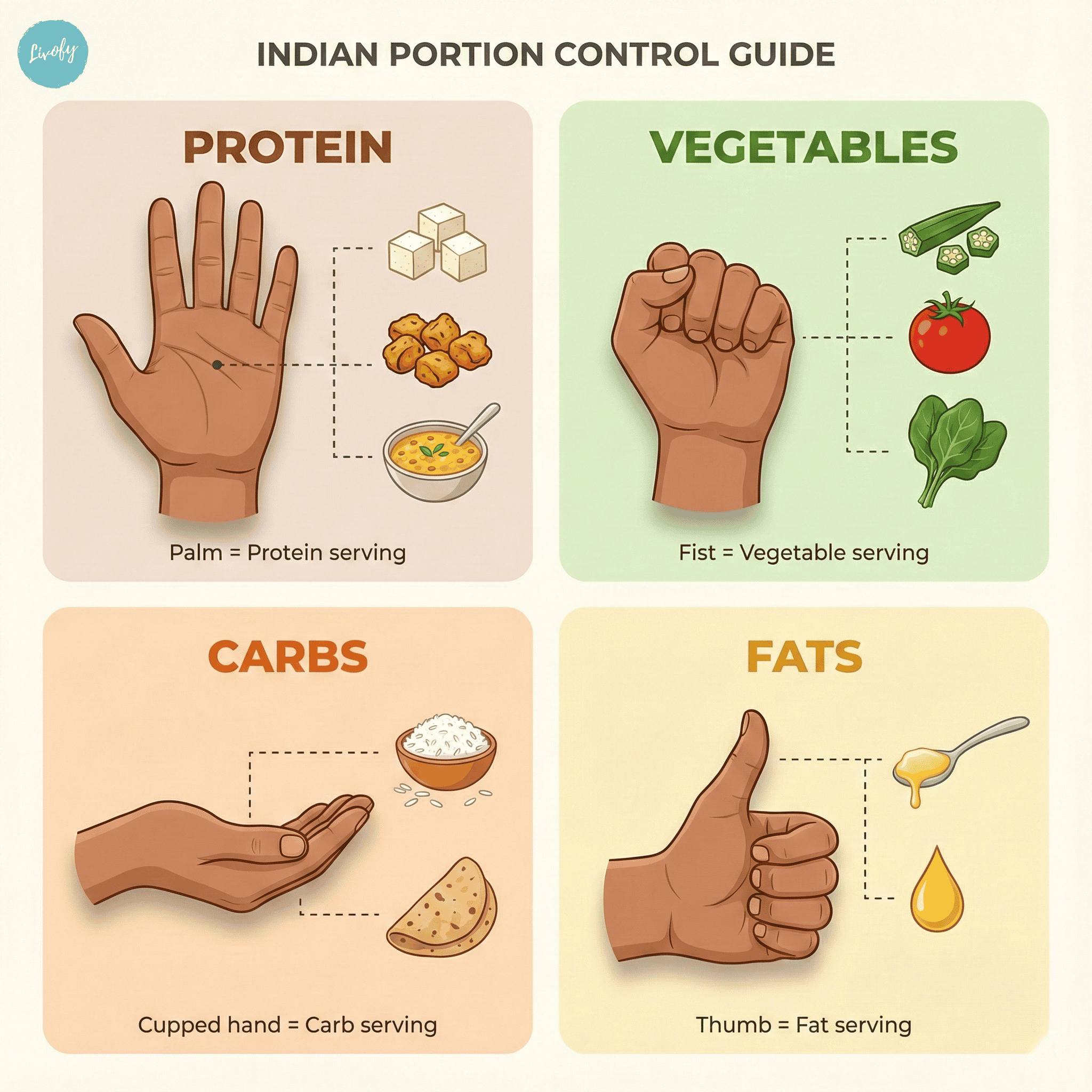
Here’s the brilliant part hand size generally matches body size so a bigger person with bigger hands naturally gets slightly bigger portions in comparison to a smaller person with smaller hands who gets appropriately smaller portions.
Your personalised measuring system
- Palm (without fingers) = Protein portion (paneer, chicken, fish, dal)
- Fist = Vegetable serving
- Cupped hand = Carbohydrate portion (rice, roti)
- Thumb = Fat serving (ghee, oil, butter)
That’s it you literally carry your portion guide everywhere you go at home, at restaurants, at wedding buffets. Your hands don’t change, so your portions stay consistent.
Visual Portions That Actually Make Sense
Let’s get practical with portions you’ll remember.
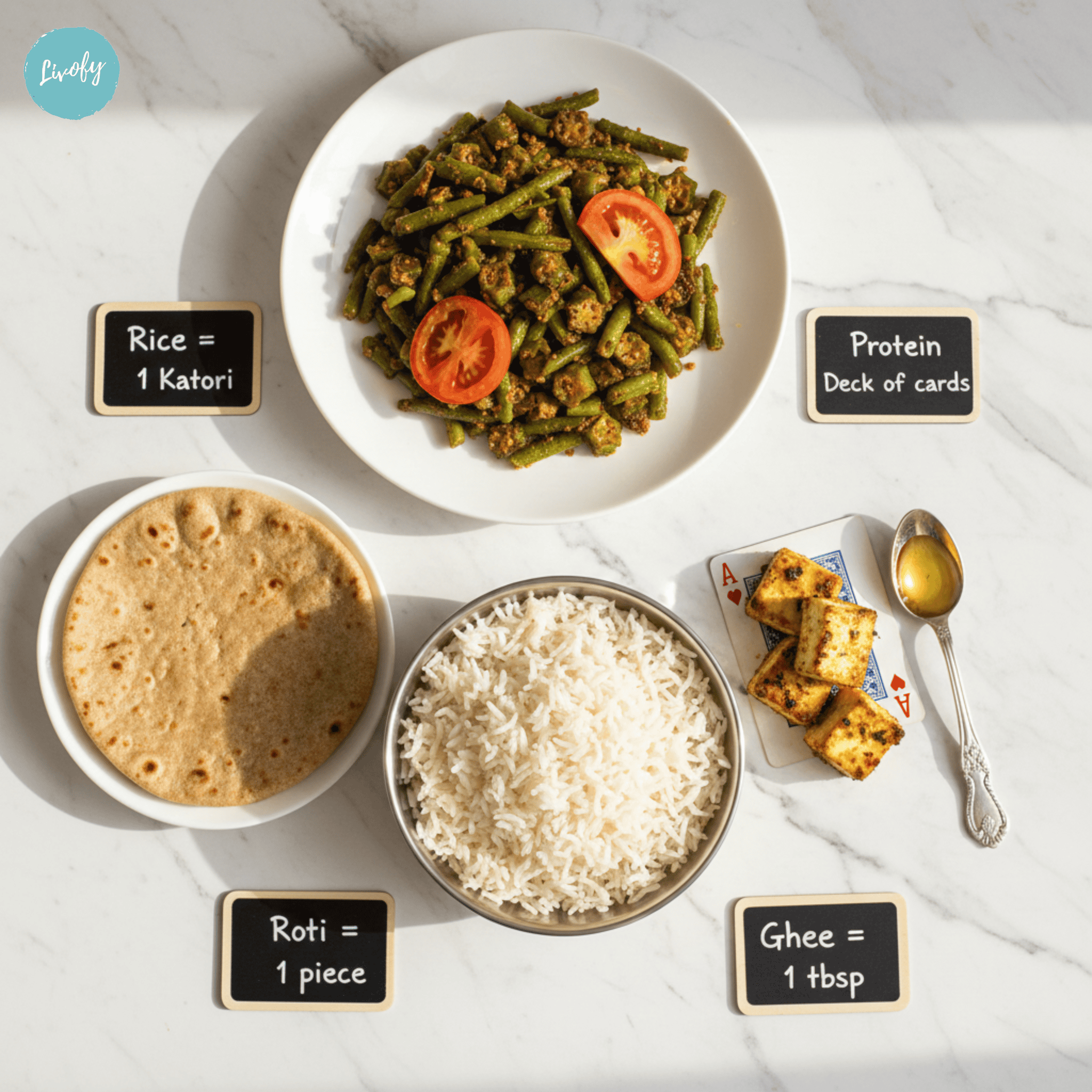
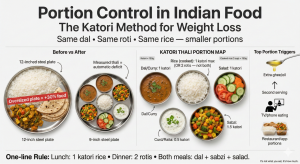
Rice: One traditional steel katori (small bowl), level, not heaped and that’s roughly one cupped hand or a computer mouse size.
Roti: One is perfect and two if you’re active or skipped rice but three or more? Only if you’re doing actual physical labour, not sitting at a desk all day.
Protein: The size of your palm or a deck of cards for whether it’s paneer, chicken, fish, or chickpeas in your chole, stick to this size.
Vegetables: Go crazy and fill half your plate because more is better and no, potatoes don’t count here.
Oil/Ghee: One tablespoon per meal, which is about your thumb tip. Yes, it sounds small because we’ve normalised drowning our food in oil.
Dal: One small katori is plenty and if you’re having dal as your main protein, you can have a bit more.
The Psychology of Smaller Plates
Want a mind trick that actually works? Use smaller plates.
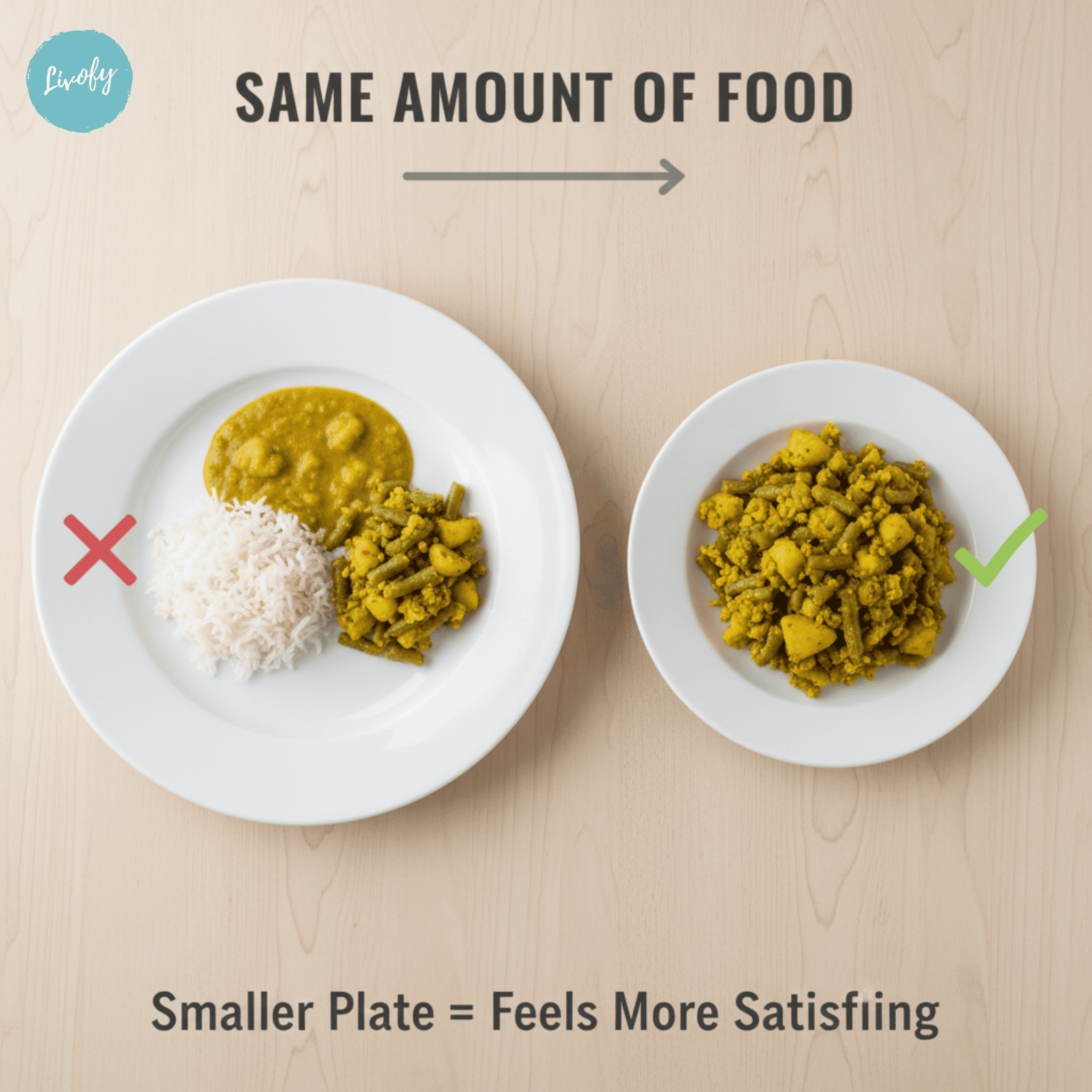
Your brain is easily fooled when you put food on a smaller plate, it looks like more food but studies prove that people eating from smaller plates feel just as satisfied as those eating larger portions from bigger plates. It’s an optical illusion that works in your favour.
Try this experiment tonight serve your usual portion on your regular dinner plate and then transfer the same amount to a salad plate. The smaller plate looks full and generous, doesn’t it? The larger plate makes the same portion look sad and insufficient.
Many families have dropped 2 to 3 kilos simply by switching from 12 inch dinner plates to 9 inch plates. No diet, No struggle, it’s just smaller plates.
Your Complete Indian Plate Method Guide
Now let’s apply this to real Indian meals not the sanitised versions in diet books, but actual food you eat every day.
The Perfect Thali Blueprint
Imagine your plate divided into sections like this:
Half the plate (50%): Vegetables like bhindi, palak, gobi, beans, baingan, lauki, anything green or colourful. Cook them however you like, just watch the oil. This is non-negotiable. Half your plate must be vegetables.
One quarter (25%): Carbohydrates including rice OR roti but not both, unless you halve each portion. This is where most people mess up because we’re trained to think carbs are the main event but they’re not, they’re the supporting actor.
One quarter (25%): Protein sources like dal, rajma, chole, paneer, chicken, fish, eggs and whatever you’re having, this is the space it gets.
On the side: Small katori of dahi (yoghurt), some pickle, salad, which don’t count toward your main plate divisions.
The beauty of this is that it works for any Indian meal, whether it’s Maharashtrian, Gujarati, Bengali, Punjabi, or South Indian the proportions stay the same.
Regional Food Adaptations
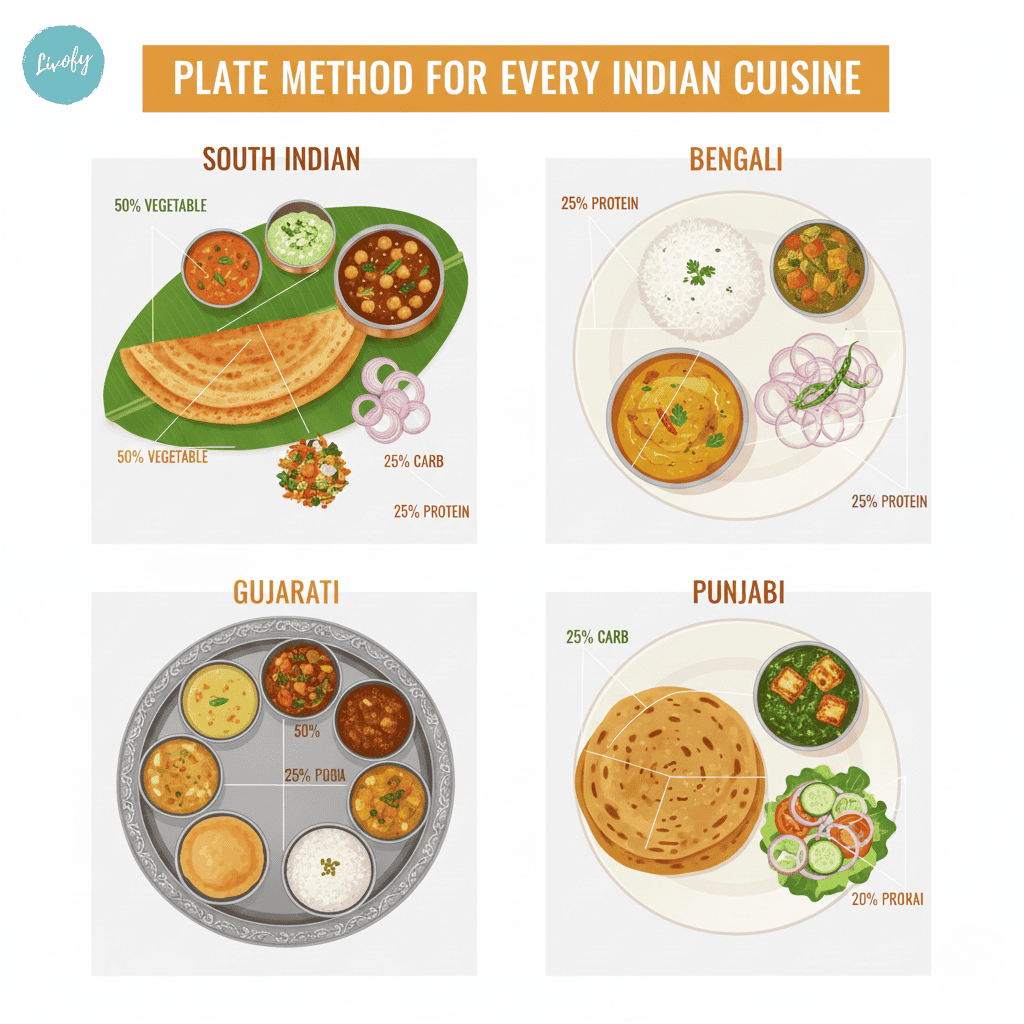
South Indian: One dosa or two small idlis = your carb quarter and fill the rest with sambar (protein), coconut chutney (fat) and add a vegetable side like avial or poriyal and your breakfast is sorted.
North Indian: One kulcha, a palm-sized portion of chole and lots of onion salad and pickle. If you’re having both rice and roti with dal and sabzi, take half portions of each carb.
Bengali: That delicious fish curry is a perfect source of protein but watch the rice, only one katori, not two. Load up on shukto or any vegetable dish and that mustard oil in the cooking counts as your fat.
Gujarati: Gujarati thalis naturally follow this method with multiple small bowls but the problem? Unlimited refills, you fill your thali once, following the plate proportions, then stop. Don’t go back for more kadhi or that third puri.
Punjabi: This is the tough one because Punjabi food is notoriously heavy, like one paratha instead of two and a palm-sized portion of paneer and please add a huge salad. The makhan and cream in the curry are your fat quota for the meal.
Festival and Special Occasion Strategies
Nobody wants to count portions at Diwali or a wedding. Here’s the trick: the one-plate rule.
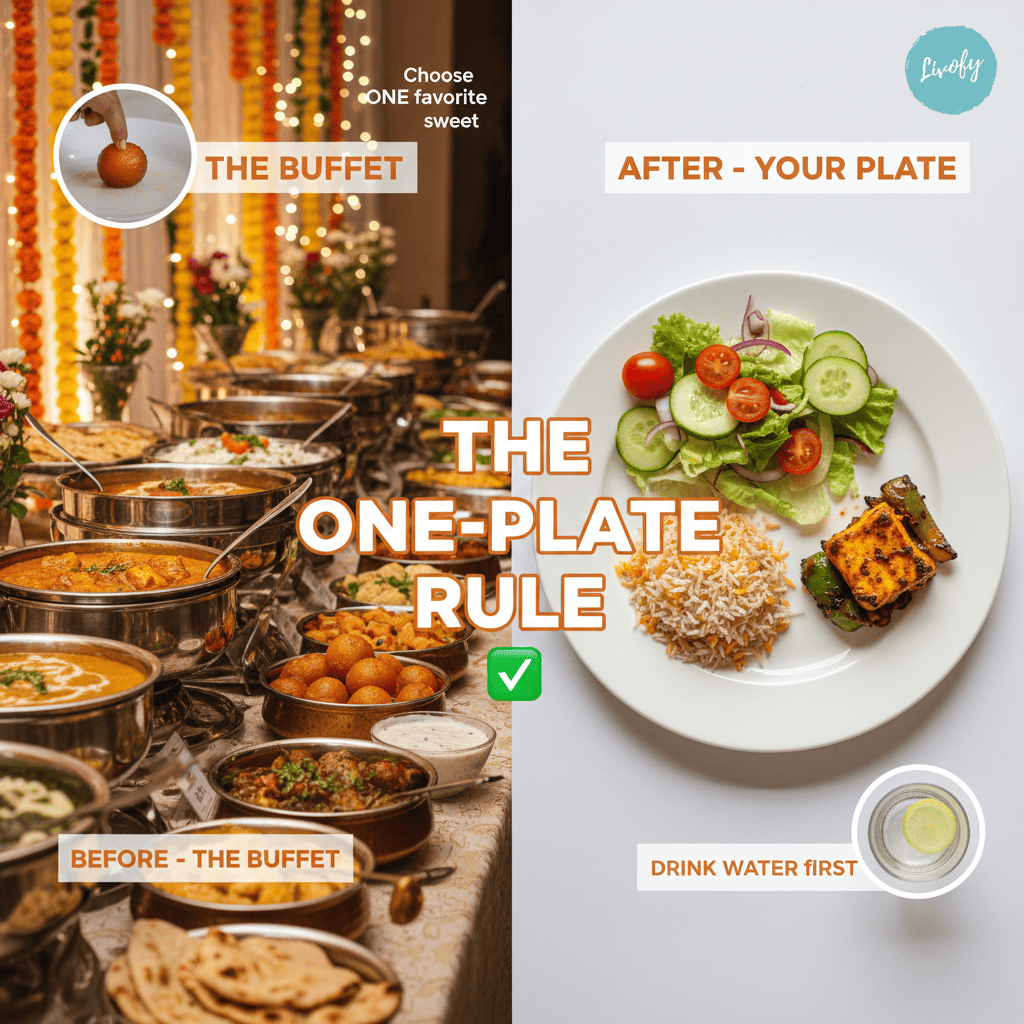
At buffets: Walk the entire buffet first and see everything available and then take one plate and fill it using the plate method. Half vegetables and salads, quarter protein items, quarter carbs enjoy it slowly, taste everything you want and then stop.
At family celebrations: Your mom is going to insist you eat more and you have your responses ready “It was delicious, I’m genuinely full,” “I’ll take some home,” or “Doctor said I need to watch portions.” Blame the doctor if you need to. Most Indian parents respect doctors’ orders.
Festive sweets: Pick your favourite and have one small piece, eating it slowly and savouring every bite. Then move away from the sweet table, and if you know there’s amazing biryani at dinner, eat lighter at lunch, it’s strategic planning, not deprivation.
The goal isn’t perfection during festivals. It’s damage control.
Common Portion Control Mistakes Indians Make
Let’s talk about where people mess up, even with the best intentions.
The “Roti/Rice” Debate Trap
People get obsessed with whether roti or rice is “better” and completely miss the point.
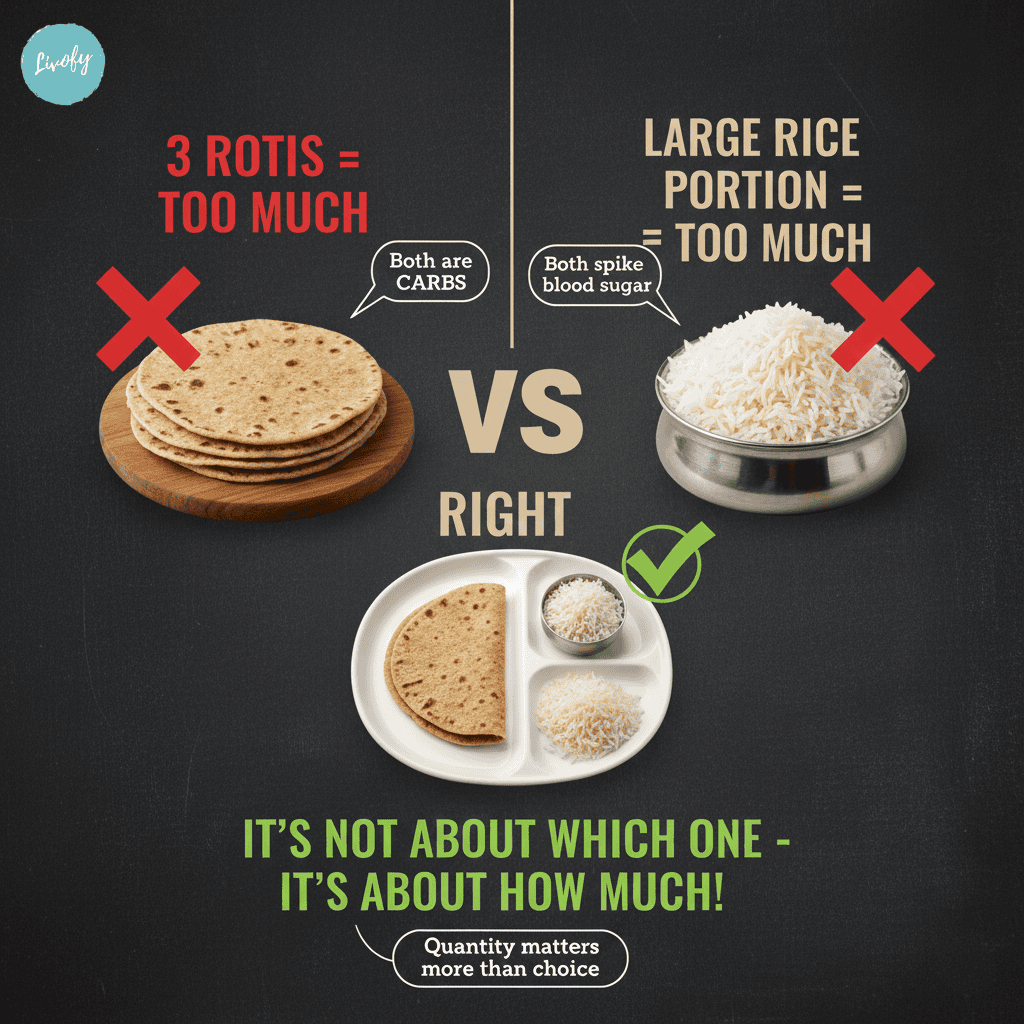
Listen, it doesn’t matter which one you choose just what matters is how much you eat. Three rotis aren’t healthier than one katori of rice just because they’re made from wheat and they’re both carbs but they both spike your blood sugar and contribute to weight gain if you overeat them.
The real question isn’t “roti or rice?” It’s “how much?” And the answer is one quarter of your plate. Whether that’s one roti, one katori of rice, or half of each if you’re having both.
Stop overthinking the choice. Start controlling the quantity.
Hidden Calories in Indian Cooking
Here’s what trips everyone up: the “invisible” additions.
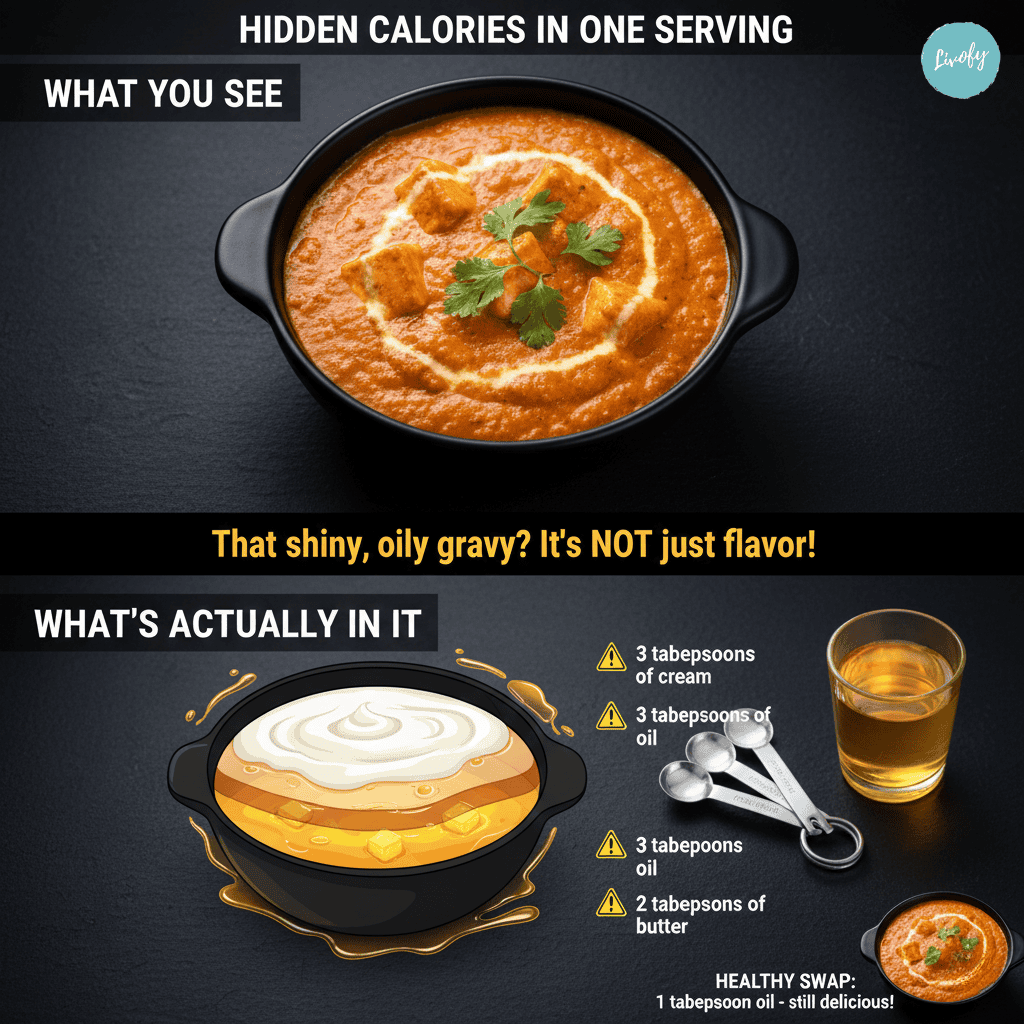
That tadka (tempering) in your dal? Two tablespoons of ghee and the oil that the sabzi is swimming in are easily three tablespoons. Is the malai (cream) in that restaurant paneer? Don’t even ask, and the Sugar in chai, ghee on roti, oil in parathas, all these hidden calories add up fast.
Watch how food is cooked and if you see oil pooling on top of the curry, that’s a problem and if the sabzi looks shiny and wet with oil, that’s too much. Healthy Indian cooking doesn’t mean tasteless. You can get an amazing flavour with one tablespoon of oil if you’re using the right spices.
Take charge of your kitchen and request less oil when someone else is cooking. Use non-stick pans and toast spices dry before adding oil. These small changes make a massive difference.
The “Wasting Food is Bad” Mentality
We’ve all heard it “Finish your plate! Think of the starving children!”
This well-meaning guilt trip has created a generation of overeaters and here’s the uncomfortable truth: forcing yourself to overeat doesn’t help anyone. Those starving children don’t benefit from you being uncomfortably full. You’re not honouring food by eating past fullness you’re just making yourself unhealthy.
The solution? Start with smaller portions. Use the plate method, and you’ll naturally waste less food. If there are leftovers, great. Save them for tomorrow’s lunch. Refrigerators exist for a reason.
It’s time to change this mindset. Your health matters more than clearing your plate.
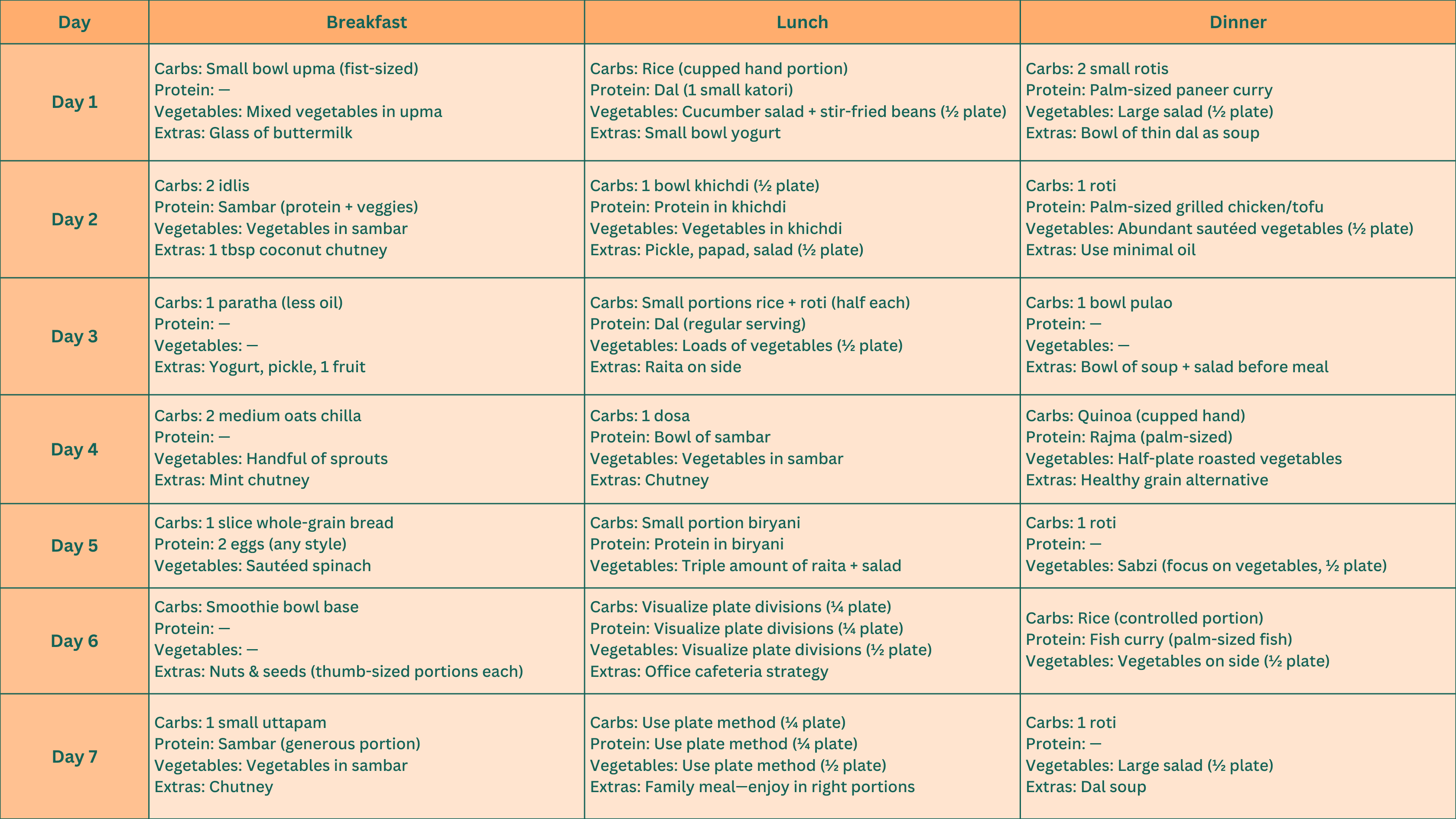
Your 7-Day Plate Method Meal Plan
Ready to start? Here’s a week-long meal plan that perfectly demonstrates portion control using the plate method. Remember, these are templates; adjust them based on your preferences and dietary needs.
Making It Sustainable: Tips for Long-Term Success
The plate method only works if you can stick with it. Here’s how to make it a permanent lifestyle, not a temporary diet.
Meal Prep the Smart Way
You don’t need to cook everything on Sunday. Just prep ingredients in portions.
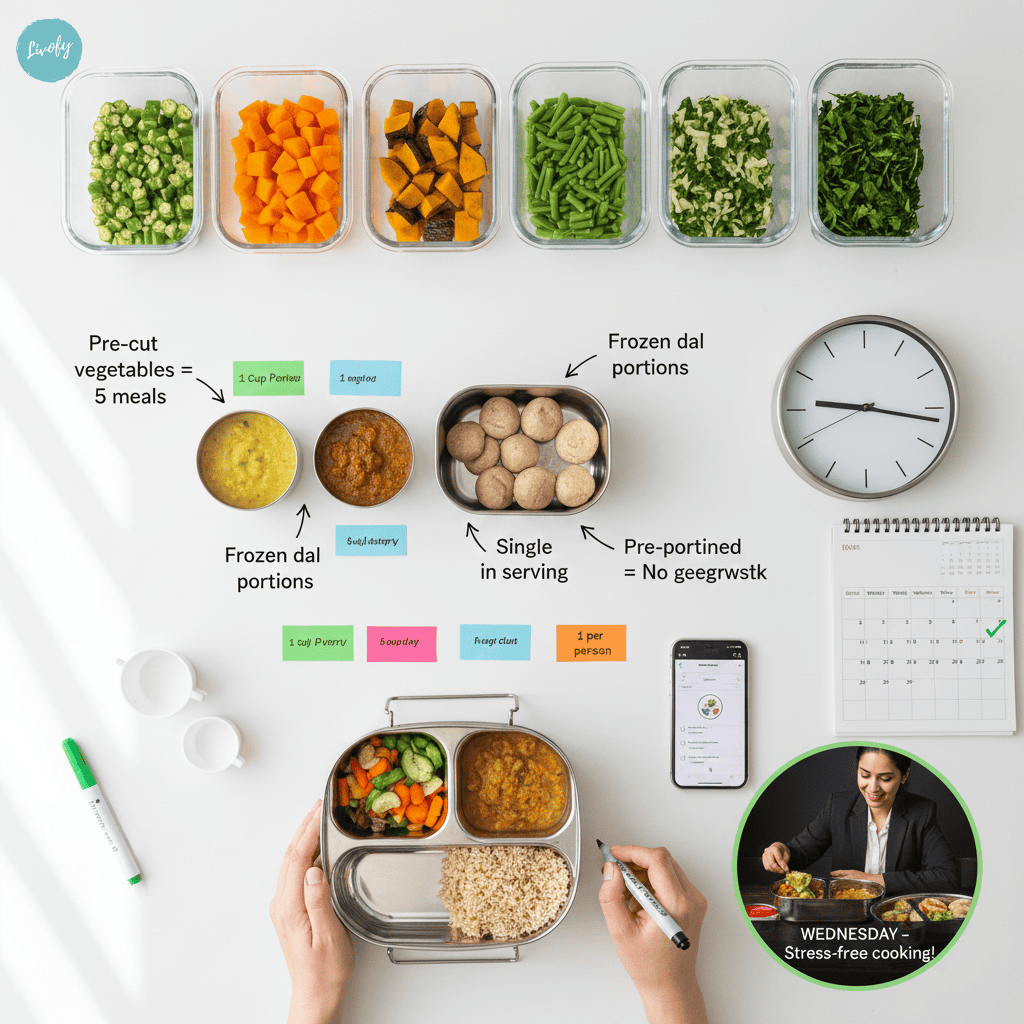
Cut vegetables on the weekend and store them in containers with each container being one meal’s vegetable portion. Cook a big batch of dal and freeze individual portions and make roti dough and divide it into small balls, one per person per meal.
When you’re tired after work, you’re not standing in the kitchen wondering “how much should I make?” Everything is already portioned, you just need to assemble and cook which removes the guesswork when you’re hungry, and decision-making is easy.
Prep smarter, not harder and in future, you will be grateful.
Eating Out Without Guilt
Restaurant portions are designed to feel generous, not to be healthy as a typical restaurant meal is easily 2-3 times what you should eat.
Here’s the strategy when your food arrives, immediately ask for a takeaway container then divide the food before you start eating. Put half (or two-thirds) in the container and now eat what’s left on your plate. Tomorrow’s lunch is already packed.
Share dishes when possible and order one rice for two people, and try to fill up on soups and salads first. And remember just because you paid for it doesn’t mean you need to finish it. Just remember, overeating doesn’t make it a better deal.
Your health is worth more than “getting your money’s worth.”
Building Family Support
Portion control works best when your family is on board.
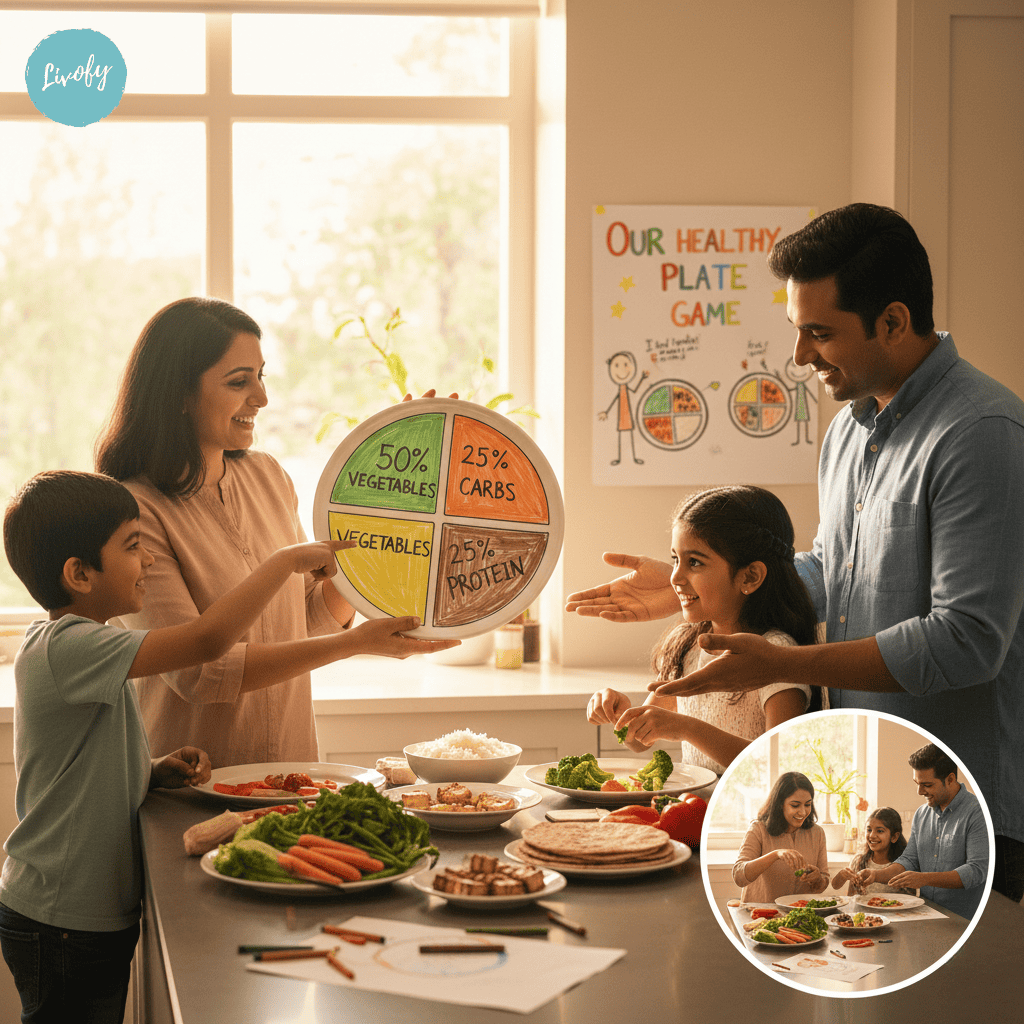
Make it fun for kids and let them divide their own plates by creating a competition to which who can eat the most colourful vegetables? Who can identify all the vegetables in the sabzi? Turn it into a game, not a health lecture.
Stop using food as a reward or punishment, like “Finish your vegetables to get dessert”, which creates unhealthy food relationships. Instead, try “Let’s see how many colours we can fit on our plate today!”
When everyone practices these habits together, it stops being “mom’s weird diet” and becomes “how our family eats.” That’s when real change happens.
Troubleshooting Common Problems
Even with the best intentions, you’ll face challenges. Let’s solve the most common issues people face with portion control.
“I’m Still Hungry After Following Portions!”
First question: Are you eating too fast? It takes 20 minutes for your brain to register fullness, so slow down and put your fork down between bites and talk more during meals and chew properly.
Second: Are you drinking enough water? Thirst often disguises itself as hunger so drink a glass of water and wait 10 minutes and if you still hungry then it’s real hunger.
Third: Check your vegetable portions honestly that are you really filling half your plate? Most people think they are, but they’re actually filling maybe a quarter. Vegetables provide volume and fiber that keep you full without many calories.
Finally: Evaluate your protein and ask yourself is my dal watery? Is my protein portion too small? Protein is the most filling nutrient and if you’re skimping on protein, you’ll stay hungry.
If you’ve checked all this and you’re still genuinely hungry, eat more vegetables. Add a bowl of clear soup. Have another katori of dal. Don’t suffer in silence.
Dealing with Food Pushers
Every Indian family has the aunt who says, “Just one more roti, beta,” and the grandmother who shows love through feeding. The friend who says you’re “getting too thin” when you’ve lost 2 kilos.
Have your responses ready:
- “It was delicious, I’m genuinely full”
- “I’ll take some home for later”
- “Doctor’s orders, you know how it is”
- “I’m pacing myself, there’s dessert coming”
Fill your plate once using the plate method, then get busy talking, which is hard to push food on someone who’s engaged in an animated conversation. Ask questions and tell stories and keep your mouth busy with words, not food.
And here’s the tough love: don’t feel guilty coz your health is your responsibility and the people who truly care about you will respect your boundaries once they see you’re serious.
When Weight Loss Stalls
You’ve been following the plate method perfectly for weeks but the scale hasn’t budged so now what?
First, don’t panic because weight loss isn’t linear, as your body holds water, builds muscle, and goes through hormonal cycles and the scale doesn’t tell the whole story.
Ask yourself do your clothes fit better? Do you have more energy? Has your digestion improved? These non-scale victories are just as important.
Now, honestly, audit your portions as “Portion creep” is real and that cupped hand of rice might have become a heaped cup over time. Reset by actually measuring once to recalibrate your visual estimates.
Check those hidden calories from the oil in cooking and the chai with sugar or “just a handful” of nuts is actually three handfuls.
Sometimes your body needs a shake-up, so try intermittent fasting with the plate method and change your exercise routine, but don’t abandon the plate method. It’s working even if the scale is temporarily stuck.
The Bottom Line
The plate method makes portion control simple, sustainable, and actually doable for Indian lifestyles. You don’t need apps, food scales, or a calculator. Just your plate, your hands, and commitment to filling them the right way. It works with any Indian cuisine, at any location, whether you’re eating at home, at restaurants, or at your cousin’s wedding.
Success isn’t about perfection. Some days you’ll nail it. Some days you’ll eat three samosas at a party. That’s life. The goal is to make balanced eating your normal, not your exception. Start with one meal a day, following the plate method. Once that feels natural, add another meal. Build the habit gradually. Within a few months, you’ll automatically visualise portions without thinking about it. You’ll enjoy your favourite foods without guilt, maintain a healthy weight without constant struggle, and most importantly, feel in control of your eating. Whether you’re having home-cooked dal-rice or restaurant biryani, the principles stay the same: half vegetables, quarter protein, quarter carbs. Simple. Sustainable. Effective for life.
Related Posts