Remember when fat-free everything was the trend? We’d carefully skim the malai off our doodh, buy those tasteless healthy fats biscuits, and pat ourselves on the back for being “healthy.” Turns out, we were doing it all wrong.
Here’s the thing about healthy fats, your body actually needs them and not just wants them, needs them. We’re talking about proper hormone function, absorbing vitamins, and even keeping your brain sharp. The real question isn’t whether to eat healthy fats, but understanding good fats vs bad fats and which ones to choose and how much. Let’s break down what actually matters when it comes to types of dietary fats.
The Many Jobs of Fat in Your Body
Fats do way more than just sit around, making your jeans tight. They’re actively working in your body right now, handling some pretty important jobs.
First up: vitamins A, D, E, and K won’t even get absorbed without healthy fats. These fat-soluble vitamins need dietary fat to actually work in your body – another reason why completely fat-free diets backfire. You could eat all the spinach and carrots in the world, but without some healthy fats in your meal, those nutrients just pass through. This is exactly why our dadi’s always added a tadka of ghee to dal.
Then there’s hormone production. Testosterone, estrogen, cortisol – they’re all made from fats. Skimp too much on fats, and your hormones get wonky. That means mood swings, low energy, metabolism issues, and even fertility problems for women.
Your brain is literally 60% fat, which explains why fat for brain health is crucial. DHA and EPA (types of omega-3s) support memory, focus, and even mood. Those omega-3 benefits aren’t just about your heart – they’re protecting your brain too. When you eat enough healthy fat sources, you’re literally feeding your brain what it needs to function optimally.
Understanding Different Types of Fats
Not all fats are the same; some are good for you, some are okay in moderation, and one type you should just avoid completely. Understanding good fats vs bad fats is essential for making smart choices. Let’s break it down.
Saturated Fats: The Misunderstood Macronutrient
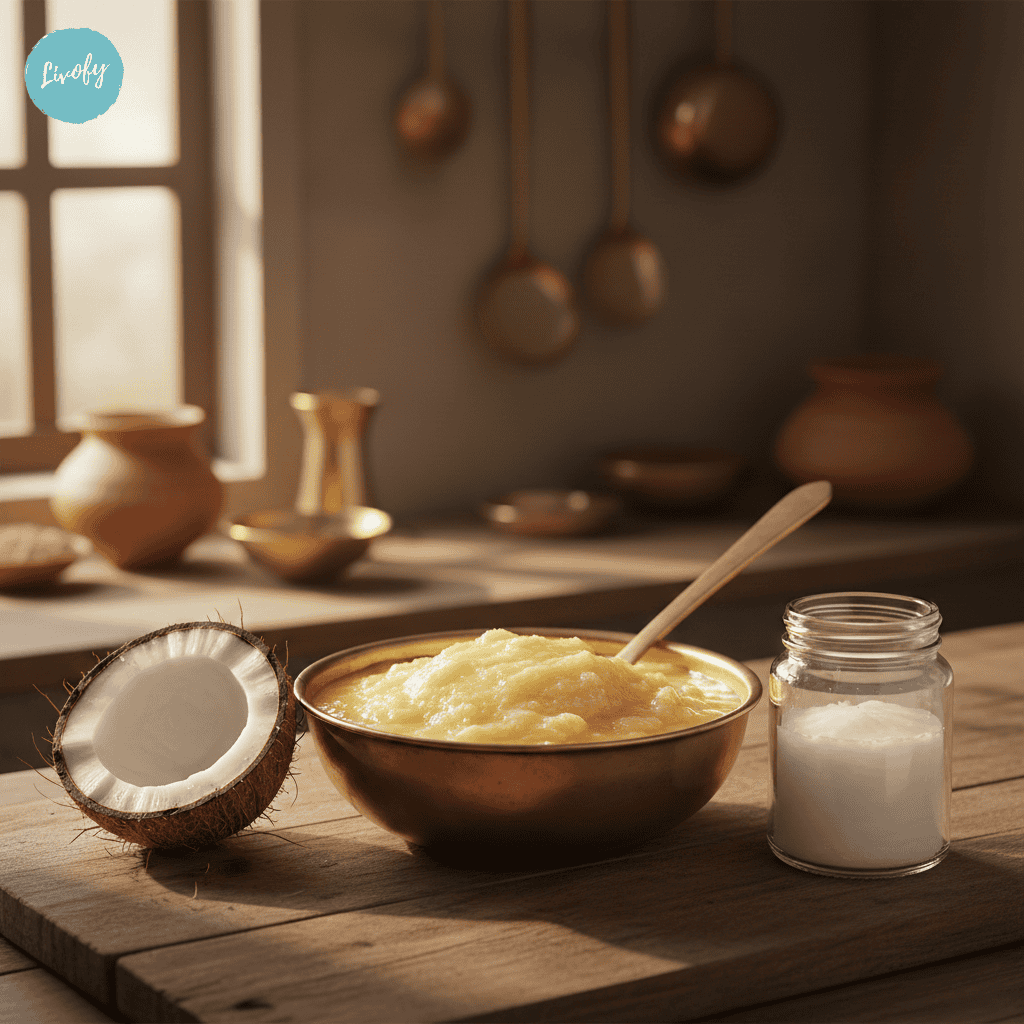
Saturated fats got a bad reputation for years, but the story’s more complicated than “saturated fat bad, everything else good.” These are the fats that stay solid at room temperature, like ghee and coconut oil.
Here’s what we know now: saturated fats from whole foods aren’t the heart disease culprits we thought they were. They help build cell membranes and support hormone production. The keyword? Moderation. A spoonful of ghee in your dal? Totally fine. Deep-frying everything in it? Not so much.
Ghee’s been used in Ayurveda for thousands of years, and science is catching up. It’s got butyric acid (good for your gut) and CLA (may help with body composition). So no, you don’t need to fear your dadi’s ghee ka dabba.
Unsaturated Fats: The Heart Heroes
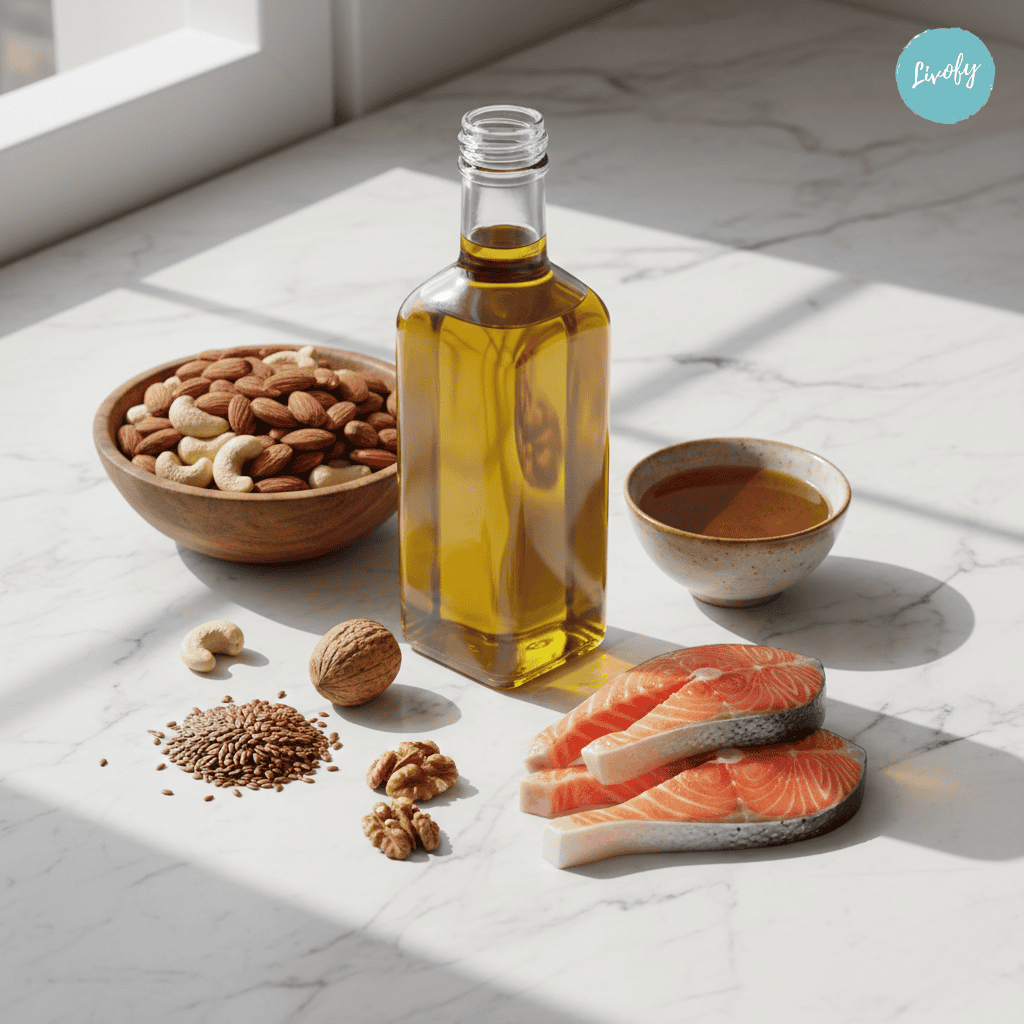
These are the fats that stay liquid at room temperature, and they’re genuinely good for you. We’re talking about two types: monounsaturated fats and polyunsaturated fats.
Monounsaturated fats are in almonds, cashews, and mustard oil. They lower bad cholesterol while keeping the good cholesterol intact. There’s a reason Mediterranean folks who eat tons of olive oil have such low heart disease rates.
Polyunsaturated fats include the famous omega-3s and omega-6s. Your body can’t make these on its own, so you need to eat them. Omega-3s especially are rockstars for brain health, reducing inflammation, and heart protection. The omega-3 benefits are impressive: reduced inflammation, better heart health, improved brain function, and even mood regulation. Think fatty fish, walnuts, and flaxseeds.
Trans Fats: The Only True Villain
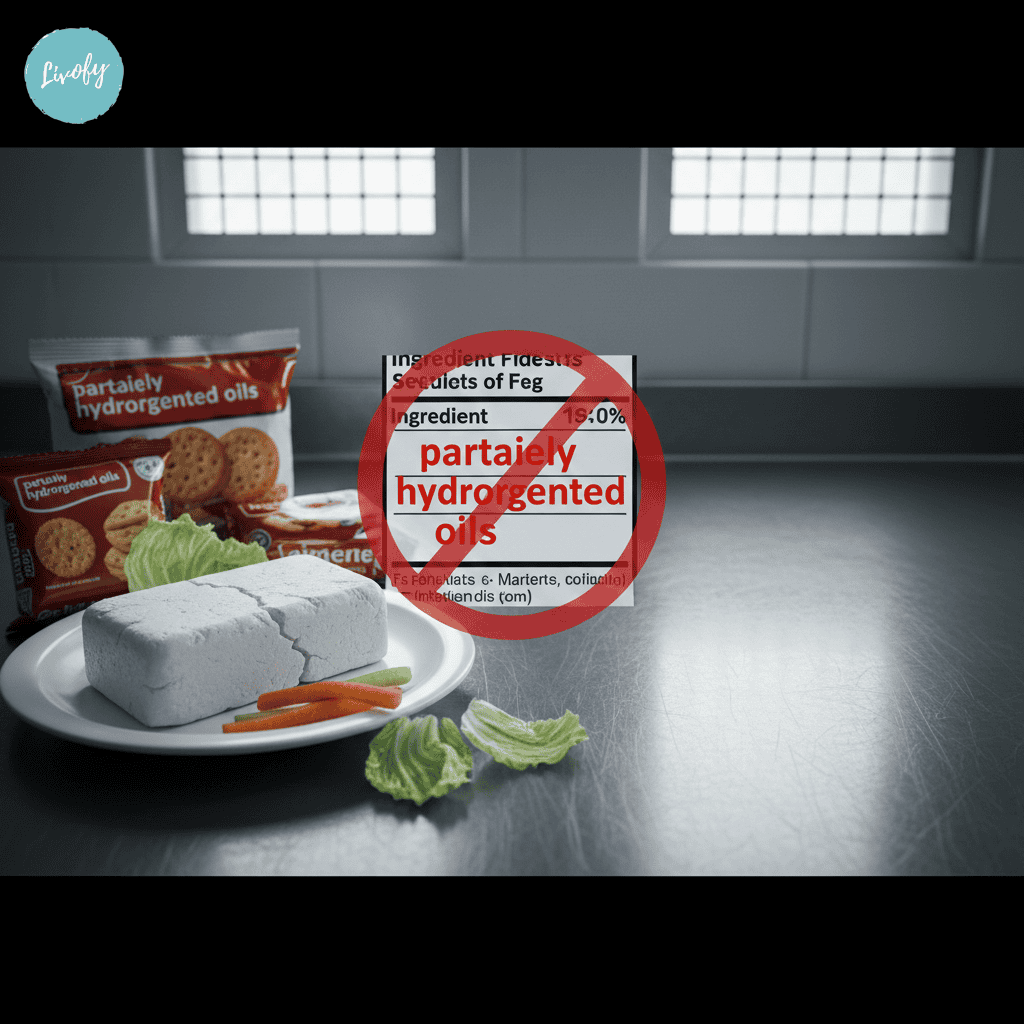
If there’s one type of fat to completely avoid, it’s trans fats. These artificial fats are created by pumping hydrogen into vegetable oils, and they’re terrible for you.
Found in vanaspati, packaged snacks, and cheap restaurant food, trans fats raise your bad cholesterol AND lower your good cholesterol at the same time. The trans fats dangers are real: they jack up inflammation and significantly increase heart disease risk. They’re basically the poster child for bad fats in any good fats vs bad fats comparison.
Check ingredient labels for “partially hydrogenated oils” – that’s code for trans fats. Many countries are actually banning them now because they’re that harmful. Just skip them entirely.
The Indian Kitchen’s Healthy Fats
Indian cooking has always known what’s up when it comes to fats. We’ve been using ghee, coconut, and mustard oil for centuries, not just for taste but for health. Let’s look at what makes these traditional healthy fat sources so good.
Ghee: Liquid Gold
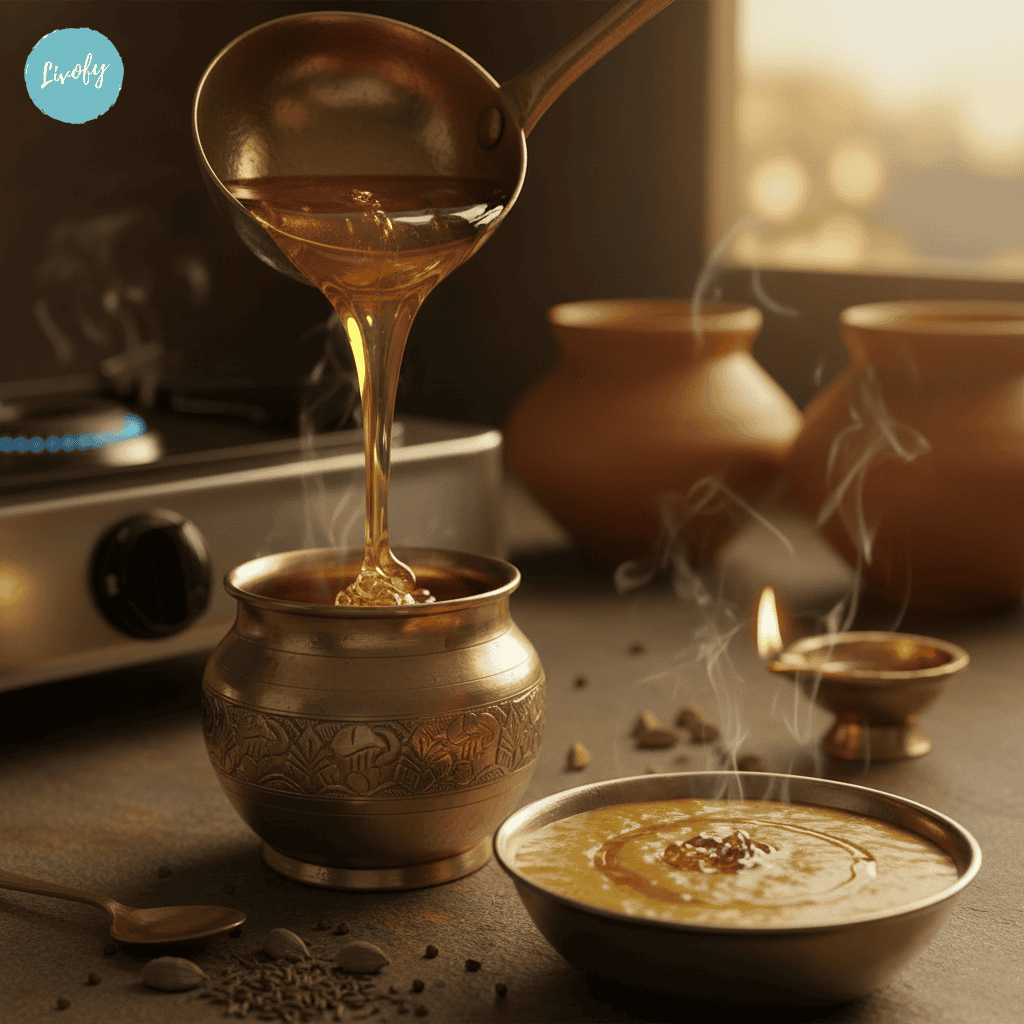
Ghee isn’t just clarified butter. It’s been called “liquid gold” in Ayurveda for a reason. With a high smoke point, you can actually cook with it at high temperatures without creating harmful compounds.
It’s rich in butyric acid (amazing for digestion) and packed with fat-soluble vitamins. Yes, it’s saturated fat, but when you use it in moderation, it’s actually beneficial. A teaspoon in your dal or on your roti adds flavor and nutrition.
Beyond cooking, ghee shows up in pujas, Ayurvedic treatments, and even as a natural moisturizer. Our ancestors were onto something way before modern nutritionists figured it out.
Coconut: The Versatile Fat
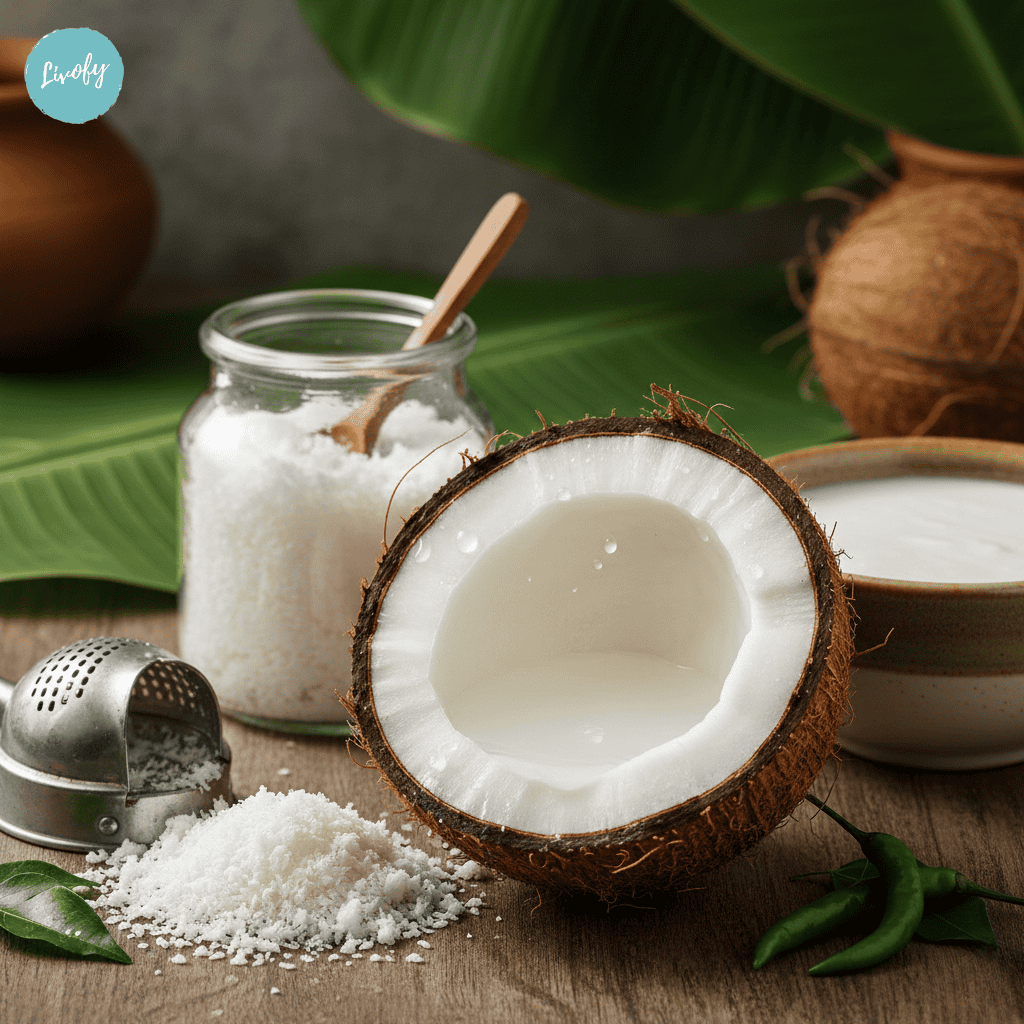
Coconut oil, coconut milk, and fresh coconut all give you medium-chain triglycerides (MCTs). These get metabolized differently than other fats, giving you quick energy and potentially boosting metabolism.
Coconut oil has antimicrobial properties thanks to lauric acid. While it’s high in saturated fat, it affects your cholesterol differently than, say, butter. The science is still evolving, but moderate use seems perfectly fine.
In South Indian cooking, coconut is everywhere. Chutneys, curries, you name it. There’s wisdom in how regional cuisines use what grows locally.
Mustard Oil: The Regional Favorite
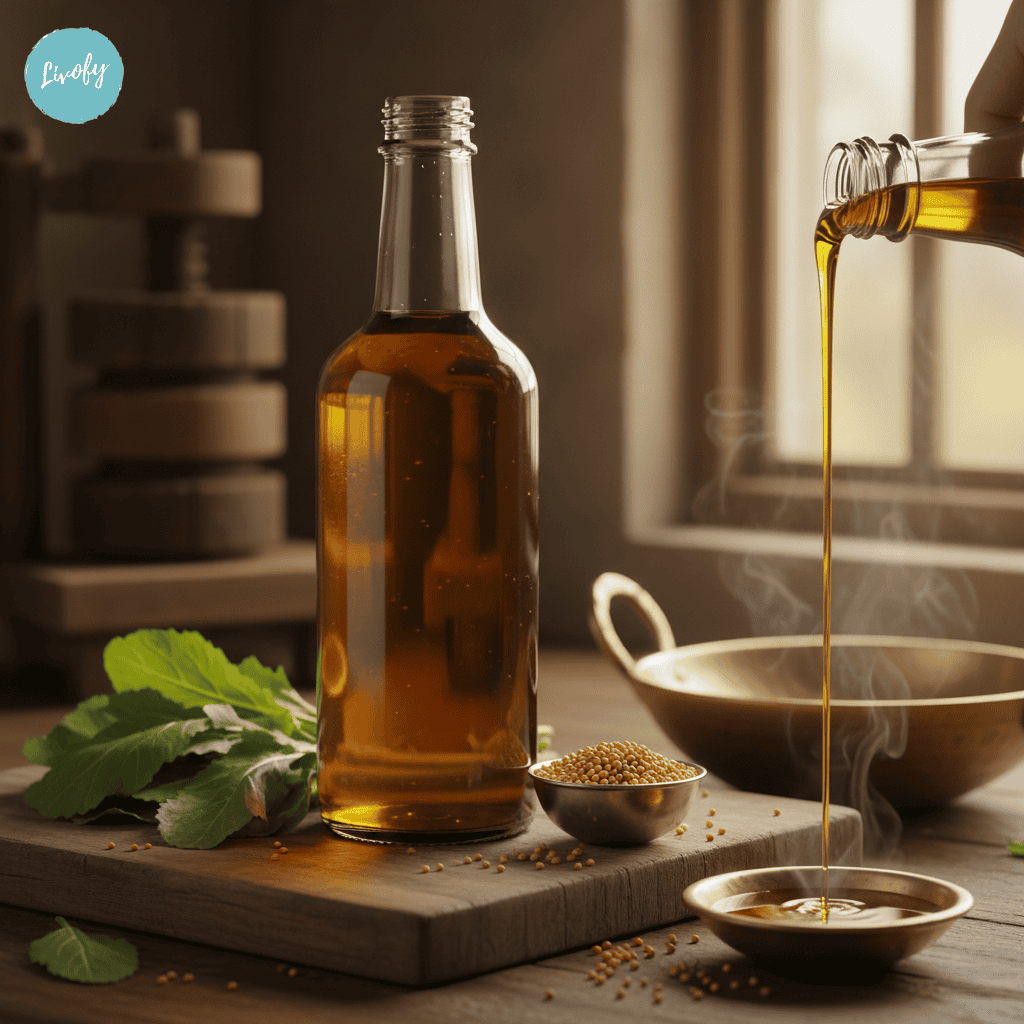
If you’re Bengali or North Indian, you know mustard oil. It’s rich in both monounsaturated fats and polyunsaturated fats, with a good omega-3 to omega-6 ratio.
There’s been some controversy around erucic acid in mustard oil, but traditional cold-pressed versions used moderately appear safe. It’s particularly rich in alpha-linolenic acid, a plant-based omega-3.
That distinctive pungent taste? It comes from compounds that have antimicrobial properties. People have been using it for cooking, massage, and hair care for generations.
Nuts and Seeds: Nutrient Powerhouses
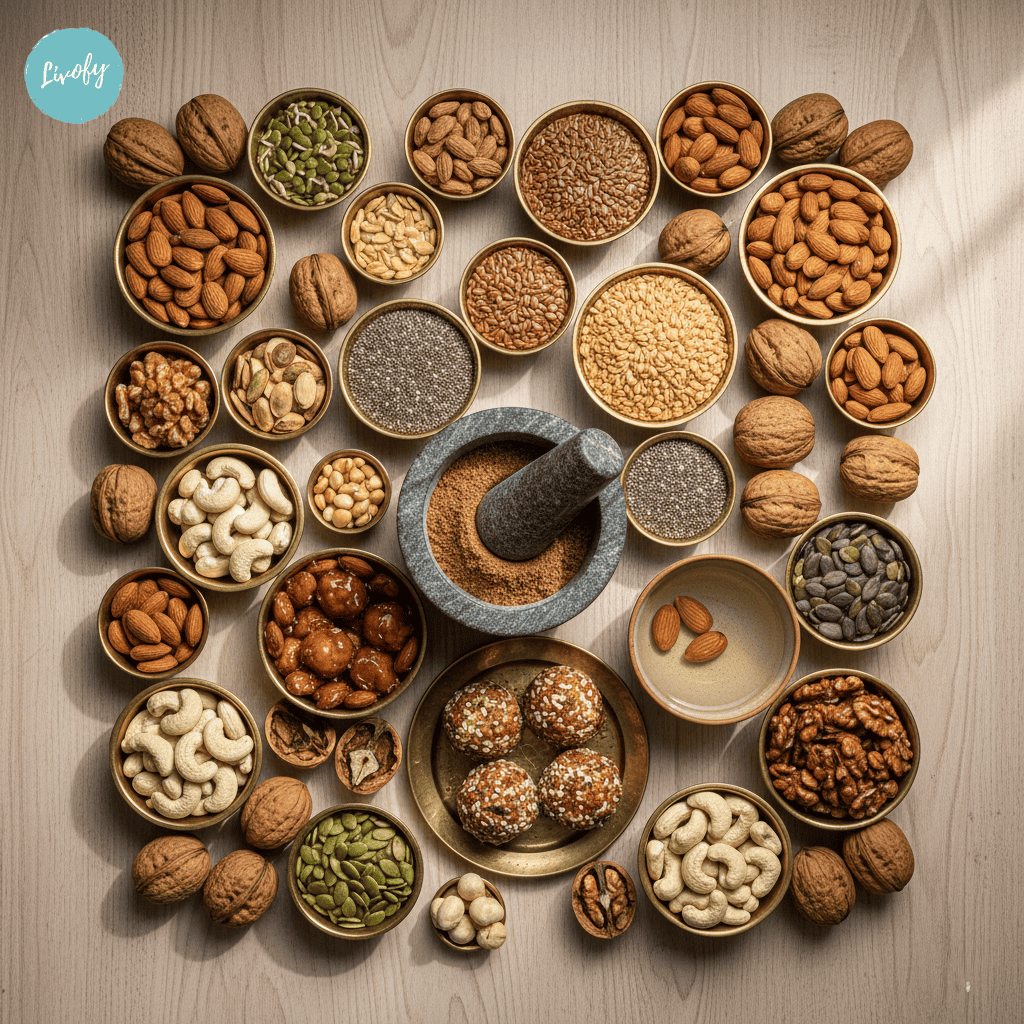
Indian cuisine loves nuts and seeds. From badaam-heavy Mughlai dishes to til ke laddoo, we’ve been using these for ages. These are prime examples of healthy fat sources that also deliver protein, fiber, and minerals in one package.
Almonds give you monounsaturated fats plus vitamin E. Walnuts are one of the few plant sources of omega-3s. Flaxseeds (alsi) and chia seeds offer alpha-linolenic acid, which is especially important if you’re a vegetarian.
Traditional prep methods actually make these better. Soaking almonds overnight? Improves digestibility. Roasting til? Boosts antioxidants. Grinding flaxseeds? Makes the omega-3s easier to absorb.
How Much Fat Do You Really Need?
The amount of fat you need depends on your age, how active you are, and your health goals. Here’s what the guidelines say.
Daily Requirements
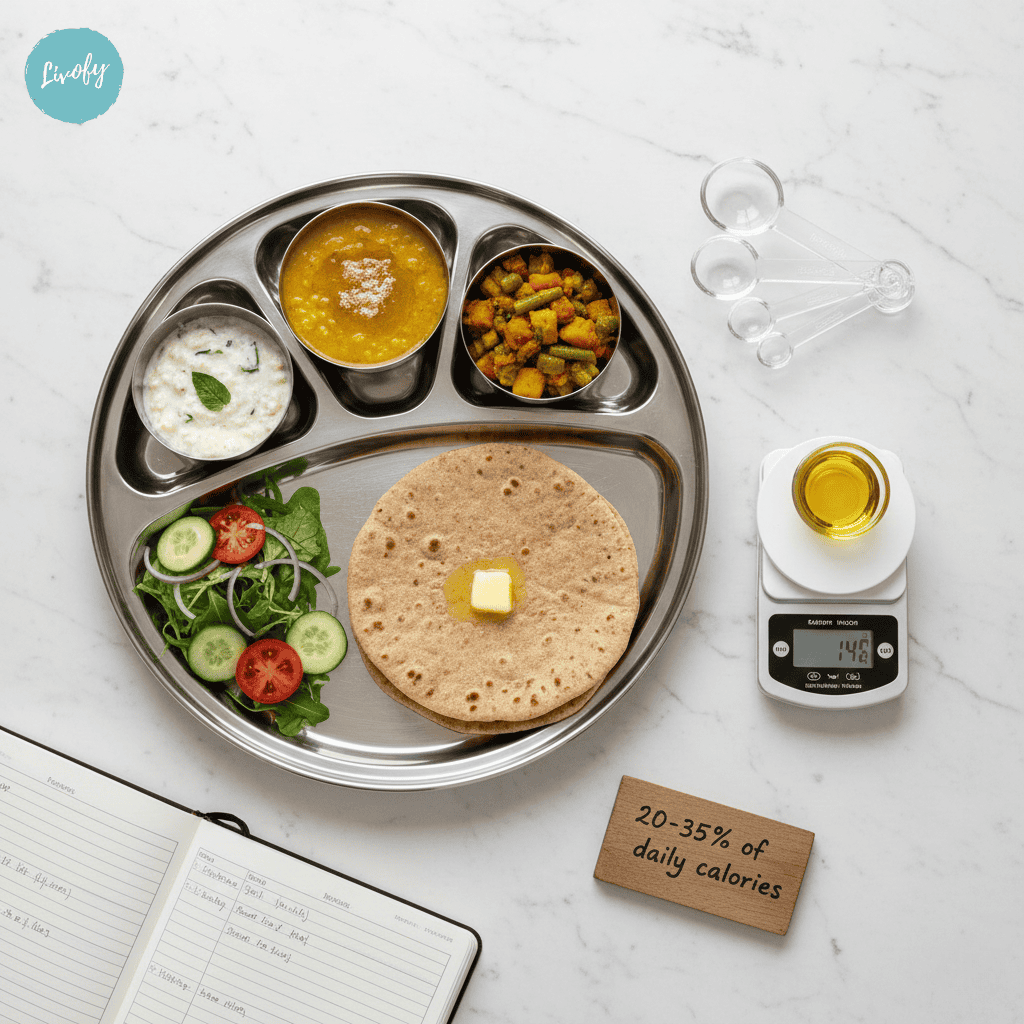
Current guidelines suggest fats should make up 20-35% of your daily calories. If you’re eating 2000 calories a day, that’s roughly 44-78 grams of fat. For reference, one tablespoon of oil has about 14 grams.
Aim for mostly unsaturated fats, moderate amounts of saturated fat (under 10% of calories), and zero trans fats. Quality matters more than obsessing over exact numbers.
If you’re super active or an athlete, you might need more. Women need adequate fat for hormone health – going too low can mess with periods and fertility.
Balancing Omega-3 and Omega-6
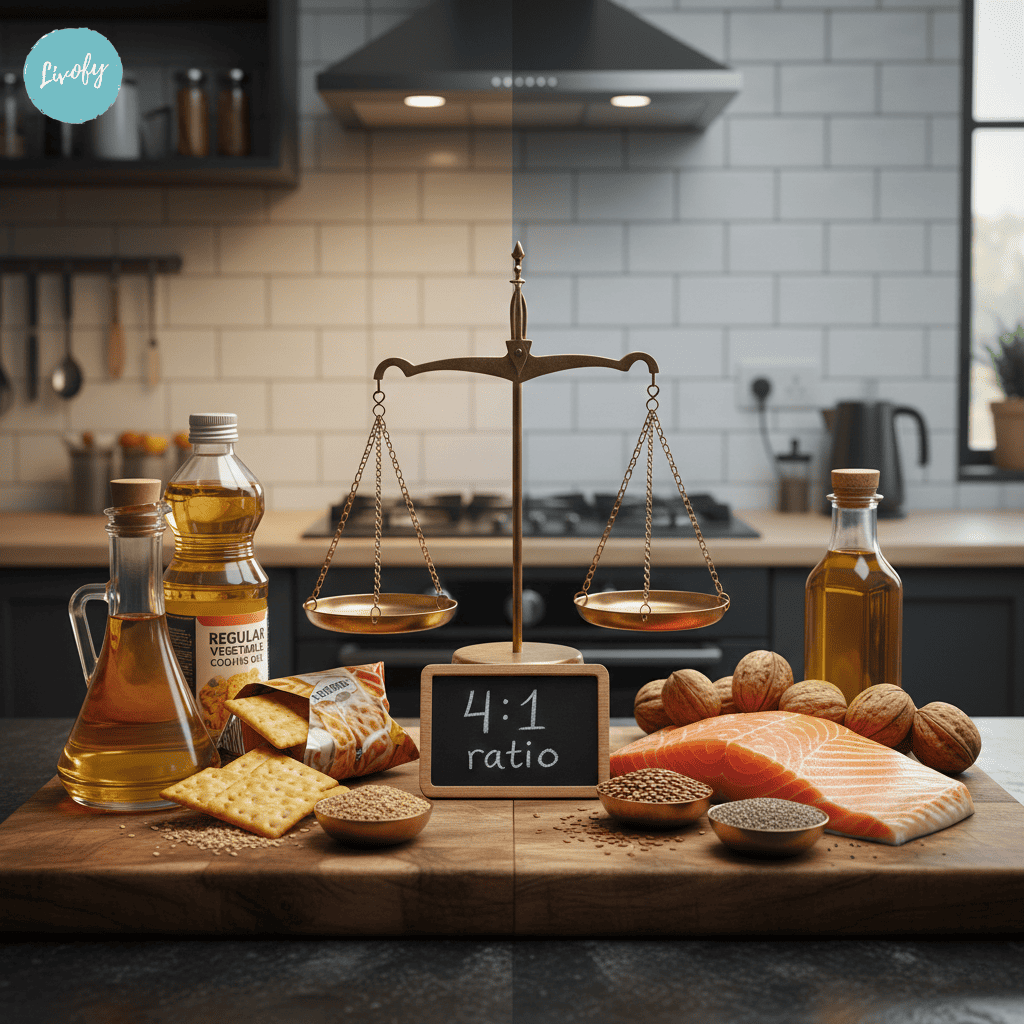
Here’s where most people mess up: we eat way too much omega-6 (from vegetable oils) and not enough omega-3. The ideal ratio should be around 4:1, but most people are at 15:1 or worse.
To fix this, eat more omega-3-rich foods like fatty fish, walnuts, and flaxseeds. At the same time, ease up on omega-6 heavy oils like sunflower and corn oil. You don’t need to eliminate omega-6 completely, just bring things into better balance.
Simple swaps help: use mustard oil instead of sunflower oil sometimes, add ground flaxseed to your atta, snack on walnuts, eat fatty fish like salmon or mackerel twice a week.
Individual Variations

Everyone’s different. Some people do great on higher-fat diets, others feel better with moderate amounts. Pay attention to how you feel – energy levels, digestion, overall vibe.
Genetics plays a role, too. If heart disease runs in your family, you might want to be more careful with saturated fats and focus more on unsaturated options.
Got gallbladder issues? You might need to go easier on fats overall. Smaller amounts spread throughout the day work better than one big fatty meal.
Common Mistakes with Dietary Fat
Even people who care about health make these mistakes with fats. Let’s talk about the big ones.
Overdoing “Healthy” Fats
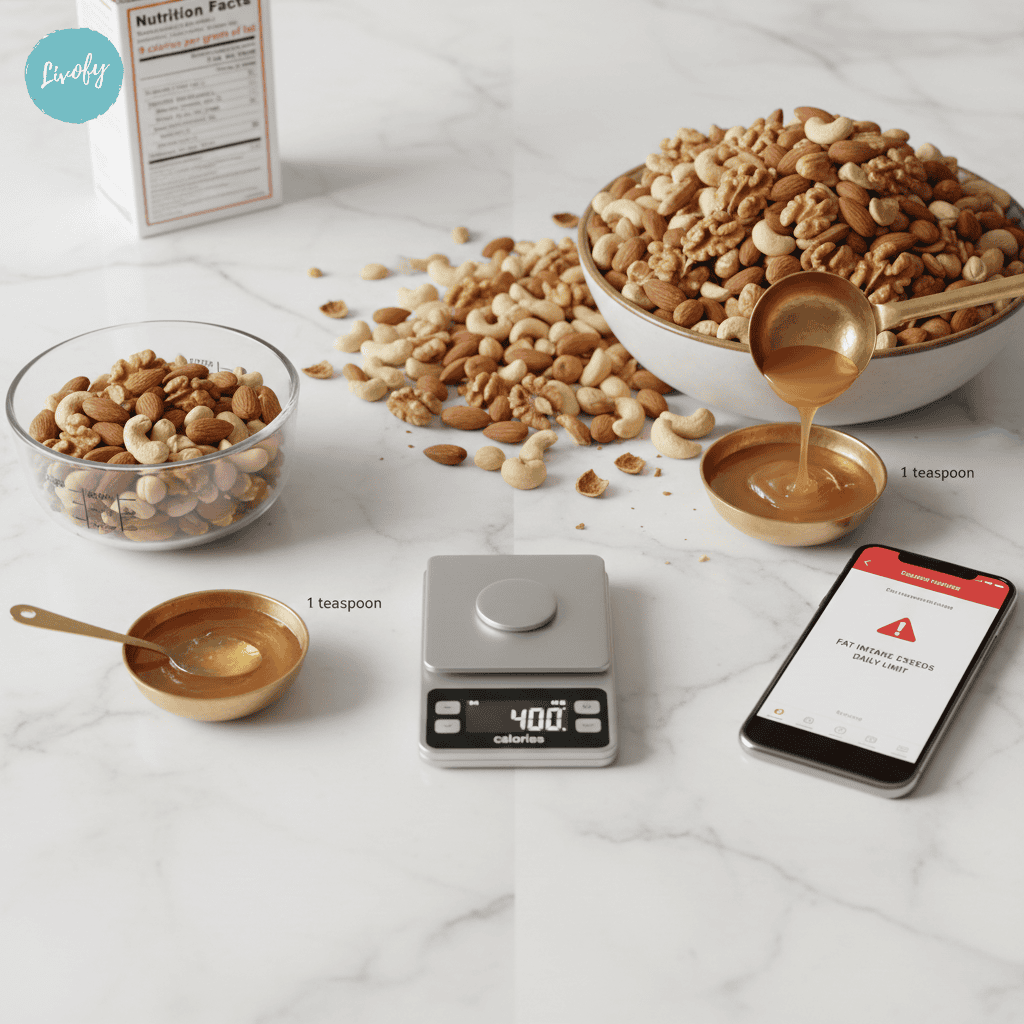
Just because something’s healthy doesn’t mean unlimited quantities are good. Nuts are nutritious, sure, but they’re also calorie-dense. A handful is great. Mindlessly eating while binge-watching Netflix? Not so much.
Same with ghee. Adding a spoonful here and there is fine. Drowning everything in it will add up fast. Fat has 9 calories per gram – more than double protein or carbs.
The whole “fat bomb” trend where people add crazy amounts of fat to coffee? Unless you’re on a specific medical diet, you really don’t need that much fat.
Fear of Saturated Fat
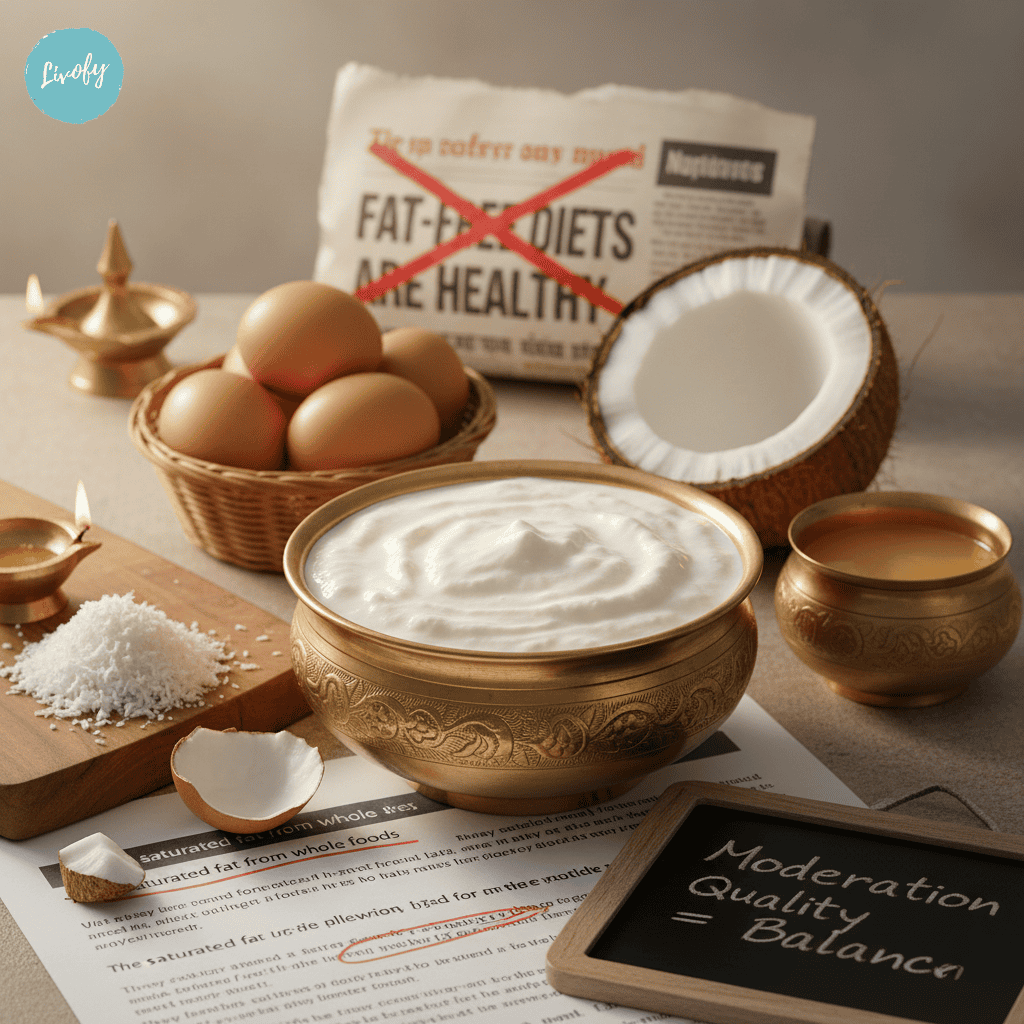
While trans fats are genuinely bad, we went too far demonizing all saturated fats. Whole-fat dahi, eggs, coconut – these have saturated fat along with lots of other good nutrients.
Recent research shows that saturated fat from real foods, eaten as part of a balanced diet, isn’t the villain we made it out to be. Quality matters.
Your dadi’s ghee and nariyal? Used in moderation as part of an overall healthy diet, they’re totally fine.
Using Wrong Fats for Cooking
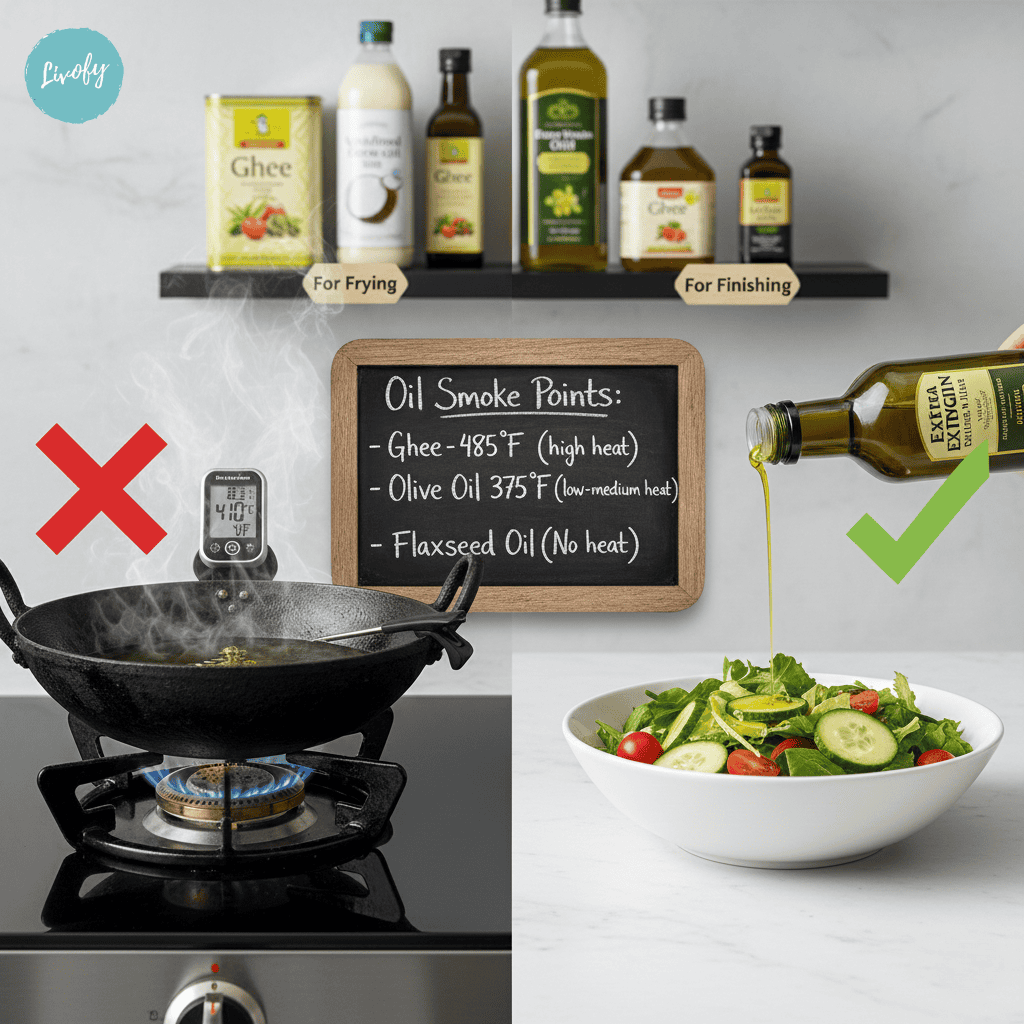
Using expensive extra virgin olive oil for deep frying? You’re wasting money AND destroying all the good compounds in it. Worse, you might be creating harmful ones.
Match the fat to the cooking method, for example, high heat = stable fats like ghee or coconut oil, and low heat or raw = delicate oils like olive or flaxseed. Understanding smoke points isn’t complicated, but it makes a real difference in both taste and health.
7-Day Healthy Fats Meal Plan
Here’s a week of meals showing how to include different types of fats in your daily eating. Mix and match based on what you like.
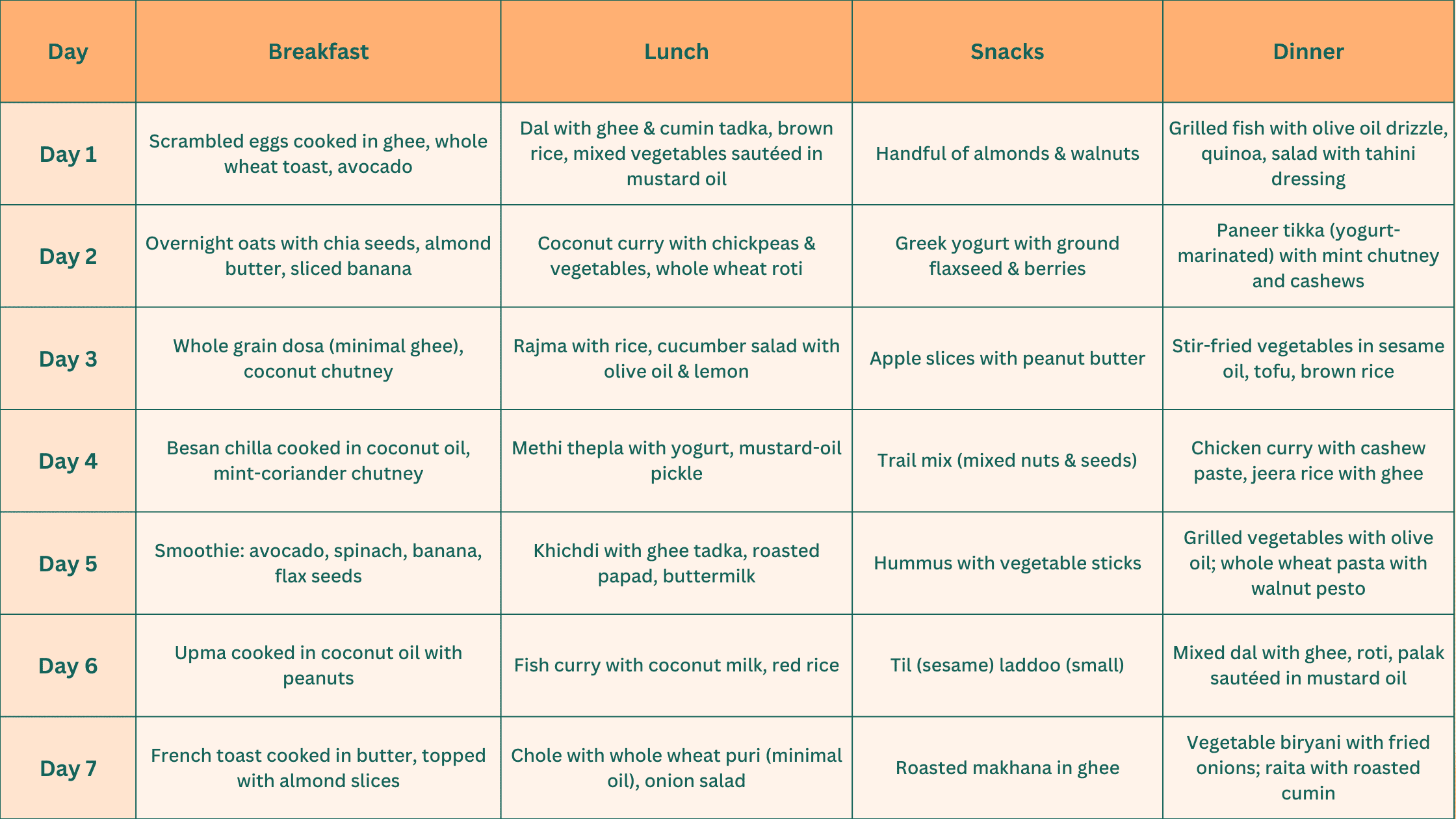
This plan demonstrates how healthy fats from various sources can make meals more satisfying and nutritious while showcasing different types of dietary fats.
Special Considerations
Different situations call for different approaches to eating fats. Here’s what to keep in mind for specific scenarios.
For Weight Loss
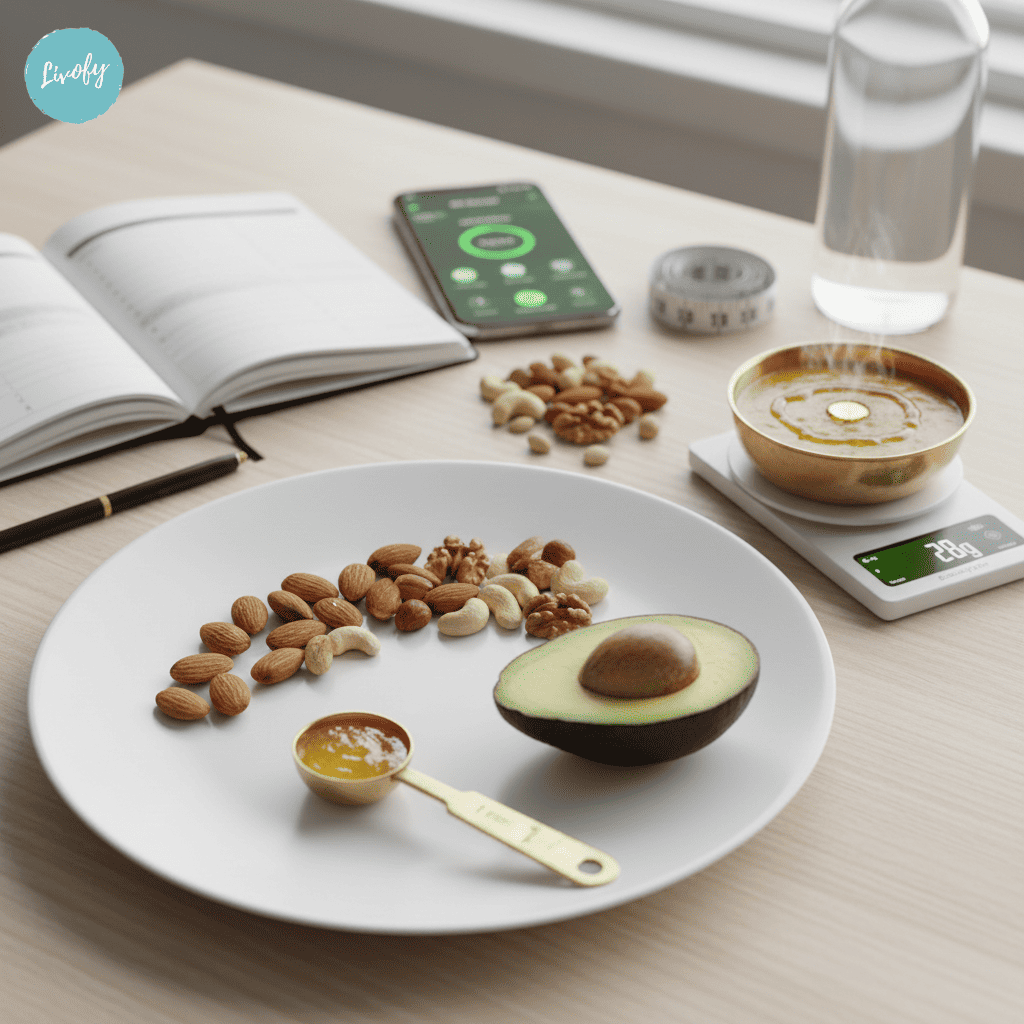
Contrary to old-school diet advice, choosing the right fat for weight loss can actually help you shed kilos. They keep you full longer and help balance hormones, which is crucial for metabolism.
The trick is portion control, not elimination. A teaspoon of ghee, a small handful of nuts, a quarter of an avocado – these give you what you need without going overboard. The key is understanding that fat for weight loss works when you choose healthy fat sources in controlled portions.
Whole foods work better than processed stuff. Actual nuts are more satisfying than nut oils, plus they come with fiber and protein.
For Heart Health
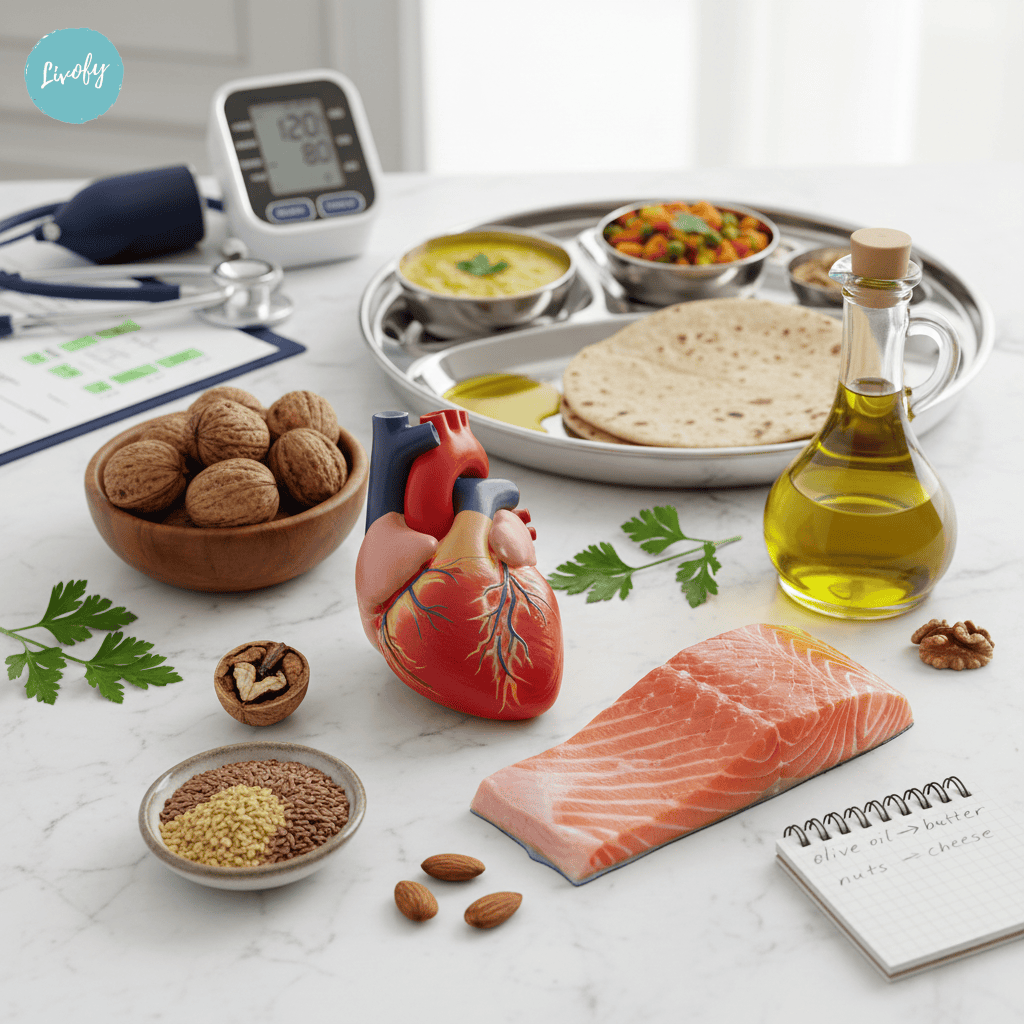
If you have heart disease or risk factors, which fats you choose become extra important. Focus more on unsaturated fats – both monounsaturated fats and polyunsaturated fats – while going easier on saturated fats.
Omega-3s are your friend here. Fatty fish twice a week if you eat fish, or daily flaxseeds and walnuts if you’re vegetarian. These actively help reduce inflammation and improve cholesterol. The omega-3 benefits for heart health are well-documented and significant.
Make some swaps: olive oil instead of butter sometimes, nuts instead of cheese for snacks, more plant-based meals overall.
For Hormonal Balance
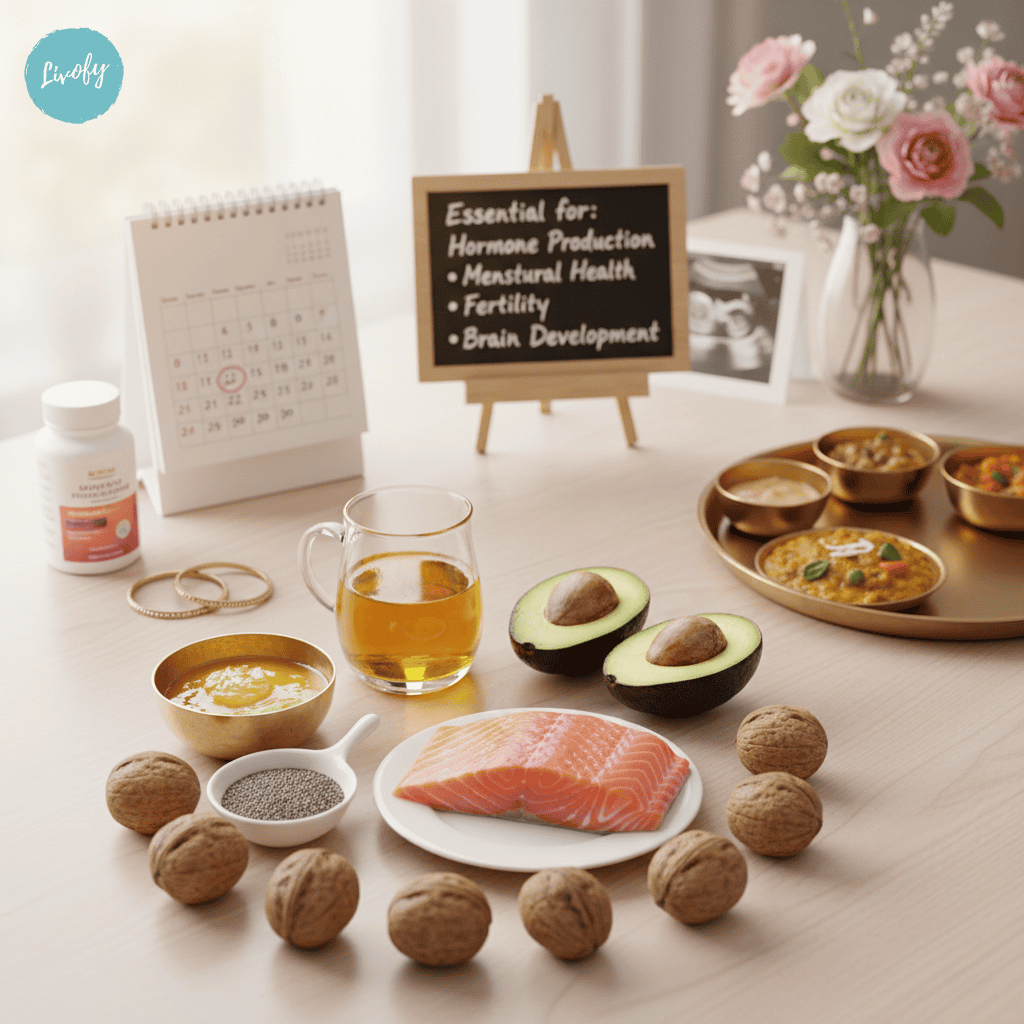
Women especially need enough fat for hormones to work properly. Those super low-fat diets? They can mess with your cycle and even affect fertility.
Mix it up throughout the day. Omega-3s help with inflammation, and some saturated fat is needed for making hormones. Don’t be scared of real food sources of fat – your hormones literally need them.
If you’re pregnant or breastfeeding, fats become even more important for your baby’s brain development. DHA (a type of omega-3) is crucial. Vegetarian or vegan? Consider algae-based DHA supplements to get that fat for brain health benefits.
Conclusion
So here’s the bottom line: fats aren’t the enemy. They never were. We just got confused about which ones to eat and how much.
Your body needs dietary fats to function – for absorbing vitamins, making hormones, keeping your brain sharp, and feeling satisfied after meals. The key is choosing wisely: focus on unsaturated fats (the liquid ones like olive oil and nuts), use saturated fats like ghee in moderation, and completely skip trans fats.
Stop being scared of your dadi’s ghee. Stop buying those sad fat-free versions of naturally fatty foods. And definitely stop scraping the malai off your doodh. When you eat quality fats as part of a balanced diet – not too much, not too little – you’re not sabotaging your health. You’re actually supporting it in ways that really matter.
Traditional Indian foods like ghee, coconut, and mustard oil have been nourishing people for generations. Modern science is just catching up to what our ancestors already knew. So go ahead, add that tadka to your dal, enjoy your handful of badaam, and drizzle some olive oil on your salad. When it comes to fats, it’s all about quality and balance, not fear and avoidance.
Related Posts