Between work deadlines, family responsibilities, and endless traffic, finding time for the gym feels nearly impossible. But what if you could get an effective home workout done in just 10 minutes, right in your living room, without any equipment?
I know it sounds too good to be true. I was skeptical, too. But after trying this home workout approach myself and seeing it work for dozens of my clients, I can tell you it’s legit.
Short, intense home exercise routines can match the effectiveness of longer gym visits when you’re consistent. Your body doesn’t know whether you’re in a fancy gym or your bedroom. It only responds to the challenge you give it.
This 10-minute home workout plan fits into even the craziest schedules. No commute, no membership fees, no excuses.
Why 10-Minute Workouts Actually Work
The fitness industry wants you to believe you need expensive memberships and hour-long sessions. But science tells a different story. Short, intense training sessions and bodyweight exercises can be just as effective as those marathon gym sessions.
High-intensity exercise triggers metabolic changes that keep working long after you’ve finished. Your body responds to the stimulus you provide, regardless of where you are.
When you challenge your muscles and elevate your heart rate through a living room workout, adaptations happen whether you’re at home or in a gym.
The Science of Short Workouts
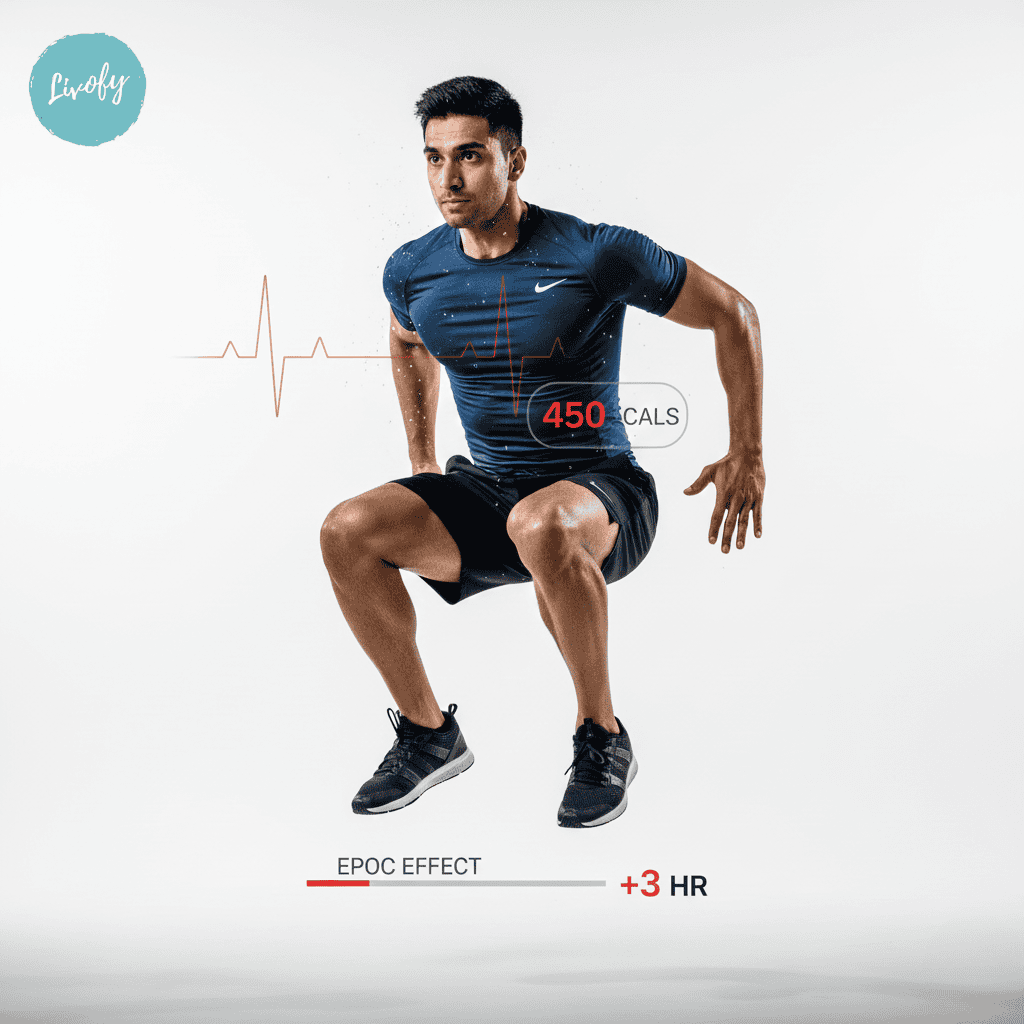
Research shows that 10-minute high-intensity sessions improve cardiovascular fitness, increase strength, and boost metabolism. A study in the European Journal of Applied Physiology found that short bursts of intense exercise produced similar benefits to longer, moderate-intensity sessions.
The key is intensity and consistency. A focused 10 minutes where you’re genuinely pushing yourself beats a distracted hour at the gym scrolling between sets.
Your muscles respond to tension and time under load, not to expensive equipment. Plus, shorter home fitness routines are way easier to stick with long-term, and consistency is what actually drives results.
EPOC: Your Secret Weapon
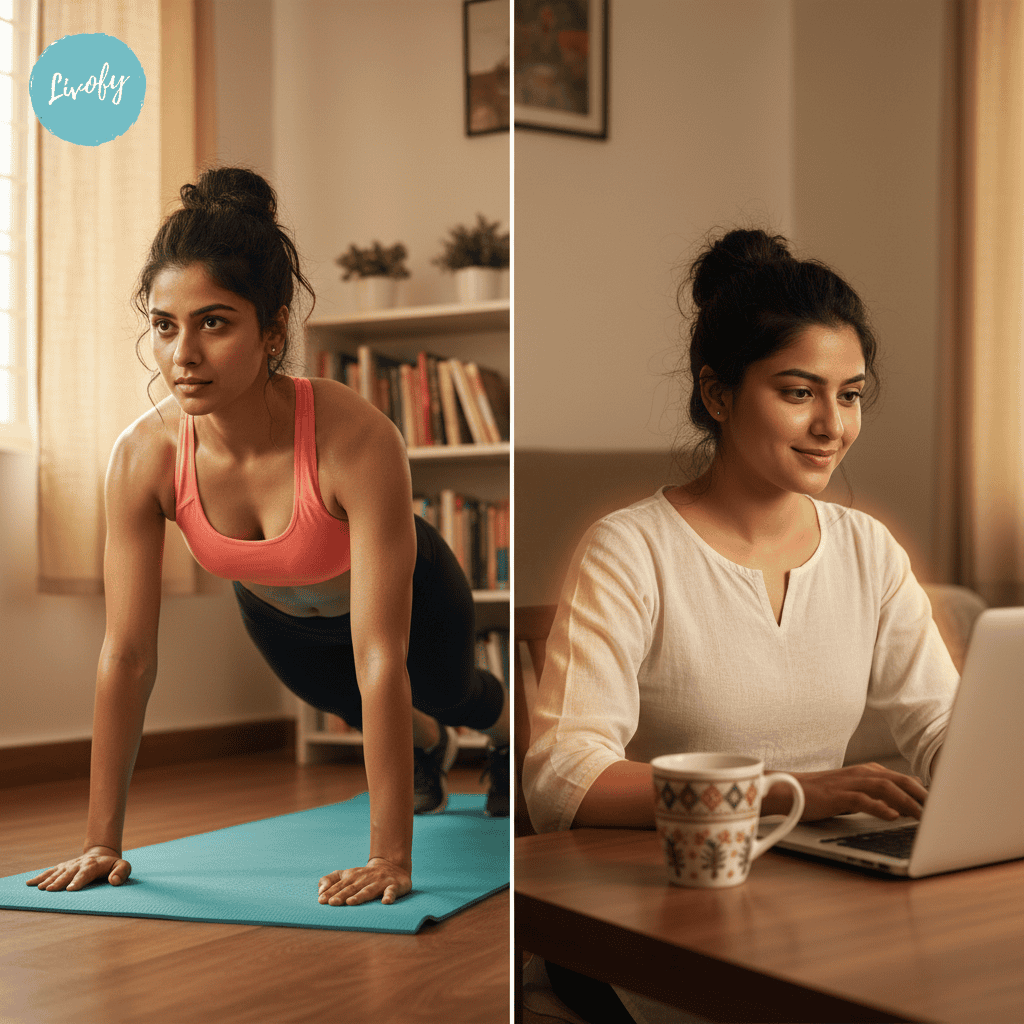
Here’s where short sessions really shine. Something called EPOC (excess post-exercise oxygen consumption), also known as the “afterburn effect.”
When you exercise intensely, your body continues burning calories at an elevated rate for hours afterwards. This means your 10-minute no-equipment workout keeps working for you while you’re sitting at your desk or watching Netflix later.
The beauty of EPOC is that it’s triggered by intensity, not duration. A challenging 10-minute session can create a similar afterburn to a much longer moderate workout. That’s what makes these effective home workouts incredibly time-efficient.
Setting Up Your Workout Space
You don’t need a dedicated room or expensive equipment. With a little creativity, any small space becomes your personal fitness zone.
I’ve done these home workouts in hotel rooms, on balconies, even in my office during lunch breaks.
Space Requirements
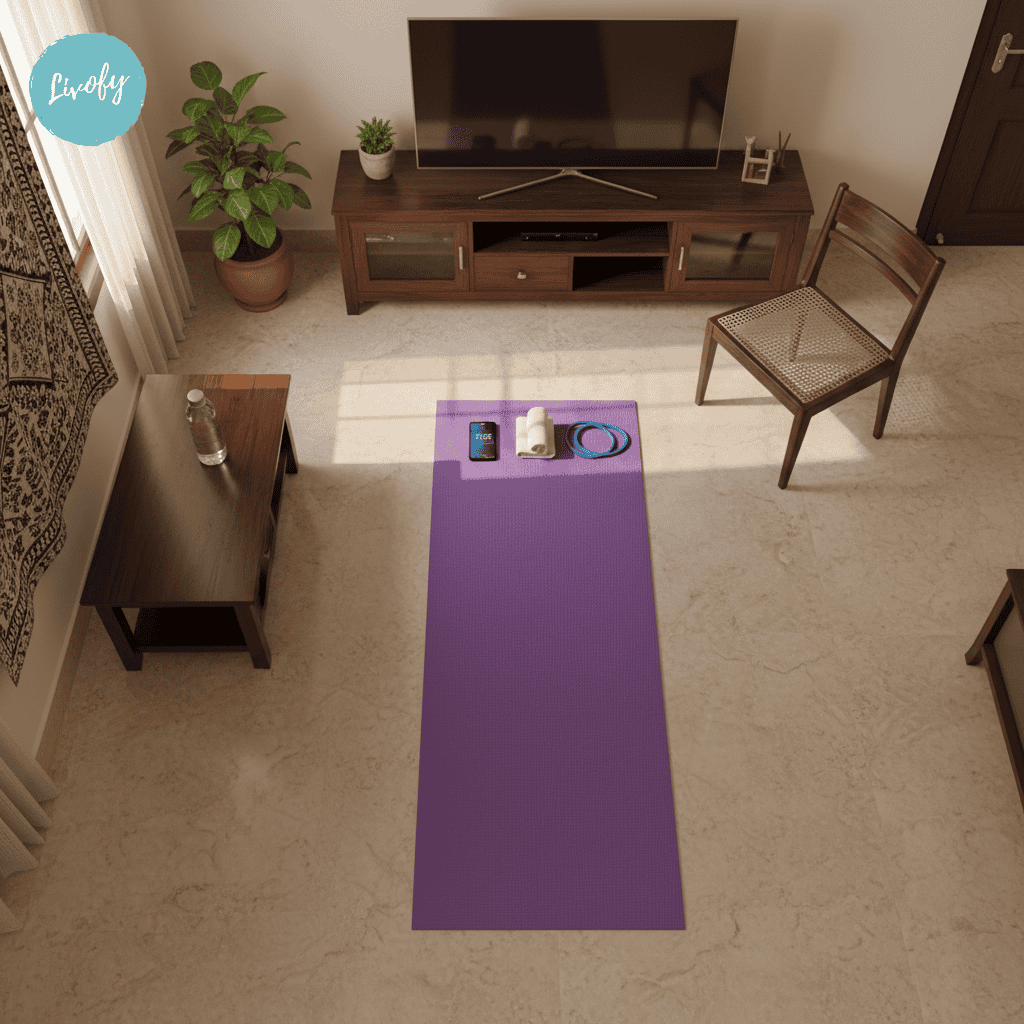
All you really need is enough room to lie down with your arms extended. Roughly 2×1 meters. Your living room, bedroom, or balcony works perfectly for a beginner home workout.
Clear any furniture that might be in the way before starting. Push the coffee table aside, move that chair. Having a clear space prevents injury and creates a mental shift that says “this is workout time.”
If you’re really tight on space, many bodyweight exercises can be modified. Can’t do jumping jacks? Do step-touches. No room for burpees? Do them in place without the jump back.
Optional Equipment
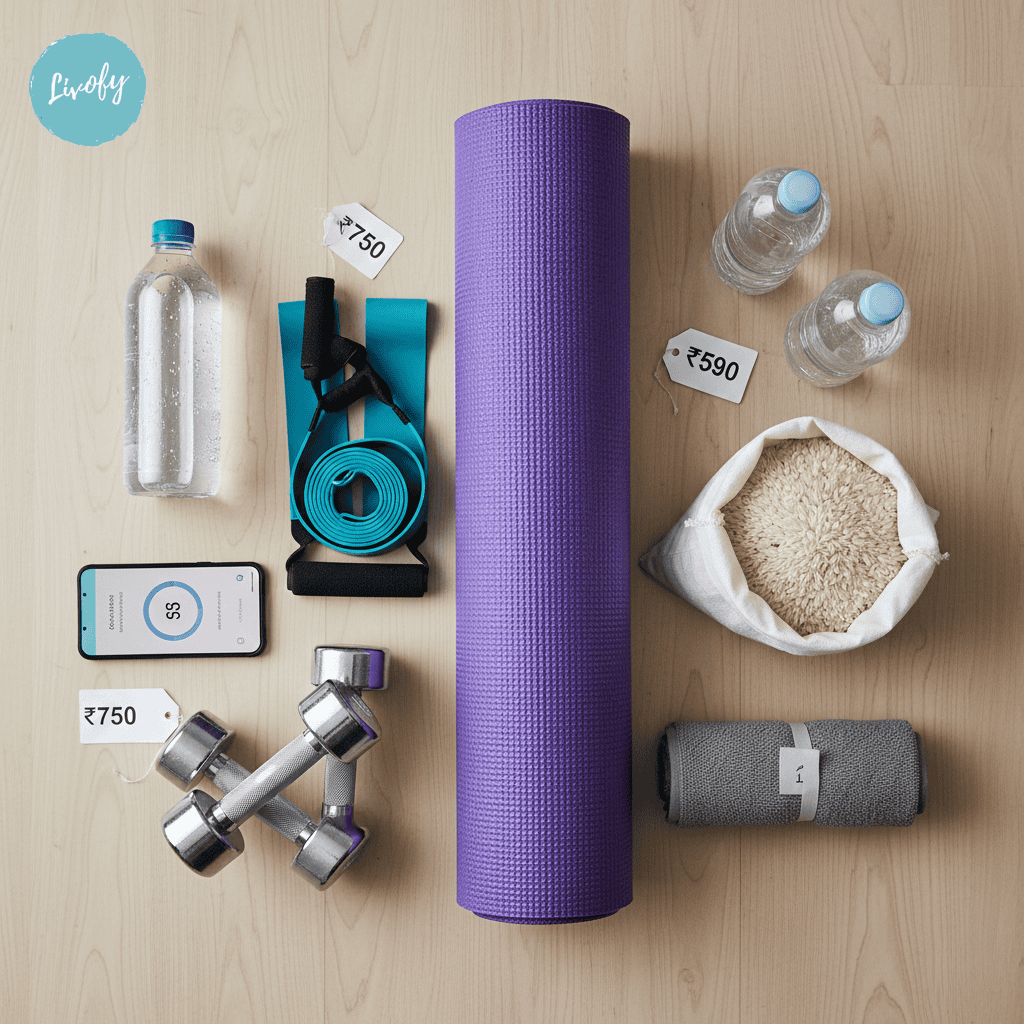
While this no-equipment workout routine requires zero equipment, a few inexpensive items can add variety later if you want.
A yoga mat makes floor exercises more comfortable, but it isn’t essential. A carpet or towel works fine. Keep a water bottle nearby for quick hydration. Your phone works great as a timer.
As you progress, you might consider resistance bands (₹500-1000). They’re versatile and don’t take up space. A pair of dumbbells can add challenge, too, but water bottles or bags of rice work just as well initially.
The Ultimate 10-Minute No-Equipment Routine
Here’s your complete home workout for beginners. 10 exercises, 45 seconds each with 15 seconds rest. This hits every major muscle group while keeping your heart rate up.
Warm-Up (Don’t Skip This!)
Before diving into your home exercise routine, spend 30 seconds doing arm circles, leg swings, and gentle twists. This prepares your body and reduces injury risk.
If you have an extra minute, do some light jogging in place. Your body will thank you.
Exercise 1: Jumping Jacks (45 seconds)
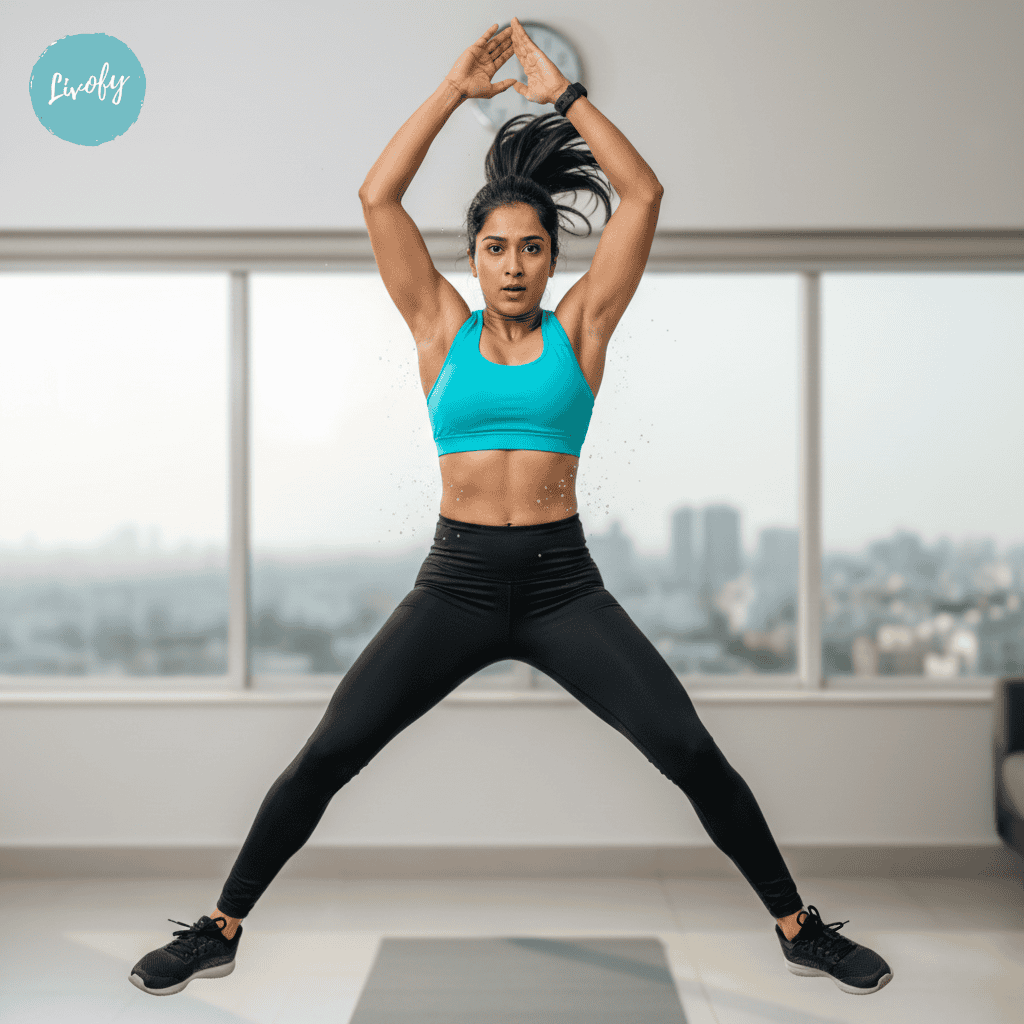
Start with classic jumping jacks to get your heart pumping. Keep your core engaged and land softly on the balls of your feet.
Modification: If jumping bothers your joints, do step-touches instead. Step one foot out while raising arms, then bring it back and switch sides.
Make it harder: Add a squat between each jumping jack, or pick up the pace while maintaining form.
Exercise 2: Squats (45 seconds)
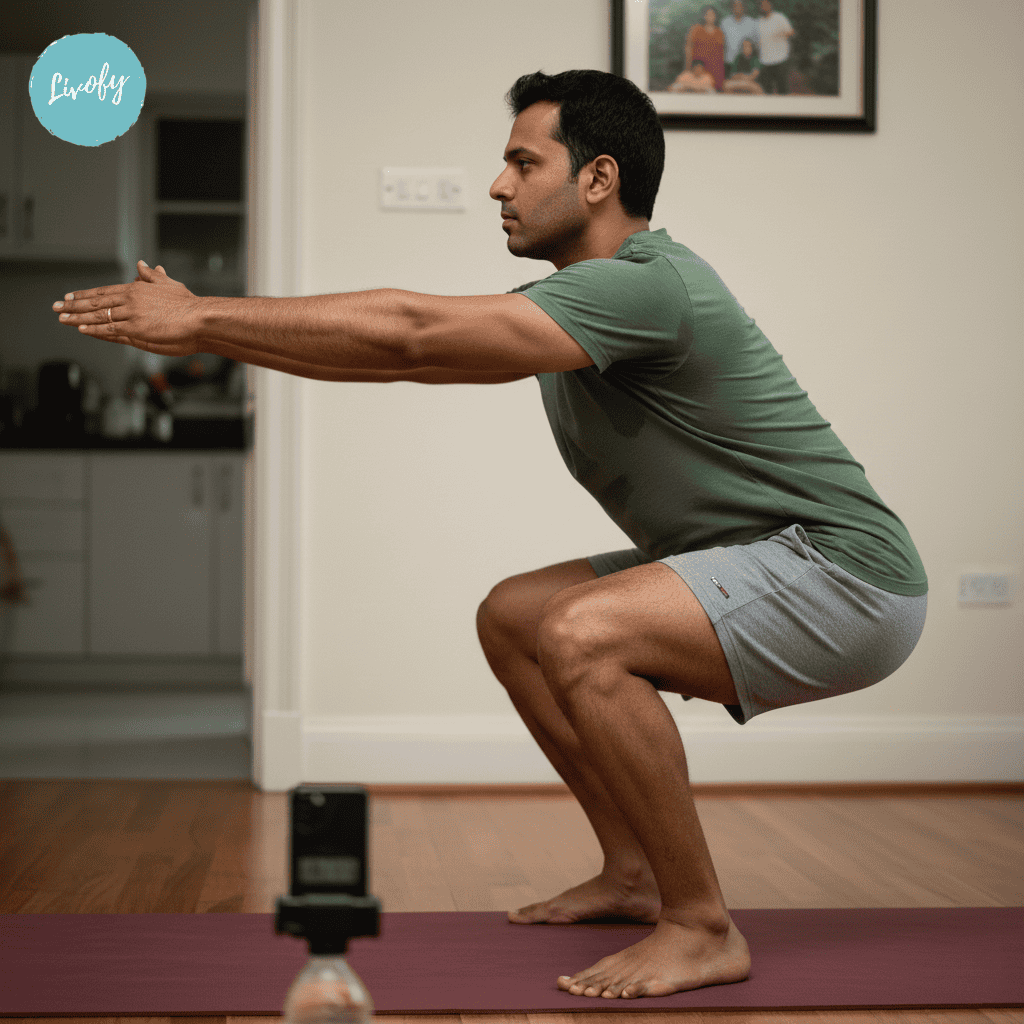
The king of lower-body bodyweight exercises. Stand with feet shoulder-width apart, lower your hips back and down like you’re sitting in a chair.
Keep your chest up and knees tracking over your toes. This one never gets old.
Modification: Hold onto a chair for balance or reduce how deep you go.
Make it harder: Add a jump at the top or hold the bottom position for 2 seconds each rep.
Exercise 3: Push-Ups (45 seconds)
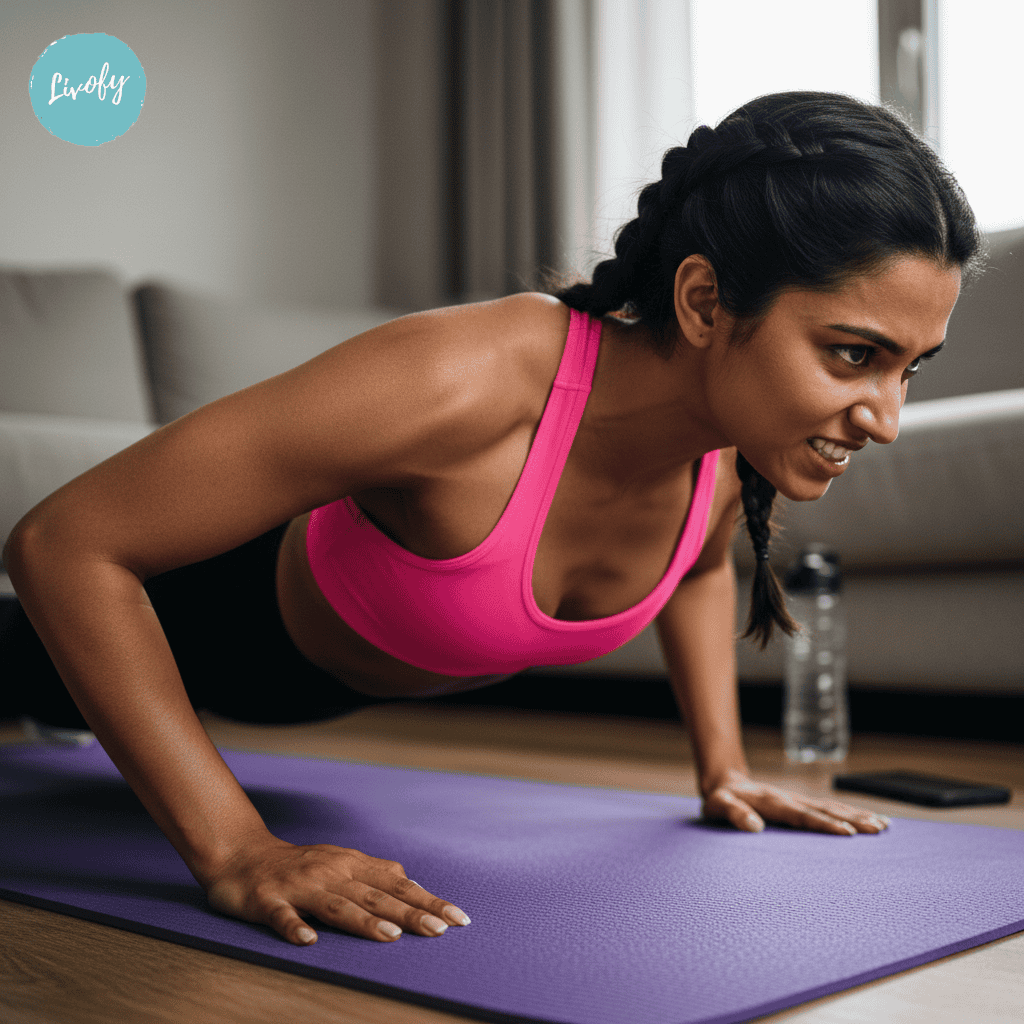
This classic targets the chest, shoulders, and triceps. Keep your body in a straight line from head to heels, lower until your chest nearly touches the floor.
Don’t worry if you can’t do many at first. I started on my knees too.
Modification: Do push-ups on your knees or against a wall – perfect for a beginner home workout.
Make it harder: Try diamond push-ups (hands close together) or add a clap between reps.
Exercise 4: Mountain Climbers (45 seconds)
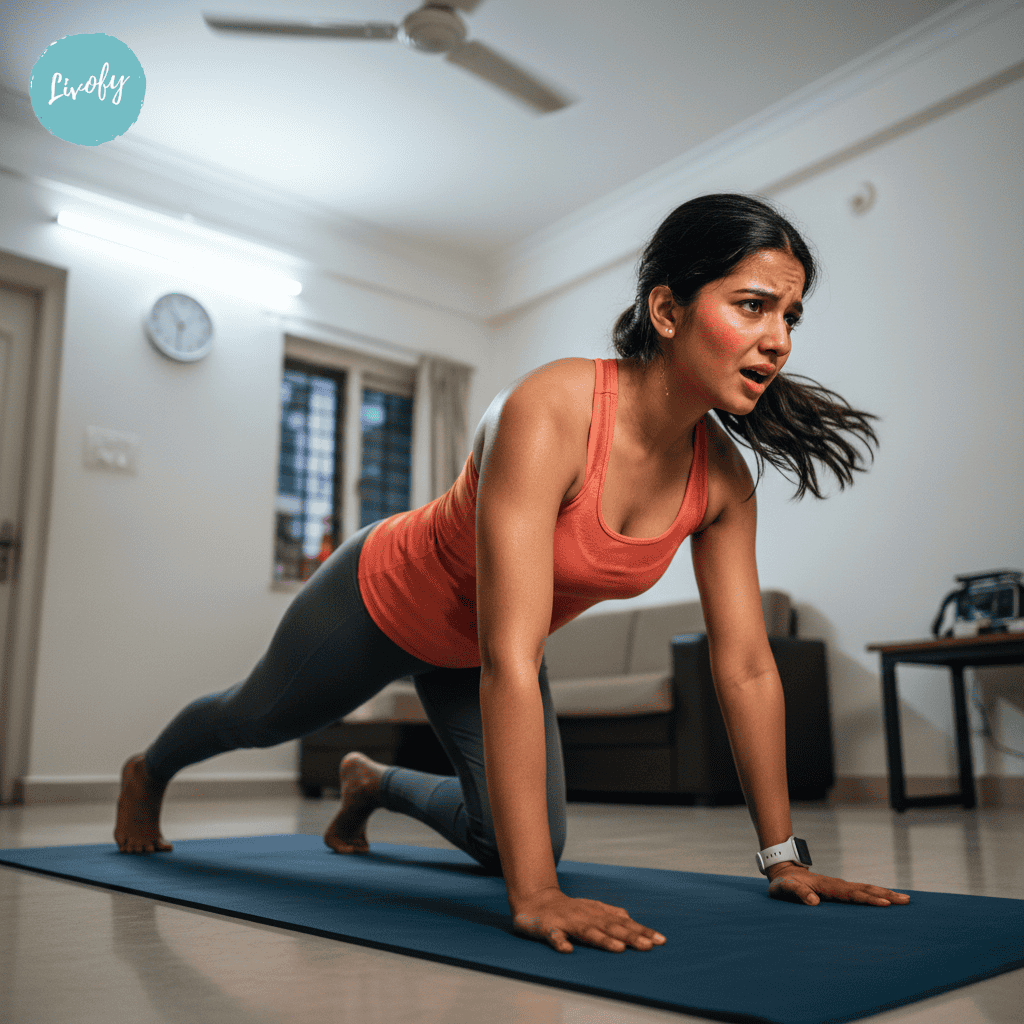
Start in plank position and alternate bringing knees toward chest quickly. This combines cardio with core work.
Honestly? It’s brutal in the best way. Your heart rate will spike fast.
Modification: Slow down the movement or bring knees only halfway to the chest.
Make it harder: Bring knees to opposite elbows or increase your speed.
Exercise 5: Lunges (45 seconds, alternating legs)
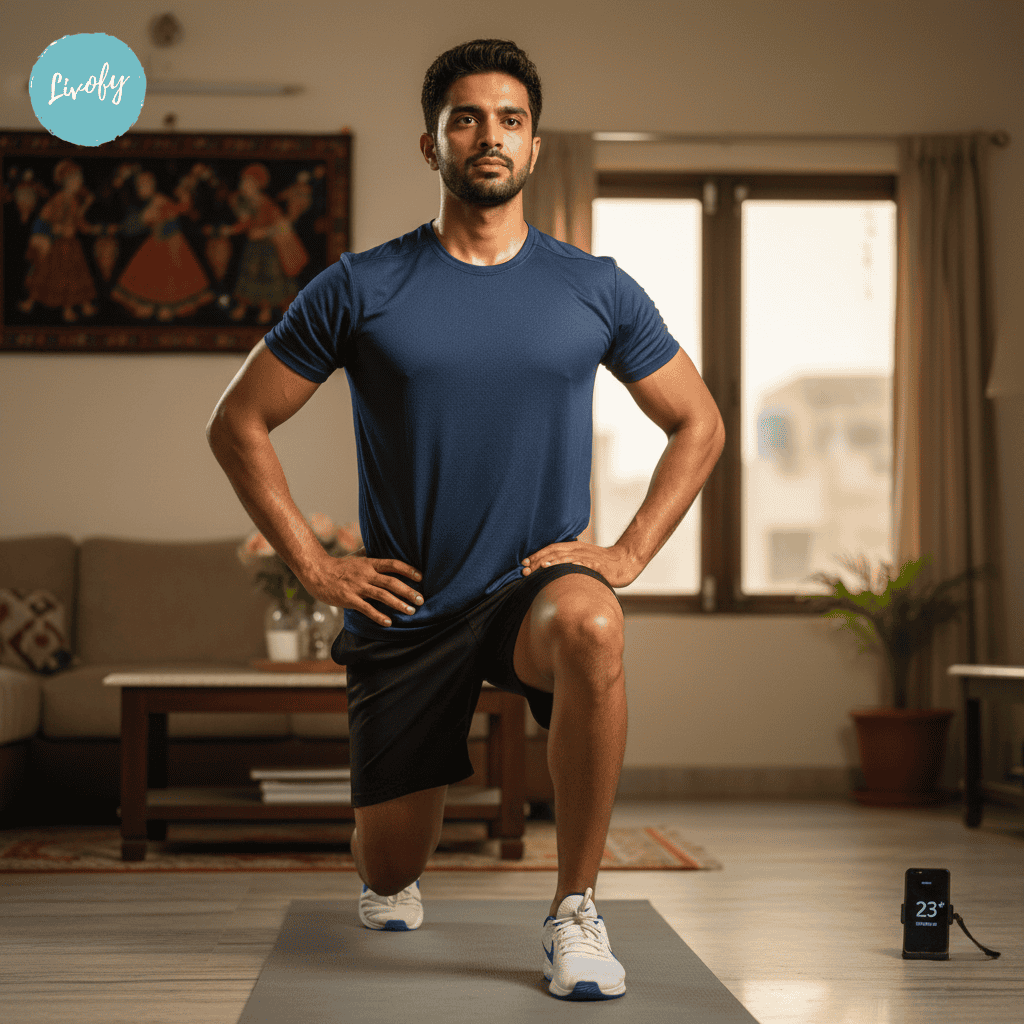
Step forward, lowering your back knee toward the floor. Push through your front heel to return to the start.
This targets legs and improves balance. Count your reps and try to match or beat them each time.
Modification: Hold onto a wall for balance, or don’t lunge as deep.
Make it harder: Add a jump when switching legs or hold weights if you have them.
Exercise 6: Plank (45 seconds)
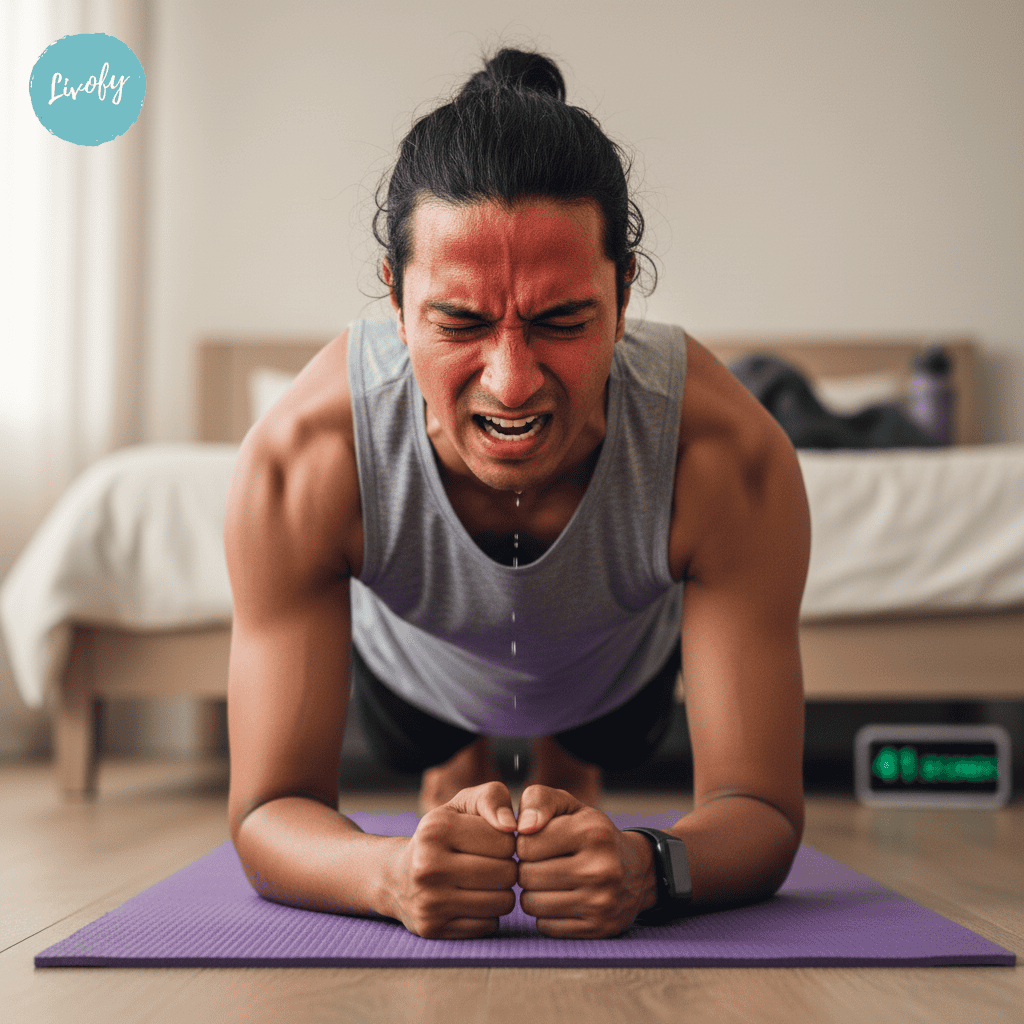
The ultimate core exercise in any home fitness routine. Hold your body in a straight line, supported on forearms and toes.
Keep breathing! I know 45 seconds sounds easy until you’re actually doing it. Your core will be on fire.
Modification: Drop to your knees while maintaining a straight line from head to knees.
Make it harder: Add leg lifts or arm reaches while holding the position.
Exercise 7: High Knees (45 seconds)
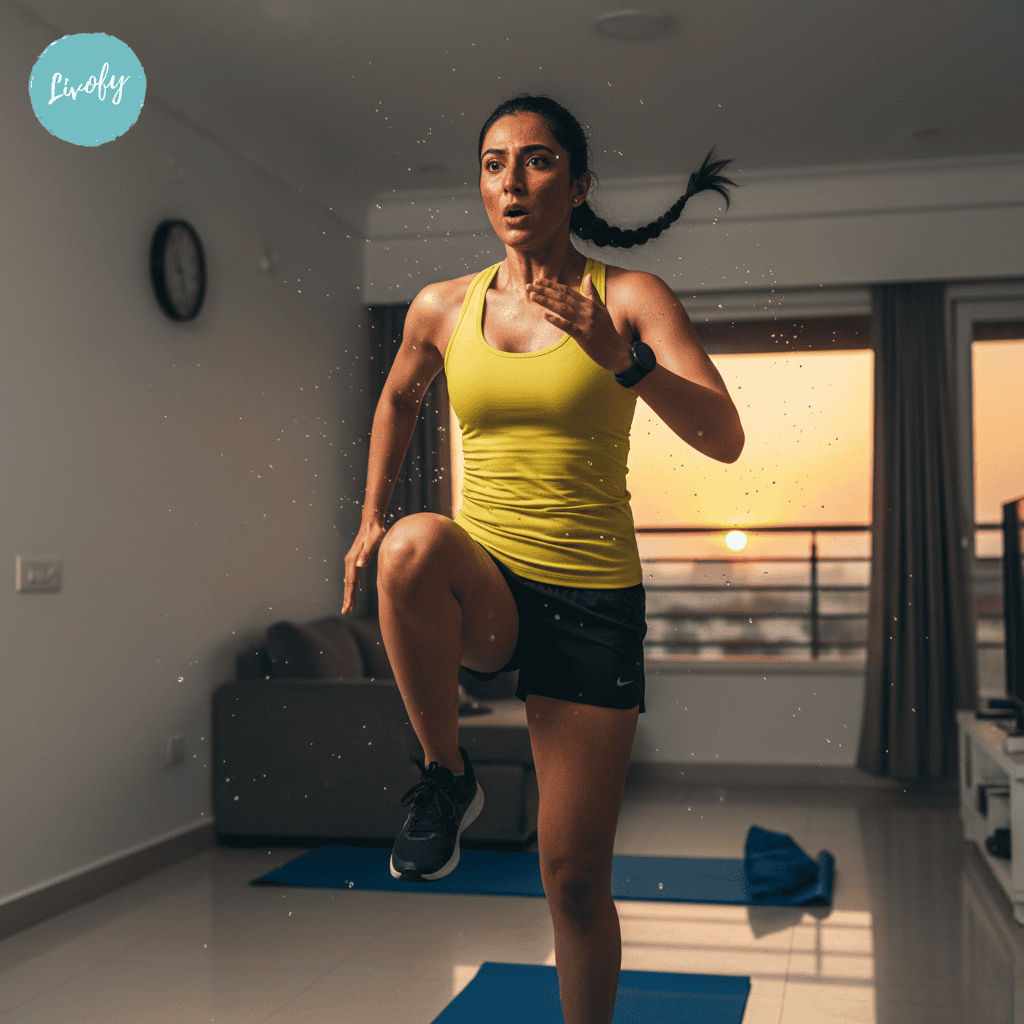
Run in place, bringing knees up to hip level. This cardio burst improves coordination and leg strength.
It’s also oddly fun once you get a rhythm going.
Modification: March in place with high knees instead of running.
Make it harder: Increase speed or add arm movements like punches.
Exercise 8: Triceps Dips (45 seconds)
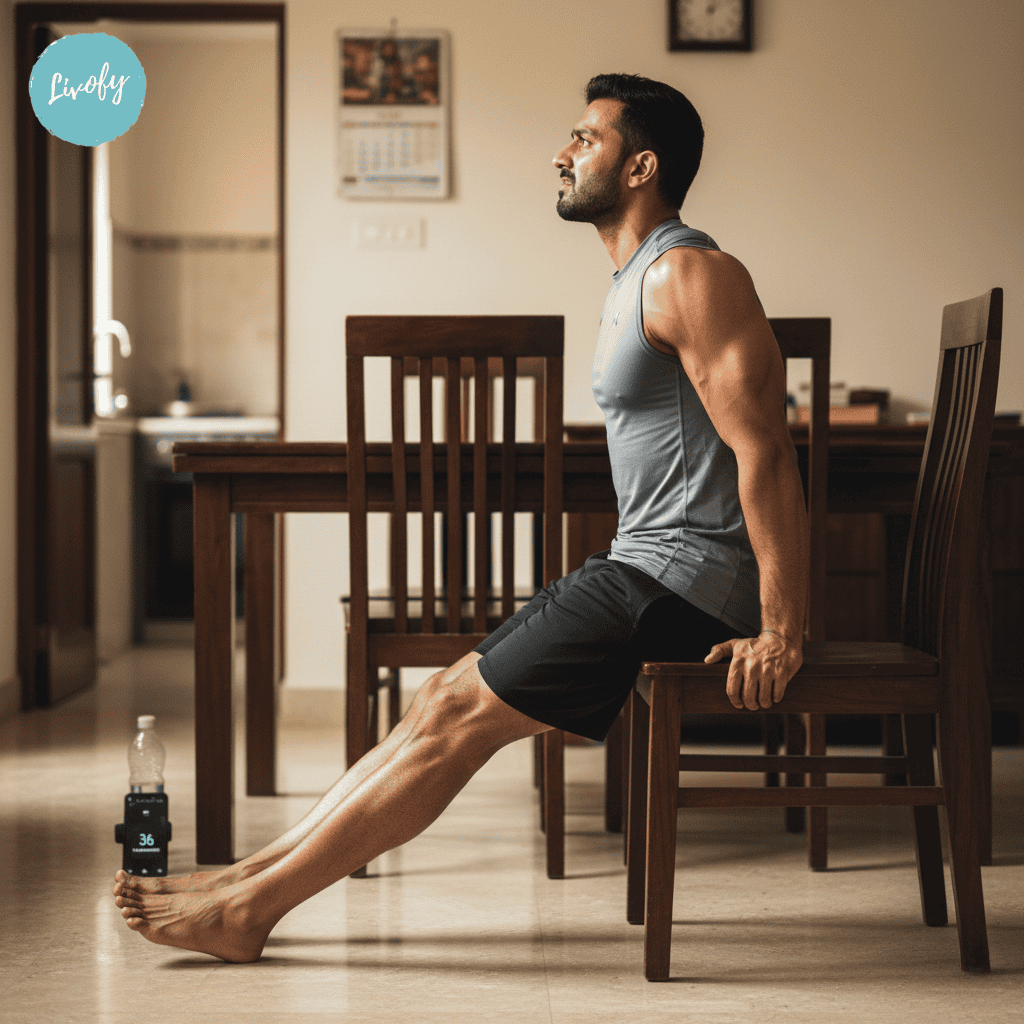
Use a sturdy chair or the edge of your couch. Lower your body by bending your elbows, then push back up.
This targets the often-neglected back of your arms. You’ll feel it tomorrow, trust me.
Modification: Keep your feet closer to your body with your knees bent for less intensity.
Make it harder: Extend legs fully or elevate feet on another surface.
Nutrition for Workout Success
Your home workout plan is only part of the equation. What you eat significantly impacts your results and recovery.
Let’s keep this simple. No need to overthink it.
Pre-Workout Fuel
For a 10-minute session, you don’t need special pre-workout nutrition. If exercising first thing in the morning, you can do it fasted.
If working out later, just make sure you haven’t eaten a heavy meal within an hour. That’ll make you feel sluggish.
If you feel low energy, have a small banana, a few dates, or a handful of nuts 30 minutes before. Avoid heavy foods like parathas or anything fried before exercising.
Stay hydrated throughout the day. Dehydration significantly impacts performance, even in short sessions.
Post-Workout Recovery
After your session, your body needs nutrients to recover and adapt. Within 30 minutes to 2 hours, have a balanced meal or snack.
Don’t stress the exact timing. The “30-minute anabolic window” is way overblown.
Good options include a glass of milk with a banana, a handful of nuts with fruit, or your regular meal if it’s mealtime. You don’t need special protein shakes for a 10-minute routine.
Focus on overall daily nutrition rather than obsessing over workout-specific timing. Eat adequate protein throughout the day (aim for your body weight in kg x 0.8-1g), stay hydrated, and include plenty of fruits and vegetables.
Indian Diet Adaptations
Traditional Indian meals can support your fitness goals perfectly. You don’t need to eat chicken breast and broccoli.
Dal provides protein, roti gives carbohydrates, and sabzi adds vitamins and minerals. It’s already balanced!
Before morning workout: Green tea or black coffee
After morning workout: Poha with peanuts, upma with vegetables, or eggs with toast
After evening workout: Your regular dinner of dal, rice/roti, and vegetables
Don’t drastically change your diet just because you started exercising. Make small, sustainable improvements like reducing fried foods and eating more vegetables.
Tracking Progress Without a Scale
Success isn’t just about weight loss. Here are better ways to measure progress with your home exercise routine. The scale lies. Don’t trust it as your only metric.
Performance Metrics
Count how many reps you complete in each 45-second interval. As you get fitter, these numbers will increase.
Record them weekly to see improvement. I track mine in a simple notebook.
Track how you feel during and after. Initially, you might be breathless quickly. Over time, you’ll notice improved endurance and faster recovery.
Measure how long you can hold a plank, how many proper push-ups you can do, or how deep you can squat. These functional improvements often matter more than weight changes.
Can you play with your kids longer without getting tired? That’s progress.
Body Composition Changes
Take photos in the same outfit and lighting weekly. Changes you don’t notice daily become obvious when comparing photos from weeks ago.
Front, side, and back views. Yes, it feels awkward at first, but it’s valuable data.
Measure key areas. Waist, hips, arms, thighs. Muscle gain and fat loss might not change scale weight, but will change measurements.
I’ve had clients gain 2kg while losing 3 inches from their waist. The scale would tell you they failed. The mirror says otherwise.
Notice how clothes fit. That kurta that was tight around the middle might become loose. Those jeans might fit better.
These real-world changes matter more than numbers on a scale that fluctuates with water weight anyway.
Lifestyle Improvements
Track energy levels throughout the day. Regular exercise typically improves overall energy and reduces that 3 pm slump.
Monitor sleep quality. Exercise improves sleep, so you might find yourself sleeping better after establishing a routine.
Notice mood changes. Regular exercise releases endorphins, reduces stress, and improves overall mental health. These benefits often appear before physical changes.
Your 30-Day Challenge
Ready to commit? Here’s a 30-day progression to establish your habit with this effective home workout.
Write this down, put it somewhere visible, and commit.
Week 1: Do the routine 3 times (Monday, Wednesday, Friday). Focus on learning proper form, not intensity.
Week 2: Add a fourth day (Monday, Tuesday, Thursday, Friday). Begin pushing intensity once form is solid.
Week 3: Complete 5 days. Try advanced variations of 2-3 bodyweight exercises where you feel confident.
Week 4: Maintain 5 days but increase intensity across the board. Add a second round on one day if you’re feeling good.
After 30 days, you’ll have completed 17 sessions, totalling nearly 3 hours of exercise. More importantly, you’ll have built a sustainable habit with your no gym workout routine.
Conclusion
The perfect time to start isn’t Monday or New Year’s, it’s today. Ten minutes might seem small compared to marathon gym sessions, but consistent daily effort creates real transformation over time. This routine builds discipline, improves health, and proves you can commit and follow through. That confidence spills into every area of your life.
Your workout doesn’t need to be perfect. You don’t need flawless form or to complete every exercise without modifications. Whether you’re 20 or 60, fit or unfit, busy or overwhelmed, this works. Stop waiting for the perfect moment, plan, or body those don’t exist. Set a timer, clear some space, and start right now. No gym? No problem. Your transformation begins at home.
Related Posts