You are eating salads, avoiding rice, walking every day, but the numbers on the scale aren’t changing, right? The problem could be cortisol, your body’s stress hormone. This is why cortisol and weight loss isn’t just science, it’s the missing link to why your plan is not working. This guide will show you the link between cortisol and weight loss and what you can do today, right now.
What Is Cortisol And Weight Loss, and Why Indian Dieters Should Care?
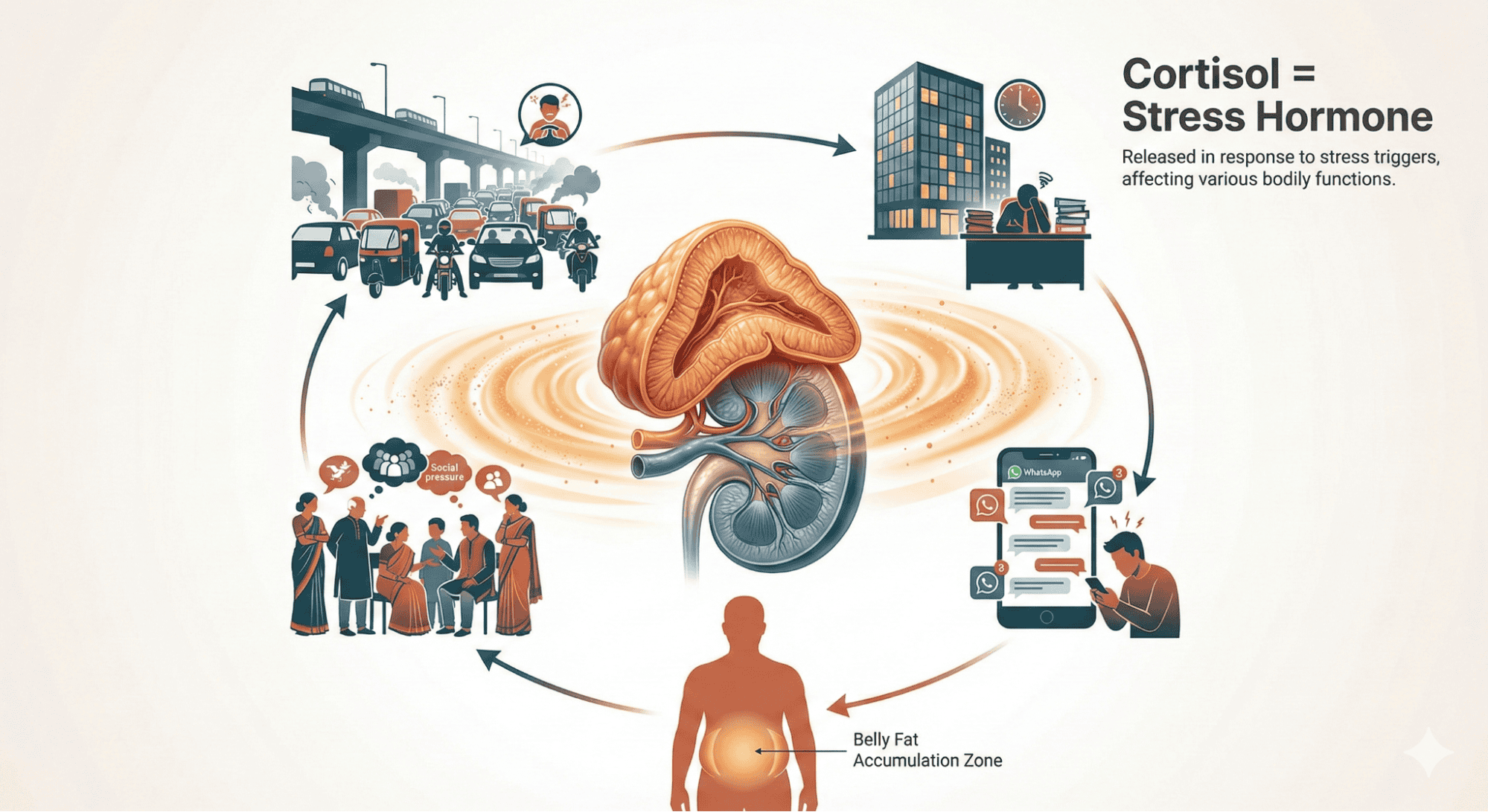
Cortisol is your body’s emergency alarm system, when you are stuck in traffic, pacing to meet deadlines or worrying about family this stress hormone rushes into your body. While it’s good in small amount, but when stress becomes constant, cortisol stays elevated, signalling your body to store fat, especially around your belly.
Why Cortisol Matters for Indian Bodies
Modern Indian lifestyle keeps cortisol chronically high like for long commutes, demanding jobs, family obligations and constant phone notifications. Our genetic tendency to store belly fat makes us more vulnerable to cortisol belly fat than other populations. Which is why we have increased risk for diabetes and heart disease, which are conditions already prevalent in Indian communities.
Common Myths Debunked About This Topic
Cortisol and weight loss struggles aren’t about willpower. You can’t just “stress less” and lose weight. Cortisol issues affect everyone, from executives to homemakers. Severe calorie restriction actually raises cortisol, making weight loss harder. And no, haldi doodh alone won’t fix it (though it helps!).
The Science Behind Cortisol And Weight Loss for Indians
How Cortisol Works in Your Body
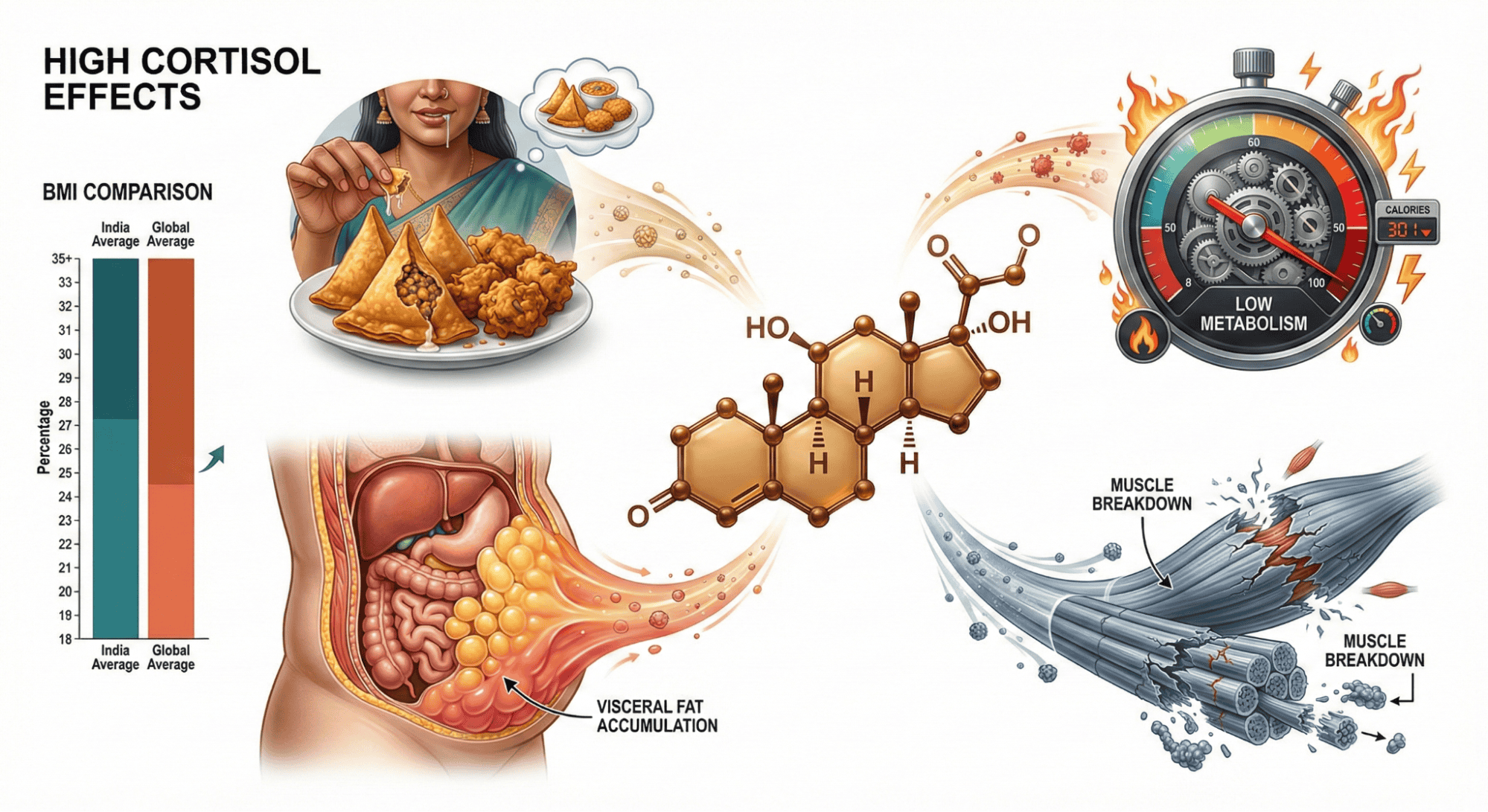
When stress hormones spike, cortisol increases appetite for high-calorie foods (like pakoras and sweets), slows metabolism, promotes belly fat storage, and breaks down muscle tissue. It’s like your body sabotages your weight loss efforts.
The Connection Between Stress Hormones and Health
Elevated cortisol disrupts insulin sensitivity (which increases diabetes risk), interferes with thyroid function, disrupts sleep (creating a vicious cycle), and affects gut health. As a result, this leads to bloating and inflammation that triggers stress weight gain.
What Research Shows for the Indian Population
Indians develop central obesity at lower BMI levels and show higher cortisol responses to stress. Urban Indian professionals have elevated evening cortisol when it should be lowest. Therefore, managing cortisol and weight loss is essential, not optional, for Indian dieters.
Cortisol Belly Fat: What to Watch For
Physical Signs and Symptoms to Monitor
Cortisol belly fat appears as weight concentrated around your midsection, while limbs stay thin. Watch for: a rounded face, a fat pad between the shoulder blades, purple stretch marks, easy bruising, persistent fatigue, and constant cravings for salty or sweet foods.
Emotional and Mental Health Indicators
High cortisol causes anxiety, brain fog, mood swings, and feeling “wired but tired.” Your mind races at night, but you’re exhausted during the day.
When to Consult a Healthcare Professional
See a doctor if you’ve gained 10+ kilos suddenly, experience severe fatigue, muscle weakness, or high blood pressure that won’t respond to treatment. Medical conditions like Cushing’s syndrome require professional care.
Indian Lifestyle Factors Affecting Cortisol And Weight Loss
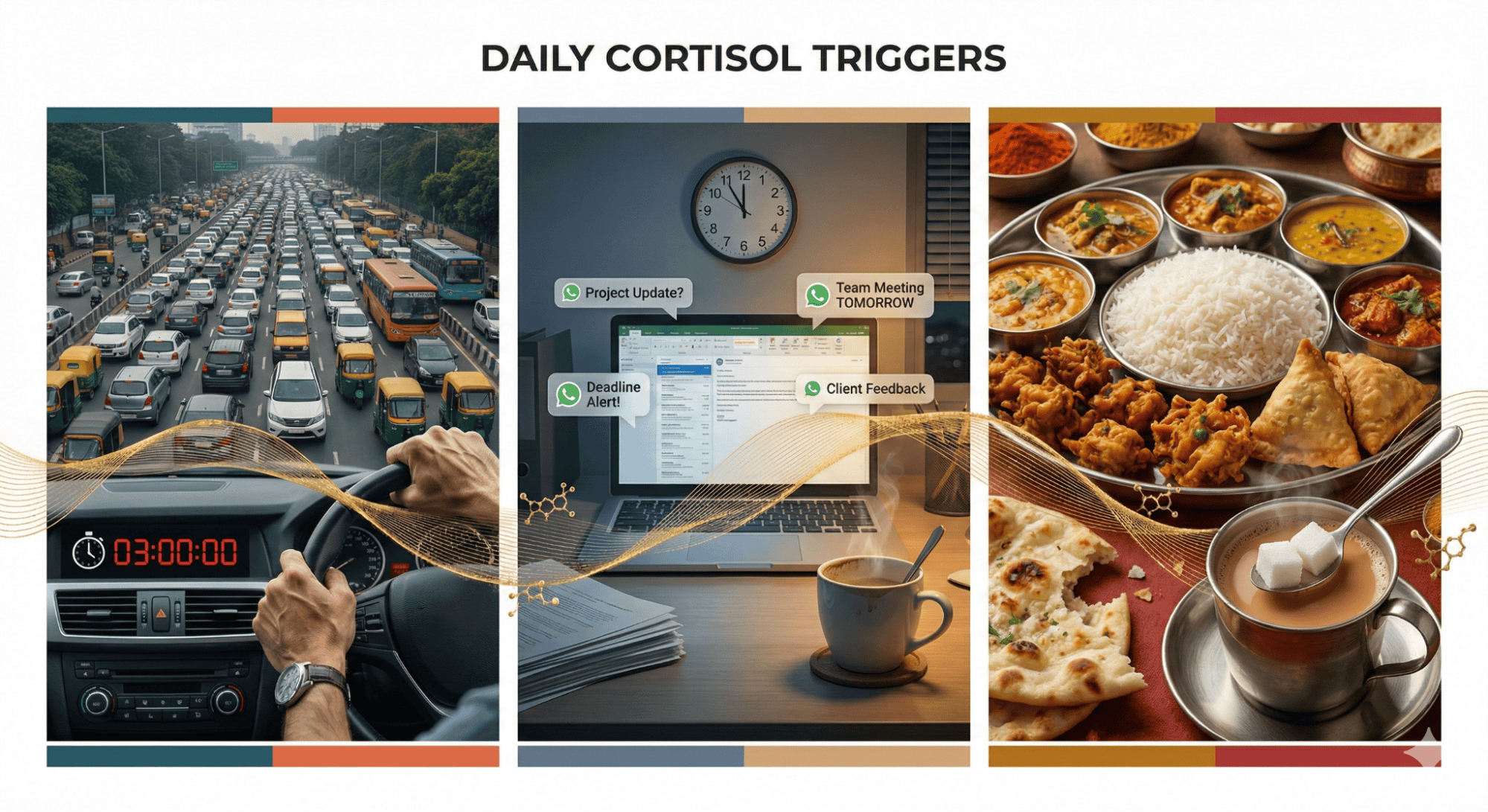
Modern Indian Diet Challenges and Solutions
The modern Indian diet, which includes white rice, deep-fried snacks, sugary chai, and late dinners, keeps cortisol elevated. The solution? Replace white rice with brown rice gradually, choose roasted over fried snacks, reduce sugar in chai, and eat at regular times. Remember that erratic meal timing is a major cortisol trigger.
Work-Life Balance and Urban Living Impact
Bangalore or Delhi commutes take 2 to 3 hours daily. Late work hours, minimal boundaries, social obligations, and financial pressure (like EMIs and school fees) keep stress high. Moreover, a cortisol diet alone isn’t enough. You need to address lifestyle factors too.
Cultural and Social Influences on Health
Family pressure, societal judgment, social media comparison, and food-as-love culture all trigger stress hormones. Recognising these cultural factors is the first step to managing them.
Best Indian Foods for Cortisol And Weight Loss Management
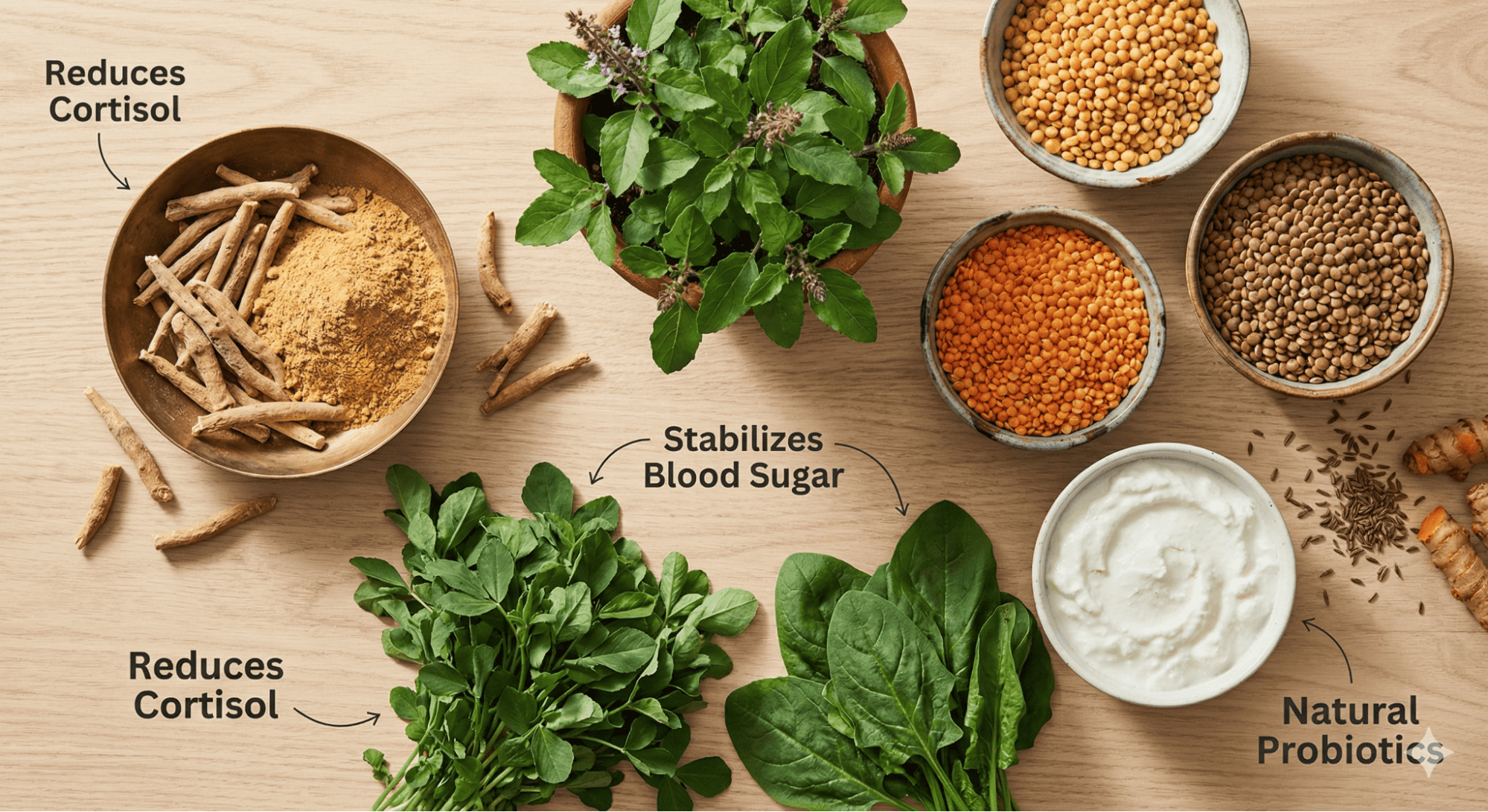
Traditional Indian Foods That Support Reducing Cortisol Naturally
Your grandmother’s kitchen has cortisol-fighters. These include ashwagandha (scientifically proven to lower cortisol), tulsi tea, whole dals (which are rich in magnesium), curd and buttermilk (containing probiotics), palak, methi, karela (which help stabilise blood sugar), and jeera (with anti-inflammatory properties).
Modern Indian Meal Options and Healthy Recipes
Breakfast: vegetable poha or moong dal cheela. Lunch: brown rice with sambhar and raita. Dinner: multigrain roti with dal and vegetables. Include protein, fibre, and healthy fats in every meal to reduce cortisol naturally.
Foods to Limit or Avoid for Better Results
Cut refined carbs (white bread, maida, white rice), packaged foods, excess caffeine (4-5 chai daily raises cortisol), and alcohol. Store-bought “healthy” foods often contain hidden sugar.
Portion Sizes and Meal Timing for Indians
Eat a substantial breakfast within an hour of waking, lunch by 1 to 2 PM, and a light dinner 2 to 3 hours before bed. Additionally, use your hand as a guide for portions: palm-sized protein, fist-sized grains, two fists of vegetables, and thumb-sized ghee.
Lifestyle Changes to Support Cortisol And Weight Loss

Stress Weight Gain: The Right Approach for Indians
Identify stress triggers. Practice saying no. Set work boundaries by deciding when you’ll stop checking emails. Create a morning routine, even 15 minutes of quiet time. Stop beating yourself up because guilt triggers cortisol.
Sleep and Stress Management Strategies
Get 7 to 8 hours of quality sleep at consistent times. Keep your bedroom cool, dark, and phone-free. Avoid screens an hour before bed. In fact, consistency matters more than duration when it comes to stress management. Try meditation, yoga, or deep breathing exercises.
Daily Habits That Make a Real Difference
Start with 10 minutes of stretching, take short work breaks, practice belly breathing, spend time in nature, connect meaningfully with loved ones, and laugh daily. These habits reduce cortisol naturally.
Your 7-Day Cortisol And Weight Loss Management Meal Plan
This cortisol diet focuses on balanced nutrition and regular meal timing.
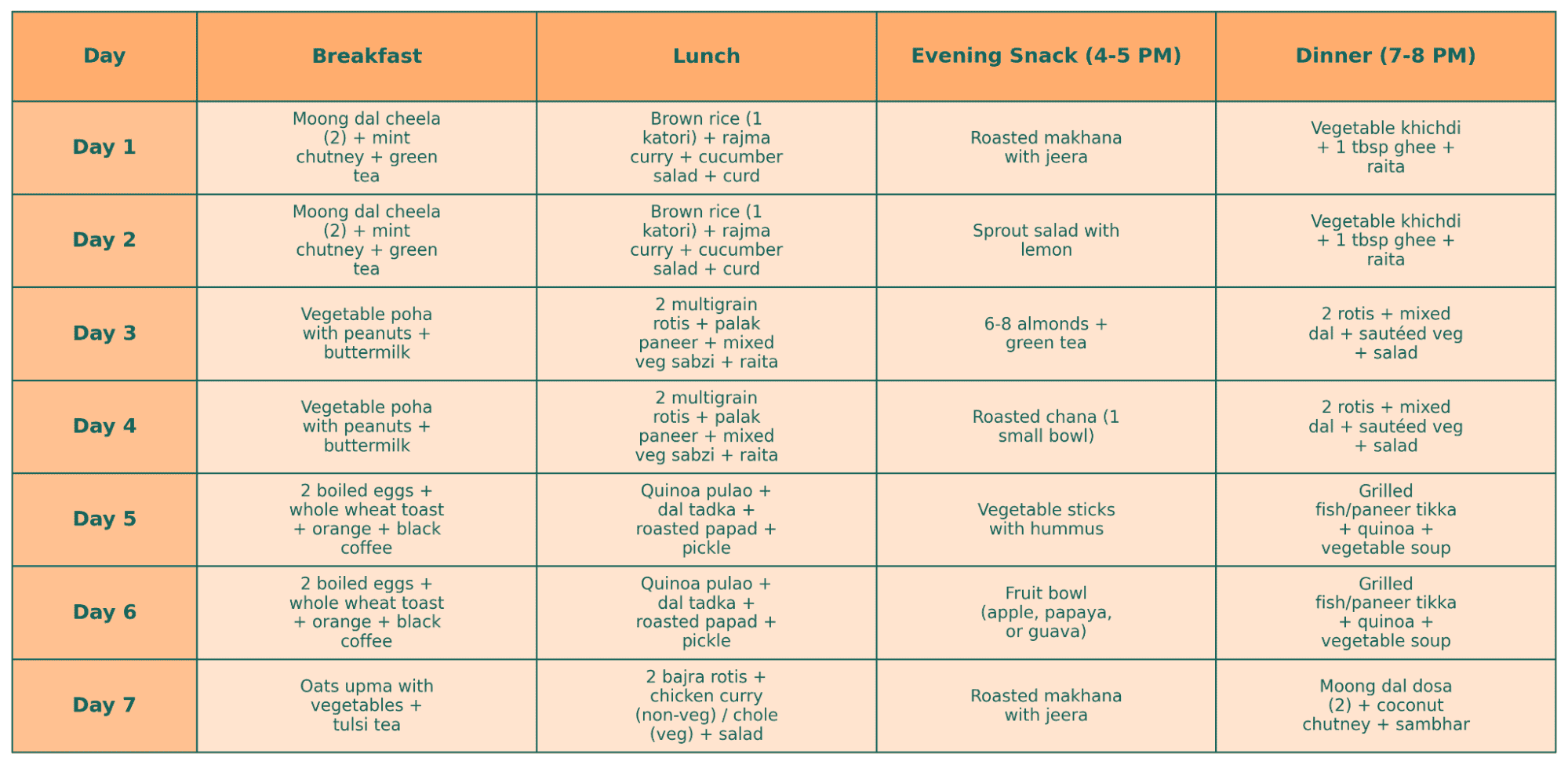
Note: Drink 2-3 litres of water daily. Have green tea or tulsi tea between meals.
Common Mistakes Indians Make with Cortisol And Weight Loss
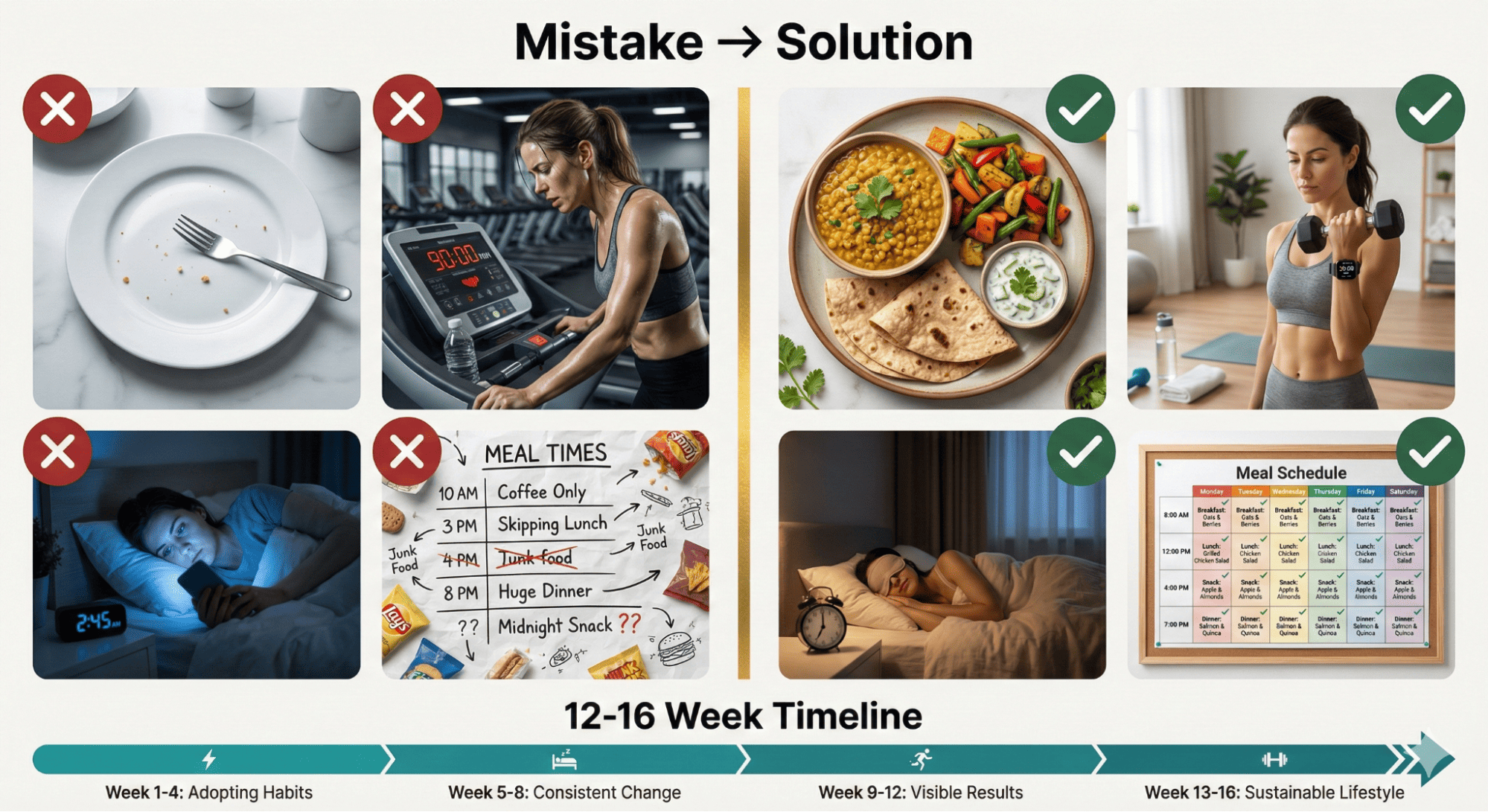
Diet Mistakes That Sabotage Progress
Starving yourself raises cortisol. Skipping meals worsens cortisol belly fat. However, going too low-carb too quickly, removing all fat, and doing only cardio (which causes muscle loss) all sabotage progress.
Lifestyle Pitfalls to Watch Out For
Sacrificing sleep, suppressing emotions, over-exercising (90+ minutes daily), social media scrolling before bed, and saying yes to every obligation keep stress hormones elevated.
How to Course-Correct When Things Go Wrong
Be kind to yourself. Return to basics: regular meal times, 7 to 8 hours sleep, and 10 minutes daily stress management. Don’t compensate by going extreme because that triggers more cortisol. Progress over perfection.
Conclusion
Understanding cortisol and weight loss is crucial for Indian dieters. Your struggles aren’t about willpower. They’re about hormones and how modern life keeps your body in survival mode. Managing cortisol through consistent small changes (like regular meal times, quality sleep, and stress management) resets your system. Start with one change today: eat one meal at the same time daily, practice 5 minutes of deep breathing before bed, or swap one refined food for a whole grain.
Want personalised support? Livofy’s nutrition coaches specialise in cortisol and weight loss management for Indians. We combine traditional wisdom with modern science to help you break through plateaus.
FAQs
Q1: What is cortisol and weight loss and how does it affect Indians?
Cortisol and weight loss are linked because this stress hormone triggers belly fat storage, slows metabolism, and increases cravings when elevated. Indians are genetically prone to central obesity and higher stress hormones responses, making hormone management essential.
Q2: What are the main signs of cortisol issues?
Cortisol belly fat signs include weight around your midsection with thin limbs, fatigue, sleep issues, constant cravings, mood swings, and brain fog. Watch for rounded face, fat pad between shoulders, frequent illness, and digestive problems.
Q3: What foods should Indians eat for better cortisol and weight loss?
To reduce cortisol naturally, eat ashwagandha, tulsi tea, whole dals, fermented foods like curd, leafy greens, and spices like turmeric. Include protein, whole grains, and healthy fats at regular meal times.
Q4: Can cortisol be managed naturally?
Yes, manage stress weight gain through balanced nutrition, 7 to 8 hours sleep, stress management like meditation, and regular exercise. Even 15 minutes of daily meditation lowers cortisol significantly.
Q5: How long does it take to see results with cortisol and weight loss changes?
You’ll notice better sleep and energy in weeks 1 to 2, reduced cravings by weeks 3 to 4, and visible cortisol belly fat reduction around 6 to 8 weeks. Significant weight loss takes 12 to 16 weeks as you heal your hormonal system.
Q6: When should I consult a doctor about cortisol?
See a doctor for sudden 10+ kilo weight gain, severe fatigue, muscle weakness, unresponsive high blood pressure, or unusual fat deposits. These may indicate Cushing’s syndrome or hormonal disorders needing treatment.
Related Posts