You’re standing at the beach shack, eyeing the fresh coconut. Your diabetic uncle warned you, “It has sugar, skip it.” But your fitness-obsessed friend swears by it for hydration. You wonder, “Does coconut water blood sugar become a problem for someone managing diabetes?” The confusion is real. Health websites call it a superfood while others label it a sugar bomb. Here’s what you need to know: coconut water blood sugar impact depends on several factors, and the answer isn’t as simple as yes or no. This guide gives you the science-backed truth about coconut water for diabetics and how to enjoy it safely.
What Is Coconut Water Blood Sugar and Why Indian Dieters Should Care?
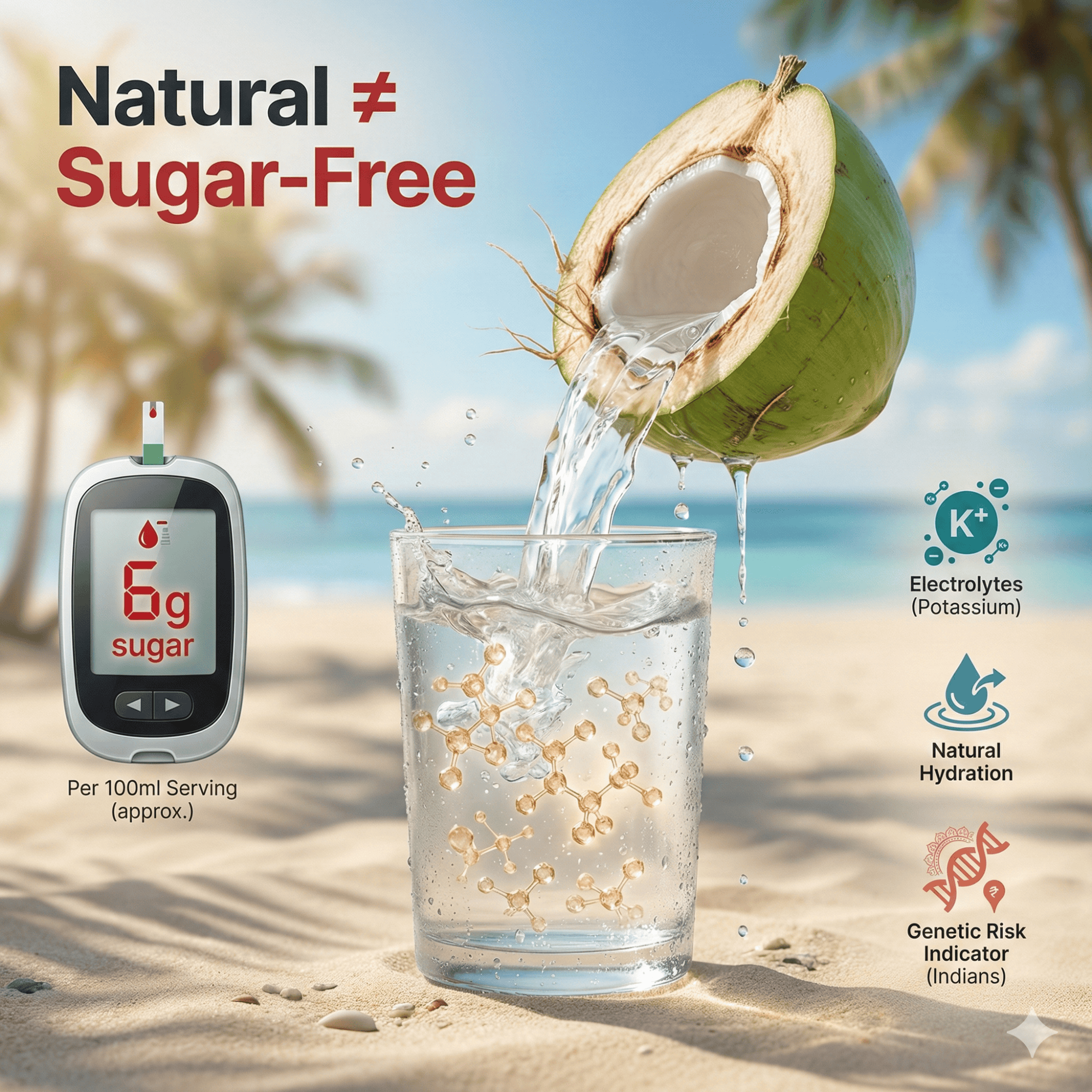
Coconut water blood sugar refers to how drinking coconut water affects your glucose levels. Coconut water is the clear liquid inside young green coconuts. It contains natural sugars (about 6 grams per cup), along with electrolytes like potassium and magnesium. When you drink it, these sugars enter your bloodstream and can raise blood glucose. However, the impact varies based on the amount you drink, whether you’re diabetic, and what else you eat with it. Understanding this relationship helps you make informed choices about including this traditional Indian beverage in your diet.
Why Coconut Water Blood Sugar Matters for Indian Bodies
Indians have a higher genetic risk for type 2 diabetes compared to other populations. We develop diabetes at younger ages and lower body weights. Therefore, managing coconut water blood sugar impact becomes crucial. In coastal Indian states, coconut water is part of daily life, especially during summers. Many people drink it thinking it’s “healthy” without considering the sugar content. Moreover, packaged coconut water often contains added sugars, making the glucose impact even higher. For Indians trying to prevent or manage diabetes, understanding how coconut water for diabetics fits into their diet is essential for blood sugar control.
Common Myths Debunked About This Topic
Let’s clear up misconceptions. First, coconut water isn’t “sugar-free.” It contains natural sugars that do affect blood glucose. Second, drinking unlimited amounts isn’t safe for diabetics just because it’s natural. Third, packaged coconut water isn’t always the same as fresh. Many brands add sugars and preservatives. Fourth, coconut water can’t replace diabetes medication or proper diet management. Finally, while it has coconut water benefits like electrolytes and hydration, it’s not a miracle cure for any condition. It’s simply a beverage with pros and cons that you need to understand.
The Science Behind Coconut Water Blood Sugar for Indians

How Coconut Water Works in Your Body
When you drink coconut water, the natural sugars (mainly glucose and fructose) are absorbed into your bloodstream. Your pancreas releases insulin to help cells use this glucose for energy. The glycemic index coconut water score is around 50 to 54, which is considered low to moderate. This means it raises blood sugar more slowly than white bread or soda. However, the total amount of sugar you consume matters more than the glycemic index alone. One cup is manageable for most people, but drinking 3 to 4 cups adds significant sugar. Additionally, coconut water provides potassium, magnesium, and natural electrolytes that support various body functions.
The Connection Between Coconut Water For Diabetics and Health
For diabetics, the relationship with coconut water is complex. On one hand, its low to moderate glycemic index means it won’t spike blood sugar as dramatically as sugary sodas. The electrolytes help with hydration, which is important for diabetics who often experience increased thirst. On the other hand, it still contains carbohydrates that must be counted in your daily intake. As a result, coconut water for diabetics can be included in moderation as part of a balanced diet. However, drinking it on an empty stomach or in large quantities can cause glucose spikes. Pairing it with protein or fiber helps slow sugar absorption.
What Research Shows for Indian Population
Studies on South Asian populations provide important insights. Research shows that Indians metabolize carbohydrates differently than other ethnic groups, with higher insulin resistance even at lower body weights. One study on diabetic Indians found that consuming 100ml of coconut water had a minimal impact on blood sugar when consumed with meals. However, 300ml or more caused noticeable glucose elevation. Another study highlighted that many Indians don’t count coconut water as part of their carbohydrate intake, leading to poor blood sugar control. Therefore, portion control and timing are crucial for Indians managing coconut water blood sugar impact.
Glycemic Index Coconut Water: What to Watch For
Physical Signs and Symptoms to Monitor
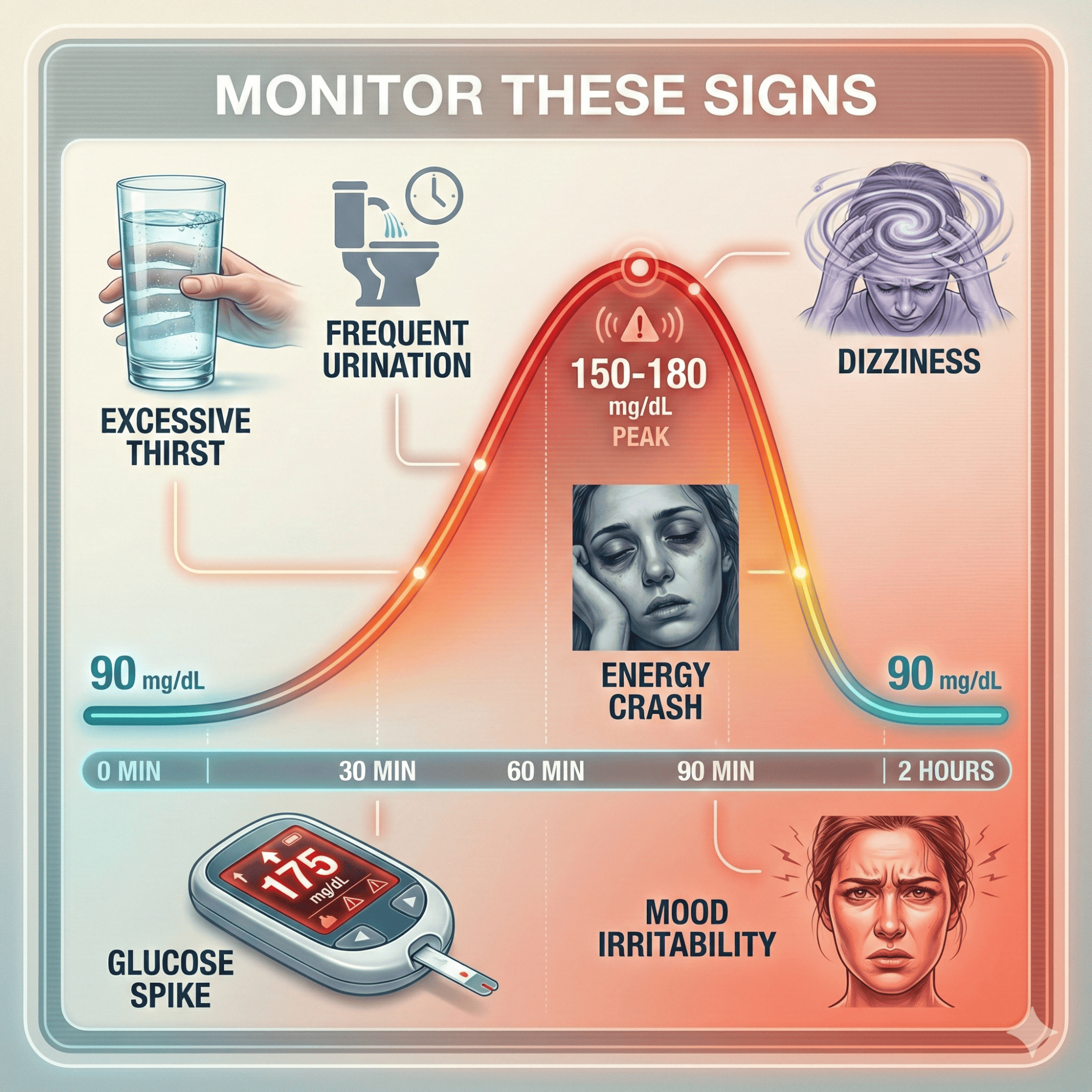
When consuming coconut water, watch for signs of blood sugar changes. If you feel unusually thirsty after drinking it, your blood sugar might be elevated. Increased urination, especially within an hour or two, can indicate glucose spillage. Feeling shaky, dizzy, or experiencing sudden energy crashes suggests blood sugar fluctuations. For diabetics, these symptoms are more pronounced. Moreover, check your glucose meter 1 to 2 hours after drinking coconut water to understand your personal response. Some people tolerate it well, while others see significant spikes.
Emotional and Mental Health Indicators
Blood sugar fluctuations affect your mental state too. Irritability, mood swings, or feeling “hangry” after coconut water might indicate blood sugar issues. Brain fog or difficulty concentrating can signal glucose problems. Anxiety or feeling jittery sometimes relates to blood sugar spikes followed by crashes. If you notice these patterns specifically after consuming coconut water, it might not be suitable for you in those quantities. Stable blood sugar is crucial for mental clarity and emotional balance.
When to Consult a Healthcare Professional
See a doctor if you experience severe symptoms after consuming coconut water. Extreme thirst, very frequent urination, or unexplained fatigue require medical attention. If you’re diabetic and notice consistent blood sugar spikes above 180 mg/dL after coconut water, discuss it with your healthcare provider. They can help adjust your meal plan or medication. Also consult a doctor if you’re newly diagnosed with diabetes and unsure about incorporating diabetes friendly drinks into your diet. Professional guidance ensures you make safe choices for your specific condition.
Indian Lifestyle Factors Affecting Coconut Water Blood Sugar
Modern Indian Diet Challenges and Solutions
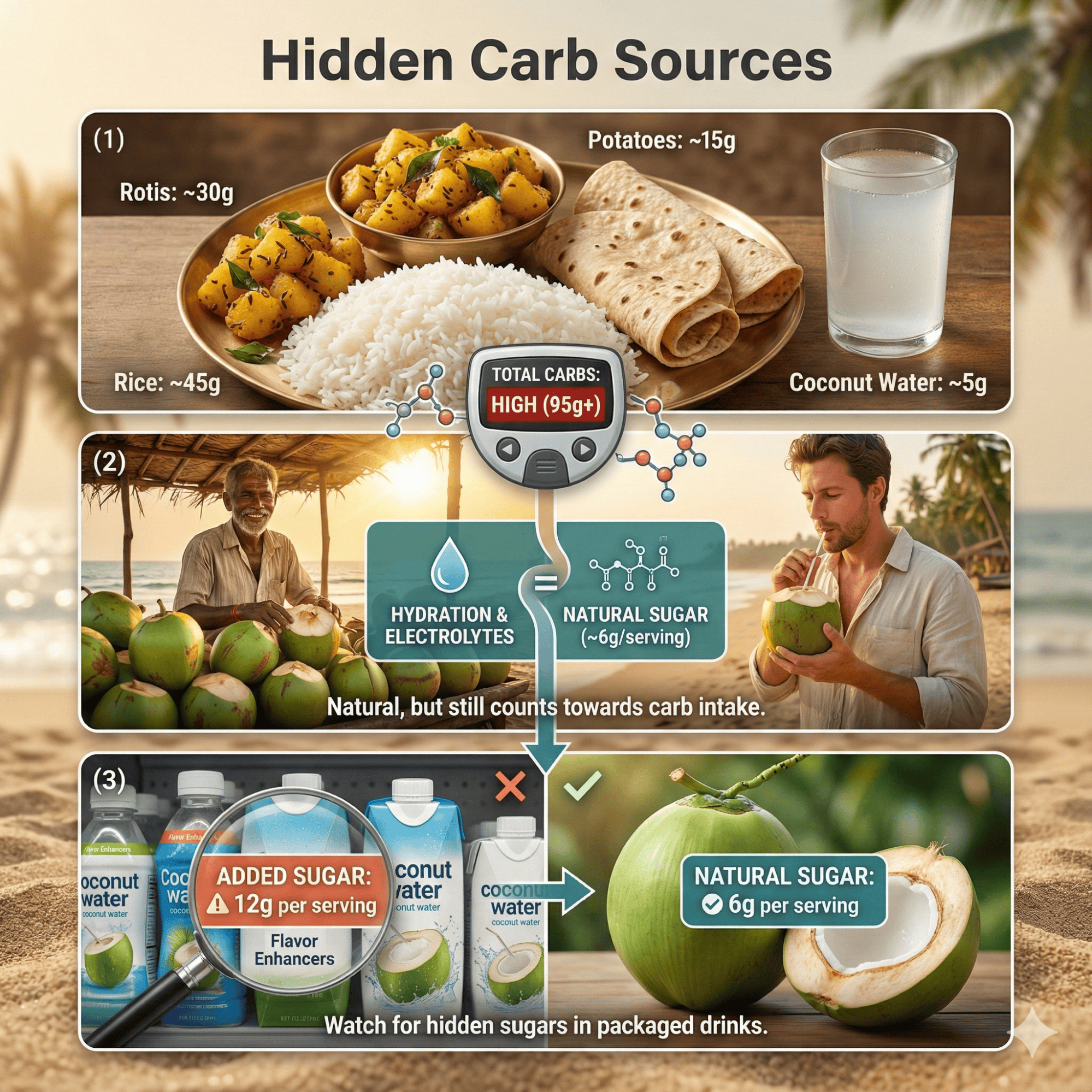
The modern Indian diet already includes many carbohydrate sources like rice, rotis, and potatoes. Adding coconut water without adjusting other carbs can lead to excessive sugar intake. The challenge is balancing traditional beverages with blood sugar management. Many Indians don’t realize that liquids absorb faster than solid foods, causing quicker glucose spikes. Solutions include treating coconut water as a carbohydrate serving (not a “free” drink), limiting intake to 100 to 150ml at a time, and consuming it with meals rather than alone. Additionally, choose fresh coconut water over packaged versions that often contain added sugars.
Work-Life Balance and Urban Living Impact
Urban Indians often grab packaged coconut water from stores for quick hydration. The convenience is tempting, but these products vary widely in sugar content. Office environments with vending machines or cafeterias rarely offer fresh options. The solution isn’t avoiding coconut water completely but making smarter choices. Read labels carefully, checking for added sugars. If fresh coconut water isn’t available, consider other diabetes friendly drinks like buttermilk, nimbu pani (without sugar), or green tea. Plan ahead by carrying your own beverages to avoid last-minute poor choices.
Cultural and Social Influences on Health
In Indian culture, coconut water is considered sacred and health-promoting. Temple offerings include coconuts, and people drink the water believing it’s purely beneficial. This cultural perception makes it hard to view coconut water critically from a blood sugar perspective. Moreover, during festivals and celebrations, people consume large amounts without consideration. The solution is balancing cultural practices with health needs. You can participate in traditions while being mindful of portions. Educate family members about coconut water for diabetics so they support rather than pressure your choices.
Best Indian Foods for Coconut Water Blood Sugar Management
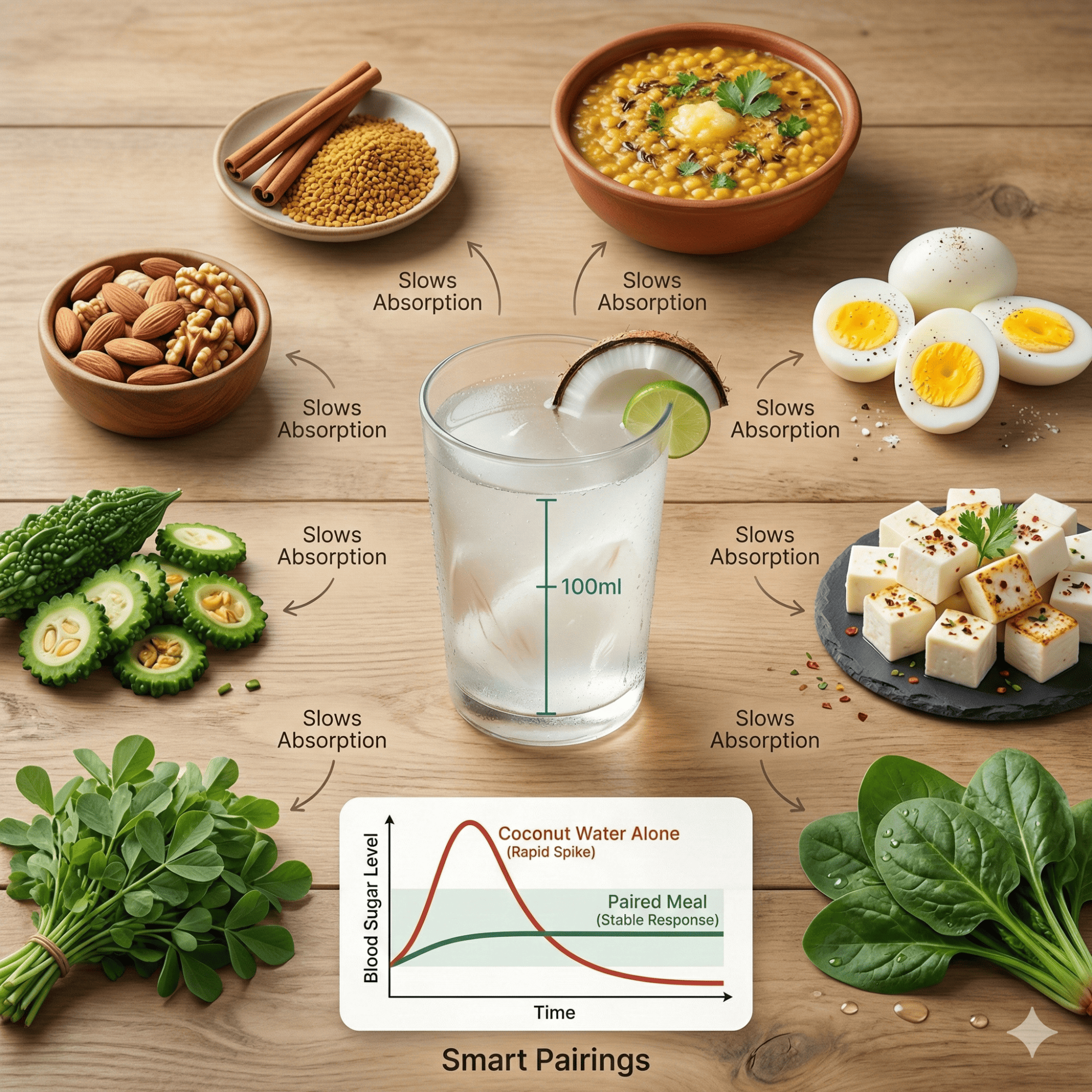
Traditional Indian Foods That Support Coconut Water Benefits
Indian cuisine offers foods that complement coconut water and stabilize blood sugar. Whole moong dal and masoor dal provide protein and fiber that slow sugar absorption. Vegetables like karela (bitter gourd), methi (fenugreek), and jamun are traditionally used for blood sugar control. Curd and buttermilk contain probiotics supporting gut health and glucose metabolism. Spices like cinnamon, turmeric, and fenugreek seeds help improve insulin sensitivity. When you consume coconut water, pairing it with these foods minimizes blood sugar spikes while maximizing the natural electrolytes benefit.
Modern Indian Meal Options and Healthy Recipes
Create balanced meals that allow room for coconut water without compromising blood sugar control. Breakfast could be vegetable poha with peanuts and a small cup of coconut water. Lunch might include brown rice with dal, plenty of vegetables, and curd, saving coconut water for post-meal if desired. Dinner options like roti with sabzi and dal work well. The principle is ensuring adequate protein, fiber, and healthy fats at every meal. This combination slows carbohydrate absorption, including sugars from coconut water, preventing sharp glucose spikes.
Foods to Limit or Avoid for Better Results
If you’re including coconut water in your diet, avoid combining it with other high-sugar items. Don’t drink it alongside fruit juice, sodas, or sweet lassi. Minimize refined carbs like white bread, maida-based snacks, and white rice in the same meal. Avoid packaged coconut water with added sugars, flavors, or preservatives. Skip coconut water during or immediately after eating sweets or desserts. The cumulative sugar load becomes too high. Additionally, limit intake if you’re having other high-potassium foods to avoid excessive potassium, which can be problematic for some people with kidney issues.
Portion Sizes and Meal Timing for Indians
Portion control is crucial for managing coconut water blood sugar impact. Stick to 100 to 150ml (about half a cup) per serving. If you want more, wait at least 2 to 3 hours before having another small portion. Best timing is during or immediately after a balanced meal, not on an empty stomach. Morning or post-workout consumption works well for most people. Additionally, avoid drinking coconut water close to bedtime, as it might affect sleep due to its natural sugar and potassium content. Spread your intake throughout the day rather than consuming large amounts at once.
Lifestyle Changes to Support Coconut Water Blood Sugar

Natural Electrolytes: The Right Approach for Indians
Coconut water is prized for its natural electrolytes, but it’s not the only source. During Indian summers or after exercise, you lose electrolytes through sweat. Coconut water can help replenish them, but so can other options like nimbu pani with a pinch of salt, buttermilk, or even plain water with meals. The right approach is choosing based on your blood sugar status that day. If your morning glucose was high, skip coconut water and choose a no-sugar option. If levels are stable and you’re exercising, a small amount of coconut water is reasonable. Flexibility and awareness matter more than rigid rules.
Sleep and Stress Management Strategies
Poor sleep and high stress affect blood sugar control, making coconut water blood sugar impact more unpredictable. Aim for 7 to 8 hours of quality sleep. Sleep deprivation increases insulin resistance, meaning the same amount of coconut water causes higher glucose spikes. For stress management, practice meditation, yoga, or deep breathing. Chronic stress elevates cortisol, which raises blood sugar. Therefore, managing these lifestyle factors creates a stable foundation where you can enjoy coconut water occasionally without dramatic effects. Your overall lifestyle matters more than any single food or drink.
Daily Habits That Make a Real Difference
Build habits that support stable blood sugar. Start your day with a protein-rich breakfast before considering any beverage with natural sugars. Take short walks after meals to help lower glucose levels. Check your blood sugar regularly to understand your personal response to different foods and drinks. Stay hydrated with water throughout the day, not just when you’re very thirsty. Keep a food diary noting when you have coconut water and your glucose readings. These habits create awareness and help you make adjustments. Small consistent actions compound into better blood sugar control over time.
Your 7-Day Coconut Water Blood Sugar Management Meal Plan
This meal plan incorporates coconut water safely for blood sugar management:
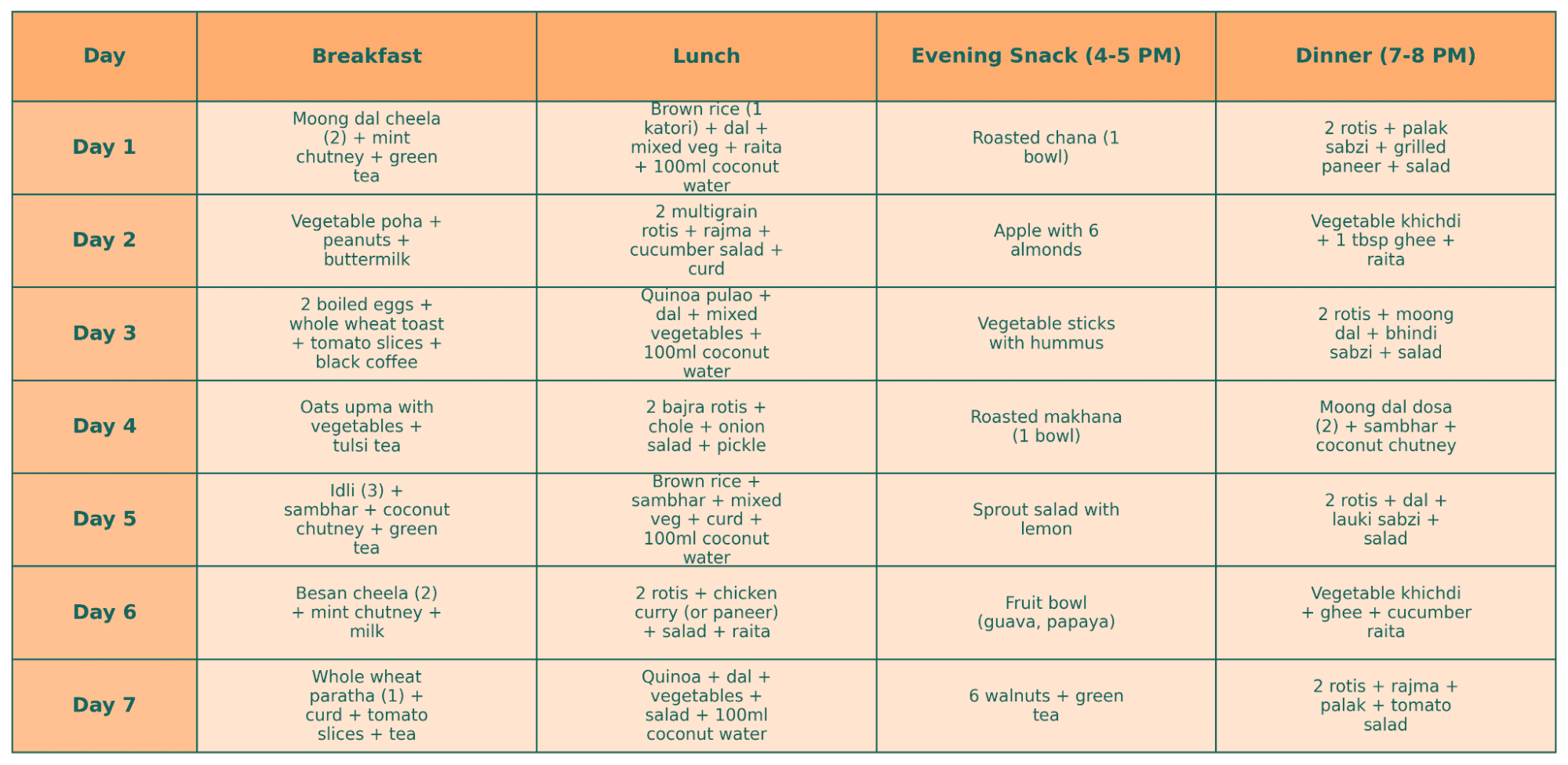
Note: Coconut water is limited to 100ml portions with meals. Monitor blood sugar 2 hours after consumption. Drink 8 to 10 glasses of water daily.
Common Mistakes Indians Make with Coconut Water Blood Sugar
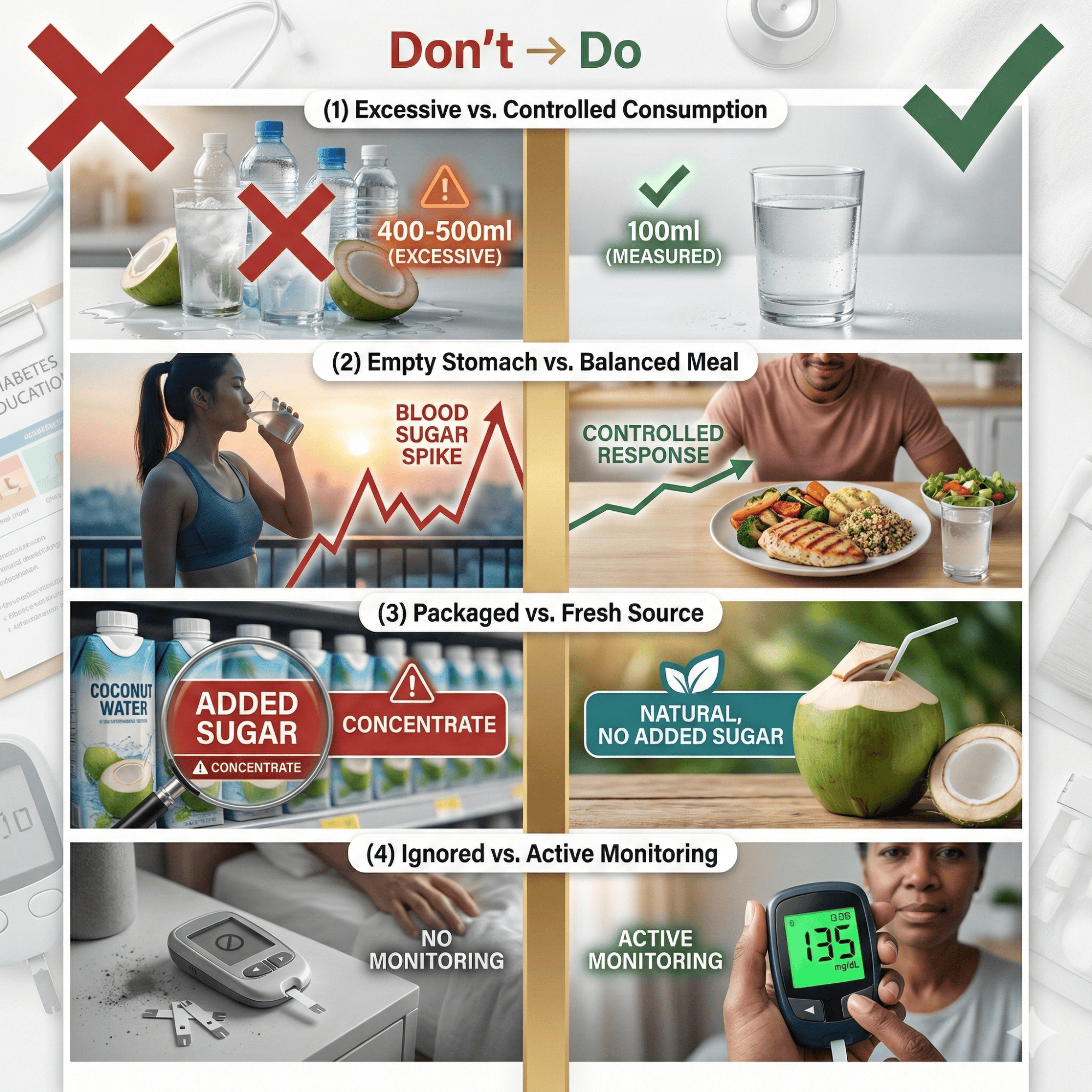
Diet Mistakes That Sabotage Progress
The biggest mistake is drinking coconut water in unlimited quantities thinking it’s “healthy.” Even diabetes friendly drinks need portion control. Another error is consuming packaged coconut water without reading labels. Many contain added sugars that significantly impact blood glucose. Drinking coconut water on an empty stomach causes faster sugar absorption and higher spikes. Not counting it as part of your daily carbohydrate intake throws off your meal planning. Additionally, using coconut water to replace plain water throughout the day adds unnecessary sugars. These mistakes prevent proper blood sugar management despite good intentions.
Lifestyle Pitfalls to Watch Out For
Many people don’t check their blood sugar after trying coconut water, so they don’t know their personal response. Assuming all coconut water is the same leads to problems. Fresh tender coconut water differs from mature coconut water and from packaged versions. Not adjusting other carbohydrates when adding coconut water results in excessive total sugar intake. However, drinking coconut water because others recommend it without considering your individual diabetes status is risky. Social media influencers often promote it without understanding the glycemic index coconut water or diabetes management. Make decisions based on your health needs, not trends.
How to Course-Correct When Things Go Wrong
If you notice blood sugar spikes after coconut water, don’t panic. First, check your portion size. Were you drinking more than 100 to 150ml? Second, consider timing. Did you drink it on an empty stomach? Third, look at what else you ate. Was the meal carb-heavy? Adjust these factors for next time. Therefore, if spikes persist, coconut water might not suit your body currently. Switch to truly no-sugar options like buttermilk, nimbu pani, or herbal teas. You can revisit coconut water once your blood sugar is better controlled. Remember, food choices aren’t permanent. They should serve your current health goals.
Conclusion
Understanding coconut water blood sugar impact empowers you to make informed choices. This traditional beverage offers coconut water benefits like hydration and natural electrolytes, but it’s not suitable for unlimited consumption, especially for diabetics. The key is portion control, timing, and awareness of your body’s response. With proper management, many Indians can enjoy coconut water as part of a balanced diet without compromising blood sugar control.
Start with small changes: limit coconut water to 100ml portions with meals, choose fresh over packaged versions, and monitor your blood sugar response. Track your glucose levels 1 to 2 hours after consumption for the first few times. These simple steps help you understand whether coconut water for diabetics works for your body.
FAQs
Q1: What is coconut water blood sugar connection and how does it affect Indians?
Coconut water blood sugar refers to how natural sugars impact glucose levels, with a glycemic index coconut water of 50 to 54 (moderate). Coconut water for diabetics can be consumed in small portions of 100 to 150ml with meals as part of daily carb limits.
Q2: What are the main signs of blood sugar problems from coconut water?
Warning signs include increased thirst, frequent urination within 1 to 2 hours, dizziness, energy crashes, mood swings, brain fog, and fatigue. For diabetics, glucose readings above 180 mg/dL indicate glycemic index coconut water problems.
Q3: What foods should Indians eat with coconut water for better blood sugar control?
Pair coconut water blood sugar with protein like moong dal or eggs, fiber-rich vegetables like palak and karela, healthy fats from nuts, and blood sugar-friendly foods like fenugreek and cinnamon. Have it with meals to get natural electrolytes benefits while minimizing glucose spikes.
Q4: Can coconut water be safely consumed by diabetics naturally?
Yes, coconut water for diabetics is safe with 100 to 150ml portions with meals, choosing fresh over packaged versions, and monitoring blood sugar after consumption. Avoid if diabetes is poorly controlled until glucose stabilises, as it’s one diabetes friendly drinks option.
Q5: How long does it take to see blood sugar changes with coconut water?
Blood sugar rises within 15 to 30 minutes, peaks at 30 to 60 minutes, and returns to baseline by 2 hours if portions are small. Monitor coconut water blood sugar levels at 1 and 2 hours initially to establish your response pattern.
Q6: When should I consult a doctor about coconut water and blood sugar?
Consult a doctor for severe symptoms like extreme thirst or fatigue, consistent readings above 180 mg/dL after drinking it, or if newly diagnosed with diabetes. Seek guidance if you have kidney problems or take diabetes medications, as coconut water is high in potassium.
Related Posts