Your hair falls in clumps every time you comb. Your nails break at the slightest touch. You’ve tried expensive serums and salon treatments, but nothing seems to work. The problem might not be what you’re applying on the outside but what’s missing from your plate. Understanding foods for keratin isn’t just about beauty tips. It’s about giving your body the building blocks it needs. This guide reveals which foods for keratin strengthen hair and nails naturally, using ingredients already in your Indian kitchen.
What Is Foods For Keratin and Why Indian Dieters Should Care?
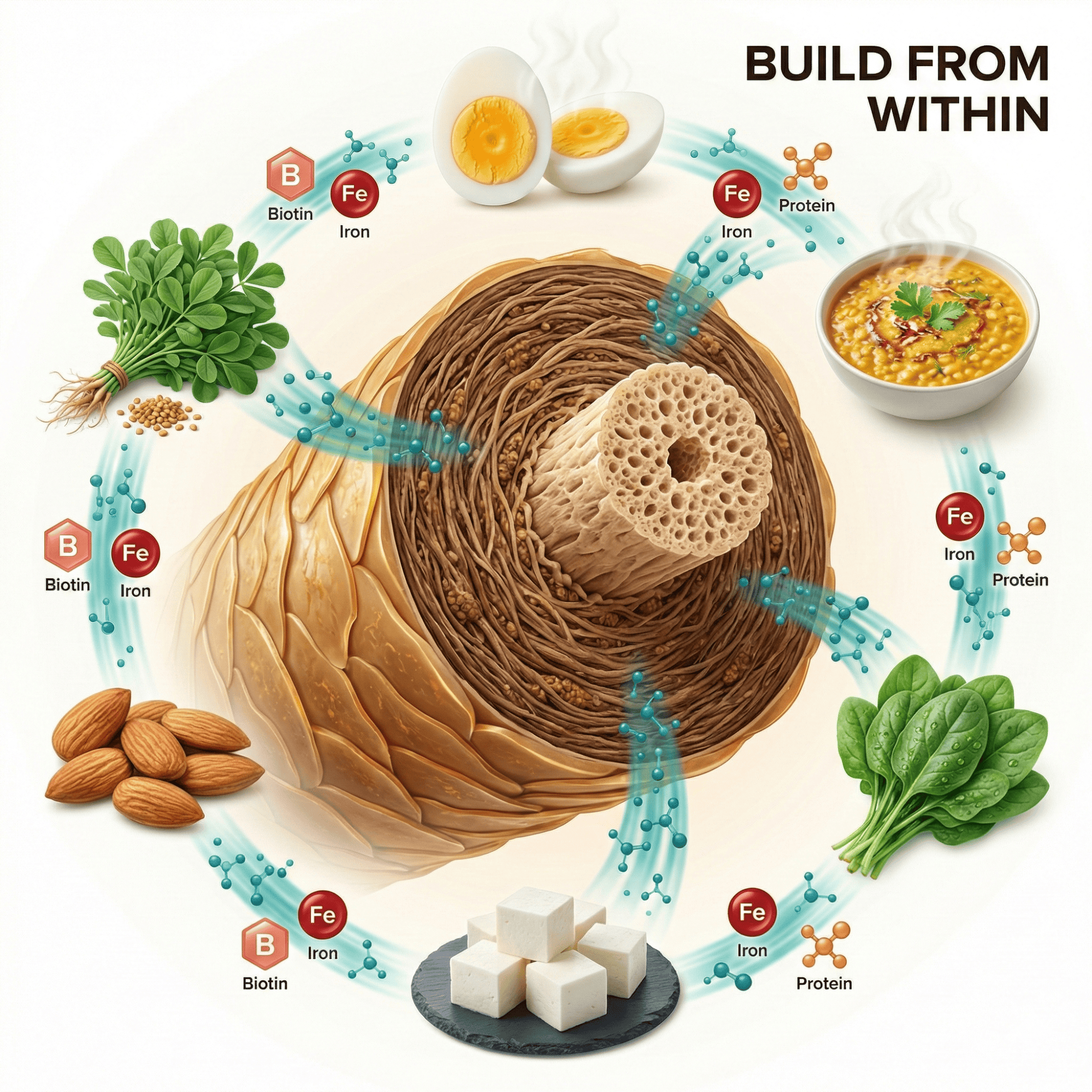
Keratin is a protein that forms the structure of your hair, nails, and skin’s outer layer. Think of it as the bricks that build these tissues. Foods for keratin are nutrients your body needs to produce this protein effectively. These include protein-rich foods, vitamins, minerals, and specific amino acids. When you lack these nutrients, your body can’t make enough keratin, leading to weak hair that breaks easily, brittle nails that split, and dull skin. The good news is that Indian cuisine offers plenty of keratin rich foods if you know what to look for.
Why Foods for Keratin Matter for Indian Bodies
Indian women face unique hair and nail challenges. Hard water in many cities strips natural oils from hair. Additionally, pollution damages the outer keratin layer, making hair rough and prone to breakage. Traditional Indian diets can be carb-heavy but sometimes lack sufficient protein and specific vitamins. Many women skip meals or eat inadequate amounts when juggling work and home responsibilities. Moreover, factors like PCOS (common in Indian women), thyroid issues, and anemia further deplete keratin production. Understanding foods for keratin becomes essential to counter these challenges naturally.
Common Myths Debunked About This Topic
Let’s clear up misconceptions. First, keratin treatments at salons and foods for keratin are different things. Salon treatments coat hair externally but don’t address internal deficiencies. Second, eating more of one food won’t magically fix everything. You need a balanced approach with multiple nutrients. Third, expensive imported supplements aren’t necessary. Indian foods provide everything you need. Finally, results take time. Your hair grows only half an inch per month, so changes in hair quality appear gradually, not overnight.
The Science Behind Foods For Keratin for Indians
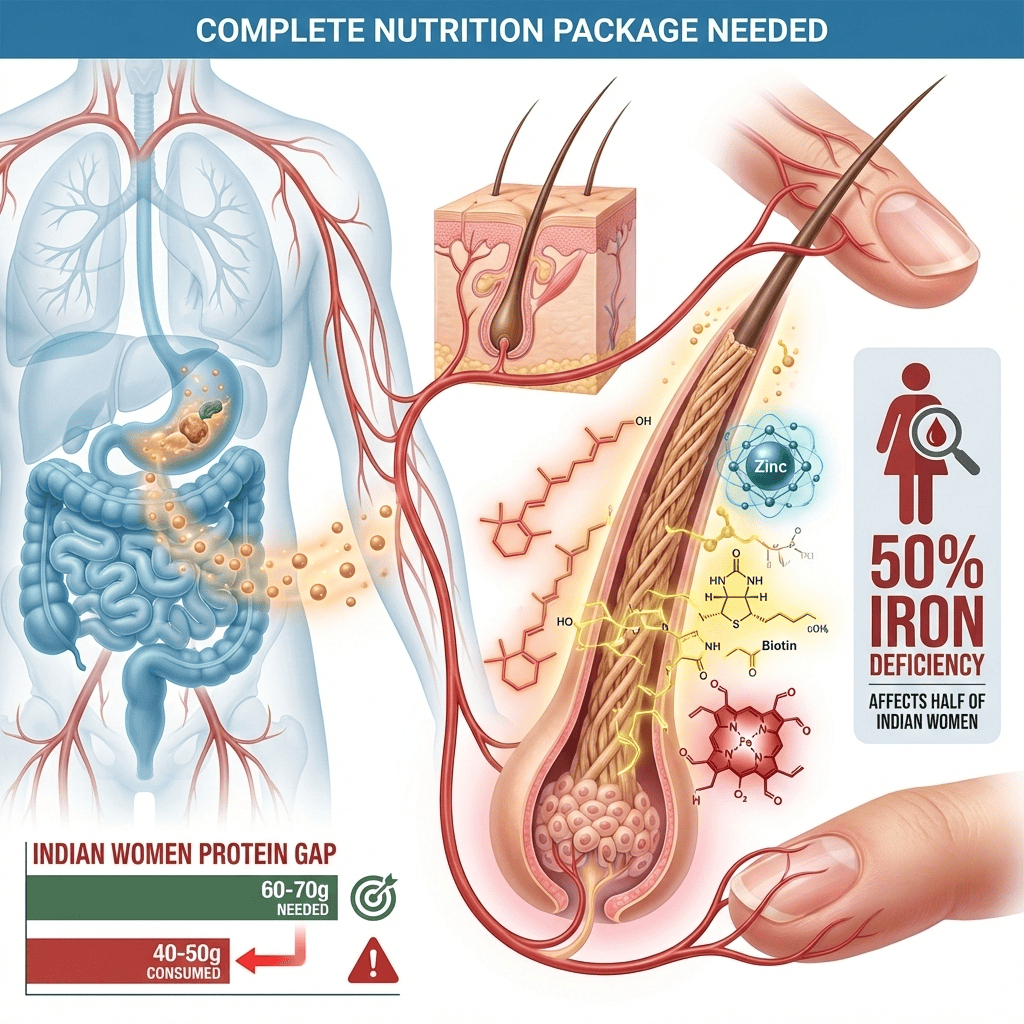
How Foods for Keratin Work in Your Body
When you eat keratin rich foods, your body breaks down the protein into amino acids. These amino acids then travel through your bloodstream to hair follicles and nail beds. Here, cells use these amino acids to build keratin protein strands. However, this process needs help from vitamins and minerals. Vitamin A helps cells produce keratin. B vitamins like biotin support the process. Zinc and iron ensure proper cell function. Therefore, you need more than just protein. You need a complete nutritional package for optimal keratin production.
The Connection Between Keratin Rich Foods and Health
Keratin rich foods impact more than just appearance. Protein deficiency shows up as hair loss, but it also causes fatigue, weak immunity, and slow wound healing. Biotin foods support not just nail strength but also energy metabolism. Iron-rich foods prevent hair loss and fight anemia, which causes tiredness. Omega-3 fats from certain foods reduce scalp inflammation and support overall brain health. As a result, when you eat for keratin production, you’re actually supporting your entire body’s wellbeing, not just cosmetic concerns.
What Research Shows for Indian Population
Studies on Indian populations reveal concerning nutritional gaps. Research shows that many Indian women consume insufficient protein, getting only 40 to 50 grams daily when they need 60 to 70 grams. Iron deficiency anemia affects nearly 50% of Indian women, directly impacting hair health. Vitamin D deficiency is widespread despite our sunny climate, affecting hair follicle health. Moreover, zinc deficiency is common, leading to hair thinning and weak nails. These deficiencies make focusing on hair growth foods crucial for Indian women’s health.
Biotin Foods: What to Watch For
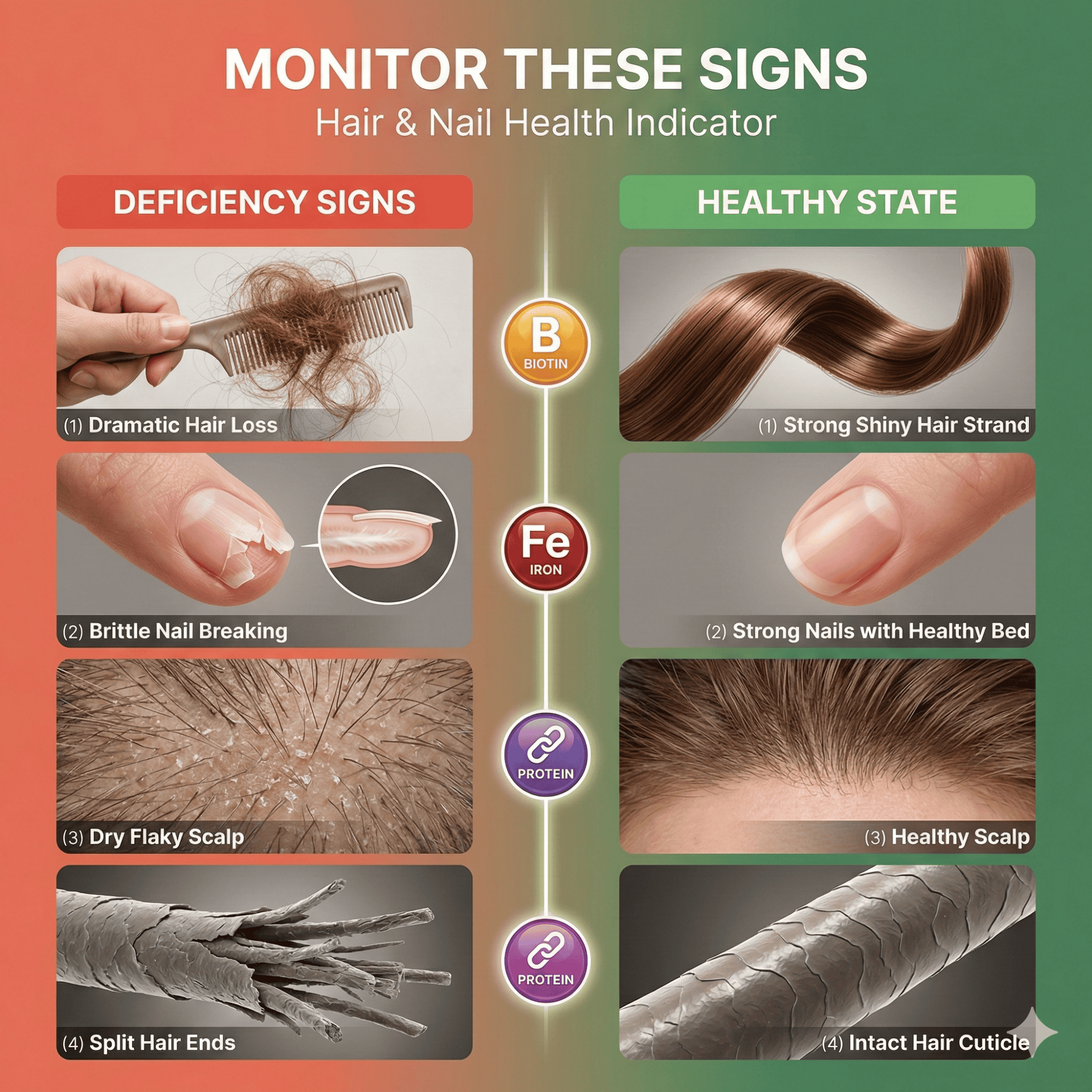
Physical Signs and Symptoms to Monitor
When your diet lacks biotin foods and other keratin-supporting nutrients, physical signs appear. Excessive hair fall (more than 100 strands daily) signals problems. Hair that breaks easily, especially near the ends, indicates weakness. Nails that peel in layers, develop ridges, or break at the slightest pressure need attention. Dry, flaky scalp or dandruff can signal nutritional gaps. Slow hair growth where you notice no length increase over months is concerning. Additionally, watch for hair texture changes, like previously smooth hair becoming coarse and unmanageable.
Emotional and Mental Health Indicators
Hair and nail problems affect mental health too. You might feel less confident about your appearance, avoiding social situations or photos. Anxiety about hair fall can become overwhelming, especially when noticing hair on pillows or in the shower. Frustration grows when expensive treatments don’t work. Some women develop obsessive behaviors, constantly checking for fallen hair or examining nails. If these concerns start affecting daily life or relationships, they’re worth addressing seriously alongside the physical aspects.
When to Consult a Healthcare Professional
Seek medical help for sudden, dramatic hair loss where you see bald patches. Consult a doctor if nails develop dark lines, change color, or separate from the nail bed. Get checked if hair loss comes with other symptoms like extreme fatigue, cold sensitivity, or unexplained weight changes, which might indicate thyroid issues. If you’ve tried improving your diet with foods for keratin for three months without any improvement, professional evaluation is needed. Blood tests can reveal specific deficiencies or underlying conditions requiring treatment.
Indian Lifestyle Factors Affecting Foods For Keratin
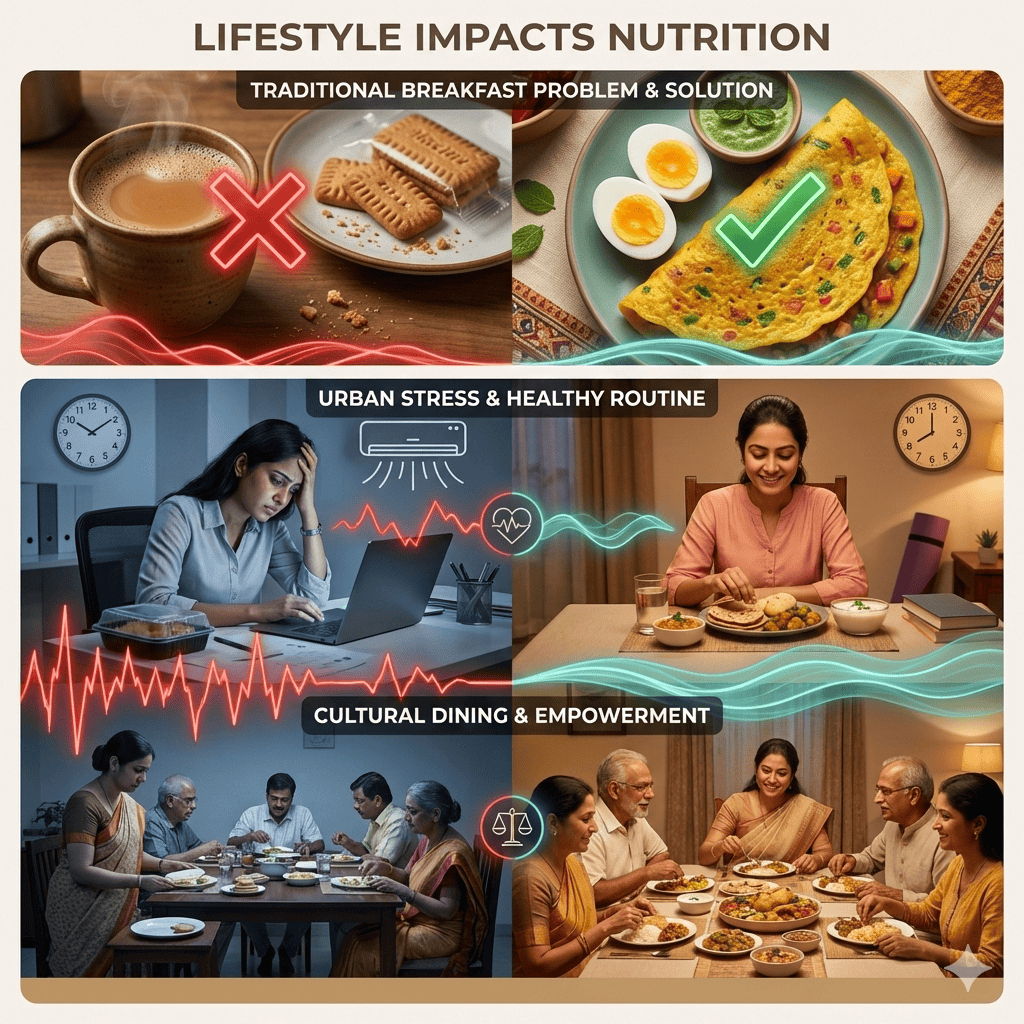
Modern Indian Diet Challenges and Solutions
The modern Indian diet creates keratin-related challenges. Breakfast is often just chai and biscuits, lacking protein entirely. Lunch might be roti with sabzi but minimal dal or protein sources. Dinner comes late, sometimes after 10 PM, affecting nutrient absorption. Moreover, many women eat last and least in families, getting insufficient nutrition. Solutions include starting the day with protein-rich options like eggs or dal cheela. Pack protein in lunch with adequate dal, curd, or paneer. Eat dinner by 8 PM when possible. Prioritize your plate equally with other family members.
Work-Life Balance and Urban Living Impact
Urban Indian women face unique stressors affecting nail health and hair quality. Long work hours mean irregular eating, often skipping meals. Stress from deadlines raises cortisol, which disrupts hair growth cycles. Lack of sleep prevents cellular repair needed for healthy hair and nails. Air conditioning dries out hair and scalp. In fact, constant exposure to screens affects posture, potentially reducing blood flow to the scalp. Balance these by carrying healthy snacks to work, practicing stress management, getting 7 to 8 hours of sleep, and taking short breaks to move around.
Cultural and Social Influences on Health
Indian culture sometimes works against women’s nutrition. Fasting frequently without proper nutrition depletes reserves. Pressure to maintain certain beauty standards causes stress. Traditional beliefs might discourage eating certain hair growth foods during specific times. Family responsibilities often mean women eat quickly or skip meals entirely. However, you can navigate these while respecting traditions. Break fasts wisely with nutrient-dense foods. Communicate your health needs to family. Find cultural foods that support your goals. Remember, taking care of yourself isn’t selfish, it’s necessary.
Best Indian Foods for Foods For Keratin Management
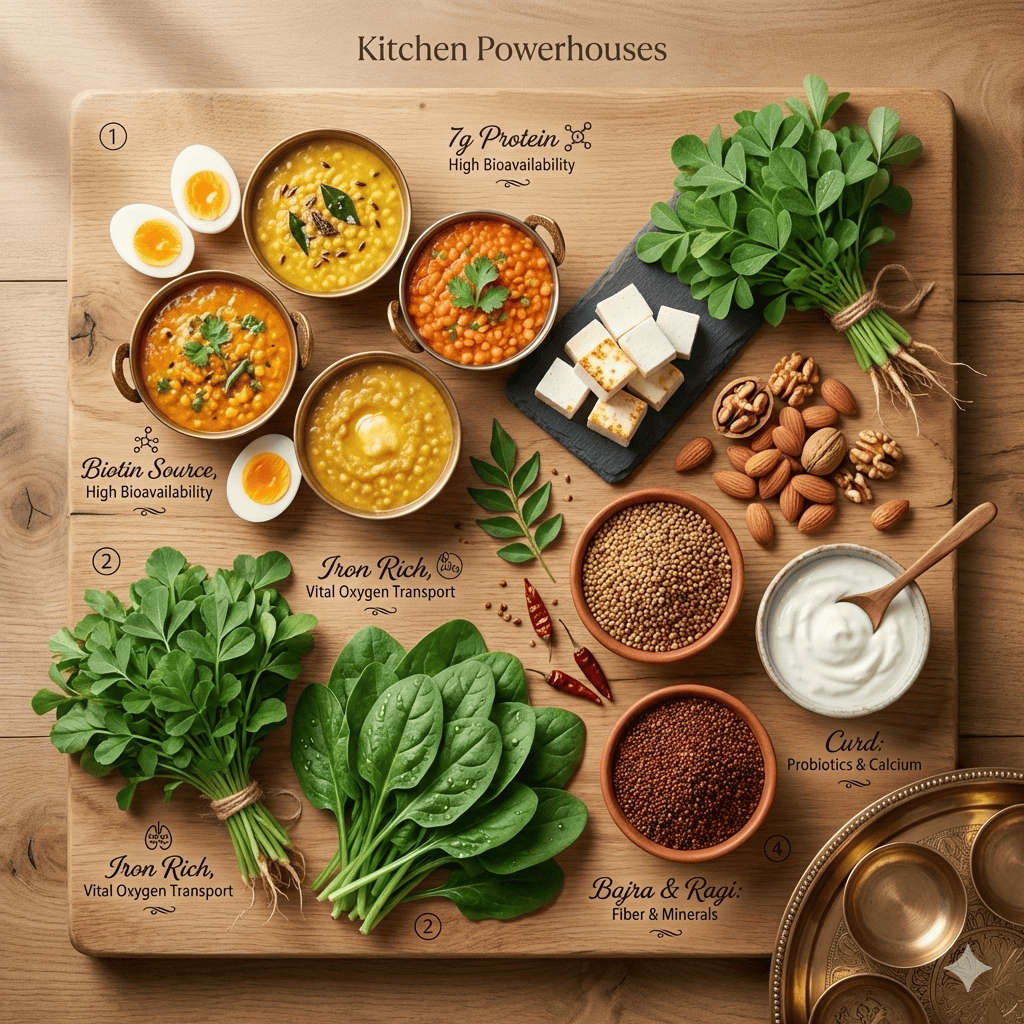
Traditional Indian Foods That Support Hair Growth Foods
Your grandmother’s kitchen has powerful hair growth foods. Eggs provide complete protein and biotin, essential for keratin. Dals (moong, masoor, toor) offer plant-based protein. Curd and paneer give protein plus calcium for strong nails. Methi (fenugreek) seeds and leaves are rich in iron and protein. Spinach (palak) provides iron, vitamins A and C. Nuts like almonds and walnuts offer protein, biotin, and healthy fats. Additionally, bajra and ragi provide protein and minerals. Even humble peanuts give protein and biotin. These affordable foods support keratin production effectively.
Modern Indian Meal Options and Healthy Recipes
Create keratin-supporting meals easily. Breakfast could be moong dal cheela with vegetables, or scrambled eggs with whole wheat toast. Lunch might include brown rice with dal, palak paneer, and curd. Try quinoa pulao with mixed vegetables and a side of raita. Dinner options include roti with rajma or chole, sautéed methi, and cucumber salad. Snacks can be roasted chana, a handful of nuts, or fruit with peanut butter. The key is including protein at every meal along with vegetables rich in vitamins A and C for better absorption.
Foods to Limit or Avoid for Better Results
Certain foods hinder keratin production. Excessive sugar damages hair follicles by causing inflammation. Limit sweets, sodas, and packaged fruit juices. Reduce refined carbs like white bread and maida-based snacks that spike blood sugar. Cut down on deep-fried foods that provide empty calories without nutrients. Minimize alcohol consumption as it depletes B vitamins needed for keratin. Moreover, too much caffeine can interfere with iron absorption. You don’t need to eliminate these completely, but limiting them allows space for more keratin rich foods in your diet.
Portion Sizes and Meal Timing for Indians
Getting enough protein matters most for keratin. Aim for 20 to 25 grams of protein per meal, which is 2 eggs, or 1 cup cooked dal, or 100 grams paneer. Include a fist-sized portion of vegetables at lunch and dinner. Have a palm-sized portion of whole grains at each meal. Additionally, eat at regular times to support nutrient absorption. Breakfast within an hour of waking kickstarts metabolism. Lunch between 12 to 2 PM supports digestion. Dinner by 8 PM allows proper nutrient processing before sleep. Consistent timing helps your body use nutrients effectively.
Lifestyle Changes to Support Foods For Keratin
Nail Health: The Right Approach for Indians
Supporting nail health goes beyond diet. Keep nails trimmed to prevent breakage. File in one direction rather than sawing back and forth. Moisturize cuticles with coconut oil or ghee daily. Wear gloves when doing household work with water and chemicals. Avoid using nails as tools to open things. Take breaks from nail polish to let nails breathe. Additionally, massage nails and cuticles nightly to improve blood circulation. These simple habits combined with proper nutrition from biotin foods strengthen nails significantly over time.
Sleep and Stress Management Strategies
Quality sleep is essential for keratin production. Aim for 7 to 8 hours nightly. During deep sleep, your body repairs and builds tissues, including hair and nails. Keep your bedroom dark and cool. Avoid screens an hour before bed. For stress management, practice deep breathing exercises for 10 minutes daily. Try meditation or yoga, which reduces cortisol that damages hair follicles. Moreover, find activities that relax you, whether reading, cooking, or talking with friends. Managing stress protects the keratin production process from disruption.
Daily Habits That Make a Real Difference
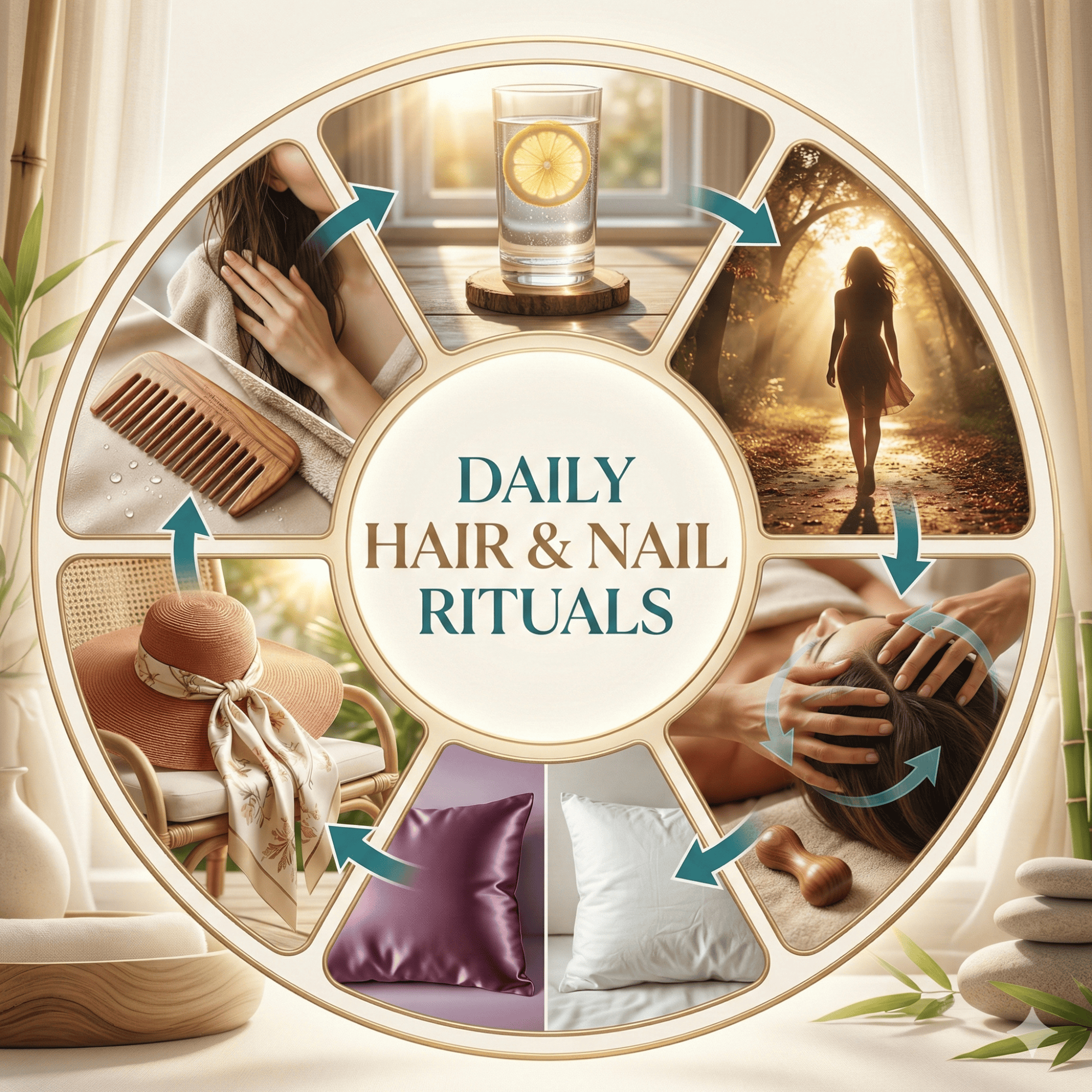
Small daily actions compound into visible results. Start your day with a glass of water to hydrate cells. Take a 10-minute walk after lunch to improve circulation. Massage your scalp for 5 minutes while shampooing to stimulate blood flow. Use a silk pillowcase to reduce hair friction during sleep. Protect hair from sun damage with scarves or hats. Handle wet hair gently as it’s more fragile. Additionally, reduce heat styling and tight hairstyles that stress hair. These habits support the foods for keratin you’re eating by protecting existing hair and nails.
Your 7-Day Foods For Keratin Management Meal Plan
This meal plan emphasizes keratin rich foods with adequate protein and nutrients:
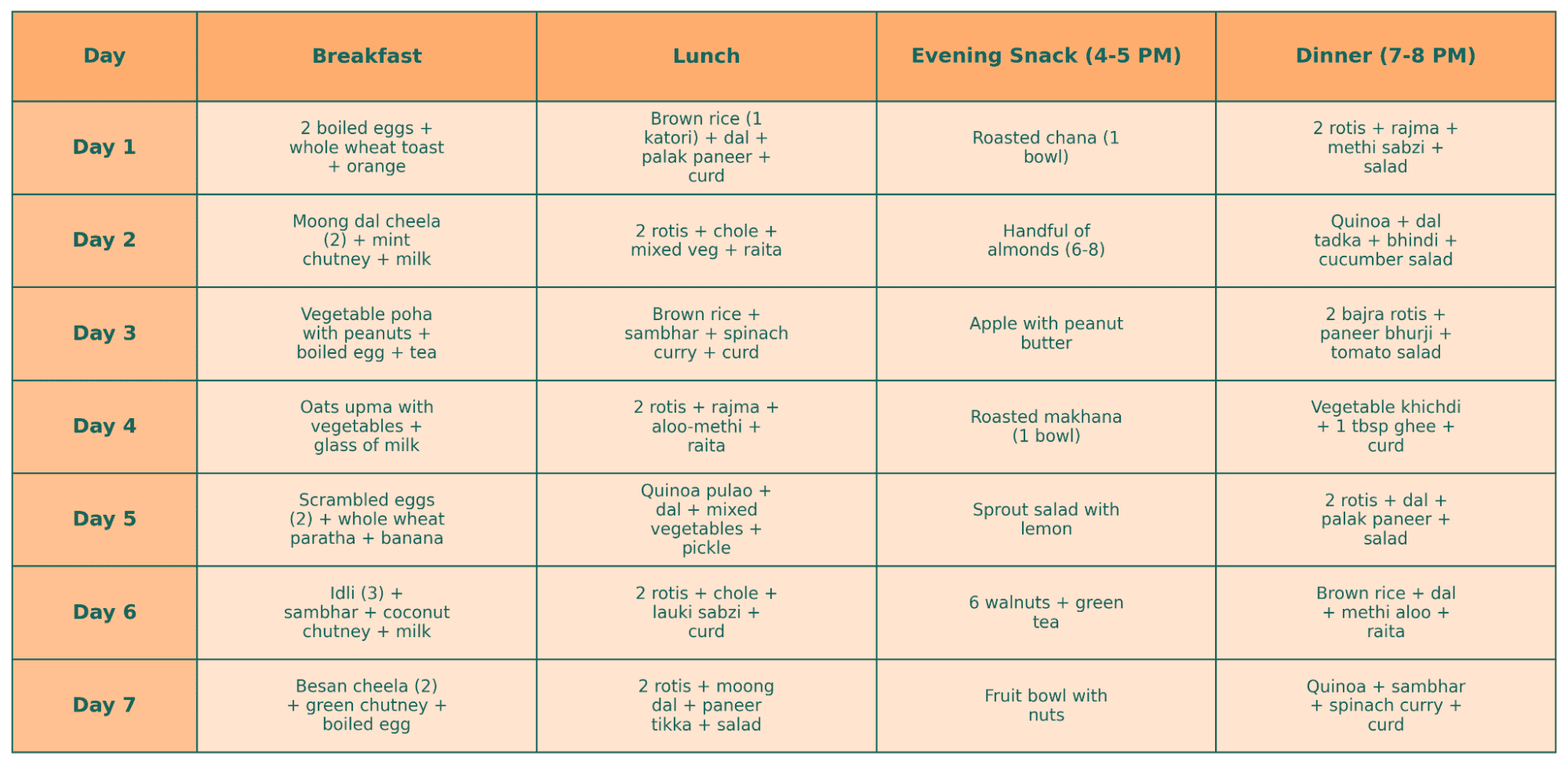
Note: Drink 8 to 10 glasses of water daily. Include seasonal fruits. Adjust portions based on your activity level.
Common Mistakes Indians Make with Foods For Keratin
Diet Mistakes That Sabotage Progress
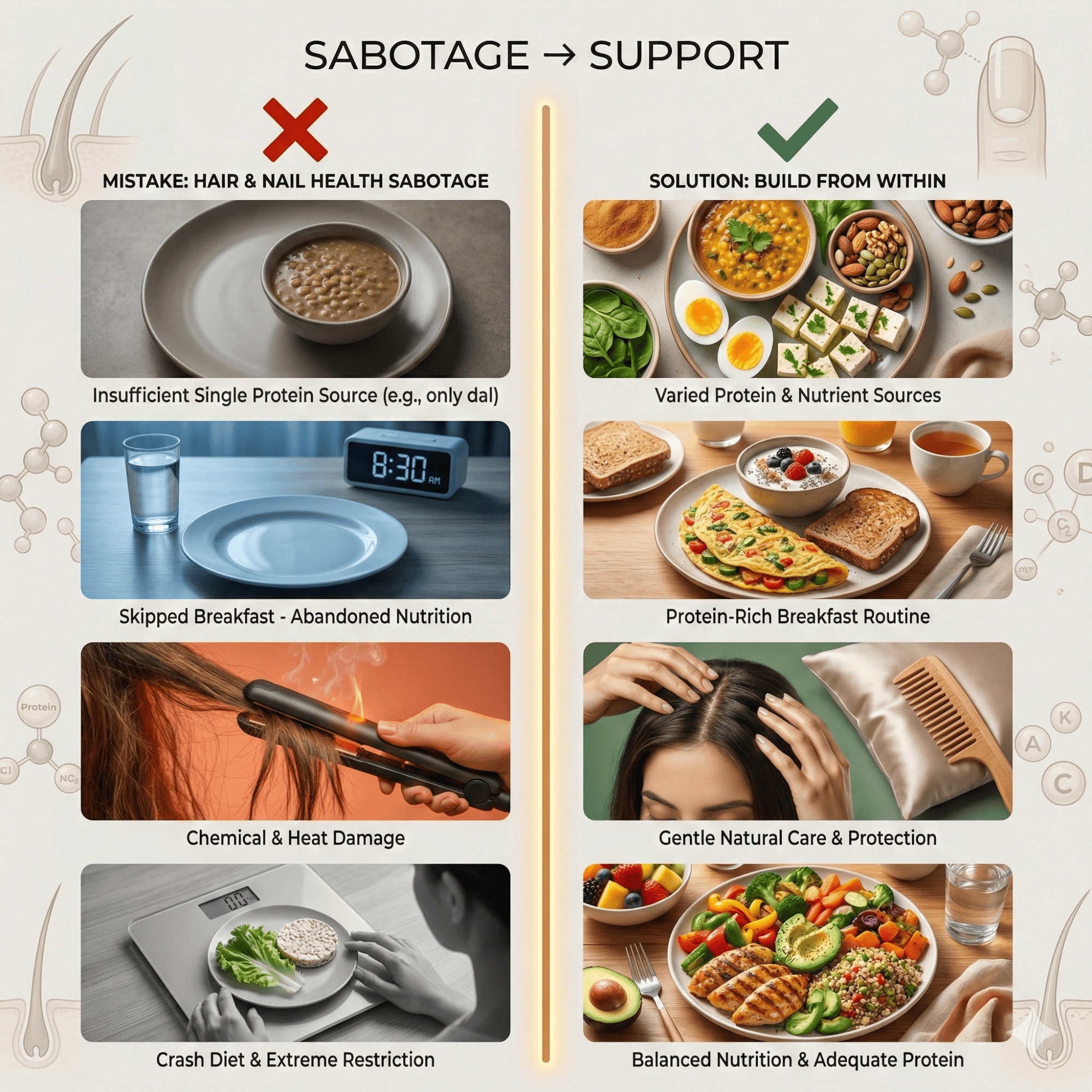
The biggest mistake is not eating enough protein. Many Indian women consume only 30 to 40 grams daily when they need 60 to 70 grams for healthy hair and nails. Another error is relying only on one protein source. Variety ensures you get all amino acids needed. Skipping breakfast means missing an opportunity for protein intake. Eating too many empty calories from refined carbs and sweets crowds out nutrient-dense collagen foods. However, crash dieting or extreme calorie restriction deprives your body of nutrients needed for keratin production. These mistakes prevent visible improvements despite efforts.
Lifestyle Pitfalls to Watch Out For
Many women sabotage progress without realizing it. Using harsh chemical treatments or excessive heat styling damages keratin faster than diet can repair it. Tight hairstyles like high ponytails or buns stress hair follicles. Washing hair daily strips natural oils that protect keratin. Not protecting hair from sun, chlorine, or pollution causes damage. Moreover, stress and poor sleep disrupt hormones that regulate hair growth. Taking hair supplements without fixing the actual diet rarely works. These lifestyle factors undermine even the best nutrition plan with foods for keratin.
How to Course-Correct When Things Go Wrong
If you’ve not seen improvement after two months, evaluate honestly. Are you actually eating enough protein at every meal? Keep a food diary for three days to check. Maybe you’re consuming protein but lacking iron or biotin. Consider getting blood tests to identify specific deficiencies. Therefore, adjust your diet based on results. If stress or sleep are poor, address those factors too. Sometimes hair fall increases initially as old weak hair sheds before new stronger hair grows. Be patient and consistent for at least three to four months before expecting visible changes in hair length or nail strength.
Conclusion
Strong hair and nails start from within, not from expensive products. Foods for keratin give your body what it needs to build strong, healthy tissues naturally. Indian kitchens already have the keratin rich foods you need, from dals and eggs to nuts and leafy greens. The key is eating them consistently in adequate amounts alongside a healthy lifestyle that supports absorption.
Start today with one simple change: add a protein source to every meal, whether eggs at breakfast, dal at lunch, or paneer at dinner. Track your protein intake for seven days to ensure you’re getting 60 to 70 grams daily. Additionally, practice scalp massage for 5 minutes while shampooing to boost circulation. These small actions build into visible results over months.
FAQs
Q1: What is foods for keratin and how does it affect Indians?
Foods for keratin are nutrients that help your body produce keratin protein, which forms hair, nails, and skin. Indian women need these keratin rich foods because protein deficiency, iron deficiency, and vitamin gaps are common, causing weak hair and brittle nails.
Q2: What are the main signs of keratin deficiency?
Signs include excessive hair fall (over 100 strands daily), hair breakage, slow growth, nails that peel or break easily, and ridged or brittle nails. Watch for dry scalp, dull hair texture, and biotin foods deficiency symptoms like fatigue.
Q3: What foods should Indians eat for better keratin production?
Eat eggs, dals (moong, masoor, toor), curd, paneer, methi, spinach, nuts like almonds and walnuts, bajra, ragi, and peanuts. These hair growth foods provide protein, biotin, iron, and vitamins A and C needed for keratin.
Q4: Can keratin levels be improved naturally?
Yes, improve keratin naturally through diet with adequate protein (60 to 70 grams daily), biotin foods, iron-rich vegetables, and proper hydration. Combine this with stress management, good sleep, and gentle hair care for nail health and hair strength.
Q5: How long does it take to see results with keratin-boosting foods?
Nails show improvement in 2 to 3 weeks as they grow faster. Hair takes longer, with reduced hair fall in 6 to 8 weeks and visible length or texture improvement in 3 to 4 months, as hair grows slowly.
Q6: When should I consult a doctor about hair or nail issues?
See a doctor for sudden severe hair loss, bald patches, nails separating from nail beds, or hair loss with fatigue and weight changes. Get blood tests if dietary changes with collagen foods show no improvement after three months.
Related Posts