You’ve heard tomatoes are superfoods, packed with antioxidants that fight disease. So you’re adding them to every meal, thinking more is better. Your morning starts with tomato juice, lunch includes tomato curry, evening snack is tomato soup, and dinner features tomato-based gravy. But lately, you’re experiencing digestive issues, and your skin has an odd orange tint. Could you have lycopene overdose? While tomatoes offer incredible lycopene benefits, too much of anything becomes problematic. This guide reveals the truth about lycopene overdose, helping you find the healthy balance.
What Is Lycopene Overdose and Why Indian Dieters Should Care?
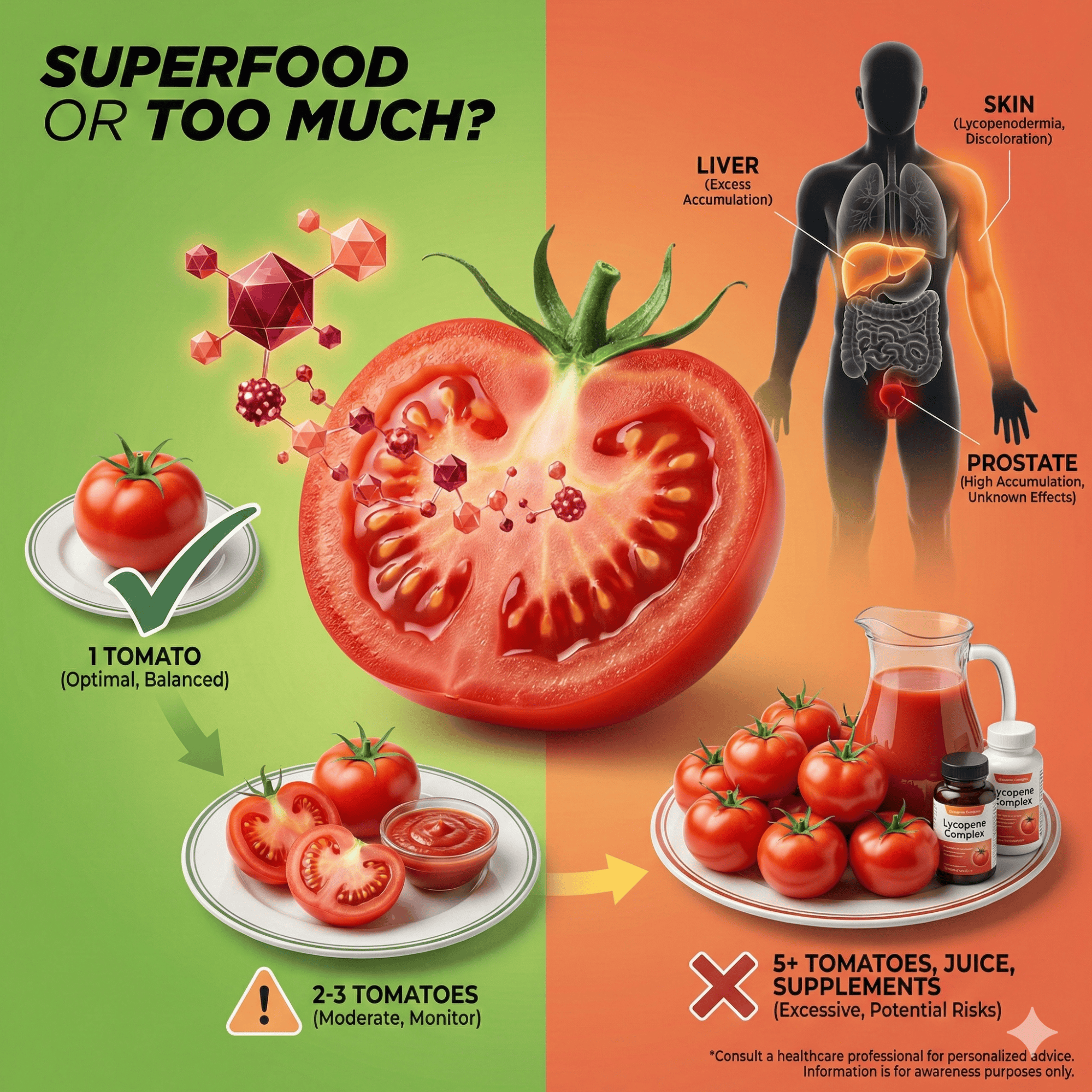
Lycopene is a natural red pigment found in tomatoes, watermelon, and pink grapefruit. It’s a powerful antioxidant that protects cells from damage. Your body doesn’t produce lycopene, so you get it entirely from food. In normal amounts, lycopene supports heart health, reduces cancer risk, and protects skin from sun damage. However, lycopene overdose occurs when you consume excessive amounts, typically from supplements or eating tomato products at every meal. The condition is rare from food alone but possible, especially if you’re following extreme health trends without guidance.
Why Lycopene Matters for Indian Bodies
Indians consume tomatoes regularly. They’re in curries, chutneys, salads, and juices. Additionally, the rise of health consciousness means many people drink tomato juice daily or take lycopene supplements. While moderate consumption provides lycopene benefits, overdoing it causes problems. Indian bodies generally handle tomatoes well, but individual tolerance varies. Some people develop tomato side effects more easily due to sensitive digestive systems or existing health conditions. Moreover, when combined with certain medications, excessive tomato consumption can cause interactions that need monitoring.
Common Myths Debunked About This Topic
Let’s clear up misconceptions. First, you cannot get lycopene overdose from eating one or two tomatoes daily. Normal dietary intake is safe. Second, lycopene isn’t toxic, but excessive amounts cause uncomfortable side effects. Third, cooked tomatoes have more available lycopene than raw ones, so tomato-based curries and sauces are more concentrated sources. Fourth, lycopene supplements carry higher overdose risk than whole foods because they’re concentrated. Finally, orange skin from lycopene isn’t the same as jaundice. It’s reversible once you reduce intake.
The Science Behind Lycopene Overdose for Indians
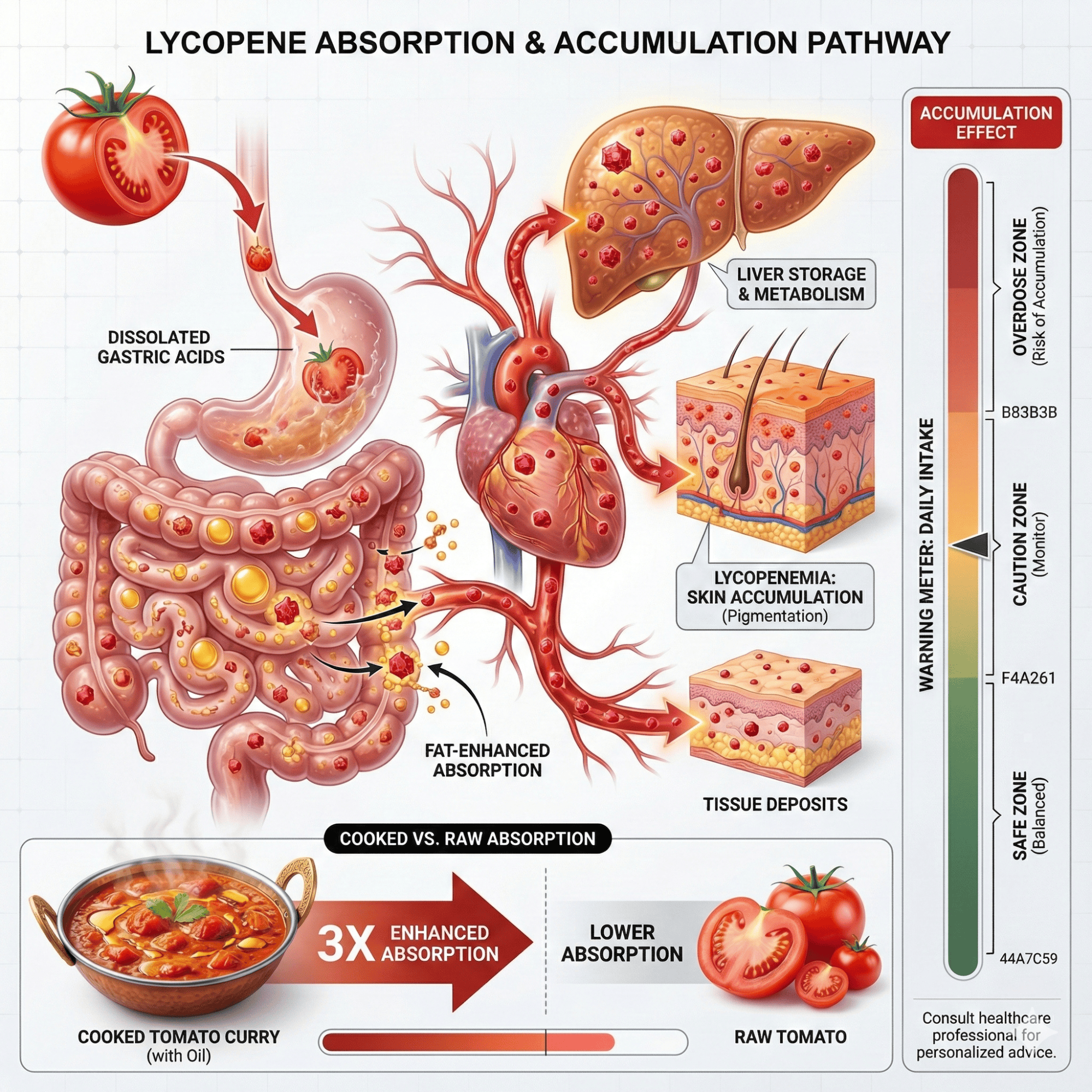
How Lycopene Works in Your Body
When you eat tomatoes, lycopene gets absorbed in your small intestine. Fat improves absorption, which is why tomatoes cooked with oil provide more lycopene. Once absorbed, lycopene travels through your bloodstream, accumulating in tissues, especially the liver, prostate, and skin. Your body doesn’t convert lycopene to vitamin A like it does with beta-carotene. Therefore, it simply accumulates. In normal amounts, this provides antioxidant protection. However, when intake exceeds what your body can process and use, side effects appear. The excess lycopene deposits in skin, causing orange discoloration called lycopenemia.
The Connection Between Tomato Side Effects and Health
Tomato side effects from excessive consumption include digestive problems. The high acidity irritates the stomach lining, causing heartburn, acid reflux, and stomach pain. Moreover, tomatoes contain solanine, a compound that can trigger inflammation in sensitive individuals, worsening conditions like arthritis. The fiber in excessive amounts causes bloating and diarrhea. Lycopene’s blood-thinning properties can interact with anticoagulant medications. As a result, people on blood thinners need to monitor tomato intake carefully. Additionally, kidney stone formers should limit tomatoes as they contain oxalates that contribute to stone formation.
What Research Shows for Indian Population
Research on lycopene consumption in Indians is limited, but studies on similar populations provide insights. Most Indians consume tomatoes within safe ranges, getting 5 to 10 mg of lycopene daily from diet. Problems arise mainly from supplement use or extreme dietary patterns. One concern is that Indians often cook tomatoes in curries, which increases lycopene availability. While this enhances lycopene benefits, it also means you’re getting more per serving than you might think. Therefore, eating tomato curry three times daily plus supplements could push intake into problematic ranges. Balance matters more than maximization.
Lycopene Benefits: What to Watch For
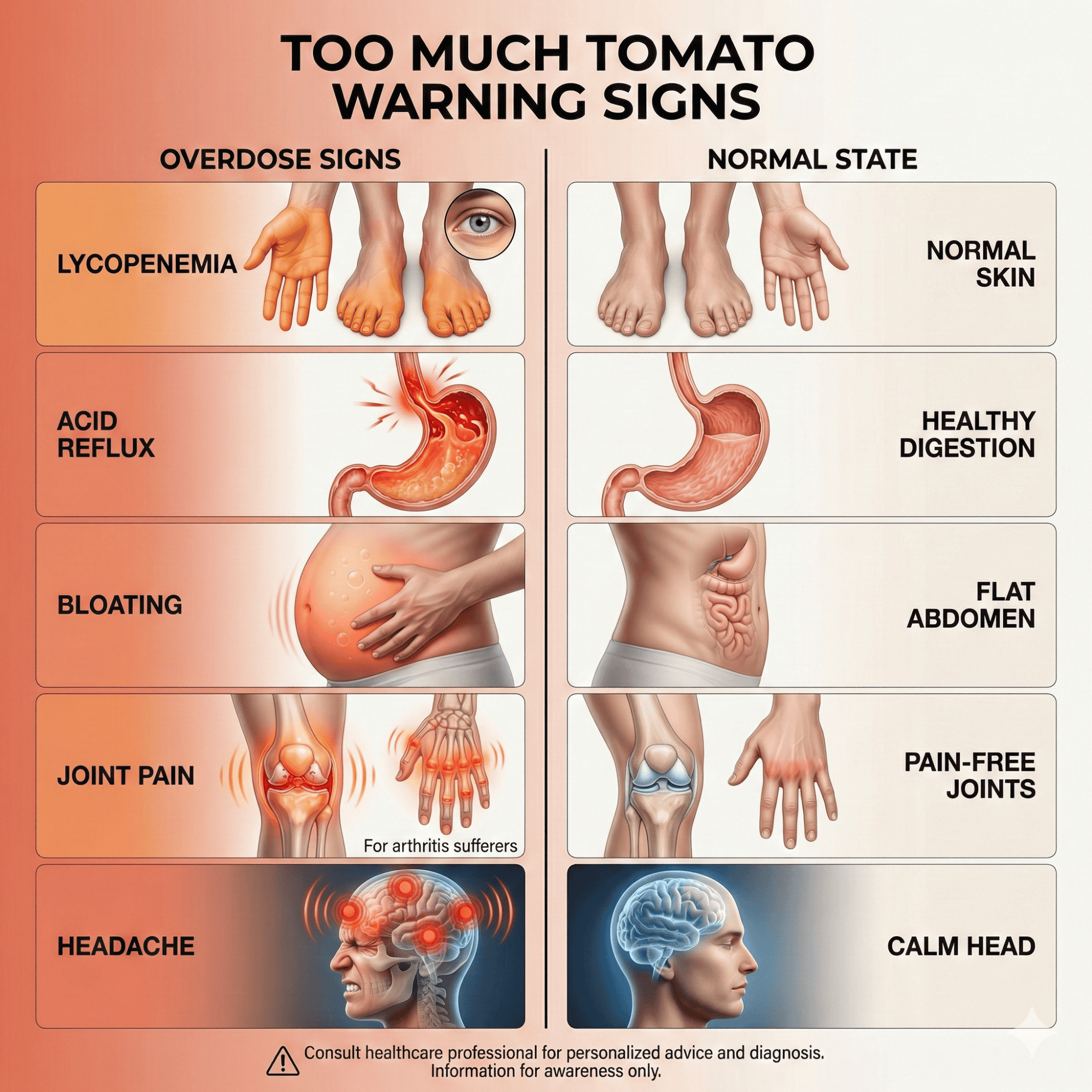
Physical Signs and Symptoms to Monitor
The most visible sign of too much lycopene is lycopenemia, where skin develops an orange or yellowish tint, especially on palms and soles. Unlike jaundice, the whites of your eyes remain white. Digestive symptoms include frequent heartburn, acid reflux that worsens after meals, stomach cramps, bloating, and diarrhea. Some people experience nausea after eating tomato-heavy meals. Additionally, watch for increased joint pain or inflammation if you have arthritis. Headaches can occur in some individuals with excessive intake. These symptoms typically resolve within days to weeks after reducing tomato consumption.
Emotional and Mental Health Indicators
While lycopene overdose doesn’t directly affect mental health, the physical discomfort can impact your mood. Constant digestive issues cause irritability and affect sleep quality. Skin discoloration might cause embarrassment or anxiety, especially if you don’t know the cause. Concern about health when symptoms appear creates stress. However, once you understand that reducing tomato intake solves the problem, anxiety decreases. It’s important to recognize that these are temporary, reversible conditions, not serious diseases requiring aggressive treatment.
When to Consult a Healthcare Professional
See a doctor if skin discoloration doesn’t improve within two weeks of reducing tomato intake, as this might indicate other conditions like liver problems or beta-carotene excess. Seek help for severe digestive symptoms including blood in stool, severe abdominal pain, or persistent vomiting. Consult a healthcare professional if you’re on blood-thinning medications and consuming large amounts of tomatoes, as interactions can occur. Additionally, if you have kidney stones or are prone to them, get guidance on safe tomato consumption. Always inform your doctor about supplement use, including lycopene supplements.
Indian Lifestyle Factors Affecting Lycopene Overdose
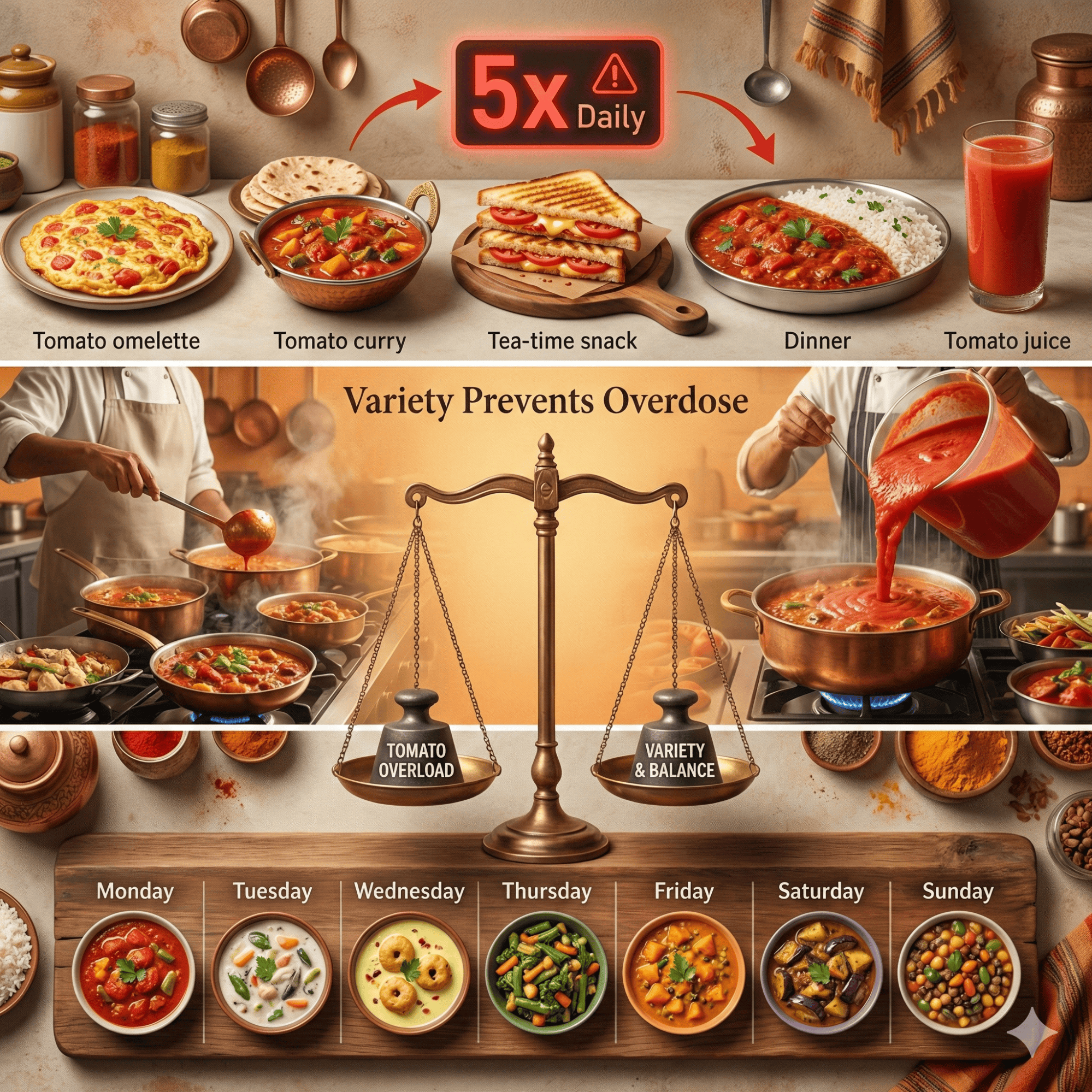
Modern Indian Diet Challenges and Solutions
Modern Indian diets include tomatoes in multiple forms throughout the day. Breakfast might have tomato omelette. Lunch features tomato-based curry. Evening tea comes with tomato sandwich. Dinner includes more tomato gravy. Add tomato juice as a health drink, and you’ve consumed tomatoes five times. Moreover, restaurant food uses tomato puree generously in gravies. The solution isn’t eliminating tomatoes but spreading variety across meals. If lunch has tomato curry, choose a different vegetable for dinner. Alternate between tomato-based and coconut-based or yogurt-based curries. Balance prevents overconsumption while maintaining lycopene benefits.
Work-Life Balance and Urban Living Impact
Urban Indians often grab quick meals like tomato soup or sandwiches. Packaged foods frequently contain tomato paste or puree. Working professionals might drink tomato juice believing it’s healthy. Additionally, health trends promote tomato consumption without mentioning upper limits. The convenience of tomato-based foods makes them easy to overeat. In fact, busy schedules mean less variety in diet, leading to repetitive tomato consumption. Balance this by meal planning weekly with varied vegetables. Choose different colored vegetables to ensure diverse nutrient intake. Remember that variety trumps focusing on single superfoods.
Cultural and Social Influences on Health
Indian culture values certain health beliefs that can lead to overconsumption. When something is labeled healthy, people tend to overdo it, thinking more equals better. Family recommendations to drink tomato juice daily for health can accumulate with tomato-heavy meals. Moreover, social media health influencers often promote extreme practices without nuance. The key is understanding that antioxidant overdose is real. Even beneficial nutrients need balance. Educate family members about moderation. Don’t follow health trends blindly. Listen to your body’s signals when something doesn’t feel right, even if it’s considered healthy.
Best Indian Foods for Lycopene Overdose Management
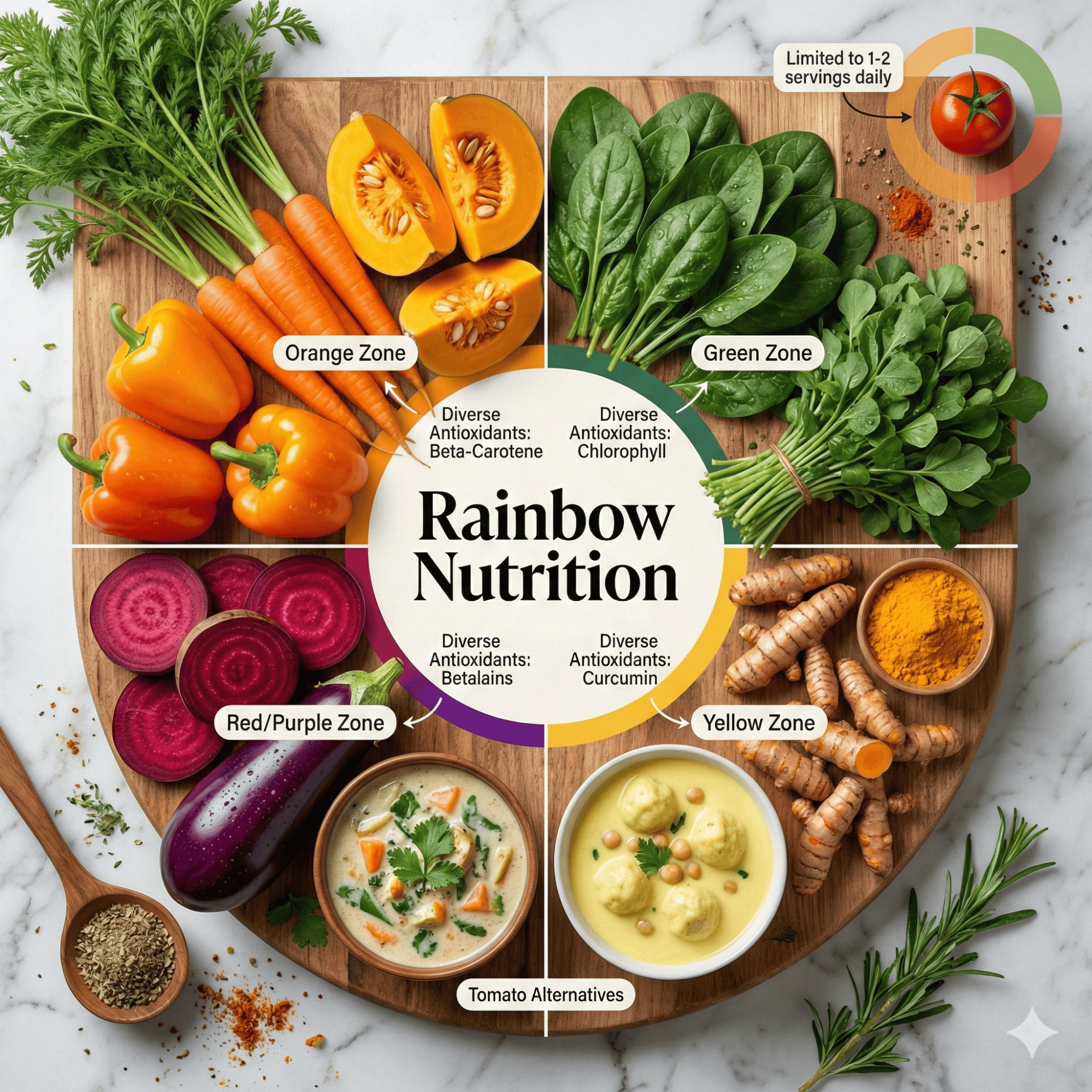
Traditional Indian Foods That Support Balanced Antioxidant Intake
When managing antioxidant overdose concerns, diversify your antioxidant sources. Get antioxidants from multiple vegetables, not just tomatoes. Carrots provide beta-carotene. Spinach offers lutein. Beets give betalains. Turmeric contains curcumin. Additionally, colorful vegetables like bell peppers, pumpkin, and sweet potatoes provide different beneficial compounds. This approach gives you broad antioxidant protection without excessive amounts of any single compound. Include green vegetables like methi, palak, and bhindi. Choose orange vegetables like carrots and pumpkin. Purple options like eggplant add variety. This rainbow approach optimizes health better than tomato-only focus.
Modern Indian Meal Options and Healthy Recipes
Create balanced meals without tomato overload. For breakfast, try poha, upma, or eggs with minimal tomato. Lunch could feature dal with jeera and garlic (no tomato), dry sabzi like aloo-gobi or beans, and curd. Use coconut-based curries like avial or kadhi made with curd. Dinner options include palak paneer, methi chicken, or dal makhani. Save tomato-based dishes for one meal daily if you enjoy them. Therefore, you get lycopene benefits without excess. This variety also ensures you’re getting diverse nutrients rather than relying heavily on tomatoes for health.
Foods to Limit or Avoid for Better Results
If experiencing tomato side effects, temporarily limit all tomato products. This includes fresh tomatoes, tomato puree, tomato paste, ketchup, pizza sauce, pasta sauce, and tomato juice. Reduce or avoid tomato-heavy dishes like tomato curry, shakshuka, or tomato rasam. Additionally, check packaged food labels as many contain hidden tomato ingredients. For people with acid reflux, avoiding tomatoes during flare-ups helps significantly. Once symptoms resolve, reintroduce tomatoes gradually in moderate amounts. You don’t need to eliminate them forever, just find your personal tolerance level through careful observation.
Portion Sizes and Meal Timing for Indians
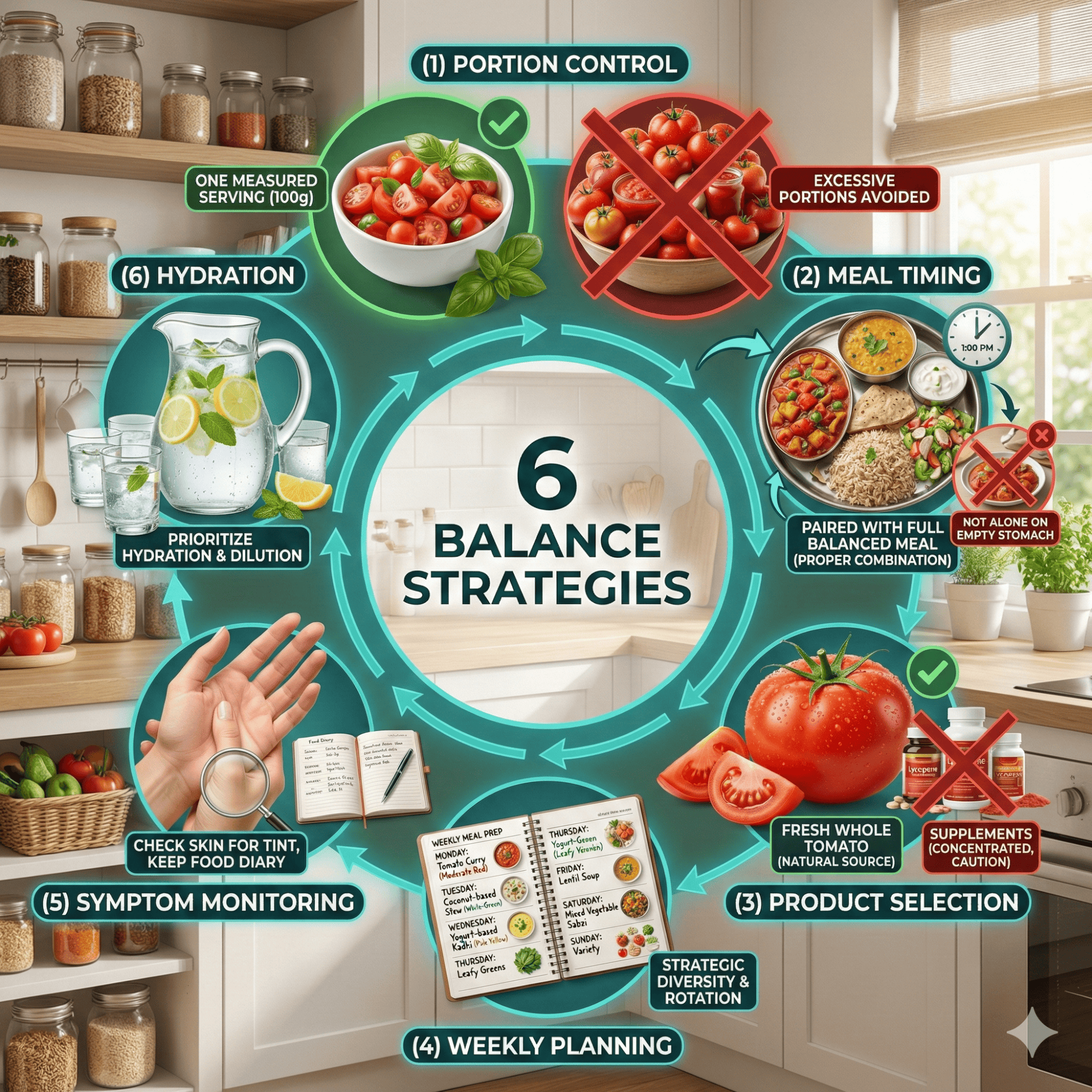
Moderate tomato intake means 1 to 2 medium tomatoes daily for most people, providing 5 to 10 mg of lycopene. This could be one tomato in your lunch curry and another in evening salad. If you’re consuming tomato juice, limit to half a glass (100ml) and count this toward your daily tomato intake. Additionally, eating tomatoes with meals rather than on an empty stomach reduces acid reflux risk. Cook tomatoes with healthy fats like olive oil or ghee to improve lycopene absorption while using smaller quantities. Time tomato consumption earlier in the day if you experience nighttime reflux.
Lifestyle Changes to Support Lycopene Overdose
Too Much Lycopene: The Right Approach for Indians
Managing too much lycopene involves simple dietary adjustments. First, track your tomato intake for three days to see actual consumption patterns. You might be surprised how often tomatoes appear. Second, designate tomato-free days where you explore other vegetables. Third, reduce portion sizes in tomato curries by mixing with other vegetables. Fourth, choose different curry bases like coconut, yogurt, or onion-based gravies. Additionally, if taking lycopene supplements, discontinue them unless prescribed by a doctor for specific medical reasons. Food-based lycopene with built-in portion control is safer than concentrated supplements.
Sleep and Stress Management Strategies
While not directly related to lycopene, proper sleep and stress management support overall health. Get 7 to 8 hours of sleep nightly to allow your body to process and eliminate excess compounds. Keep your bedroom cool and dark. Avoid heavy tomato-based meals close to bedtime as they can trigger reflux that disrupts sleep. For stress management, practice deep breathing or meditation daily. Moreover, stress increases stomach acid production, which combined with acidic tomatoes causes more discomfort. Managing stress reduces this compounding effect and improves digestive health overall.
Daily Habits That Make a Real Difference
Small habits prevent lycopene overdose while maintaining health benefits. Start meals with vegetables other than tomatoes to increase variety. When cooking, add tomatoes for flavor but not as the primary ingredient in every dish. Choose seasonal vegetables that change throughout the year, naturally diversifying your diet. Read labels on packaged foods to spot hidden tomato ingredients. Stay hydrated with water rather than tomato juice. Additionally, keep a food diary if experiencing symptoms, noting when they occur relative to tomato consumption. This awareness helps you identify your personal tolerance threshold.
Your 7-Day Lycopene Overdose Management Meal Plan
This meal plan limits tomatoes while ensuring balanced nutrition and diverse antioxidants:
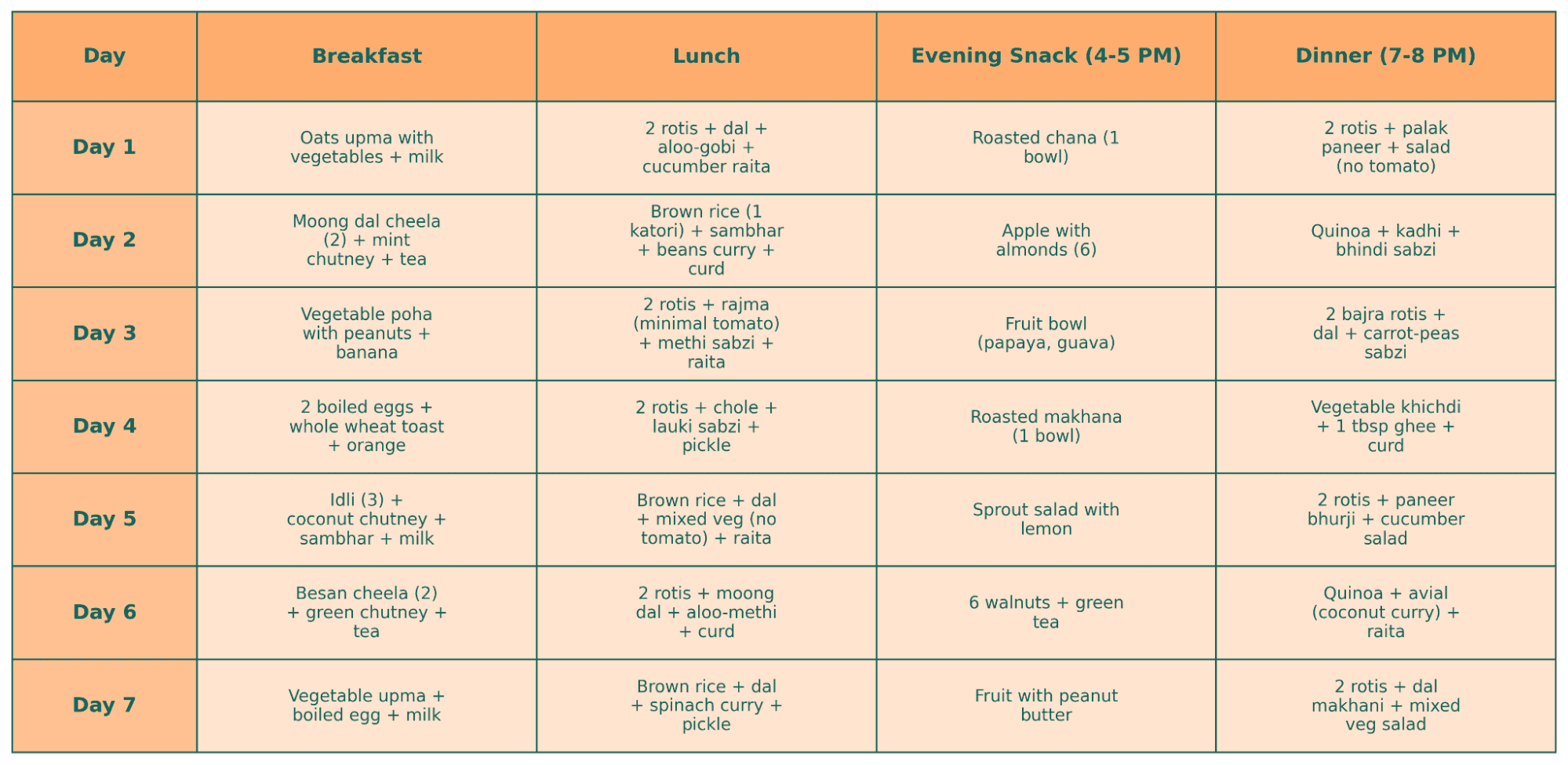
Note: Tomatoes appear minimally (in rajma on Day 3). Focus on diverse colored vegetables for varied antioxidants. Drink 8 to 10 glasses of water daily.
Common Mistakes Indians Make with Lycopene Overdose
Diet Mistakes That Sabotage Progress
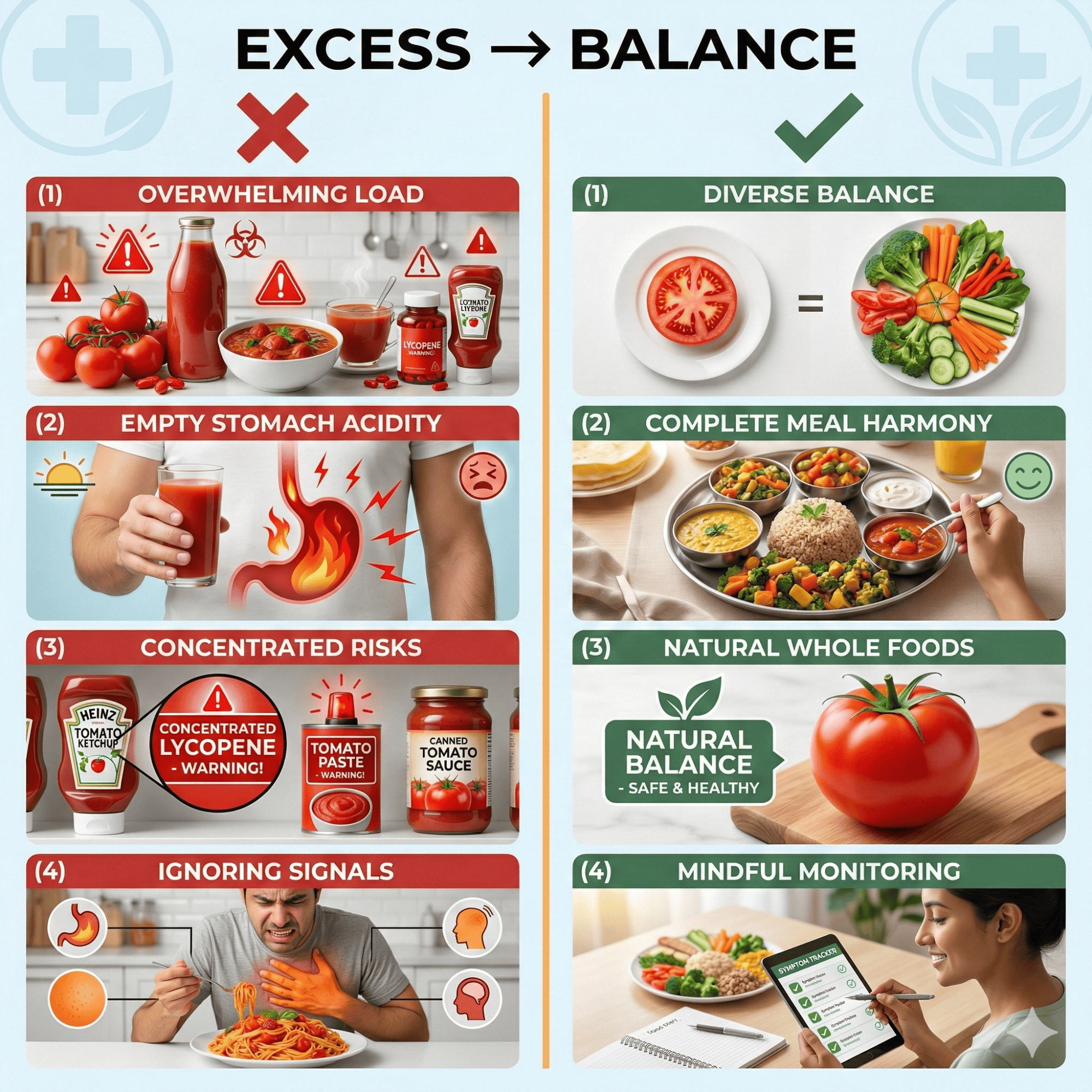
The biggest mistake is following health trends blindly without understanding personal limits. Drinking tomato juice daily because it’s “healthy” ignores individual tolerance. Another error is taking lycopene supplements while eating tomato-rich diets, creating excessive intake. Using tomato puree generously in every curry concentrates lycopene beyond natural food levels. Moreover, eating tomatoes on an empty stomach maximizes acid reflux problems. Not diversifying vegetable intake means missing other important nutrients while overloading on lycopene. These mistakes create tomato side effects that could be easily avoided with balanced eating.
Lifestyle Pitfalls to Watch Out For
Many people ignore their body’s signals. Experiencing heartburn after tomato curry but continuing to eat it daily because it’s tasty creates ongoing problems. Not reading ingredient labels means unknowingly consuming tomatoes in multiple packaged foods. Following supplement recommendations from social media rather than healthcare professionals risks excessive intake. Additionally, assuming all “superfoods” are safe in unlimited quantities is dangerous. Even water causes problems when consumed excessively. The mindset that “more is better” with healthy foods leads to imbalances that harm rather than help.
How to Course-Correct When Things Go Wrong
If you’ve developed lycopene overdose symptoms, course correction is straightforward. Eliminate all tomato products for two weeks while monitoring symptoms. Skin discoloration should start fading. Digestive issues should improve within days. Therefore, after symptoms resolve, reintroduce tomatoes slowly. Start with one small tomato every other day. If tolerated well, gradually increase to one daily. Pay attention to how your body responds. Some people tolerate half a tomato daily while others handle two comfortably. Find your personal sweet spot through observation. Remember, the goal is balanced nutrition, not tomato elimination or tomato overload.
Conclusion
Lycopene overdose reminds us that even healthy foods need balance. While tomatoes offer impressive lycopene benefits for heart health and disease prevention, excessive consumption causes uncomfortable and visible side effects. The key is moderation and variety, not elimination or overindulgence. Indian diets can include tomatoes safely by spreading them across meals rather than featuring them in every dish.
Start today by tracking your tomato intake for three days to identify patterns. Replace one tomato-based meal daily with a different vegetable curry using coconut, yogurt, or onion base. Additionally, aim for a rainbow of vegetables throughout the week rather than relying heavily on tomatoes alone. These simple adjustments maintain the health benefits while preventing problems.
FAQs
Q1: What is lycopene overdose and how does it affect Indians?
Lycopene overdose occurs when you consume excessive lycopene, usually from supplements or eating tomatoes at every meal, causing skin discoloration and digestive issues. Indians consuming tomato-heavy diets plus supplements risk tomato side effects like heartburn, bloating, and orange-tinted skin.
Q2: What are the main signs of too much lycopene?
Signs include orange or yellow skin tint (especially palms and soles), frequent heartburn, acid reflux, stomach cramps, bloating, diarrhea, and nausea. Lycopene benefits turn to problems when consumed excessively, with symptoms resolving after reducing tomato intake.
Q3: What should Indians eat for balanced antioxidant intake?
Diversify antioxidant sources with carrots, spinach, beets, turmeric, bell peppers, pumpkin, and leafy greens instead of only tomatoes. Use coconut-based or yogurt-based curries, limit tomato products to 1 to 2 servings daily to avoid antioxidant overdose.
Q4: Can a lycopene overdose be managed naturally?
Yes, manage too much lycopene by eliminating tomato products for two weeks, then reintroducing gradually. Diversify vegetables, stop taking lycopene supplements, and eat tomatoes with meals rather than empty stomach to reduce acid reflux.
Q5: How long does it take to see improvement after reducing tomatoes?
Digestive symptoms improve within 3 to 5 days of reducing tomato intake. Skin discoloration from lycopene fades within 2 to 4 weeks. Monitor symptoms and adjust intake to find your personal tolerance level.
Q6: When should I consult a doctor about lycopene issues?
See a doctor if skin discoloration persists over two weeks despite reducing tomatoes, for severe digestive symptoms with blood in stool, or if you’re on blood thinners. Get guidance for kidney stone concerns with tomato nutrition intake.
Related Posts