Your recent blood test shows fasting glucose at 115 mg/dL. Your doctor mentioned it’s “borderline.” But what does that actually mean for someone your age? Is 115 the same concern at 25 as it is at 65? Understanding the blood sugar level chart by age isn’t about memorizing numbers. It’s about knowing what’s normal for you and when to take action. This comprehensive blood sugar level chart by age guide helps Indian diabetics and pre-diabetics manage glucose effectively with clear targets and practical strategies.
What Is the Blood Sugar Level Chart By Age and Why Indian Dieters Should Care?
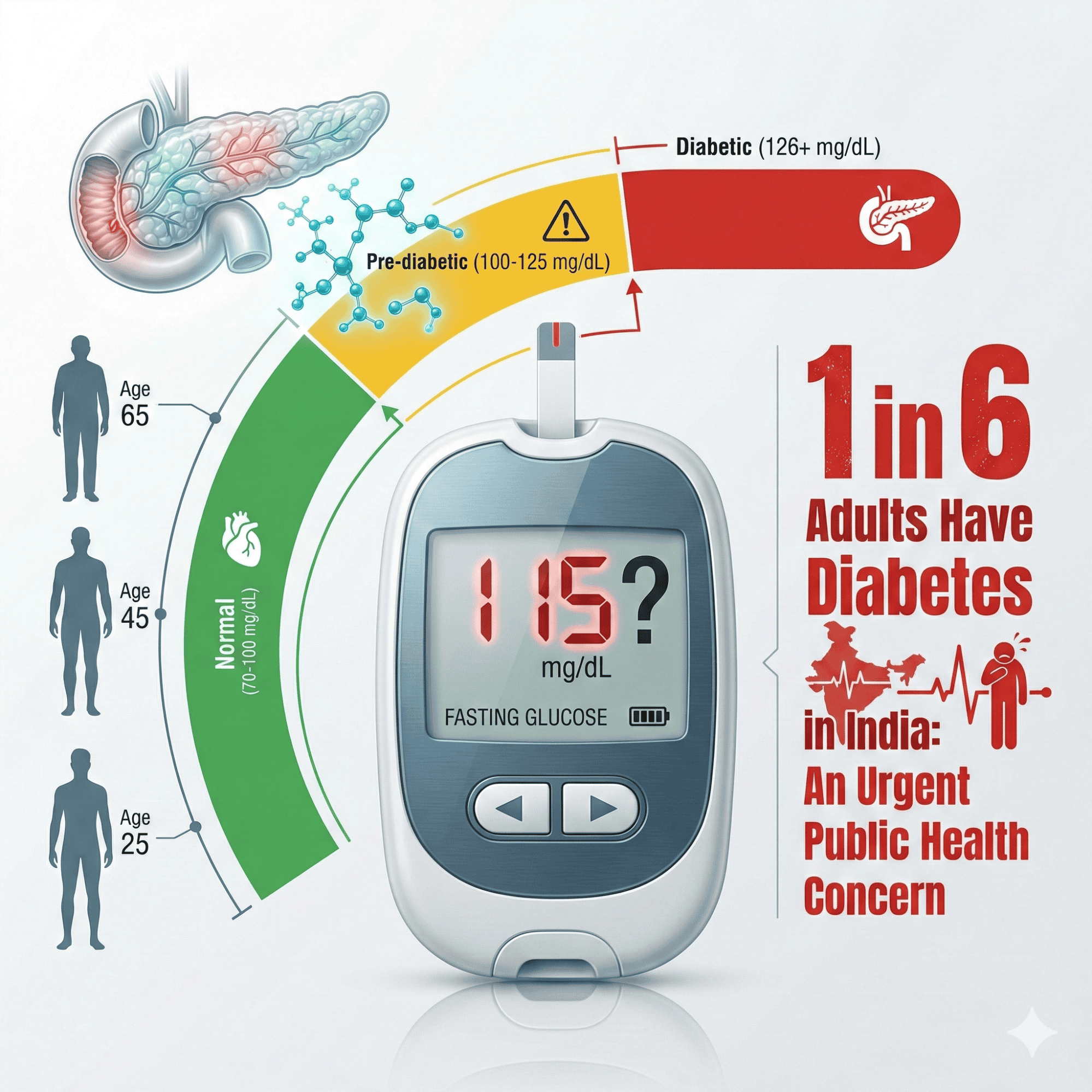
Blood sugar (glucose) is your body’s main energy source, coming from the food you eat. Your pancreas releases insulin to help cells use this glucose. A blood sugar level chart by age shows the ranges considered normal, pre-diabetic, or diabetic for different age groups. Fasting glucose (after 8 hours without food) should typically be 70 to 100 mg/dL. Post-meal glucose (2 hours after eating) should stay under 140 mg/dL. However, these targets can vary slightly based on age, health status, and individual circumstances. Therefore, understanding your personal targets is crucial for effective diabetes management.
Why Blood Sugar Management Matters for Indian Bodies
Indians face alarmingly high diabetes rates. Nearly 1 in 6 adults has diabetes, and rates are climbing even in younger age groups. We develop diabetes 10 years earlier than Westerners and at lower body weights due to genetic factors. Additionally, our traditional high-carb diets (rice, rotis, sweets) make blood sugar management challenging. Urban lifestyles with sedentary jobs and stress compound the problem. Moreover, many Indians ignore early warning signs or delay treatment. Understanding normal glucose levels by age helps you catch problems early when lifestyle changes are most effective, before medications become necessary.
Common Myths Debunked About This Topic
Let’s clear up misconceptions about blood sugar level chart by age. First, “borderline diabetes” isn’t something to ignore. It’s pre-diabetes requiring immediate action. Second, diabetes isn’t just for older people. Indians develop type 2 diabetes in their 30s and 40s increasingly. Third, normal ranges do change with age, but this doesn’t mean elderly people should accept very high glucose. Fourth, random glucose tests aren’t enough. You need fasting and post-meal readings for accurate assessment. Finally, feeling fine doesn’t mean your blood sugar is normal. Diabetes often has no symptoms initially.
The Science Behind Blood Sugar Level Chart By Age for Indians
How Blood Sugar Works in Your Body
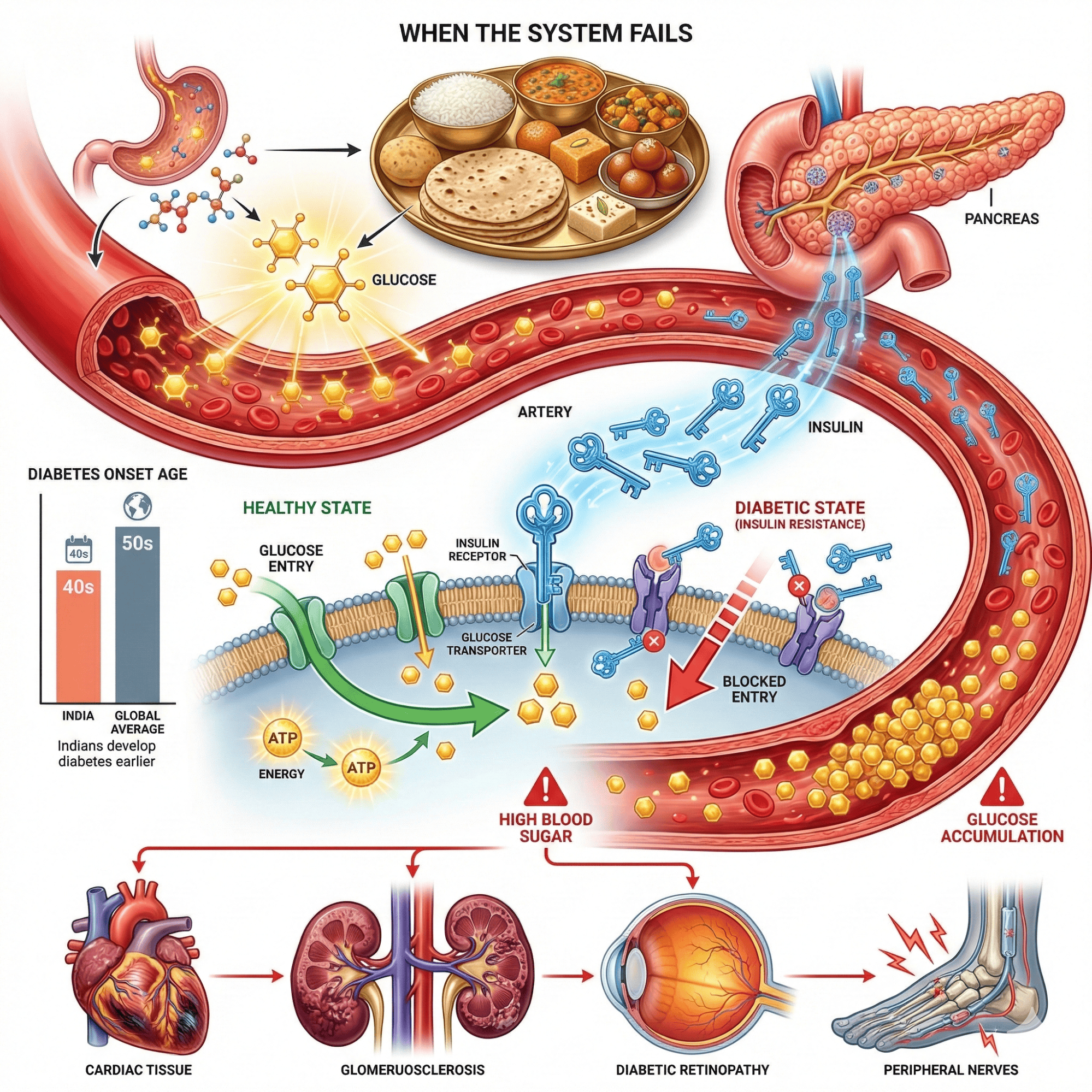
When you eat, carbohydrates break down into glucose and enter your bloodstream. Your pancreas detects this glucose rise and releases insulin. Insulin acts like a key, unlocking cells so glucose can enter and provide energy. In healthy people, this system keeps glucose in normal glucose levels range automatically. However, in pre-diabetes and diabetes, this system fails. Either your pancreas doesn’t make enough insulin, or your cells become resistant to insulin’s effects. As a result, glucose accumulates in blood instead of entering cells, causing high blood sugar and depriving cells of energy.
The Connection Between Normal Glucose Levels and Health
Maintaining normal glucose levels protects your entire body. High blood sugar damages blood vessels over time, affecting every organ. Your heart and blood vessels suffer, increasing heart attack and stroke risk. Kidneys get damaged, potentially leading to kidney failure. Eyes develop retinopathy, causing vision loss. Additionally, nerves suffer damage causing tingling, numbness, and pain in feet and hands. Wound healing slows dramatically. Infections become more frequent and severe. Moreover, brain function declines, affecting memory and cognitive abilities. Therefore, keeping glucose in target ranges prevents these serious complications and maintains quality of life.
What Research Shows for Indian Population
Studies on Indians reveal concerning trends in diabetes diagnosis patterns. Research shows that Indians develop diabetes at younger ages (40s instead of 50s) and at lower BMI levels compared to Westerners. One major study found that urban Indians had diabetes prevalence of 20% or higher in some cities. Additionally, Indians often have higher post-meal glucose spikes even when fasting glucose appears normal. HbA1c levels (3-month average glucose) tend to be higher in Indians with similar fasting glucose compared to other populations. In fact, complications like heart disease appear earlier in Indian diabetics. These factors make regular monitoring with appropriate age-based targets crucial.
Diabetes Diagnosis: What to Watch For
Physical Signs and Symptoms to Monitor
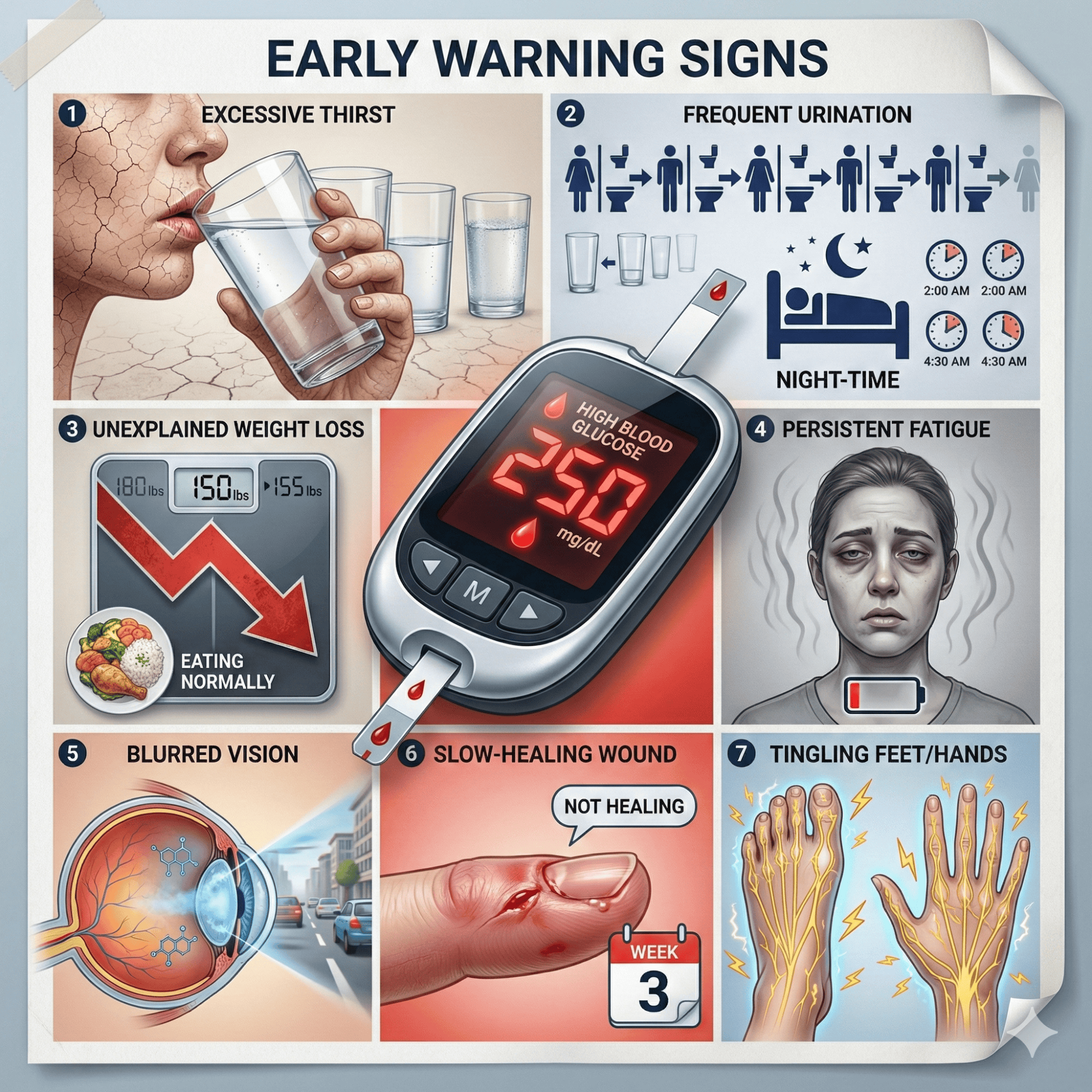
Early diabetes diagnosis often happens through symptoms or routine testing. Watch for increased thirst where you drink water constantly but still feel thirsty. Frequent urination, especially at night, signals high glucose spilling into urine. Unexplained weight loss despite normal eating occurs when cells can’t use glucose for energy. Persistent fatigue and weakness result from cells being energy-starved. Additionally, blurred vision happens when high glucose affects the lens of your eye. Slow-healing cuts or frequent infections indicate immune system impairment. Tingling or numbness in hands or feet suggests early nerve damage.
Emotional and Mental Health Indicators
Blood sugar fluctuations significantly affect mental health and mood. High glucose causes irritability, difficulty concentrating, and feeling foggy. Low glucose (hypoglycemia) causes anxiety, shakiness, confusion, and intense hunger. Chronic high blood sugar leads to depression and emotional instability over time. Moreover, the stress of managing diabetes affects mental wellbeing. Sleep disturbances are common as high nighttime glucose causes frequent bathroom trips. Mood swings throughout the day often correlate with glucose fluctuations. Addressing blood sugar ranges through proper management stabilizes mood and mental clarity remarkably.
When to Consult a Healthcare Professional
Get tested if you have risk factors even without symptoms. Indians over 35 should get screened. Test earlier if you’re overweight, have family history of diabetes, had gestational diabetes, or have PCOS. Seek immediate help for severe symptoms like extreme thirst, rapid breathing, confusion, or fruity-smelling breath (diabetic ketoacidosis emergency). Additionally, see your doctor if home monitoring shows consistently high readings despite lifestyle changes. Regular follow-ups are essential once diagnosed to adjust treatment and monitor for complications. Annual eye exams, kidney function tests, and foot examinations prevent serious problems.
Indian Lifestyle Factors Affecting Blood Sugar Level Chart By Age
Modern Indian Diet Challenges and Solutions
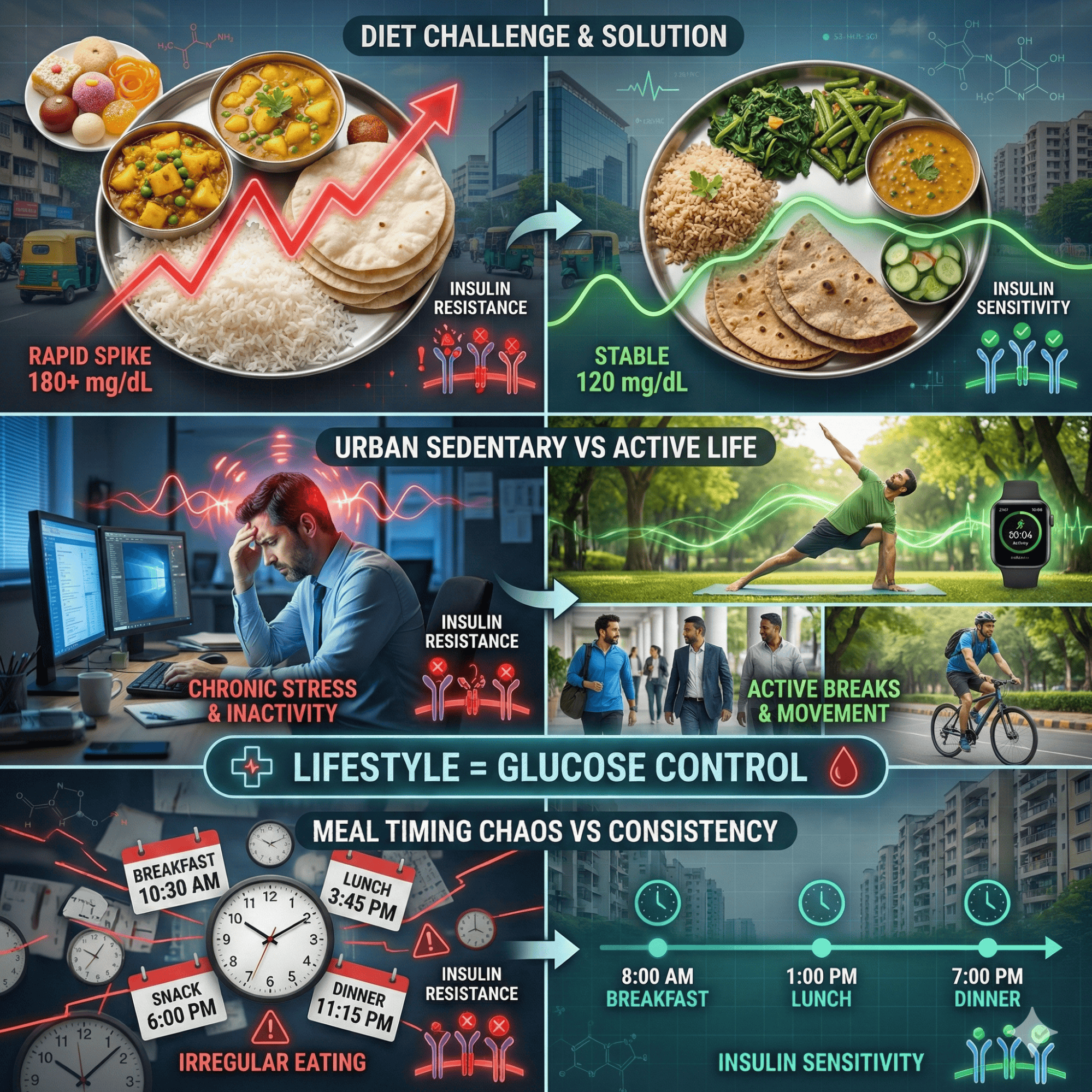
Traditional Indian diets, while delicious, pose challenges for blood sugar ranges. White rice, refined wheat, and potatoes dominate meals, causing rapid glucose spikes. Sweets are integral to celebrations and daily life. Fried snacks like samosas and pakoras are everywhere. Moreover, large portions of carbs with minimal protein or fiber make glucose control difficult. Solutions include switching to brown rice, millets, or quinoa gradually. Choose whole wheat products over refined. Load half your plate with vegetables before adding grains. Include protein (dal, eggs, paneer, chicken) at every meal. Save sweets for special occasions, not daily consumption. Small changes in food choices make dramatic differences.
Work-Life Balance and Urban Living Impact
Urban Indian lifestyles sabotage glucose control through multiple pathways. Desk jobs mean sitting 8 to 10 hours daily, reducing insulin sensitivity. Stress from work and traffic raises cortisol, which elevates blood sugar. Irregular meal timing disrupts glucose regulation. Additionally, lack of sleep (common with long commutes and work pressure) significantly impairs glucose control. Fast food and restaurant meals are convenient but high in refined carbs and unhealthy fats. In fact, air pollution affects metabolism and diabetes risk. Balance these by taking walking breaks at work, packing healthy meals, prioritizing 7 to 8 hours of sleep, and managing stress through meditation or exercise.
Cultural and Social Influences on Health
Indian culture creates unique diabetes management challenges. Social pressure to eat when visiting family or friends makes portion control difficult. Refusing food is considered rude. Festival seasons involve continuous sweets and special meals. Moreover, stigma around diabetes means people hide the diagnosis rather than managing it openly. Traditional beliefs about body size mean people don’t recognize obesity as a health risk. Fatalism (“it’s my destiny”) prevents proactive management. Navigate these by communicating your health needs clearly to family. Participate in celebrations while making smart choices. Take small portions to be polite. Educate family about the importance of HbA1c levels management.
Best Indian Foods for Blood Sugar Level Chart By Age Management
Traditional Indian Foods That Support Blood Sugar Control
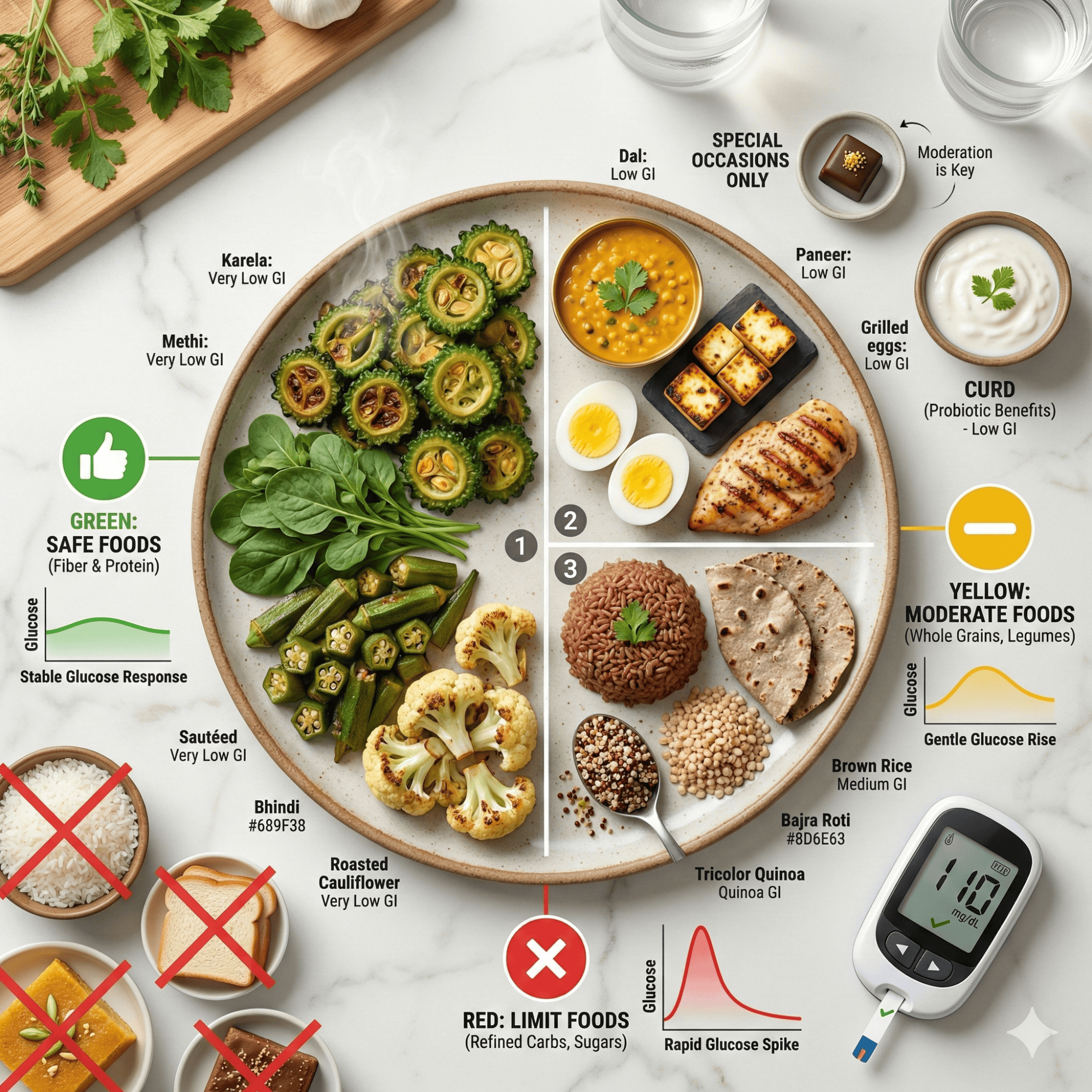
Indian cuisine offers excellent options for managing blood sugar ranges. Whole dals (moong, masoor, chana) provide protein and fiber that slow glucose absorption. Vegetables like bitter gourd (karela), fenugreek (methi), okra (bhindi), and drumstick are particularly beneficial. Whole grains like bajra, jowar, ragi, and brown rice release glucose slowly. Additionally, cinnamon helps improve insulin sensitivity. Fenugreek seeds lower glucose when soaked overnight and consumed. Amla (Indian gooseberry) supports pancreatic health. Coconut oil in moderation provides healthy fats that don’t spike glucose. Curd improves gut health and glucose control. These traditional foods work powerfully when used consistently.
Modern Indian Meal Options and Healthy Recipes
Create glucose-friendly meals easily. Breakfast could be vegetable poha with moong sprouts, or oats upma with vegetables and peanuts. Try egg bhurji with whole wheat toast. Lunch might include brown rice or bajra roti with dal, plenty of vegetables, and curd. Make mixed vegetable sambhar or palak paneer. Dinner options include quinoa pulao with dal, or roti with rajma and cucumber raita. Additionally, snacks can be roasted chana, handful of nuts, or vegetable sticks with hummus. The key is controlling carb portions, including protein and fiber, and avoiding refined foods. Cooking methods matter too: steaming, roasting, or sautéing beats deep frying.
Foods to Limit or Avoid for Better Results
Certain foods wreak havoc on normal glucose levels. White rice, especially polished rice, spikes glucose rapidly. Refined flour (maida) products like white bread, biscuits, and pastries cause similar problems. Sugary drinks including sodas, packaged fruit juices, and sweet lassi shoot glucose up. Fried foods like samosas, pakoras, and puris affect both glucose and weight. Moreover, sweets and desserts (gulab jamun, jalebi, barfi) are concentrated sugar bombs. Processed snacks with hidden sugars and unhealthy fats disrupt metabolism. You don’t need to never eat these, but they should be rare treats, not regular parts of your diet.
Portion Sizes and Meal Timing for Indians
Portion control is crucial for maintaining blood sugar level chart by age targets. Use the plate method: fill half with vegetables, one-quarter with protein (dal, chicken, paneer), and one-quarter with whole grains. For rotis, 2 to 3 small whole wheat rotis per meal is reasonable. For rice, stick to 1 katori (about 1 cup cooked). Additionally, meal timing matters significantly. Eat breakfast within an hour of waking to stabilize morning glucose. Have lunch between 12 to 2 PM when metabolism is active. Eat dinner by 7 to 8 PM, at least 2 to 3 hours before sleep. Consistent meal timing helps your body regulate glucose more effectively than erratic eating patterns.
Lifestyle Changes to Support Blood Sugar Level Chart By Age
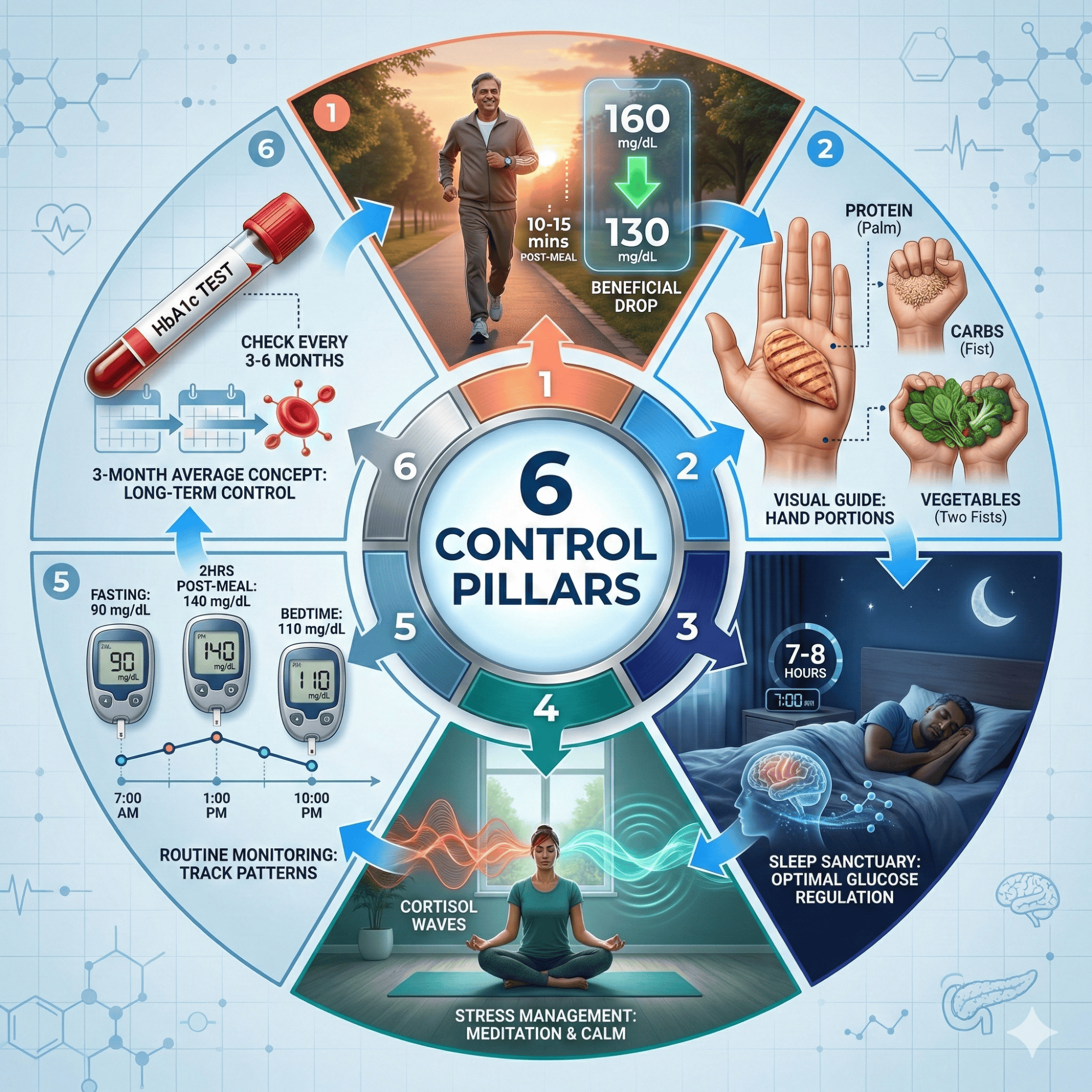
HbA1c Levels: The Right Approach for Indians
Understanding HbA1c levels is crucial for long-term glucose management. HbA1c measures your average glucose over 2 to 3 months. Normal is below 5.7%. Pre-diabetes is 5.7% to 6.4%. Diabetes is 6.5% or higher. However, for diagnosed diabetics, the target is usually under 7%, though this varies by age and health status. Elderly people might have slightly higher targets to prevent dangerous low glucose episodes. Check HbA1c every 3 months if above target, or every 6 months if well-controlled. This test gives the big picture beyond daily fluctuations. Improving HbA1c by even 1% significantly reduces complication risks.
Sleep and Stress Management Strategies
Quality sleep is essential for glucose control. Poor sleep increases insulin resistance, making blood sugar harder to manage. Aim for 7 to 8 hours nightly. Keep your bedroom dark, cool, and quiet. Avoid screens an hour before bed. Keep consistent sleep times even on weekends. For stress management, chronic stress raises cortisol, which elevates blood sugar. Moreover, practice daily stress reduction: 10 minutes of meditation, deep breathing exercises, or gentle yoga. Take short breaks during work to walk and breathe. Find activities that relax you. Managing stress isn’t optional for diabetics; it’s essential medicine.
Daily Habits That Make a Real Difference
Small consistent habits create dramatic results in glucose monitoring. Check your blood sugar at different times to understand patterns: fasting in the morning, 2 hours after meals, and before bed occasionally. Keep a log to spot trends. Take a 10 to 15 minute walk after meals, which significantly lowers post-meal glucose spikes. Stay hydrated with water throughout the day. Additionally, examine your feet daily for cuts or sores that heal slowly. Take medications consistently if prescribed. Carry glucose tablets or candy for low blood sugar emergencies. These habits, combined with good nutrition, keep glucose in target ranges and prevent complications.
Your 7-Day Blood Sugar Level Chart By Age Management Meal Plan
This meal plan emphasizes low glycemic foods and portion control:
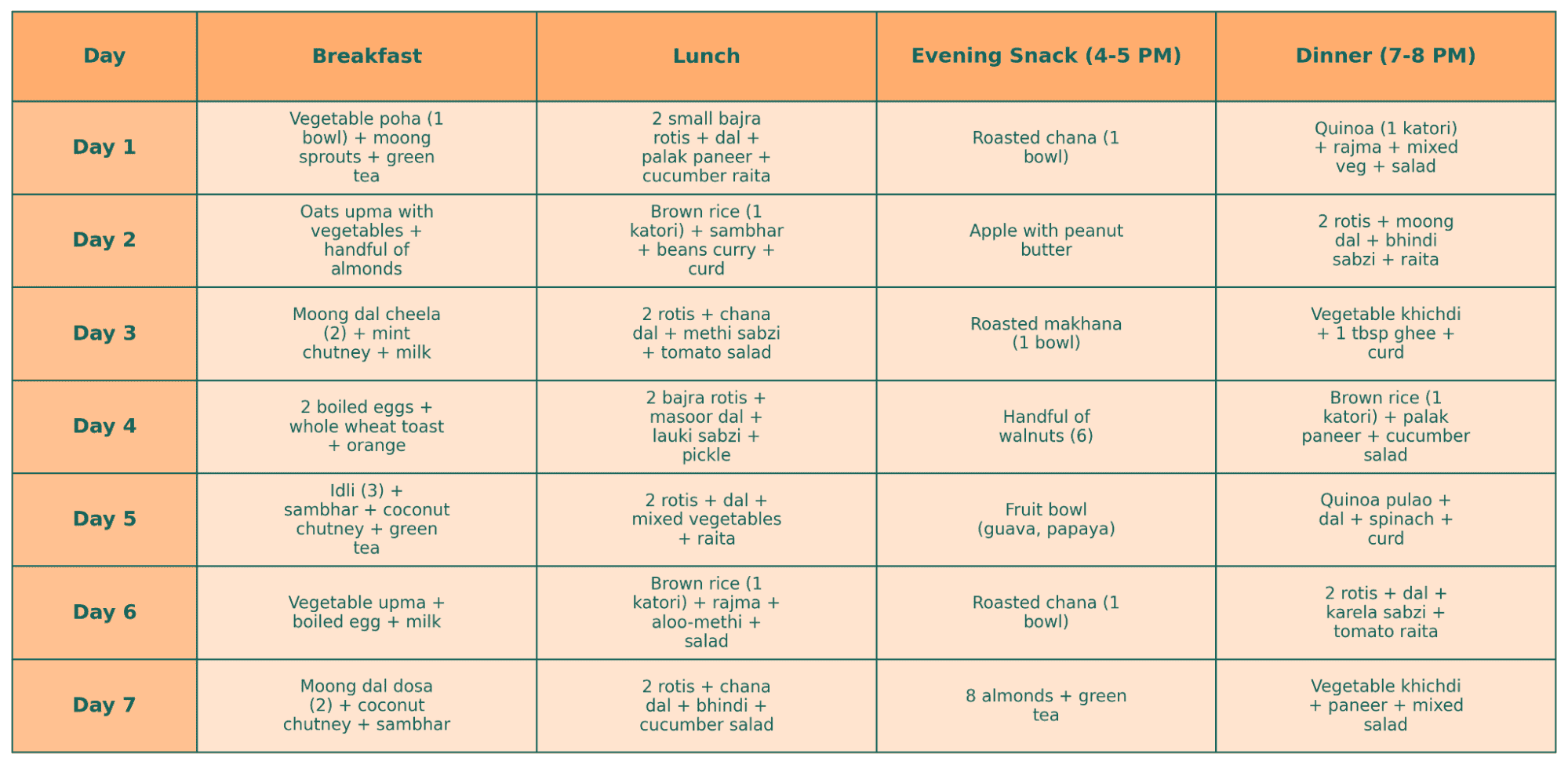
Note: Drink 8 to 10 glasses of water daily. Avoid fruit juices. Test blood sugar 2 hours after meals to understand food impacts.
Common Mistakes Indians Make with Blood Sugar Level Chart By Age
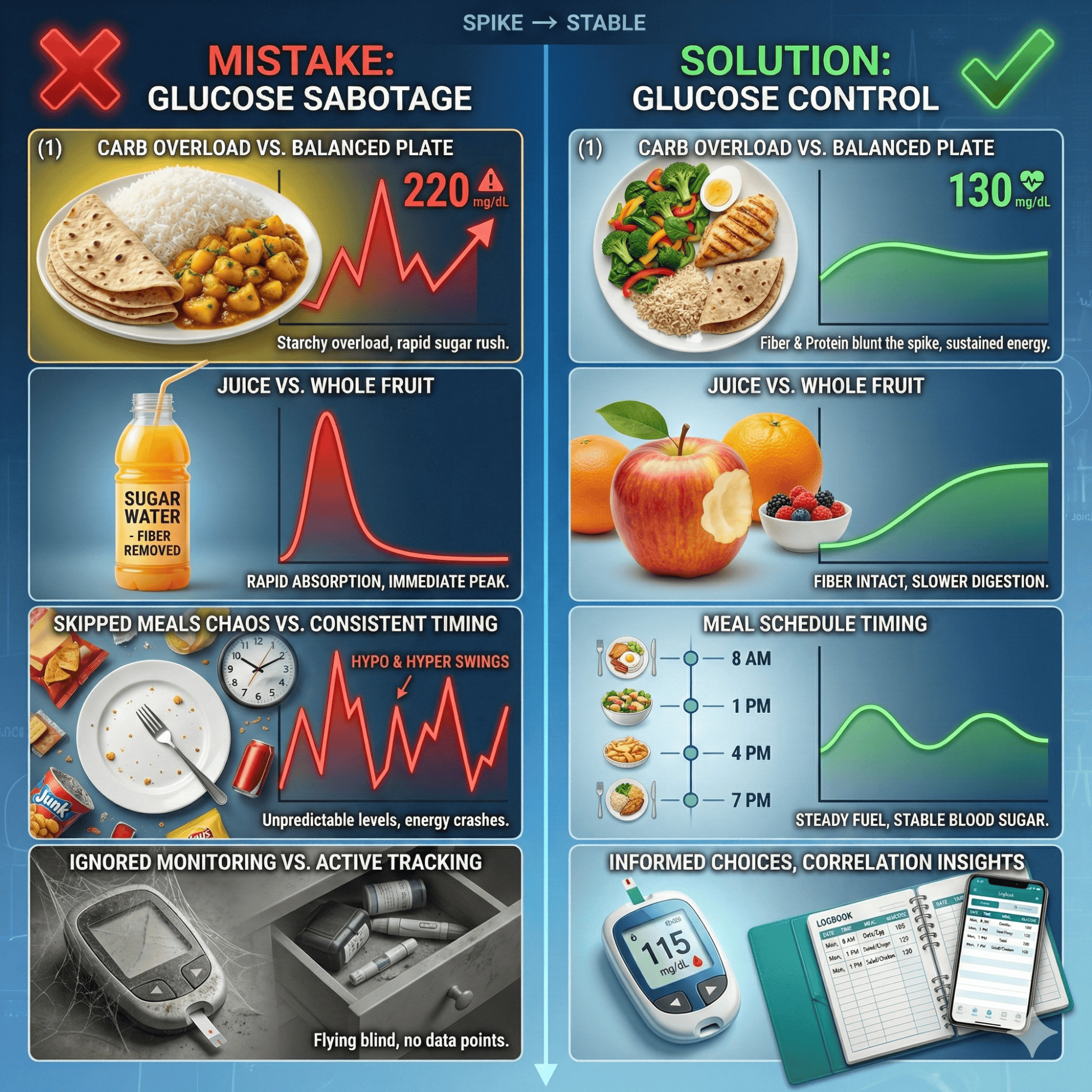
Diet Mistakes That Sabotage Progress
The biggest mistake is eating too many carbs at once, even healthy carbs. A plate full of rice plus roti plus potatoes spikes glucose regardless of quality. Another error is drinking fruit juice thinking it’s healthy, when it’s essentially sugar water without fiber. Many people skip meals hoping it helps, but this causes glucose swings. Moreover, not including protein and fiber with carbs means rapid absorption. Relying on “diabetic-friendly” packaged foods without checking labels misses hidden sugars and refined flours. These mistakes keep blood sugar ranges elevated despite thinking you’re eating well.
Lifestyle Pitfalls to Watch Out For
Many diabetics sabotage themselves unknowingly. Checking glucose only when feeling bad misses important patterns. Not tracking food, glucose, and symptoms prevents identifying triggers. Sitting all day dramatically worsens insulin resistance. Additionally, taking medications inconsistently reduces effectiveness. Believing supplements can replace dietary changes and medications is dangerous. Ignoring portion sizes because “it’s healthy” still causes problems. Moreover, not managing stress means constantly elevated cortisol keeps glucose high. Skipping doctor appointments prevents catching complications early. These lifestyle factors undermine even good dietary efforts.
How to Course-Correct When Things Go Wrong
If your glucose remains high despite efforts, evaluate systematically. Track everything for one week: all food with portions, glucose readings, physical activity, sleep, and stress levels. Patterns will emerge. Maybe you’re eating well but portions are too large. Perhaps meal timing is irregular. Therefore, adjust based on data. If lifestyle changes aren’t enough after 3 months, medications might be needed. Don’t see this as failure; it’s additional support. Work with your doctor to find the right combination. Sometimes HbA1c levels improve with medication plus lifestyle, then medication can be reduced later. The goal is controlled glucose however achieved, protecting your health long-term.
Conclusion
Understanding blood sugar level chart by age empowers you to take control of diabetes management or prevention. Normal glucose levels vary slightly by age, but the principles remain the same: balanced nutrition with controlled carbs, regular physical activity, adequate sleep, and stress management create dramatic improvements. Indians face higher diabetes risk, but early action through lifestyle changes can prevent or reverse pre-diabetes entirely.
Start today by testing your fasting glucose if you haven’t recently. Begin tracking one meal’s impact on your blood sugar 2 hours after eating. Additionally, commit to a 10-minute walk after lunch and dinner this week. These simple actions reveal patterns and create immediate improvements.
FAQs
Q1: What is blood sugar level chart by age and how does it affect Indians?
A blood sugar level chart by age shows target glucose ranges for different age groups, helping monitor diabetes risk. Indians develop diabetes earlier and at lower weights than other populations, making age-appropriate normal glucose levels monitoring crucial for early intervention.
Q2: What are the main signs of diabetes?
Signs include increased thirst, frequent urination especially at night, unexplained weight loss, persistent fatigue, blurred vision, slow-healing wounds, and tingling in hands or feet. Many diabetes diagnosis cases have no symptoms initially, making regular screening essential for at-risk Indians.
Q3: What foods should Indians eat for blood sugar control?
Eat whole dals, vegetables like karela and methi, whole grains (bajra, jowar, brown rice), curd, and lean proteins like eggs or chicken. These maintain healthy blood sugar ranges when eaten in proper portions with minimal refined carbs and sweets.
Q4: Can blood sugar be managed naturally?
Yes, manage blood sugar through portion-controlled balanced meals, regular exercise (especially walking after meals), 7 to 8 hours sleep, stress management, and consistent meal timing. Monitor HbA1c levels every 3 to 6 months to track progress beyond daily fluctuations.
Q5: How long does it take to see blood sugar improvements?
Daily glucose readings improve within 1 to 2 weeks of consistent dietary and lifestyle changes. HbA1c levels (3-month average) show measurable improvement in 8 to 12 weeks, with optimal control often achieved in 3 to 6 months of sustained effort.
Q6: When should I consult a doctor about blood sugar?
See a doctor if you’re over 35 (or younger with risk factors), have diabetes symptoms, or home readings consistently exceed 125 mg/dL fasting or 180 mg/dL post-meal. Get immediate help for confusion, rapid breathing, or fruity breath indicating diabetic emergency.
Related Posts