You planned to hit the gym after work, but exhaustion hits hard. Your motivation is zero, your body feels heavy, and that intense workout seems impossible today. Should you force yourself through high-intensity training or skip exercise entirely? There’s a better option: low-impact workouts that keep you active without pushing beyond your current capacity. These gentle exercise approaches maintain fitness progress on days when you’re not feeling your best, preventing the all-or-nothing mindset that derails consistency. This guide reveals how low-impact workouts support long-term fitness for busy Indian professionals managing work stress, family responsibilities, and unpredictable energy levels.
What Is Low-Impact Workouts and Why Indian Dieters Should Care?
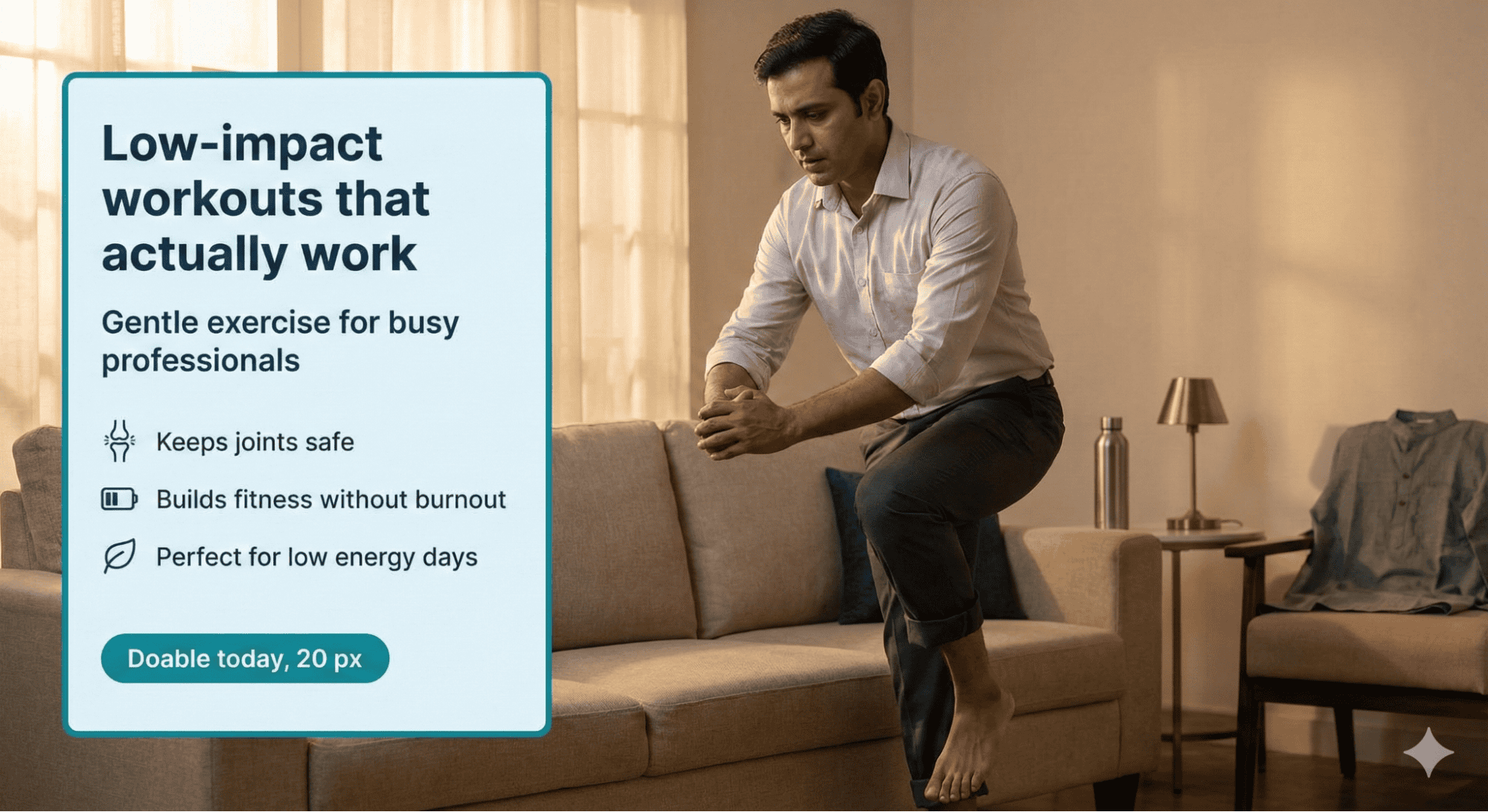
Low-impact workouts are exercises that keep at least one foot on the ground at all times, reducing stress on joints while still providing cardiovascular and strength benefits. Unlike high-impact activities like running or jumping that create force through your joints, gentle exercise options like walking, swimming, yoga, or cycling minimise joint stress while still burning calories and building fitness. Additionally, low-impact doesn’t mean low-intensity. You can work hard and breathe heavy during low intensity workouts while still being kind to your joints. The “impact” refers to force on joints, not effort level or results. Therefore, low-impact workouts suit everyone from beginners to advanced athletes, people recovering from injury, those with joint issues, and anyone not feeling energetic enough for intense training but wanting to stay active.
Why Low-Impact Matters for Indian Bodies
Indians need low-impact workouts for several specific reasons. Our typically sedentary urban lifestyles mean jumping straight into high-impact exercise without a fitness base creates injury risk. Additionally, many Indians have joint issues from obesity, genetics, or previous injuries, making high-impact exercise painful or dangerous. Moreover, the “no pain, no gain” mentality in Indian gym culture pushes people to exercise too intensely when they’re not ready, causing burnout or injury. Furthermore, busy Indian professionals with unpredictable work hours, family obligations, and high stress need flexible exercise options for days when motivation or energy is low. Recovery workouts and joint friendly exercise approaches allow consistency despite these challenges. In fact, exercising regularly at moderate intensity beats occasional intense workouts for long-term health and fitness. Therefore, embracing low-impact workouts as legitimate exercise rather than dismissing them as “too easy” creates sustainable fitness habits.
Common Myths Debunked About This Topic
Let’s demolish myths preventing Indians from embracing low-impact workouts. First, low-impact doesn’t mean ineffective. Studies show walking, cycling, and swimming produce excellent fitness and health benefits comparable to higher-impact options when done consistently. Second, you don’t need to feel destroyed after every workout for it to “count.” Chronic intense exercise without adequate recovery actually impairs progress and health. Third, gentle exercise isn’t only for elderly or injured people. Elite athletes use low-impact training regularly for recovery and maintenance. Fourth, you can build muscle and lose fat with low intensity workouts when combined with proper nutrition and progressive challenge. Additionally, low-impact exercise doesn’t bore you inevitably. Variety in routes, intensity, music, or workout partners keeps it engaging. Finally, spending 30 to 45 minutes on low-impact workouts isn’t “wasting time” when you could do 15 minutes of intense work. The sustainable option that you’ll actually do consistently beats the theoretically optimal workout you abandon.
The Science Behind Low-Impact Workouts for Indians
How Low-Impact Works in Your Body
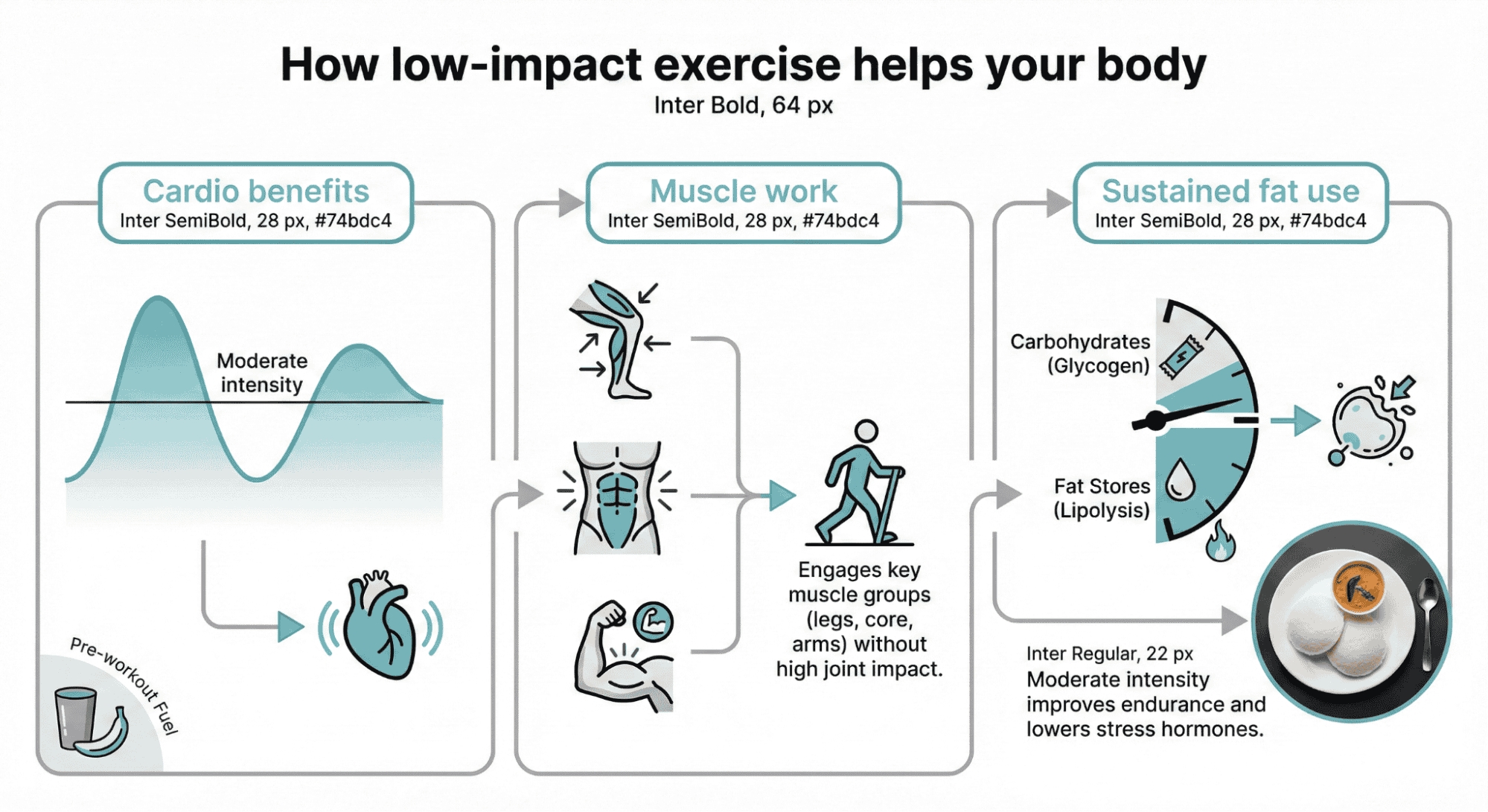
Low-impact workouts provide fitness benefits through the same mechanisms as high-impact exercise but with different stress patterns. Your cardiovascular system responds to elevated heart rate regardless of whether that elevation comes from running or brisk walking. Therefore, gentle exercise that raises your heart rate for sustained periods improves heart health, increases endurance, and burns calories. Additionally, muscles work during low-impact activities, building strength and endurance. Walking uphill or cycling against resistance challenges muscles significantly. Moreover, low intensity workouts done for longer durations can match or exceed calorie burn from shorter intense sessions. In fact, your body uses more fat for fuel during moderate-intensity exercise compared to very high-intensity where carbohydrates dominate. Furthermore, low-impact options reduce cortisol stress response compared to intense training, supporting better recovery and sleep. The reduced joint stress means less inflammation and injury risk, allowing more frequent training and faster recovery.
The Connection Between Gentle Exercise and Health
Gentle exercise provides comprehensive health benefits beyond fitness metrics. Regular low-impact workouts reduce the risk of heart disease, diabetes, certain cancers, and premature death just as effectively as vigorous exercise, according to research. Additionally, low-impact activities reduce stress and anxiety, supporting mental health without the cortisol spike from intense training that can worsen stress when you’re already overwhelmed. Moreover, joint friendly exercise allows people with arthritis, previous injuries, or obesity to stay active without pain, preventing the sedentary lifestyle that worsens these conditions. Furthermore, sustainable moderate activity maintains muscle mass during aging better than sporadic intense workouts punctuated by long inactive periods. In fact, daily walking provides more health benefits than weekly marathon training sessions because consistency matters more than intensity. The reduced injury risk with low-impact workouts means fewer disruptions to your exercise routine, supporting the consistency that creates long-term results.
What Research Shows for Indian Population
Research on exercise in Indians reveals patterns supporting low-impact workouts as ideal approach. Studies show Indians have higher injury rates from sudden intense exercise without proper progression, particularly among previously sedentary adults suddenly starting aggressive programs. One study found that moderate-intensity walking programs in Indian adults produced significant improvements in diabetes markers, blood pressure, and weight comparable to more intense programs while having much lower dropout rates. Additionally, research shows Indians respond well to yoga and walking, both low-impact options, with measurable health improvements. Moreover, studies indicate that exercise adherence among busy Indian professionals is much higher with flexible moderate-intensity options compared to rigid intense programs requiring specific gym access and time commitments. Therefore, the best exercise program is the one you’ll actually do consistently. Low intensity workouts fitting realistically into your life beat theoretically perfect intense programs you can’t sustain.
Low Intensity Workouts: What to Watch For
Physical Signs and Symptoms to Monitor
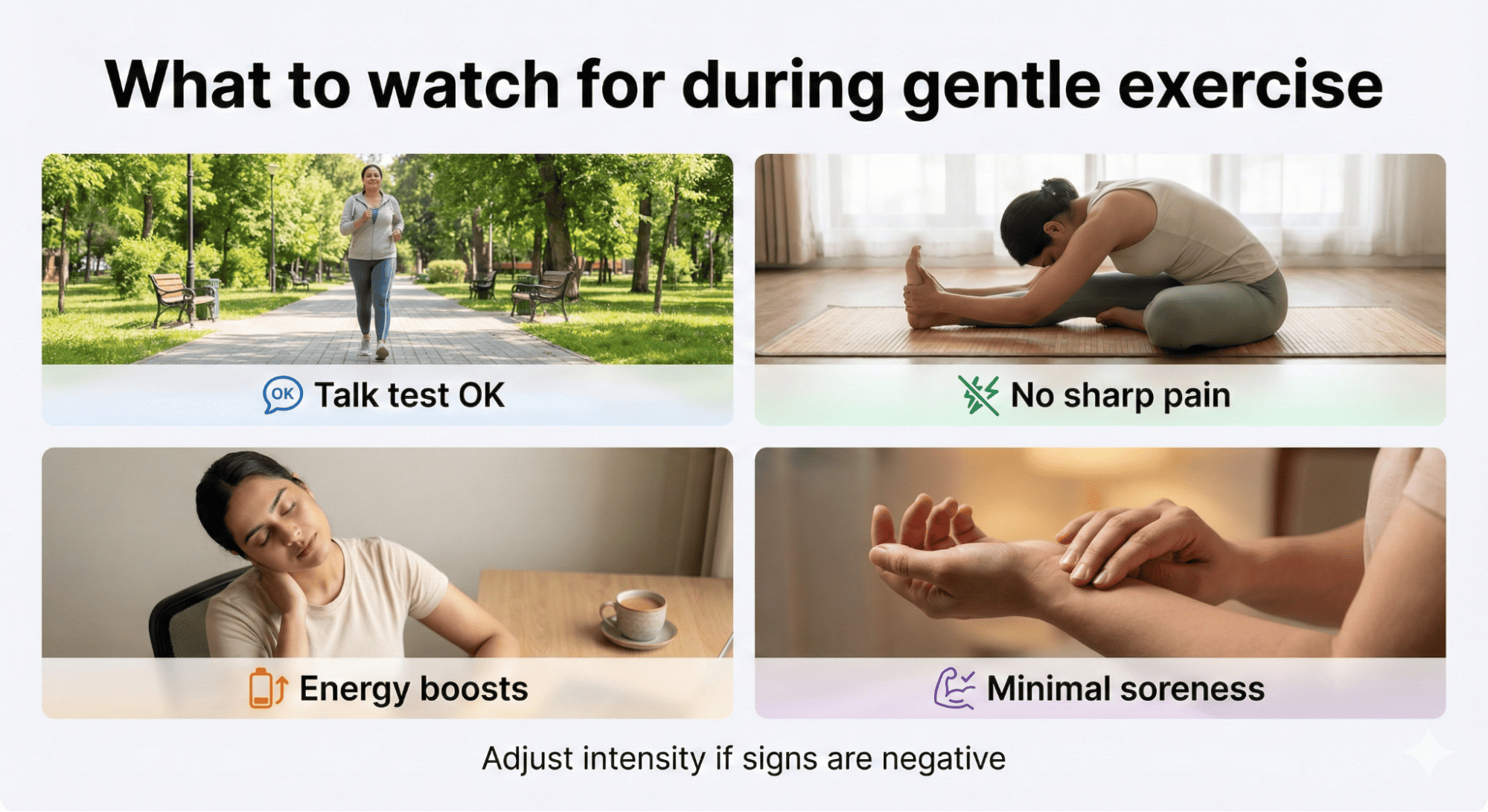
Low intensity workouts should leave you feeling energised, not destroyed. During exercise, you should be able to hold a conversation, though breathing harder than at rest. This “talk test” indicates appropriate intensity. Additionally, you might sweat and feel muscles workin,g but shouldn’t experience sharp pain, dizziness, or extreme breathlessness. After gentle exercise, you should feel pleasantly tired but capable of continuing your day without collapsing. Moreover, next-day soreness should be minimal to moderate, not debilitating. Watch for improved energy levels, better sleep quality, and enhanced mood from regular recovery workouts. Conversely, warning signs include joint pain during or after exercise, extreme fatigue, worsening sleep, declining performance over time, or getting sick frequently. These indicate either intensity is too high, recovery is inadequate, or underlying health issues need medical evaluation. Therefore, adjust intensity, frequency, or exercise selection if experiencing these problems.
Emotional and Mental Health Indicators
Low-impact workouts should enhance mental health, not create more stress. You should feel less anxious and more clear-headed after gentle exercise, not more frazzled. Additionally, motivation to exercise should remain stable or increase over time, not dwindle into dreading workouts. Pride in consistency and small improvements supports continued adherence. Moreover, exercise should be a stress reliever, a break from work and obligations, not another pressure point. If you feel guilty or anxious about exercise intensity, duration, or frequency, your relationship with movement has become unhealthy. Furthermore, joint friendly exercise should make your body feel better, more capable, and stronger, not beaten down. Watch for using exercise to punish yourself for eating or to “earn” food, both disordered behaviours. The right intensity and approach support mental well-being. Therefore, adjust your program if it’s creating more stress than relief, even if others say you “should” train harder.
When to Consult a Healthcare Professional
See a doctor before starting even low-impact workouts if you have uncontrolled chronic diseases like diabetes, heart disease, or hypertension. Additionally, consult a physician if you experience chest pain, severe shortness of breath, dizziness, or fainting during exercise. Get evaluated if you have joint pain that doesn’t improve with rest, ice, and over-the-counter pain medication. Moreover, if you’re significantly overweight or have been sedentary for years, medical clearance ensures exercise is safe and at an appropriate intensity. Work with a physical therapist if recovering from injury to design proper recovery workouts that rebuild function without re-injury. Furthermore, if you’re pregnant or recently delivered a baby, get medical guidance on safe exercise types and intensities. Don’t ignore persistent pain, swelling, or dysfunction from exercise. These signal problems need professional evaluation and treatment rather than just “pushing through.”
Indian Lifestyle Factors Affecting Low-Impact Workouts
Modern Indian Diet Challenges and Solutions
Exercise effectiveness depends significantly on nutrition, creating unique challenges for Indians. Traditional high-carb diets can cause energy crashes, affecting exercise energy. Additionally, skipping breakfast and then overeating at dinner disrupts energy availability for evening workouts, which many Indians prefer. Moreover, inadequate protein intake means poor recovery from even gentle exercise, creating cumulative fatigue. Furthermore, chronic dehydration from inadequate water intake impairs exercise performance and recovery significantly. Solutions include eating balanced meals with protein, carbs, and vegetables throughout the day. Have a small snack 1 to 2 hours before low-impact workouts if exercising on an empty stomach causes dizziness or weakness. Additionally, drink water before, during, and after exercise. Include protein within 2 hours post-exercise for recovery. For vegetarians, combining dal with rice or having paneer ensures complete protein. These nutrition habits fuel workouts and support recovery, maximising benefits from low intensity workouts.
Work-Life Balance and Urban Living Impact
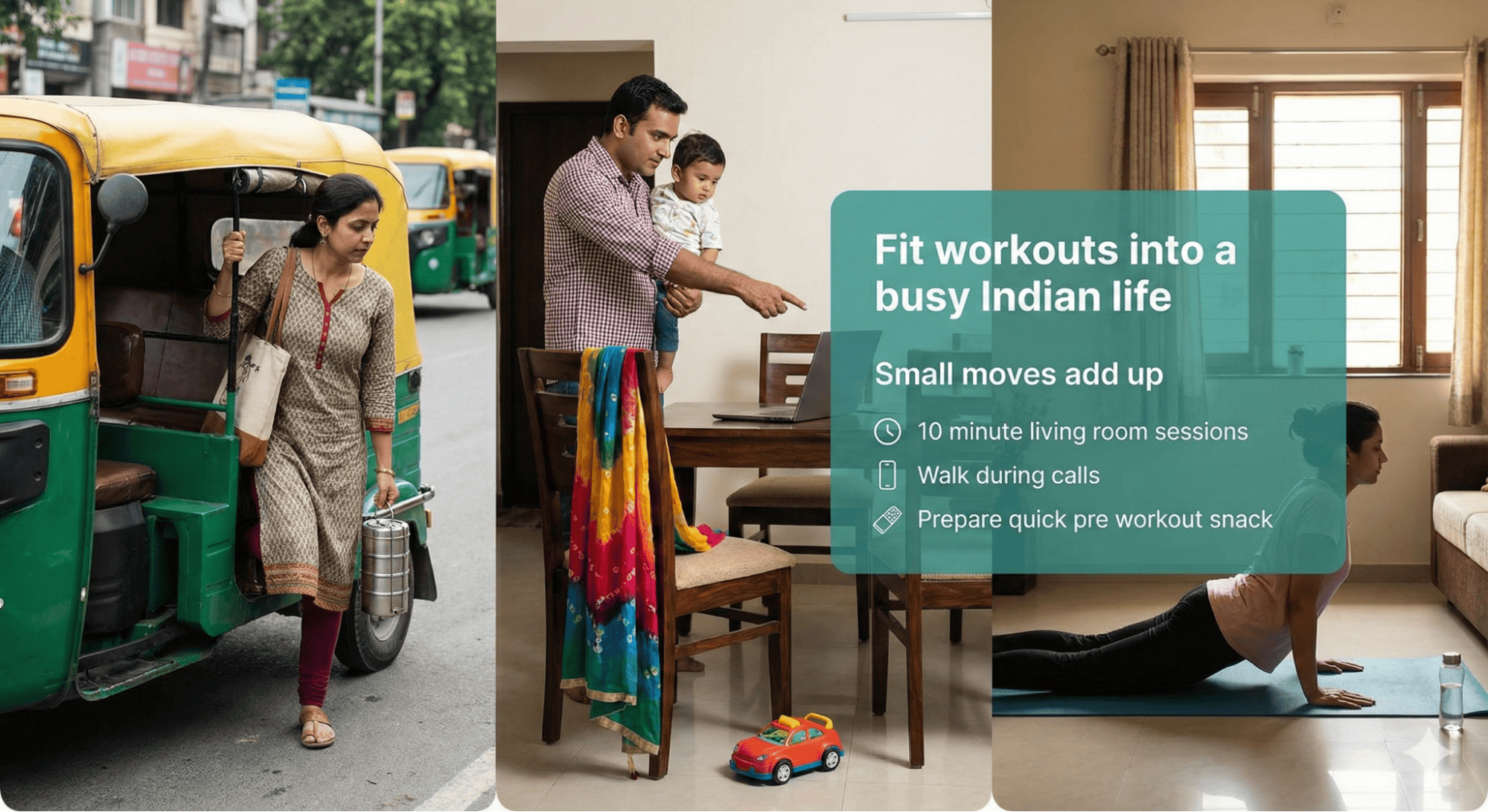
Urban Indian professional life creates specific challenges for maintaining low-impact workouts consistently. Long, unpredictable work hours mean scheduled gym sessions often get cancelled. Additionally, lengthy commutes steal time and energy for exercise. Pollution in Indian cities makes outdoor exercise unpleasant or even dangerouson some days. Moreover, family obligations, especially for women, leave minimal time for structured exercise. Furthermore, guilt about taking time for yourself when family needs attention discourages consistent workouts. Solutions include exercising at home with online videos or apps, and eliminating commute time. Keep workout clothes ready to eliminate decision fatigue. Additionally, include family in joint friendly exercise like evening walks or weekend cycling. Wake earlier for exercise if evenings are unpredictable. Choose bodyweight exercises requiring no equipment or a gym. Moreover, reframe exercise as essential health maintenance, not selfish indulgence. Even 20 minutes daily of gentle exercise accumulated over weeks creates significant benefits. Perfection isn’t the goal; consistency within your realistic constraints is.
Cultural and Social Influences on Health
Indian culture creates both barriers and opportunities for low-impact workouts. Traditional emphasis on achievement and intensity makes some people dismiss gentle exercise as inadequate. Additionally, comparing yourself to fitness influencers doing intense workouts creates unrealistic expectations. Moreover, gym culture sometimes mocks those doing easier modifications or taking breaks, discouraging beginners. Social pressure to look a certain way makes people pursue extreme exercise when moderate movement would serve them better. Furthermore, gender norms might discourage women from exercising in public spaces or prioritising their health over family. However, Indian culture also values yoga, walking, and gentle movement traditions. Additionally, family and community support exercise partners when you invite them. Navigate these dynamics by ignoring comparisons and focusing on your sustainable path. Educate family about health benefits so they support rather than sabotage your efforts. Moreover, find communities or classes emphasizing recovery workouts and health over appearance. These cultural shifts support sustainable fitness habits.
Best Indian Foods for Low-Impact Workouts Management
Traditional Indian Foods That Support Joint Friendly Exercise
Proper nutrition amplifies joint friendly exercise benefits and supports recovery. Anti-inflammatory foods like turmeric used in Indian cooking support joint health naturally. Additionally, omega-3 rich foods like walnuts and flax seeds reduce exercise-induced inflammation. Whole dals provide protein for muscle recovery after low-impact workouts without excessive saturated fat. Moreover, curd and buttermilk offer probiotics supporting gut health, which influences overall inflammation and recovery. Fresh fruits and vegetables provide antioxidants combating exercise-induced oxidative stress. Furthermore, adequate carbs from whole grains like brown rice and millets fuel workouts without causing energy crashes. Hydrating foods like cucumber, watermelon, and coconut water support fluid balance. In fact, traditional Indian spices like ginger and black pepper have anti-inflammatory properties supporting recovery. These foods naturally support exercise recovery and performance without requiring supplements or expensive imported ingredients.
Modern Indian Meal Options and Healthy Recipes
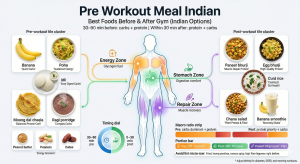
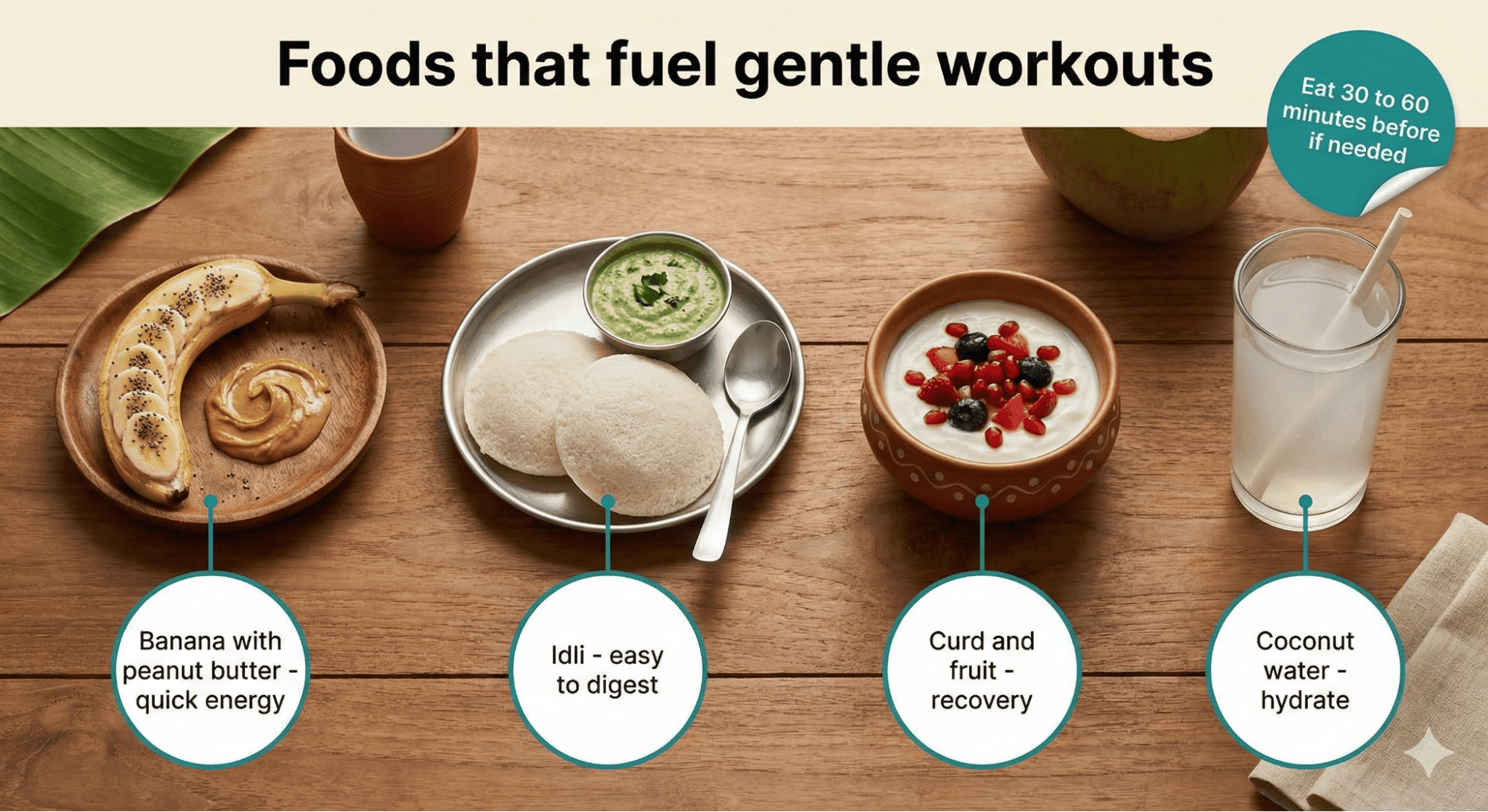
Create meals supporting gentle exercise performance and recovery. Pre-workout snack could be a banana with peanut butter, toast with jam, or idlis with chutney, eaten 1 to 2 hours before exercise. These provide energy without causing stomach upset during movement. Additionally, post-workout meals should include protein and carbs for recovery. Try dal with rice, paneer paratha, or curd with fruit and nuts within 2 hours of low intensity workouts. Moreover, overall daily nutrition should include adequate protein from dal, eggs, paneer, or chicken for muscle recovery. Include whole grains for sustained energy and vegetables for micronutrients. Hydration matters significantly, so drink water throughout the day, not just during exercise. Furthermore, if exercising early morning, having dinner the night before with adequate carbs ensures energy for morning workouts. These meal timing and composition strategies fuel regular exercise without complicated sports nutrition.
Foods to Limit or Avoid for Better Results
Certain foods impair low-impact workouts performance or recovery of low-impact workouts. Fried heavy foods like samosas, pakoras, or parathas cooked in excessive oil before exercise cause digestive discomfort and sluggishness. Additionally, large meals immediately before workouts create blood sugar spikes followed by crashes during exercise. Moreover, excessive caffeine can cause jitters, anxiety, and heart palpitations during exercise for sensitive individuals. Limit coffee to 1 to 2 cups well before workouts.
Furthermore, alcohol impairs recovery significantly, disrupting sleep and muscle repair. Avoid it near exercise days. Excessive sugar from sweets or sugary drinks causes energy spikes and crashes, affecting workout energy. Moreover, inadequate water intake from drinking excessive chai or coffee instead of water impairs performance and recovery. Focus on balanced, whole foods, timing around recovery workouts rather than relying on quick fixes that ultimately impair rather than support your exercise goals.
Portion Sizes and Meal Timing for Indians
Meal timing and portions significantly affect joint friendly exercise quality. Eat a normal, balanced meal 2 to 3 hours before workouts to ensure energy without stomach upset. Additionally, have a small, easily digestible snack 30 to 60 minutes before exercising, first thing, or if it’s been many hours since eating. Good pre-workout snacks are a banana, toast with jam, or idlis, providing quick energy. Moreover, after low-impact workouts, eat within 2 hours, including both protein and carbs for recovery. A meal with dal, rice, and vegetables works perfectly. For vegetarians, combining grains and legumes provides complete protein.
Furthermore, overall daily caloric intake should include adequate calories, not extreme restriction, as this impairs exercise performance and recovery. Use your hand for portions: palm protein, fist carbs, two fists vegetables, thumb fats at each meal. Hydrate consistently throughout the day with 8 to 10 glasses of water, more if exercising in heat or sweating heavily.
Lifestyle Changes to Support Low-Impact Workouts
Recovery Workouts: The Right Approach for Indians
Understanding when to do recovery workouts rather than intense training prevents burnout and supports long-term consistency. Schedule low intensity workouts on days after intense training, when you’re stressed or sleep-deprived, recovering from illness, or managing high work demands. Additionally, use gentle exercise during menstruation if you experience significant discomfort, though many women can maintain normal intensity. Moreover, as you age, recovery needs increase, making low-impact workouts more important for sustainable fitness.
In fact, a balanced week might include 2 to 3 intense sessions and 2 to 3 recovery workouts rather than intense training daily. This prevents overtraining while maintaining consistency. Furthermore, listen to your body’s signals. Feeling excessively sore, fatigued, or unmotivated despite adequate sleep signals need for easier sessions. On the other hand, feeling energetic and strong means you can push harder. This flexibility prevents the rigid all-or-nothing approach that causes people to abandon exercise entirely when they can’t maintain unsustainable intensity.
Sleep and Stress Management Strategies
Sleep and stress management are crucial for making low-impact workouts effective and enjoyable. Inadequate sleep impairs exercise performance, increases injury risk, and prevents recovery. Therefore, prioritize 7 to 9 hours of quality sleep nightly. Additionally, chronic stress elevates cortisol, making even gentle exercise feel harder and preventing fitness improvements despite consistent training. Practice daily stress management through meditation, deep breathing, or relaxing hobbies for at least 10 minutes. Moreover, recognize that exercise itself is a stressor, though beneficial. Adding intense workouts when you’re already overwhelmed with work and life stress can push you into overtraining. Therefore, recovery workouts on high-stress days allow you to stay active without compounding stress.
Furthermore, use exercise as active stress relief rather than another obligation. Walking in nature, dancing to music, or doing gentle yoga reduces stress while providing movement. The mental health benefits of low intensity workouts often exceed the physical benefits, supporting overall well-being and resilience.
Daily Habits That Make a Real Difference
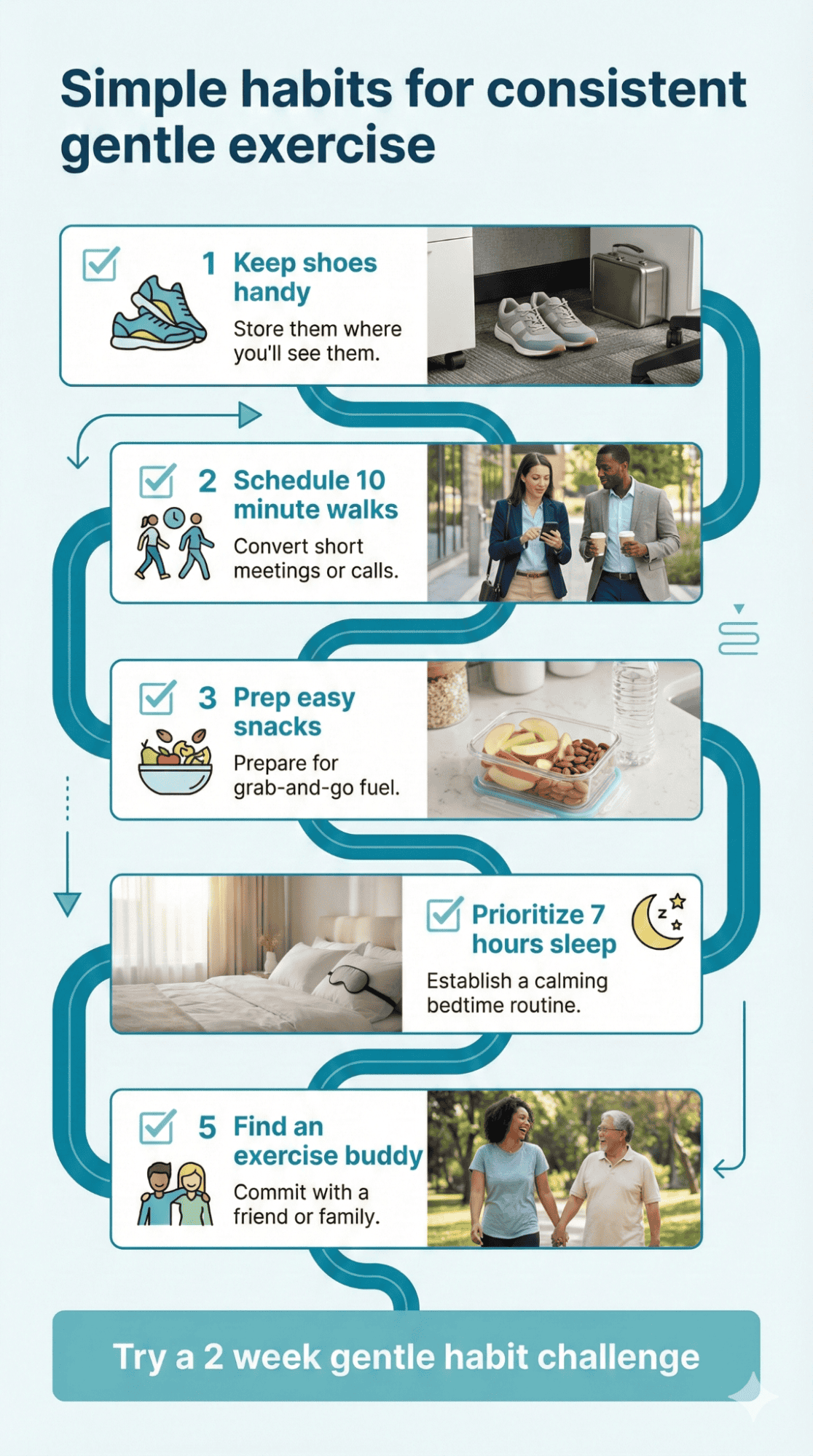
Small consistent actions make low-impact workouts sustainable long-term. Schedule exercise at the same time daily to build habit, but stay flexible when life interferes. Additionally, prepare workout clothes and equipment the night before, eliminating morning decision fatigue. Keep comfortable walking shoes at work and home for convenience. Moreover, track workouts briefly noting type, duration, and how you felt. Seeing consistency builds motivation even when individual sessions feel unremarkable. Include variety in joint friendly exercise to prevent boredom: walking different routes, trying new yoga classes, cycling in different areas. Furthermore, find an accountability partner or community for support and encouragement. Social connection enhances adherence significantly. In fact, connecting exercise to existing habits creates automaticity. Walk after breakfast daily, or do yoga before dinner consistently. These consistent small actions compound into significant fitness improvements over months and years without requiring superhuman motivation or willpower.
Your 7-Day Low-Impact Workouts Management Meal Plan
This meal plan supports consistent gentle exercise with balanced nutrition:
| Day | Breakfast | Lunch | Evening Snack (4-5 PM) | Dinner (7-8 PM) |
| Day 1 | Vegetable poha + boiled egg + banana + milk | Brown rice + dal + mixed veg + raita + salad | Apple with peanut butter | 2 rotis + palak dal + paneer + cucumber |
| Day 2 | Moong dal cheela (2) + mint chutney + curd + orange | 2 rotis + chana dal + bhindi + raita + pickle | Roasted chana (1 bowl) + tea | Quinoa pulao + dal + vegetables + salad |
| Day 3 | Oats upma with vegetables + handful of nuts + milk | Brown rice + sambhar + mixed veg + curd + papad | Fruit bowl with yogurt | 2 bajra rotis + dal + aloo-methi + raita |
| Day 4 | 2 boiled eggs + whole wheat toast + banana + coffee | 2 rotis + masoor dal + palak + paneer + salad | Sprout salad with lemon | Vegetable khichdi + 1 tbsp ghee + curd |
| Day 5 | Idli (3) + sambhar + coconut chutney + boiled egg | Brown rice + dal + mixed vegetables + raita + salad | Handful of almonds + apple | 2 rotis + rajma + methi sabzi + curd |
| Day 6 | Besan cheela (2) + vegetables + curd + banana + tea | 2 rotis + chana dal + lauki + raita + pickle | Roasted makhana (1 bowl) | Quinoa + dal + paneer bhurji + salad |
| Day 7 | Vegetable upma + boiled egg + handful of walnuts + milk | Brown rice + moong dal + mixed veg + curd + papad | Fresh coconut water + fruit | 2 rotis + dal + mixed vegetables + raita |
Note: Eat a balanced meal 2 to 3 hours before workouts. Have small snack (banana, toast) 30 to 60 minutes before if needed. Include protein and carbs within 2 hours post-exercise for recovery. Drink 8 to 10 glasses of water daily.
Common Mistakes Indians Make with Low-Impact Workouts
Diet Mistakes That Sabotage Progress
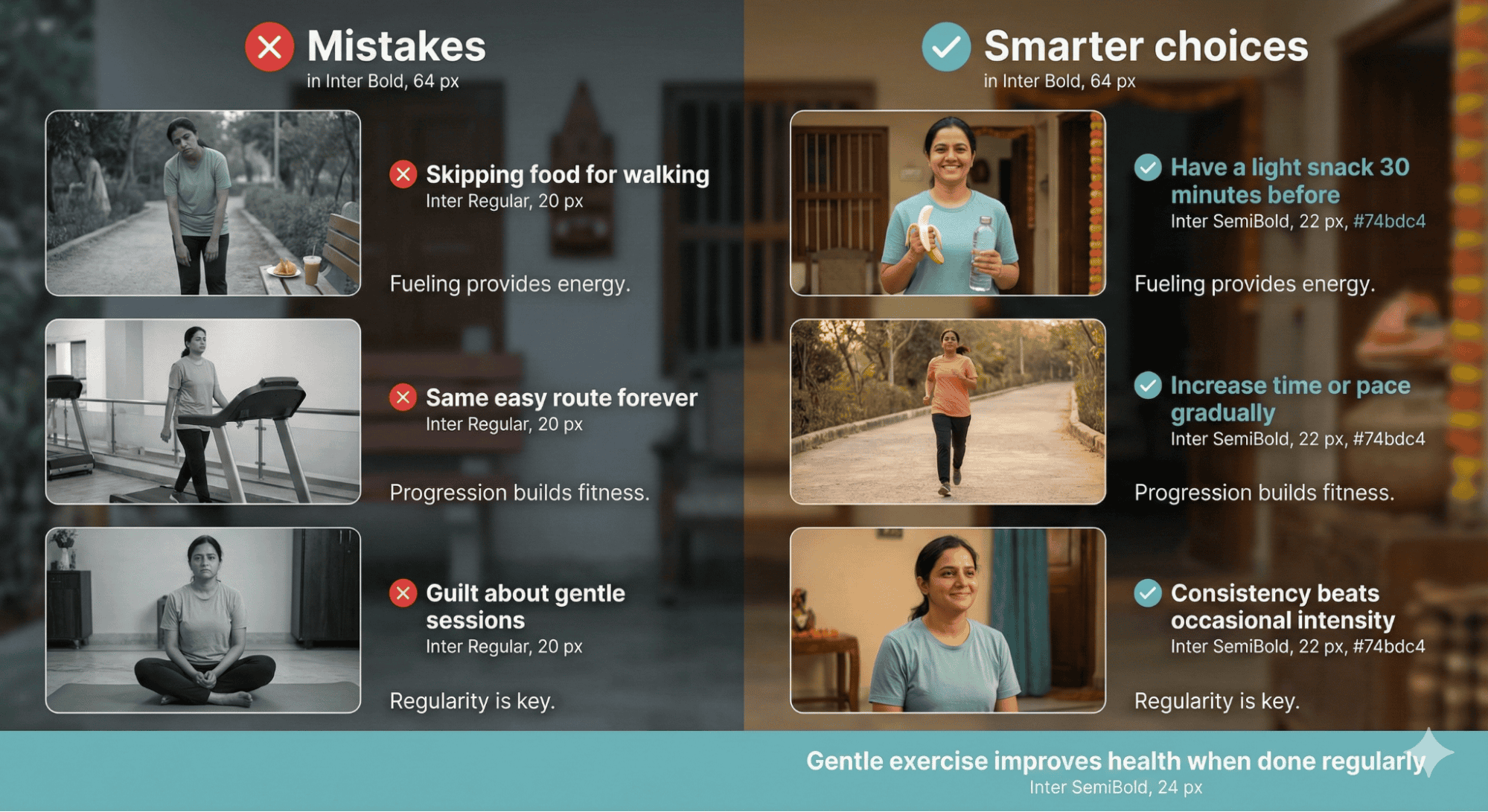
The biggest mistake is not fueling low-impact workouts adequately because you think they don’t burn enough calories to “deserve” food. Your body needs fuel for all exercise, and under-eating impairs performance and recovery. Another error is exercising on empty stomach thinking it burns more fat, when it actually causes weakness, dizziness, and poor performance. Additionally, not eating enough protein prevents recovery from even gentle exercise, creating cumulative fatigue. Moreover, chronic dehydration from not drinking enough water significantly impairs exercise capacity and recovery. Furthermore, believing recovery workouts allow eating whatever you want ignores that nutrition still matters for overall health and fitness goals. In fact, skipping post-workout meals because “it was just walking” prevents optimal recovery. These nutrition mistakes prevent you from getting full benefits from consistent low intensity workouts despite putting in the time and effort.
Lifestyle Pitfalls to Watch Out For
Many people sabotage low-impact workouts through mindset and scheduling issues. Dismissing gentle exercise as “not real exercise” prevents fully committing to consistency. Additionally, always planning intense workouts but rarely following through means sporadic activity patterns that don’t create results. Moreover, comparing your recovery workouts to others’ intense training on social media creates inadequacy and discouragement. Furthermore, not scheduling exercise means it gets crowded out by other “urgent” tasks constantly. Waiting for perfect conditions like getting new shoes, joining a gym, or having more time means never starting. In fact, letting one missed workout spiral into weeks of inactivity because “what’s the point” destroys momentum unnecessarily. Additionally, doing the exact same joint friendly exercise repeatedly without any progression or variety causes plateaus and boredom. These lifestyle patterns prevent the consistency that creates results from low-impact workouts over time.
How to Course-Correct When Things Go Wrong
If low-impact workouts haven’t produced expected results or you’ve abandoned exercise, evaluate systematically. Are you truly consistent or sporadic? Track honestly for 2 weeks. Therefore, aim for 4 to 5 days weekly minimum rather than perfect daily. Additionally, assess whether you’re progressing. Even gentle exercise needs gradual increases in duration, intensity, or complexity to continue improving fitness. If walking, gradually increase pace or distance. Moreover, check your nutrition. Are you eating adequately to fuel and recover from exercise? Track for 3 days to verify. Furthermore, evaluate sleep and stress. If getting less than 7 hours or managing extreme stress, focus on fixing these before expecting exercise improvements. If you’ve been consistent for 3 months without any fitness improvements, work with a personal trainer to assess form, progression, and identify issues. Sometimes underlying health problems need medical evaluation. Don’t give up on low-impact workouts without troubleshooting systematically first.
Conclusion
Low-impact workouts aren’t inferior exercise but intelligent, sustainable approach for busy Indians managing work stress, family responsibilities, and fluctuating energy levels. Gentle exercise like walking, cycling, yoga, and swimming provides comprehensive health and fitness benefits while reducing injury risk and supporting consistency crucial for long-term results. The best exercise program is the one you’ll actually maintain long-term, not the theoretically optimal intense training you abandon after two weeks. Recovery workouts and joint friendly exercise allow you to stay active even on days when motivation or energy is low.
Start today with a 20-minute walk after dinner ata comfortable pace where you can hold a conversation. Do this 3 days this week without pressure for perfection. Additionally, notice how you feel afterwards: energy, mood, sleep quality. These immediate benefits motivate continued consistency more than distant weight loss goals.
FAQs
Q1: What is low-impact workouts and how does it affect Indians?
Low-impact workouts are gentle exercise options like walking, cycling, swimming, or yoga that keep at least one foot on the ground, reducing joint stress while still providing fitness benefits. Indians benefit particularly as our sedentary lifestyles, joint issues, and busy schedules make sustainable joint friendly exercise more important than sporadic intense training.
Q2: What are the main signs low-impact exercise is working?
Signs include improved energy levels, better sleep quality, enhanced mood, stable motivation to exercise, and ability to recover quickly without excessive soreness. Watch for increased cardiovascular endurance, strength improvements, and better body composition over 8 to 12 weeks of consistent low intensity workouts without joint pain or exhaustion.
Q3: What foods should Indians eat for better low-impact workouts performance?
Eat balanced meals with protein (dal, eggs, paneer), whole grains (brown rice, millets), and vegetables 2 to 3 hours before gentle exercise. Include anti-inflammatory foods like turmeric, ginger, and omega-3 sources. Have protein and carbs within 2 hours post-workout for recovery, supporting consistent recovery workouts.
Q4: Can fitness be managed naturally through low-impact exercise alone?
Yes, consistent low-impact workouts like brisk walking 30 to 45 minutes most days provide significant health benefits, including reduced disease risk, improved mood, better sleep, and sustainable weight management. Combine with proper nutrition and progressive challenge for continued improvements in joint friendly exercise capacity over time.
Q5: How long does it take to see results from low-impact workouts?
Energy and mood improvements appear within 2 to 3 weeks of regular gentle exercise. Cardiovascular fitness and endurance increase measurably within 4 to 6 weeks. Body composition changes showing fat loss and muscle definition emerge within 8 to 12 weeks of consistent low intensity workouts with proper nutrition.
Related Posts