You’ve lost 10 kilos and feel great about your progress. Then you notice clumps of hair in the shower drain. Your hairbrush fills faster than ever. Congratulations on the weight loss, which turned into panic about hair loss. Is your diet causing this? The frustrating connection between weight loss and hair loss affects thousands of Indian dieters who didn’t expect beautiful results to come with unwanted side effects. Understanding why hair thinning happens during weight loss and how to prevent it helps you achieve your weight goals without sacrificing your crowning glory. This guide reveals the truth about weight loss and hair loss and how to diet smartly.
What Is Weight Loss And Hair Loss and Why Indian Dieters Should Care?
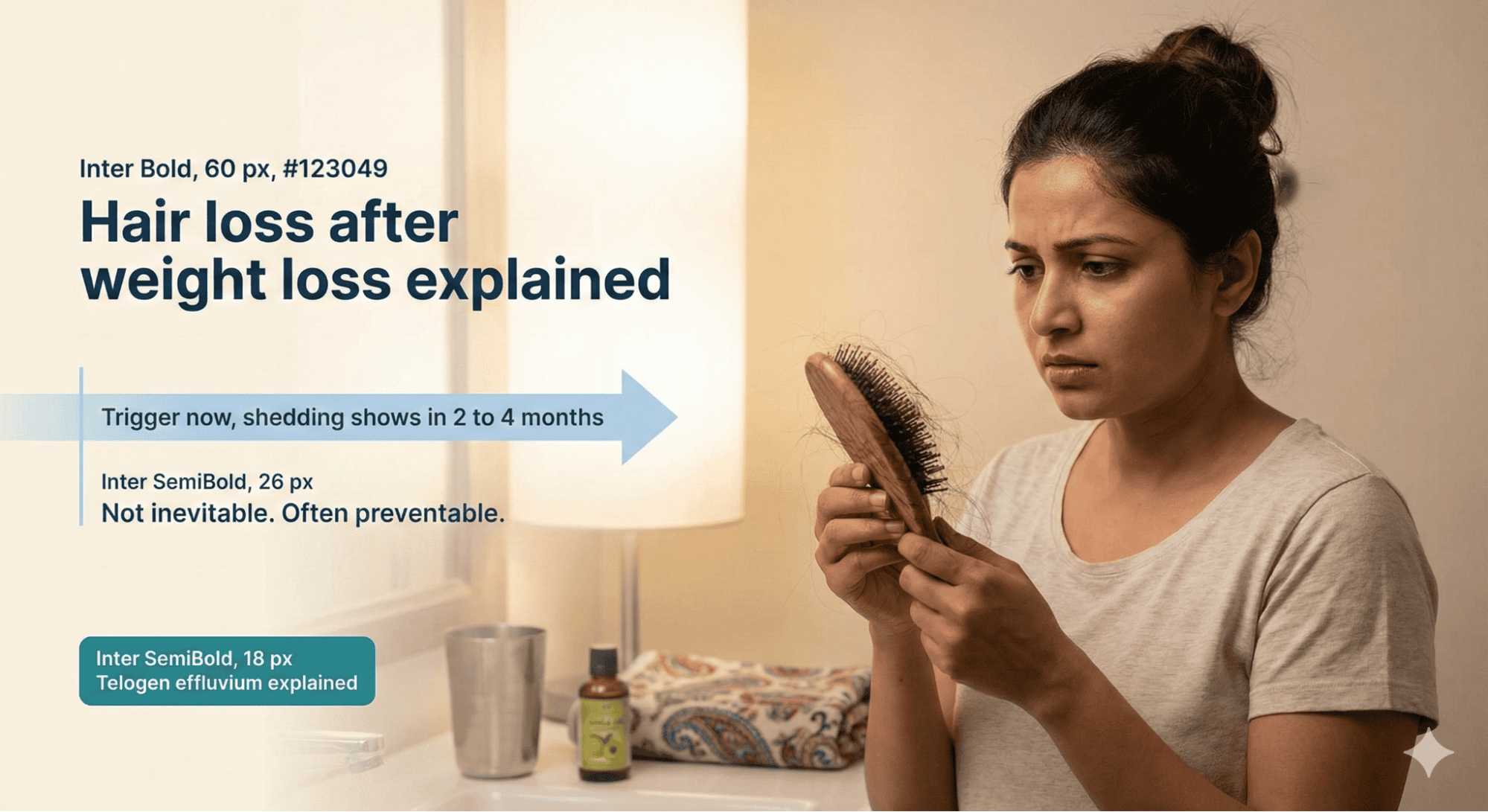
Weight loss and hair loss refer to the temporary shedding that occurs when rapid weight reduction or nutritional deficiencies trigger your body’s survival response. Hair isn’t essential for survival, so your body redirects nutrients away from hair growth when it perceives stress or insufficient nutrition. This condition, called telogen effluvium, causes hair follicles to enter the resting phase prematurely, leading to noticeable shedding 2 to 4 months after the triggering event. Additionally, specific nutrient deficiency, particularly protein, iron, zinc, and biotin, directly impairs hair growth. Therefore, hair thinning during dieting isn’t inevitable but results from specific mistakes in how you’re losing weight. Understanding these mechanisms helps you prevent or minimize hair loss while still achieving fat loss goals successfully.
Why Weight Matters for Indian Bodies
Indians face particular vulnerability to weight loss and hair loss due to our typical dieting approaches and baseline nutritional status. Many Indians already have iron deficiency anemia, especially women, before even starting weight loss. Additionally, crash dieting popular for pre-wedding transformations creates perfect conditions for hair thinning through extreme calorie restriction.
Moreover, vegetarian diets common among Indians require careful planning to get adequate protein and bioavailable iron during weight loss. Furthermore, Indian hair, while often thick and abundant, grows in cycles sensitive to nutritional stress. In fact, the combination of aggressive calorie cutting, inadequate protein, and pre-existing deficiencies means Indians lose hair during dieting more frequently than necessary. Understanding these population-specific risks helps you take preventive measures rather than discovering the problem only after significant shedding has occurred.
Common Myths Debunked About This Topic
Let’s clear up dangerous myths about weight loss and hair loss. First, hair loss during dieting isn’t inevitable or normal. Healthy sustainable weight loss shouldn’t cause significant shedding. Second, hair loss doesn’t mean you’re losing weight “too fast” necessarily. It means you’re losing weight wrong, usually through nutrient deficiency or extreme restriction. Third, protein deficiency alone doesn’t cause hair loss always. Multiple nutritional factors contribute. Fourth, hair loss won’t continue indefinitely. Once nutrition normalizes, hair typically regrows, though it takes 6 to 12 months to see noticeable improvement.
Additionally, supplements can’t fix hair loss caused by ongoing poor nutrition. You must address the dietary cause. Finally, you don’t need to choose between weight loss and healthy hair. Proper approach achieves both simultaneously. Therefore, understanding the truth about weight loss and hair loss prevents unnecessary hair damage.
The Science Behind Weight Loss And Hair Loss for Indians
How Weight Works in Your Body
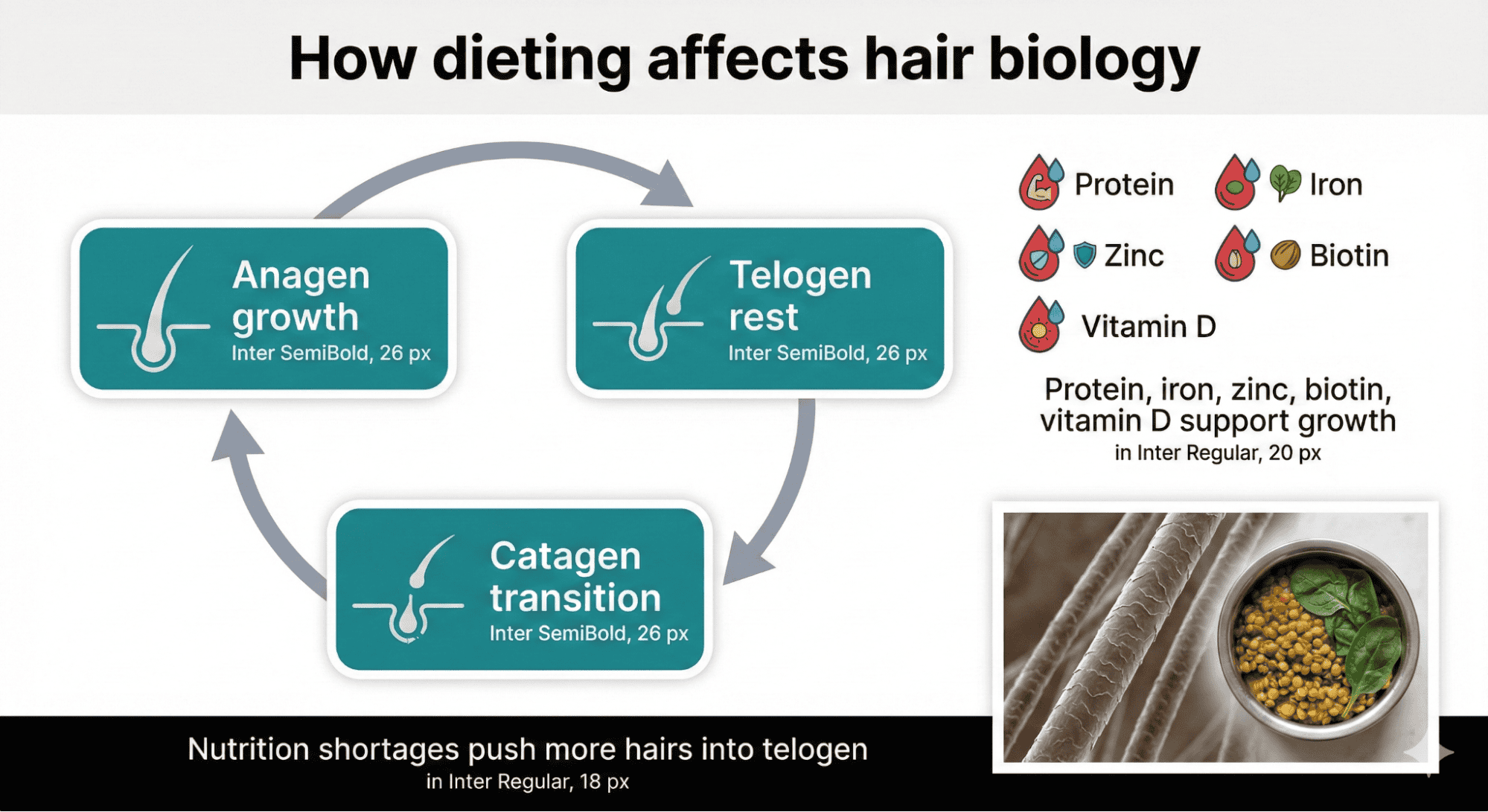
Hair grows in three phases: anagen (growth), catagen (transition), and telogen (resting). Normally, 85 to 90% of your hair is in growth phase while 10 to 15% rests. During telogen, hair doesn’t grow and eventually sheds, replaced by new growth. Rapid weight loss side effects disrupt this cycle by pushing more hair into telogen phase prematurely. Additionally, your body prioritizes survival functions over cosmetic concerns. When calories or protein are inadequate, your body redirects resources to vital organs and away from hair follicles.
Moreover, crash dieting increases cortisol stress hormone, which triggers telogen effluvium independently of nutrition. Furthermore, specific nutrients support hair health directly. Protein provides building blocks for hair structure. Iron carries oxygen to follicles. Zinc supports cell division in follicles. Biotin aids keratin production. Therefore, nutrient deficiency in any of these impairs hair growth even if total calories are adequate.
The Connection Between Hair Thinning and Health
Hair thinning often signals broader health problems beyond cosmetic concerns. Noticeable hair loss indicates your body is under significant stress from inadequate nutrition, excessive calorie restriction, or both. Additionally, the same nutritional deficiencies causing hair loss also impair immune function, bone health, and muscle preservation. Moreover, protein deficiency hair loss indicates you’re losing muscle along with fat, slowing metabolism and making weight regain likely.
Furthermore, iron deficiency severe enough to cause hair loss also creates fatigue, weakness, and reduced exercise capacity. In fact, treating hair loss as merely cosmetic ignores that it’s your body’s warning signal about inadequate nutrition threatening overall health. Therefore, addressing weight loss and hair loss means improving your diet quality comprehensively, which benefits far more than just your hair. The nutritional changes preventing hair loss also optimize fat loss, preserve muscle, maintain energy, and support long-term health.
What Research Shows for Indian Population
Research on weight loss and hair loss in Indians reveals concerning patterns. Studies show that Indian women have high rates of iron deficiency anemia even before dieting, with 50 to 60% affected. One study found that rapid weight loss programs in Indians led to hair loss in 40% of participants, particularly those losing more than 1 kilo weekly. Additionally, research indicates that Indian vegetarians on weight loss diets frequently develop protein deficiency hair loss when consuming less than 60 grams daily.
Moreover, studies show that Indians have lower baseline vitamin D levels, which also affects hair growth. Deficiency worsens during dieting when fat-soluble vitamin absorption decreases. In fact, research demonstrates that supplementing protein, iron, and zinc significantly reduces hair loss during weight loss in Indians compared to dieting without supplementation. Therefore, proactive nutritional strategies prevent rather than just treat hair thinning during weight loss.
Rapid Weight Loss Side Effects: What to Watch For
Physical Signs and Symptoms to Monitor
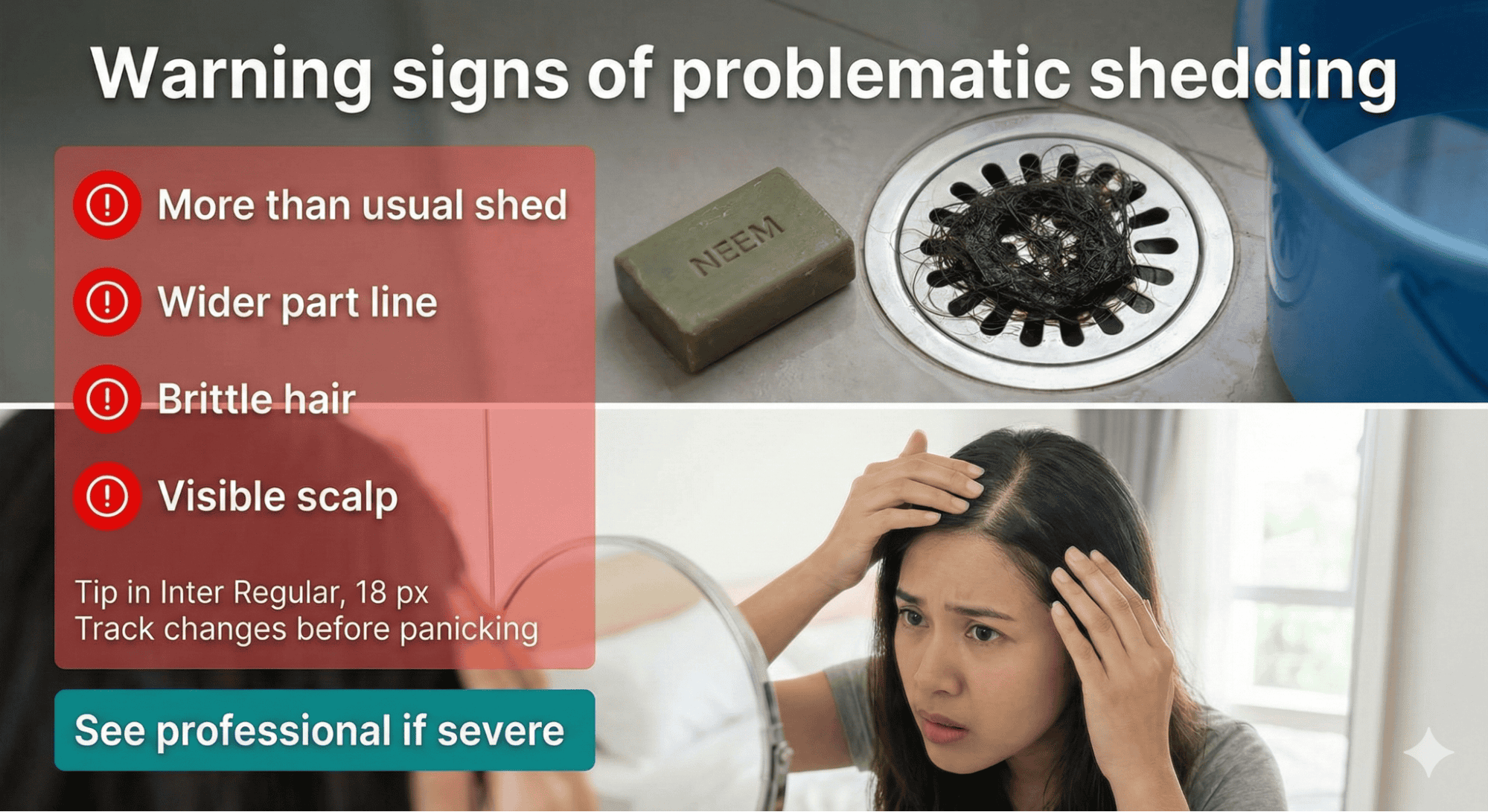
Rapid weight loss side effects manifest through observable hair changes you should monitor. Increased shedding where you lose more than 100 hairs daily signals a problem. Additionally, wider part lines or visible scalp where previously hidden indicates diffuse thinning. Moreover, finding excessive hair on your pillow, in the shower drain, or on your hairbrush beyond normal levels requires attention. Watch for changes in hair texture, with strands becoming thinner, more brittle, or breaking easily.
Furthermore, reduced hair volume when styling or tied up becomes noticeable. However, distinguish normal shedding from concerning loss. Losing 50 to 100 hairs daily is physiologically normal. Therefore, actual hair thinning from dieting typically shows as doubling or tripling this amount consistently for weeks. Track changes rather than panicking over isolated observations. Early detection allows dietary correction before massive loss occurs.
Emotional and Mental Health Indicators
Hair thinning profoundly affects mental health, especially for women who often associate hair with femininity and attractiveness. Noticing significant shedding creates anxiety and panic about continued loss. Additionally, the emotional distress sometimes triggers more extreme restriction thinking that eating even less will speed results, worsening both weight and hair loss. Moreover, shame about visible thinning makes some people avoid social situations, affecting relationships and quality of life.
Furthermore, the stress of hair loss itself can worsen shedding through elevated cortisol creating vicious cycles. In fact, many people become obsessed with researching solutions, trying endless products, and constantly checking for improvement, which increases stress further. Therefore, addressing weight loss and hair loss requires managing emotional responses alongside nutritional correction. Recognize that hair regrows once nutrition normalizes, but this takes 6 to 12 months. Patience and proper nutrition recovery are essential.
When to Consult a Healthcare Professional
See a doctor if hair loss is severe, with noticeable bald patches or extremely rapid shedding. Consult a healthcare professional if hair loss continues despite improving your diet for 8 to 12 weeks, as this might indicate underlying medical issues like thyroid dysfunction, PCOS, or alopecia rather than just nutritional factors. Additionally, get evaluated if you experience other symptoms alongside hair loss like extreme fatigue, irregular periods, cold intolerance, or unexplained weight changes.
Moreover, if you’ve been dieting very restrictively, medical supervision for refeeding prevents complications. Work with a registered dietitian to create nutrition plans adequate for hair health while still supporting weight goals. Furthermore, dermatologists specializing in hair loss can assess follicle health and recommend treatments. Blood tests checking iron, ferritin, vitamin D, zinc, and thyroid function identify specific deficiencies requiring targeted supplementation. Don’t ignore persistent hair thinning hoping it resolves alone.
Indian Lifestyle Factors Affecting Weight Loss And Hair Loss
Modern Indian Diet Challenges and Solutions
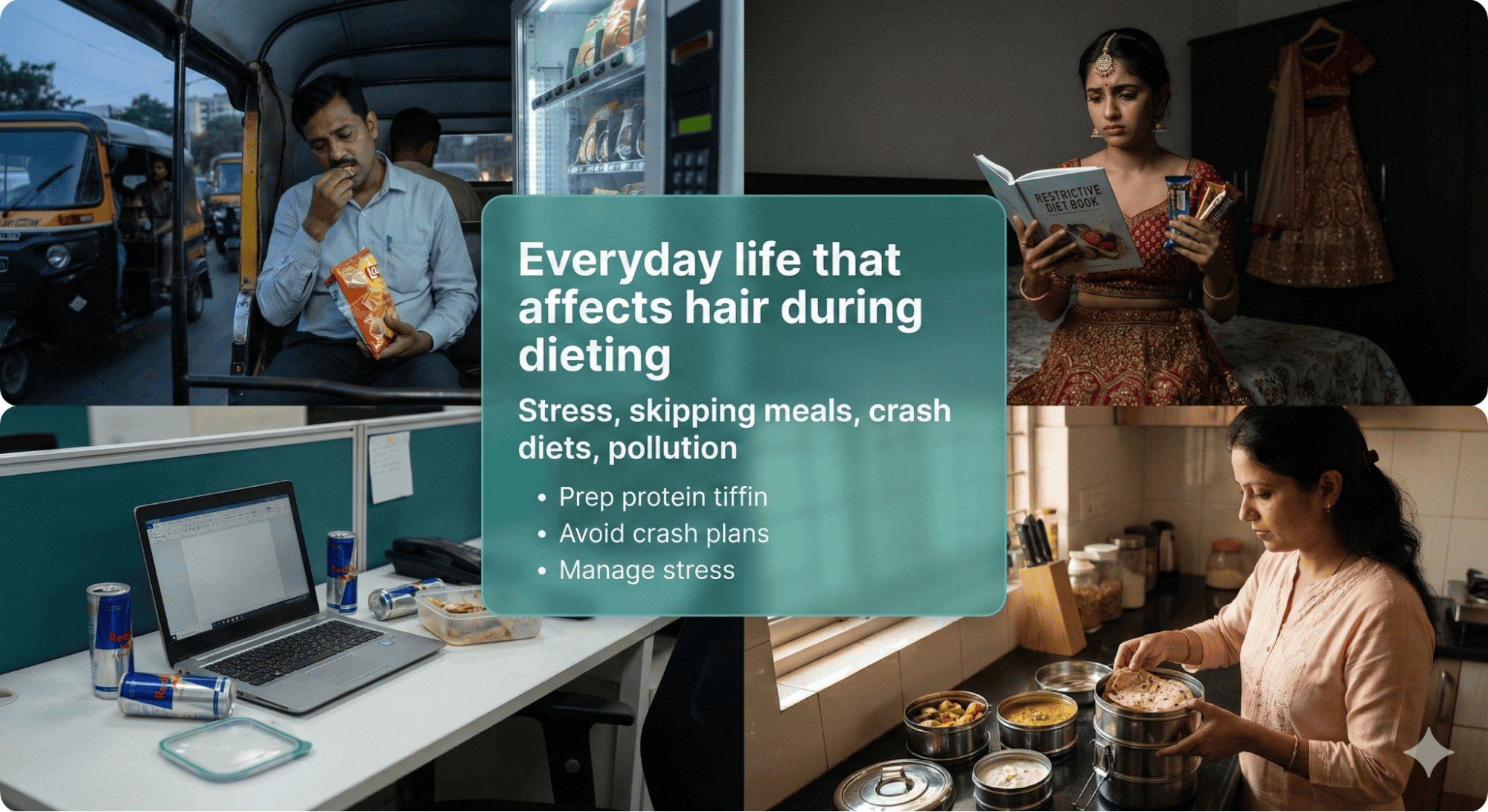
Modern Indian dieting approaches create perfect conditions for weight loss and hair loss through extreme restriction and poor food choices. Crash diets eliminating entire food groups like carbs or fats often also drastically reduce total calories and protein below minimum requirements. Additionally, juice cleanses, GM diet, and other fad approaches provide virtually no protein while claiming rapid results. Moreover, vegetarian Indians not eating eggs, dairy, or legumes adequately get insufficient protein for hair health during weight loss.
Furthermore, skipping meals to cut calories means missing opportunities for nutrient intake. Solutions include losing weight gradually at 0.5 to 1 kilo weekly maximum, which prevents triggering telogen effluvium from rapid weight loss side effects. Additionally, ensure adequate protein at 1.2 to 1.6 grams per kilogram body weight. Include iron-rich foods like spinach, beetroot, and pomegranate with vitamin C for absorption. For vegetarians, combine legumes with grains for complete protein. These nutritional foundations prevent hair thinning while supporting sustainable fat loss.
Work-Life Balance and Urban Living Impact
Urban Indian professional life creates barriers to proper nutrition during weight loss that can trigger hair thinning. Busy schedules lead to skipping meals, then overeating low-nutrient convenience foods. Additionally, work stress elevates cortisol, which itself can trigger hair loss independent of nutrition. Moreover, inadequate sleep from long commutes and work hours impairs hormone regulation affecting both weight loss and hair growth.
Furthermore, reliance on office cafeterias or food delivery means limited control over protein and micronutrient content. Pollution in Indian cities also creates oxidative stress potentially affecting hair follicles. Solutions include meal prepping protein-rich foods on weekends ensuring adequate nutrition despite busy weekdays.
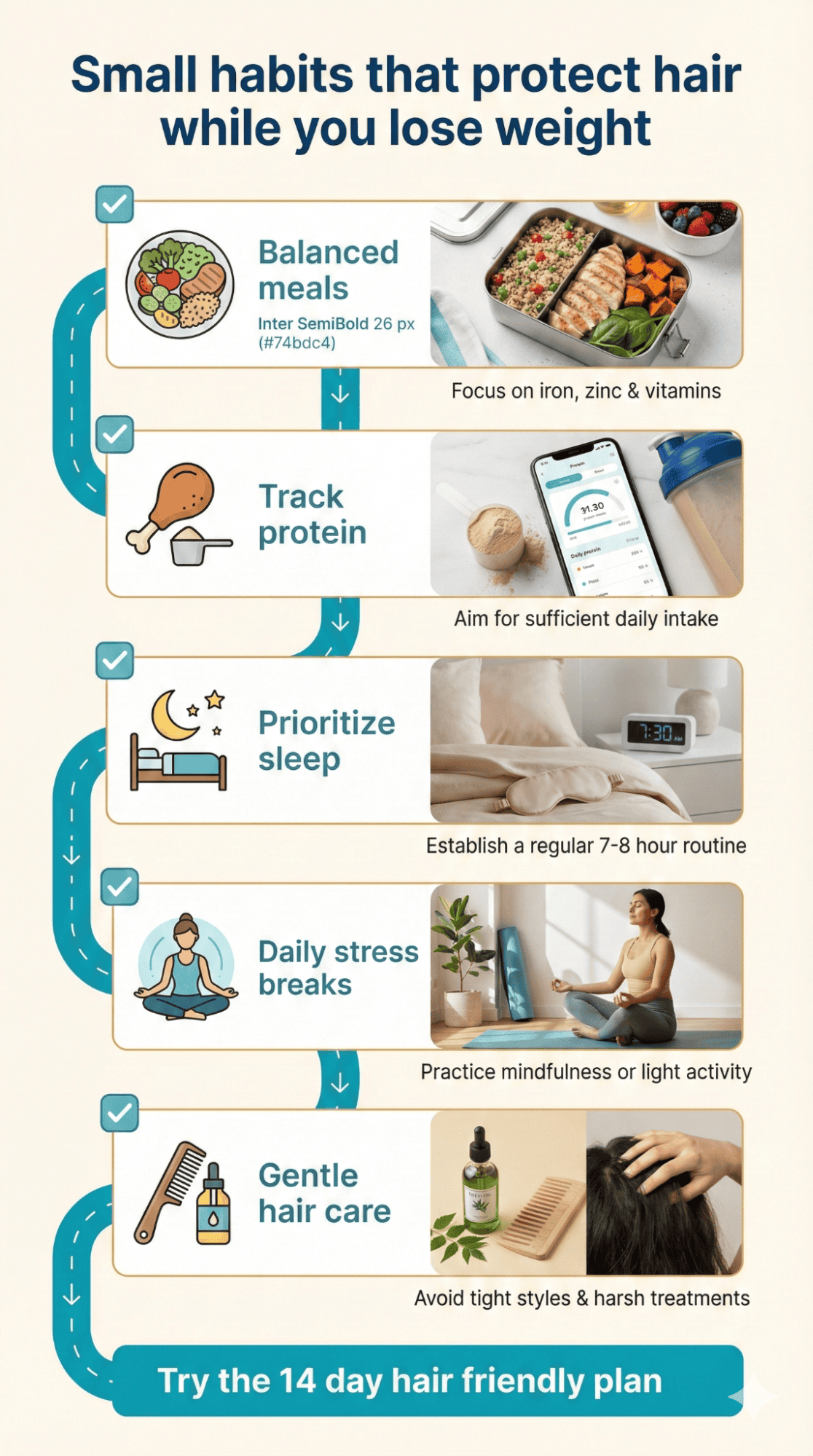
Additionally, manage stress actively through breaks, exercise, or meditation rather than letting it compound. Prioritize 7 to 8 hours of sleep as non-negotiable for hormone regulation. Pack your lunch when possible to control nutrition quality. These lifestyle modifications support both healthy weight loss and hair health simultaneously.
Cultural and Social Influences on Health
Indian cultural pressures create conditions promoting weight loss with hair loss through extreme pre-event dieting. Wedding season pressure drives brides and their families to crash diet for 2 to 3 months before ceremonies. Additionally, social comparisons with celebrities and influencers create unrealistic timelines for weight loss. Moreover, family comments about weight, though well-intentioned, sometimes push people toward dangerous restriction.
Furthermore, traditional beliefs that certain foods are “fattening” lead to unnecessary elimination of nutritious options. In fact, the stigma around being overweight makes people desperate enough to risk health for rapid results. Navigate these pressures by educating yourself and family about rapid weight loss side effects including hair loss. Set boundaries around weight commentary. Additionally, start weight loss early enough for wedding or events that you don’t need crash dieting. Focus on sustainable approaches even if they seem slower. Your hair, health, and long-term success matter more than fitting into a specific outfit by a deadline.
Best Indian Foods for Weight Loss And Hair Loss Management
Traditional Indian Foods That Support Nutrient Deficiency
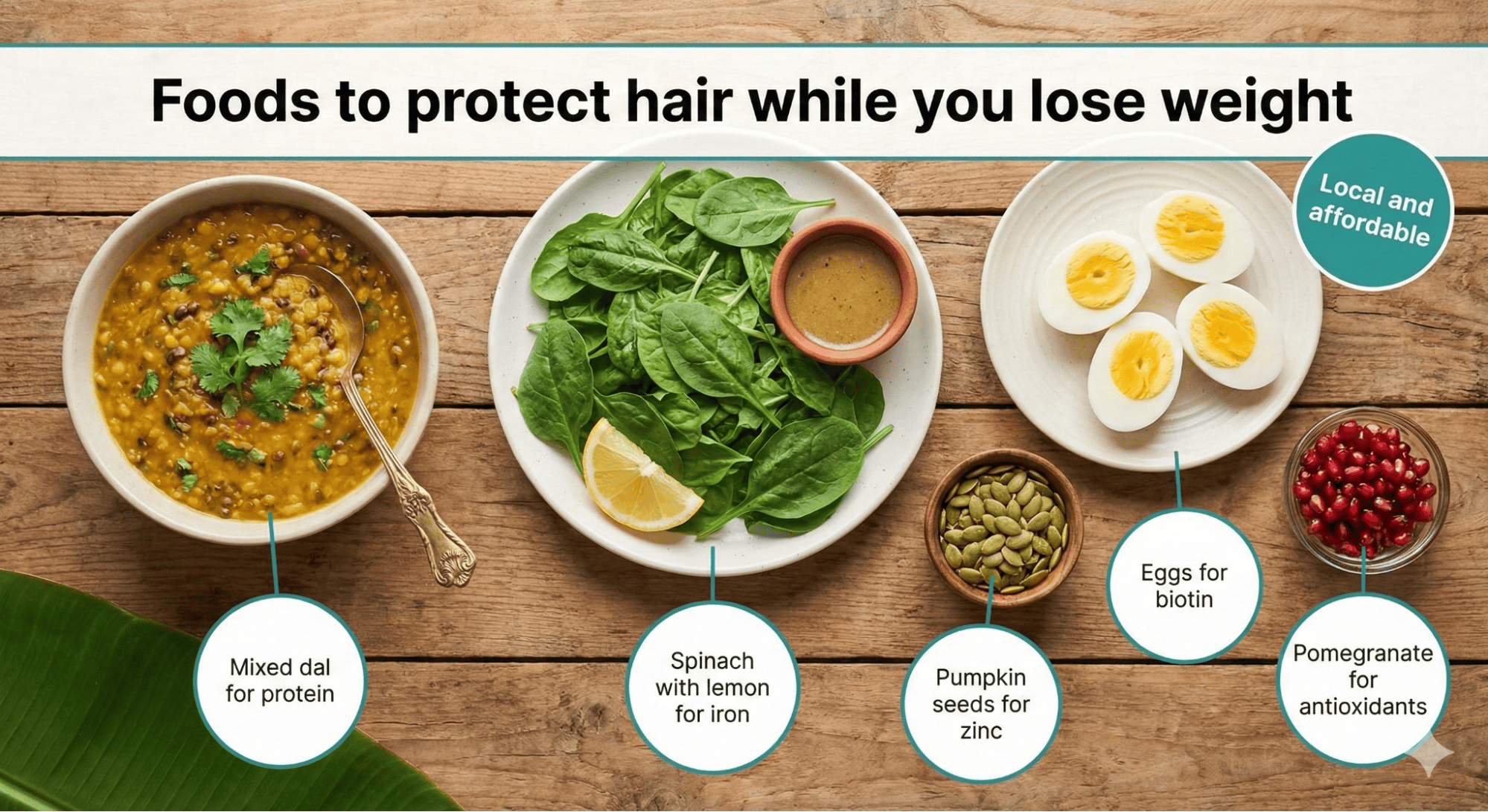
Indian cuisine offers excellent foods supporting both weight loss and hair health when chosen strategically. Whole dals provide protein essential for hair structure, approximately 20 to 25 grams per cooked cup. Include at least one dal daily during weight loss. Additionally, eggs offer complete protein with biotin for hair growth, 6 grams protein and significant biotin per egg. Spinach, methi, and other leafy greens provide iron, though less bioavailable than animal sources. Combine with vitamin C from tomatoes or lemon to enhance absorption.
Moreover, beetroot and pomegranate support iron intake. Curd provides protein and probiotics supporting nutrient absorption. For non-vegetarians, fish offers omega-3 fats and protein supporting hair health. Furthermore, nuts and seeds like almonds, walnuts, and pumpkin seeds provide zinc and healthy fats. These traditional foods prevent nutrient deficiency while supporting calorie deficit for weight loss when eaten in appropriate portions.
Modern Indian Meal Options and Healthy Recipes
Create meals supporting both fat loss and healthy weight loss without hair loss. Breakfast could be moong dal cheela with vegetables plus curd, providing 15 to 20 grams protein. Add boiled eggs for extra protein if non-vegetarian. Additionally, make vegetable poha with peanuts and top with eggs or paneer. Lunch should include generous dal serving (1.5 katori for 25+ grams protein), brown rice or rotis, vegetables, and salad. Don’t restrict portions to tiny amounts trying to accelerate weight loss.
Moreover, dinner could be rotis with dal, vegetables, and paneer or fish, again ensuring adequate protein. Include iron-rich vegetables like spinach or methi regularly. Furthermore, snacks like roasted chana, nuts, or curd between meals prevent extreme hunger driving overeating while adding protein and minerals. These balanced meals create moderate calorie deficits supporting gradual weight loss without triggering hair thinning from protein deficiency hair loss or micronutrient inadequacy.
Foods to Limit or Avoid for Better Results
While losing weight, certain foods should be limited but not eliminated entirely as extreme restriction triggers rapid weight loss side effects including hair loss. Refined carbs like white bread and maida products provide calories without nutrients supporting hair health, so minimize these. Additionally, sugary sweets and fried foods add calories while displacing more nutritious options. However, don’t eliminate healthy fats entirely as fat-soluble vitamins A, D, E, and K need fat for absorption.
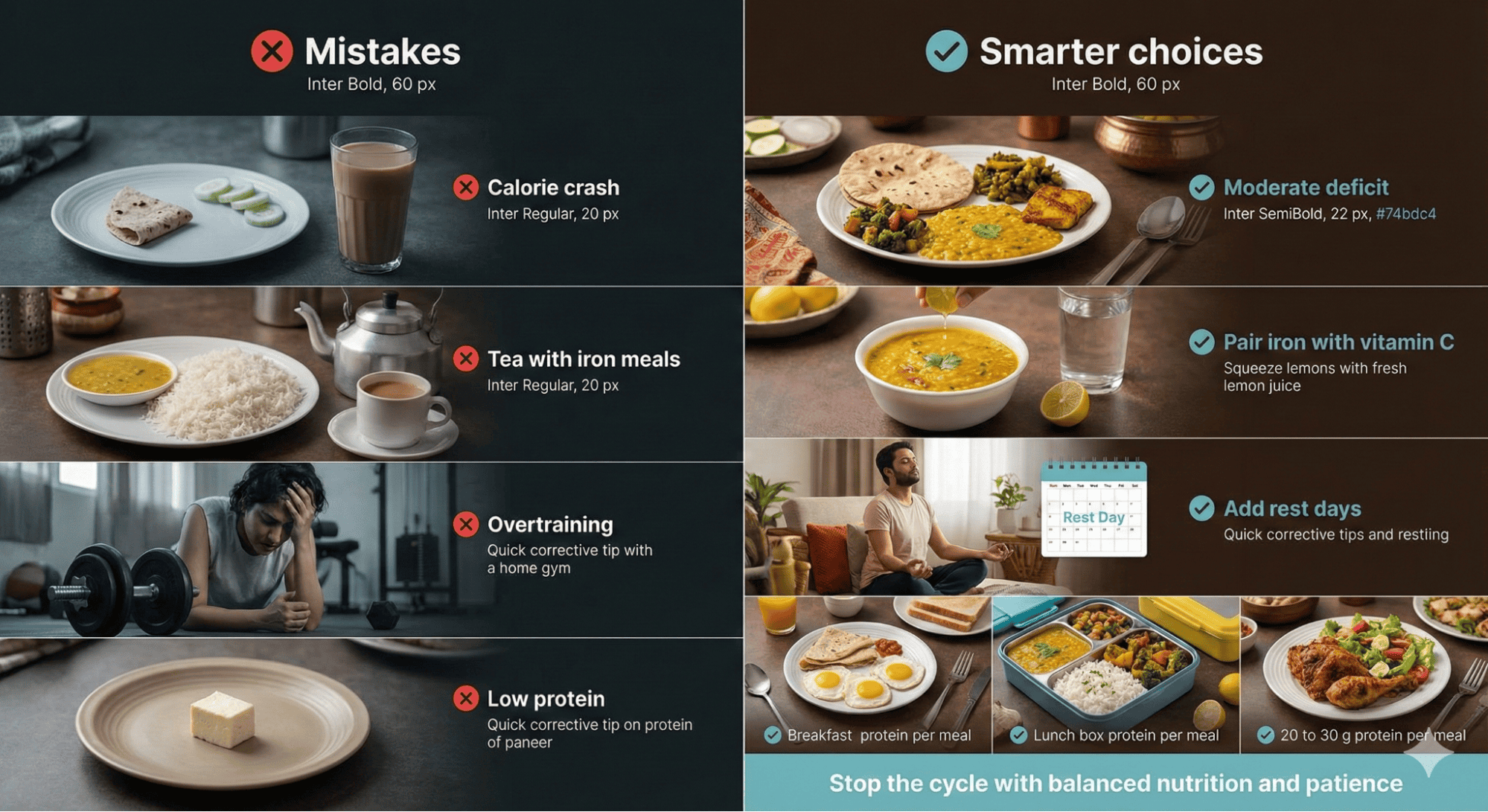
Moreover, excessive caffeine can interfere with iron absorption, so limit coffee and tea around meals containing iron-rich foods. Furthermore, alcohol provides empty calories and impairs nutrient absorption. In fact, the mistake isn’t eating certain foods but rather extreme elimination dieting or excessive calorie restriction. Therefore, focus on adding nutrient-dense foods to crowd out less nutritious options rather than draconian restriction creating nutritional deficiencies that cause weight loss with hair loss simultaneously.
Portion Sizes and Meal Timing for Indians
Appropriate portions during weight loss prevent both excessive restriction causing hair thinning and overeating preventing fat loss. Use your palm for protein portions at each meal, fist for carbs, two fists for vegetables, and thumb for fats. Additionally, aim for three balanced meals plus one to two snacks daily rather than extreme meal skipping. Moreover, ensure total daily calories don’t drop below 1200 for women or 1500 for men, as going lower typically means inadequate protein and micronutrients triggering hair loss. Include protein at every meal to reach total daily target of 1.2 to 1.6 grams per kilogram body weight.
Furthermore, eat iron-rich foods with vitamin C sources like tomatoes, lemon, or citrus fruits to maximize absorption. Time meals consistently throughout the day to maintain stable blood sugar and adequate nutrient intake. These portion and timing strategies create moderate calorie deficits supporting gradual healthy weight loss without the extreme restriction causing rapid weight loss side effects like hair loss.
Lifestyle Changes to Support Weight Loss And Hair Loss
Protein Deficiency Hair Loss: The Right Approach for Indians
Protein deficiency hair loss is particularly common among Indian dieters due to inadequate intake during restriction. Calculate your protein needs: multiply your weight in kilograms by 1.2 to 1.6 to determine daily grams required during weight loss. For a 70 kilogram person, this means 84 to 112 grams daily. Additionally, distribute protein across meals with 20 to 30 grams at breakfast, lunch, and dinner rather than loading it all at one meal. Moreover, for vegetarians, combine different plant proteins throughout the day to ensure complete amino acid profiles. Dal plus rice, or paneer with rotis provides complementary proteins.
Furthermore, track protein intake for several days to verify you’re meeting targets, as most people overestimate actual consumption. In fact, many Indians consume only 30 to 40 grams daily while thinking they eat “enough” protein. Therefore, honest tracking followed by strategic increases prevents protein deficiency hair loss while supporting muscle preservation during weight loss.
Sleep and Stress Management Strategies
Sleep and stress management profoundly affect both weight loss and hair health. Inadequate sleep disrupts hormones regulating hunger, making calorie control difficult and increasing cortisol which triggers hair loss. Therefore, prioritize 7 to 9 hours of quality sleep in a dark, cool room. Additionally, chronic stress elevates cortisol constantly, promoting hair shedding directly through telogen effluvium while also driving emotional eating and poor food choices. Practice daily stress management through meditation, yoga, deep breathing, walking, or hobbies for at least 10 to 15 minutes.
Moreover, recognize that excessive calorie restriction itself is a physical stressor. Combining aggressive dieting with high life stress and inadequate sleep creates the perfect storm for weight loss hair loss. Furthermore, exercise moderately rather than excessively as overtraining adds more stress. In fact, addressing these lifestyle factors often allows hair to recover even before dietary changes fully implement. Therefore, holistic stress reduction supports both weight and hair goals.
Daily Habits That Make a Real Difference
Small consistent actions prevent hair thinning during weight loss. Take a daily multivitamin with iron, zinc, and biotin as insurance against micronutrient gaps in your diet. Additionally, drink 8 to 10 glasses of water daily as dehydration affects hair health along with overall wellbeing. Moreover, massage your scalp for 5 minutes daily while showering to increase blood flow to follicles. Use gentle hair care practices, avoiding tight hairstyles, excessive heat styling, or harsh chemical treatments while dieting and hair is vulnerable.
Furthermore, don’t panic and try endless hair loss products which often waste money and add stress. Focus on correcting nutritional deficiencies as the root cause. In fact, be patient recognizing hair regrowth takes 6 to 12 months after nutrition normalizes. Therefore, consistent proper nutrition today sets the foundation for healthy hair emerging months from now. Track your nutrition and weight loss rate rather than obsessing over daily hair shedding which increases anxiety without helping.
Your 7-Day Weight Loss And Hair Loss Management Meal Plan
This meal plan provides adequate protein and nutrients preventing hair loss during weight loss:
| Day | Breakfast (20-25g protein) | Lunch (25-30g protein) | Evening Snack (10-15g) | Dinner (20-25g protein) |
| Day 1 | Moong dal cheela (2) + paneer (50g) + spinach + orange | Brown rice (1 katori) + dal (1.5 katori) + beetroot salad + raita | Roasted chana (1 bowl) + pomegranate | 2 rotis + palak dal + paneer (50g) + curd |
| Day 2 | Vegetable poha + peanuts + 2 boiled eggs + milk | 2 rotis + chana dal (1.5 katori) + methi sabzi + raita + tomato | Handful of almonds + apple | Quinoa + dal + fish (100g) + vegetables |
| Day 3 | Oats upma with vegetables + walnuts + 2 boiled eggs | Brown rice + sambhar (1.5 katori) + spinach + paneer + curd | Greek yogurt (1 cup) with nuts | 2 bajra rotis + moong dal + mixed veg |
| Day 4 | 2 eggs scrambled + whole wheat toast + banana + milk | 2 rotis + masoor dal (1.5 katori) + beetroot + paneer (50g) | Sprout salad with lemon | Brown rice + dal + chicken (100g) + salad |
| Day 5 | Moong dal dosa (2) + paneer filling + sambhar + coconut chutney | Brown rice + dal (1.5 katori) + methi + fish (100g) + raita | 8 almonds + pomegranate | 2 rotis + rajma (1.5 katori) + vegetables |
| Day 6 | Besan cheela (2) + vegetables + 2 boiled eggs + milk | 2 rotis + chana dal (1.5 katori) + spinach + paneer (50g) + salad | Roasted makhana + curd | Quinoa + dal + mixed vegetables + egg |
| Day 7 | Idli (3) + sambhar + 2 eggs + coconut chutney | Brown rice + dal (1.5 katori) + beetroot + chicken (100g) + raita | Handful of walnuts + apple | 2 rotis + moong dal + paneer bhurji (50g) |
Note: Each meal provides 20 to 30 grams protein totaling 80 to 100+ grams daily. Iron-rich foods (spinach, methi, beetroot, pomegranate) included regularly with vitamin C sources. Adequate calories prevent rapid loss triggering hair shedding.
Common Mistakes Indians Make with Weight Loss And Hair Loss
Diet Mistakes That Sabotage Progress
The biggest mistake is cutting calories too drastically, dropping below 1200 daily for women, triggering rapid weight loss side effects including hair loss. Another error is not eating adequate protein, consuming only 30 to 40 grams daily when needing 80 to 100+ grams. Additionally, many people eliminate healthy fats entirely, preventing absorption of fat-soluble vitamins needed for hair health. Moreover, skipping breakfast means missing a protein opportunity, making daily targets harder to reach.
Furthermore, relying on salads alone without adequate protein or calories creates nutrient deficiency guaranteed to cause hair thinning. In fact, taking hair growth supplements while continuing inadequate nutrition wastes money as supplements can’t compensate for poor diet. Additionally, people often try to “speed up” weight loss when noticing hair loss, thinking faster results will allow them to stop dieting sooner. This worsens both problems. Therefore, slow sustainable weight loss with adequate nutrition prevents hair loss that extreme restriction inevitably causes.
Lifestyle Pitfalls to Watch Out For
Many people sabotage both weight and hair health through lifestyle choices beyond food. Excessive cardio without adequate calorie or protein intake creates high stress breaking down muscle and hair. Additionally, chronic sleep deprivation disrupts hormones affecting both weight regulation and hair growth cycles. Moreover, high stress from work, relationships, or life combined with aggressive dieting compounds cortisol-related hair loss.
Furthermore, constantly trying new diets rather than sticking with sustainable approaches prevents body from stabilizing. Each diet restart stresses your system potentially triggering more hair loss. In fact, weighing yourself daily and panicking at normal fluctuations increases stress worsening hair loss. Additionally, comparing your timeline to others’ ignores individual differences in how quickly hair responds to improved nutrition. Not being patient with hair regrowth which takes 6 to 12 months makes people abandon good nutrition prematurely. Therefore, addressing these lifestyle factors supports both healthy weight loss and hair recovery.
How to Course-Correct When Things Go Wrong
If you’re experiencing weight loss and hair loss, act immediately to prevent further damage. First, stop any crash dieting or extreme restriction. Increase calories to at least 1200 to 1500 daily with balanced macros. Additionally, verify you’re eating adequate protein by tracking for 3 days and calculating actual intake. Most people consuming insufficient protein don’t realize it until tracking. Moreover, add iron-rich foods with vitamin C at meals to boost absorption. Get blood tests checking ferritin (iron stores), vitamin D, zinc, and thyroid function to identify specific deficiencies requiring supplementation.
Furthermore, reduce exercise intensity temporarily if you’ve been training hard while under-eating. In fact, shift focus from rapid weight loss to sustainable habit building that maintains hair health. Accept that hair takes 6 to 12 months to regrow once nutrition normalizes. Therefore, patience with proper nutrition recovery is essential. Work with a registered dietitian if you’re struggling to create adequate meal plans. Don’t continue restrictive approaches hoping hair loss will miraculously stop.
Conclusion
Weight loss and hair loss aren’t inevitable partners, but rather signals that you’re losing weight through dangerous methods requiring correction. Hair thinning during dieting results from specific mistakes: excessive calorie restriction, inadequate protein, nutrient deficiency, or extreme stress, all preventable through proper approach. Indians face particular vulnerability due to crash dieting culture, pre-existing iron deficiency, and inadequate protein in typical vegetarian restriction. The solution isn’t choosing between weight loss and healthy hair but pursuing healthy weight loss at sustainable rates with adequate nutrition supporting both goals simultaneously.
Start today by calculating your protein needs and tracking intake for 3 days to identify gaps. Increase protein immediately to 1.2 to 1.6 grams per kilogram body weight through dal, eggs, paneer, or fish at every meal. Additionally, slow weight loss to 0.5 to 1 kilo weekly by eating at least 1200 to 1500 calories daily. Include iron-rich foods with vitamin C for absorption. These changes stop further hair damage and support regrowth over the next 6 to 12 months.
FAQs
Q1: What is weight loss and hair loss and how does it affect Indians?
Weight loss and hair loss occur when rapid restriction or nutrient deficiency triggers telogen effluvium, pushing hair follicles into the resting phase prematurely, causing excessive shedding 2 to 4 months later. Indians face particular risk due to a crash dieting culture, pre-existing iron deficiency, and inadequate protein intake during vegetarian weight loss diets common in the population.
Q2: What are the main signs of diet-related hair loss?
Signs include shedding more than 100 hairs daily consistently, wider part lines showing more scalp, excessive hair on the pillow or in the shower drain, and hair becoming thinner or more brittle. Hair thinning from rapid weight loss side effects typically appears 2 to 4 months after starting extreme dieting, with noticeable volume loss when styling.
Q3: What foods should Indians eat to prevent hair loss during weight loss?
Eat adequate protein from dal, eggs, paneer, fish (80 to 100+ grams daily), iron-rich foods like spinach, methi, beetroot, and pomegranate with vitamin C for absorption. Include nuts and seeds for zinc supporting healthy weight loss without nutrient deficiency causing protein deficiency hair loss.
Q4: Can hair loss from dieting be prevented naturally?
Yes, prevent through gradual weight loss (0.5 to 1 kilo weekly maximum), adequate protein (1.2 to 1.6 grams per kilogram body weight), sufficient calories (1200+ for women), iron-rich foods, stress management, and adequate sleep. Hair regrows in 6 to 12 months once nutrition normalizes addressing weight loss and hair loss root causes.
Q5: How long does it take to see hair regrowth after improving nutrition?
Initial shedding may continue for 2 to 3 months after nutritional correction as affected follicles complete their cycle. New growth appears within 3 to 4 months, with noticeable length and volume improvement taking 6 to 12 months of consistent adequate nutrition supporting recovery from hair thinning during weight loss.
Related Posts