You struggle to fall asleep despite exhaustion. Your eye twitches randomly throughout the day. Muscle cramps interrupt your workouts and nighttime rest. Anxiety feels constant, and stress overwhelms you easily. Your doctor ran tests, but “everything is normal.” What if the problem isn’t what doctors are testing for? Magnesium deficiency affects up to 70% of Indians according to research, yet most people and even many doctors overlook this critical mineral. This invisible deficiency impacts everything from sleep to stress management to muscle function. This guide reveals why magnesium deficiency is so common among Indians and how to fix it effectively.
What Is Magnesium Deficiency and Why Indian Dieters Should Care?

Magnesium deficiency occurs when your body doesn’t have adequate amounts of this essential mineral involved in over 300 biochemical reactions. Your body uses magnesium for energy production, muscle contraction and relaxation, nerve function, blood pressure regulation, and protein synthesis. Additionally, magnesium supports bone health, heart rhythm, blood sugar control, and stress response. Therefore, when magnesium levels are low, multiple body systems malfunction simultaneously creating diverse symptoms that seem unrelated.
Moreover, magnesium deficiency is often subclinical, meaning standard blood tests show normal levels even when body stores are depleted. Blood only contains 1% of body magnesium, so normal blood levels don’t guarantee adequate tissue magnesium. This makes magnesium deficiency particularly insidious and commonly missed.
Why Magnesium Matters for Indian Bodies
Indians face particular vulnerability to magnesium deficiency due to dietary patterns, lifestyle factors, and genetic predisposition. Traditional Indian diets once provided adequate magnesium through whole grains, leafy greens, and legumes. However, modern refined diets stripped of these nutrient-dense foods leave many Indians deficient. Additionally, high stress levels common among urban Indians deplete magnesium rapidly as your body uses more during stress response.
Moreover, chronic diseases prevalent in Indians like diabetes and hypertension both cause and result from magnesium deficiency, creating vicious cycles. Furthermore, Indians have genetic variations affecting magnesium absorption and utilization, increasing vulnerability. In fact, research shows Indian women have especially high rates of deficiency due to inadequate dietary intake combined with losses during menstruation and pregnancy. Therefore, understanding and addressing magnesium deficiency becomes crucial for comprehensive health improvement.
Common Myths Debunked About This Topic
Let’s clear up myths about magnesium deficiency. First, blood tests don’t reliably detect deficiency. Most deficiency is intracellular, missed by standard serum magnesium tests. Second, you can’t get enough from diet alone easily if you’re deficient. Foods contain less magnesium than decades ago due to soil depletion. Third, all magnesium supplements aren’t equal. Different forms have dramatically different absorption rates and uses. Fourth, magnesium supplementation won’t fix everything. It helps specific symptoms related to deficiency but isn’t a cure-all.
Additionally, taking calcium without adequate magnesium worsens deficiency. They need balance, not calcium dominance. Finally, magnesium isn’t just for muscle cramps. Its effects span nervous system function, energy production, and metabolic health far beyond muscles. Therefore, comprehensive understanding of magnesium benefits helps you appreciate its importance beyond single symptoms.
The Science Behind Magnesium Deficiency for Indians

How Magnesium Works in Your Body
Magnesium functions as cofactor for hundreds of enzymes controlling critical processes. It activates ATP, the energy currency of cells, so energy production requires adequate magnesium. Additionally, magnesium regulates calcium channels in cells, controlling muscle contraction and relaxation. Too little magnesium means muscles can’t relax properly, causing cramps, twitches, and tension. Moreover, magnesium calms nervous system activity by regulating neurotransmitters like GABA, supporting stress management and sleep.
Furthermore, magnesium helps maintain healthy blood pressure by relaxing blood vessels and supports insulin function, affecting blood sugar control. In fact, magnesium deficiency impairs vitamin D activation in kidneys, creating secondary vitamin D deficiency even with adequate sun exposure or supplementation. Therefore, magnesium deficiency creates cascading problems across multiple body systems. Correcting it often improves numerous seemingly unrelated symptoms simultaneously.
The Connection Between Magnesium Benefits and Health
Magnesium benefits extend across virtually every aspect of health. Adequate magnesium reduces anxiety and improves stress resilience by modulating stress hormone responses and supporting calming neurotransmitters. Additionally, magnesium improves sleep quality by regulating melatonin and relaxing muscles and nervous system. Moreover, it reduces migraine frequency and severity for many people by stabilizing nerve function and blood vessel tone.
Furthermore, magnesium supports heart health by maintaining normal heart rhythm, regulating blood pressure, and improving cholesterol profiles. In fact, research shows higher magnesium intake correlates with reduced risk of type 2 diabetes, metabolic syndrome, and cardiovascular disease. Magnesium rich foods and supplementation improve exercise performance through better energy production, reduced lactic acid buildup, and enhanced recovery. Therefore, optimizing magnesium status creates comprehensive health improvements affecting quality of life significantly.
What Research Shows for Indian Population
Research on magnesium deficiency in Indians reveals alarming prevalence and consequences. Studies show 60-75% of urban Indians have inadequate magnesium intake below recommended levels. One study found 70% of Indian women had serum magnesium levels below optimal, with higher rates among those with diabetes or hypertension. Additionally, research demonstrates that Indians with metabolic syndrome have significantly lower magnesium levels than healthy controls, suggesting causative relationship. Moreover, studies show magnesium supplementation in Indian diabetics improved blood sugar control and insulin sensitivity significantly.
Furthermore, research indicates that Indian diets lacking whole grains, leafy greens, and nuts provide insufficient magnesium even when total calories are adequate. In fact, studies demonstrate that magnesium supplementation improved sleep quality and reduced anxiety in stressed Indian adults. Therefore, widespread deficiency combined with clear benefits from correction makes addressing magnesium deficiency a priority for Indian health improvement.
Magnesium Rich Foods: What to Watch For

Physical Signs and Symptoms to Monitor
Magnesium deficiency creates diverse symptoms often misattributed to other causes. Muscle cramps, especially nighttime leg cramps, are classic signs. Additionally, eye twitches, facial twitches, or muscle tremors indicate inadequate magnesium affecting nerve-muscle communication. Moreover, chronic fatigue despite adequate sleep suggests impaired energy production from low magnesium. Difficulty falling asleep, staying asleep, or non-restorative sleep are common.
Furthermore, frequent headaches or migraines often improve with magnesium correction. Watch for irregular heartbeat or heart palpitations, especially with exertion or stress. Additionally, constipation results from smooth muscle dysfunction in digestive tract. High blood pressure resistant to treatment might indicate underlying magnesium deficiency. In fact, if you experience several of these symptoms simultaneously, magnesium deficiency is likely culprit. Therefore, addressing magnesium often creates dramatic improvement across multiple symptoms rather than requiring separate treatment for each.
Emotional and Mental Health Indicators
Magnesium deficiency profoundly affects mental health in ways often unrecognized. Anxiety and feeling “on edge” constantly improve with magnesium as it supports GABA, your calming neurotransmitter. Additionally, irritability and mood swings often stem from inadequate magnesium affecting neurotransmitter balance. Moreover, difficulty managing stress and feeling overwhelmed easily indicate magnesium depletion from chronic stress.
Furthermore, brain fog and poor concentration result from impaired energy production in brain cells requiring magnesium. Some people experience depression worsening or improving with magnesium status changes. In fact, restlessness and inability to relax physically or mentally despite trying are magnesium-related symptoms. Therefore, if mental health interventions aren’t working as expected, assessing magnesium status makes sense. Correcting deficiency creates foundation allowing other treatments to work better.
When to Consult a Healthcare Professional
See a doctor for severe symptoms like irregular heartbeat, severe muscle weakness, or seizures, as these indicate serious deficiency requiring immediate medical treatment. Additionally, if you have kidney disease, consult before supplementing magnesium as impaired kidney function affects magnesium excretion. Get medical guidance if taking medications like diuretics, proton pump inhibitors, or antibiotics that interfere with magnesium absorption or increase losses.
Moreover, if symptoms don’t improve after 4-8 weeks of adequate supplementation, underlying conditions might need evaluation. Work with doctors who understand magnesium deficiency testing limitations and are willing to try therapeutic supplementation even with normal blood tests. Furthermore, some practitioners order red blood cell magnesium tests providing better assessment than serum magnesium, though even these aren’t perfect. Therefore, finding knowledgeable healthcare providers who take magnesium seriously rather than dismissing it makes getting proper care easier.
Indian Lifestyle Factors Affecting Magnesium Deficiency

Modern Indian Diet Challenges and Solutions
Modern Indian dietary patterns create conditions for widespread magnesium deficiency. White rice replacing brown rice removes 80% of magnesium. Additionally, refined wheat flour for rotis instead of whole wheat reduces magnesium significantly. Moreover, decreased consumption of traditional leafy greens like spinach, methi, and amaranth removes major magnesium sources.
Furthermore, over-boiling vegetables leaches magnesium into cooking water that’s discarded. Solutions include switching to brown rice providing 80-100mg magnesium per cup versus 20mg in white rice. Additionally, use whole wheat flour for rotis and include other whole grains like bajra, jowar, and ragi. Moreover, eat leafy greens daily, lightly cooked or raw to preserve magnesium. Add dal to both lunch and dinner as legumes provide good magnesium. Furthermore, include nuts daily, especially almonds and cashews. These simple dietary shifts significantly increase magnesium intake from magnesium rich foods naturally.
Work-Life Balance and Urban Living Impact
Urban Indian lifestyle depletes magnesium rapidly through multiple mechanisms. Chronic work stress uses magnesium for stress hormone production and nervous system regulation. Additionally, inadequate sleep from long hours and commutes prevents proper magnesium utilization and recovery. Moreover, excessive caffeine consumption increases magnesium excretion through urine.
Furthermore, alcohol depletes magnesium while impairing absorption. High sugar consumption from packaged snacks and beverages increases magnesium excretion. In fact, the combination of high stress, poor diet, inadequate sleep, and substance use creates perfect storm for severe magnesium deficiency. Solutions include stress management practices like meditation or yoga helping preserve magnesium. Additionally, limit caffeine to 1-2 cups daily and alcohol to occasional moderate amounts. Moreover, reduce added sugar consumption. Furthermore, prioritize 7-8 hours sleep supporting magnesium utilization. These lifestyle modifications preserve magnesium rather than constantly depleting it.
Cultural and Social Influences on Health
Indian cultural factors both help and hinder magnesium status. Traditional diets with dal, whole grains, and leafy greens naturally provided adequate magnesium. However, modernization toward refined foods reduces intake. Additionally, Ayurvedic practices emphasizing whole foods and stress management support magnesium status. Moreover, yoga and meditation traditions help manage stress preserving magnesium. However, increasing Westernization of diet with processed foods strips magnesium.
Furthermore, work culture prioritizing productivity over rest depletes magnesium through chronic stress. In fact, social pressure around success and achievement creates stress consuming magnesium. Solutions include returning to traditional food wisdom emphasizing whole foods. Additionally, incorporate stress management practices from Indian traditions. Moreover, educate family about importance of magnesium-rich traditional foods. Furthermore, resist social pressures creating unsustainable stress levels. Therefore, balancing beneficial traditional practices with awareness of modern deficiency risks helps maintain adequate magnesium status.
Best Indian Foods for Magnesium Deficiency Management
Traditional Indian Foods That Support Magnesium Supplementation
Indian cuisine offers excellent magnesium rich foods when chosen thoughtfully. Spinach (palak) provides 157mg per cooked cup, one of the richest sources. Additionally, methi (fenugreek leaves) offers significant magnesium along with other nutrients. Moreover, amaranth leaves (chaulai) contain good magnesium amounts. Whole moong dal provides 97mg per cooked cup.
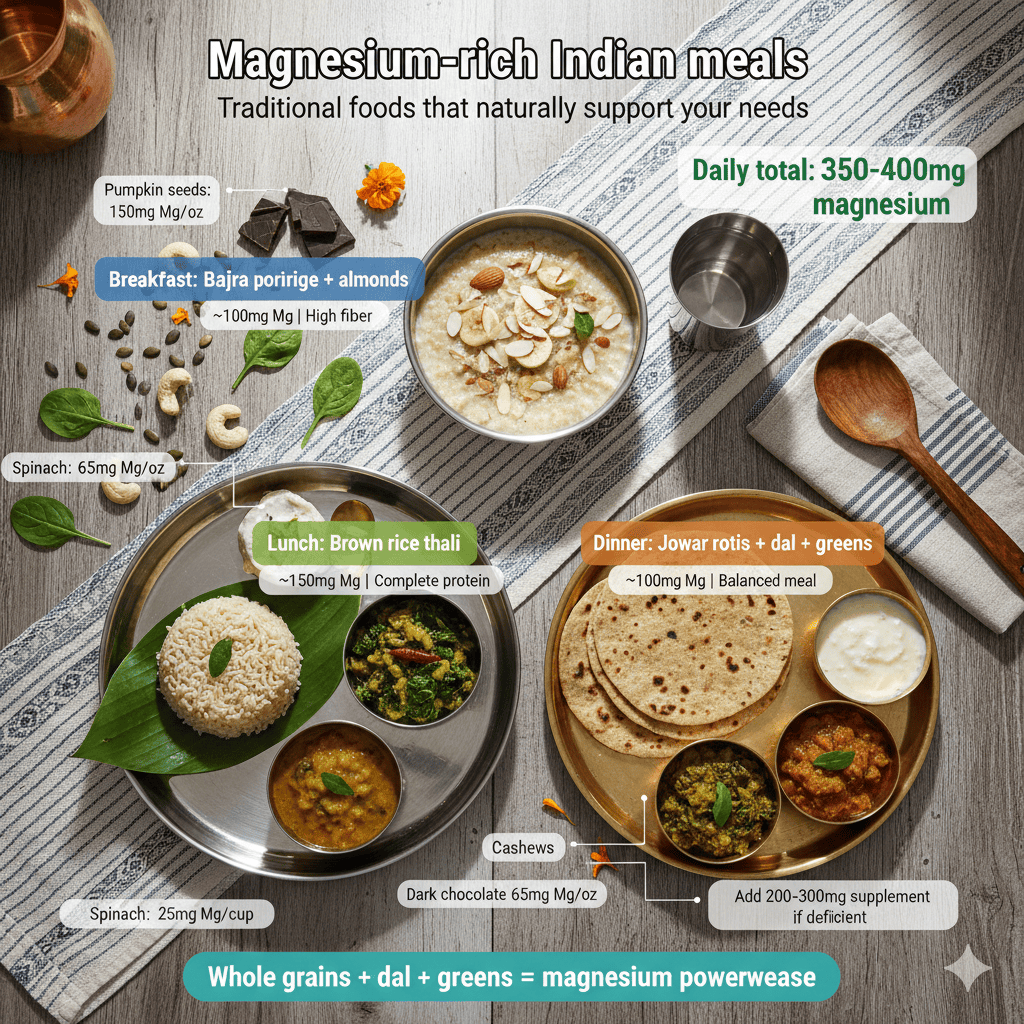
Furthermore, whole grains like brown rice (86mg per cup), bajra, jowar, and ragi offer substantial magnesium. Almonds and cashews are magnesium powerhouses with 80mg per ounce. In fact, dark chocolate (70%+ cacao) provides 64mg per ounce, making it both healthy and enjoyable magnesium source. Bananas, avocados, and figs contain moderate amounts. Additionally, pumpkin seeds offer exceptional magnesium density. Therefore, including these magnesium rich foods daily through traditional Indian preparations significantly increases intake naturally before considering supplementation.
Modern Indian Meal Options and Healthy Recipes
Create magnesium-rich meals using Indian ingredients strategically. Breakfast could be bajra porridge with almonds and banana, providing 150+ mg magnesium. Additionally, make palak paratha with whole wheat flour for substantial magnesium boost. Lunch might include brown rice with moong dal, spinach sabzi, and raita, totaling 250+ mg magnesium. Moreover, dinner could be jowar rotis with chana dal, methi sabzi, and curd. Include nuts as evening snack for additional magnesium.
Furthermore, make smoothies with banana, almond butter, cacao powder, and oats for delicious magnesium-dense option. Add pumpkin seeds to salads, upma, or poha for extra magnesium. In fact, strategic meal planning focusing on whole grains, legumes, leafy greens, and nuts can provide 300-400mg daily magnesium from food, approaching recommended 400-420mg for men and 310-320mg for women. Therefore, consistent inclusion of magnesium rich foods reduces reliance on supplements alone.
Foods to Limit or Avoid for Better Results
Certain foods and practices reduce magnesium absorption or increase losses. Excessive caffeine from multiple chai or coffee servings daily increases urinary magnesium excretion. Therefore, limit to 1-2 cups daily. Additionally, high sugar consumption increases magnesium losses. Minimize sweets, sugary drinks, and processed foods with added sugars. Moreover, excessive alcohol impairs magnesium absorption and increases excretion. Limit alcohol consumption.
Furthermore, phytic acid in grains and legumes binds magnesium reducing absorption. Soaking, sprouting, or fermenting reduces phytic acid. However, don’t avoid these foods as they still provide net magnesium benefit. Additionally, excessive calcium supplementation without adequate magnesium creates imbalance. Maintain 2:1 calcium to magnesium ratio. In fact, carbonated beverages, especially colas, contain phosphoric acid interfering with magnesium absorption. Avoid these. Therefore, reducing magnesium-depleting foods and practices while increasing magnesium rich foods addresses deficiency comprehensively.
Portion Sizes and Meal Timing for Indians
Meeting magnesium needs requires consistent intake throughout the day rather than one large dose. Include magnesium sources at each meal. Breakfast might provide 100mg through whole grain porridge and nuts. Additionally, lunch can contribute 150mg through dal, brown rice, and leafy green sabzi. Moreover, dinner adds 100mg through whole grain roti, dal, and vegetables. Snacks like nuts or dark chocolate provide 50-80mg.
Furthermore, aim for 300-400mg daily from food sources plus supplementation if needed to reach 400-420mg for men or 310-320mg for women. Space magnesium-rich foods throughout the day as your body absorbs limited amounts at once. In fact, taking magnesium supplements with food improves absorption and reduces digestive side effects. Therefore, strategic distribution of magnesium rich foods across meals optimizes absorption and maintains steady levels supporting continuous bodily functions requiring this essential mineral.
Lifestyle Changes to Support Magnesium Deficiency

Magnesium Supplementation: The Right Approach for Indians
Magnesium supplementation becomes necessary when dietary intake can’t meet needs or deficiency is severe. Choose magnesium forms based on goals and tolerance. Magnesium glycinate absorbs well and is gentle on stomach, ideal for most people. Additionally, magnesium threonine crosses blood-barrier supporting cognitive function and memory. Moreover, magnesium citrate is well-absorbed but can have laxative effect useful for constipation.
Furthermore, magnesium oxide is poorly absorbed but inexpensive. Avoid it unless specifically for constipation. Start with 200-300mg supplemental magnesium taken with food in evening. In fact, taking magnesium before bed supports sleep quality and muscle relaxation overnight. Increase gradually to 400-600mg total daily if needed based on response.
However, excessive supplementation causes diarrhea, signaling you’ve reached bowel tolerance. Therefore, find your optimal dose balancing benefit and tolerance. Give supplementation 4-8 weeks to show full effects on symptoms.
Sleep and Stress Management Strategies
Sleep and stress management work synergistically with magnesium for optimal health. Adequate magnesium improves sleep quality, while good sleep preserves magnesium stores. Therefore, take magnesium supplement 30-60 minutes before bed supporting natural sleep onset. Additionally, practice sleep hygiene like dark room, cool temperature, and consistent schedule. Moreover, chronic stress depletes magnesium rapidly, while adequate magnesium improves stress resilience. Practice daily stress management through meditation, deep breathing, or yoga.
Furthermore, magnesium supports stress management by modulating cortisol response and supporting calming neurotransmitters. In fact, many people notice stress feels more manageable within 2-3 weeks of correcting magnesium deficiency. Additionally, sleep and magnesium have bidirectional relationship. Improving one helps the other, creating positive cycle. Therefore, addressing both simultaneously through magnesium optimization and sleep/stress practices creates comprehensive health improvement.
Daily Habits That Make a Real Difference
Small consistent actions optimize magnesium status long-term. Take your magnesium supplement same time daily making it habitual. Additionally, choose water rich in magnesium when possible or add magnesium drops to drinking water. Moreover, use Epsom salt (magnesium sulfate) baths weekly. Magnesium absorbs through skin, providing additional supplementation route while promoting relaxation.
Furthermore, reduce or eliminate magnesium-depleting habits like excessive caffeine, alcohol, and sugar. Track your symptoms keeping a journal noting changes as you optimize magnesium. In fact, many symptoms improve within 1-2 weeks but some like sleep and magnesium relationship or chronic issues take 4-8 weeks to show full benefit. Additionally, educate yourself about which medications or conditions affect magnesium, discussing with doctors when relevant. Furthermore, get sunlight daily as vitamin D and magnesium work together. Therefore, these daily habits compound into significant magnesium status improvement supporting comprehensive health enhancement.
Your 7-Day Magnesium Deficiency Management Meal Plan
This meal plan provides 300-400mg magnesium daily through magnesium rich foods:
| Day | Breakfast (80-100mg Mg) | Lunch (120-150mg Mg) | Evening Snack (50-80mg Mg) | Dinner (80-100mg Mg) |
| Day 1 | Bajra porridge + almonds (10) + banana | Brown rice (1 cup) + moong dal (1 cup) + palak sabzi + raita | Dark chocolate (1 oz 70% cacao) | 2 jowar rotis + chana dal + methi sabzi |
| Day 2 | Oats upma with vegetables + cashews (10) + milk | Brown rice + whole moong dal + spinach + pumpkin seeds on salad | Banana + almond butter (1 tbsp) | 2 bajra rotis + rajma + mixed greens |
| Day 3 | Palak paratha (whole wheat) + curd + almonds | Quinoa (1 cup) + dal + methi sabzi + raita | Roasted pumpkin seeds (1 oz) | Brown rice + dal + amaranth leaves |
| Day 4 | Ragi porridge + walnuts + banana | Brown rice + moong dal + palak paneer + salad | Dark chocolate + almonds (8) | 2 whole wheat rotis + dal + spinach |
| Day 5 | Whole wheat toast + almond butter + banana | Brown rice + dal + methi sabzi + cashews in salad | Smoothie (banana, cacao, almond butter, oats) | 2 bajra rotis + chana dal + greens |
| Day 6 | Bajra khichdi + almonds + dried figs | Brown rice + whole moong dal + palak + pumpkin seeds | Banana + cashews (10) | Quinoa + dal + spinach sabzi |
| Day 7 | Oats with almonds + banana + milk | Brown rice + dal + amaranth leaves + nuts | Dark chocolate (1 oz) | 2 jowar rotis + rajma + methi sabzi |
Note: Each day provides 300-400mg magnesium from food. Consider supplementing additional 200-300mg if deficient. Magnesium-rich foods: brown rice (86mg/cup), moong dal (97mg/cup cooked), spinach (157mg/cup cooked), almonds (80mg/oz), cashews (74mg/oz), dark chocolate (64mg/oz), banana (32mg), pumpkin seeds (150mg/oz).
Common Mistakes Indians Make with Magnesium Deficiency

Diet Mistakes That Sabotage Progress
The biggest mistake is relying entirely on supplementation while continuing refined diet providing minimal magnesium from food. Supplements should complement, not replace, magnesium rich foods. Another error is taking inadequate supplement amounts thinking low doses suffice when deficiency is severe. Additionally, many people take poorly absorbed magnesium forms like oxide, wasting money on ineffective supplementation. Moreover, not giving supplementation adequate time to work, expecting immediate results when tissue replenishment takes weeks.
Furthermore, taking magnesium without addressing dietary calcium imbalance. Excessive calcium without adequate magnesium worsens deficiency. In fact, combining multiple magnesium-depleting habits like high sugar, caffeine, and alcohol while taking supplements prevents correction. Additionally, over-boiling vegetables destroys and leaches magnesium, then discarding cooking water wastes nutrients. Therefore, comprehensive approach addressing diet quality, supplement type and dose, and lifestyle factors creates effective magnesium deficiency correction.
Lifestyle Pitfalls to Watch Out For
Many people sabotage magnesium status through lifestyle choices they don’t connect to deficiency. Chronic stress without management depletes magnesium faster than supplementation can replace. Additionally, inadequate sleep prevents proper magnesium utilization and recovery. Moreover, excessive intense exercise without adequate nutrition and recovery increases magnesium needs beyond intake.
Furthermore, taking medications like diuretics, proton pump inhibitors, or antibiotics long-term without addressing resulting magnesium depletion. Not recognizing symptoms as potential magnesium-related means continuing to suffer unnecessarily. In fact, self-diagnosing and supplementing with magnesium without proper assessment sometimes masks serious conditions needing medical treatment.
Additionally, expecting magnesium to fix everything when multiple nutritional deficiencies or health issues exist. Therefore, balanced approach addressing lifestyle stressors while optimizing magnesium through food and supplementation creates lasting improvement.
How to Course-Correct When Things Go Wrong
If supplementing magnesium but not seeing improvement, troubleshoot systematically. Verify you’re taking adequate amounts, generally 300-600mg supplemental magnesium daily depending on severity. Additionally, check if you’re using well-absorbed forms like glycinate, citrate, or threonate rather than poorly absorbed oxide. Moreover, ensure you’re taking magnesium consistently daily, not sporadically.
Furthermore, assess whether other factors like ongoing stress, poor sleep, or medication use are depleting magnesium faster than supplementation can correct. If digestive side effects occur, try different forms or split doses across the day. In fact, if after 8 weeks of adequate supplementation symptoms persist, consult healthcare providers checking for other issues or confirming actual deficiency through testing. Some symptoms attributed to magnesium might have other causes requiring different treatments. Therefore, methodical troubleshooting identifies whether implementation issues or alternative explanations prevent expected improvement from magnesium supplementation.
Frequently Asked Questions
Q1: What is magnesium deficiency and how does it affect Indians?
Magnesium deficiency occurs when inadequate intake or increased losses create shortage of this essential mineral involved in 300+ bodily reactions including energy production, muscle function, and stress response. Research shows 60-75% of Indians have inadequate magnesium intake due to refined diets lacking whole grains, leafy greens, and nuts that traditionally provided sufficient magnesium.
Q2: What are the main signs of low magnesium?
Signs include muscle cramps and twitches, difficulty sleeping, chronic fatigue, anxiety and stress sensitivity, frequent headaches or migraines, irregular heartbeat, constipation, and high blood pressure. Multiple symptoms occurring together strongly suggest magnesium deficiency as magnesium affects numerous body systems simultaneously when inadequate.
Q3: What foods should Indians eat for better magnesium intake?
Eat magnesium rich foods including leafy greens (spinach, methi, amaranth), whole grains (brown rice, bajra, jowar, ragi), legumes (moong dal, chana dal), nuts (almonds, cashews), seeds (pumpkin seeds), dark chocolate (70%+ cacao), and bananas. These traditional Indian foods provide 300-400mg magnesium daily when included consistently.
Q4: Can magnesium deficiency be managed naturally?
Yes, manage through diet emphasizing whole grains, legumes, leafy greens, and nuts providing 300-400mg daily, plus magnesium supplementation of 200-400mg if deficient, stress management, adequate sleep, and reducing magnesium-depleting habits like excessive caffeine, alcohol, and sugar. Complete correction takes 4-8 weeks of consistent effort.
Q5: How long does it take to see magnesium benefits?
Sleep and magnesium improvements appear within 1-2 weeks as is muscle cramp reduction. Anxiety and stress resilience enhance within 2-4 weeks. Energy levels and chronic symptoms requiring tissue magnesium replenishment show significant improvement within 4-8 weeks of adequate intake from magnesium rich foods and supplementation.
Q6: When should I consult a doctor about magnesium?
Consult for severe symptoms like irregular heartbeat, severe weakness, or seizures requiring immediate treatment. Get guidance before supplementing if you have kidney disease or take medications affecting magnesium. If symptoms don’t improve after 8 weeks of adequate supplementation, underlying conditions might need evaluation beyond magnesium deficiency.
Conclusion
Magnesium deficiency represents a silent health crisis affecting majority of Indians through modern refined diets, chronic stress, and lifestyle factors rapidly depleting this essential mineral. The diverse symptoms from muscle cramps to sleep problems to anxiety often go unrecognized as magnesium-related, leading to ineffective treatments targeting symptoms rather than root cause. Understanding magnesium benefits spanning energy production, stress management, sleep quality, muscle function, and metabolic health reveals why correcting deficiency creates comprehensive improvements across multiple aspects of wellbeing simultaneously.
Start today by adding one magnesium rich foods to each meal: spinach at lunch, almonds as snack, brown rice at dinner. Additionally, consider magnesium glycinate supplementation 300mg daily taken with dinner. Track your symptoms weekly noting changes in sleep, muscle cramps, stress levels, and energy. Give changes 4-8 weeks showing full benefit.
Related Posts