Your morning starts with chai. You have another cup mid-morning, then after lunch, and maybe one more in the evening. For many Indians, tea isn’t just a beverage, it’s a ritual, a comfort, and a social bond. But with growing health consciousness, you’re wondering: are tea health benefits real, or is your chai habit sabotaging your goals? The truth is nuanced. Chai benefits exist, but preparation methods and frequency matter significantly. Understanding how different tea types affect your body helps you enjoy tea’s advantages while avoiding potential downsides. This guide reveals the science behind tea health benefits and how Indians can optimize their beloved chai habit.
What Is Tea Health Benefits and Why Indian Dieters Should Care?
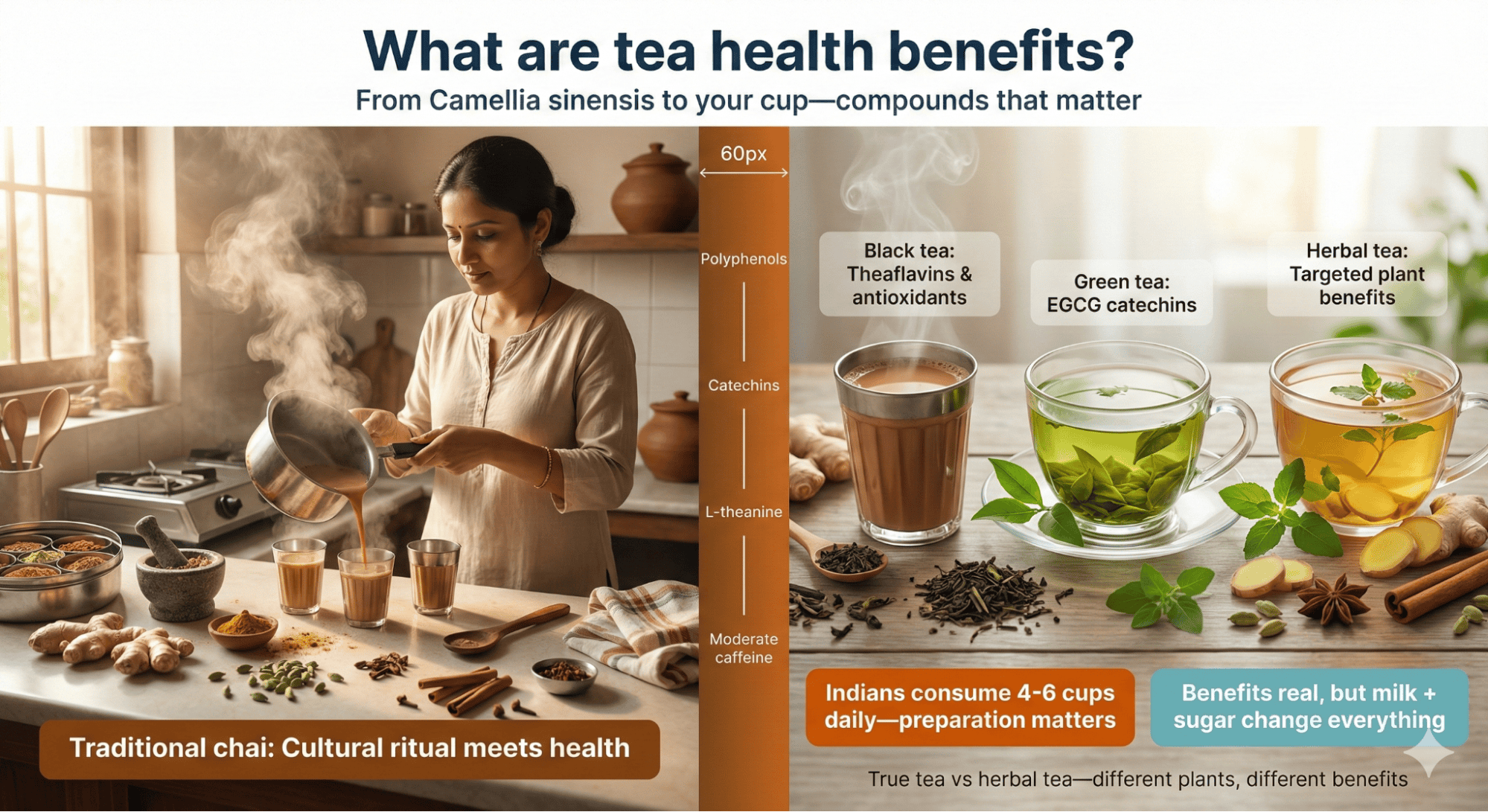
Tea health benefits refer to the positive health effects from consuming tea, particularly from compounds like polyphenols, catechins, and antioxidants present in tea leaves. True tea comes from Camellia sinensis plant, including green tea, black tea, white tea, and oolong tea. Additionally, herbal tea like tulsi (holy basil), ginger, or chamomile aren’t technically tea but offer different health properties. Moreover, chai benefits depend heavily on preparation. Traditional Indian chai with milk and sugar provides different effects than unsweetened green tea or herbal infusions. Therefore, understanding which tea types offer specific benefits and how preparation affects them helps you make informed choices about your tea consumption habits.
Why Tea Matters for Indian Bodies
Indians consume more tea per capita than almost any population globally. Our morning chai ritual is cultural cornerstone, but modern preparation methods often emphasize sugar and milk more than tea leaves. Additionally, many Indians drink 4-6 cups daily not realizing excessive consumption can cause problems despite individual benefits. Moreover, chai benefits get negated by adding excessive sugar and full-fat milk, turning healthy beverage into calorie bomb. Furthermore, drinking tea with meals interferes with iron absorption, particularly concerning for Indians with high anemia rates. In fact, while moderate tea consumption offers health advantages, excessive intake especially late in day affects sleep quality and increases caffeine dependence. Therefore, understanding optimal consumption patterns maximizes tea health benefits while minimizing potential downsides for Indian health and wellness goals.
Common Myths Debunked About This Topic
Let’s clear up tea myths preventing Indians from optimizing consumption. First, tea doesn’t “dehydrate” you despite caffeine content. The water in tea provides net hydration. Second, green tea isn’t dramatically superior to black tea. Both offer health benefits; green tea just has different antioxidant profile. Third, adding milk doesn’t completely negate tea health benefits despite claims. Some antioxidant absorption decreases, but benefits remain. Fourth, tea doesn’t cause calcium loss from bones at reasonable consumption levels (2-3 cups daily). Additionally, herbal tea isn’t always completely safe or side-effect-free just because it’s “natural.” Some herbs interact with medications or have potent effects. Finally, tea alone won’t create weight loss despite marketing claims. It can support calorie control and metabolism slightly but isn’t magic solution. Therefore, realistic expectations about tea types and their effects prevents disappointment while allowing appreciation of genuine benefits.
The Science Behind Tea Health Benefits for Indians
How Tea Works in Your Body
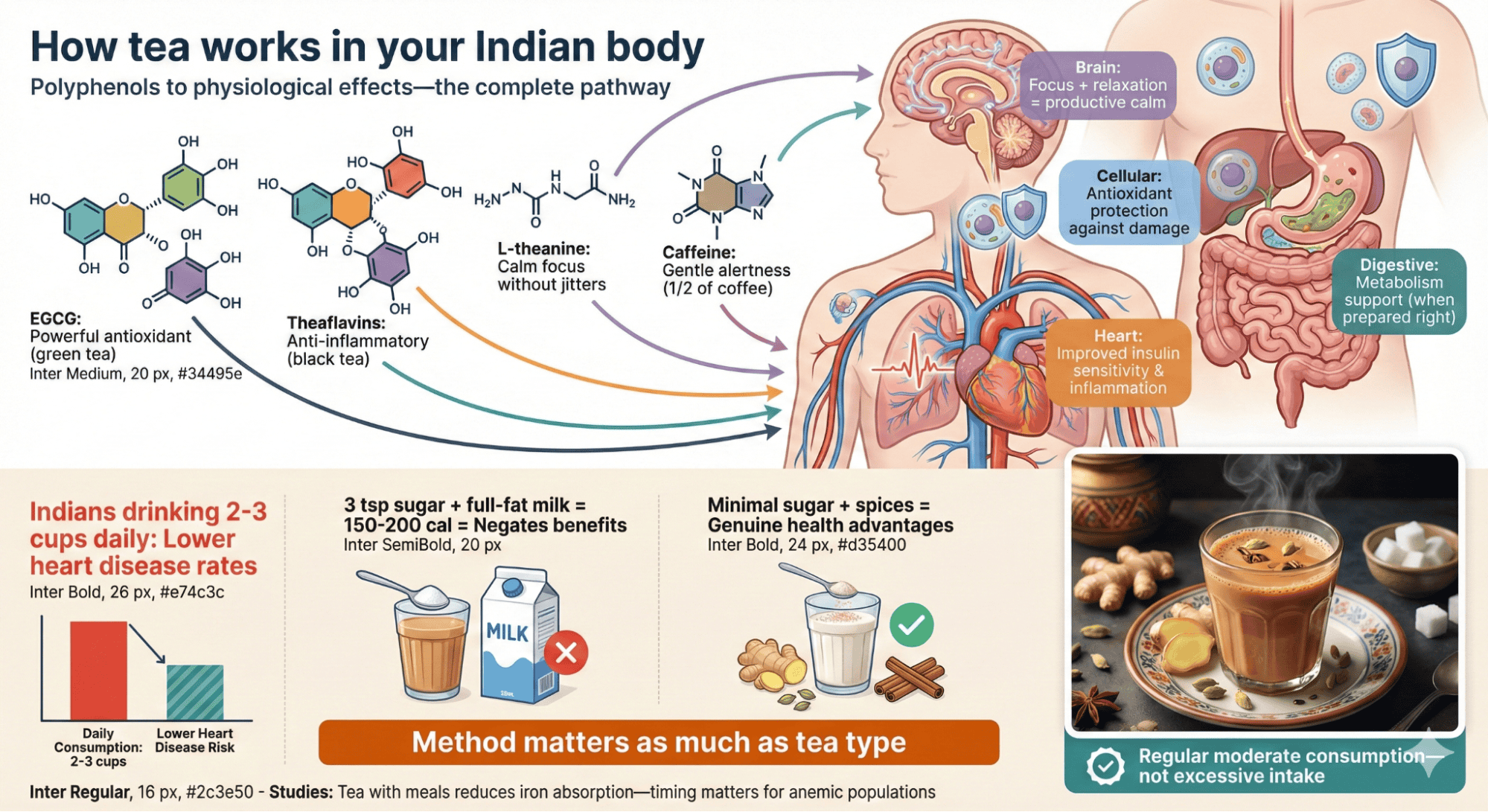
Tea health benefits come primarily from polyphenols, antioxidant compounds protecting cells from damage. Green tea contains catechins, particularly EGCG, with powerful antioxidant and anti-inflammatory effects. Additionally, black tea provides theaflavins and thearubigins after oxidation, offering different but equally valuable antioxidants. Moreover, tea contains caffeine providing mental alertness, though less than coffee, making it gentler stimulant. Furthermore, L-theanine in tea promotes relaxation without drowsiness, balancing caffeine’s stimulating effects. This combination creates focused calm unlike coffee’s jittery energy. In fact, regular tea consumption improves insulin sensitivity, reduces inflammation, supports heart health, and may reduce cancer risk according to research. However, benefits require regular moderate consumption without excessive sugar or additives negating positive compounds. Therefore, preparation method matters as much as choosing beneficial tea types for health optimization.
The Connection Between Chai Benefits and Health
Chai benefits depend on ingredients beyond just tea leaves. Traditional Indian chai includes spices like ginger, cardamom, cloves, and cinnamon offering additional health properties. Ginger aids digestion and reduces nausea. Additionally, cardamom supports digestive health and provides antioxidants. Moreover, cinnamon helps regulate blood sugar and adds sweetness allowing sugar reduction. Furthermore, tulsi (holy basil) in masala chai supports immune function and stress management. However, these benefits get overshadowed when chai preparation uses excessive sugar (3-4 teaspoons per cup) and full-fat milk (entire cup is milk with tea splash). In fact, typical Indian chai can contain 150-200 calories from sugar and milk alone, essentially becoming dessert drink. Therefore, optimizing chai benefits means emphasizing spices and tea, minimizing sugar and milk, creating truly healthy beverage rather than caloric indulgence masked as tea.
What Research Shows for Indian Population
Research on tea health benefits in Indians provides specific insights. Studies show Indians consuming 2-3 cups of tea daily have lower rates of heart disease compared to non-tea drinkers. One study found green tea consumption in Indians improved markers of metabolic health including blood sugar and cholesterol. Additionally, research demonstrates that excessive tea consumption (5+ cups daily) with meals significantly reduces iron absorption, worsening anemia common among Indian women. Moreover, studies show that chai prepared with minimal sugar and spices provides anti-inflammatory benefits, while sugar-heavy versions negate these advantages. Furthermore, research indicates that timing matters: drinking tea between meals rather than with food optimizes antioxidant absorption and minimizes iron interference. In fact, studies suggest Indians who drink unsweetened or lightly sweetened tea have better weight management than those consuming heavily sweetened chai multiple times daily. Therefore, preparation and consumption patterns significantly affect whether tea helps or hurts Indian health goals.
Tea Types: What to Watch For
Physical Signs and Symptoms to Monitor
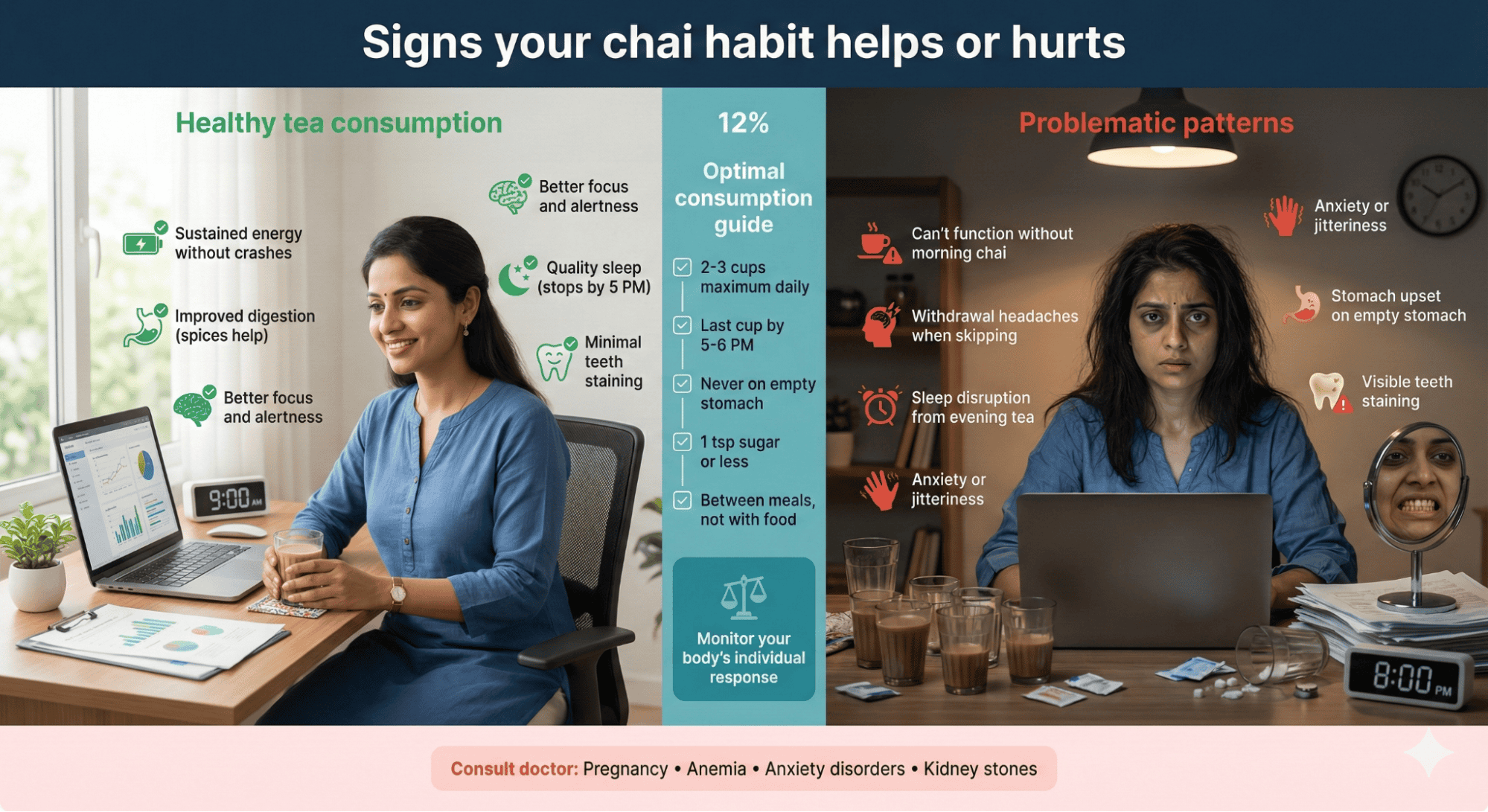
Moderate tea consumption should enhance wellbeing, not create problems. Improved mental alertness and sustained energy without crashes indicate beneficial effects. Additionally, better digestion from digestive support of chai spices is common positive sign. Moreover, gradual improvements in metabolic markers like blood sugar and cholesterol with regular consumption of unsweetened tea. Watch for these benefits. Conversely, warning signs of excessive consumption include sleep disruption especially if drinking tea afternoon or evening. Teeth staining from tannins indicates perhaps reducing frequency or using straw. Furthermore, stomach upset or acid reflux from drinking tea on empty stomach suggests eating something first or switching to less caffeinated tea types. Anxiety or jitteriness means excessive caffeine intake requiring reduction. In fact, if you can’t function without morning tea and experience withdrawal headaches when skipping it, caffeine dependence has developed. Therefore, monitoring how tea affects you personally helps optimize consumption.
Emotional and Mental Health Indicators
Tea health benefits include mental health support when consumed appropriately. Improved focus and sustained energy support productivity. Additionally, the ritual of tea preparation and consumption provides stress relief and mindfulness opportunity. Moreover, social bonding over chai supports emotional wellbeing and connection. Furthermore, L-theanine’s calming effects reduce anxiety without drowsiness for many people. Watch for these positive effects. However, excessive tea consumption can cause problems. Dependence on tea for energy or mood suggests relying on caffeine rather than addressing underlying fatigue or stress. Additionally, anxiety worsening from excessive caffeine intake requires reduction. Moreover, using sweetened chai as emotional comfort creates sugar dependence and weight gain. In fact, if your tea consumption feels compulsive rather than enjoyable, reassessment is needed. Therefore, tea should enhance mental wellbeing, not create dependence or anxiety that requires more tea to manage.
When to Consult a Healthcare Professional
Most people can safely enjoy 2-3 cups of tea daily without medical supervision. However, consult a doctor if you’re pregnant, as caffeine recommendations differ. Additionally, people with anemia should discuss tea consumption timing with doctors to avoid exacerbating iron deficiency. Moreover, those with anxiety disorders might need to limit or avoid caffeinated tea types. If you have kidney stones, especially calcium oxalate type, excessive black tea consumption might increase risk. Furthermore, if you take medications that interact with caffeine or herbs in herbal tea, pharmacist consultation ensures safety. People with insomnia should discuss caffeine cutoff times. In fact, if you’re experiencing side effects like severe stomach upset, heart palpitations, or anxiety from tea, medical evaluation rules out underlying conditions before assuming tea is solely responsible. Therefore, individual health status determines appropriate tea consumption and types.
Indian Lifestyle Factors Affecting Tea Health Benefits
Modern Indian Diet Challenges and Solutions
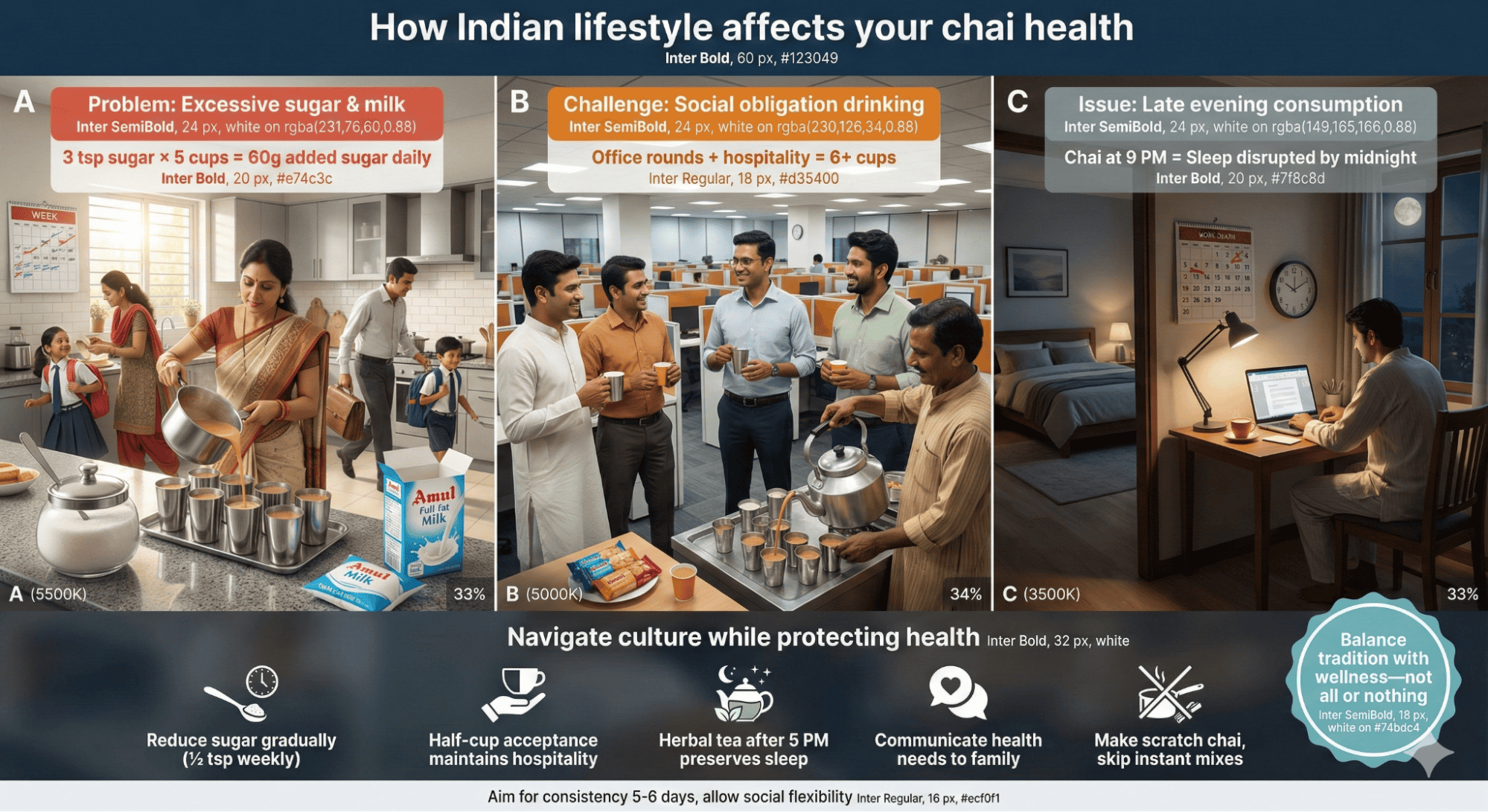
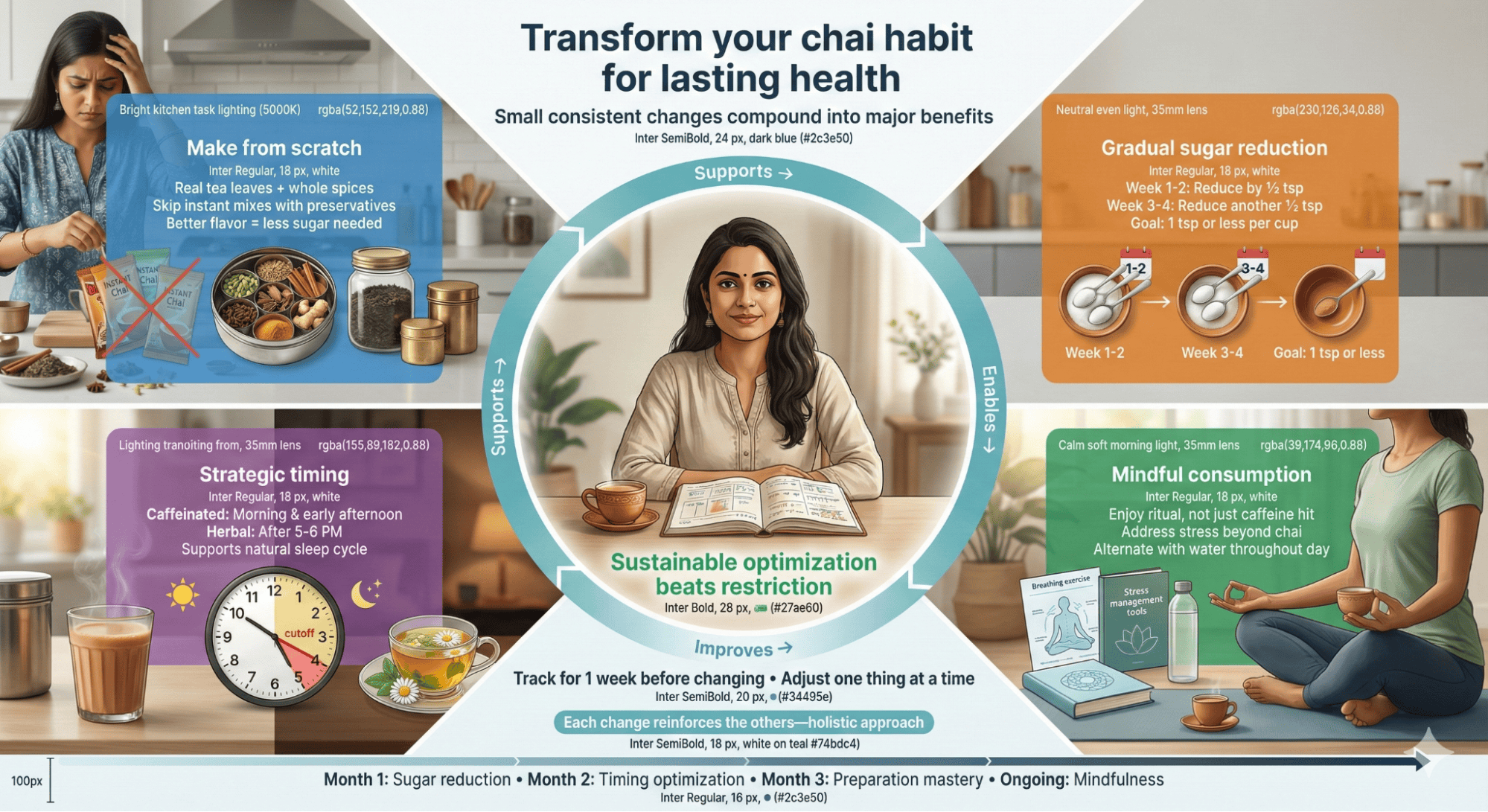
Modern Indian tea consumption patterns often negate tea health benefits through excessive sugar and milk. Traditional chai might use 2-3 teaspoons of sugar per cup, consumed 4-5 times daily adding 40-60 grams of added sugar far exceeding recommended limits. Additionally, using full-fat milk in every cup adds saturated fat and calories. Moreover, packaged instant chai mixes contain additional preservatives, artificial flavors, and excessive sugar. Furthermore, drinking tea with every meal especially high-iron foods like spinach or meat reduces iron absorption significantly. Solutions include gradually reducing sugar by half teaspoon weekly until drinking tea with 1 teaspoon or less. Additionally, switch to low-fat milk or reduce milk quantity, letting tea flavor shine. Moreover, make chai from scratch using tea leaves and spices avoiding processed mixes. Furthermore, drink tea between meals rather than during meals for better nutrient absorption. Therefore, these modifications preserve chai benefits while eliminating problematic additions.
Work-Life Balance and Urban Living Impact
Urban Indian lifestyle affects tea consumption patterns both positively and negatively. Office chai breaks provide welcome pause and social connection supporting mental health. Additionally, tea’s moderate caffeine helps maintain alertness during long work hours. However, excessive consumption from multiple office tea rounds plus home chai creates caffeine dependence. Moreover, relying on sugary tea for energy masks underlying problems like inadequate sleep, poor diet, or chronic stress needing different solutions. Furthermore, late afternoon or evening tea disrupts sleep, creating vicious cycle of fatigue requiring more tea next day. Solutions include limiting tea to morning and one midday cup, avoiding afternoon consumption. Additionally, address fatigue through better sleep and nutrition rather than just caffeine. Moreover, choose unsweetened or lightly sweetened tea at office rather than sugary versions. Furthermore, alternate tea rounds with water or herbal tea without caffeine. Therefore, strategic tea consumption supports rather than replaces good sleep and nutrition.
Cultural and Social Influences on Health
Indian culture deeply intertwines with tea, creating both benefits and challenges. Offering chai demonstrates hospitality and care, supporting social bonds. Additionally, chai breaks provide pause in busy days for connection and conversation. Moreover, regional tea varieties like Kashmiri kahwa, masala chai, or lemon tea offer diversity and cultural connection. However, refusing chai can be socially awkward or interpreted as rudeness. Furthermore, preparing and serving chai often falls to women, creating additional work burden. Additionally, social pressure to drink tea when offered happens regardless of preference or consumption already that day. Solutions include preparing healthier chai at home using minimal sugar and spices, offering this to guests. Additionally, having herbal tea alternatives like ginger or tulsi tea available. Moreover, it’s okay to accept tea but drink just half the cup out of politeness. Furthermore, educating family about health reasons for moderating consumption builds understanding rather than offense. Therefore, balancing cultural significance of chai with health consciousness creates sustainable approach.
Best Indian Foods for Tea Health Benefits Management
Traditional Indian Foods That Support Tea Myths
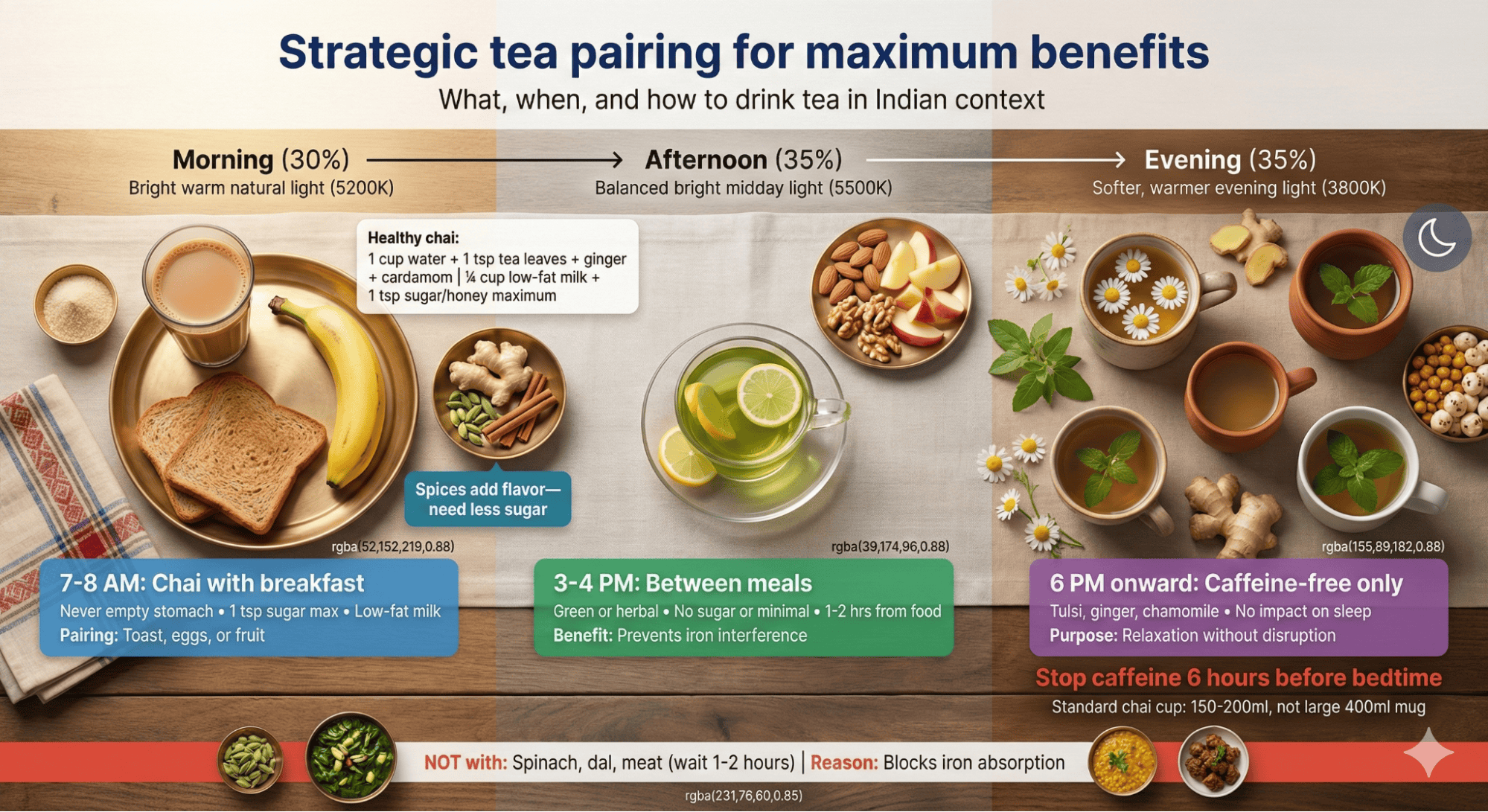
Pairing tea with strategic foods enhances benefits while minimizing problems. Avoid drinking tea with iron-rich meals; wait 1-2 hours before or after eating spinach, meat, or dal to prevent interference with iron absorption. Additionally, have something to eat with morning tea preventing stomach upset from drinking on empty stomach. Try toast, biscuits, or fruit. Moreover, traditional chai benefits are enhanced with spices. Use fresh ginger, cardamom, cinnamon, cloves, and black pepper creating flavorful chai with health benefits requiring less sugar. Furthermore, herbal tea options include tulsi (holy basil), ginger, lemongrass, or cinnamon sticks brewed alone or mixed with regular tea. These provide benefits without caffeine when consumed afternoon or evening. In fact, ending tea consumption 6 hours before bedtime supports better sleep quality. Therefore, strategic tea types selection and timing optimizes benefits for Indian dietary patterns and health goals.
Modern Indian Meal Options and Healthy Recipes
Create healthier versions of traditional chai maintaining flavor while reducing sugar and calories. For basic healthy chai, brew 1 tea bag or 1 teaspoon loose tea in 1 cup water with crushed ginger, cardamom, and cinnamon. Add 1/4 cup low-fat milk and 1 teaspoon sugar or honey maximum. Additionally, try green tea with lemon and honey for different tea health benefits profile. Moreover, prepare masala chai concentrate on Sunday using tea, water, and spices. Store refrigerated, then mix 1/4 cup concentrate with 3/4 cup hot milk daily, controlling sugar addition. Furthermore, make iced tea with green or black tea, lemon, mint, and minimal sweetener for summer refreshment. For evening, herbal tea like tulsi, ginger, or chamomile provides relaxation without disrupting sleep. In fact, having these preparations ready makes choosing healthy versions easier than defaulting to sugary chai. Therefore, strategic preparation makes chai benefits accessible while minimizing downsides.
Foods to Limit or Avoid for Better Results
Certain tea additions negate tea health benefits significantly. Excessive sugar turns healthy beverage into dessert drink. Therefore, reduce sugar to 1 teaspoon or less, or use alternatives like stevia. Additionally, full-fat milk or cream adds saturated fat and calories. Use low-fat milk or plant-based alternatives. Moreover, packaged instant chai mixes contain artificial flavors, excessive sugar, and preservatives. Make chai from real tea leaves. Furthermore, pairing tea with sugary snacks like cookies, cakes, or fried snacks compounds calorie intake. If having snacks with tea, choose nuts, fruit, or whole grain options. Excessive consumption of any tea type even green tea can cause problems. Limit total to 3-4 cups daily. In fact, drinking tea too hot increases esophageal cancer risk slightly according to research. Let tea cool few minutes before drinking. Therefore, mindful consumption and preparation maximizes genuine tea health benefits while avoiding problematic additions.
Portion Sizes and Meal Timing for Indians
Appropriate tea consumption means 2-3 cups daily maximum, spaced throughout the day rather than continuously. Have morning tea with breakfast or shortly after, not on empty stomach. Additionally, mid-morning tea break between breakfast and lunch is fine. Moreover, afternoon tea around 3 PM provides gentle energy boost without disrupting evening sleep. Avoid tea after 5-6 PM as caffeine can interfere with sleep quality 6+ hours. Furthermore, drink tea between meals rather than during meals to prevent iron absorption interference. Tea types matter for timing too: caffeinated teas morning and early afternoon, herbal tea without caffeine afternoon and evening. In fact, standard chai cup should be actual tea cup (150-200ml) not large mug (300-400ml), controlling total caffeine and calorie intake from milk and sugar. Therefore, appropriate portions and timing optimize tea health benefits while preventing excessive consumption creating problems rather than benefits.
Lifestyle Changes to Support Tea Health Benefits
Herbal Tea: The Right Approach for Indians
Herbal tea offers alternative to caffeinated tea providing different benefits without sleep disruption. Tulsi (holy basil) supports immune function, reduces stress, and provides antioxidants. Additionally, ginger tea aids digestion, reduces nausea, and has anti-inflammatory properties. Moreover, chamomile promotes relaxation and better sleep, ideal for evening consumption. Furthermore, peppermint tea supports digestion and provides cooling effect. Cinnamon tea helps regulate blood sugar and adds natural sweetness reducing need for sugar additions. In fact, experimenting with different herbal tea types throughout the day creates variety while providing targeted benefits. Morning caffeinated tea for alertness, afternoon herbal tea for digestion or relaxation, evening herbal tea for sleep preparation. Therefore, incorporating herbal tea alongside traditional chai expands options while optimizing different benefits at appropriate times throughout the day.
Sleep and Stress Management Strategies
Tea health benefits interact significantly with sleep and stress. Moderate morning and midday tea consumption supports alertness and stress management through L-theanine and moderate caffeine. Additionally, tea rituals themselves provide stress relief through mindful preparation and consumption. However, late-day tea disrupts sleep creating stress and fatigue requiring more tea, making vicious cycle. Therefore, establish caffeine cutoff time 6 hours before bed, switching to herbal tea later. Moreover, address stress through means beyond just chai. Practice meditation, exercise, or hobbies preventing stress-drinking pattern where tea becomes coping mechanism. Furthermore, quality sleep reduces reliance on tea for energy. Prioritize 7-8 hours nightly allowing natural alertness rather than caffeine dependence. In fact, if you need multiple cups tea just to function, underlying sleep or stress problems need attention, not more caffeine masking symptoms. Therefore, tea should enhance wellbeing, not compensate for inadequate self-care.
Daily Habits That Make a Real Difference
Small actions optimize chai benefits while minimizing downsides. Gradually reduce sugar in your tea by half teaspoon every week until using 1 teaspoon or less. Additionally, brew tea properly: boiling water, steep 3-5 minutes for full antioxidant extraction, then add minimal milk. Moreover, clean teeth or rinse mouth after tea preventing staining from tannins. Furthermore, alternate tea with water throughout the day maintaining proper hydration, not relying solely on tea for fluid intake. Experiment with different tea types finding options you enjoy prepared healthily. In fact, keep high-quality tea at home and work making healthy choices convenient rather than defaulting to whatever’s available with excessive sugar. Additionally, track your tea consumption for one week building awareness of current patterns before making changes. Therefore, strategic small modifications to preparation and consumption habits create significant health improvements while maintaining enjoyment of beloved chai tradition.
Your 7-Day Tea Health Benefits Management Meal Plan
This meal plan demonstrates strategic tea consumption throughout the day optimizing tea health benefits:
| Day | Morning Tea (7-8 AM) | Mid-Morning (10-11 AM) | Afternoon Tea (3 PM) | Evening (6 PM) |
| Day 1 | Masala chai (1 tsp sugar, low-fat milk) with breakfast | Water / No tea | Green tea with lemon (unsweetened) | Ginger herbal tea |
| Day 2 | Black tea (1 tsp honey, splash of milk) with breakfast | Water / No tea | Tulsi tea (herbal, no caffeine) | Chamomile tea |
| Day 3 | Chai with ginger & cardamom (1 tsp sugar) with breakfast | Water / No tea | Green tea with mint (unsweetened) | Cinnamon tea |
| Day 4 | Black tea with lemon (1 tsp honey) with breakfast | Water / No tea | Tulsi-ginger tea (herbal) | Peppermint tea |
| Day 5 | Masala chai (1 tsp sugar, low-fat milk) with breakfast | Water / No tea | Green tea (unsweetened) | Ginger-lemon tea |
| Day 6 | Chai with spices (minimal sugar) with breakfast | Water / No tea | Herbal tea blend (caffeine-free) | Chamomile tea |
| Day 7 | Black tea (1 tsp honey) with breakfast | Water / No tea | Green tea with cinnamon (unsweetened) | Tulsi tea |
Note: Maximum 2-3 teas daily. Morning tea with breakfast (not on an empty stomach), optional afternoon tea before 3-4 PM, and evening herbal tea without caffeine. All teas are prepared with minimal sugar (1 tsp or less) and low-fat milk if using. Drink water between teas to maintain hydration.
Common Mistakes Indians Make with Tea Health Benefits
Diet Mistakes That Sabotage Progress
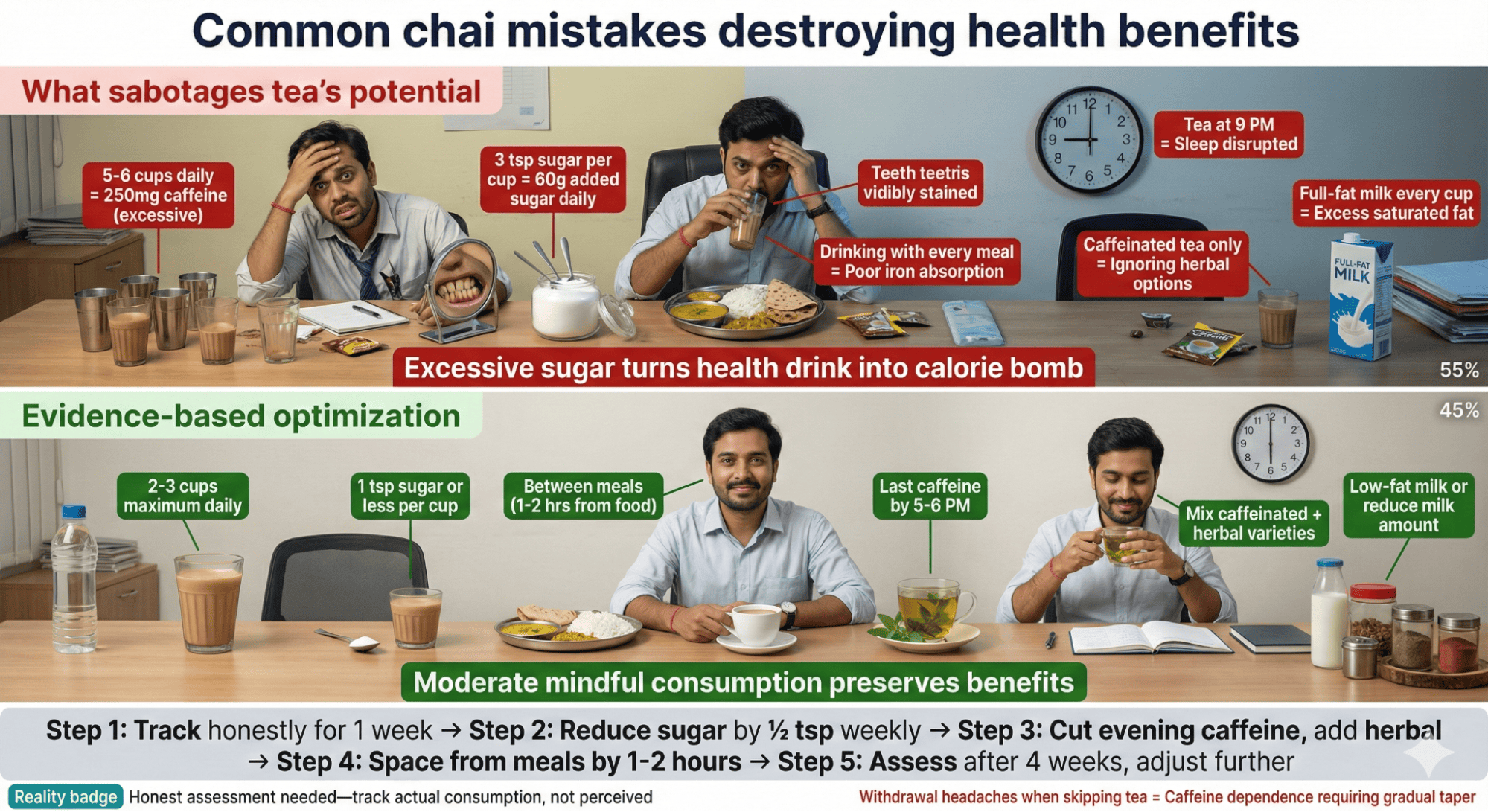
Biggest mistake is excessive sugar in every cup turning healthy beverage into calorie bomb. Using 2-3 teaspoons sugar per cup consumed 4-5 times daily adds 40-60 grams added sugar ruining tea health benefits. Another error is drinking tea with every meal interfering with iron absorption especially concerning for anemic Indians. Additionally, many people use full-fat milk or cream excessively adding saturated fat and calories. Moreover, drinking tea on empty stomach causes acidity and stomach upset for many people. Furthermore, believing green tea alone creates significant weight loss leads to disappointment when no magic happens without calorie deficit. In fact, relying on tea for energy rather than addressing underlying fatigue from poor sleep or nutrition creates caffeine dependence. Therefore, moderate consumption with minimal additives between meals optimizes genuine chai benefits without problematic habits.
Lifestyle Pitfalls to Watch Out For
Many people sabotage tea health benefits through poor consumption patterns. Drinking tea late afternoon or evening disrupts sleep creating fatigue requiring more tea next day. Additionally, using tea as only source of fluid intake rather than drinking adequate water alongside leads to inadequate hydration. Moreover, developing caffeine dependence where functioning without morning tea becomes impossible indicates problem, not health benefit. Furthermore, drinking tea continuously throughout the day prevents insulin from dropping between meals potentially affecting blood sugar regulation. Not being selective about tea types and preparation means missing optimization opportunities. In fact, social obligation drinking where accepting every tea offer regardless of preference or consumption already creates excessive intake. Additionally, ignoring individual reactions like anxiety, stomach upset, or sleep problems from tea consumption. Therefore, mindful strategic consumption based on your body’s responses optimizes benefits while preventing problems.
How to Course-Correct When Things Go Wrong
If tea consumption feels problematic, troubleshoot systematically. Track actual consumption for one week likely revealing more than expected. Therefore, gradually reduce to 2-3 cups daily maximum if consuming more. Additionally, assess sugar amounts honestly. If using 2+ teaspoons per cup, reduce by half teaspoon weekly until reaching 1 teaspoon or less. Moreover, experiment with caffeine cutoff time finding what prevents sleep disruption for you, generally 6 hours before bed. Furthermore, notice if tea worsens anxiety, heartburn, or other symptoms. Switch to herbal tea or reduce consumption if problematic effects appear. If you experience withdrawal headaches when skipping tea, caffeine dependence exists. Gradually taper consumption rather than quitting abruptly. In fact, if tea interferes with social interactions or creates stress rather than pleasure, relationship with tea needs reassessment. Therefore, honest evaluation helps determine whether current patterns serve you or need modification for genuine tea health benefits.
Frequently Asked Questions
Q1: What is tea health benefits and how does it affect Indians?
Tea health benefits include antioxidants supporting heart health, improved insulin sensitivity, reduced inflammation, and sustained energy from moderate caffeine plus calming L-theanine. However, chai benefits get negated when Indians add excessive sugar (2-3 teaspoons per cup) consumed multiple times daily, plus drinking tea with meals interfering with iron absorption, worsening anemia.
Q2: What are the main signs of excessive tea consumption?
Signs include sleep disruption despite stopping tea by evening, caffeine withdrawal headaches when skipping morning tea, anxiety or jitteriness, stomach upset or acid reflux, teeth staining, and inability to function without tea. Watch for consuming 5+ cups daily, particularly when heavily sweetened creating excessive sugar and calorie intake.
Q3: What tea types should Indians choose for health?
Choose unsweetened or lightly sweetened (1 teaspoon maximum) green tea, black tea, or traditional masala chai with spices like ginger and cardamom providing chai benefits. Include herbal tea like tulsi, ginger, or chamomile in the afternoon and evening for caffeine-free options. Avoid packaged instant chai mixes with artificial ingredients and excessive sugar.
Q4: Can tea consumption support health naturally?
Yes, moderate consumption (2-3 cups daily) of properly prepared tea with minimal sugar between meals provides antioxidants, supports metabolic health, and aids focus without disrupting sleep or nutrition. Combine with adequate water intake, appropriate meal timing, avoiding iron interference, and strategic tea type selection throughout the day, to optimize tea health benefits.
Q5: How long does it take to see tea benefits?
Immediate effects include improved alertness and focus within 30 minutes. Regular consumption for 2-4 weeks shows improvements in energy stability and digestion. Metabolic benefits like improved blood sugar control and cholesterol appear within 4-8 weeks of consistent moderate unsweetened tea consumption, supporting overall health when combined with a proper diet.
Conclusion
Tea’s health benefits are real but depend entirely on preparation and consumption patterns. Traditional Indian chai, loaded with sugar and milk, becomes a caloric dessert drink, negating antioxidants and anti-inflammatory compounds that make tea healthy. Strategic optimization means enjoying 2-3 cups daily with minimal sugar (1 teaspoon or less), low-fat milk, beneficial spices, and timing between meals rather than during them to prevent iron interference. Chai benefits from social ritual and stress relief remain when preparation becomes health-supporting rather than health-sabotaging.
Start this week by reducing sugar in your chai by half a teaspoon. Notice that flavor remains enjoyable with an adjustment period. Additionally, establish a caffeine cutoff time 6 hours before bedtime, switching to herbal tea later. Try one new tea type this week, like green tea or tulsi tea, expanding your options beyond habitual chai. These small changes preserve tea’s role in your life while optimizing genuine tea health benefits.
Related Posts