You reach for samosas when stressed at work. A fight with family sends you straight to the kitchen for something sweet. Boredom triggers endless snacking despite not being hungry. Your weight loss efforts fail repeatedly because emotions drive eating more than actual hunger. Sound familiar? Emotional eating HALT is a simple yet powerful framework helping you identify whether you’re truly hungry or eating to manage feelings. This acronym stands for Hungry, Angry, Lonely, Tired – the four primary triggers causing eating when you don’t need food. Understanding emotional eating patterns and applying the HALT method transforms your relationship with food, supporting sustainable weight loss for Indians struggling with stress eating triggers.
What Is Emotional Eating HALT and Why Indian Dieters Should Care?
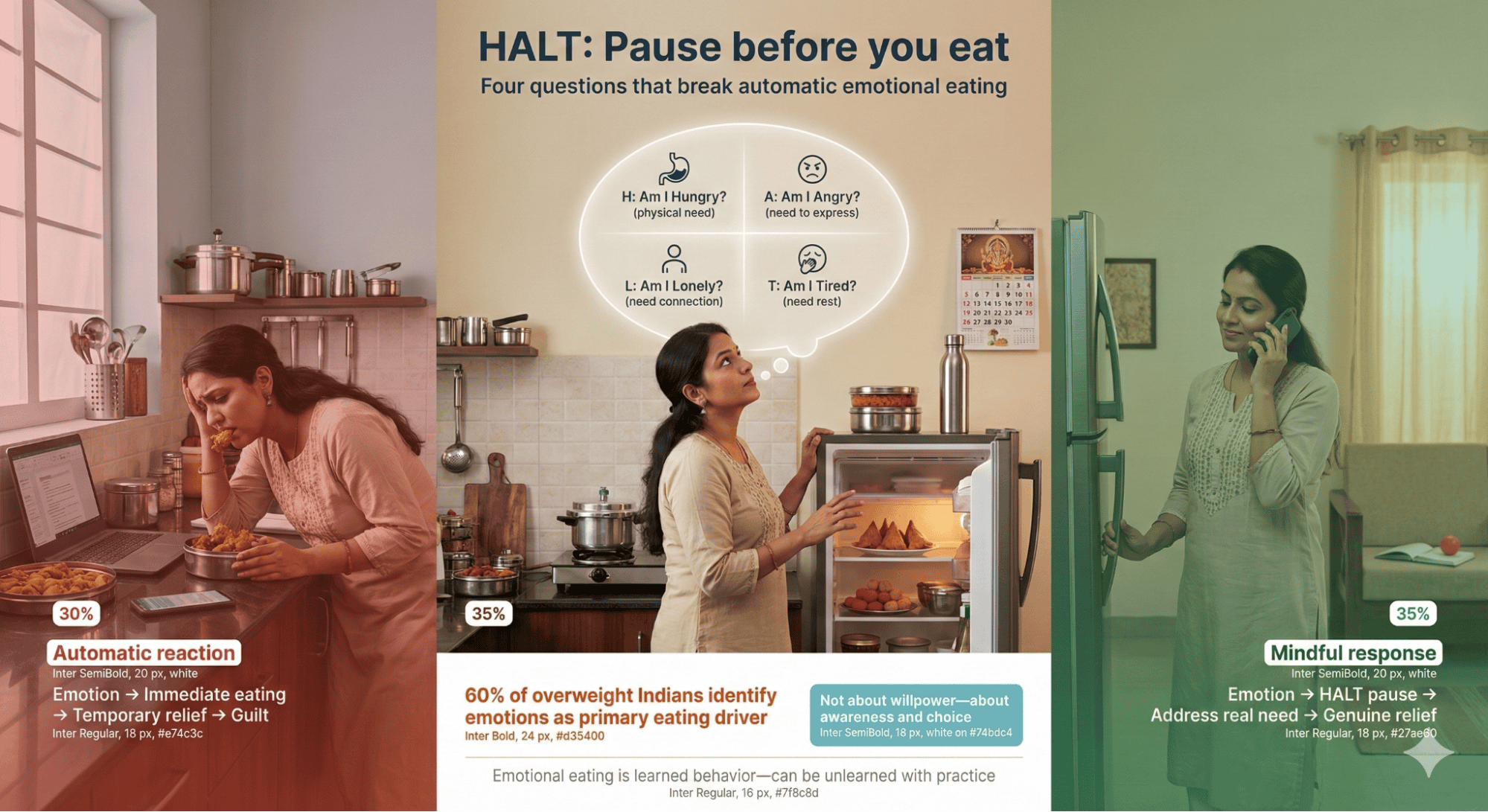
Emotional eating HALT is a mindfulness tool asking four questions before eating: Am I Hungry? Am I Angry? Am I Lonely? Am I Tired? This simple check-in distinguishes physical hunger from emotional triggers driving eating. Additionally, emotional eating means consuming food for comfort, stress relief, or distraction rather than genuine nutritional need. Moreover, mindful eating involves paying attention to hunger cues, emotions, and eating experiences rather than autopilot consumption. Therefore, HALT method creates pause between trigger and action, allowing conscious choice rather than impulsive reaction to uncomfortable feelings.
Why Emotional Matters for Indian Bodies
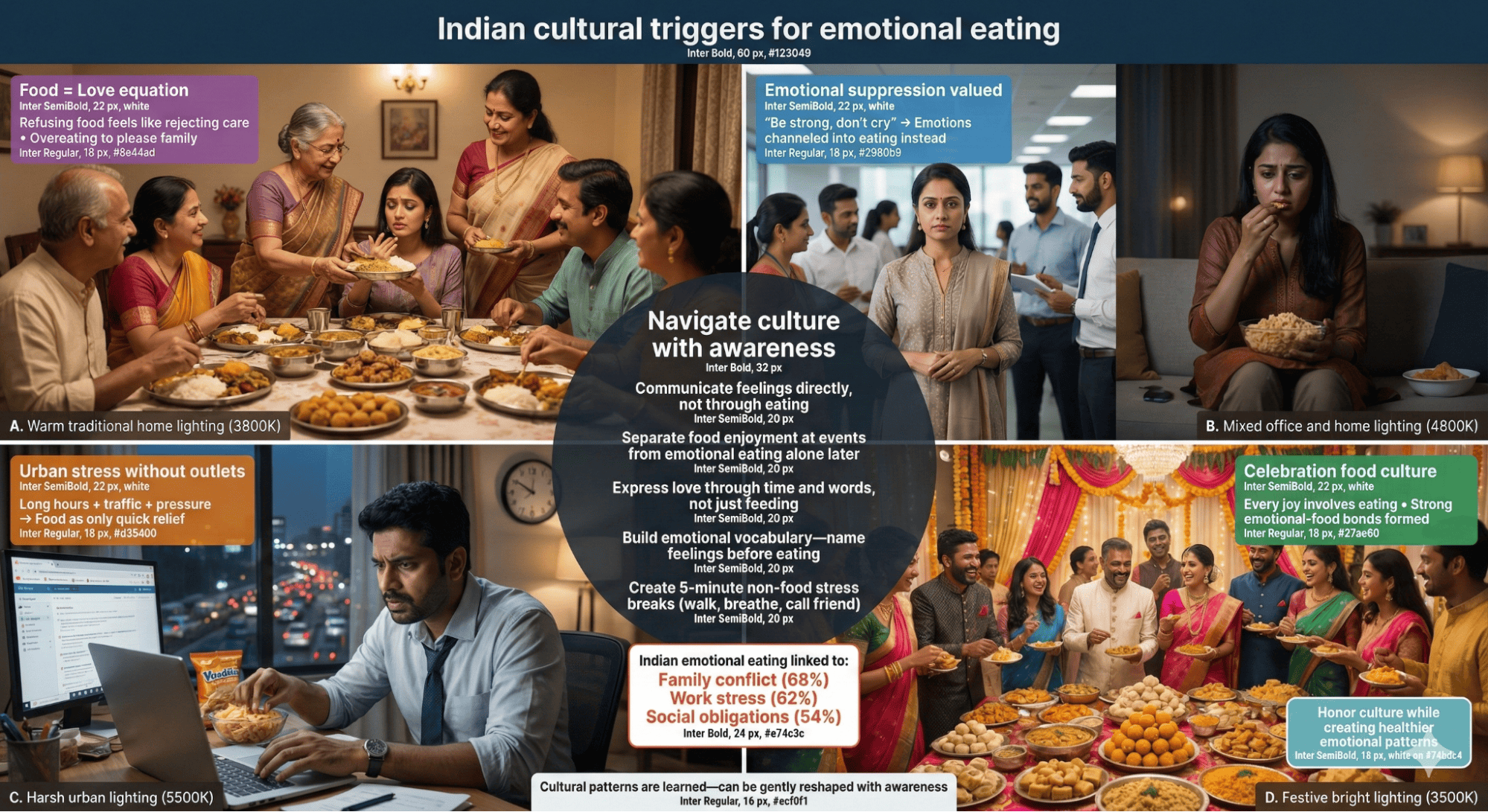
Indians face unique emotional eating triggers through cultural, social, and lifestyle factors. Food-centered celebrations and social gatherings create strong emotional food associations. Additionally, using food to express love and care makes refusing food emotionally loaded. Moreover, high-stress urban lifestyles create chronic stress eating triggers using food for quick relief.
Furthermore, emotional suppression valued in Indian culture means using food to cope with unacknowledged feelings. In fact, research shows Indians report higher emotional eating rates than mindful eating, contributing to obesity epidemic. Therefore, eating psychology understanding specifically addressing Indian emotional patterns becomes essential for sustainable weight management and healthy food relationships.
Common Myths Debunked About This Topic
Let’s clear up myths about emotional eating HALT. First, emotional eating doesn’t mean you’re weak or lack willpower. It’s a learned coping mechanism anyone can develop. Second, identifying emotional triggers doesn’t immediately stop emotional eating. It’s the first step requiring practice and alternative coping strategies. Third, some emotional eating is normal and not problematic. Occasional stress-eating isn’t a disorder requiring intervention. Fourth, you don’t need to eliminate all emotional connections to food. Food naturally connects to celebration and comfort. Additionally, mindful eating doesn’t mean eating perfectly or never overeating. It means awareness and non-judgment. Finally, addressing emotional eating isn’t just about weight loss but comprehensive wellbeing. Therefore, compassionate understanding of emotional hunger patterns supports lasting change better than self-criticism.
The Science Behind Emotional Eating HALT for Indians
How Emotional Works in Your Body
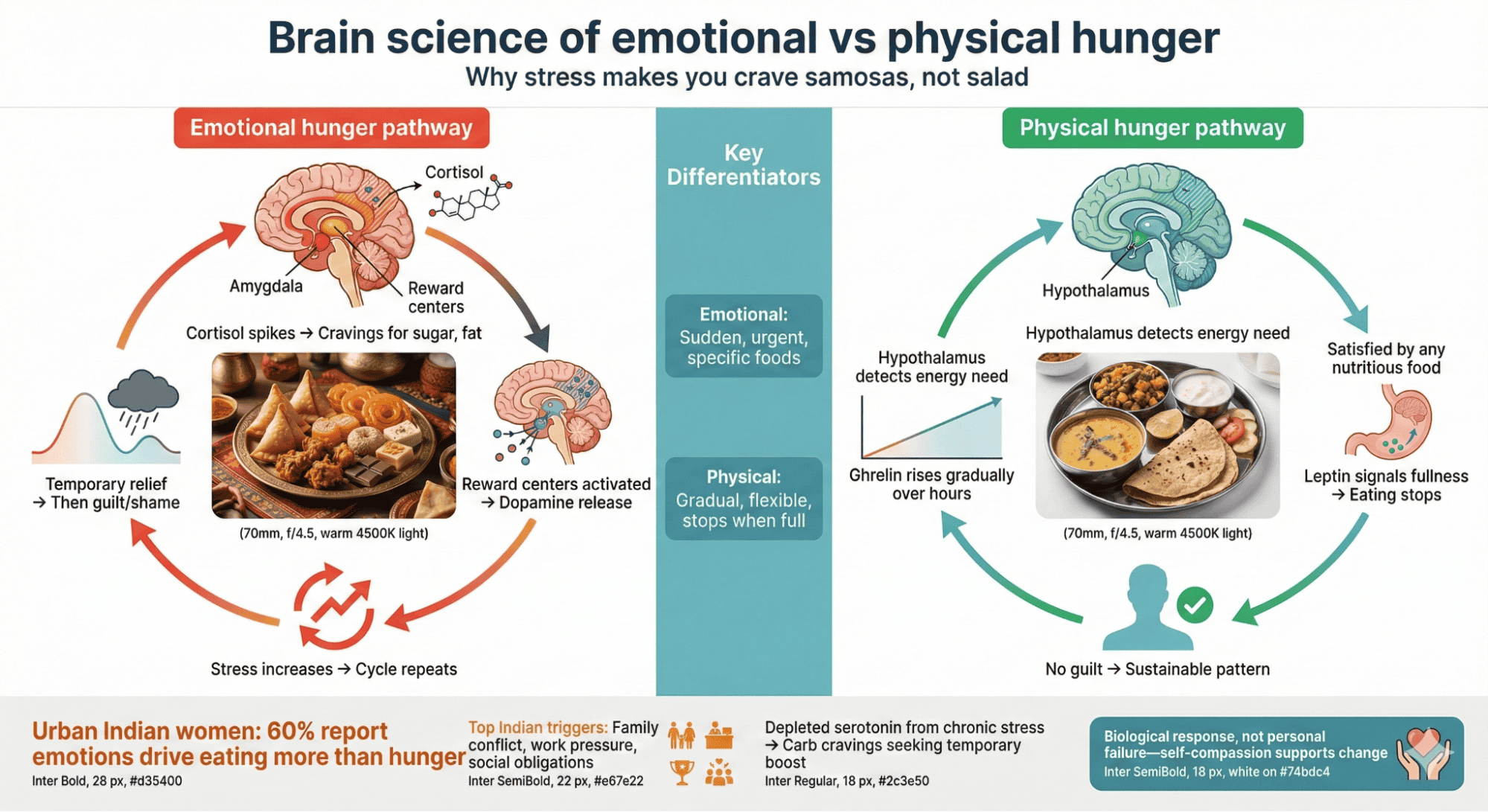
Emotional eating involves complex brain-body connections between emotions and food-seeking behavior. Stress triggers cortisol release increasing cravings for high-sugar, high-fat foods providing temporary relief. Additionally, eating comfort foods activates reward centers releasing dopamine, creating feel-good sensation that reinforces behavior. Moreover, chronic stress depletes serotonin, making you crave carbs that boost this calming neurotransmitter.
Furthermore, emotional hunger comes suddenly and urgently unlike gradual physical hunger, targeting specific comfort foods rather than any food. In fact, emotional eating rarely satisfies physical hunger, often leading to overeating followed by guilt creating vicious cycles. Understanding these mechanisms helps you recognize stress eating triggers as biological responses, not personal failures requiring self-compassion alongside behavior change.
The Connection Between Mindful Eating and Health
Mindful eating improves both physical and mental health through awareness and intentional choices. Paying attention to hunger and fullness cues prevents overeating supporting weight management naturally. Additionally, mindful eating reduces binge eating and guilt around food improving relationship with eating. Moreover, eating slowly and deliberately improves digestion and nutrient absorption.
Furthermore, identifying emotional patterns allows addressing underlying issues like stress or loneliness directly rather than temporarily numbing them with food. In fact, eating psychology research shows mindful eating approaches are more effective for sustainable weight loss than restrictive dieting because they address behaviors and emotions driving eating rather than just limiting food. Therefore, developing mindful eating skills creates foundation for long-term health and balanced food relationships.
What Research Shows for Indian Population
Research on emotional eating in Indians reveals significant prevalence and patterns. Studies show urban Indian women report high emotional eating rates correlating with stress, depression, and body dissatisfaction. One study found 60% of overweight Indians identified emotions as primary eating driver, not hunger. Additionally, research demonstrates that stress eating triggers for Indians often involve family conflict, work pressure, and social obligations rather than just personal stress.
Moreover, studies show Indians are less likely to recognize emotional eating patterns due to cultural stigma around mental health preventing emotional awareness. Furthermore, research indicates that mindful eating interventions in Indians significantly reduce emotional eating and improve weight outcomes better than diet-only approaches. Therefore, addressing emotional hunger through frameworks like HALT method becomes crucial for Indian weight management success.
Emotional Hunger: What to Watch For
Physical Signs and Symptoms to Monitor
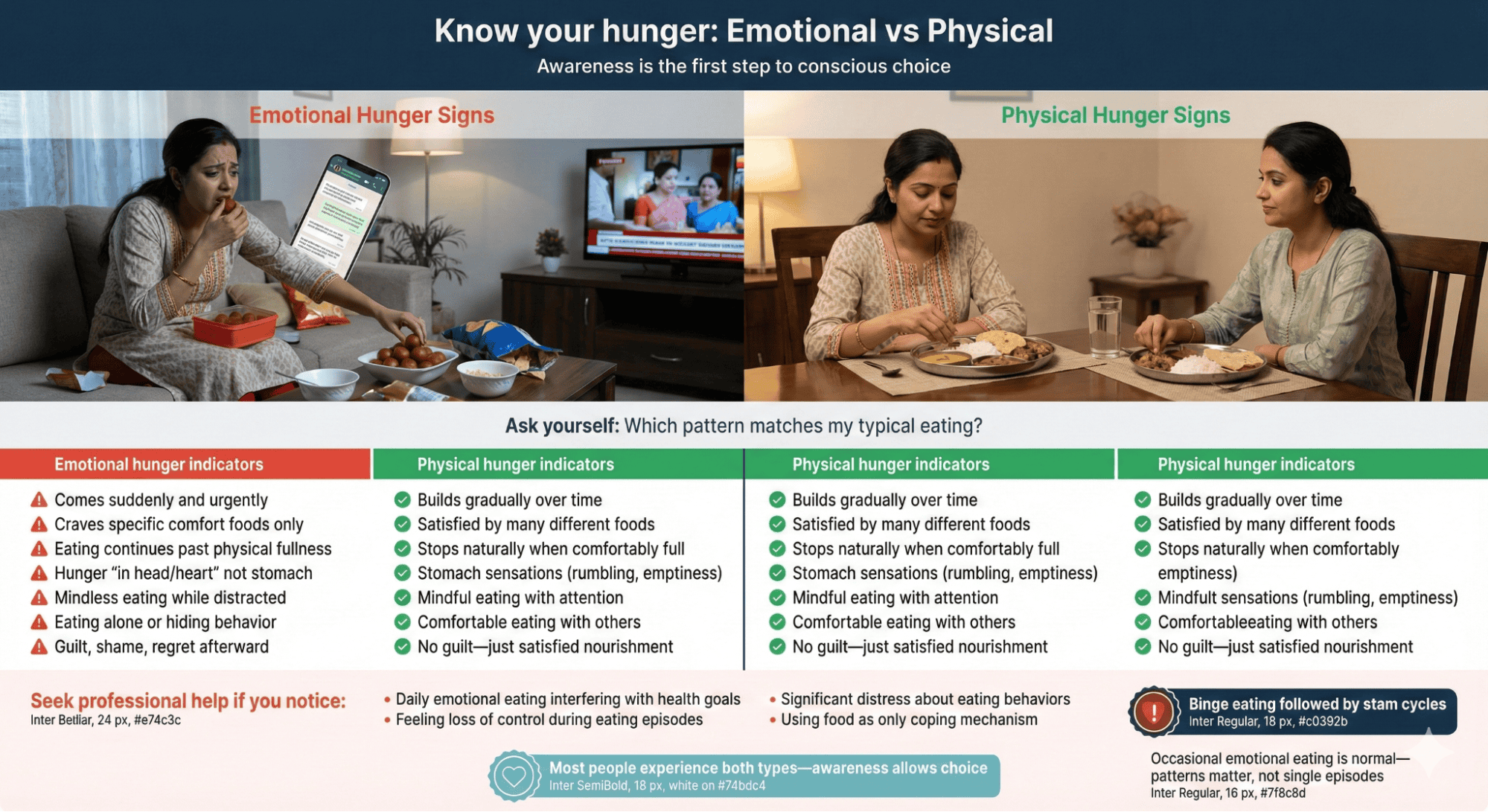
Emotional hunger has distinct characteristics different from physical hunger. Emotional hunger comes suddenly and urgently demanding immediate satisfaction. Additionally, it craves specific comfort foods like sweets or fried items rather than being satisfied by any nutritious food. Moreover, emotional eating often involves eating past fullness, continuing despite physical discomfort.
Furthermore, emotional hunger stays “above the neck” as cravings and thoughts rather than physical stomach sensations. Watch for eating when not physically hungry, eating faster than normal, or eating alone to hide behavior. Additionally, feeling guilt, shame, or regret after eating indicates emotional rather than nutritional eating. These signs help distinguish genuine hunger from stress eating triggers requiring alternative coping strategies rather than food.
Emotional and Mental Health Indicators
Emotional eating both reflects and worsens mental health challenges. Using food as primary coping mechanism prevents developing healthier stress management skills. Additionally, guilt and shame after emotional eating damage self-esteem and body image. Moreover, the cycle of restricting after overeating creates all-or-nothing thinking sabotaging sustainable habits.
Furthermore, emotional eating often masks underlying issues like depression, anxiety, or relationship problems needing direct attention. Watch for increasing eating in response to emotions, decreasing ability to manage feelings without food, or eating interfering with life activities and relationships. In fact, if emotional eating feels compulsive or uncontrollable despite negative consequences, this suggests eating disorder requiring professional treatment. Therefore, honest self-assessment determines whether self-help strategies suffice or professional support is needed.
When to Consult a Healthcare Professional
Most people can address moderate emotional eating through awareness and coping skill development independently. However, consult professionals for binge eating disorder involving recurrent episodes of eating large amounts with loss of control, feeling distressed about eating. Additionally, if emotional eating occurs daily interfering with health goals, quality of life, or causes significant distress, therapy helps. Moreover, if using food to cope with trauma, severe depression, or anxiety, mental health treatment addresses root causes supporting lasting change.
Furthermore, if you’ve tried addressing emotional eating for 3 months without improvement, guidance helps identify barriers. Work with therapists specializing in eating psychology and eating disorders providing tools specifically for emotional eating patterns. Therefore, professional support accelerates progress and prevents emotional eating from progressing to more serious eating disorders.
Indian Lifestyle Factors Affecting Emotional Eating HALT
Modern Indian Diet Challenges and Solutions
Modern Indian lifestyle creates numerous stress eating triggers requiring strategic management. High work pressure with long hours leaves little time for stress relief beyond quick food comfort. Additionally, packaged snacks and sweets are everywhere making emotional eating access effortless. Moreover, food delivery apps enable immediate gratification when emotional hunger strikes.
Furthermore, social media food content triggers cravings and emotional associations constantly. Solutions include identifying your top emotional eating triggers through tracking, then planning alternatives. Additionally, remove or limit trigger foods from home requiring conscious decision to obtain them. Moreover, delay gratification using 10-minute rule: wait 10 minutes before eating emotionally, often urge passes. Furthermore, practice HALT method consistently creating new habit of checking in before eating rather than automatic consumption.
Work-Life Balance and Urban Living Impact
Urban Indian professional life amplifies emotional hunger through multiple stressors. Work deadlines, client pressures, and performance anxiety create chronic stress seeking food relief. Additionally, sitting all day with accessible office snacks encourages mindless emotional eating. Moreover, work-life imbalance means inadequate sleep and rest, increasing vulnerability to stress eating triggers.
Furthermore, isolation from extended family traditional support systems leaves emotions unprocessed and unshared. Solutions include building non-food stress relief into workday: 5-minute walks, desk stretches, breathing exercises, or calling friend. Additionally, pack healthy satisfying lunch and snacks preventing desperate hunger driving poor choices. Moreover, establish firm boundaries around work hours protecting time for exercise, hobbies, and relationships providing genuine stress relief. Therefore, comprehensive lifestyle management reduces emotional eating frequency and intensity.
Cultural and Social Influences on Health
Indian culture creates unique emotional eating patterns requiring culturally-informed solutions. Using food to express love makes refusing food feel like rejecting care and connection. Additionally, celebrations and gatherings centered on food create strong emotional food associations. Moreover, emotional suppression valued in culture (“don’t cry,” “be strong”) means emotions get channeled into eating instead.
Furthermore, body image pressures from family comments, marriage prospects, and social comparison create food-emotion tangles. Solutions include communicating feelings directly rather than eating them, challenging family patterns of expressing love primarily through feeding. Additionally, separate food enjoyment at celebrations from emotional eating alone later. Moreover, develop emotional expression and processing skills through journaling, therapy, or trusted relationships. Therefore, culturally-aware approaches address Indian-specific triggers effectively.
Best Indian Foods for Emotional Eating HALT Management
Traditional Indian Foods That Support Eating Psychology
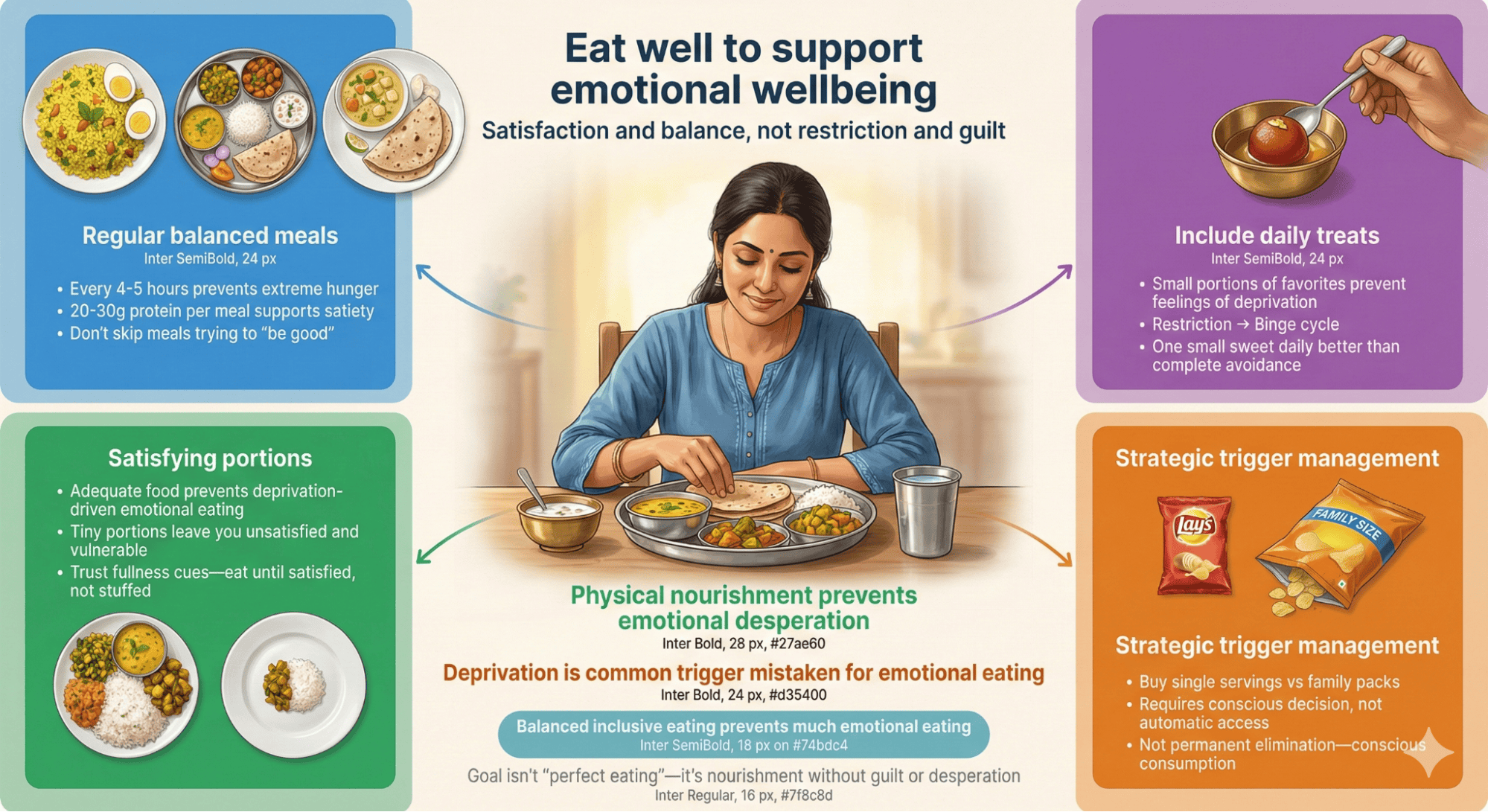
When eating for genuine hunger after HALT method check-in, choose satisfying nutritious foods preventing physical deprivation triggering emotional eating later. Balanced Indian meals with dal, vegetables, whole grain, and moderate portions satisfy physically and emotionally. Additionally, including small amounts of favorite foods in daily eating prevents feeling deprived, common trigger for emotional eating episodes. Moreover, traditional Indian comfort foods can be part of balanced eating when consumed mindfully rather than emotionally.
Furthermore, having healthy versions of Indian snacks available like baked samosas, roasted chana, or fruit with nuts provides options when genuine hunger strikes. In fact, extreme restriction and elimination diets often backfire by increasing emotional eating of forbidden foods. Therefore, balanced inclusive approach to mindful eating works better than rigid rules creating deprivation.
Modern Indian Meal Options and Healthy Recipes
Create eating patterns supporting stop overeating goals through satisfaction and balance. Include protein at each meal as it increases satiety reducing vulnerability to emotional eating. Additionally, don’t skip meals as physical deprivation intensifies emotional hunger cravings. Moreover, practice eating slowly and without distractions noticing flavors, textures, and fullness cues.
Furthermore, when genuinely hungry, eat satisfying meals rather than tiny portions leaving you unsatisfied and prone to emotional eating later. Include daily treats in moderation rather than completely restricting then binging. In fact, structured eating with planned meals and snacks reduces impulsive emotional eating by ensuring physical needs are met consistently. Therefore, regular adequate eating forms foundation preventing much emotional eating stemming from restriction and deprivation.
Foods to Limit or Avoid for Better Results
While avoiding labeling foods “bad,” notice which foods most frequently associate with emotional eating for you. Highly processed foods engineered for overconsumption often become emotional eating staples. Therefore, keeping these foods out of immediate access requires conscious decision to obtain them, inserting pause for HALT method application. Additionally, foods strongly linked to childhood comfort or specific emotions might need temporary restriction while developing new coping patterns. Moreover, be strategic about portions of trigger foods, perhaps buying single servings rather than family packs reducing availability during emotional moments.
Furthermore, notice if certain foods trigger all-or-nothing thinking and binge eating. These might need more careful management initially. However, goal isn’t permanent elimination creating forbidden food psychology. Rather, it’s conscious consumption when genuinely desired, not automatic emotional response. Therefore, personalized awareness of your trigger foods informs strategic management.
Portion Sizes and Meal Timing for Indians
Eating patterns significantly affect emotional eating vulnerability. Eat regular balanced meals every 4-5 hours preventing extreme hunger triggering poor choices. Additionally, include adequate protein (20-30 grams) and fiber at each meal supporting satiety. Moreover, don’t save all calories for dinner trying to “be good” earlier, this creates deprivation driving evening emotional eating.
Furthermore, if evening is your emotional eating time, ensure dinner is satisfying and you’re not physically restricting creating vulnerability. Allow planned evening snack reducing desperation if genuine hunger appears. In fact, notice whether skipping breakfast makes you more vulnerable to emotional eating later. Experiment finding meal timing and portions that keep you satisfied reducing emotional eating opportunities. Therefore, strategic eating patterns addressing physical needs removes deprivation, common trigger mistaken for emotional eating.
Lifestyle Changes to Support Emotional Eating HALT
HALT Method: The Right Approach for Indians
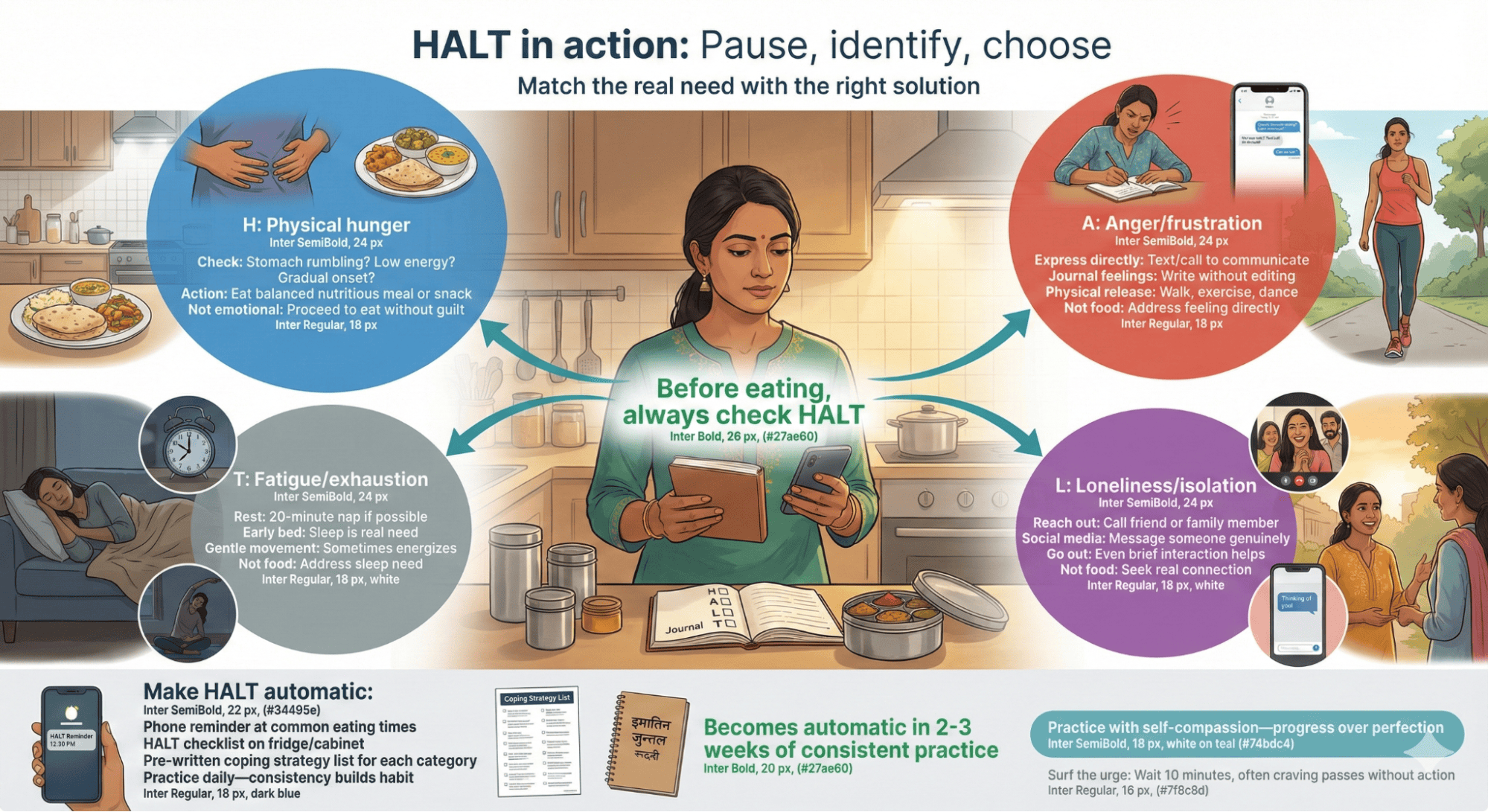
Implementing HALT method requires consistent practice creating new habit. Before eating, pause asking: Am I Hungry? Check for physical hunger cues: stomach rumbling, low energy, difficulty concentrating. If yes, eat nutritious meal or snack. If no, continue checking. Am I Angry? Notice irritation, frustration, or resentment. If yes, address directly through communication, exercise, or journaling rather than eating. Am I Lonely? Identify isolation or disconnection. If yes, reach out to friend or family rather than eating. Am I Tired? Notice fatigue or sleepiness. If yes, rest or energize through movement rather than eating. Additionally, practice this consistently before eating creating automatic check-in. Moreover, keep HALT method reminder on phone or sticky note on fridge prompting pause. Furthermore, when identifying emotional trigger, choose alternative coping strategy from prepared list. Therefore, systematic HALT method application intercepts emotional eating creating space for conscious choice.
Sleep and Stress Management Strategies
Sleep and stress management prevent many stress eating triggers. Adequate sleep (7-9 hours) regulates hunger hormones preventing hunger that’s actually fatigue. Additionally, sleep deprivation increases emotional reactivity making emotional eating more likely. Moreover, chronic stress management through daily practices reduces using food as primary coping mechanism. Practice meditation, yoga, exercise, or hobbies providing genuine stress relief beyond temporary food comfort.
Furthermore, identify and address stress sources when possible rather than just managing symptoms. In fact, many emotional eating episodes stem from unaddressed stress and fatigue more than emotional issues requiring processing. Therefore, foundational self-care through sleep and stress management prevents much emotional eating before it starts, making HALT method application easier and more effective.
Daily Habits That Make a Real Difference
Small consistent habits support stop overeating and emotional eating management. Keep journal noting emotional eating episodes: triggers, feelings, circumstances, learning patterns over time. Additionally, create alternative coping strategy list specific to each HALT category you can reference when identified. Moreover, practice emotions without eating through “surf the urge”: observe craving without acting for 10 minutes, noticing it passes.
Furthermore, develop emotional awareness through daily check-ins: “How am I feeling?” three times daily building emotional vocabulary and recognition. Remove shame and self-criticism from emotional eating episodes, instead approaching with curiosity and compassion supporting learning. In fact, celebrate successful HALT method applications and alternative coping use, not just weight loss, reinforcing new patterns. Therefore, consistent practice with self-compassion creates lasting change in emotional eating patterns.
Your 7-Day Emotional Eating HALT Management Meal Plan
This meal plan supports balanced eating reducing physical triggers for emotional eating:
| Day | Breakfast | Lunch | Snack | Dinner |
| Day 1 | Vegetable poha + boiled egg + milk | Brown rice + dal + palak paneer + raita | Apple with almonds (10) | 2 rotis + rajma + vegetables + curd |
| Day 2 | Moong dal cheela (2) + curd + banana | 2 rotis + chana dal + mixed veg + raita | Roasted chana (1 bowl) | Quinoa + dal + paneer + salad |
| Day 3 | Oats upma + nuts + boiled egg | Brown rice + sambhar + vegetables + curd | Fruit with peanut butter | 2 bajra rotis + dal + sabzi + raita |
| Day 4 | Idli (3) + sambhar + egg + milk | 2 rotis + dal + paneer curry + salad | Greek yogurt with nuts | Khichdi + vegetables + curd |
| Day 5 | Besan cheela + vegetables + curd | Brown rice + dal + mixed veg + raita | Handful of mixed nuts | 2 rotis + chana dal + palak + curd |
| Day 6 | Vegetable upma + boiled egg + milk | 2 rotis + moong dal + paneer + raita | Banana + almonds | Quinoa + dal + vegetables + salad |
| Day 7 | Dosa (2) + sambhar + egg + chutney | Brown rice + dal + mixed veg + curd | Sprout salad | 2 rotis + rajma + sabzi + raita |
Note: Regular balanced meals prevent physical deprivation triggering emotional eating. Adequate protein and fiber support satiety. Before eating, practice HALT method checking if genuinely hungry or responding to emotions. Keep non-food coping strategies ready for emotional triggers.
Common Mistakes Indians Make with Emotional Eating HALT
Diet Mistakes That Sabotage Progress
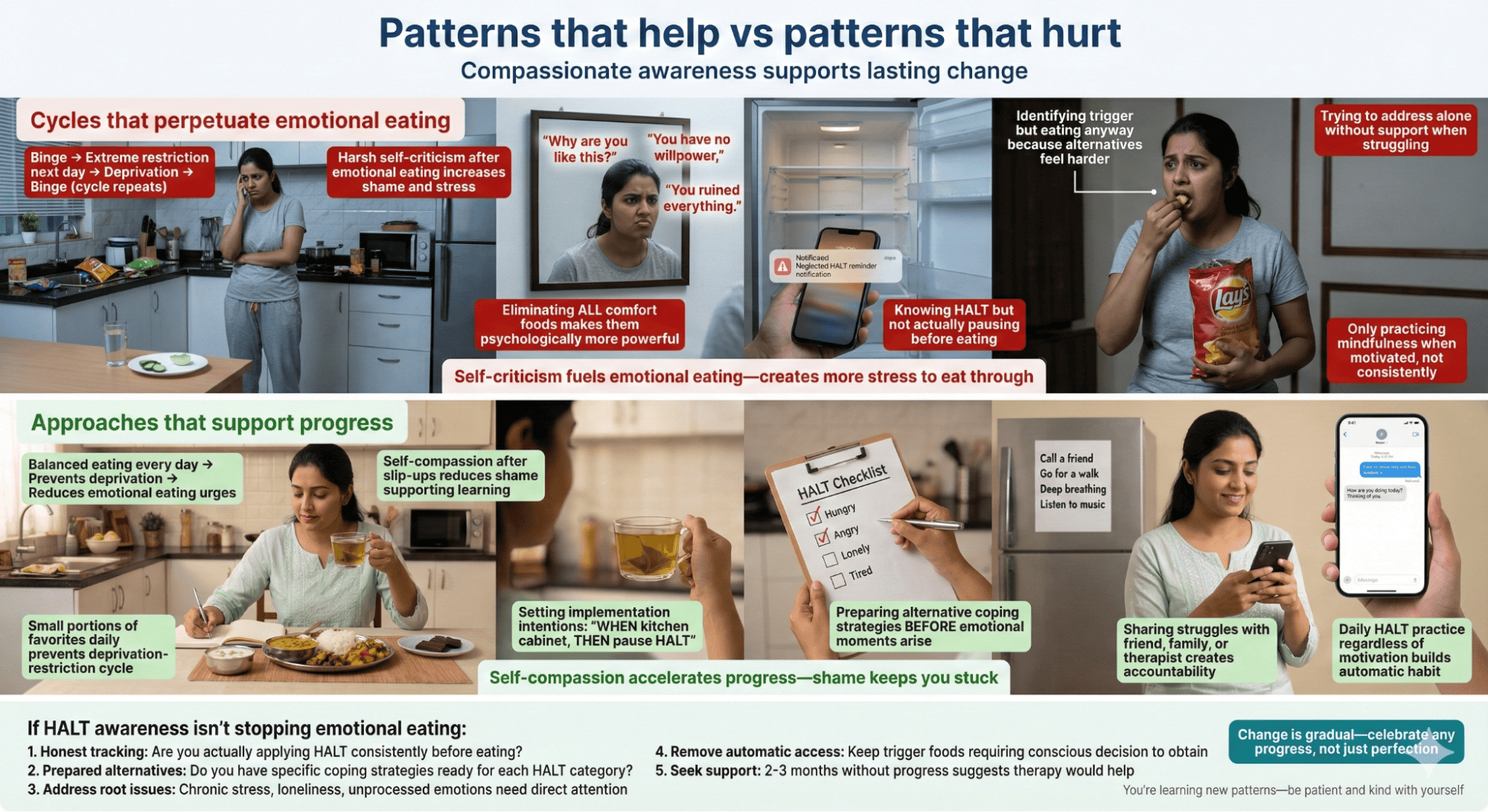
Biggest mistake is extreme restriction after emotional eating creating deprivation that triggers more emotional eating, perpetuating cycles. Another error is eliminating all comfort foods making them more psychologically powerful and triggering when consumed. Additionally, many people focus only on identifying emotional eating without developing alternative coping strategies leaving them without tools when emotions arise. Moreover, expecting HALT method to immediately stop all emotional eating creates unrealistic expectations and discouragement.
Furthermore, not addressing underlying emotions like chronic stress, loneliness, or unprocessed feelings means emotional eating continues despite awareness. In fact, harsh self-criticism after emotional eating increases shame and stress, ironically triggering more emotional eating. Therefore, balanced approach with adequate eating, alternative coping strategies, and self-compassion creates sustainable progress rather than perpetuating struggles.
Lifestyle Pitfalls to Watch Out For
Many people sabotage emotional eating recovery through problematic patterns. Not actually pausing before eating to check HALT, instead continuing automatic emotional eating despite knowing the framework. Additionally, identifying emotional trigger but eating anyway because alternative coping feels harder or less immediately comforting. Moreover, only practicing mindful eating when motivated, not consistently building the habit.
Furthermore, not removing or limiting access to trigger foods from home then blaming willpower when emotional eating occurs. Trying to address emotional eating while ignoring poor sleep, high stress, and lack of self-care that intensify vulnerability. In fact, isolation and not seeking support when struggling makes emotional eating harder to address alone. Therefore, comprehensive approach addressing environment, lifestyle, and seeking support when needed creates better outcomes than willpower alone.
How to Course-Correct When Things Go Wrong
If emotional eating continues despite HALT method awareness, troubleshoot systematically. Are you actually applying HALT consistently before eating, or only occasionally? Set specific implementation intentions: “When I open the kitchen cabinet, I will pause and check HALT.” Additionally, have you identified specific alternative coping strategies for each HALT category? Create concrete list you can reference. Moreover, are you addressing underlying issues like chronic stress, loneliness, or unprocessed emotions? These need direct attention beyond just managing eating. Furthermore, track emotional eating without judgment for two weeks identifying patterns: specific triggers, times, circumstances, feelings providing insights for targeted strategies. If self-directed efforts aren’t working after 2-3 months, working with therapist specializing in emotional eating provides tools and support beyond what self-help can offer. Therefore, honest assessment and willingness to seek help when needed supports success.
Frequently Asked Questions
Q1: What is emotional eating HALT and how does it affect Indians?
Emotional eating HALT is mindfulness framework asking before eating: Am I Hungry, Angry, Lonely, or Tired? This identifies whether eating stems from physical hunger or emotional triggers. Research shows urban Indians have high emotional eating rates from stress, family dynamics, and food-centered culture, making HALT method valuable tool for distinguishing genuine hunger from emotional hunger.
Q2: What are the main signs of emotional versus physical hunger?
Emotional hunger comes suddenly craving specific comfort foods, continues despite fullness, and causes guilt afterward. Physical hunger develops gradually, any nutritious food satisfies, stops at fullness, and doesn’t cause guilt. Watch for eating when not physically hungry, eating past fullness, or using food for comfort indicating stress eating triggers rather than nutritional needs.
Q3: What strategies help stop emotional eating?
Practice HALT method consistently pausing before eating checking hunger, anger, loneliness, tiredness then addressing identified emotion directly rather than eating. Develop alternative coping strategies for each trigger: exercise, calling friend, journaling, or nap. Maintain regular adequate balanced eating preventing physical deprivation. Seek therapy if emotional eating feels compulsive supporting stop overeating efforts.
Q5: How long does it take to reduce emotional eating?
Awareness of patterns develops within 1-2 weeks of tracking. Successfully applying HALT method and alternatives shows improvement within 3-4 weeks of consistent practice. Significant reduction in emotional eating episodes appears within 6-8 weeks as new habits establish. Complete transformation of eating psychology and emotional coping takes 3-6 months of dedicated practice and self-compassion.
Conclusion
Emotional eating HALT provides simple yet powerful framework distinguishing genuine hunger from eating driven by anger, loneliness, or tiredness. For Indians struggling with stress eating triggers from work pressure, family dynamics, and food-centered culture, HALT method creates pause between emotional trigger and automatic eating response. This pause allows conscious choice, developing alternative coping strategies addressing emotions directly rather than temporarily numbing them with food. Mindful eating approaches addressing emotional hunger create sustainable weight management and healthy food relationships that restrictive dieting alone can’t achieve.
Start today by practicing the HALT method before your next meal or snack. Check: Am I actually hungry? If yes, eat satisfying, nutritious food. If no, identify which emotion is present and choose one alternative coping strategy from your prepared list. Track this practice daily for one week, building awareness and habit.
Related Posts