Your clothes suddenly don’t fit despite eating the same. The scale keeps creeping up no matter what you try. Hot flashes interrupt your sleep and energy crashes plague your days. Welcome to menopause, where your previously cooperative body seems to have different plans. For Indian women navigating menopause weight loss diet challenges, understanding hormonal changes and metabolic shifts makes the difference between frustration and success. The strategies that worked in your 30s don’t work now because your body fundamentally changed. This guide reveals science-backed approaches to perimenopause diet and menopause belly fat specifically for Indian women managing this transition.
What Is Menopause Weight Loss Diet and Why Indian Dieters Should Care?

Menopause weight loss diet refers to eating strategies addressing hormonal changes during perimenopause and menopause making weight management challenging. Additionally, perimenopause is the transition period before menopause when estrogen fluctuates and gradually declines. Moreover, menopause belly fat specifically accumulates around midsection due to declining estrogen shifting fat storage patterns. Therefore, effective approaches must address hormonal changes, not just calories, as estrogen and weight have complex relationships affecting metabolism, hunger, and fat distribution fundamentally different from pre-menopausal years.
Why Menopause Matters for Indian Bodies
Indian women face unique menopause weight loss challenges compounded by genetic predisposition and cultural factors. Indians naturally have higher body fat percentages and tendency toward abdominal fat storage, worsening during menopause. Additionally, early menopause is more common among Indian women, sometimes in early 40s rather than 50s. Moreover, cultural silence around menopause prevents women from seeking information and support. Furthermore, midlife weight gain gets dismissed as inevitable rather than manageable through strategic approaches. In fact, research shows Indian menopausal women gain 2-3 kilos yearly without intervention compared to 0.5-1 kilo for pre-menopausal women. Therefore, understanding hormone balance diet becomes crucial for maintaining health during this significant transition.
Common Myths Debunked About This Topic
Let’s clear up myths about menopause weight loss diet. First, weight gain during menopause isn’t inevitable. While hormones affect metabolism, strategic nutrition and lifestyle prevent gain. Second, you don’t need expensive hormone replacement or specialized diets. Practical approaches work effectively. Third, exercise alone won’t overcome poor nutrition during menopause. Diet becomes more important than ever. Fourth, you can’t eat the same amounts as pre-menopause expecting maintenance. Metabolic rate drops requiring calorie adjustment. Additionally, spot reduction of menopause belly fat through ab exercises doesn’t work. Comprehensive approach reduces overall fat including belly. Finally, menopause doesn’t mean giving up favorite foods. Strategic inclusion within balanced eating works better than elimination. Therefore, realistic expectations plus effective strategies create success.
The Science Behind Menopause Weight Loss Diet for Indians
How Menopause Works in Your Body
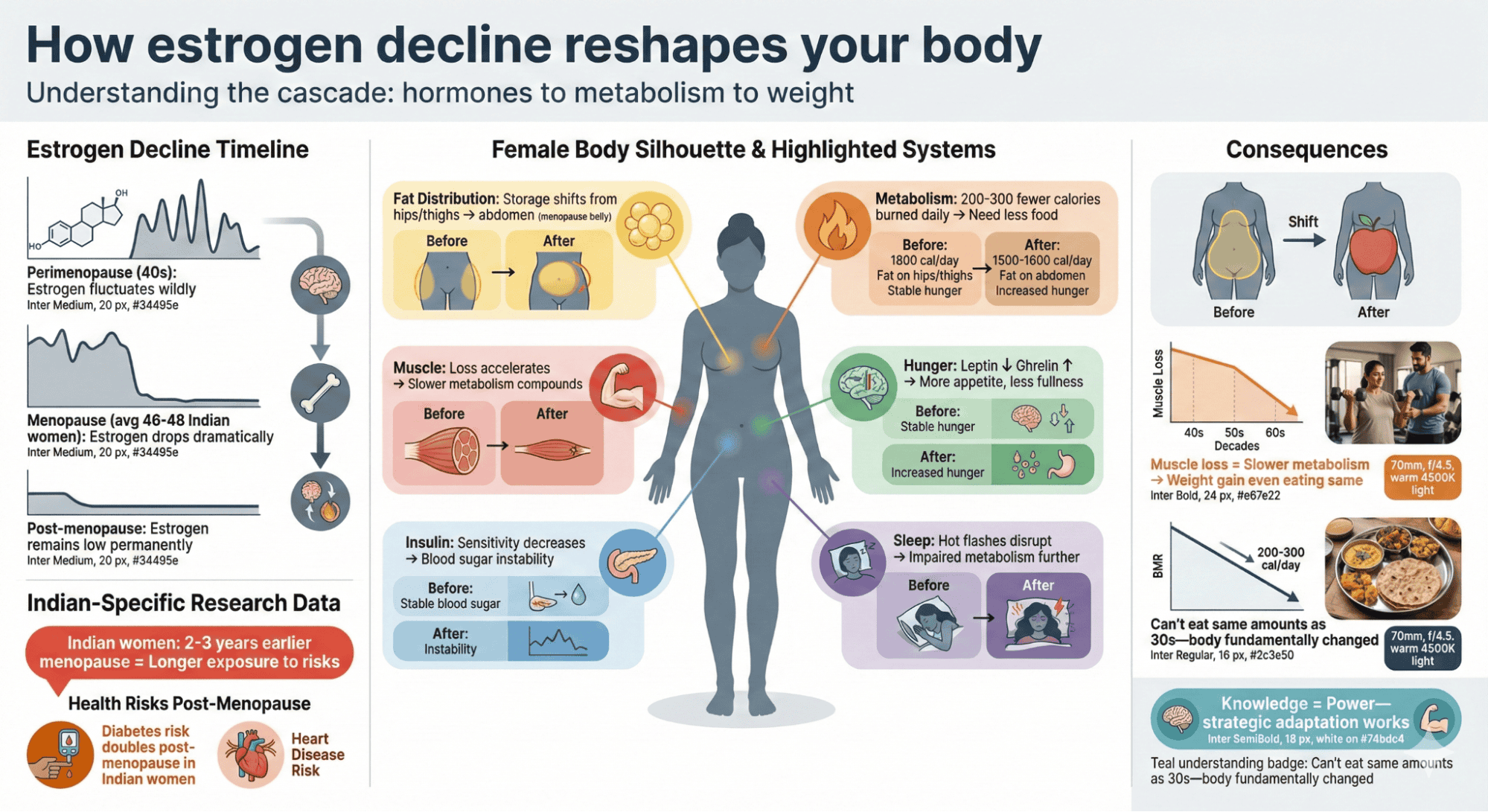
Estrogen and weight have intricate relationships affecting multiple body systems. Declining estrogen during menopause reduces metabolic rate by 200-300 calories daily meaning you need less food maintaining same weight. Additionally, estrogen loss shifts fat storage from hips and thighs to abdomen creating menopause belly fat. Moreover, decreased estrogen reduces insulin sensitivity increasing blood sugar instability and diabetes risk. Furthermore, menopause affects leptin and ghrelin hunger hormones, increasing appetite while reducing fullness signals. Sleep disruption from hot flashes further impairs metabolism and hunger regulation. In fact, muscle loss accelerates during menopause as estrogen supports muscle maintenance. Less muscle means slower metabolism compounding weight gain. Therefore, addressing hormonal changes through hormone balance diet becomes essential for weight management during this transition.
The Connection Between Perimenopause Diet and Health
Perimenopause diet affects more than just weight, influencing disease risk and quality of life. Strategic nutrition reduces hot flash frequency and intensity improving sleep and daily function. Additionally, adequate calcium and vitamin D prevent osteoporosis risk increasing dramatically post-menopause. Moreover, anti-inflammatory foods reduce joint pain and body inflammation common during this transition. Furthermore, blood sugar control through proper nutrition prevents diabetes risk doubling post-menopause. Omega-3 fats support brain health reducing depression and cognitive decline risks. In fact, women eating balanced hormone balance diet report fewer menopausal symptoms, better energy, and easier weight management than those with poor nutrition. Therefore, diet becomes powerful tool managing transition symptoms alongside weight.
What Research Shows for Indian Population
Research on menopause in Indian women reveals specific patterns and needs. Studies show Indian women experience menopause 2-3 years earlier than Western women, averaging age 46-48. One study found midlife weight gain in Indian women averaged 3-4 kilos annually without intervention, higher than other populations. Additionally, research demonstrates Indian menopausal women have dramatically increased diabetes and heart disease risk due to abdominal fat accumulation. Moreover, studies show Indian women report severe menopausal symptoms but rarely seek treatment due to cultural stigma. Furthermore, research indicates that dietary interventions emphasizing protein, fiber, and reduced refined carbs significantly improve weight and metabolic health in Indian menopausal women. Therefore, culturally-informed nutritional approaches provide essential support during this challenging transition.
Menopause Belly Fat: What to Watch For

Physical Signs and Symptoms to Monitor
Menopause belly fat and transition symptoms create observable changes. Weight gain particularly around midsection despite unchanged eating indicates hormonal shift. Additionally, clothes fitting differently especially around waist shows fat redistribution even without scale changes. Moreover, hot flashes, night sweats, and sleep disruption signal perimenopause transition. Irregular periods with unpredictable cycles indicate hormone fluctuations. Furthermore, increased joint pain, muscle aches, and stiffness are common. Watch for fatigue, brain fog, and mood changes affecting daily function. Hair thinning and skin changes also occur. In fact, if experiencing several symptoms simultaneously and you’re 40+, perimenopause is likely. Therefore, recognizing transition allows implementing supportive strategies rather than attributing symptoms to aging or other causes.
Emotional and Mental Health Indicators
Menopause profoundly affects mental health through hormonal impacts on brain chemistry. Mood swings, irritability, and increased anxiety are common during transition. Additionally, depression or worsening of existing depression occurs frequently during perimenopause. Moreover, brain fog and memory problems create frustration and anxiety about cognitive decline. Furthermore, body image struggles increase with weight gain and physical changes. Sleep disruption from hot flashes creates chronic fatigue worsening mood and cognitive function. In fact, hormonal changes affect neurotransmitters serotonin and dopamine directly impacting mood regulation. Therefore, mental health support alongside perimenopause diet and lifestyle changes provides comprehensive care during this challenging transition period.
When to Consult a Healthcare Professional
See a doctor if experiencing severe symptoms disrupting daily life, work, or relationships. Additionally, consult for heavy or irregular bleeding requiring evaluation for underlying conditions. Moreover, if hot flashes are debilitating despite lifestyle modifications, hormone replacement therapy or other treatments might help. Furthermore, discuss bone density screening if you have risk factors for osteoporosis. If depression or anxiety is severe, psychiatric support alongside hormonal treatment addresses comprehensive needs. Work with gynecologists knowledgeable about menopause management and registered dietitians creating hormone balance diet suited to your specific health needs. Therefore, professional support optimizes this transition preventing complications and improving quality of life during menopause years.
Indian Lifestyle Factors Affecting Menopause Weight Loss Diet

Modern Indian Diet Challenges and Solutions
Modern Indian dietary patterns worsen midlife weight gain during menopause. High-carb diets centered on rice and rotis spike insulin when sensitivity is already declining. Additionally, inadequate protein consumption accelerates muscle loss during menopause. Moreover, processed foods, sweets, and fried items consumed regularly promote inflammation and fat gain. Furthermore, skipping meals or erratic eating disrupts blood sugar particularly problematic during menopause. Solutions include increasing protein to 80-100 grams daily preserving muscle during hormonal transition. Additionally, reduce refined carbs choosing whole grains in moderate portions. Moreover, emphasize vegetables, healthy fats, and fiber supporting satiety and blood sugar. Furthermore, eat regular balanced meals preventing blood sugar crashes and overeating. These modifications address hormonal metabolic changes effectively.
Work-Life Balance and Urban Living Impact
Urban Indian women face menopause weight loss barriers through lifestyle factors. Work stress elevates cortisol worsening menopause belly fat accumulation. Additionally, long sitting hours reduce calorie burn while menopause already lowers metabolism. Moreover, caregiving responsibilities for aging parents plus children leave no time for self-care. Furthermore, sleep deprivation from hot flashes plus life stress creates metabolic dysfunction. Solutions include prioritizing self-care as necessity not luxury during this transition. Additionally, build movement into daily life through walking, stairs, and stretching at work. Moreover, practice stress management actively through meditation, yoga, or hobbies. Furthermore, communicate needs to family creating support for nutrition and self-care priorities. Therefore, comprehensive lifestyle approach supports weight management during challenging transition.
Cultural and Social Influences on Health
Indian culture creates unique perimenopause diet challenges requiring navigation. Cultural silence around menopause prevents women from seeking information and support. Additionally, dismissing symptoms as “normal aging” delays interventions that improve quality of life and health. Moreover, women’s health needs often get deprioritized in families focused on children and elders. Furthermore, body image pressures combined with weight gain create distress without support systems. Solutions include educating yourself about menopause despite cultural silence. Additionally, create or join support groups of women experiencing similar transitions. Moreover, advocate for your health needs within family and medical systems. Furthermore, reframe menopause as natural transition requiring support, not shameful condition to hide. Therefore, changing cultural narratives around menopause supports women’s health and wellbeing.
Best Indian Foods for Menopause Weight Loss Diet Management

Traditional Indian Foods That Support Hormone Balance Diet
Strategic Indian foods support hormone balance diet during menopause. Phytoestrogen-containing foods like soy, flax seeds, and sesame seeds provide plant compounds with mild estrogenic effects potentially easing symptoms. Additionally, adequate protein from dal, paneer, eggs, chicken, and fish preserves muscle during accelerated loss. Moreover, calcium-rich foods like dairy, leafy greens, and ragi prevent bone loss. Furthermore, omega-3 rich foods like walnuts, flax, and fish reduce inflammation and support brain health. Whole grains in moderation provide fiber supporting gut health and blood sugar. In fact, traditional Indian spices like turmeric, ginger, and fenugreek have anti-inflammatory properties supporting overall health during transition. Therefore, these traditional foods provide comprehensive nutrition addressing menopausal needs.
Modern Indian Meal Options and Healthy Recipes
Create meals supporting menopause weight loss with adequate nutrition. Breakfast needs substantial protein: moong dal cheela with vegetables, eggs, curd, and fruit providing 25-30 grams protein. Additionally, lunch should be largest meal with generous protein and vegetables, moderate whole grains. Include dal, paneer or chicken, vegetables, and brown rice or roti. Moreover, lighter dinner with soup, salad, moderate protein, and vegetables supports sleep and metabolism. Include snacks like nuts, seeds, yogurt, or fruit preventing hunger and maintaining blood sugar. Furthermore, minimize refined carbs, sugary foods, and excessive salt worsening symptoms and weight gain. These balanced meals address hormonal changes while maintaining satisfaction. Therefore, strategic meal composition supports this transition effectively.
Foods to Limit or Avoid for Better Results
Certain foods worsen menopausal symptoms and menopause belly fat. Refined carbs and sugar spike blood sugar when insulin sensitivity is already impaired. Therefore, limit white rice, maida products, sweets, and sugary drinks. Additionally, alcohol triggers hot flashes, disrupts sleep, and provides empty calories. Limit consumption. Moreover, excessive caffeine worsens hot flashes and sleep problems for many women. Reduce coffee and tea if experiencing these issues. Furthermore, very spicy foods trigger hot flashes in some women requiring individual assessment. Processed foods high in sodium increase bloating and blood pressure risk elevated during menopause. In fact, while some restriction helps, extreme elimination diets create unsustainability. Focus on moderation and portion control rather than complete avoidance. Therefore, balanced approach creates sustainable long-term patterns.
Portion Sizes and Meal Timing for Indians
Portion control becomes crucial during menopause as metabolic rate drops requiring fewer calories. Use smaller plates creating visual fullness with less food. Additionally, measure grains limiting to 1 small katori rice or 2 rotis per meal rather than unlimited amounts. Moreover, fill half your plate with vegetables, quarter with protein, quarter with carbs creating balanced proportions. Furthermore, eat slowly allowing 20 minutes for fullness signals to register preventing overeating. Space meals 4-5 hours apart allowing blood sugar to stabilize between eating. In fact, front-load calories earlier in day when metabolism is more active rather than eating heavily at night. Therefore, strategic portions and timing accommodate lowered metabolic rate while maintaining satisfaction and nutrition.
Lifestyle Changes to Support Menopause Weight Loss Diet
Estrogen And Weight: The Right Approach for Indians
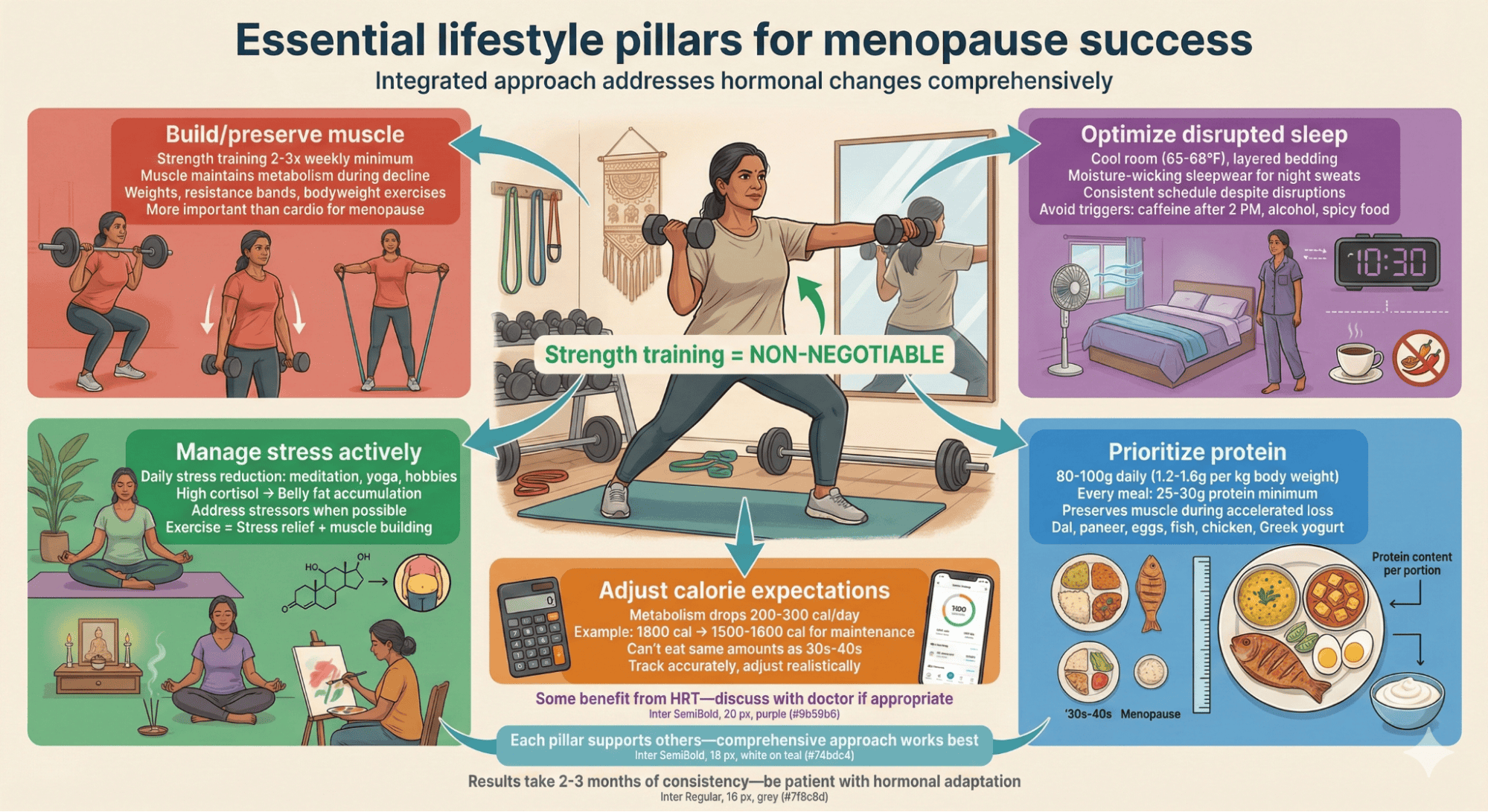
Understanding estrogen and weight relationship helps create effective strategies. Focus on preserving muscle through strength training 2-3 times weekly as muscle maintains metabolism. Additionally, prioritize protein at 1.2-1.6 grams per kilogram body weight supporting muscle maintenance during accelerated loss. Moreover, manage blood sugar through balanced meals with protein, fiber, and healthy fats preventing insulin spikes. Furthermore, include phytoestrogens from soy, flax, and legumes potentially easing symptoms through mild estrogenic effects. Reduce inflammation through anti-inflammatory foods like fatty fish, turmeric, and vegetables. In fact, some women benefit from hormone replacement therapy discussing with doctors whether appropriate for their situation. Therefore, comprehensive approach addressing hormonal changes through multiple strategies creates best outcomes.
Sleep and Stress Management Strategies
Sleep and stress management become critical during menopause transition. Hot flashes disrupting sleep require environmental strategies: cool room, layered bedding, moisture-wicking sleepwear. Additionally, establish consistent sleep schedule supporting circadian rhythms despite disruptions. Moreover, avoid triggers before bed: caffeine after 2 PM, alcohol, spicy food, or large meals. Practice relaxation techniques like meditation or gentle yoga before bed. Furthermore, stress management prevents cortisol worsening menopause belly fat. Practice daily stress reduction through exercise, meditation, hobbies, or social connection. Address underlying stressors when possible rather than just managing symptoms. In fact, inadequate sleep and high stress make weight management nearly impossible during menopause regardless of perfect nutrition. Therefore, these lifestyle factors are foundational, not optional additions.
Daily Habits That Make a Real Difference
Small consistent actions support midlife weight gain prevention. Weigh yourself weekly same time/conditions tracking trends without daily obsession. Additionally, track symptoms noting patterns between foods, activities, and symptom severity guiding personalized strategies. Moreover, stay hydrated with 8-10 glasses water daily supporting metabolism and reducing hot flash intensity. Furthermore, move throughout day beyond formal exercise: stairs, walking, stretching maintaining higher daily calorie burn. Include strength training 2-3 times weekly non-negotiable for muscle preservation. In fact, build community with other menopausal women sharing experiences and strategies reducing isolation. Therefore, consistent habits compounding over months create significant difference in managing this transition successfully.
Your 7-Day Menopause Weight Loss Diet Management Meal Plan
This meal plan emphasizes protein, fiber, and balanced nutrition for menopausal women:
| Day | Breakfast (25-30g protein) | Lunch (30-35g protein) | Snack | Dinner (20-25g protein) |
| Day 1 | 2 boiled eggs + whole wheat toast + avocado + milk | Brown rice (1 katori) + dal (1 katori) + palak paneer (100g) + salad | Handful of walnuts + apple | Vegetable soup + 1 roti + grilled fish/paneer + vegetables |
| Day 2 | Moong dal cheela (2) + paneer filling + curd + banana | 2 rotis + chana dal + chicken curry (100g) + raita + salad | Greek yogurt with flax seeds | Light khichdi + curd + vegetables |
| Day 3 | Oats with milk + almonds + chia seeds + boiled egg | Quinoa (1 bowl) + dal + paneer tikka + vegetables | Roasted chana + fruit | Tomato soup + 1 bajra roti + dal + salad |
| Day 4 | Vegetable poha + peanuts + 2 boiled eggs + milk | Brown rice + sambhar + fish curry (100g) + vegetables | Handful of mixed nuts | Clear soup + grilled chicken/paneer + vegetables |
| Day 5 | Idli (3) + sambhar + 2 eggs + coconut chutney | 2 rotis + moong dal + paneer curry + raita + salad | Curd with flax + fruit | Vegetable soup + 1 roti + dal + greens |
| Day 6 | Besan cheela with vegetables + paneer + curd | Quinoa + dal + chicken (100g) + vegetables + salad | Roasted makhana + almonds | Soup + 1 roti + dal + mixed vegetables |
| Day 7 | Scrambled eggs (2) + whole wheat toast + milk + fruit | Brown rice + dal + palak paneer (100g) + raita | Greek yogurt with seeds | Light khichdi + curd + grilled vegetables |
Note: Each meal emphasizes adequate protein (80-100g daily total) supporting muscle maintenance. Moderate whole grains control blood sugar. Calcium-rich foods support bone health. Phytoestrogen sources (soy, flax) included. Portions controlled accommodating lower metabolic rate.
Common Mistakes Indians Make with Menopause Weight Loss Diet
Diet Mistakes That Sabotage Progress
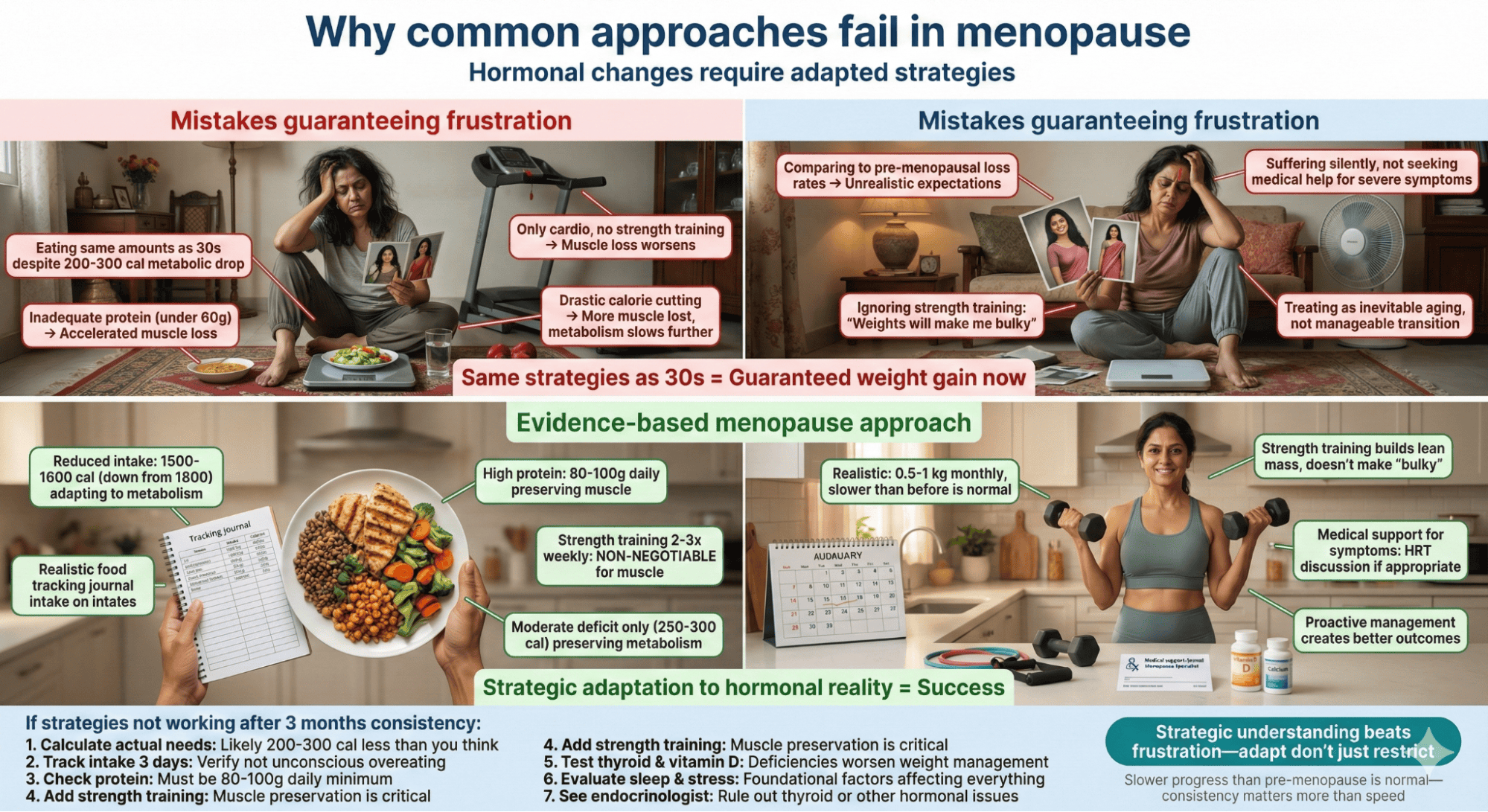
Biggest mistake is eating the same amounts as pre-menopause despite 200-300 calorie metabolic drop, guaranteeing weight gain. Another error is inadequate protein failing to preserve muscle during accelerated loss. Additionally, many women drastically cut calories trying to overcome plateau, slowing metabolism further and losing more muscle. Moreover, eliminating healthy fats worsens hormonal symptoms and reduces satiety. Furthermore, not adjusting expectations realistically, comparing to pre-menopausal weight loss rates creating frustration. In fact, ignoring strength training focusing only on cardio accelerates muscle loss and metabolic slowdown. Therefore, strategic approach addressing hormonal metabolic changes works better than just reducing calories dramatically.
Lifestyle Pitfalls to Watch Out For
Many women sabotage menopause weight loss through lifestyle choices. Not prioritizing sleep despite hot flashes worsens metabolism and hunger regulation. Additionally, chronic stress unchecked elevates cortisol promoting menopause belly fat. Moreover, sedentary lifestyle accelerates muscle loss and metabolic decline. Furthermore, social isolation during this transition increases depression and reduces support for healthy changes. Not seeking medical help for severe symptoms creates unnecessary suffering impacting overall health and weight management. In fact, treating menopause as something to endure silently rather than manage actively prevents accessing helpful interventions. Therefore, comprehensive approach addressing lifestyle factors alongside nutrition creates better outcomes.
How to Course-Correct When Things Go Wrong
If menopause weight loss diet strategies aren’t working, troubleshoot systematically. Calculate actual calorie needs for menopausal metabolism, likely 200-300 calories less than previously. Track intake for 3 days verifying you’re not unconsciously overeating. Additionally, assess protein intake ensuring 80-100 grams daily. Add strength training if not currently doing it as muscle preservation is critical. Moreover, check vitamin D and thyroid function as deficiencies worsen weight management during menopause. Furthermore, evaluate sleep quality and stress levels addressing these foundational factors. If after 3 months of consistent appropriate efforts you’re not seeing results, work with endocrinologist ruling out thyroid or other hormonal issues beyond menopause. Therefore, systematic assessment identifies whether implementation or underlying medical issues prevent progress.
Frequently Asked Questions
Q1: What is menopause weight loss diet and how does it affect Indians?
Menopause weight loss diet addresses hormonal changes during perimenopause and menopause when declining estrogen reduces metabolism by 200-300 calories daily and shifts fat storage to abdomen. Indian women face early menopause (age 46-48) and genetic predisposition to abdominal fat making midlife weight gain averaging 3-4 kilos yearly without strategic intervention.
Q2: What are main signs of menopause-related weight changes?
Signs include weight gain particularly around midsection creating menopause belly fat, clothes fitting differently especially at waist despite stable scale weight, plus symptoms like hot flashes, irregular periods, sleep disruption, mood changes, and fatigue. Multiple symptoms together in women 40+ indicate perimenopause transition requiring adjusted nutrition and lifestyle strategies.
Q3: What should Indian women eat during menopause for weight loss?
Eat high protein (80-100g daily) preserving muscle, moderate whole grains for blood sugar control, generous vegetables and fiber, calcium-rich foods for bones, omega-3 fats for inflammation and brain health, and phytoestrogen sources like soy and flax. Reduce refined carbs, sugar, and processed foods while maintaining adequate overall calories supporting hormone balance diet.
Q4: Can menopause weight gain be managed naturally?
Yes, through adequate protein intake, strength training preserving muscle, appropriate calorie reduction (not excessive), stress management, sleep optimization, and anti-inflammatory foods. However, metabolic rate naturally decreases requiring adjustment to lower maintenance calories. Some women benefit from hormone replacement therapy discussing with doctors for comprehensive management supporting menopause weight loss.
Q5: How long does menopause weight loss take?
Slower than pre-menopause requiring patience. Expect 0.25-0.5 kilo weekly loss with appropriate nutrition and exercise due to hormonal metabolic changes. Significant body composition improvements appear within 8-12 weeks of consistent protein, strength training, and calorie control. Estrogen and weight relationship means weight management remains ongoing requiring permanent lifestyle adjustments.
Conclusion
Menopause weight loss diet requires understanding that your body fundamentally changed, not personal failure. Declining estrogen reduces metabolism 200-300 calories daily, shifts fat storage to abdomen, and accelerates muscle loss. The approaches working pre-menopause don’t work now because hormonal context completely changed. For Indian women experiencing earlier menopause and genetic abdominal fat predisposition, strategic nutrition emphasizing adequate protein, strength training, appropriate calorie adjustment, and comprehensive lifestyle management becomes essential for successful midlife weight gain prevention.
Start this week by calculating your menopausal metabolic needs (likely 200-300 calories less than previously) and tracking actual intake. Increase protein to 80-100 grams daily and add 2-3 strength training sessions weekly preserving muscle. Prioritize sleep and stress management as foundational, not optional. Give changes 12 weeks showing full effects as menopausal weight loss is slower requiring patience.
Related Posts