You’re eating clean, exercising regularly, yet weight refuses to budge. Your friend eats whatever they want staying slim effortlessly. Bloating, irregular digestion, and stubborn belly fat plague you constantly. The missing link might be invisible: trillions of bacteria in your digestive system controlling metabolism, fat storage, and hunger. Understanding gut microbiome weight loss connection plus implementing strategic gut health diet creates breakthrough results when traditional approaches fail. This guide reveals how Indians can optimize gut bacteria for sustainable weight loss and comprehensive health transformation.
What Is Gut Microbiome Weight Loss and Why Indian Dieters Should Care?

Gut microbiome weight loss refers to weight management through optimizing beneficial gut bacteria affecting metabolism, inflammation, and appetite regulation. Your gut contains trillions of microorganisms including bacteria, fungi, and viruses influencing health beyond just digestion. Additionally, research shows lean people have different gut bacterial compositions than obese individuals. Moreover, manipulating gut bacteria through probiotics for weight loss and prebiotic fiber supports fat burning when other methods fail. Therefore, microbiome diet strategies address invisible factors sabotaging weight loss efforts.
Why Gut Matters for Indian Bodies
Indians face unique gut microbiome weight loss challenges through dietary changes and antibiotic overuse disrupting beneficial bacteria. Traditional fermented foods like dahi, idli, and pickles supported gut health for generations. Additionally, modern processed diets lack these beneficial foods while high-stress lifestyles damage gut bacteria balance. Moreover, excessive antibiotic use in India kills good bacteria along with harmful ones. Furthermore, Indians have genetic susceptibility to gut-related metabolic issues affecting weight. In fact, poor digestive health contributes to insulin resistance affecting 40% of urban Indians. Therefore, restoring gut balance becomes crucial for Indian weight management success.
Common Myths Debunked About This Topic
Let’s clear myths about gut microbiome weight loss. First, all bacteria aren’t bad—beneficial bacteria are essential for health and weight management. Second, probiotics for weight loss alone won’t create results without overall diet quality improvements. Third, expensive probiotic supplements aren’t always necessary when fermented foods work effectively. Fourth, gut healing happens gradually over weeks, not overnight with quick fixes. Additionally, you can’t out-supplement poor diet—food quality matters most for gut health diet. Finally, symptoms like bloating aren’t always gut-related but often indicate bacterial imbalance. Therefore, comprehensive approach works better than supplements alone.
The Science Behind Gut Microbiome Weight Loss for Indians
How Gut Works in Your Body
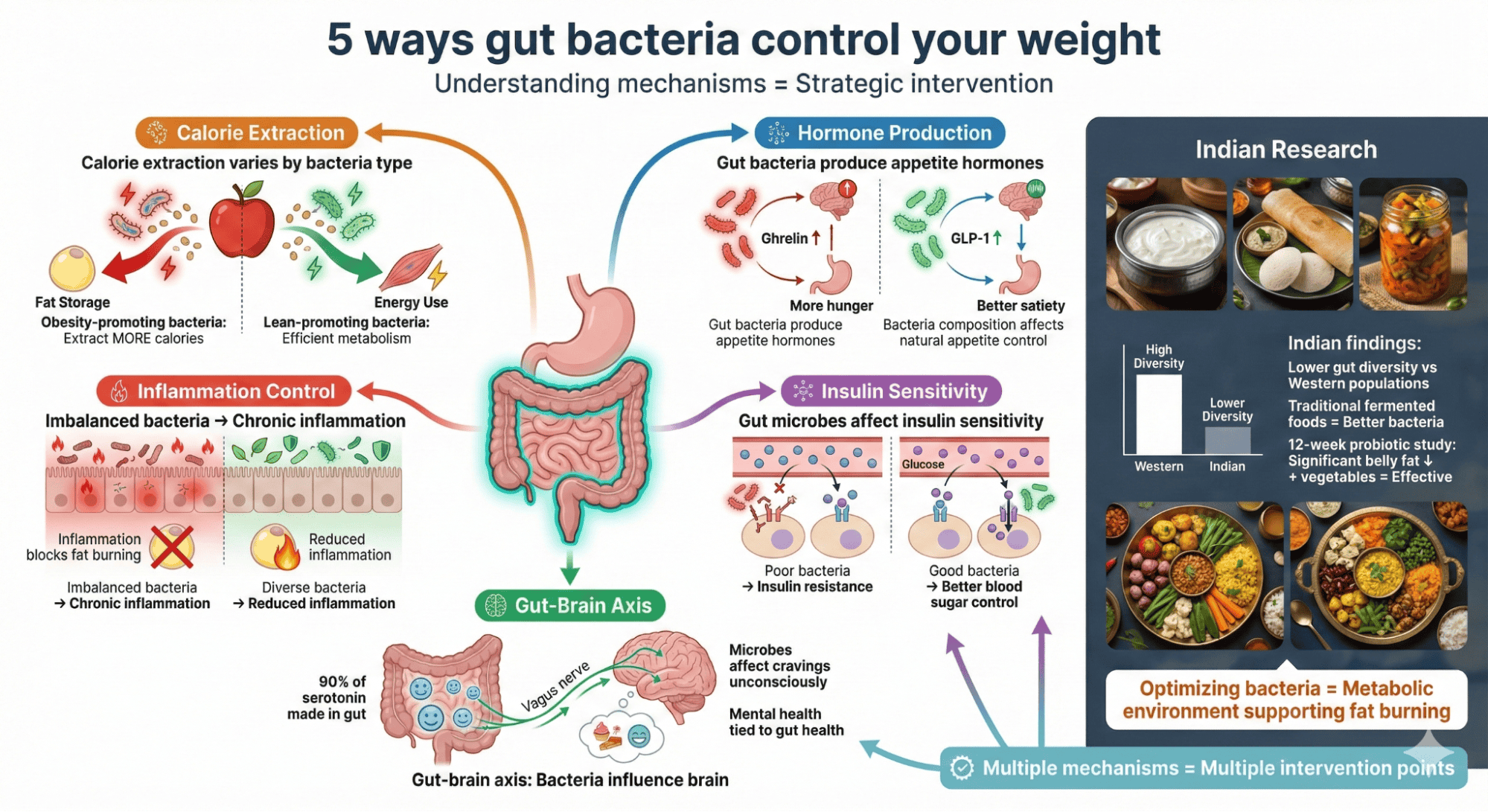
Gut bacteria affect weight through multiple mechanisms worth understanding. Certain bacterial strains extract more calories from food storing excess as fat, while beneficial bacteria improve metabolic efficiency. Additionally, gut microbes produce hormones affecting hunger and satiety signals controlling appetite naturally. Moreover, imbalanced microbiome increases inflammation promoting weight gain and preventing fat loss despite calorie restriction. Furthermore, gut bacteria influence insulin sensitivity affecting blood sugar control and fat storage patterns. The gut-brain axis means microbes even affect cravings and food choices unconsciously. Therefore, optimizing gut microbiome weight loss creates metabolic environment supporting fat burning naturally.
The Connection Between Gut Bacteria and Health
Gut bacteria influence virtually every health aspect beyond just weight management. Beneficial microbes strengthen immune function preventing infections and reducing autoimmune disease risk. Additionally, gut health affects mental health through neurotransmitter production with 90% of serotonin made in gut. Moreover, digestive health impacts nutrient absorption determining whether your body extracts vitamins and minerals from food effectively. Furthermore, diverse gut microbiome reduces inflammation underlying most chronic diseases including heart disease and diabetes. Research shows specific bacterial strains reduce belly fat and improve metabolic markers. Therefore, probiotics for weight loss provide comprehensive health benefits extending beyond scale numbers.
What Research Shows for Indian Population
Research on gut microbiome weight loss in Indians reveals concerning patterns but promising intervention results. Studies show Indians have lower gut bacterial diversity than Western populations due to modern dietary changes. One study found Indians consuming traditional fermented foods maintained healthier gut bacteria supporting better weight management. Additionally, research demonstrates Indians supplementing with probiotics for weight loss show significant improvements in belly fat reduction and metabolic markers within 12 weeks. Moreover, studies indicate prebiotic fiber from traditional foods like dal and vegetables feeds beneficial bacteria effectively. Therefore, combining fermented foods with fiber-rich microbiome diet creates optimal results for Indian populations.
Probiotics For Weight Loss: What to Watch For

Physical Signs and Symptoms to Monitor
Probiotics for weight loss effectiveness shows through observable digestive and metabolic changes. Initial signs include reduced bloating and improved bowel regularity within 1-2 weeks of gut health diet implementation. Additionally, increased energy throughout the day without crashes indicates improving gut function and nutrient absorption. Moreover, reduced sugar cravings suggest balanced gut bacteria regulating appetite hormones naturally. Furthermore, clearer skin and reduced inflammation show comprehensive digestive health improvements. Watch for gradual weight loss particularly around midsection where gut inflammation causes stubborn fat. However, warning signs include worsening digestive symptoms suggesting wrong probiotic strains or underlying conditions needing attention. Therefore, monitoring both improvements and problems guides effective gut microbiome weight loss strategies.
Emotional and Mental Health Indicators
Gut bacteria profoundly affect mental health through gut-brain axis communication pathways. Improved mood and reduced anxiety indicate healthy gut microbiome producing adequate neurotransmitters like serotonin. Additionally, better stress resilience suggests balanced gut bacteria regulating cortisol response effectively. Moreover, improved sleep quality often accompanies gut healing as microbes influence circadian rhythms. Furthermore, reduced brain fog and better concentration indicate optimal digestive health supporting cognitive function. However, watch for mood swings or anxiety worsening during gut healing as bacterial die-off temporarily affects neurotransmitters. Therefore, mental health improvements validate gut microbiome weight loss efforts beyond just physical changes.
When to Consult a Healthcare Professional
See doctors if experiencing severe digestive symptoms like persistent diarrhea, blood in stool, or unexplained weight loss suggesting serious conditions beyond simple gut imbalance. Additionally, consult before taking probiotics for weight loss if immunocompromised as live bacteria can cause infections in weakened immune systems. Moreover, if implementing gut health diet consistently for 3 months without any digestive or weight improvements, medical evaluation ensures no underlying issues like SIBO, parasites, or inflammatory bowel disease. Work with registered dietitians specializing in gut health creating personalized microbiome diet plans addressing individual bacterial needs. Therefore, professional guidance optimizes gut microbiome weight loss while preventing complications from undiagnosed conditions.
Indian Lifestyle Factors Affecting Gut Microbiome Weight Loss
Modern Indian Diet Challenges and Solutions
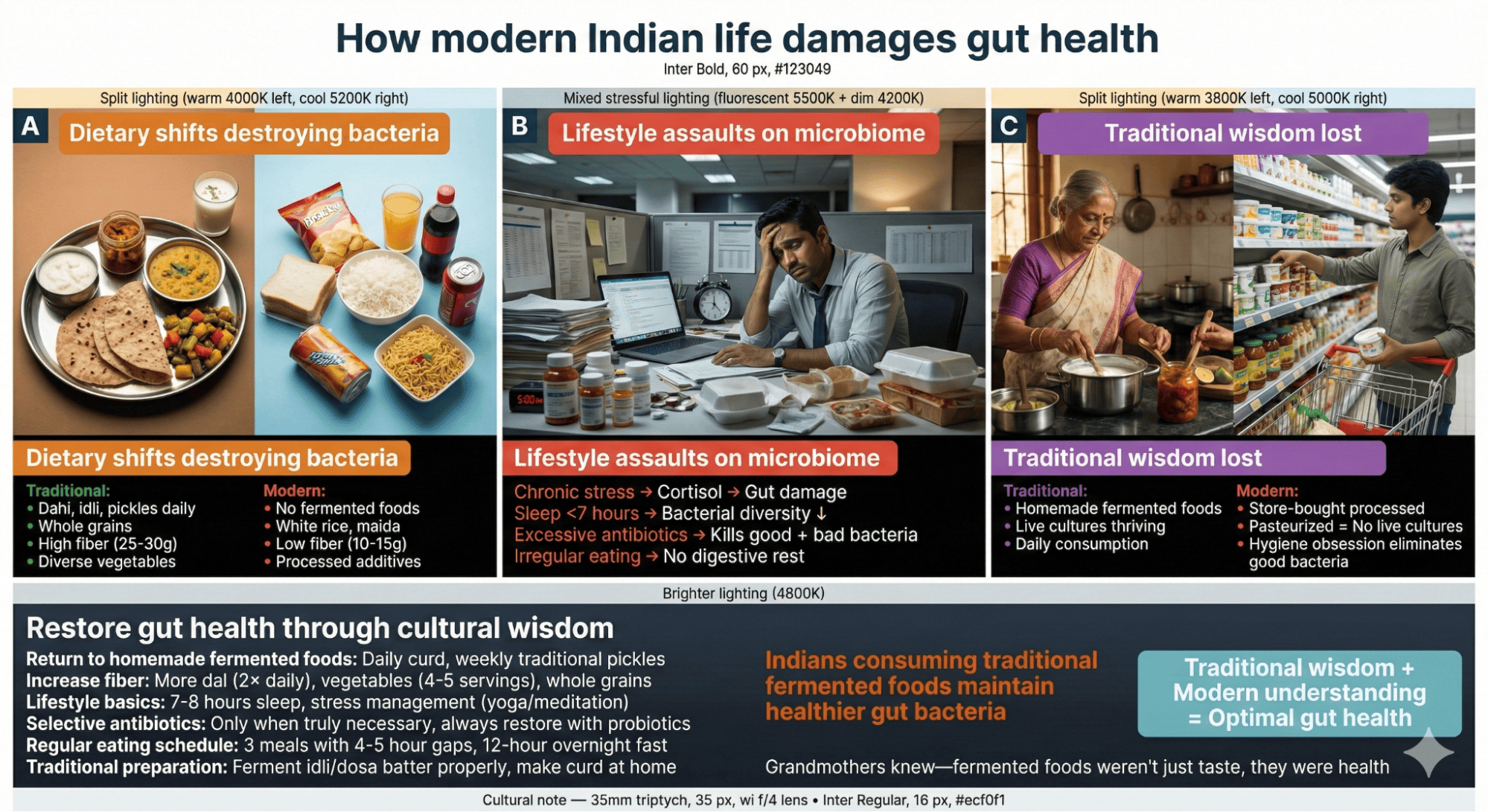
Modern Indian dietary patterns damage gut bacteria through multiple mechanisms. Excessive sugar and refined carbs from white rice and maida feed harmful bacteria while starving beneficial ones. Additionally, inadequate fiber intake averaging 10-15 grams daily when needing 25-30 grams fails to nourish good bacteria. Moreover, processed foods with artificial additives kill beneficial microbes disrupting digestive health. Furthermore, lack of fermented foods in modern diets eliminates traditional probiotics for weight loss sources. Solutions include adding homemade curd or buttermilk daily, increasing vegetable and dal intake for prebiotic fiber, switching to whole grains, and minimizing processed foods. Therefore, returning to traditional food wisdom supports gut health diet naturally.
Work-Life Balance and Urban Living Impact
Urban Indian lifestyle creates stress damaging gut microbiome weight loss efforts significantly. Chronic work stress elevates cortisol disrupting gut bacteria balance and increasing intestinal permeability. Additionally, inadequate sleep below 7 hours reduces beneficial bacteria diversity affecting metabolism and weight. Moreover, excessive antibiotic use for minor infections kills good bacteria along with harmful ones without proper restoration. Furthermore, irregular eating patterns and constant snacking prevent digestive system rest needed for gut healing. Solutions include 7-8 hours quality sleep, stress management through meditation or yoga, avoiding unnecessary antibiotics, and establishing regular eating schedule. Therefore, lifestyle optimization supports gut bacteria health beyond just dietary changes.
Cultural and Social Influences on Health
Indian cultural factors both help and hinder gut microbiome weight loss efforts. Traditional cuisine included fermented foods like dahi, kanji, and homemade pickles supporting gut health naturally. However, modern hygiene obsession eliminates beneficial bacteria exposure while store-bought processed versions lack live cultures. Additionally, cultural pressure to take antibiotics for every illness disrupts digestive health repeatedly. Moreover, social eating patterns with late heavy dinners stress digestive system. Solutions include returning to homemade fermented food preparation, being selective about antibiotic use, and educating family about gut health importance. Therefore, balancing cultural wisdom with modern understanding optimizes gut health diet success.
Best Indian Foods for Gut Microbiome Weight Loss Management
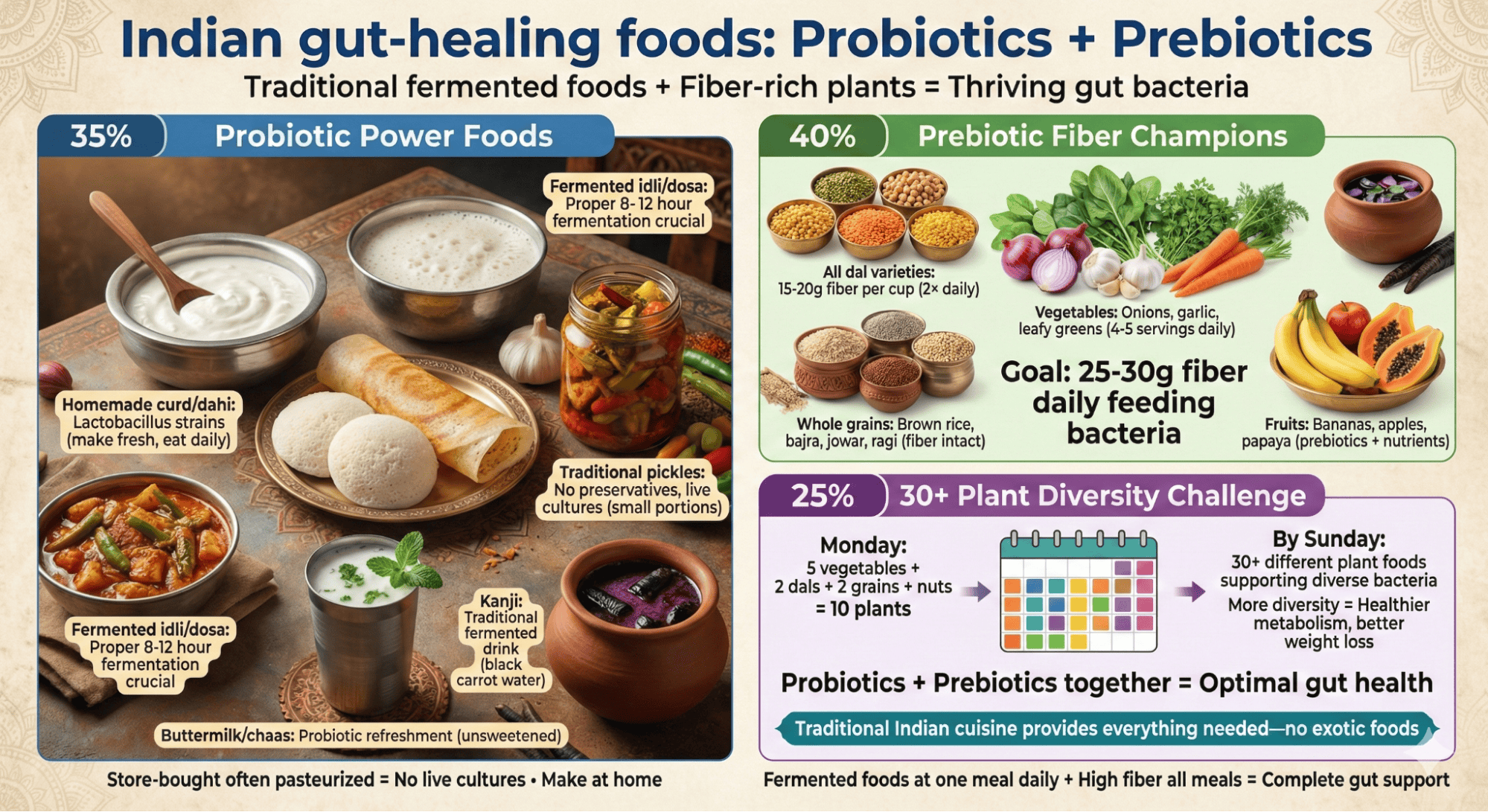
Traditional Indian Foods That Support Gut Health Diet
Gut health diet for Indians emphasizes traditional fermented and fiber-rich foods. Probiotic sources include homemade curd or dahi providing beneficial bacteria, fermented idli and dosa batter, traditional pickles without preservatives, buttermilk, and kanji. Additionally, prebiotic fiber feeding good bacteria comes from dal varieties, vegetables especially onions and garlic, whole grains, bananas, and apples. Moreover, traditional spices like turmeric, ginger, and cumin support digestive health through anti-inflammatory properties. Include diverse plant foods providing different fibers supporting bacterial diversity. Therefore, returning to traditional Indian cuisine provides natural probiotics for weight loss and prebiotic support.
Modern Indian Meal Options and Healthy Recipes
Create meals supporting gut microbiome weight loss using accessible Indian ingredients. Breakfast could include curd with berries and nuts, or fermented idli with coconut chutney providing probiotics. Additionally, lunch should emphasize dal for prebiotic fiber, brown rice, and generous vegetables feeding beneficial bacteria. Moreover, include fermented foods at one meal daily ensuring regular probiotic intake for digestive health. Snacks like buttermilk or homemade curd with fruit provide between-meal probiotic support. Furthermore, dinner could feature vegetable-heavy meals with dal and small grain portions allowing digestive system overnight rest. Include variety of vegetables weekly ensuring diverse fiber types supporting different bacterial strains. Therefore, strategic meal planning supports microbiome diet goals effectively.
Foods to Limit or Avoid for Better Results
Certain foods damage gut bacteria sabotaging weight loss despite being common in Indian diets. Excessive sugar feeds harmful bacteria creating imbalance and inflammation hindering gut microbiome weight loss. Additionally, artificial sweeteners kill beneficial bacteria more effectively than sugar according to research. Moreover, processed foods with preservatives and additives disrupt gut bacterial diversity. Furthermore, excessive alcohol damages gut lining increasing inflammation and permeability. Fried foods and trans fats promote harmful bacteria while reducing beneficial ones. Minimize these foods allowing gut healing and bacterial balance restoration. Therefore, eliminating gut-damaging foods matters as much as adding beneficial ones for gut health diet success.
Portion Sizes and Meal Timing for Indians
Strategic eating patterns support gut bacteria health beyond just food choices. Eat three main meals with 4-5 hours between allowing digestive system rest and bacterial fermentation time. Additionally, avoid constant snacking keeping digestive system working continuously without recovery periods. Moreover, make dinner smallest meal eaten by 8 PM allowing 12+ hour overnight fast supporting gut healing. Include adequate protein and fiber at each meal supporting satiety and bacterial nourishment. Furthermore, stay hydrated with 8-10 glasses water daily supporting digestive function. Eat slowly and mindfully chewing thoroughly for optimal digestion and nutrient absorption. Therefore, meal timing and eating patterns matter significantly for gut microbiome weight loss success.
Lifestyle Changes to Support Gut Microbiome Weight Loss
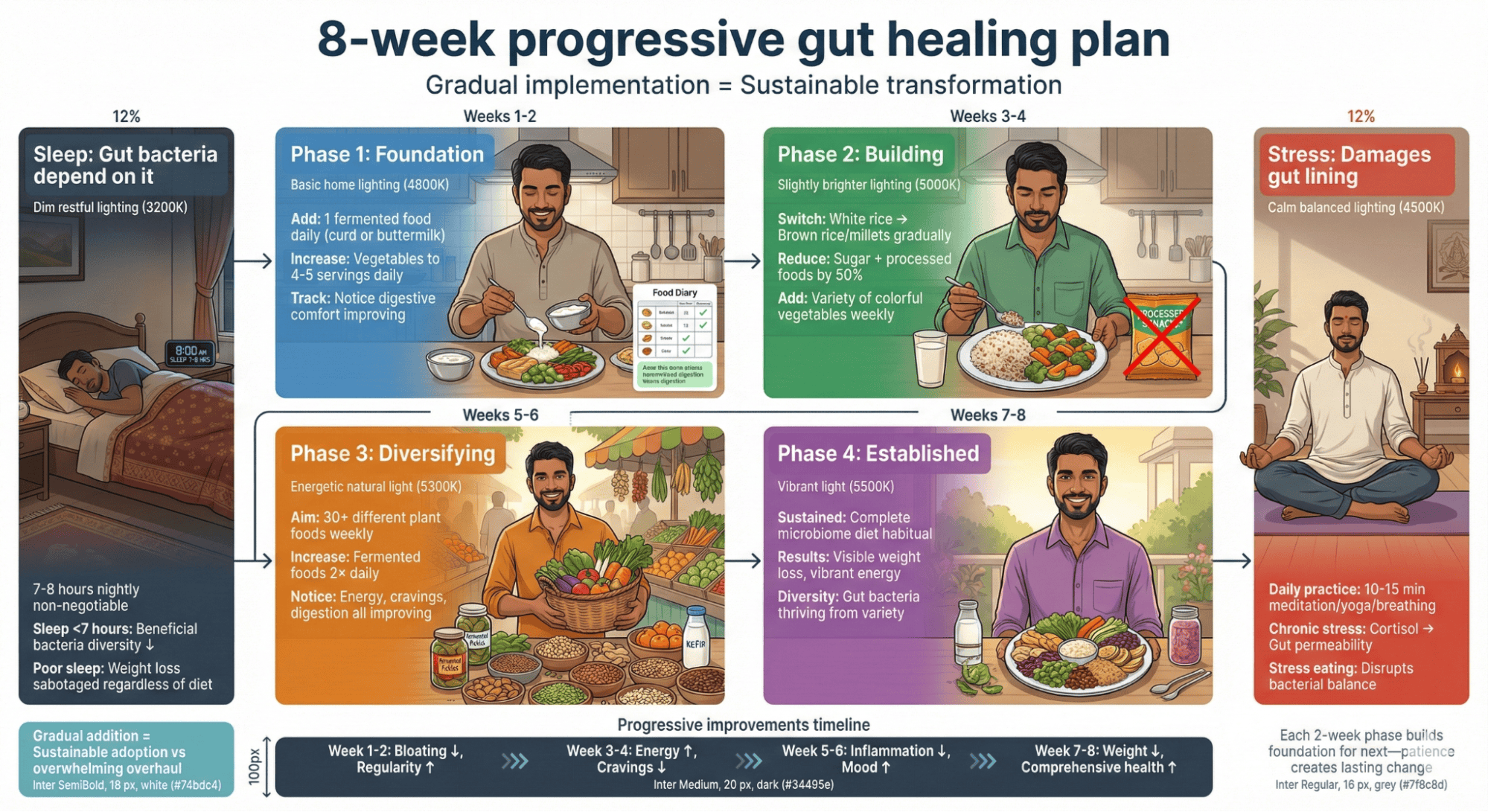
Microbiome Diet: The Right Approach for Indians
Implementing effective microbiome diet requires progressive approach focusing on both adding beneficial foods and removing harmful ones. Week 1-2: Add one fermented food daily like homemade curd establishing probiotic foundation. Additionally, increase vegetable intake to 4-5 servings daily providing prebiotic fiber. Week 3-4: Switch to whole grains from refined versions and add variety of colorful vegetables weekly. Moreover, reduce sugar and processed foods by half eliminating major gut disruptors. Week 5-8: Aim for 30+ different plant foods weekly supporting maximum bacterial diversity. Include fermented foods twice daily for consistent probiotic support. Therefore, gradual implementation creates sustainable gut health diet transformation.
Sleep and Stress Management Strategies
Sleep and stress profoundly affect gut bacteria balance and digestive health. Inadequate sleep reduces beneficial bacteria diversity while increasing harmful bacteria promoting inflammation and weight gain. Additionally, chronic stress damages gut lining creating permeability allowing toxins into bloodstream. Moreover, stress hormones alter gut bacteria composition favoring obesity-promoting strains. Solutions include prioritizing 7-8 hours quality sleep supporting gut healing and bacterial balance. Practice daily stress management through meditation, yoga, or deep breathing protecting gut health. Furthermore, establish bedtime routine promoting quality sleep essential for gut microbiome weight loss. Therefore, lifestyle management supports gut healing as effectively as dietary changes.
Daily Habits That Make a Real Difference
Small consistent habits optimize gut bacteria health long-term. Take probiotic-rich foods like curd or buttermilk at consistent times daily establishing routine. Additionally, eat rainbow of vegetables weekly ensuring diverse fiber types feeding different bacterial strains. Moreover, chew food thoroughly supporting optimal digestion and nutrient extraction. Furthermore, limit antibiotic use to truly necessary situations and always follow with probiotic supplementation restoring balance. Stay hydrated throughout day supporting digestive function and toxin elimination. Additionally, practice mindful eating without screens allowing proper digestion and satiety recognition. Therefore, these daily habits create environment supporting gut health diet and sustainable weight loss.
Your 7-Day Gut Microbiome Weight Loss Management Meal Plan
| Day | Breakfast | Lunch | Evening Snack | Dinner |
| Day 1 | Curd (1 bowl) + berries + almonds + flax seeds | Brown rice + dal + mixed veg + fermented pickle | Buttermilk + roasted chana | Vegetable khichdi + curd + cucumber salad |
| Day 2 | Fermented idli (3) + sambhar + coconut chutney | 2 bajra rotis + dal + palak + onion salad | Homemade curd + apple | Dal soup + vegetables + small brown rice portion |
| Day 3 | Curd smoothie + banana + oats + chia seeds | Quinoa + dal + mixed vegetables + fermented pickle | Buttermilk + handful of nuts | 2 rotis + dal + beans + cucumber raita |
| Day 4 | Fermented dosa (2) + sambhar + tomato chutney | Brown rice + rajma + mixed veg + curd | Curd + berries + seeds | Vegetable soup + dal + leafy greens + small millet roti |
| Day 5 | Curd (1 bowl) + papaya + walnuts + pumpkin seeds | 2 whole wheat rotis + dal + mixed sabzi + pickle | Buttermilk + roasted makhana | Brown rice + dal + vegetables + fermented side |
| Day 6 | Fermented idli (3) + vegetable sambhar + chutney | Quinoa + moong dal + vegetables + curd | Curd + seasonal fruit | Dal khichdi + vegetables + cucumber salad |
| Day 7 | Curd parfait + oats + fruits + nuts + seeds | Brown rice + dal + mixed vegetables + pickle | Buttermilk + roasted chana | 2 small rotis + dal + leafy greens + raita |
Note: Each day includes fermented foods (curd, idli, dosa, pickle) providing probiotics for weight loss. High fiber from dal, vegetables, and whole grains feeds beneficial gut bacteria. Aim for 30+ different plant foods weekly supporting bacterial diversity essential for digestive health and weight management.
Common Mistakes Indians Make with Gut Microbiome Weight Loss

Diet Mistakes That Sabotage Progress
Biggest mistake is taking expensive probiotic supplements while continuing poor diet that kills beneficial bacteria through sugar and processed foods. Additionally, many people eliminate all fermented foods thinking they cause bloating when improper preparation or low-quality store-bought versions are actual culprits. Moreover, not eating adequate prebiotic fiber means probiotic bacteria lack food to survive and multiply. Furthermore, expecting immediate results when gut healing takes 4-8 weeks of consistent effort before showing significant changes. Not diversifying plant food intake limits bacterial diversity crucial for metabolic health. Therefore, comprehensive gut health diet approach works better than isolated interventions.
Lifestyle Pitfalls to Watch Out For
Many people sabotage gut microbiome weight loss through lifestyle choices they don’t connect to gut health. Excessive antibiotic use for minor infections repeatedly damages gut bacteria without proper restoration afterward. Additionally, chronic stress left unmanaged continuously damages gut lining and bacterial balance. Moreover, inadequate sleep persistently reduces beneficial bacteria diversity regardless of perfect diet. Furthermore, excessive alcohol consumption damages gut lining and kills beneficial bacteria. Not giving gut healing adequate time before trying different approach prevents seeing results from any strategy. Therefore, lifestyle optimization supports dietary changes for gut bacteria health.
How to Course-Correct When Things Go Wrong
If implementing gut health diet for 8-12 weeks without digestive improvements or weight loss, troubleshoot systematically. Verify you’re actually consuming fermented foods daily with live cultures, not pasteurized versions lacking beneficial bacteria. Additionally, assess whether prebiotic fiber intake reaches 25-30 grams daily through vegetables, dal, and whole grains. Moreover, check if stress, inadequate sleep, or medications are undermining dietary efforts. Furthermore, some people need specific probiotic strains or higher doses than food provides requiring quality supplements. If severe digestive symptoms persist, medical evaluation rules out SIBO, parasites, or inflammatory conditions. Therefore, systematic troubleshooting identifies whether implementation issues or underlying problems prevent gut microbiome weight loss success.
Frequently Asked Questions
Q1: What is gut microbiome weight loss and how does it affect Indians?
Gut microbiome weight loss involves optimizing beneficial gut bacteria affecting metabolism, fat storage, inflammation, and appetite through fermented foods and prebiotic fiber. Indians face challenges from modern diets lacking traditional fermented foods like dahi and pickles while processed foods and antibiotics damage bacterial balance, contributing to stubborn weight gain and metabolic issues affecting our population.
Q2: What are the main signs of gut issues?
Signs include persistent bloating especially after meals, irregular bowel movements alternating between constipation and diarrhea, constant sugar cravings suggesting bacterial imbalance, stubborn belly fat resistant to diet and exercise, frequent infections from weakened immunity, and skin issues like acne. Multiple symptoms together indicate digestive health problems requiring gut bacteria restoration through probiotics for weight loss and dietary changes.
Q3: What foods should Indians eat for better gut microbiome weight loss?
Eat fermented foods daily including homemade curd, idli, dosa, and traditional pickles providing probiotics for weight loss. Include prebiotic fiber from dal, vegetables especially onions and garlic, whole grains, and diverse fruits feeding beneficial gut bacteria. Aim for 30+ different plant foods weekly supporting bacterial diversity essential for gut health diet and sustainable weight management.
Q4: Can gut be managed naturally?
Yes, through microbiome diet emphasizing fermented foods providing probiotics, prebiotic fiber from vegetables and dal, diverse plant foods supporting bacterial variety, adequate sleep and stress management protecting gut health, and limiting antibiotics, sugar, and processed foods damaging beneficial bacteria. Natural approaches restore digestive health effectively within 8-12 weeks of consistent implementation supporting sustainable weight loss.
Q5: How long does it take to see results with gut microbiome weight loss changes?
Digestive improvements like reduced bloating appear within 1-2 weeks of gut health diet implementation. Significant bacterial diversity changes occur within 4-6 weeks. Weight loss particularly belly fat becomes noticeable within 8-12 weeks of consistent fermented food consumption, adequate fiber intake, and lifestyle optimization supporting gut bacteria balance and metabolic health improvements.
Conclusion
Gut microbiome weight loss reveals that trillions of bacteria in your digestive system significantly influence metabolism, fat storage, and hunger beyond calories alone. For Indians, returning to traditional fermented foods like homemade curd and idli while including diverse plant-based prebiotic fiber optimizes gut bacteria supporting weight loss when other approaches fail. The connection between digestive health and weight means comprehensive approach addressing stress, sleep, antibiotics, and food diversity creates sustainable results. Managing gut isn’t about perfection it’s about consistent small changes restoring bacterial balance naturally.
Start this week by adding homemade curd to one meal daily ensuring live probiotic cultures. Additionally, increase vegetable variety aiming for different colored vegetables daily providing diverse fiber types. Track digestive symptoms and energy levels for 7 days, noticing improvements from simple changes.
Related Posts