

Every morning, you face the same question: green tea or lemon water? Instagram influencers swear that both melt belly fat magically. Your colleague drinks green tea religiously and claims it’s the secret to her flat stomach. Your neighbor starts every day with lemon water and credits it for her weight loss. You’ve tried both, but can’t tell if they’re actually working. The debate of green tea vs lemon water for weight loss confuses millions of Indians trying to lose belly fat. This guide cuts through the hype, comparing green tea vs lemon water scientifically to reveal which truly helps and how to use them effectively.
What Is Green Tea Vs Lemon Water and Why Indian Dieters Should Care?
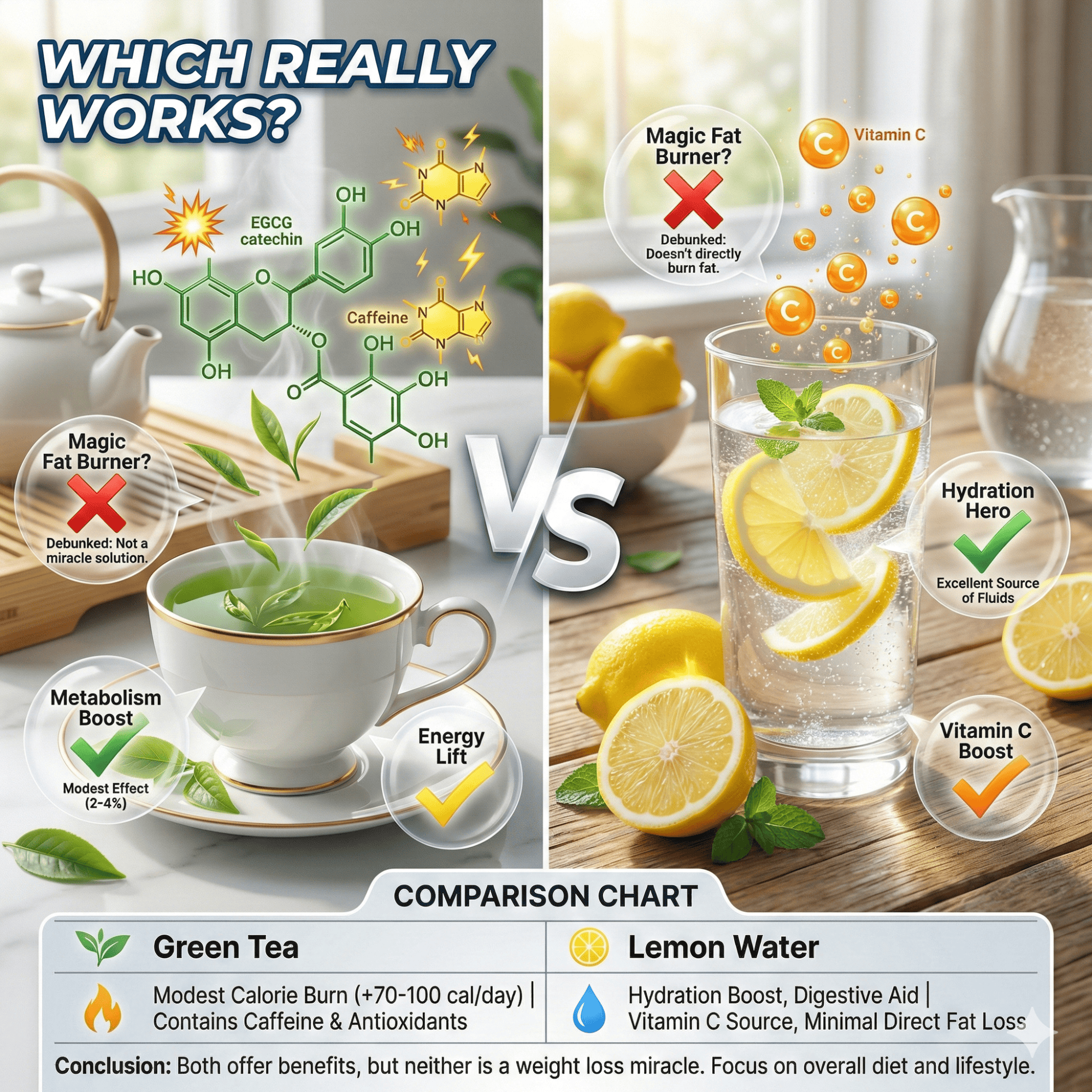
Green tea is made from unoxidized tea leaves, containing compounds called catechins (especially EGCG) and caffeine that may boost metabolism. Lemon water is simply water with fresh lemon juice, providing vitamin C, antioxidants, and virtually no calories. The green tea vs lemon water debate centers on which is more effective for fat loss. Green tea offers potential metabolism-boosting compounds plus hydration. Lemon water provides hydration with vitamins but lacks metabolism-affecting compounds. Therefore, they work differently in your body. Neither is a magic fat-burner, despite marketing claims. Both can support weight loss as part of an overall healthy diet, but they’re tools, not solutions by themselves.
Why Green Tea vs Lemon Water Matters for Indian Bodies
Indians have embraced both drinks in their quest for belly fat solutions. Green tea shops have proliferated in cities, and lemon water is a traditional morning ritual in many households. Additionally, the stubborn belly fat common in Indians due to genetics makes people desperate for easy solutions. Social media amplifies claims about these fat burning drinks, creating unrealistic expectations. Moreover, Indians often consume these drinks incorrectly, adding sugar or drinking them at wrong times, reducing any potential benefits. Understanding what green tea vs lemon water can and cannot do helps you use them appropriately rather than relying on them as the sole strategy while ignoring diet and exercise fundamentals that actually create results.
Common Myths Debunked About This Topic
Let’s clear up misconceptions about green tea vs lemon water. First, neither drink magically melts belly fat without calorie deficit. They’re not fat-burners that override poor diet. Second, drinking gallons won’t multiply results. More isn’t better and can cause problems. Third, you don’t need to choose one exclusively. You can have both if you enjoy them. Fourth, timing isn’t magical. Drinking green tea or lemon water at specific times doesn’t unlock secret fat loss. Additionally, these drinks don’t “detox” your body. Your liver and kidneys handle detoxification naturally. Finally, expensive brands aren’t better than basic green tea or fresh lemons. Simple versions work fine.
The Science Behind Green Tea Vs Lemon Water for Indians

How Green Tea and Lemon Water Work in Your Body
Green tea contains catechins and caffeine that may slightly increase metabolic rate and fat oxidation. The catechin EGCG might help your body break down fat and prevent new fat cells from forming. However, the effects are modest, burning perhaps 70 to 100 extra calories daily at most, and only if consumed regularly without sugar. Additionally, green tea provides antioxidants that support overall health. Lemon water works differently as a hydration aid. Water itself boosts metabolism temporarily (about 24 to 30% for an hour after drinking). Lemon adds vitamin C and antioxidants but doesn’t significantly affect fat loss directly. Therefore, the metabolism boosters claim is stronger for green tea, though both support weight loss primarily through hydration and replacing high-calorie drinks.
The Connection Between Fat Burning Drinks and Health
Calling these fat burning drinks oversimplifies their role. Green tea’s true benefits include antioxidants that reduce inflammation, catechins that may improve cholesterol levels and blood sugar control, and modest metabolism boost that helps slightly with calorie burn. Additionally, it’s a calorie-free alternative to sugary drinks. Lemon water’s benefits include excellent hydration (most Indians are chronically dehydrated), vitamin C supporting immune function, alkalizing effect in the body despite being acidic, and helping you drink more water if you dislike plain water. As a result, both support weight loss indirectly by improving overall health, supporting metabolism, and replacing calorie-dense beverages rather than burning fat directly like many believe.
What Research Shows for Indian Population
Research specifically comparing green tea vs lemon water for Indian populations is limited, but studies on each drink provide insights. One study on Indian participants showed green tea consumption alongside calorie-controlled diet resulted in slightly more weight loss than diet alone, but the difference was modest (perhaps 1 to 2 kg over 12 weeks). Additionally, research on hydration shows that most urban Indians drink insufficient water, affecting metabolism negatively. Lemon water helps increase water intake. Moreover, studies indicate that replacing sugary chai with unsweetened green tea creates calorie deficit that contributes to weight loss. In fact, the real benefit of both drinks for Indians is not magical fat burning but supporting healthy habits like adequate hydration and reducing sugar intake.
Metabolism Boosters: What to Watch For

Physical Signs and Symptoms to Monitor
When incorporating these metabolism boosters, watch for both positive and negative effects. Positive signs include increased energy (from green tea’s caffeine or better hydration), improved digestion (lemon water), reduced bloating (adequate hydration), and feeling more alert. Additionally, better skin from hydration and antioxidants might appear. However, watch for problems too. Excessive green tea causes insomnia, anxiety, or jitteriness from too much caffeine. Drinking it on empty stomach causes nausea or acid reflux in sensitive people. Moreover, excessive lemon water can damage tooth enamel from acid exposure. Drinking either to replace actual meals leads to nutrient deficiencies. These drinks support health but don’t replace proper nutrition.
Emotional and Mental Health Indicators
The psychological relationship with these drinks matters. Feeling good about making healthy choices (drinking green tea or lemon water) supports motivation. However, obsessing over which drink is “better” or believing they’re essential for weight loss creates unnecessary stress. Additionally, feeling guilty if you miss your morning drink or disappointed when weight doesn’t drop dramatically despite drinking them religiously signals unrealistic expectations. Moreover, using these drinks to avoid addressing real dietary issues like excessive portion sizes or junk food consumption is avoidance behavior. A healthy approach views green tea benefits or lemon water advantages as small parts of overall wellness strategy, not magic solutions creating anxiety when unavailable.
When to Consult a Healthcare Professional
Consult a doctor if you experience persistent digestive issues after starting either drink. See a healthcare professional if you’re pregnant or nursing and unsure about green tea’s caffeine content. Get help if you have kidney stones or are prone to them, as excessive lemon water might worsen this in some individuals. Additionally, if you’re on medications, check interactions since green tea can affect certain drugs. Seek guidance if you’ve become obsessed with these drinks as weight loss solutions while ignoring fundamental nutrition and exercise. A registered dietitian helps create comprehensive plans where detox water or green tea play small supportive roles in realistic, sustainable weight loss strategies.
Indian Lifestyle Factors Affecting Green Tea Vs Lemon Water

Modern Indian Diet Challenges and Solutions
Traditional Indian tea (chai) culture complicates the green tea vs lemon water choice. Many Indians grew up with chai multiple times daily, making green tea feel strange or unsatisfying. Additionally, the tendency to add sugar to everything means people often sweeten green tea or lemon water, negating any calorie benefits. Moreover, drinking habits at restaurants and offices default to sodas or sweetened beverages. Solutions include gradually transitioning from chai to green tea by mixing them initially. Add lemon or ginger to green tea for flavor without calories. Choose herbal varieties if you’re sensitive to caffeine. Additionally, start meals with lemon water to stay hydrated and reduce calorie-dense beverage consumption. These small shifts support overall calorie reduction.
Work-Life Balance and Urban Living Impact
Urban Indian lifestyles present unique challenges and opportunities for incorporating these drinks. Office environments often provide chai or coffee but rarely green tea or fresh lemons. Additionally, busy mornings make preparing lemon water feel like extra work. Dehydration from air conditioning and long hours makes adequate fluid intake crucial. In fact, stress and poor sleep affect metabolism more than any drink can fix. Solutions include keeping green tea bags at your desk for easy preparation. Pre-squeeze lemons in the morning, storing juice for the day. Moreover, set phone reminders to drink water regularly. However, prioritize addressing fundamental issues like adequate sleep, stress management, and balanced meals rather than believing green tea or lemon water alone will compensate for poor lifestyle habits.
Cultural and Social Influences on Health
Indian culture creates specific dynamics around these drinks. Traditional beliefs attribute various health properties to lemon water, sometimes with exaggerated claims about detoxification. Social media influencers promote expensive green tea brands suggesting they’re necessary for results, when basic tea works equally well. Moreover, family members might pressure you to drink their preferred option or dismiss these drinks as fads. Additionally, festival seasons and celebrations revolve around sweets and fried foods that no amount of green tea or lemon water can neutralize. Navigate these by choosing what you genuinely enjoy rather than what’s trendy. Educate family about realistic benefits without overhyping. Focus on overall healthy eating patterns where these drinks play minor supporting roles.
Best Indian Foods for Green Tea Vs Lemon Water Management
Traditional Indian Foods That Support Detox Water Benefits
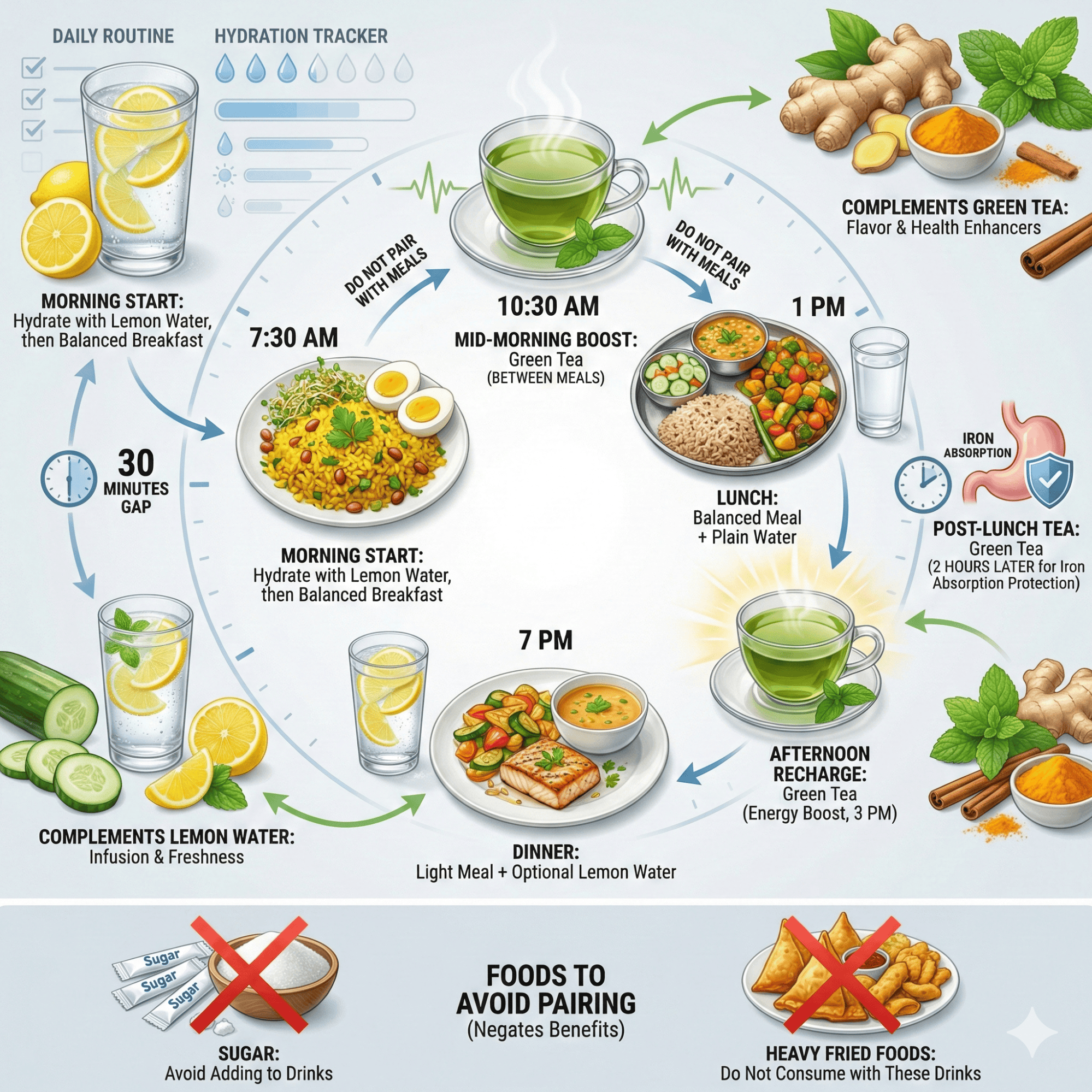
While detox water is somewhat of a marketing term, hydration and antioxidants do support health. Traditional Indian foods complement green tea and lemon water benefits. Ginger, turmeric, and tulsi provide additional antioxidants. Add these to green tea for enhanced benefits and flavor. Moreover, cucumber, mint, and coriander enhance lemon water. Traditional spices like black pepper, cumin, and cinnamon support metabolism naturally. Seasonal fruits provide vitamins and hydration. Additionally, eating water-rich vegetables like lauki, tori, and cucumber increases overall fluid intake. These foods combined with proper hydration from green tea or lemon water create synergistic benefits far greater than relying on beverages alone. Focus on whole foods that naturally support health rather than searching for magic drinks.
Modern Indian Meal Options and Healthy Recipes
Create meals that complement your green tea or lemon water habit. Start breakfast with lemon water, then eat vegetable poha or oats upma. Have green tea between breakfast and lunch. For lunch, brown rice with dal, plenty of vegetables, and salad provides nutrients that support metabolism. Additionally, green tea in the afternoon gives an energy boost without adding calories like a snack would. Dinner could be lighter with roti, dal, and vegetables. Throughout the day, drink adequate plain water too. These drinks supplement water intake but shouldn’t replace it entirely. Moreover, the structure of drinking something healthy between meals can prevent mindless snacking if you use these drinks as pause points to check if you’re actually hungry.
Foods to Limit or Avoid for Better Results
Certain foods negate any benefits from green tea or lemon water. Sugary foods spike insulin, promoting fat storage that modest metabolism boost from green tea can’t overcome. Fried foods provide excessive calories that small calorie burns can’t offset. Moreover, drinking these beverages with sugar ruins their low-calorie advantage. Adding honey, thinking it’s healthier than sugar, still adds calories. Additionally, having green tea or lemon water while continuing to eat large portions or junk food creates false sense of doing something healthy while ignoring real problems. Excessive caffeine from multiple green teas plus coffee can disrupt sleep, which impairs metabolism more than green tea improves it. Balance is key for green tea benefits or lemon water advantages to materialize.
Portion Sizes and Meal Timing for Indians
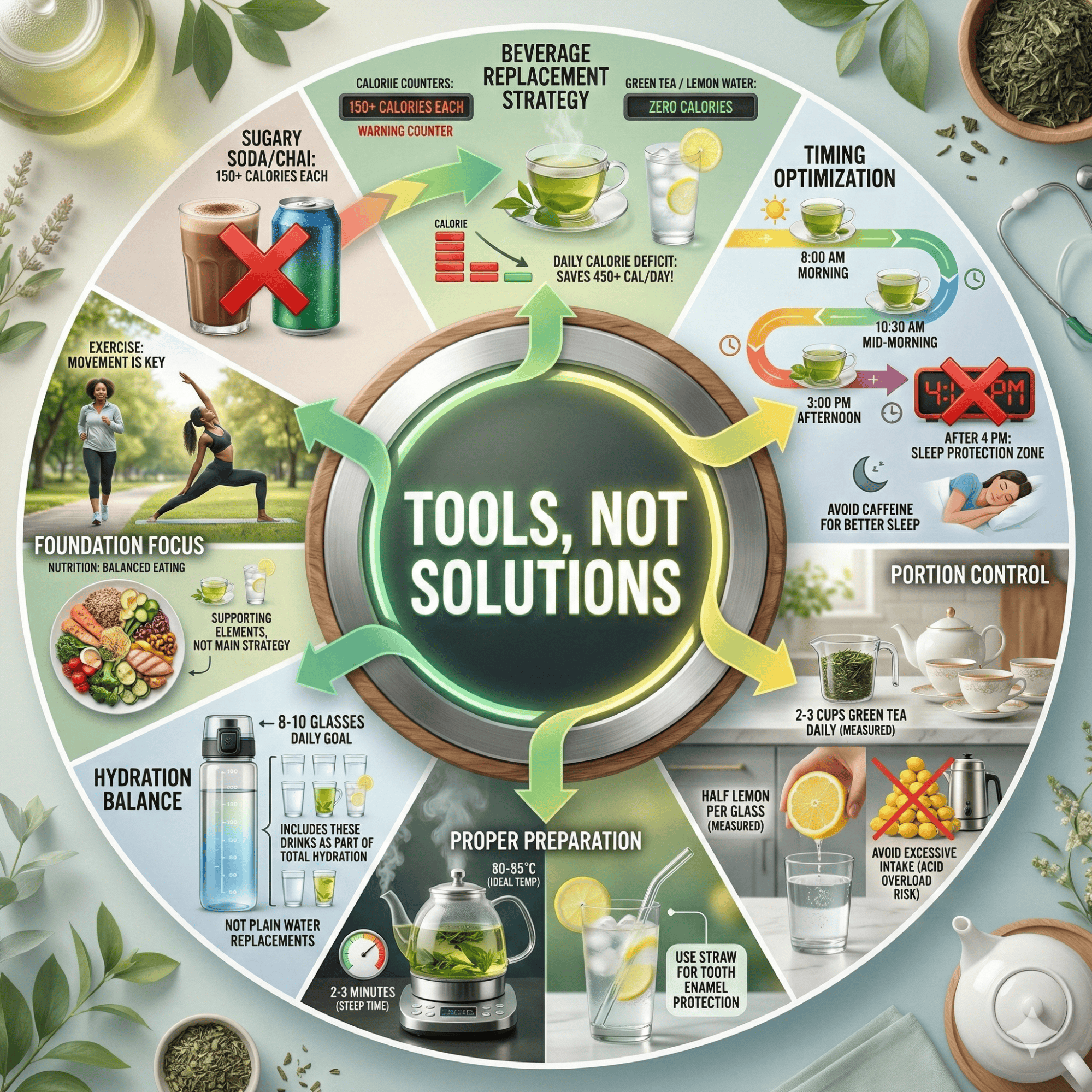
Appropriate amounts matter for both drinks. Green tea: 2 to 3 cups daily is sufficient. More doesn’t multiply benefits and might cause caffeine side effects. Drink it between meals rather than with food since compounds in tea can interfere with iron absorption. Avoid green tea after 4 PM if sensitive to caffeine. Additionally, lemon water: one glass in the morning upon waking is traditional and helpful. You can have more throughout the day, but ensure you’re also drinking plain water. Use half a lemon per glass, not entire lemons which waste fruit and are unnecessarily acidic. Moreover, drink through a straw to protect tooth enamel from lemon’s acidity. These moderate amounts support health without creating problems.
Lifestyle Changes to Support Green Tea Vs Lemon Water
Green Tea Benefits: The Right Approach for Indians
Maximizing green tea benefits requires proper usage. Brew with water below boiling (80 to 85°C) to prevent bitter taste and preserve catechins. Steep for 2 to 3 minutes only. Don’t reuse bags excessively as later brews have minimal active compounds. Additionally, drink plain or with lemon (vitamin C enhances catechin absorption). Never add sugar or honey if weight loss is your goal. Choose good quality tea but don’t overspend on brands making exaggerated claims. Moreover, store in an airtight container away from light and moisture. Remember green tea supports weight loss efforts but doesn’t replace them. Combine with calorie deficit through proper diet and exercise for actual results.
Sleep and Stress Management Strategies
Quality sleep and stress management affect weight loss more than any beverage. Aim for 7 to 8 hours of sleep nightly. Poor sleep increases cortisol and appetite hormones, promoting fat gain that no amount of green tea or lemon water can prevent. Keep your bedroom dark, cool, and phone-free. Additionally, avoid green tea in evening as caffeine disrupts sleep. For stress management, practice daily relaxation techniques. Try 10 minutes of meditation or deep breathing. Chronic stress promotes belly fat more powerfully than green tea or lemon water can fight. Moreover, find physical activities you enjoy to manage stress while burning calories. These lifestyle factors create the foundation where metabolism boosters like green tea or lemon water can provide small additional benefits.
Daily Habits That Make a Real Difference
Small consistent habits matter more than the green tea vs lemon water debate. Drink adequate water daily (2 to 3 liters) regardless of whether it’s plain, with lemon, or as green tea. Take short walks after meals to boost metabolism naturally and significantly. Additionally, eat protein at every meal to support satiety and preserve muscle during weight loss. Practice portion control using smaller plates. Sleep consistently and manage stress actively. Track your food intake periodically to stay aware. These fundamental habits create actual fat loss. Green tea or lemon water are tiny pieces of this puzzle, supporting overall efforts but never replacing them. Focus on big rocks first, then add these drinks as pleasant bonuses.
Your 7-Day Green Tea Vs Lemon Water Management Meal Plan
This plan incorporates both drinks strategically:
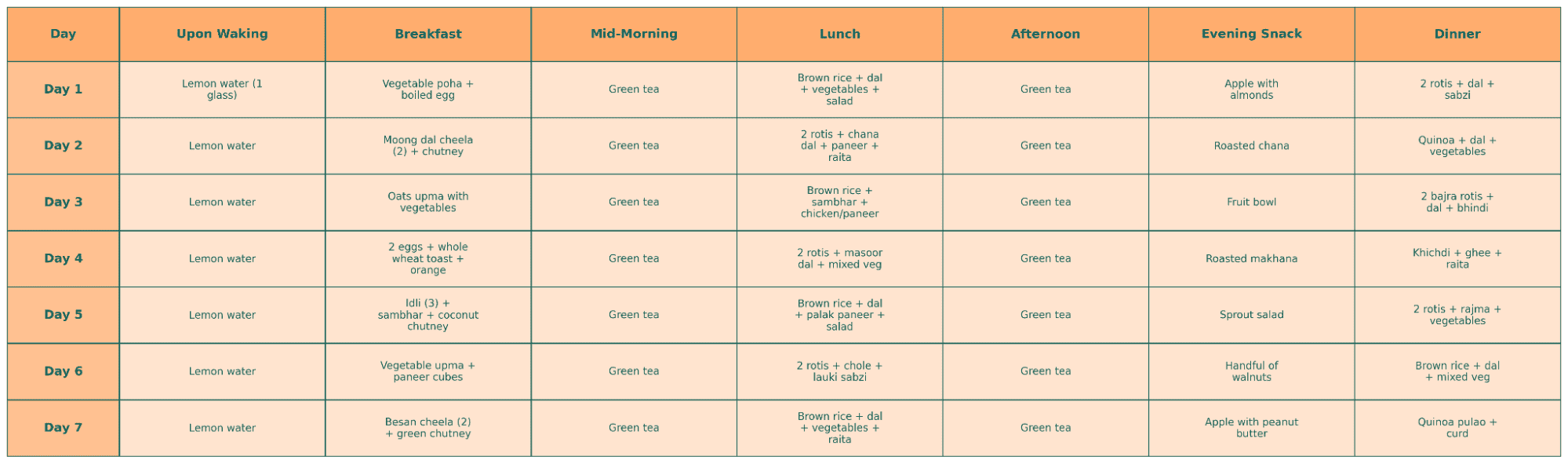
Note: Drink plain water between meals too (8 to 10 glasses total daily). Avoid green tea after 4 PM if caffeine sensitive.
Common Mistakes Indians Make with Green Tea Vs Lemon Water

Diet Mistakes That Sabotage Progress
The biggest mistake is believing these drinks replace proper diet and exercise. Drinking green tea or lemon water while eating excess calories, fried foods, and sweets won’t create weight loss. Another error is adding sugar or honey, negating the zero-calorie advantage. Moreover, many people drink only 1 to 2 cups of these beverages daily but forget to drink adequate plain water, remaining dehydrated overall. Additionally, having green tea with meals blocks iron absorption, particularly concerning for vegetarian Indians already at anemia risk. Drinking excessive amounts thinking more equals better results causes caffeine problems from green tea or tooth enamel damage from lemon water. These mistakes prevent potential fat burning drinks benefits from materializing.
Lifestyle Pitfalls to Watch Out For
Many Indians sabotage themselves unknowingly. Obsessing over green tea vs lemon water debate wastes mental energy better spent on meal planning or exercise. Following social media trends buying expensive branded versions doesn’t improve results. Additionally, using these drinks to justify poor eating (“I had green tea so I can eat this samosa”) creates net negative effects. Drinking green tea late disrupts sleep, harming metabolism more than green tea improves it. Moreover, not addressing fundamental issues like sedentary lifestyle, stress eating, or poor sleep while believing these drinks will compensate is delusional thinking. Success requires a comprehensive healthy lifestyle where these drinks play tiny supportive roles.
How to Course-Correct When Things Go Wrong
If you’ve been drinking green tea or lemon water religiously without results, evaluate honestly. Are you maintaining a calorie deficit through proper diet and exercise? Probably not if weight isn’t dropping. Therefore, track food intake for three days to see actual consumption versus perception. Address calorie intake first. Additionally, ensure adequate sleep and stress management as these affect weight powerfully. If green tea causes anxiety or sleep issues, reduce intake or switch to decaf green tea. If lemon water bothers your stomach, dilute it more or drink it with food. Remember these are small tools in your toolkit, not magic solutions. Focus on fundamentals: calorie deficit through balanced nutrition and regular activity.
Conclusion
The green tea vs lemon water debate misses the point. Neither drink magically melts belly fat. Green tea offers a modest metabolism boost and antioxidants, while lemon water enhances hydration with vitamin C. Both are fat burning drinks only in the sense that they replace high-calorie beverages as part of an overall calorie deficit created through proper diet and exercise. Indians benefit from either or both drinks when used appropriately, but expecting them to compensate for poor eating habits and sedentary lifestyles leads to disappointment.
Start today by choosing the drink you actually enjoy more. Have it plain without sugar, and use it to establish healthy morning rituals or afternoon pick-me-ups that replace mindless snacking. Additionally, focus your energy on fundamental habits: maintaining a calorie deficit through balanced nutrition, moving your body daily, getting adequate sleep, and managing stress. These create real results where green tea benefits or lemon water advantages provide small supportive bonuses.
FAQs
Q1: What is green tea vs lemon water and how does it affect Indians?
Green tea vs lemon water compares two popular drinks for weight loss. Green tea contains catechins and caffeine that may slightly boost metabolism, while lemon water provides hydration with vitamin C. Both are fat burning drinks primarily through replacing high-calorie beverages, not magical fat burning.
Q2: What are the main benefits of each drink?
Green tea provides modest metabolism boost, antioxidants, and caffeine for energy. Lemon water enhances hydration, provides vitamin C, and helps increase water intake. Both are metabolism boosters more through supporting overall health and hydration than directly burning fat.
Q3: What foods should Indians pair with these drinks?
Pair with protein-rich dals, vegetables, whole grains like brown rice, and lean proteins like eggs or paneer. Avoid adding sugar to drinks. Use as detox water alternatives to sugary beverages while maintaining balanced meals for actual weight loss results.
Q4: Can weight loss be achieved with just these drinks?
No, weight loss requires calorie deficit through proper diet and exercise. These drinks support efforts by providing hydration, replacing high-calorie drinks, and offering modest green tea benefits like small metabolism boost. Use them as tools, not solutions.
Q5: How long does it take to see results?
Any weight loss comes from overall diet and exercise changes, not these drinks alone. Proper calorie deficit shows results in 2 to 4 weeks. Lemon water weight loss or green tea benefits appear through consistent use supporting healthy habits over 8 to 12 weeks.
Q6: When should I avoid these drinks?
Avoid green tea if pregnant, nursing, or caffeine-sensitive, especially after 4 PM. Limit lemon water if you have acid reflux or are prone to kidney stones. Consult a doctor about interactions with medications before consuming large amounts regularly.
Related Posts


