

No, healthy carbs are not the enemy, and complex carbohydrates from whole grains, legumes, fruits, and vegetables provide essential fiber, vitamins, minerals, and sustained energy your body needs. The real issue isn’t carbs themselves, but refined and processed carbohydrates that spike blood sugar and lack nutritional value, creating confusion about all carbohydrate-containing foods.
Scientific research shows diets rich in whole grains reduce Type 2 diabetes risk by 38%, support healthy weight management, and improve athletic performance. Your brain requires approximately 120 grams of glucose daily just for basic cognitive function, and carbohydrates are your body’s preferred fuel source for high-intensity activities. Understanding the difference between healthy carbs and refined carbohydrates is crucial for making smart carb choices that support your health goals.
What Are Healthy Carbs, Really?
When we talk about quality carbs, we mean complex carbohydrates that provide sustained energy, essential nutrients, and fiber. Not the refined sugars and processed junk that spike your blood sugar and leave you crashed an hour later.
Think wholesome, nutrient-dense foods that humans have thrived on for millennia. Whole grains. Legumes. Vegetables. Fruits. These healthy carb sources have nourished generations and continue to be nutritional powerhouses.
Your brain runs on glucose. Your muscles store carbs as glycogen for energy. Every cell uses them for basic processes. This isn’t controversial; it’s basic biology.
Simple vs. Complex: The Real Difference
Here’s where people get confused: eating a bowl of oatmeal is VASTLY different from eating a donut, even though both technically contain carbs. Simple carbohydrates candy, soda, and white bread, break down fast. Blood sugar spikes and then crashes. You’re hungry again, tired, and Irritable. These are the troublemakers giving all carbs a bad name.
Complex carbs break down slowly, providing steady energy and no rollercoaster. The complex carbohydrates’ benefits extend far beyond just sustained energy; they provide essential nutrients, fiber, vitamins, minerals, and phytonutrients that simple carbs simply cannot match. It’s a complete nutritional package, not just calories.
Why Your Body Actually Needs Carbs
Your body needs carbs for more than just energy. (Though that alone would be enough reason.) Beyond being excellent carbs for energy, quality carbohydrates play crucial roles in hormone production, brain function, and metabolic health.
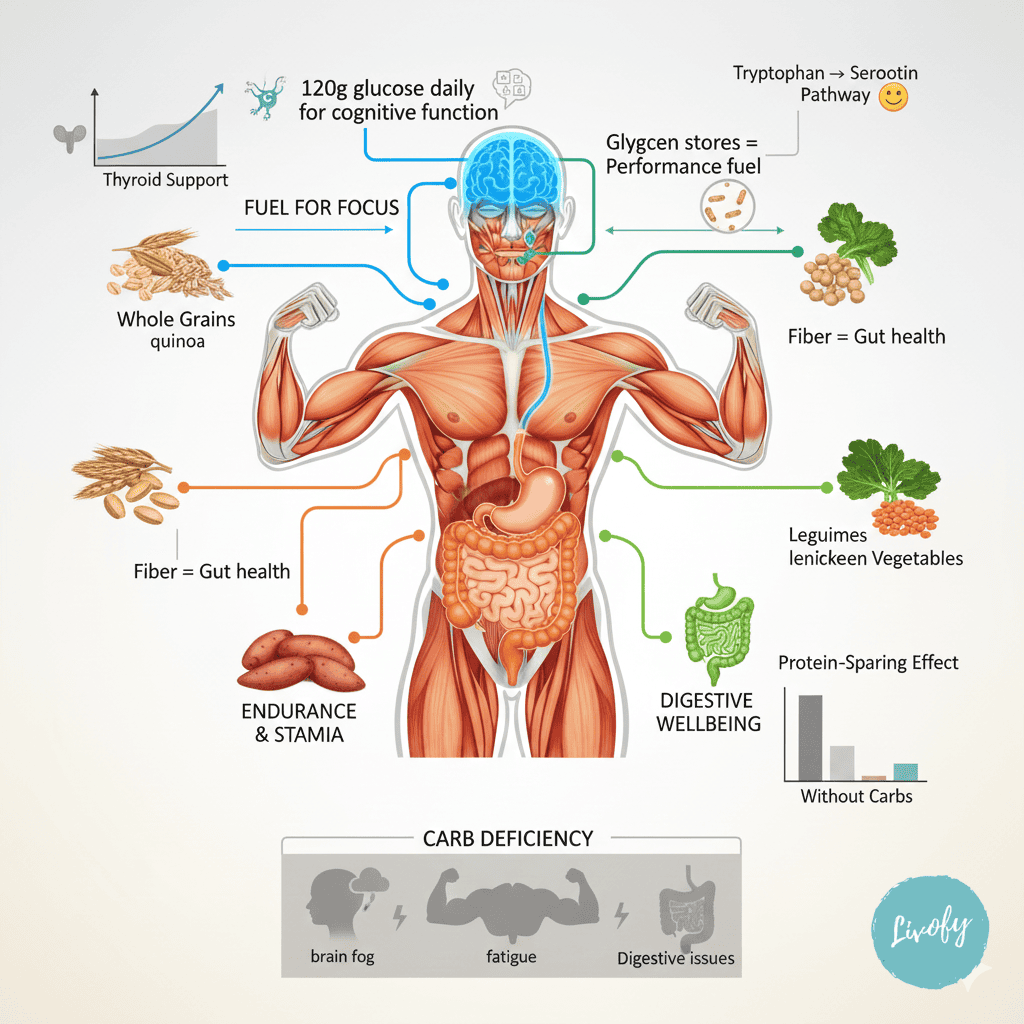
First, carbs are protein-sparing. When you eat adequate carbs, your body uses them for fuel instead of breaking down protein, including your muscles, for energy. This becomes crucial if you’re active or trying to maintain muscle as you age.
Carbs support thyroid function. Very low-carb diets can decrease thyroid hormone production, slowing your metabolism. (Ironic, considering most people cut carbs to lose weight.)
They help produce serotonin, the “feel-good” neurotransmitter. Ever wonder why you crave carbs when stressed? Your body knows they improve mood.
And fiber found EXCLUSIVELY in carbohydrate-containing foods feeds beneficial gut bacteria, promotes digestive health, and helps control cholesterol. You cannot get fiber from protein or fat sources. Period.
The Science Behind Carbs and Health
Let’s look at what research actually says. Spoiler alert: the science paints a very different picture from what diet culture claims.
Blood Sugar: It’s About Quality, Not Quantity
The glycemic index (GI) measures how quickly foods raise blood sugar. Low-GI carbs cause gradual increases. High-GI foods cause spikes.

Here’s what’s interesting. The total amount matters less than the quality. The relationship between carbs and blood sugar isn’t as simple as “carbs are bad.” Research on carbs and diabetes shows that whole food sources actually protect against blood sugar problems rather than cause them.
Studies show that diets rich in whole grains actually improve insulin sensitivity and reduce diabetes risk. A Harvard study following over 70,000 women found those eating the most whole grains had a 38% lower risk of Type 2 diabetes.
The key? Fiber. It slows digestion and prevents blood sugar spikes.
When you eat an apple (with fiber), your blood sugar rises slowly. Drink apple juice (without fiber), and it spikes rapidly. Same fruit. Completely different metabolic effect.
Weight Loss: The Surprising Truth
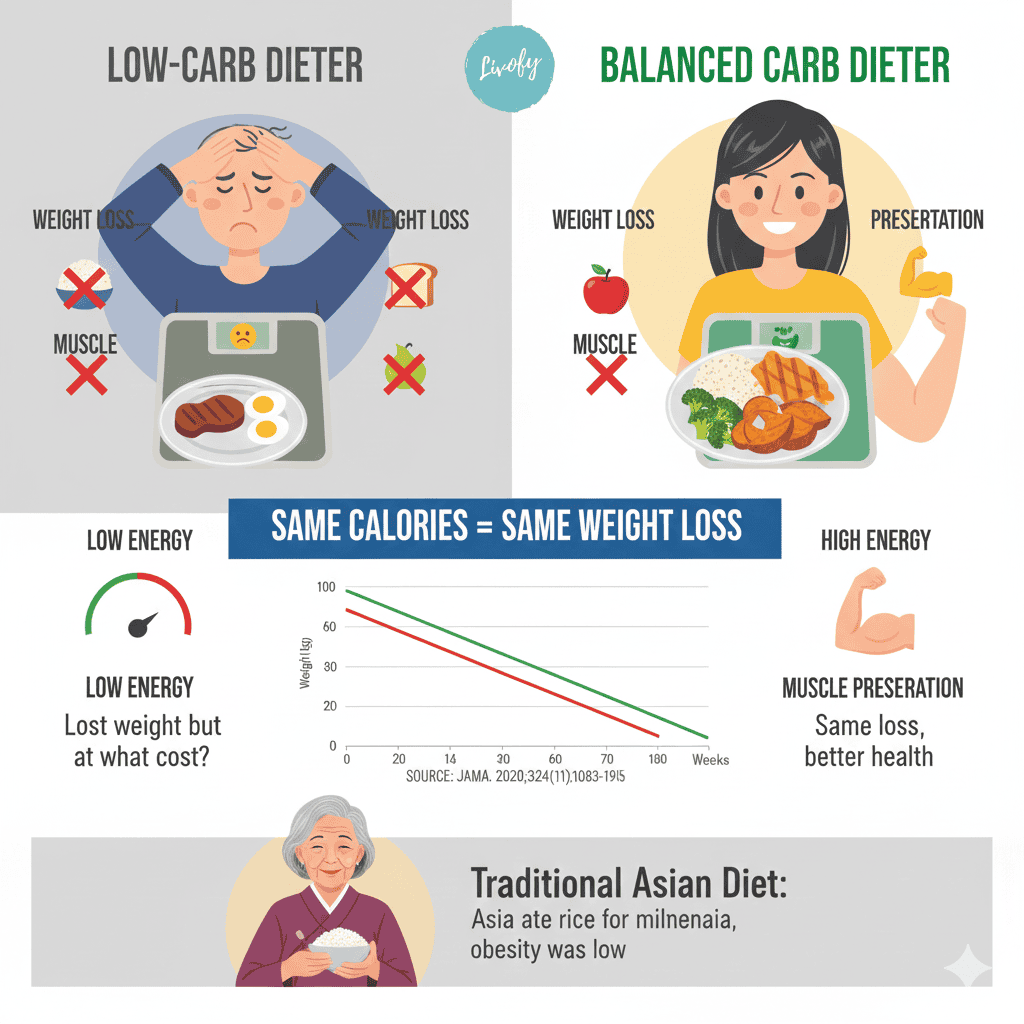
Despite what everyone claims, you don’t need to eliminate carbs to lose weight. The debate of low carb vs balanced carbs often misses the point entirely. Multiple studies comparing low-carb and balanced-carb diets with equal calories show similar weight loss results. Studies comparing these approaches with equal calories show that carbohydrate balance matters more than extreme restriction.
Here’s the truth: when people say “I cut carbs and lost 10kg,” what they actually did was cut chips, soda, desserts, and processed junk. Of course, you lost weight you eliminated 500-1000 calories of garbage!
That’s not carbs being bad. That’s processed food being garbage. Rice? Not your enemy. That bag of Uncle Chips? Different story.
Athletic Performance and Carbs
Ask any serious athlete, and they’ll tell you carbs are essential. Carbohydrates are the body’s preferred fuel during high-intensity exercise. While fat works for low-intensity activities, you need carbs for anything intense or explosive.
Research consistently shows adequate carb intake improves endurance, power output, and recovery. Athletes who restrict carbs experience decreased performance and impaired recovery. This is why professional athletes don’t follow zero-carb diets during competitive seasons. They understand that performance matters more than diet trends.
Even for recreational exercisers, carbs make workouts feel easier and more enjoyable. That morning run feels infinitely better when you’ve had some oatmeal than when you’re running on empty. Your body performs best with its preferred fuel source. Fighting that is just making life harder.
Indian Carbs That Work
Indian cuisine is BUILT on carbs and for good reason. These traditional foods have nourished generations and continue to be nutritional powerhouses.
Whole Grains and Millets
India’s diverse grain heritage offers options beyond just wheat and rice. Each brings unique benefits. The whole grain benefits are substantial from improved insulin sensitivity to better heart health. These healthy carb sources have sustained populations for millennia.
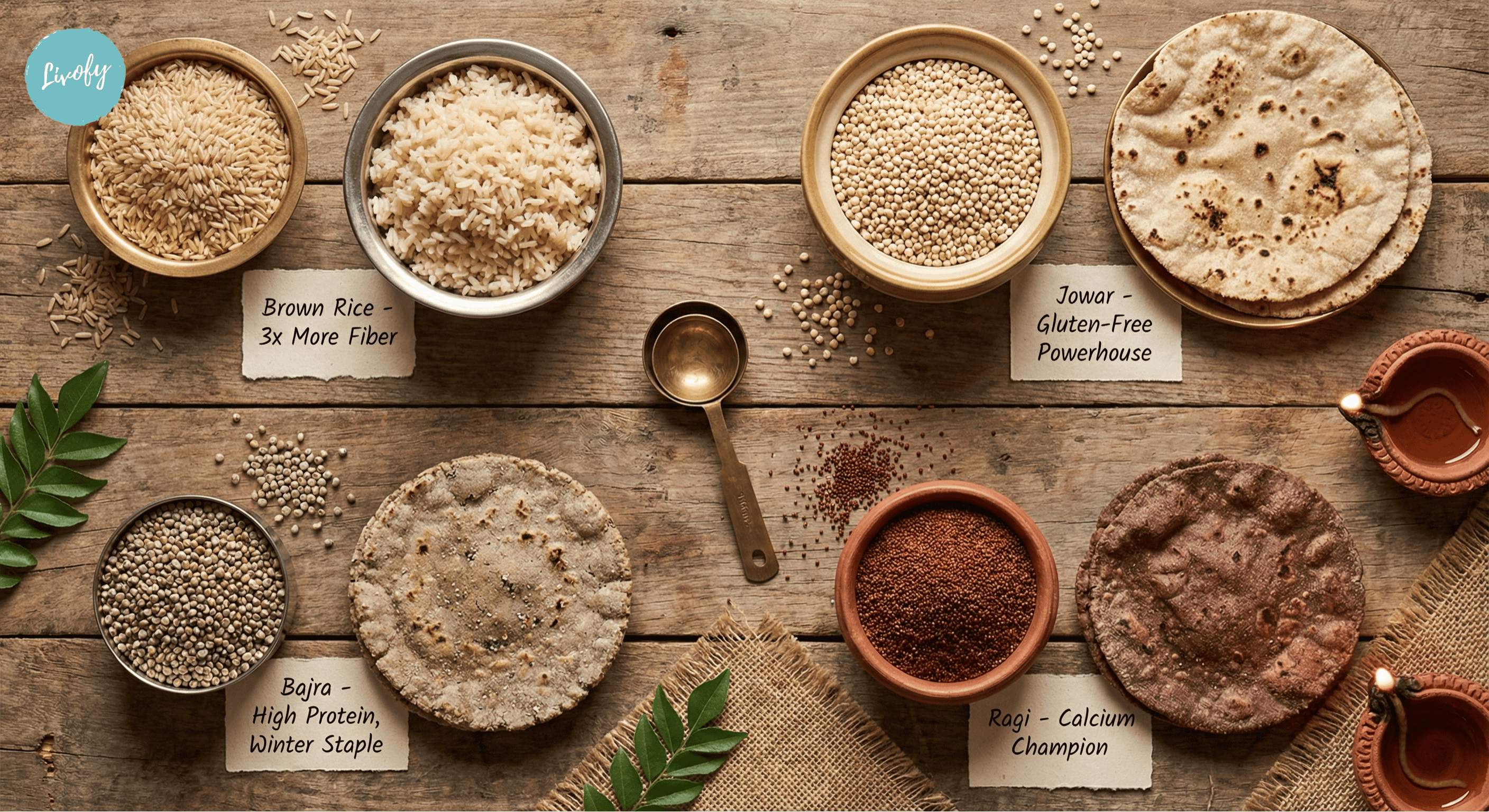
Brown Rice provides three times the fiber of white rice, making it excellent for sustained energy. It’s rich in manganese, selenium, and magnesium. The fiber helps regulate blood sugar while keeping you full longer.
Jowar (Sorghum) is gluten-free and packed with antioxidants. It’s one of the best options for managing blood sugar due to its low glycemic index. Jowar roti has been a staple in Indian households for centuries for good reason.
Bajra (Pearl Millet) contains higher protein than most grains, making it perfect for winters. It’s rich in iron and helps manage diabetes and cholesterol. Bajra khichdi or roti are excellent choices.
Ragi (Finger Millet) is the calcium champion. Highest calcium content among cereals, excellent for bone health. Also, one of the best options for weight management due to its high fiber.
Legumes and Pulses
Dal isn’t just comfort food. It’s one of the healthiest carb sources you can eat. Legumes provide the perfect combination of protein, carbs, and fiber.
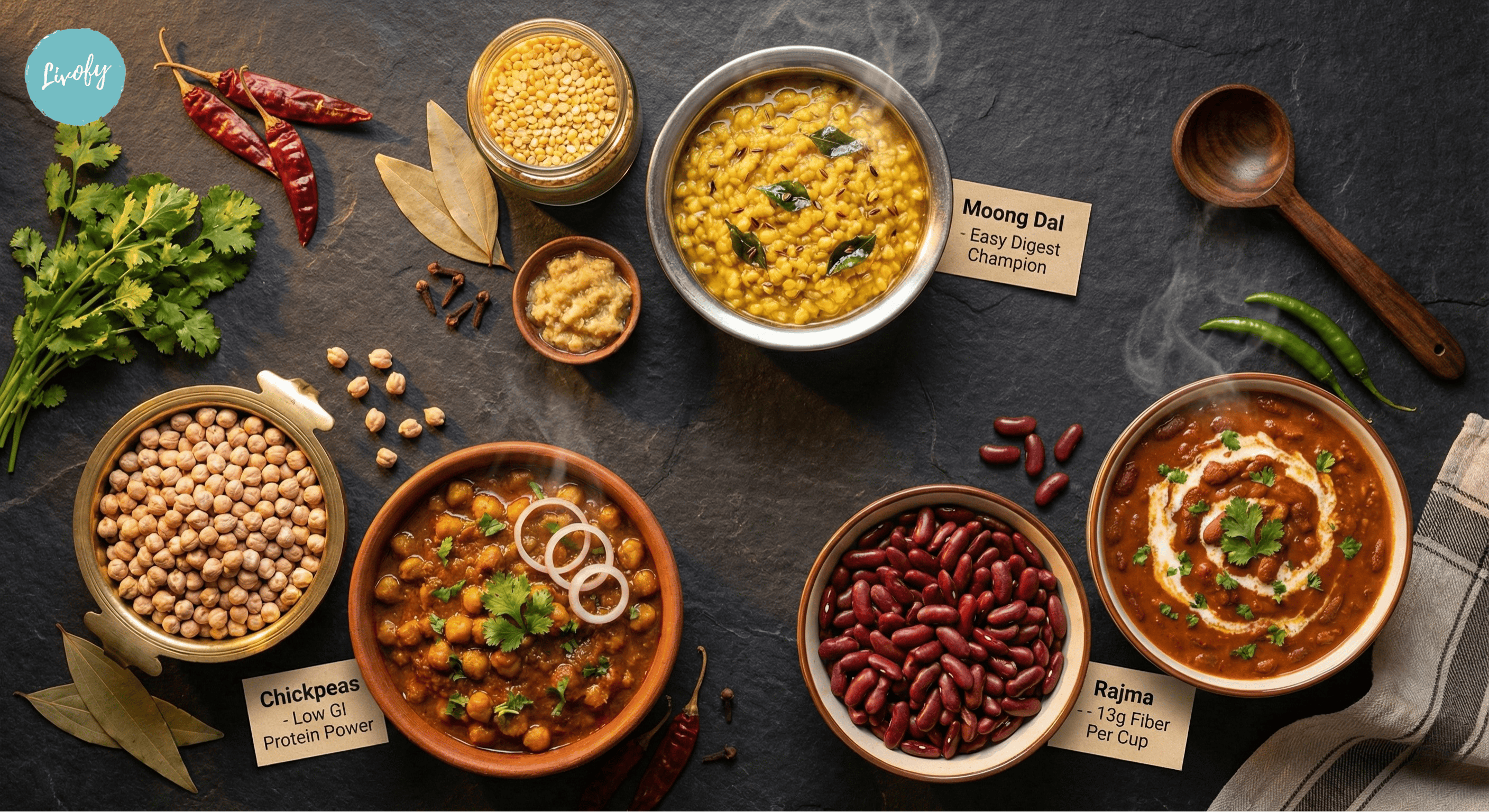
Moong Dal offers easy digestion and versatility, providing sustained energy without feeling heavy. One of the best choices for recovery after illness or for sensitive digestion.
Chickpeas (Chole) provide low glycemic index carbs with high protein, keeping blood sugar stable. Rich in folate and iron, too.
Rajma (Kidney Beans) are fiber champions about 13 grams per cooked cup. They help lower cholesterol and stabilize blood sugar while keeping you satisfied for hours.
Traditional Preparations
The way we traditionally prepare food in India often enhances nutritional value.

Fermentation (idli, dosa) increases nutrient bioavailability and adds beneficial probiotics. These fermented options are easier to digest and have lower glycemic impact than unfermented versions.
Sprouting (moong and other legumes) increases vitamin content and makes proteins more digestible. Sprouted legumes are nutritional powerhouses.
The combination of dal and rice creates a complete protein while providing sustained energy. This traditional pairing shows ancestral wisdom in creating balanced, nutritious meals. Our grandparents weren’t idiots.
Choosing the Right Carbs for Your Body
Not everyone responds to carbs the same way. Understanding how to choose and time your intake makes all the difference.
Activity Level Matters
Your carb needs depend heavily on activity level. The more active you are, the more carbs your body requires.
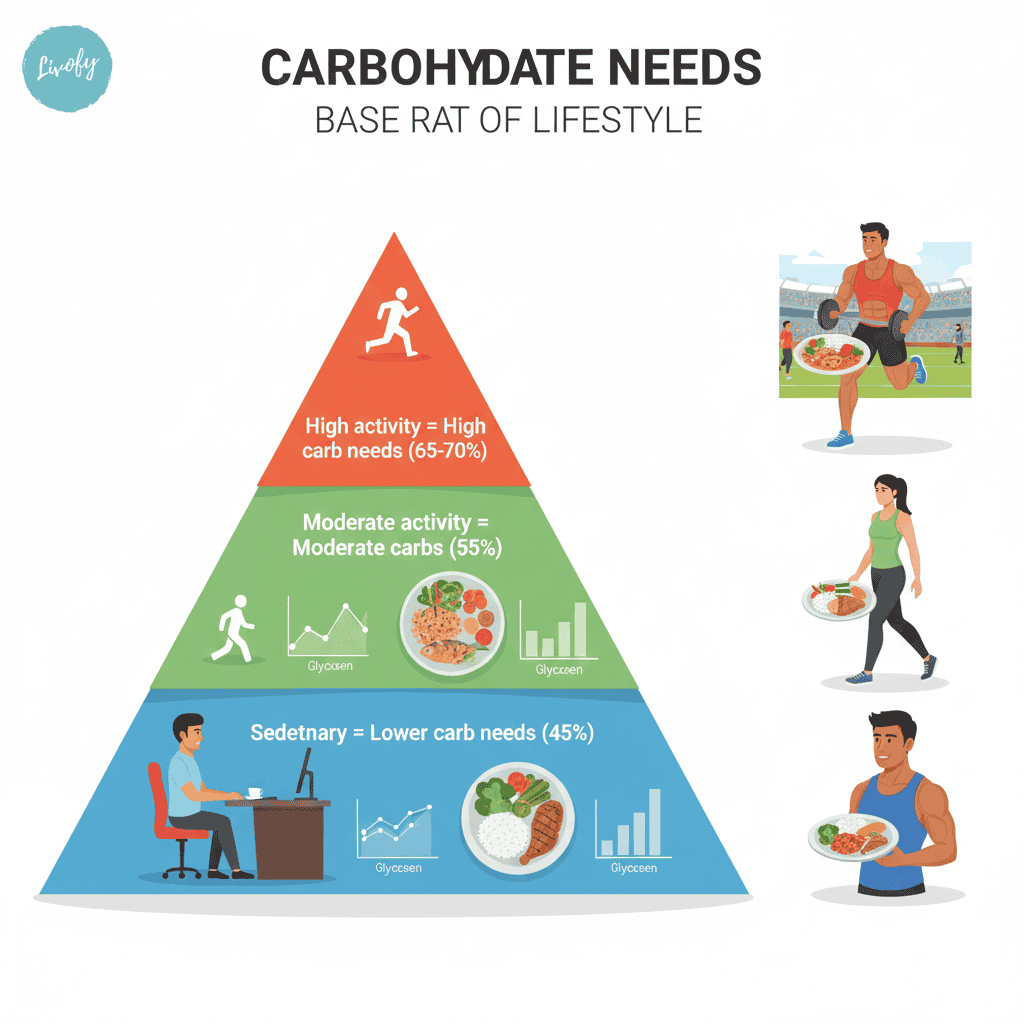
If you’re sedentary, you need fewer carbs but should still include them for fiber, vitamins, and minerals. Focus on vegetables, legumes, and small portions of whole grains.
Moderately active individuals benefit from including carbs at most meals. A mix of whole grains, fruits, and starchy vegetables provides energy for daily activities and exercise. This is where most people fall, needing about 45-55% of calories from carbs.
Highly active people or athletes need substantial amounts to fuel performance and recovery. This might mean 60-70% of calories from carbohydrates, focusing on nutrient-dense whole food sources.
Timing Your Carbs
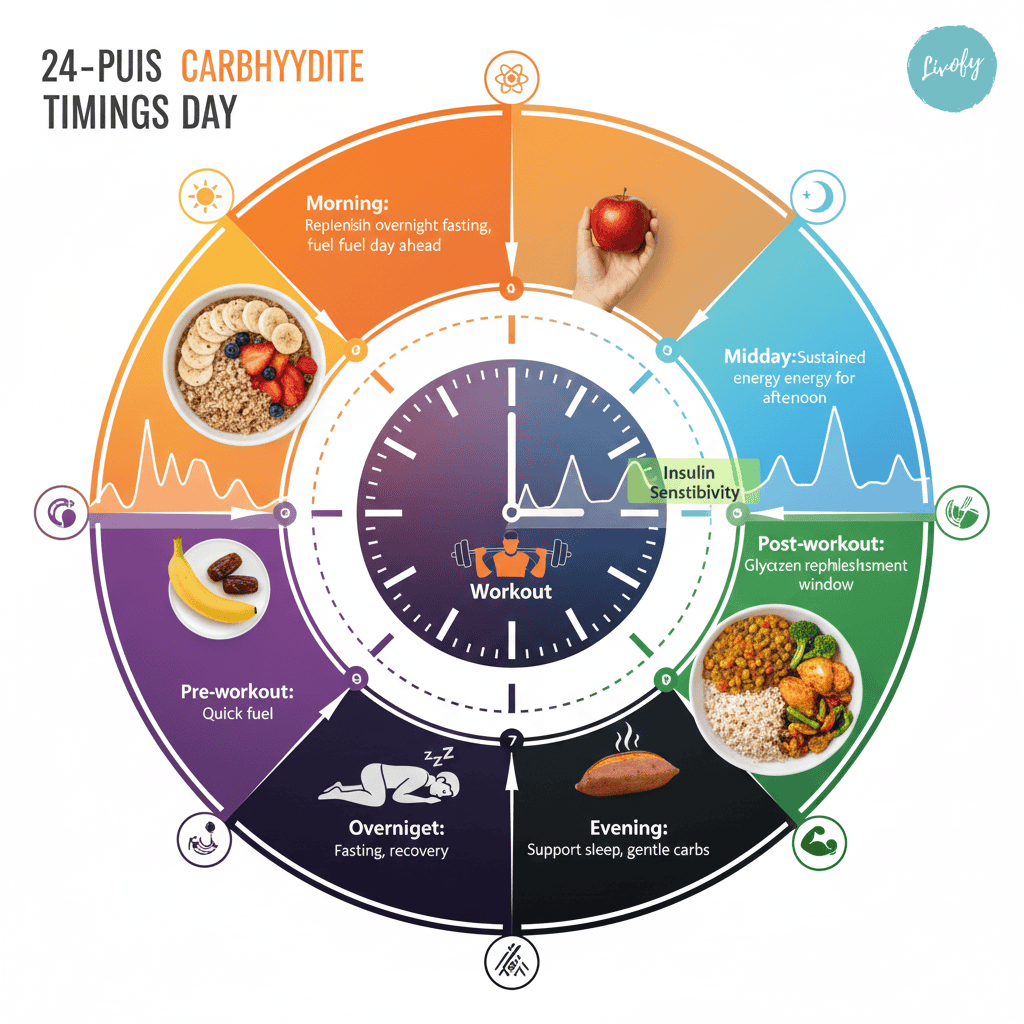
When you eat carbs can be just as important as what you eat. Strategic carb timing helps optimize energy, performance, and body composition.
Morning carbs help restore glycogen depleted overnight and provide energy for the day. Oatmeal, whole-grain toast, or fruit works well for breakfast.
Pre-workout carbs fuel your training. Having dates, a banana, or toast 30-60 minutes before exercise provides readily available energy.
Post-workout is when muscles are most receptive to replenishing glycogen. This is the ideal time for carbs like sweet potato, rice, or fruit.
Evening carbs can actually promote better sleep by helping produce serotonin. Just choose lower glycemic options in moderate portions.
Individual Tolerance

Some people thrive on higher-carb diets. Others feel better with moderate amounts. Pay attention to how different carbs affect your energy, mood, and digestion.
Signs you’re eating the right amount: stable energy throughout the day, good performance during workouts, regular digestion, stable mood. If you’re experiencing these, your intake is probably appropriate.
Signs you might need to adjust: energy crashes, constant hunger, digestive issues, and difficulty losing weight despite healthy eating. These might indicate you need to modify your choices or timing.
How to Add Carbs Back Into Your Diet
If you’ve been restricting carbs, reintroduce them gradually to avoid digestive discomfort.
Start Slow and Simple
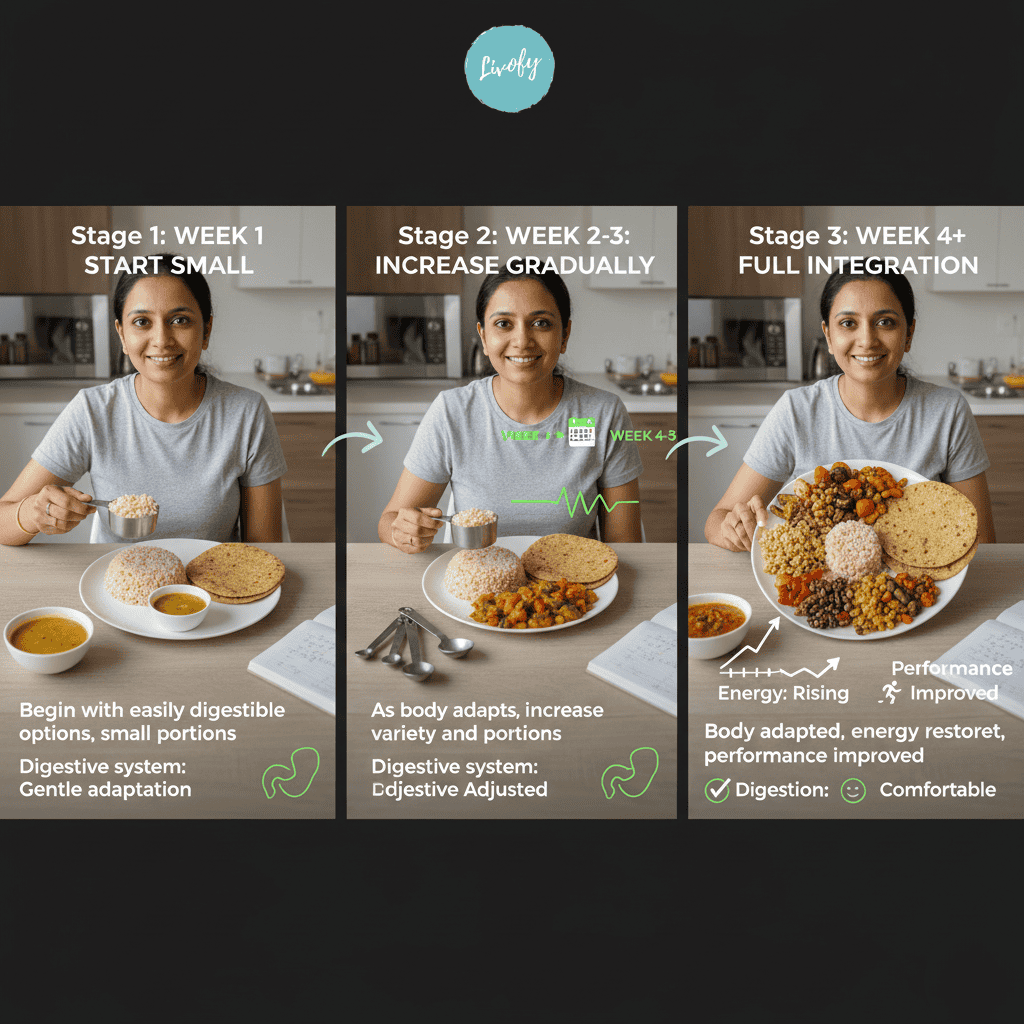
Begin with small portions of easily digestible carbs, like half a cup of cooked rice or one slice of whole-grain bread per meal, which allows your system to readjust. Choose simple preparations initially—plain rice, simple dal, basic oatmeal. These are good starting points.
As your body adapts, increase portions and variety, and pay attention to how you feel. Energy should improve, mood should stabilize, and performance should be enhanced.
Focus on Whole Foods
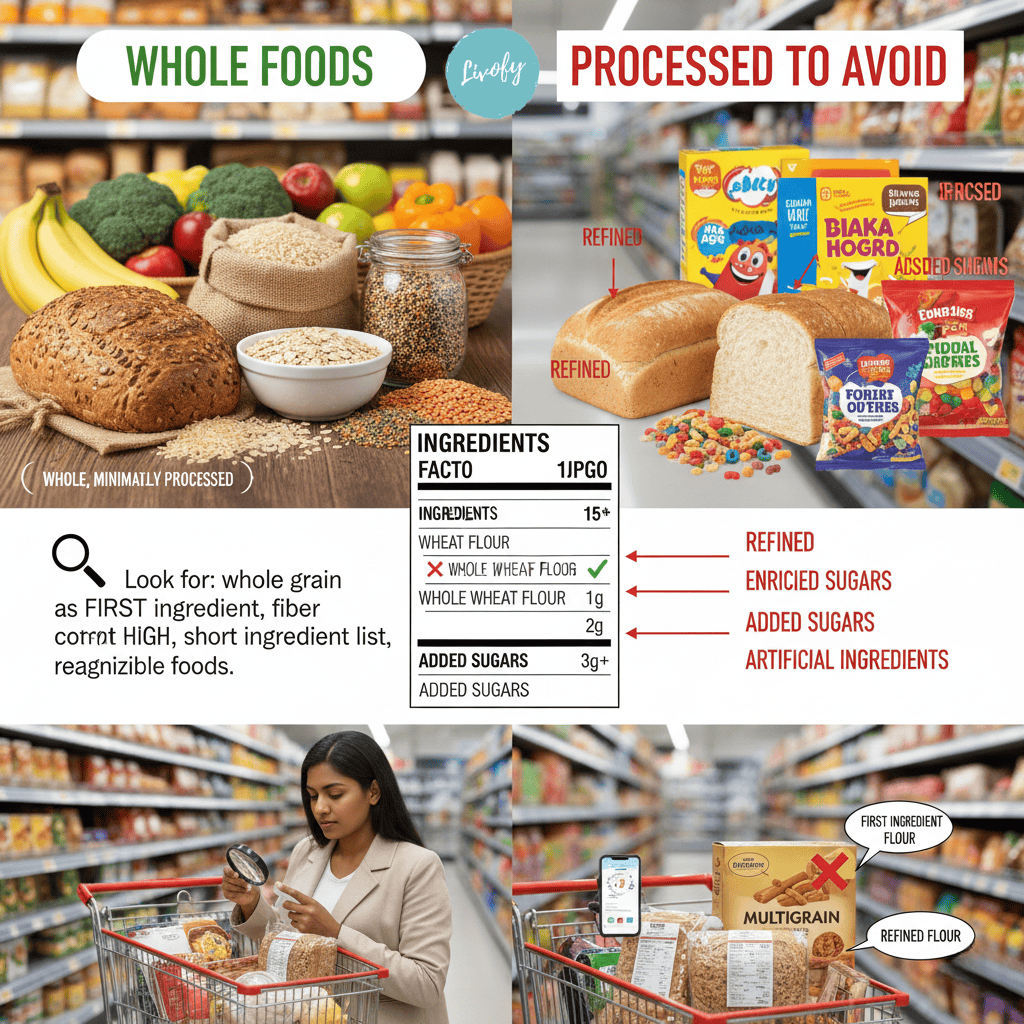
Prioritize unprocessed carbs from whole food sources and prefer brown rice over white. Whole wheat over refined flour and fresh fruit over fruit juice. Read labels carefully because many products marketed as “whole grain” contain mostly refined flour with minimal whole grains. Look for products where whole grains are the first ingredient. Always cook more at home, where you control ingredients, as this ensures genuine nutrition without hidden sugars or excessive processing.
Balance Your Plate
Carbs should be part of balanced meals, not eaten alone. Pair them with protein and healthy fats for optimal nutrition and satisfaction. Achieving proper carbohydrate balance on your plate ensures you get sustained energy without blood sugar spikes.
The ideal plate: carbs (about 1/4), protein (another 1/4), vegetables (1/2), and a small amount of healthy fat. This combination provides sustained energy and complete nutrition. For example, a meal of brown rice with dal, vegetables, and a teaspoon of ghee is perfectly balanced.
7-Day Meal Plan
Here’s a practical week featuring quality carbs incorporated deliciously and nutritiously.
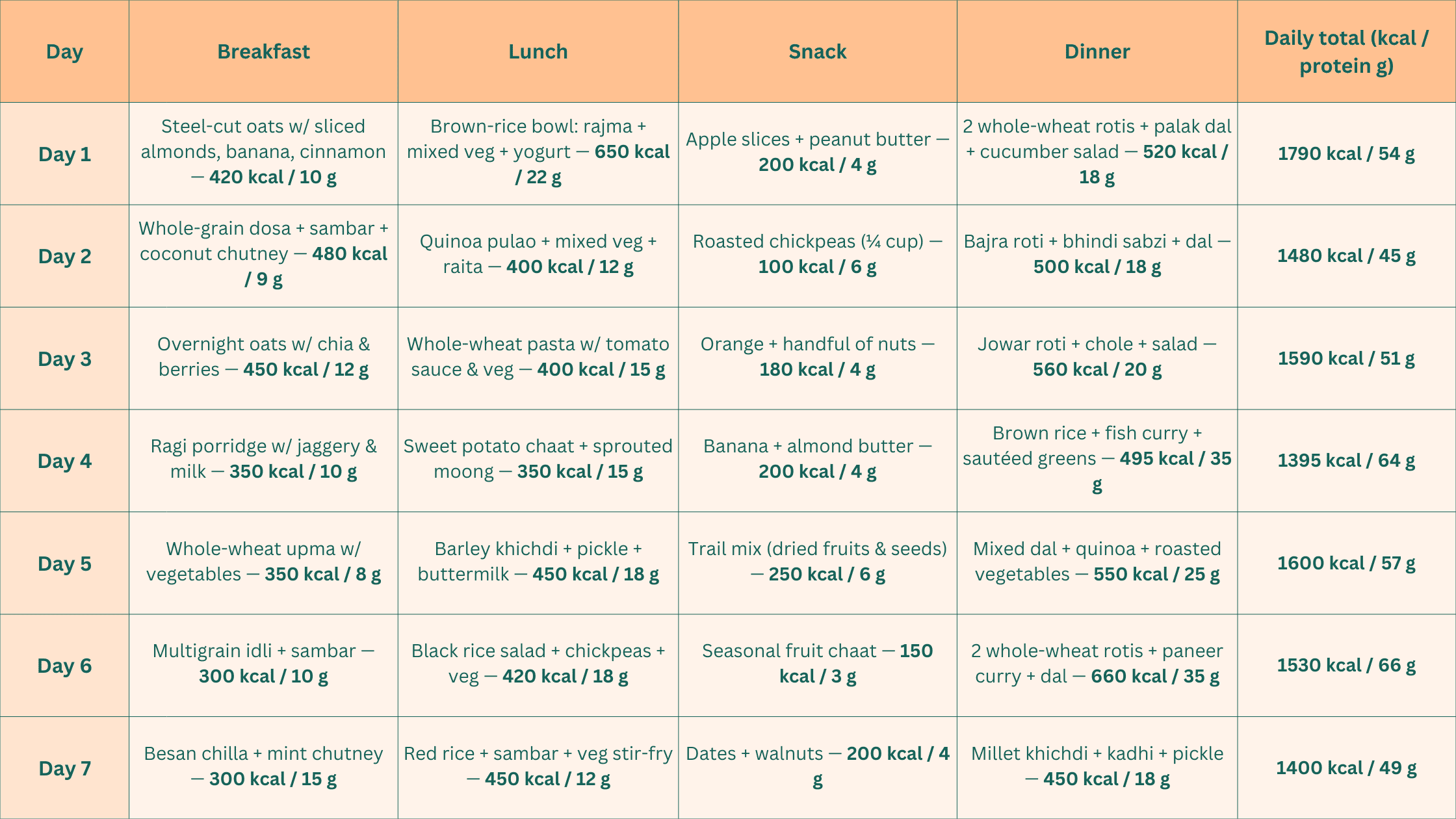
This shows how carbs can be the foundation of delicious, satisfying meals that nourish your body.
Conclusion
The fear around carbs is unnecessary, as science shows that the type of carbs you eat matters more than avoiding them completely. Healthy carbs from whole foods like whole grains, beans, fruits, and vegetables give you important fiber, vitamins, minerals, and steady energy. People eating traditional carb-rich diets have stayed healthy throughout history. Problems only started when processed, refined carbs became common.
Finding balance with carbs, not cutting them out, leads to lasting health. Whether you want to lose weight, perform better, manage blood sugar, or have more energy, eating nutritious whole food carbs helps with all of these. Stop being afraid of foods that have fed people for thousands of years. Focus on eating quality carbs, fuel your body naturally, and your health and energy will improve.
Related Posts


