

Your gym trainer insists you need more protein for muscle. Your aunt warns that too much protein causes kidney damage and weight gain. Instagram influencers chug protein shakes daily and stay lean. Meanwhile, you’re confused whether increasing protein intake will help or hurt your goals. The internet overflows with conflicting advice about high protein weight gain, leaving Indian fitness enthusiasts paralyzed by indecision. This guide cuts through the noise with science-backed truth about protein, revealing how much you actually need and whether high protein weight gain is myth or reality for Indian bodies.
What Is High Protein Weight Gain and Why Indian Dieters Should Care?
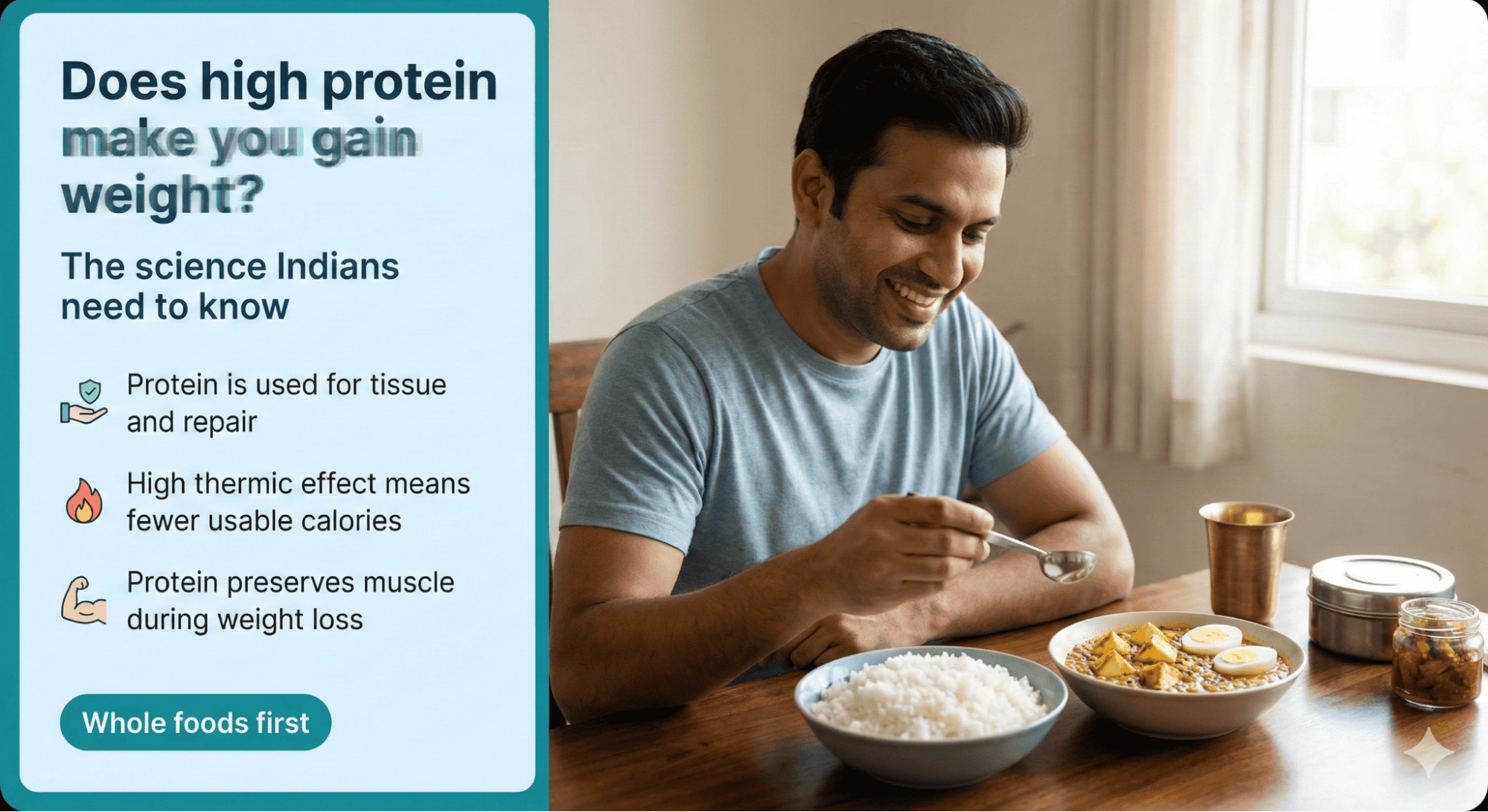
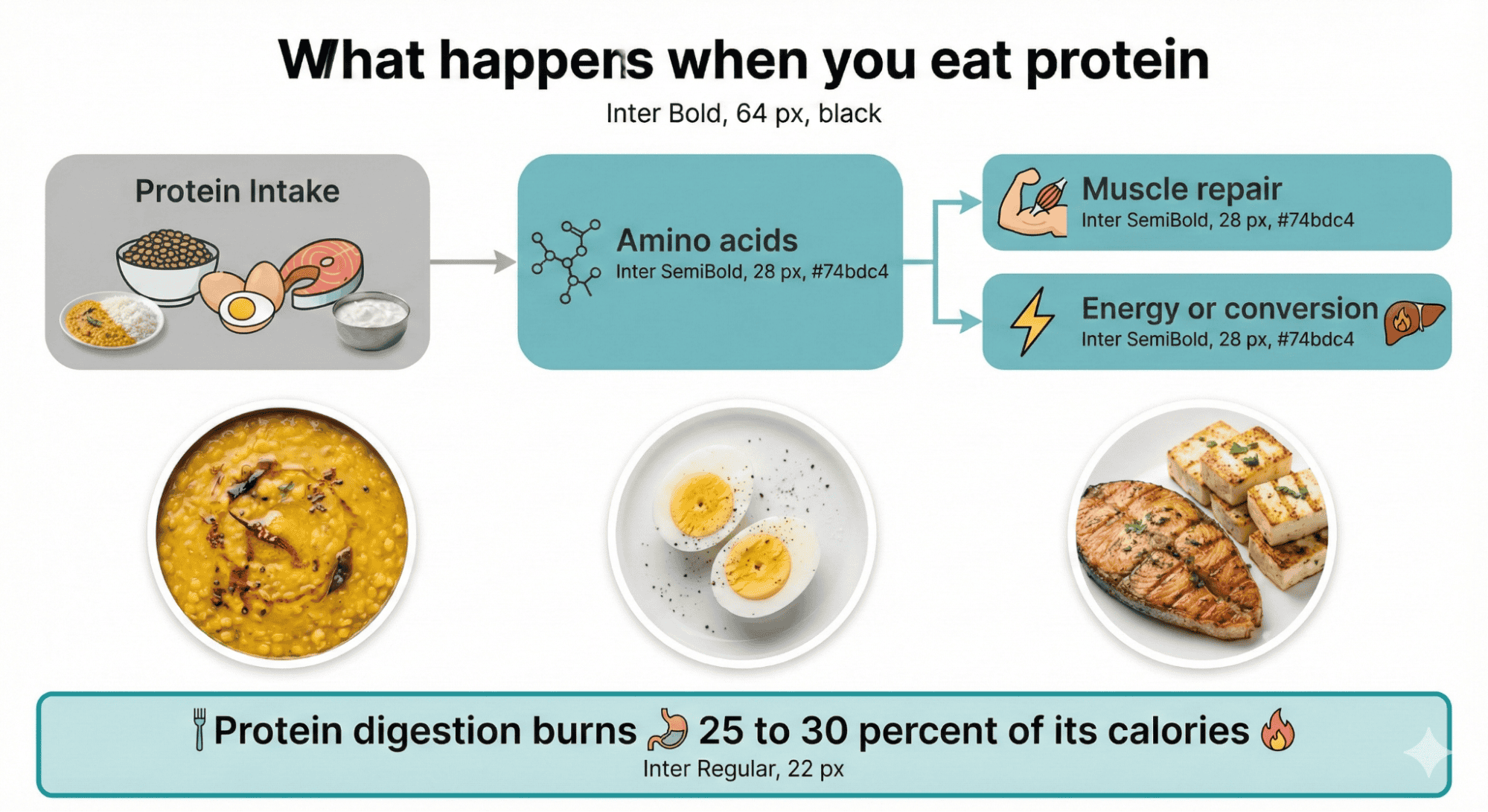
High protein weight gain refers to the belief that eating too much protein causes fat gain or makes you bulky. This fear stops many Indians, especially women, from eating adequate protein for health and fitness goals. The truth is protein is the least likely macronutrient to cause fat storage. Your body uses protein primarily for building and repairing tissues, producing enzymes and hormones, and supporting immune function. Additionally, protein has the highest thermic effect of food, meaning 25 to 30% of protein calories are burned during digestion. Therefore, 100 calories of protein only provides 70 to 75 usable calories after accounting for digestion cost. This makes protein far less likely to cause fat gain than carbs or fats which have much lower thermic effects. Understanding this fundamental difference helps you make informed decisions about protein intake.
Why High Matters for Indian Bodies
Indians typically eat far less protein than needed, creating widespread deficiencies affecting health and fitness. Traditional Indian diets centered on rice, rotis, and vegetables provide only 30 to 40 grams of protein daily when most adults need 60 to 100+ grams depending on activity level and goals. Moreover, vegetarian diets common among Indians require careful planning to get adequate protein from plant sources. This protein deficiency contributes to low muscle mass, slow metabolism, poor recovery from exercise, and difficulty losing fat or gaining muscle. Additionally, Indian women fear high protein weight gain particularly strongly, avoiding protein to stay “slim” when inadequate protein actually makes fat loss harder by slowing metabolism. Furthermore, protein myths perpetuated through family beliefs and social media confuse people about safe amounts. Understanding the truth about optimal protein intake helps you overcome these cultural barriers and achieve your health goals.
Common Myths Debunked About This Topic
Let’s demolish dangerous protein myths preventing Indians from eating adequately. First, protein doesn’t damage healthy kidneys. Research shows no harm from high protein in people without existing kidney disease. Second, you won’t get “bulky” from eating protein. Muscle growth requires intense training, adequate calories, and often years of dedicated effort. Protein alone can’t create bulk. Third, plant protein isn’t inferior to animal protein. While some plant proteins are incomplete, combining different sources throughout the day provides all essential amino acids. Fourth, you don’t need protein immediately post-workout. The “anabolic window” is actually 24+ hours, not 30 minutes. Additionally, more isn’t always better. Beyond about 2.2 grams per kilogram body weight, extra protein provides minimal additional benefit for most goals. Finally, protein powder isn’t necessary. Whole foods can meet needs, though supplements offer convenience.
The Science Behind High Protein Weight Gain for Indians
How High Works in Your Body
When you eat protein, your body breaks it down into amino acids through digestion. These amino acids enter your bloodstream and travel to cells throughout your body. Your cells use amino acids primarily for building and repairing tissues, especially muscle. Additionally, amino acids create enzymes that regulate metabolism, hormones that control body functions, and antibodies for immune defense. Moreover, your body can convert excess amino acids to glucose through gluconeogenesis for energy when needed. However, this process is inefficient and energy-expensive. Therefore, your body strongly prefers using carbs for energy rather than protein. In fact, protein is the least efficient macronutrient for fat storage. Converting protein to fat requires multiple metabolic steps burning significant energy. This makes protein the least likely to cause high protein weight gain compared to carbs or fats which convert to body fat far more easily.
The Connection Between Protein Intake and Health
Protein intake affects virtually every aspect of health beyond just muscle gain. Adequate protein preserves muscle mass during weight loss, keeping metabolism high and supporting long-term success. Additionally, protein is the most satiating macronutrient, reducing hunger and making calorie control easier. Moreover, protein supports bone density, reducing osteoporosis risk particularly important for Indian women. Adequate protein improves wound healing, immune function, and recovery from illness or injury. Furthermore, protein helps regulate blood sugar by slowing carbohydrate absorption when eaten together. In fact, studies show higher protein diets improve body composition, reduce belly fat, and lower cardiovascular disease risk markers. Therefore, eating optimal protein isn’t just for bodybuilders but essential for everyone’s health. The fear of high protein weight gain causes people to under-eat protein, creating far more health problems than appropriate higher intake could ever cause.
What Research Shows for Indian Population
Research on protein needs in Indians reveals concerning deficiency patterns. Studies show average Indian protein intake is 0.6 to 0.8 grams per kilogram body weight when recommendations are 0.8 to 1.0 grams for sedentary people and 1.6 to 2.2 grams for active individuals. One study found that increasing protein from 0.8 to 1.5 grams per kilogram in overweight Indians significantly improved fat loss while preserving muscle compared to lower protein groups. Additionally, research on Indian vegetarians shows that combining different plant proteins throughout the day provides adequate amino acids despite no individual plant protein being complete. Moreover, studies demonstrate that Indians tolerate and benefit from higher protein diets just as other populations do, with no increased kidney problems in healthy individuals. In fact, higher protein intake in Indians correlates with better metabolic health markers, lower body fat percentages, and improved muscle mass. This research contradicts fears about high protein weight gain, showing opposite effects when protein replaces carbs or fats.
Muscle Gain: What to Watch For
Physical Signs and Symptoms to Monitor
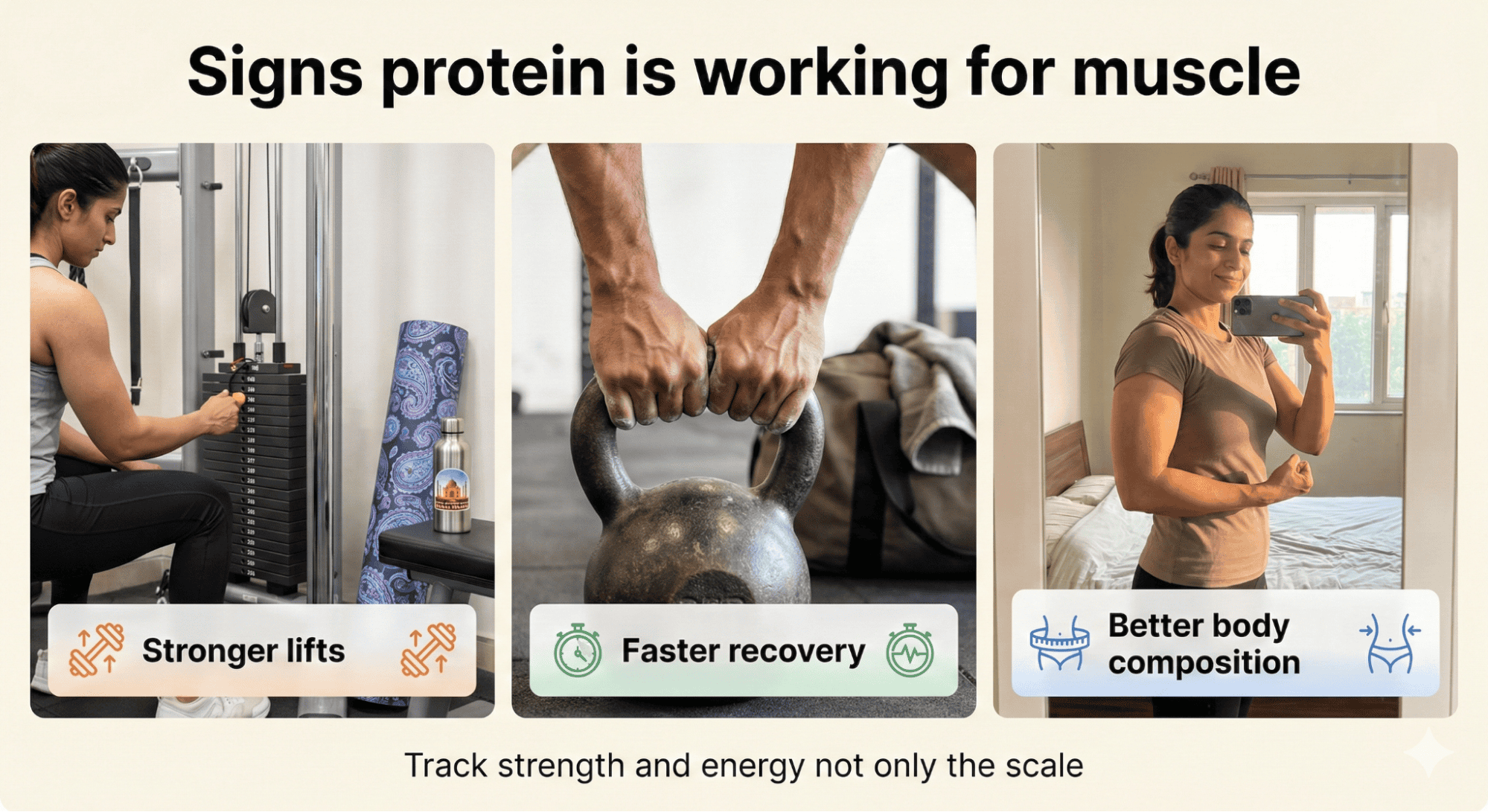
Adequate protein intake creates observable physical improvements you can track. Increased strength in the gym or daily activities indicates muscle building and recovery. Additionally, improved recovery from workouts means less soreness and faster bounce-back for next session. Better body composition becomes visible with more muscle definition and less fat despite stable or higher weight. Moreover, healthier hair, skin, and nails result from adequate protein providing building blocks for these tissues. Watch for stable or increasing energy levels throughout the day rather than afternoon crashes. Furthermore, better appetite control and satiety between meals signal protein’s satisfying effects. Conversely, inadequate protein shows as constant hunger despite eating, poor workout recovery, plateaued strength gains, hair thinning, weak nails, and difficulty losing fat. These signs help you assess whether your current protein intake is adequate or needs adjustment upward.
Emotional and Mental Health Indicators
Protein intake significantly affects mental health through neurotransmitter production. Adequate protein provides amino acids needed for serotonin, dopamine, and other mood-regulating chemicals. Therefore, higher protein diets often improve mood, reduce anxiety, and enhance mental clarity. Additionally, the satiety from adequate protein reduces food obsession and emotional eating by preventing the intense hunger that drives these behaviors. Moreover, achieving fitness goals through proper protein supports self-esteem and confidence. Furthermore, stable blood sugar from protein’s moderating effects prevents mood swings and irritability from glucose crashes. In fact, many people report better sleep quality with adequate protein at dinner, possibly from amino acids supporting melatonin production. Conversely, inadequate protein can manifest as depression, anxiety, poor concentration, and obsessive thoughts about food from inadequate neurotransmitter precursors and chronic hunger. Therefore, optimizing protein intake supports mental health alongside physical benefits.
When to Consult a Healthcare Professional
Most healthy people can safely increase protein intake to recommended levels without medical supervision. However, consult a doctor before significantly increasing protein if you have existing kidney disease, as damaged kidneys struggle processing protein waste products. Additionally, people with liver disease should get medical guidance on safe protein amounts. If you’re pregnant or nursing, discuss appropriate protein intake with your doctor, though needs actually increase during these times rather than decrease. Moreover, if you experience unusual symptoms after increasing protein like persistent digestive issues, allergic reactions, or unusual fatigue, seek medical evaluation. Work with a registered dietitian if you’re vegetarian or vegan and struggling to meet protein needs through food alone, as they can create strategic meal plans. Furthermore, if you’re considering protein supplements, discussing quality brands and appropriate amounts with a professional prevents wasting money on unnecessary or poor-quality products.
Indian Lifestyle Factors Affecting High Protein Weight Gain
Modern Indian Diet Challenges and Solutions
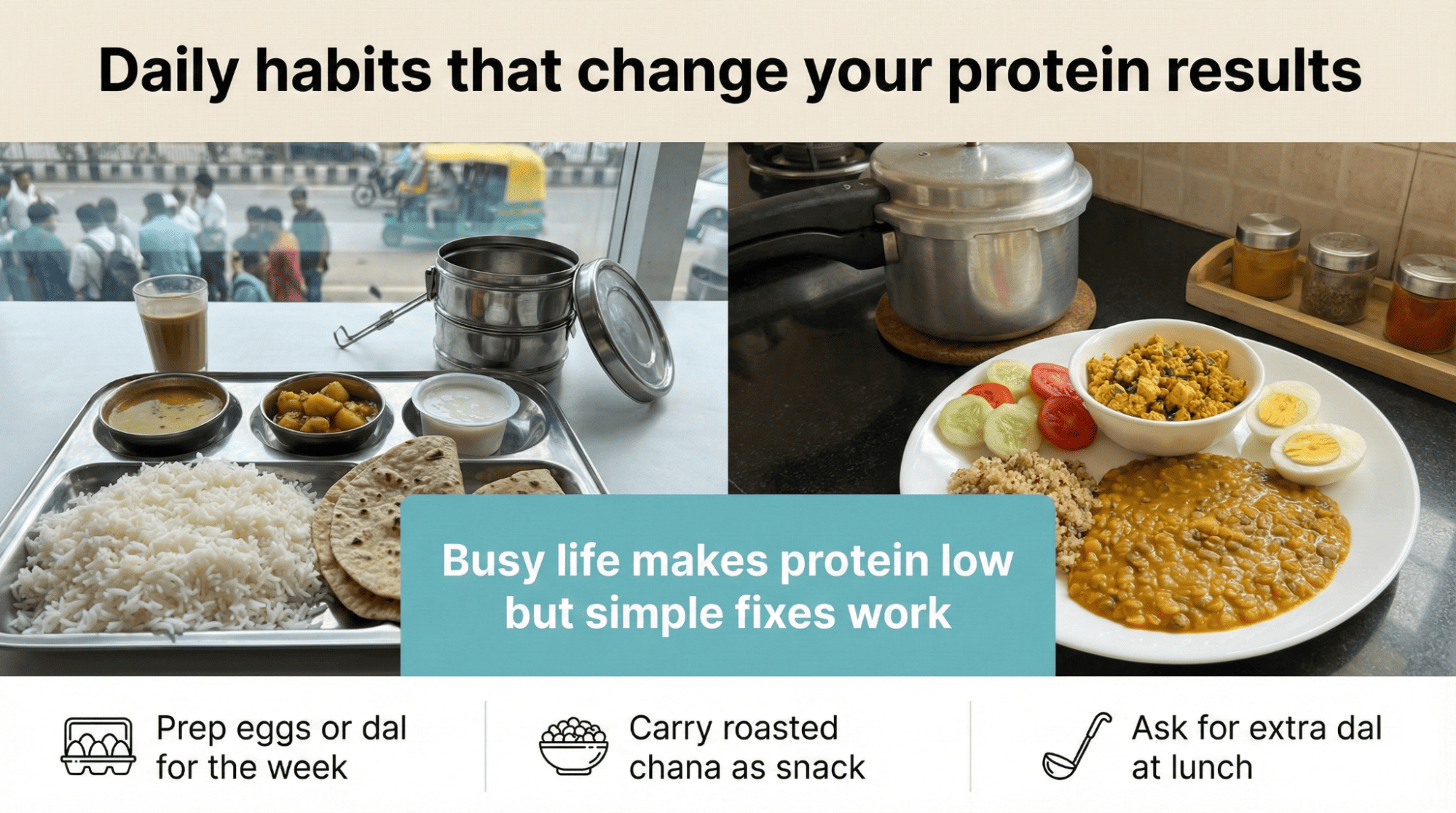
Modern Indian diets make meeting protein needs challenging without intentional planning. Traditional vegetarian meals centered on rice, rotis, and vegetables provide only 30 to 40 grams daily. Additionally, even non-vegetarians often eat meat only at one meal, leaving other meals protein-deficient. Moreover, breakfast is often carb-heavy with options like poha, upma, or paratha lacking significant protein. Snacks tend toward namkeen, biscuits, or fruit rather than protein sources. Furthermore, the perception that high-protein foods are expensive makes people hesitant to buy eggs, paneer, or quality dal regularly. Solutions include adding protein to every meal systematically. Include eggs or paneer at breakfast. Add extra dal at lunch and dinner. Moreover, choose protein-rich snacks like roasted chana, nuts, or curd. Greek yogurt or hung curd provides more protein than regular curd. For vegetarians, combining different plant proteins ensures complete amino acid profiles. These modifications increase protein intake significantly without completely changing your diet.
Work-Life Balance and Urban Living Impact
Urban Indian professional life creates barriers to adequate protein intake through time pressure and convenience choices. Busy mornings mean skipping breakfast or grabbing carb-heavy options lacking protein. Additionally, office cafeterias and food delivery emphasize carb-heavy meals with minimal protein. Eating out makes it difficult to control portions or protein content. Moreover, lack of time for meal prep means relying on quick options usually lacking adequate protein. Furthermore, gym culture among urban Indians sometimes promotes excessive protein through expensive supplements while actual food protein remains inadequate. In fact, social eating situations make it awkward to request protein-heavy modifications to meals. Address these by meal prepping protein sources on weekends like hard-boiled eggs, cooked dal, grilled chicken, or paneer. Keep protein-rich snacks at your desk. Additionally, choose protein-focused options when ordering food. Request extra dal, eggs, or paneer at restaurants. These strategies overcome urban lifestyle barriers to meeting optimal protein needs.
Cultural and Social Influences on Health
Indian culture creates unique challenges around protein intake through beliefs and social dynamics. Traditional emphasis on vegetarianism for religious or cultural reasons requires extra attention to protein adequacy. Additionally, beliefs that protein is “heating” in Ayurvedic terms make some people limit intake unnecessarily. Moreover, family elders might discourage protein focus based on outdated nutritional knowledge from decades ago. The perception that high protein means expensive Western foods like imported protein powder or exotic meats creates resistance. Furthermore, women particularly face pressure to eat minimal amounts overall, making adequate protein intake even harder when total food is restricted. Social media fitness influencers sometimes promote extreme high protein approaching 200+ grams daily, creating unrealistic and unnecessary standards. Navigate these by educating yourself and family about protein needs with scientific sources. Emphasize affordable Indian protein sources like dal, eggs, and curd. Additionally, women should advocate for eating adequate amounts for health rather than restricting due to appearance pressure. Finding middle ground between traditional beliefs and modern nutritional science supports both cultural respect and optimal health.
Best Indian Foods for High Protein Weight Gain Management
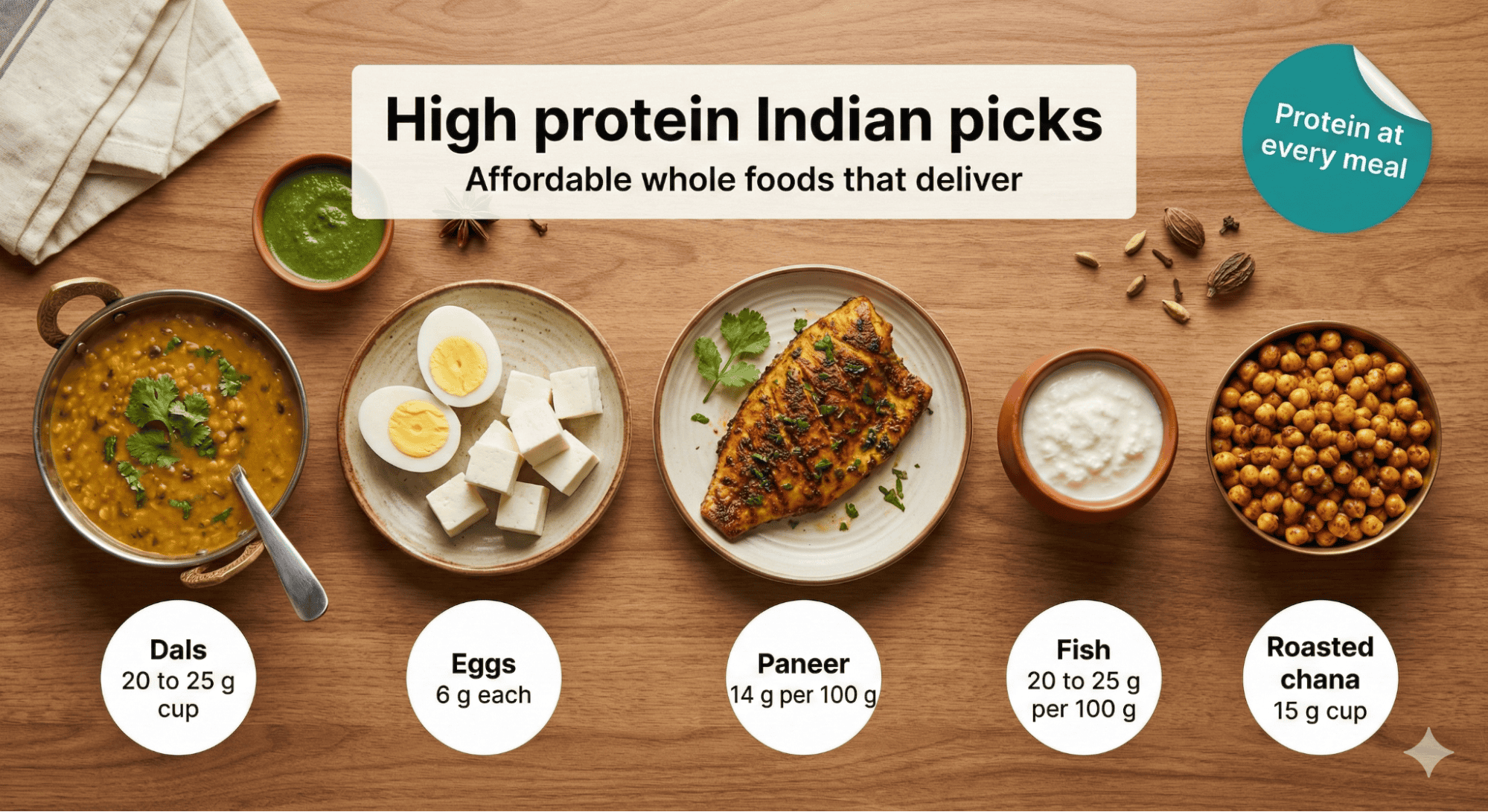
Traditional Indian Foods That Support Protein Myths
Indian cuisine offers excellent protein sources when chosen strategically. Whole dals provide 20 to 25 grams of protein per cooked cup. Include at least one dal daily, preferably at both lunch and dinner. Additionally, eggs offer 6 grams of complete protein each at low cost. Two to three eggs at breakfast significantly boosts daily intake. Paneer provides about 14 grams per 100 grams. Include paneer at one meal daily. Moreover, curd offers 10 to 12 grams per cup and supports gut health. Greek yogurt or hung curd provides double this amount. For non-vegetarians, chicken breast has 30 grams per 100 grams, fish 20 to 25 grams. Furthermore, lesser-known options like roasted chana provide 15 to 20 grams per cup as portable snacks. Soy products like tofu offer complete plant protein. These traditional foods meet protein needs affordably without relying on expensive imported supplements or exotic ingredients, addressing concerns about high protein weight gain through nutrient-dense whole foods.
Modern Indian Meal Options and Healthy Recipes
Create high-protein Indian meals using accessible ingredients. For breakfast, try moong dal cheela (15 to 20 grams protein) with paneer filling (add 10 to 15 grams). Make vegetable poha with added peanuts and boiled eggs for 20+ grams total. Additionally, prepare oats upma with nuts and milk, topping with eggs or paneer. Lunch could be generous dal serving (20 grams) with brown rice, vegetables, and paneer curry (15 grams), totaling 35+ grams. Include curd or buttermilk for extra protein. Dinner might be rotis with extra dal, grilled chicken or paneer tikka, and raita. Moreover, protein-rich snacks like roasted chana, nuts, protein smoothies with curd and fruit, or boiled eggs between meals boost daily total. A protein-focused smoothie with banana, curd, peanut butter, and oats provides 25+ grams deliciously. These meals show that meeting optimal protein of 60 to 100+ grams daily is achievable through regular Indian foods without supplements, addressing protein myths about difficulty and expense.
Foods to Limit or Avoid for Better Results
While increasing protein intake, balance total calories to avoid actual weight gain from excessive eating. Protein doesn’t cause fat gain itself, but overeating total calories from any source does. Therefore, if adding protein foods, reduce refined carbs slightly to keep total calories appropriate for your goals. Additionally, limit protein sources that come with excessive unhealthy fats like fried paneer or heavily processed meats. Moreover, protein supplements often contain added sugars and artificial ingredients. Choose minimally processed options if using supplements. Furthermore, excessive protein beyond 2.2 to 2.5 grams per kilogram body weight provides minimal additional benefit and costs more without improving results. Don’t waste money on massive amounts thinking more is always better. In fact, balance protein with adequate carbs for energy and fats for hormones rather than eating protein exclusively. The goal is optimal protein within balanced nutrition, not excessive amounts or unbalanced ratios that create other problems.
Portion Sizes and Meal Timing for Indians
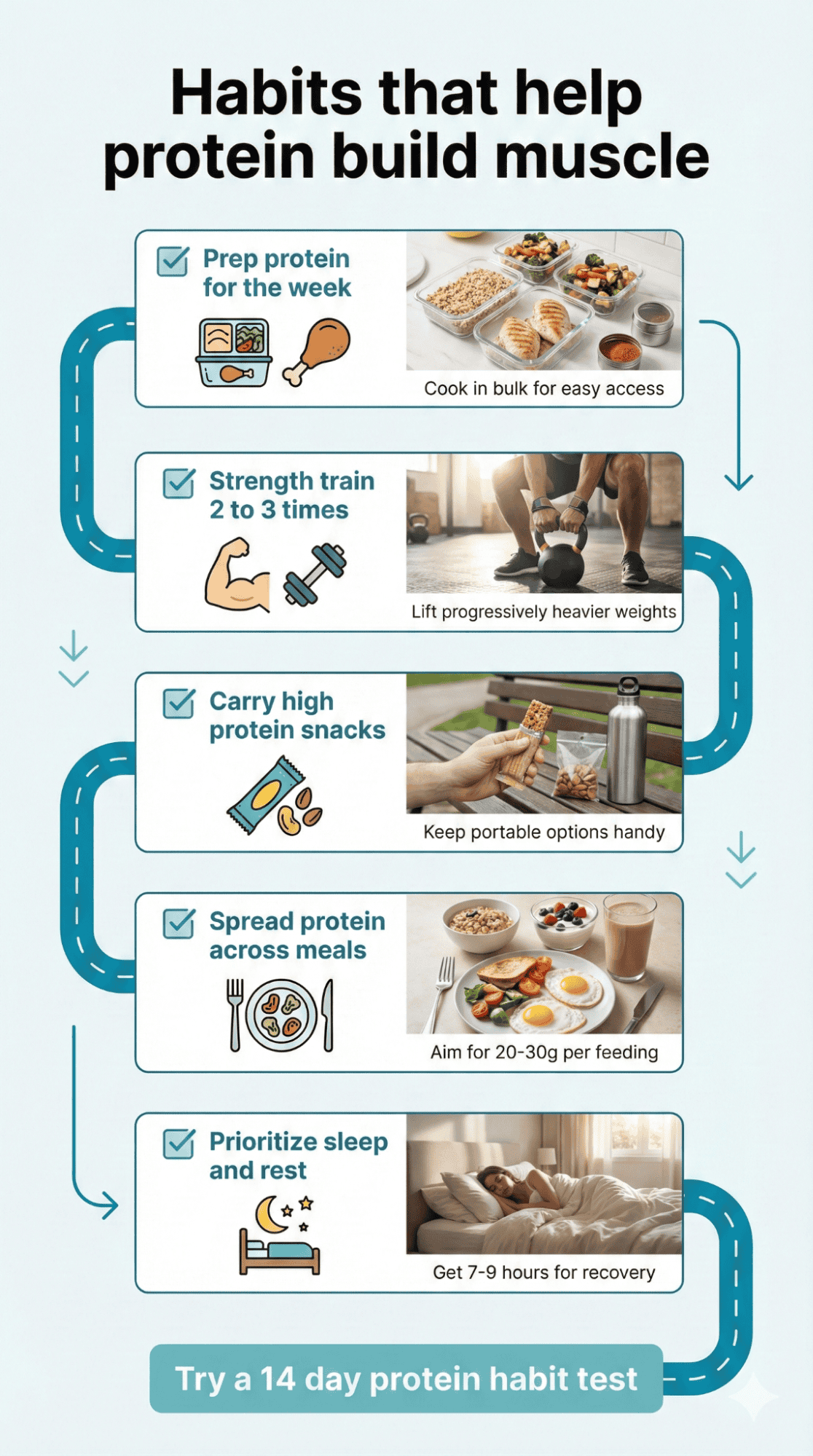
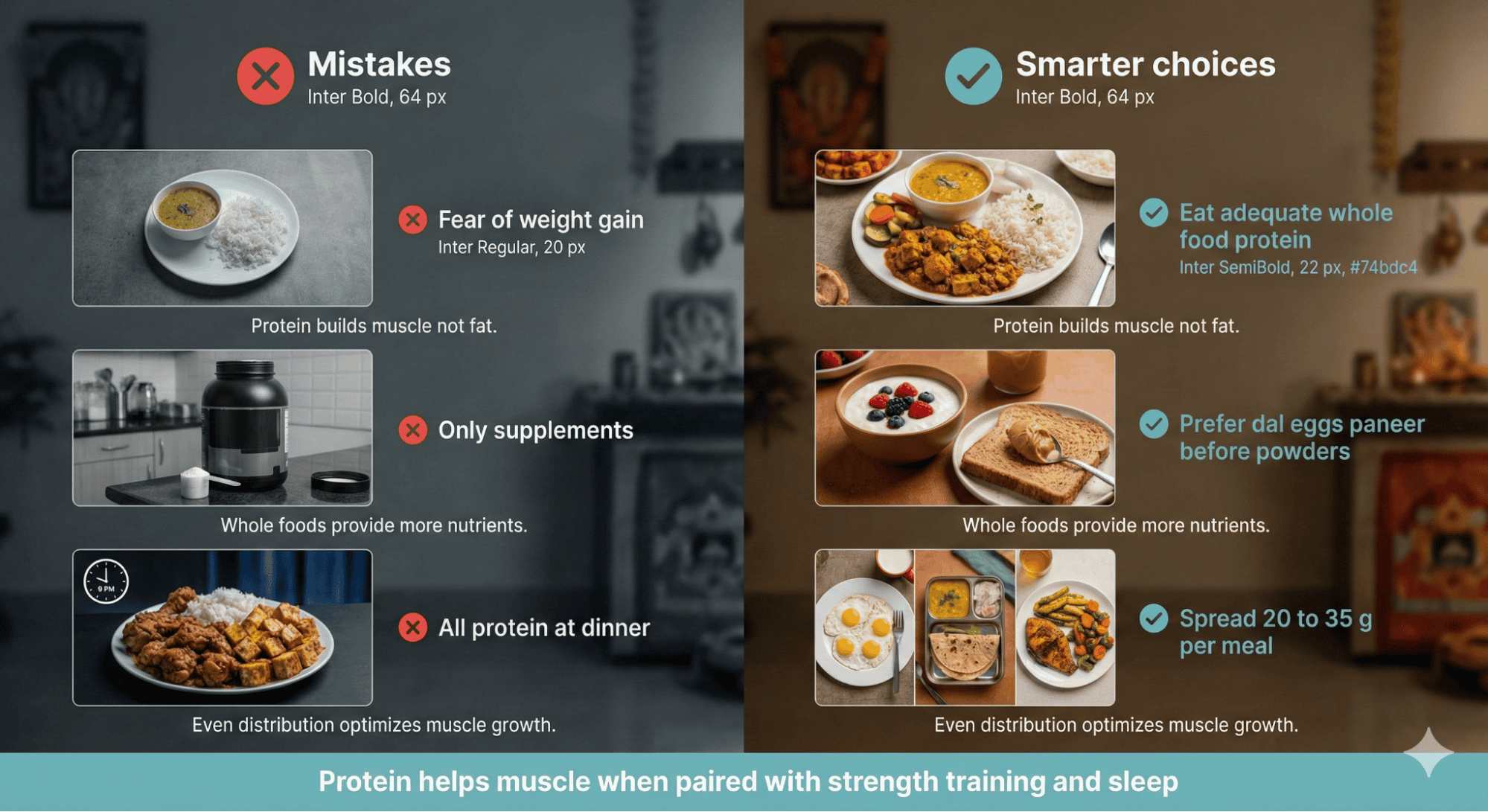
Distribute protein intake across meals rather than loading it all at one time. Your body can only use about 25 to 40 grams per meal for muscle protein synthesis optimally. Therefore, eating 80 grams at dinner while having minimal amounts at other meals wastes some of that protein’s muscle-building potential. Aim for 20 to 35 grams at each of three main meals. Additionally, include 10 to 15 grams at snacks if eating between meals. This distribution maximizes protein’s benefits throughout the day. Moreover, having protein at breakfast especially helps control appetite and stabilize energy for the entire day. Include protein within 2 hours after resistance training to support recovery, though the “window” is actually 24+ hours, not the mythical 30 minutes. Furthermore, use your palm as a portion guide for protein at each meal. One palm-size portion typically provides 20 to 30 grams depending on the source. These practical guidelines make meeting optimal protein achievable without obsessive measuring or calculations.
Lifestyle Changes to Support High Protein Weight Gain
Optimal Protein: The Right Approach for Indians
Determining your optimal protein needs requires considering several factors. Sedentary individuals need 0.8 to 1.0 grams per kilogram body weight for basic health. Additionally, active people need 1.2 to 1.6 grams per kilogram to support exercise recovery. Those trying to lose fat while preserving muscle need 1.6 to 2.2 grams per kilogram, as higher protein helps preserve muscle during calorie deficits. Moreover, people trying to gain muscle with resistance training need similar amounts, 1.6 to 2.2 grams per kilogram. For a 70 kilogram person, this means 56 to 154 grams daily depending on goals and activity. Therefore, calculate your needs based on your specific situation rather than copying what bodybuilders or influencers eat. Furthermore, vegetarians might aim for the higher end of ranges to ensure adequate essential amino acids from plant sources. Track protein intake for several days to assess your current consumption, then adjust gradually upward if below needs. These personalized targets prevent both inadequate intake and unnecessary excess.
Sleep and Stress Management Strategies
Sleep and stress significantly affect how your body uses protein for muscle gain and recovery. Growth hormone released during deep sleep drives muscle building and recovery. Therefore, inadequate sleep reduces protein’s muscle-building benefits despite adequate intake. Aim for 7 to 9 hours of quality sleep nightly. Additionally, chronic stress elevates cortisol which promotes muscle breakdown and prevents muscle protein synthesis even with adequate protein intake. Practice daily stress management through meditation, yoga, walking, or hobbies for 10 to 15 minutes minimum. Moreover, overtraining stress from excessive exercise without adequate recovery prevents muscle growth despite high protein. Balance training with rest days. Furthermore, poor sleep and high stress increase appetite and cravings, making it harder to maintain appropriate total calories even if protein is adequate. Therefore, optimizing these factors ensures the protein you eat actually supports your goals rather than being wasted because other factors prevent its proper utilization.
Daily Habits That Make a Real Difference
Small consistent actions make meeting protein intake goals sustainable long-term. Prep protein sources in bulk on weekends like hard-boiling eggs, cooking dal, or grilling chicken to make including protein at every meal effortless during busy weekdays. Additionally, keep portable protein snacks in your bag, desk, and car like roasted chana, nuts, or protein bars for convenient options between meals. Moreover, drink a protein-rich smoothie daily if struggling to eat enough solid protein. Blend curd, banana, peanut butter, and oats for 25+ grams deliciously. Furthermore, track protein intake for at least 2 weeks initially to build awareness of how much you’re actually consuming versus what you think. Use an app to make this easy. Most people are surprised how little protein they eat. In fact, ordering an extra portion of dal or eggs when eating out ensures adequate protein even when choices are limited. These habits embedded into your routine make optimal protein intake automatic rather than requiring constant effort and willpower.
Your 7-Day High Protein Weight Gain Management Meal Plan
This meal plan provides 80 to 100 grams of protein daily using Indian foods:
| Day | Breakfast (20-25g protein) | Lunch (25-30g protein) | Evening Snack (10-15g) | Dinner (25-30g protein) |
| Day 1 | Moong dal cheela (2) + paneer (50g) + banana + milk | Brown rice + dal (1.5 katori) + palak paneer (100g) + raita + salad | Roasted chana (1 bowl) | 2 rotis + rajma (1.5 katori) + mixed veg + curd |
| Day 2 | Vegetable poha + peanuts + 2 boiled eggs + milk | 2 rotis + chana dal (1.5 katori) + chicken curry (100g) + raita | 10 almonds + apple + curd | Quinoa + dal tadka + paneer tikka (100g) + salad |
| Day 3 | Oats upma with nuts + 2 boiled eggs + milk | Brown rice + sambhar (1.5 katori) + fish curry (100g) + vegetables + curd | Protein smoothie (curd, banana, peanut butter) | 2 bajra rotis + moong dal + paneer bhurji (100g) + raita |
| Day 4 | 3 eggs scrambled + 2 whole wheat toast + milk | 2 rotis + masoor dal (1.5 katori) + mixed veg + paneer (100g) | Sprout salad (1 bowl) | Brown rice + chana dal + grilled chicken (100g) + salad |
| Day 5 | Moong dal dosa (2) + paneer filling (50g) + sambhar + coconut chutney | Quinoa + dal (1.5 katori) + palak + fish (100g) + raita | Roasted makhana + 2 boiled eggs | 2 rotis + rajma (1.5 katori) + vegetables + curd |
| Day 6 | Besan cheela (2) + vegetables + 2 boiled eggs + milk | Brown rice + chana dal (1.5 katori) + paneer tikka (100g) + mixed veg | Handful of mixed nuts + fruit | 2 rotis + dal + chicken curry (100g) + salad |
| Day 7 | Idli (3) + sambhar + 2 eggs + coconut chutney + milk | 2 rotis + dal (1.5 katori) + fish curry (100g) + vegetables + curd | Greek yogurt (1 cup) with nuts | Quinoa pulao + dal + paneer (100g) + raita |
Note: Each meal provides 20 to 35 grams protein, totaling 80 to 100 grams daily. Adjust portions based on your specific needs (0.8 to 2.2 grams per kg body weight). Include strength training 2 to 3 times weekly to use protein for muscle building.
Common Mistakes Indians Make with High Protein Weight Gain
Diet Mistakes That Sabotage Progress
The biggest mistake is fearing high protein weight gain so intensely that you eat inadequate amounts, preventing muscle building and slowing metabolism. Another error is getting all protein from one source rather than varying between dal, eggs, paneer, chicken, and fish for nutritional diversity. Additionally, many people add protein foods without reducing other macros, genuinely causing weight gain from excessive total calories rather than protein itself. Moreover, relying exclusively on protein supplements while eating inadequate whole food protein wastes money and misses nutrients from whole foods. Some people eat adequate protein but never strength train, preventing muscle building protein enables. Furthermore, distributing protein poorly by having minimal amounts at breakfast and lunch while loading it all at dinner wastes its muscle-building potential. In fact, believing you need 200+ grams daily when you’re a 60 kilogram person wastes money and creates unnecessary digestive stress. These mistakes prevent optimizing protein intake for your goals.
Lifestyle Pitfalls to Watch Out For
Many people sabotage protein’s benefits through lifestyle choices. Not strength training means protein can’t build the muscle it’s designed to support, reducing its effectiveness. Additionally, chronic sleep deprivation prevents growth hormone release and muscle protein synthesis despite adequate protein intake. Moreover, excessive cardio without adequate calories creates an environment where body breaks down muscle for energy rather than building it despite protein availability. Furthermore, not drinking enough water when increasing protein can cause constipation and kidney strain unnecessarily. Aim for 8 to 10 glasses daily. Social pressure to eat minimal amounts overall makes women especially struggle to eat adequate protein. In fact, comparing your needs to a 90 kilogram bodybuilder and either eating way too much or feeling inadequate about “only” needing 60 to 80 grams creates confusion. Additionally, constantly switching between diets means never giving adequate protein time to show results before abandoning it for the next trend. These lifestyle patterns prevent seeing protein’s benefits.
How to Course-Correct When Things Go Wrong
If increasing protein isn’t producing expected results, evaluate your approach systematically. Track actual protein intake for 3 days to verify you’re hitting targets consistently. Many people think they’re eating high protein but actually only getting 40 to 50 grams daily. Additionally, assess whether you’re strength training appropriately. Muscle building requires progressive overload, not just going through motions. Moreover, check total calorie intake. If genuinely gaining unwanted weight, reduce carbs or fats slightly while maintaining protein, as excess calories from any source cause fat gain. Furthermore, ensure adequate sleep and stress management as these affect how your body uses protein. If you’ve been eating high protein for 8 to 12 weeks with strength training but seeing no muscle gain or fat loss improvements, work with a registered dietitian and personal trainer to identify issues with execution. Sometimes form problems in the gym or subtle dietary tracking errors prevent results despite generally good efforts. Professional guidance identifies and corrects these blind spots efficiently.
Conclusion
High protein weight gain is a myth preventing Indians from eating adequate protein for health and fitness. Protein is the least likely macronutrient to cause fat storage due to its high thermic effect and preferential use for tissue building rather than energy. The real problem is eating too little protein, typically 30 to 40 grams daily when most need 60 to 100+ grams depending on activity and goals. Protein myths rooted in outdated beliefs and cultural misunderstandings keep metabolism slow, muscle building impossible, and fat loss difficult.
Start today by calculating your protein needs: multiply your weight in kilograms by 0.8 to 2.2, depending on activity and goals. Track the current intake for 3 days to identify the gap. Additionally, add one high-protein food to each meal this wee,k like eggs at breakfast, extra dal at lunch, and paneer at dinner. These simple changes increase optimal protein intake significantly without complicated meal plans or expensive supplements.
FAQs
Q1: What is high protein weight gain and how does it affect Indians?
High protein weight gain is the myth that eating protein causes fat gain, when protein actually has the highest thermic effect (25 to 30% burned during digestion) and is least likely to store as fat. Indians often eat inadequate protein (30 to 40 grams daily) when most need 60 to 100+ grams, preventing muscle building and slowing metabolism.
Q2: What are the main signs of adequate versus inadequate protein intake?
Adequate protein shows as good muscle gain with strength training, stable energy, appetite control, healthy hair and nails, and efficient fat loss. Inadequate protein manifests as constant hunger, poor workout recovery, plateaued strength, hair thinning, difficulty losing fat despite low calories, and muscle loss during dieting.
Q3: What foods should Indians eat for better protein intake?
Eat dal (20 to 25 grams per cooked cup), eggs (6 grams each), paneer (14 grams per 100g), curd, chicken (30 grams per 100g), and fish (20 to 25 grams per 100g). Include roasted chana, nuts, and Greek yogurt as high-protein snacks supporting optimal protein of 0.8 to 2.2 grams per kilogram body weight.
Q4: Can protein intake be managed naturally through food alone?
Yes, meet protein intake needs through whole Indian foods without supplements by including protein at every meal: eggs or paneer at breakfast, dal with lunch, and dal plus paneer/chicken/fish at dinner. Supplements offer convenience but aren’t necessary for most people achieving 60 to 100 grams daily through food.
Q5: How long does it take to see results from adequate protein?
Muscle gain improvements appear within 4 to 6 weeks of adequate protein with strength training, including increased strength and better recovery. Body composition changes showing more muscle definition emerge within 8 to 12 weeks, with continued improvements over 6 to 12 months of consistent training and optimal protein intake.
Related Posts


