

You walk past the vegetable vendor and see bunches of greens you don’t recognize. Your grandmother cooked them, but you stick to familiar spinach and cabbage. Meanwhile, you’re taking expensive vitamin supplements for nutrients these forgotten Indian leafy vegetables provide naturally. The sabziwalah sells amaranth, fenugreek, colocasia leaves, and drumstick greens, but most Indians ignore them for imported kale and exotic superfoods. These traditional Indian leafy vegetables offer superior nutrition adapted specifically for Indian bodies and climate, yet they’re disappearing from modern diets. This guide reveals 10 powerful Indian leafy vegetables you need to rediscover.
What Is Indian Leafy Vegetables and Why Indian Dieters Should Care?
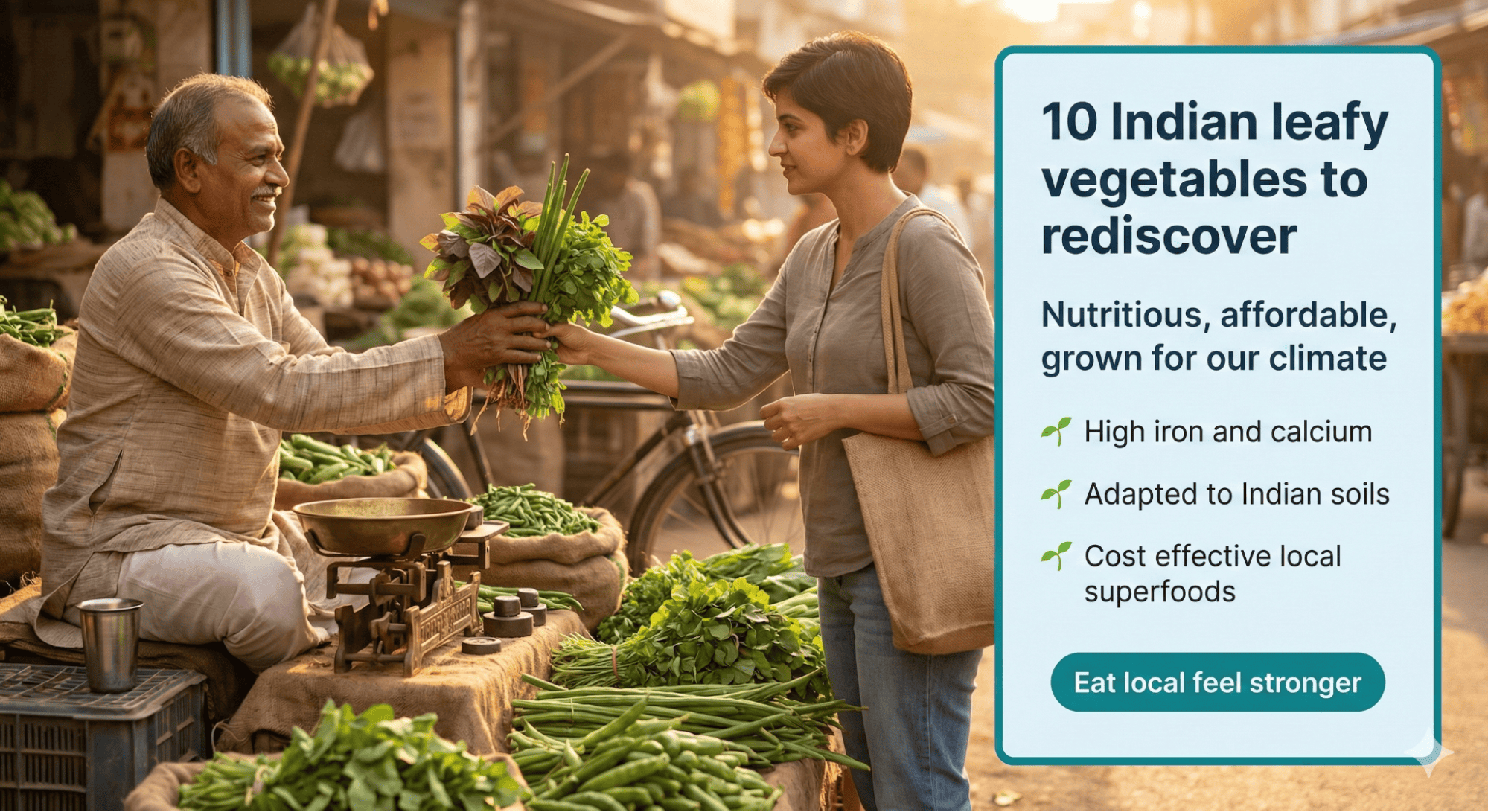
Indian leafy vegetables are the diverse greens native to India that have sustained populations for thousands of years. These include saag varieties like amaranth (chaulai), fenugreek (methi), colocasia (arbi) leaves, drumstick (moringa) leaves, radish greens, mustard greens, and many regional varieties. Unlike European greens that need specific climates, Indian leafy vegetables thrive in our weather and soil. They’re nutrient dense vegetables packed with vitamins, minerals, and compounds specifically beneficial for health issues common in Indians. Moreover, these traditional greens cost a fraction of imported options while providing superior nutrition. Your ancestors knew their value instinctively, incorporating them into daily meals through simple preparations that preserved nutrients while making them delicious.
Why Indian Matters for Indian Bodies
Indian leafy vegetables address nutritional deficiencies widespread in our population. Iron deficiency anemia affects 50% of Indian women, and these greens provide highly bioavailable iron. Additionally, they’re rich in calcium crucial for bone health in a population with high osteoporosis risk despite vegetarian diets. These nutrient dense vegetables offer vitamin K for blood clotting, vitamin A for eye health, and folate for preventing birth defects. Moreover, the phytonutrients in Indian leafy vegetables protect against diseases Indians face disproportionately: diabetes, heart disease, and certain cancers. The fiber content supports digestive health and weight management. Furthermore, these greens grew alongside Indian grains and legumes over millennia, creating nutritional synergies optimized for our genetic makeup. Therefore, eating Indian leafy vegetables isn’t just about nutrition, it’s about foods co-evolved with Indian bodies for thousands of years.
Common Myths Debunked About This Topic
Let’s clear up misconceptions about Indian leafy vegetables. First, they’re not inferior to trendy Western greens like kale or spinach. In fact, many saag varieties exceed imported options in specific nutrients. Second, these vegetables aren’t only for village life or poverty. They’re nutritional powerhouses everyone should eat. Third, preparation doesn’t have to be complicated. Simple sautéing or adding to dal works perfectly. Fourth, these greens aren’t all bitter or unpalatable. Many have mild, pleasant flavors when cooked correctly. Additionally, concerns about oxalates causing kidney stones are overblown. Most people can eat these vegetables safely, and their benefits far outweigh minimal risks. Finally, you don’t need to eliminate spinach or modern vegetables. Simply add these traditional greens to your rotation, expanding variety and nutritional diversity rather than replacing everything you currently eat.
The Science Behind Indian Leafy Vegetables for Indians
How Indian Works in Your Body
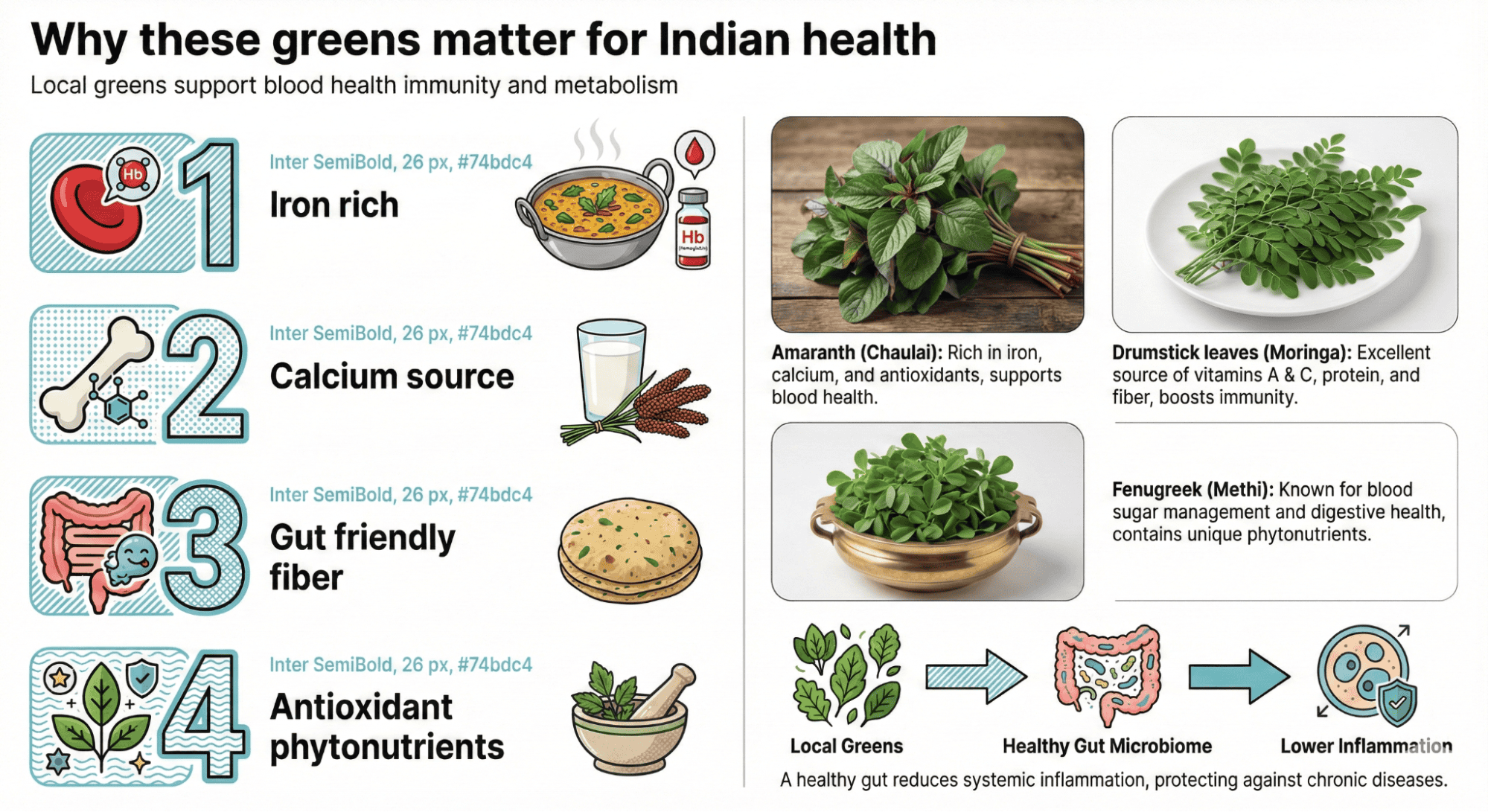
Indian leafy vegetables work through multiple mechanisms to support health. The high chlorophyll content supports liver detoxification, helping your body eliminate toxins accumulated from pollution and processed foods. Additionally, these nutrient dense vegetables provide antioxidants that combat oxidative stress and inflammation, root causes of chronic diseases. The fiber feeds beneficial gut bacteria, supporting immune function and mental health through the gut-brain axis. Moreover, minerals like magnesium from these greens regulate hundreds of biochemical reactions, including blood sugar control and blood pressure. The vitamin K activates proteins needed for calcium utilization in bones and prevents calcium deposits in arteries. Furthermore, folate and B vitamins support DNA synthesis and cell division, crucial for preventing anemia and supporting pregnancy. Therefore, eating Indian leafy vegetables regularly provides comprehensive nutritional support beyond what any single supplement could offer.
The Connection Between Saag Varieties and Health
Saag varieties offer specific health benefits backed by research. Fenugreek leaves help control blood sugar and cholesterol, making them valuable for diabetics. Amaranth contains squalene, an antioxidant that supports heart health. Additionally, drumstick leaves provide protein rare in plant foods, making them valuable for vegetarians. Colocasia leaves offer exceptional amounts of vitamin A for eye health. Radish greens contain compounds that support thyroid function. Moreover, the diversity of phytonutrients across different saag varieties means eating multiple types provides synergistic benefits no single vegetable can deliver. In fact, traditional Indian thalis included multiple greens in small amounts rather than large portions of one type, maximizing nutritional diversity. This wisdom gets lost when modern diets focus on one or two vegetables repeatedly. The variety in Indian leafy vegetables is the point, providing a spectrum of nutrients working together for optimal health.
What Research Shows for Indian Population
Studies on Indian leafy vegetables reveal impressive nutritional profiles often exceeding popular Western vegetables. Research shows amaranth leaves contain 2 to 3 times more iron than spinach and exceptional calcium levels. One study found that regular consumption of fenugreek leaves improved blood sugar control in diabetics better than medication alone in some cases. Additionally, research on drumstick leaves demonstrates protein content comparable to milk, making them valuable for vegetarian Indians lacking protein. Moreover, studies show that traditional saag varieties contain higher concentrations of certain phytonutrients adapted to support health in hot climates, providing benefits specifically relevant to Indians. In fact, populations consuming diverse traditional greens regularly show lower rates of anemia, osteoporosis, and cardiovascular disease compared to those eating limited vegetable varieties. This research validates what traditional Indian wisdom knew: these vegetables are Indian superfoods deserving recognition and regular inclusion in modern diets.
Traditional Greens: What to Watch For
Physical Signs and Symptoms to Monitor
Including Indian leafy vegetables in your diet creates noticeable improvements. Energy levels increase within 2 to 4 weeks as iron deficiency improves from regular consumption. Additionally, digestive function enhances from the fiber, reducing constipation and bloating. Hair and nail quality improves as the vitamins and minerals support keratin production. Skin becomes clearer and more radiant from the antioxidants and vitamins. Moreover, you might notice reduced inflammation shown by less joint pain or fewer headaches. However, some people experience initial digestive adjustment with increased gas or loose stools when suddenly adding lots of fiber. This resolves within a week as your gut bacteria adapt. Start with small portions and increase gradually to prevent discomfort. Furthermore, watch for any allergic reactions, though these are rare. If you notice itching, swelling, or difficulty breathing after eating a new green, discontinue and consult a doctor.
Emotional and Mental Health Indicators
Nutrient dense vegetables support mental health through multiple pathways. Improved nutrition enhances mood and reduces anxiety within 3 to 4 weeks of consistent consumption. Additionally, the B vitamins and magnesium in Indian leafy vegetables support neurotransmitter production, helping regulate mood and stress response. Iron deficiency causes fatigue and depression, so correcting it through these greens improves mental clarity and emotional stability. Moreover, the act of cooking and eating traditional greens connects you to cultural heritage, providing psychological benefits beyond nutrition. Some people report feeling more grounded and connected to their roots when incorporating foods their grandparents ate. Furthermore, the affordability of these vegetables reduces financial stress compared to expensive supplements or imported superfoods. Therefore, adding Indian leafy vegetables to your diet supports mental health through both direct nutritional effects and indirect cultural and financial benefits.
When to Consult a Healthcare Professional
Most people can eat Indian leafy vegetables safely and benefit greatly. However, consult a doctor if you have specific medical conditions. People with kidney disease need medical guidance on oxalate-containing vegetables as kidneys can’t process oxalates normally. Additionally, those on blood thinners like warfarin should maintain consistent vitamin K intake from greens rather than adding them suddenly, as vitamin K affects blood clotting. If you’re pregnant or nursing, discuss adding traditional greens with your doctor, though most are safe and beneficial during pregnancy. Moreover, if you experience any unusual symptoms like severe stomach pain, persistent diarrhea, or allergic reactions after eating specific greens, seek medical attention. Furthermore, if you have thyroid problems, discuss goitrogenic vegetables like mustard greens with your doctor, though moderate consumption is usually fine. Don’t let fear prevent you from eating these nutritious foods, but get personalized guidance if you have underlying health conditions.
Indian Lifestyle Factors Affecting Indian Leafy Vegetables
Modern Indian Diet Challenges and Solutions
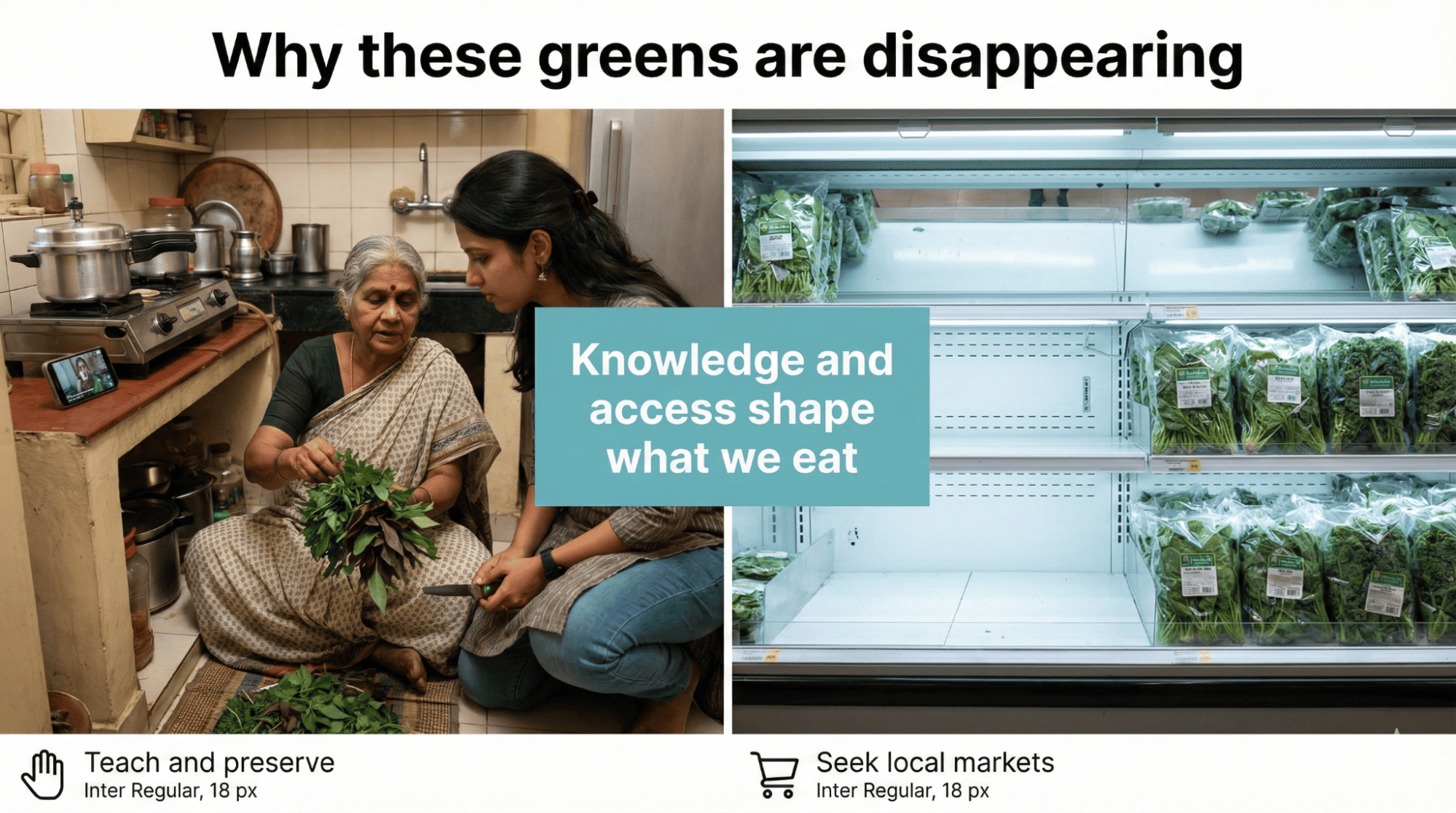
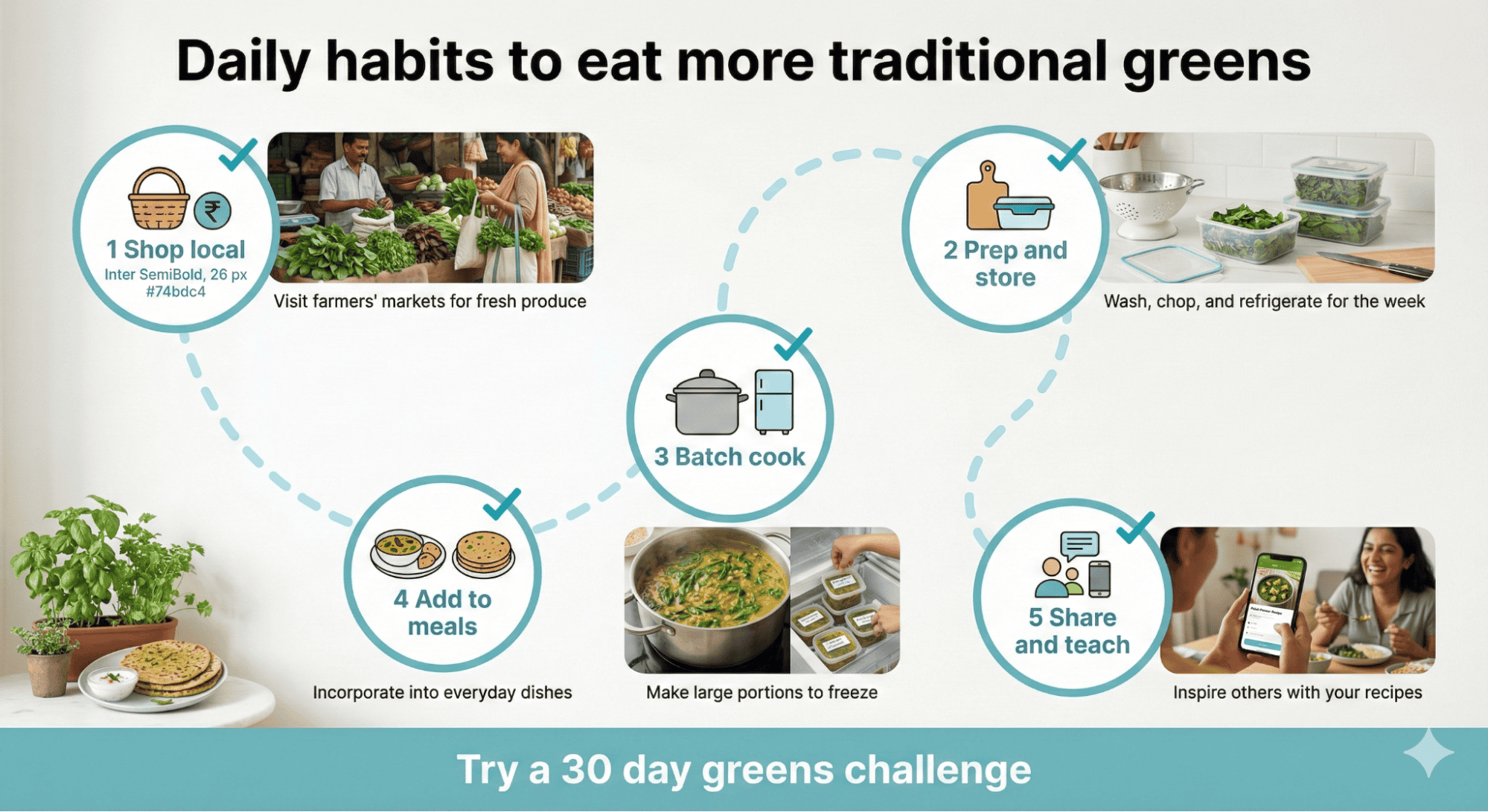
Modern Indian diets have lost Indian leafy vegetables due to urbanization and changing lifestyles. Young people don’t know how to identify or cook traditional greens, sticking to familiar options like spinach. Additionally, supermarkets stock limited varieties compared to traditional vegetable markets, reducing access. Busy schedules make people choose convenient packaged foods over vegetables requiring washing and chopping. Moreover, the perception that these greens are “poor people’s food” or “too traditional” discourages consumption among urban, educated Indians. Solutions include visiting local vegetable markets rather than supermarkets to access diverse saag varieties. Learn one new green monthly, asking the vendor for cooking suggestions. Batch prep on weekends by washing, chopping, and freezing portions for quick weekday cooking. Additionally, watch YouTube videos showing traditional preparations from different regions. Start with easy options like adding chopped fenugreek to dal or sautéing amaranth with garlic. These small steps reintroduce traditional greens into modern lifestyles without overwhelming your routine.
Work-Life Balance and Urban Living Impact
Urban lifestyles create barriers to eating Indian leafy vegetables that require strategic solutions. Long work hours mean less time for shopping at traditional markets selling these greens. Additionally, nuclear families living away from grandparents lose knowledge about selecting, storing, and cooking traditional greens. Small urban kitchens lack space to store large bunches of fresh vegetables. Moreover, pollution makes washing greens thoroughly more important and time-consuming. Air conditioning preserves vegetables less effectively than traditional cool, moist storage methods. Furthermore, domestic help unfamiliar with regional greens might not know how to prepare them properly. Address these by shopping for greens once weekly and storing them properly (most keep 5 to 7 days when washed and wrapped in newspaper in the refrigerator). Choose vendors who clean vegetables before selling. Additionally, buy smaller quantities more frequently rather than bulk purchases that spoil. Teach household help simple preparation methods or prepare vegetables yourself on weekends. These adjustments make eating nutrient dense vegetables feasible despite urban constraints.
Cultural and Social Influences on Health
Indian culture both helps and hinders Indian leafy vegetables consumption. Traditional family meals naturally included multiple saag varieties, teaching children to eat them. However, modern aspirations toward Western lifestyles make some people view traditional greens as old-fashioned. Additionally, social media promotes expensive imported superfoods while ignoring local nutritional powerhouses. Regional variations mean some greens familiar in one state are unknown in others, and people sometimes resist trying unfamiliar regional varieties. Moreover, the aesthetic focus on Instagram-worthy meals disadvantages simple greens that don’t photograph dramatically. Family elders might insist on traditional preparation methods that take hours, discouraging busy young people from cooking these vegetables. Navigate these dynamics by appreciating Indian leafy vegetables as both traditional and scientifically superior nutrition. Share information about their benefits on social media to change perceptions. Moreover, adapt traditional recipes for modern cooking methods like pressure cookers or air fryers. Celebrate regional diversity by trying greens from different Indian states. These approaches honor tradition while making traditional greens relevant and appealing to modern Indians.
Best Indian Foods for Indian Leafy Vegetables Management
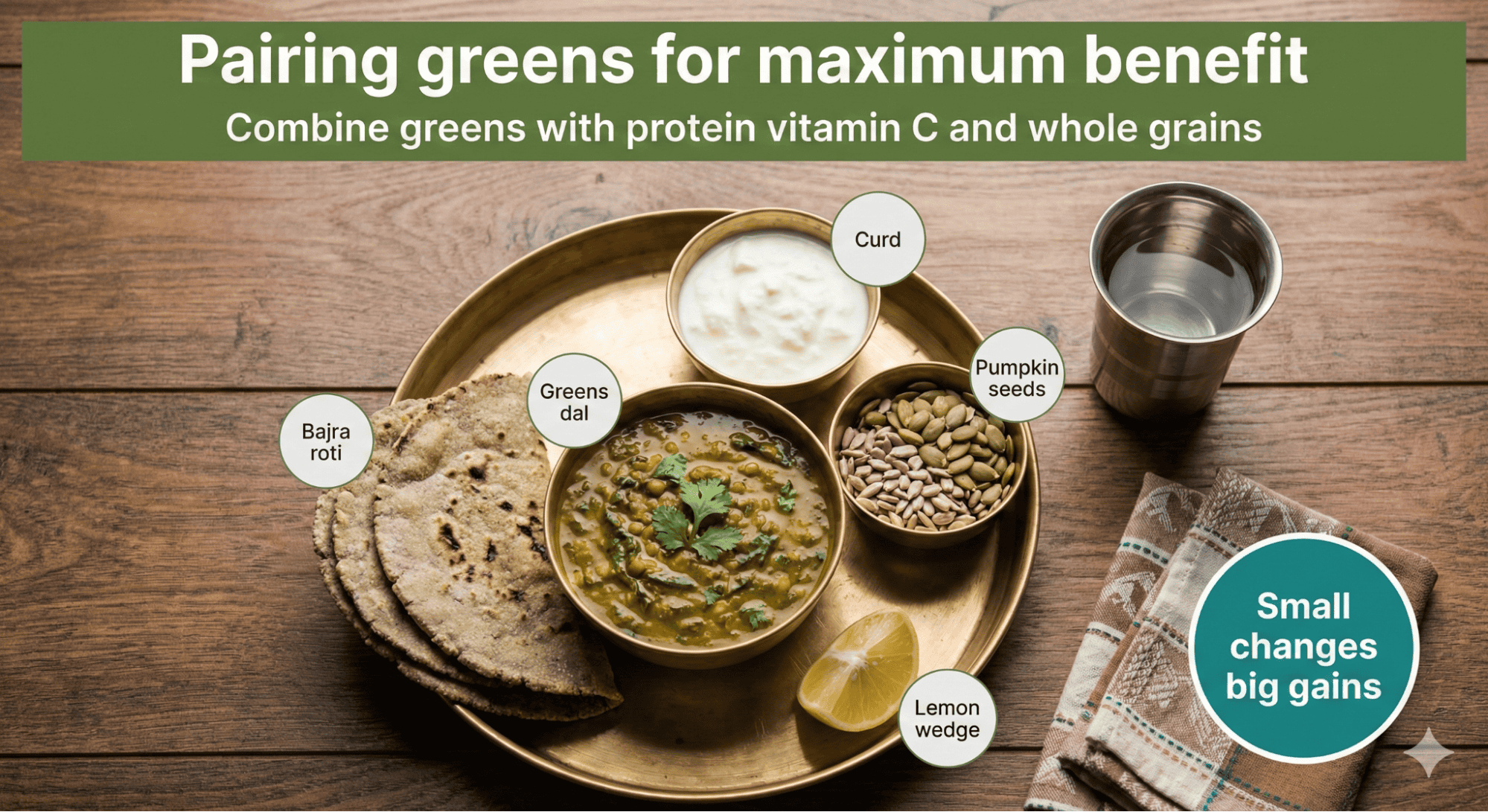
Traditional Indian Foods That Support Nutrient Dense Vegetables
Indian leafy vegetables pair perfectly with traditional Indian foods, creating nutritional synergies. Dal provides protein and iron absorption-enhancing amino acids, making it ideal to eat with greens. Additionally, rotis made from millets or whole wheat offer B vitamins that work synergistically with vitamins in vegetables. Rice combines with greens to create complete meals balancing macronutrients. Buttermilk or curd eaten with vegetable dishes aids digestion and provides probiotics. Moreover, adding tomatoes or lemon to greens enhances iron absorption through vitamin C. Traditional spice combinations using turmeric, cumin, and coriander enhance nutrient bioavailability and add their own health benefits. Ghee used in moderate amounts helps absorb fat-soluble vitamins A and K from greens. These traditional combinations developed over centuries optimize nutrition naturally without needing scientific understanding. Therefore, eating Indian leafy vegetables as part of traditional Indian thalis rather than in isolation maximizes their nutritional benefits through synergistic food combinations.
Modern Indian Meal Options and Healthy Recipes
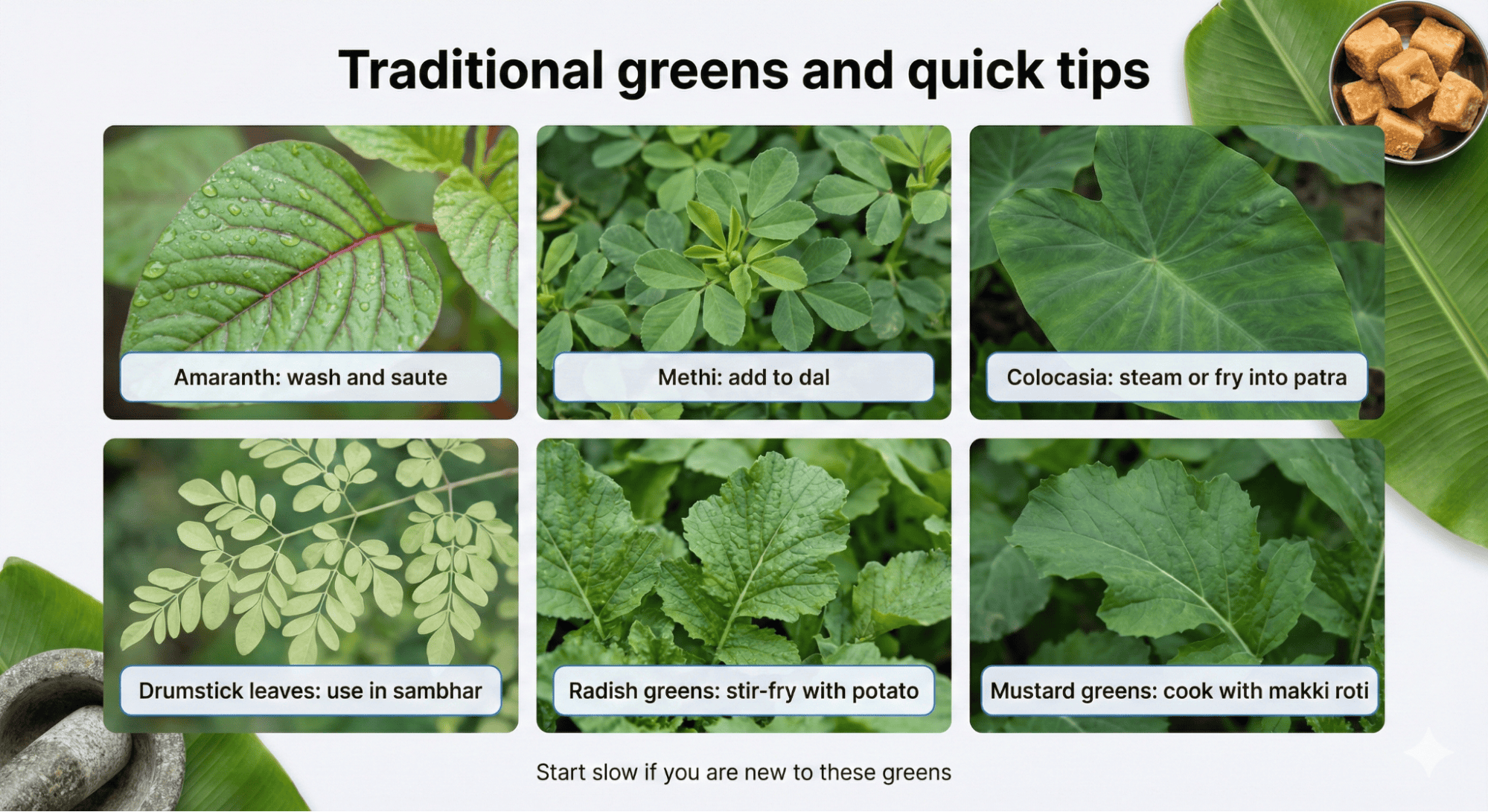
Create modern meals showcasing Indian leafy vegetables in accessible ways. For breakfast, add finely chopped fenugreek to besan cheela or moong dal dosa batter for extra nutrition. Make palak paratha using any saag variety, not just spinach. Additionally, blend greens into smoothies with fruit, curd, and nuts for a nutrient-packed drink. For lunch, prepare mixed greens dal by adding amaranth, fenugreek, or radish greens to any dal in the last 10 minutes of cooking. Make dry sabzi by sautéing greens with onions, garlic, and spices as a side dish. Moreover, add chopped colocasia or drumstick leaves to sambhar or rasam. For dinner, make palak paneer using a mix of traditional greens rather than only spinach. Add greens to vegetable pulao or biryani. Furthermore, stuff parathas with spiced mashed vegetables including greens. These modern preparations make nutrient dense vegetables easy to incorporate without completely changing your cooking style or requiring extensive preparation time.
Foods to Limit or Avoid for Better Results
While including Indian leafy vegetables, limit foods that interfere with nutrient absorption. Excessive tea and coffee with or immediately after meals containing greens reduces iron absorption due to tannins. Therefore, drink chai 1 to 2 hours before or after vegetable meals. Additionally, processed foods high in phytates block mineral absorption from vegetables. Refined grains lack nutrients that work synergistically with greens. Moreover, excessive salt damages vegetable cell walls during cooking, leaching out water-soluble vitamins. Use minimal salt and add it toward the end of cooking. Overcooking vegetables destroys delicate vitamins, so cook greens briefly. Furthermore, avoid eating Indian leafy vegetables with calcium supplements or dairy in excessive amounts at the same meal, as calcium can interfere with iron absorption. These don’t require complete elimination but strategic timing and moderation to maximize the nutritional benefits of traditional greens you’re making the effort to include in your diet.
Portion Sizes and Meal Timing for Indians
Include Indian leafy vegetables in appropriate amounts for maximum benefit. Aim for 1 to 2 cups of cooked greens daily, which equals about 200 to 300 grams of fresh greens before cooking. Additionally, vary the types you eat rather than having the same green every day. Rotate through 4 to 5 different saag varieties weekly to ensure diverse phytonutrient intake. Eat greens at lunch when your digestive fire is strongest in Ayurvedic terms, supporting optimal nutrient absorption. Moreover, spread intake across the day rather than eating large amounts at once. Include a handful of cooked greens at both lunch and dinner. For those with iron deficiency, eat greens with vitamin C sources like tomatoes or lemon and avoid tea for 2 hours afterward. Furthermore, if you’re introducing traditional greens after not eating them regularly, start with half cup daily and increase gradually over 2 weeks to prevent digestive upset. These portion and timing strategies optimize nutrition while preventing discomfort.
Lifestyle Changes to Support Indian Leafy Vegetables
Indian Superfoods: The Right Approach for Indians
Recognizing Indian leafy vegetables as Indian superfoods requires shifting perspective. Stop spending money on imported chia seeds, quinoa, or kale when traditional greens offer equal or better nutrition at lower cost. Additionally, patronize local vegetable vendors who sell these greens rather than exclusively shopping at supermarkets with limited varieties. Learn to identify different saag varieties by appearance and name in your regional language. Moreover, grow easy greens like fenugreek or amaranth at home in pots if you have any outdoor space. They grow quickly and provide fresh greens regularly. Start conversations with older family members about how they prepared traditional greens, preserving this knowledge. Furthermore, share recipes and information on social media to rebuild appreciation for these vegetables among your generation. Support restaurants that feature regional greens in their menus. These actions collectively revive the cultural and culinary importance of Indian leafy vegetables while improving your nutritional intake and supporting local food systems that sustain these nutritious crops.
Sleep and Stress Management Strategies
While seemingly unrelated, adequate sleep and stress management enhance your body’s ability to absorb and utilize nutrients from Indian leafy vegetables. Chronic stress depletes B vitamins and magnesium that these greens provide, creating a vicious cycle. Therefore, manage stress through practices like yoga, meditation, or walking to ensure nutrients support health rather than just replacing what stress depletes. Additionally, adequate sleep allows your body to repair and regenerate using the vitamins and minerals from nutrient dense vegetables. Poor sleep impairs digestion and nutrient absorption, reducing benefits from even the best diet. Moreover, meal planning and cooking traditional greens can themselves be meditative stress-relief activities when approached mindfully rather than as chores. The act of preparing food connecting you to tradition and culture provides psychological benefits beyond nutrition. Furthermore, better nutrition from consistently eating Indian leafy vegetables improves sleep quality and stress resilience, creating a positive cycle. Focus on these lifestyle factors alongside dietary changes for comprehensive health improvement.
Daily Habits That Make a Real Difference
Small consistent actions make eating Indian leafy vegetables sustainable long-term. Keep a list of different saag varieties and check off ones you try, gamifying the process of expanding your vegetable repertoire. Additionally, shop for vegetables twice weekly to ensure freshness, purchasing small quantities of multiple greens rather than bulk amounts of one type. Prep vegetables the day you buy them by washing and storing properly, removing the barrier of prep work when you’re ready to cook. Moreover, cook extra when making dishes with greens, freezing portions for quick meals later. Keep your favorite greens-based recipes accessible on your phone or in a physical cookbook for easy reference. Furthermore, eat vegetables early in the meal when you’re hungriest, ensuring you actually consume them rather than filling up on rice or roti first. These habits embed traditional greens into your routine naturally rather than requiring constant willpower or motivation to maintain improved eating patterns.
Your 7-Day Indian Leafy Vegetables Management Meal Plan
This meal plan incorporates diverse Indian leafy vegetables throughout the week:
| Day | Breakfast | Lunch | Evening Snack (4-5 PM) | Dinner (7-8 PM) |
| Day 1 | Methi paratha (2) + curd + pickle | Brown rice + dal with amaranth leaves + tomato salad | Roasted chana (1 bowl) | 2 rotis + palak paneer + raita |
| Day 2 | Vegetable poha + handful of nuts + tea | 2 rotis + fenugreek dal + mixed veg + curd | Fresh fruit (1 bowl) | Quinoa + colocasia leaves curry + salad |
| Day 3 | Moong dal dosa (2) + drumstick leaves chutney + sambhar | Brown rice + radish greens sabzi + dal + raita | Sprout salad with lemon | 2 bajra rotis + mustard greens + dal |
| Day 4 | Oats upma with vegetables + boiled egg + milk | 2 rotis + mixed greens (amaranth + methi) dal + sabzi | Apple with almonds (6) | Vegetable khichdi with fenugreek leaves + curd |
| Day 5 | Palak paratha (using mixed greens) + curd + pickle | Brown rice + sambhar with drumstick leaves + veg + raita | Coconut water + roasted makhana | 2 rotis + colocasia leaves curry + dal |
| Day 6 | Besan cheela (2) with methi + chutney + tea | 2 rotis + dal + radish greens sabzi + tomato salad | Fruit bowl with nuts | Quinoa + palak paneer (mixed greens) + raita |
| Day 7 | Idli (3) + sambhar + amaranth leaves chutney | Brown rice + dal + mustard greens + curd + pickle | Handful of walnuts (6) | 2 rotis + mixed greens dry sabzi + dal + raita |
Note: Rotate different saag varieties each week. Wash all greens thoroughly. Cook with minimal water to preserve nutrients. Add lemon or tomato to enhance iron absorption. Drink 8 to 10 glasses of water daily.
Common Mistakes Indians Make with Indian Leafy Vegetables

Diet Mistakes That Sabotage Progress
The biggest mistake is sticking to only spinach and ignoring the diversity of Indian leafy vegetables available. This limits nutritional variety and gets boring quickly. Another error is overcooking greens until they’re mushy, destroying delicate vitamins and creating unappetizing texture. Additionally, many people add excessive salt which leaches nutrients and increases sodium intake. Not washing greens thoroughly means consuming pesticides and dirt, creating health risks. Moreover, some people avoid traditional greens entirely based on one bad experience or childhood memories of being forced to eat bitter vegetables. Buying greens but letting them rot in the refrigerator because you don’t know how to cook them wastes money and nutrition. Furthermore, believing expensive supplements can replace whole food nutrition from nutrient dense vegetables ignores the synergistic benefits of whole foods that isolated vitamins can’t replicate. These mistakes prevent you from experiencing the superior nutrition Indian leafy vegetables offer.
Lifestyle Pitfalls to Watch Out For
Many people sabotage their intentions to eat Indian leafy vegetables through inconsistent habits. Shopping only at supermarkets means limited access to diverse saag varieties, but people continue this pattern out of convenience. Additionally, not learning basic cooking techniques for greens means relying on family members to prepare them, which doesn’t work if you live alone. Giving up after trying one unfamiliar green that tastes bitter instead of trying different varieties or preparation methods prevents discovering ones you enjoy. Moreover, following social media food trends promoting expensive imported foods while ignoring local nutrition creates unnecessary spending and environmental impact. Not educating children about traditional greens perpetuates the cycle of these vegetables disappearing from Indian diets. Furthermore, perfectionism about finding organic greens prevents eating conventional ones, when any greens beat no greens nutritionally. These lifestyle patterns require conscious effort to change for sustainable inclusion of Indian leafy vegetables in your regular diet.
How to Course-Correct When Things Go Wrong
If you’ve struggled to include Indian leafy vegetables consistently, try a reset approach. Start with just one easy green like fenugreek, which has mild flavor and cooks quickly. Therefore, add it to dal twice weekly for a month until it becomes habit. Then add a second green. Additionally, identify your specific barriers. Is it access, knowledge, time, or taste? Address that specific issue. If it’s access, find one vendor selling these greens and commit to stopping there weekly. If knowledge, watch three YouTube videos showing different preparations. Moreover, involve family in trying new greens together, making it an adventure rather than a chore. If greens you bought previously went bad, buy smaller quantities more frequently. Furthermore, be patient with taste adaptation. Your palate needs 8 to 12 exposures to new foods before accepting them. Don’t give up after one attempt. The health benefits of Indian leafy vegetables are too valuable to abandon because of minor obstacles that have practical solutions.
Conclusion
Indian leafy vegetables represent India’s original superfoods, providing superior nutrition adapted specifically for Indian bodies and deficiencies. These traditional greens sustained healthy populations for millennia before modern processed foods and imported vegetables dominated Indian plates. The saag varieties available at your local vegetable market offer iron for anemia, calcium for bones, vitamins for immunity, and phytonutrients for chronic disease prevention at prices far below expensive supplements or imported alternatives. Rediscovering these nutrient dense vegetables connects you to cultural heritage while addressing modern health challenges through time-tested nutrition.
Start this week by trying one Indian leafy vegetable you’ve never eaten. Ask your vegetable vendor for recommendations and simple cooking suggestions. Additionally, call a grandmother or elder to learn their favorite preparation methods for traditional greens. Cook it once this week without pressure for perfection.
FAQs
Q1: What is Indian leafy vegetables and how does it affect Indians?
Indian leafy vegetables are diverse traditional greens like amaranth, fenugreek, colocasia, drumstick, and mustard leaves native to India, providing nutrients specifically beneficial for deficiencies common in Indians. These saag varieties offer superior iron, calcium, vitamins, and phytonutrients compared to many imported vegetables, addressing anemia, bone health, and chronic diseases affecting Indian populations disproportionately.
Q2: What are the main signs of nutrient deficiency these vegetables address?
Signs include constant fatigue from iron deficiency, weak bones from calcium deficiency, poor vision from vitamin A deficiency, anemia symptoms, and frequent illness from inadequate nutrients. Nutrient dense vegetables improve energy, strengthen bones and immunity, enhance skin and hair health, and support overall vitality within 2 to 4 weeks of regular consumption.
Q3: What Indian leafy vegetables should Indians eat regularly?
Eat amaranth (chaulai), fenugreek (methi), colocasia (arbi) leaves, drumstick (moringa) leaves, radish greens, mustard greens, and regional varieties. Aim for 1 to 2 cups cooked traditional greens daily, rotating through 4 to 5 different types weekly to ensure diverse phytonutrient intake and prevent monotony.
Q4: Can nutrient deficiencies be managed naturally through these vegetables?
Yes, regular consumption of diverse Indian leafy vegetables significantly improves iron deficiency anemia, calcium intake for bone health, vitamin A for vision, and folate for cellular health. Combine with vitamin C sources like lemon for enhanced iron absorption and maintain consistent intake for 8 to 12 weeks to see measurable improvements in deficiency markers.
Q5: How long does it take to see results from eating Indian leafy vegetables?
Energy levels improve within 2 to 4 weeks as iron status improves from Indian superfoods rich in bioavailable iron. Hair and skin quality are enhanced by week 4 to 6, while significant blood marker improvements in anemia, vitamin levels show within 8 to 12 weeks of consistently eating diverse saag varieties daily.
Related Posts


