

You’ve heard conflicting advice about when to eat for weight loss. Some experts swear eating breakfast boosts metabolism. Others claim skipping breakfast accelerates fat burning. Your friend lost weight eating dinner at 6 PM while your colleague eats at 10 PM and stays lean. Does meal timing weight loss actually matter, or is it just another diet myth? The truth is nuanced and might surprise you. Understanding how meal timing affects metabolism, hunger, and fat loss helps you optimize your eating schedule for results rather than following arbitrary rules. This guide reveals the science behind meal timing weight loss and how busy Indians can apply it practically.
What Is Meal Timing Weight Loss and Why Indian Dieters Should Care?
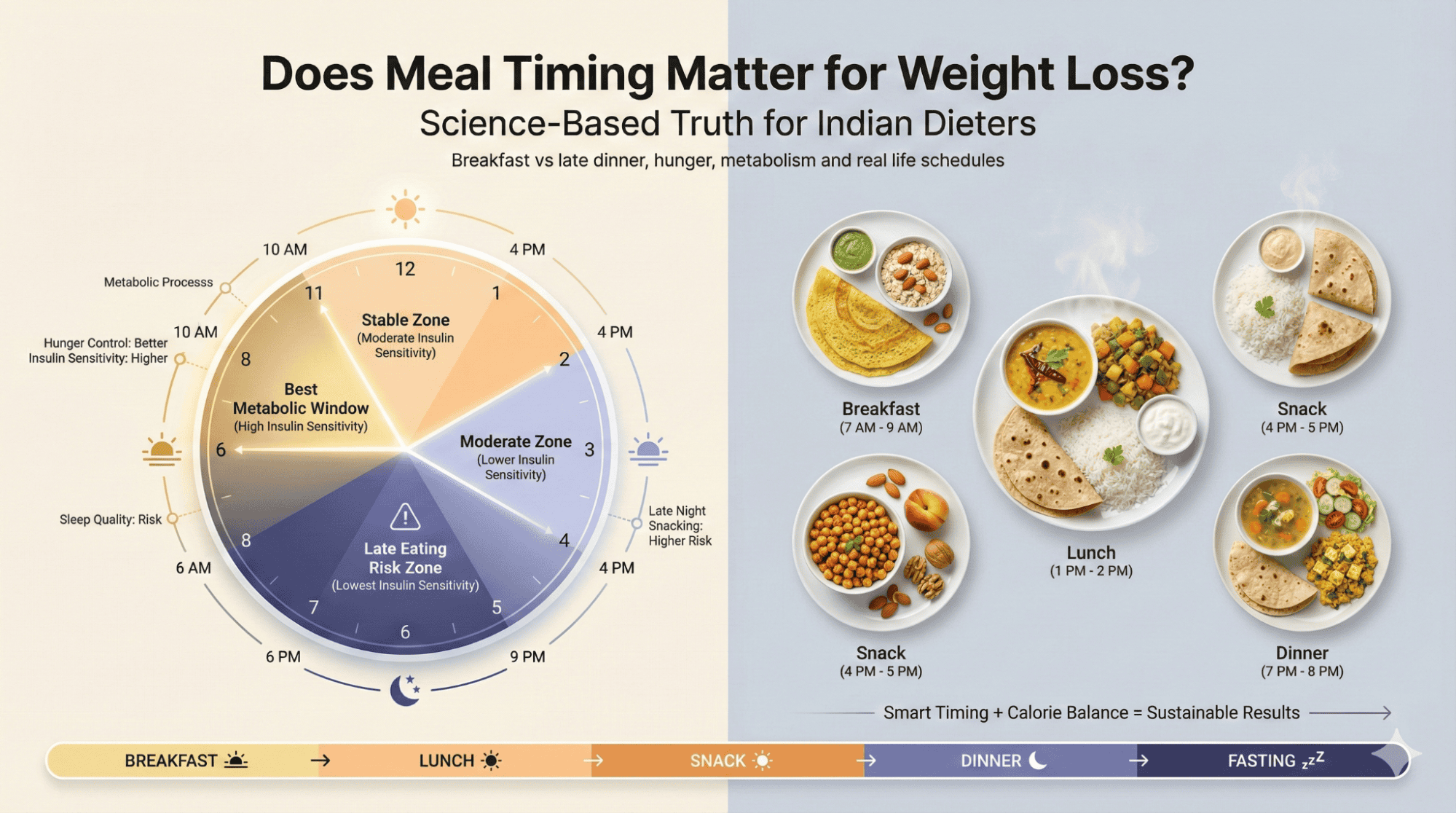
Meal timing weight loss refers to strategically scheduling when you eat throughout the day to optimize metabolism, hormone function, and appetite control for better fat loss results. Additionally, this involves considering factors like breakfast timing, spacing between meals, eating frequency, late-night eating, and nutrient timing around exercise. Moreover, meal timing works synergistically with total calories and food quality, not independently. Therefore, no eating schedule magically creates fat loss if you’re overeating. However, strategic timing can enhance results from calorie deficit, improve adherence, and optimize hormones supporting fat loss. Understanding when to eat becomes another tool in your toolkit alongside what and how much to eat.
Why Meal Matters for Indian Bodies
Indians need practical meal timing guidance because traditional eating patterns are changing rapidly. Urban Indians eat later dinners due to work schedules, skip breakfasts rushing to office, and snack constantly on packaged foods. Additionally, cultural celebrations and social gatherings happen late evening, conflicting with recommendations for early dinners. Moreover, family dynamics mean cooking for others while managing your own eating schedule differently. Furthermore, Indians have genetic predisposition to insulin resistance making nutrient timing particularly relevant for blood sugar management. In fact, understanding science behind meal timing weight loss helps you make informed decisions about which timing “rules” actually matter versus which are flexible based on your lifestyle. Therefore, practical evidence-based guidance beats rigid rules that don’t fit Indian reality.
Common Myths Debunked About This Topic
Let’s clear up myths about meal timing weight loss. First, breakfast isn’t essential for everyone despite claims it “jumpstarts metabolism.” Some people naturally aren’t hungry mornings and forcing breakfast doesn’t help them. Second, eating late doesn’t automatically cause fat gain. Total daily calories matter more than specific timing. Third, eating every 2-3 hours doesn’t boost metabolism significantly. Meal frequency has minimal metabolic impact compared to total intake. Fourth, there’s no magic cutoff time like “no eating after 7 PM” that applies universally. Individual schedules matter. Additionally, eating schedule flexibility matters more than perfect adherence to specific times. Consistency helps, but occasional variations don’t destroy progress. Finally, when to eat matters somewhat, but what and how much you eat matters far more. Therefore, focusing obsessively on timing while ignoring food quality and portions wastes effort.
The Science Behind Meal Timing Weight Loss for Indians
How Meal Works in Your Body
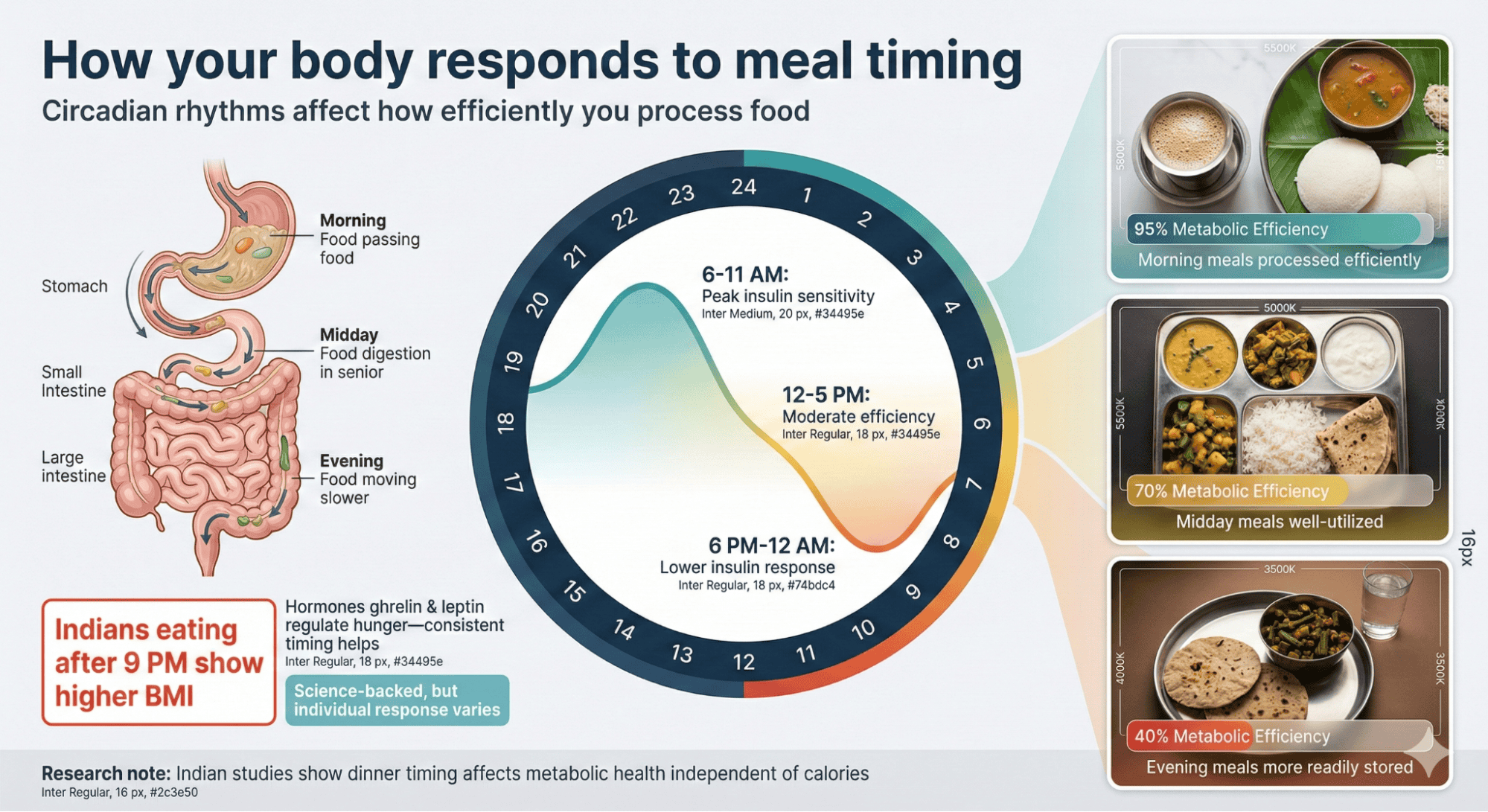
Meal timing affects your body through circadian rhythms, hormones, and digestive processes. Your metabolism follows natural daily rhythms with insulin sensitivity highest morning and decreasing throughout day. Therefore, eating more calories earlier when your body processes them efficiently might support better results. Additionally, late-night eating when insulin sensitivity is low can promote fat storage more than morning eating with same calories. Moreover, eating schedule affects hunger hormones ghrelin and leptin. Consistent meal timing regulates these hormones better than erratic eating. Furthermore, spacing meals 4-5 hours apart allows insulin to drop between meals, potentially enhancing fat burning. However, individual responses vary significantly. Some people maintain better blood sugar with smaller frequent meals while others do better with larger meals and fasting periods. Therefore, meal timing weight loss strategies need personalization rather than universal prescriptions.
The Connection Between When To Eat and Health
When to eat affects more than just weight loss, influencing overall health and disease risk. Eating aligned with circadian rhythms improves metabolic health markers like blood sugar control and cholesterol levels. Additionally, early time-restricted eating with last meal by 6-7 PM improves insulin sensitivity and blood pressure more than later eating windows according to research. Moreover, consistent meal timing supports better sleep quality by allowing digestion before bed. Furthermore, avoiding late-night eating prevents acid reflux and improves next-day appetite regulation. In fact, studies show people eating breakfast consistently have lower obesity rates, though this might relate to overall healthier habits rather than breakfast causing weight loss directly. Therefore, eating schedule optimization supports comprehensive health improvements beyond just scale weight changes.
What Research Shows for Indian Population
Research on meal timing specifically in Indians provides valuable insights. Studies show Indians who eat dinner later (after 9 PM) have higher BMI and worse metabolic health than those eating earlier, independent of total calories. Additionally, research demonstrates that Indians skipping breakfast have higher rates of obesity and metabolic syndrome, though causation versus correlation remains unclear. Moreover, studies indicate Indians benefit particularly from avoiding late-night snacking which disrupts blood sugar regulation. Furthermore, research shows that consistent meal timing day-to-day predicts better weight management than highly variable eating times. In fact, studies on shift workers in India show disrupted eating schedules contribute to metabolic dysfunction beyond sleep disruption alone. Therefore, while total calories remain primary, metabolic timing and consistency appear relevant for Indian health outcomes.
Eating Schedule: What to Watch For
Physical Signs and Symptoms to Monitor
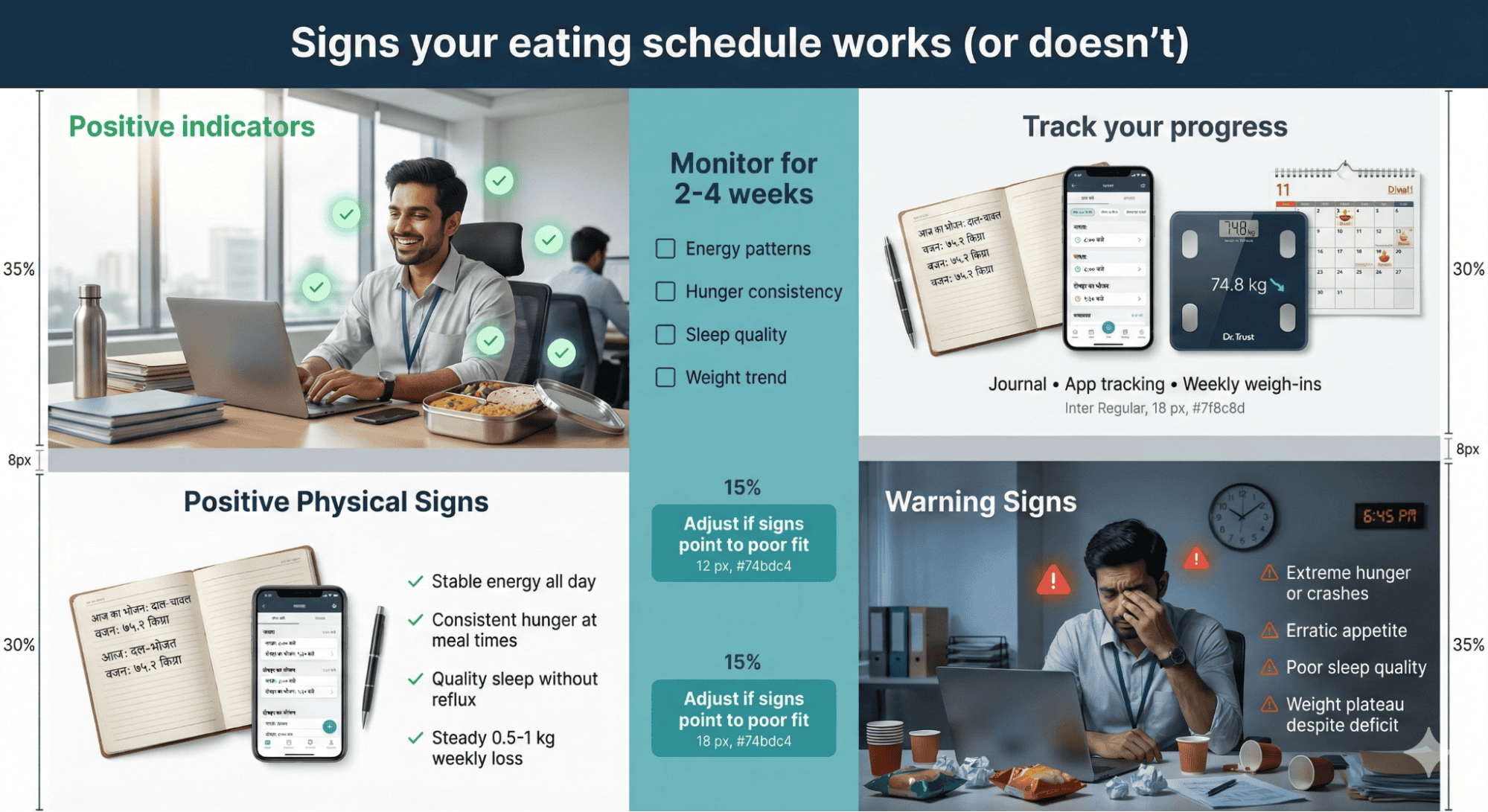
Your eating schedule affects observable physical markers you can track. Stable energy throughout the day without extreme afternoon crashes indicates good meal timing and food quality. Additionally, consistent hunger cues at predictable times signal well-regulated appetite hormones. Moreover, steady weight loss of 0.5-1 kilo weekly when in calorie deficit shows effective approach. Good sleep quality without nighttime waking or reflux suggests appropriate dinner timing. Furthermore, workout performance maintained or improving indicates adequate nutrient timing around exercise. Watch for these positive signs. Conversely, extreme hunger, energy crashes, poor sleep, or weight plateaus despite calorie deficit suggest timing adjustments might help. Therefore, tracking how you feel alongside scale weight provides comprehensive feedback about whether your current eating schedule suits your body and lifestyle.
Emotional and Mental Health Indicators
Meal timing should simplify your life, not create more stress. You should feel the schedule works with your natural hunger patterns and lifestyle. Additionally, reduced food obsession and decision fatigue from consistent timing indicates helpful structure. Moreover, satisfaction with meals and absence of constant snacking shows good meal frequency and timing. Furthermore, enjoying social meals without guilt or anxiety demonstrates healthy flexibility. However, watch for increasing rigidity or anxiety about eating outside scheduled times. Additionally, forcing meals when not hungry or restricting when genuinely hungry indicates inappropriate schedule for you. If timing creates more stress than benefit, adjustment is needed. In fact, the “best” eating schedule is one you’ll actually maintain consistently without constant willpower. Therefore, personal sustainability matters more than theoretical optimality.
When to Consult a Healthcare Professional
Most people can experiment with meal timing independently without medical supervision. However, consult a doctor if you have diabetes on medication, as eating times affect blood sugar significantly and might require medication timing adjustments. Additionally, people with history of eating disorders should avoid rigid timing rules that might trigger disordered patterns. Moreover, if you have digestive conditions like GERD or IBS, certain timing patterns might help or worsen symptoms requiring professional guidance. Furthermore, if you’re unable to lose weight despite appropriate calories and timing, underlying metabolic or hormonal issues might need evaluation. Work with registered dietitians who understand metabolic timing complexities creating personalized schedules accommodating your health needs, preferences, and lifestyle rather than following generic templates. Therefore, professional guidance prevents problems and optimizes individual approaches.
Indian Lifestyle Factors Affecting Meal Timing Weight Loss
Modern Indian Diet Challenges and Solutions
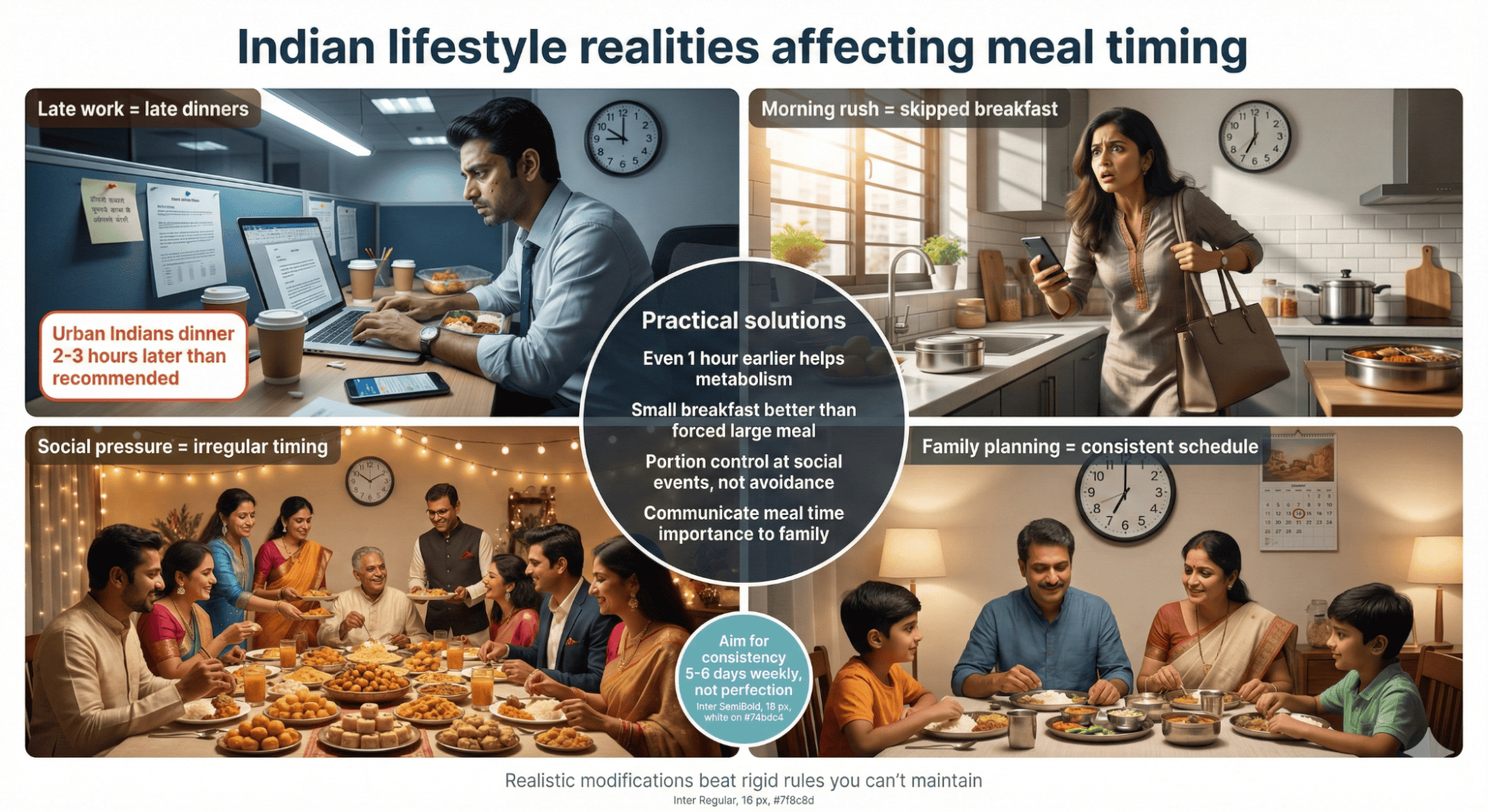
Modern Indian eating patterns conflict with recommendations for optimal meal timing weight loss. Late work hours mean dinner often happens 9-10 PM or later. Additionally, skipping breakfast becomes common with rushed mornings, then overeating later from extreme hunger. Moreover, constant snacking on chai with biscuits, office snacks, and street food creates continuous eating without distinct meals. Furthermore, social and family gatherings typically happen late evening, requiring late eating. Solutions include setting earlier dinner times as priority when possible, even if just 1 hour earlier than current. Additionally, if you’re not naturally hungry for breakfast, start with something small like banana with nuts establishing the pattern. Moreover, reduce constant snacking by planning proper meals with adequate protein and fiber maintaining satiety. Furthermore, maintain slight flexibility for social occasions rather than rigid perfectionism. Therefore, practical modifications respecting Indian lifestyle while applying eating schedule principles creates sustainable approach.
Work-Life Balance and Urban Living Impact
Urban Indian professional life creates meal timing challenges requiring creative solutions. Unpredictable work schedules make consistent eating times difficult. Additionally, long commutes mean eating in transit or very late after reaching home. Moreover, client dinners and business meals happen outside your control. Furthermore, stress affects appetite, sometimes suppressing it then causing compensatory overeating later. Solutions include meal prepping containers bringing lunch to office ensuring midday eating. Additionally, keep healthy snacks preventing extreme hunger driving poor choices. Moreover, eat something substantial mid-afternoon if dinner will be very late. Communicate dinner time importance to family establishing it as priority rather than eating whenever convenient. In fact, recognize some inconsistency is inevitable with demanding careers. Aim for consistency 5-6 days weekly rather than perfect daily adherence. Therefore, realistic meal frequency and timing goals accommodating career demands beats idealistic plans abandoned immediately.
Cultural and Social Influences on Health
Indian culture creates both support and barriers for optimal meal timing. Traditional 3-meal pattern with breakfast, lunch, and dinner supports structured eating. Additionally, family meals together establish consistent timing. Moreover, cultural value on home-cooked food supports quality nutrition alongside timing. However, late social gatherings conflict with early dinner recommendations. Furthermore, hospitality culture means eating when offered food regardless of hunger or schedule. Additionally, women cooking for family often eat last and rushed, disrupting their own optimal timing. Solutions include explaining when to eat importance to family gaining cooperation around dinner time. Additionally, portion control at social events rather than complete avoidance maintains relationships without derailing progress. Moreover, women deserve proper meal timing and conditions, not just serving others. Therefore, navigating cultural expectations while maintaining beneficial eating schedule requires communication and boundaries.
Best Indian Foods for Meal Timing Weight Loss Management
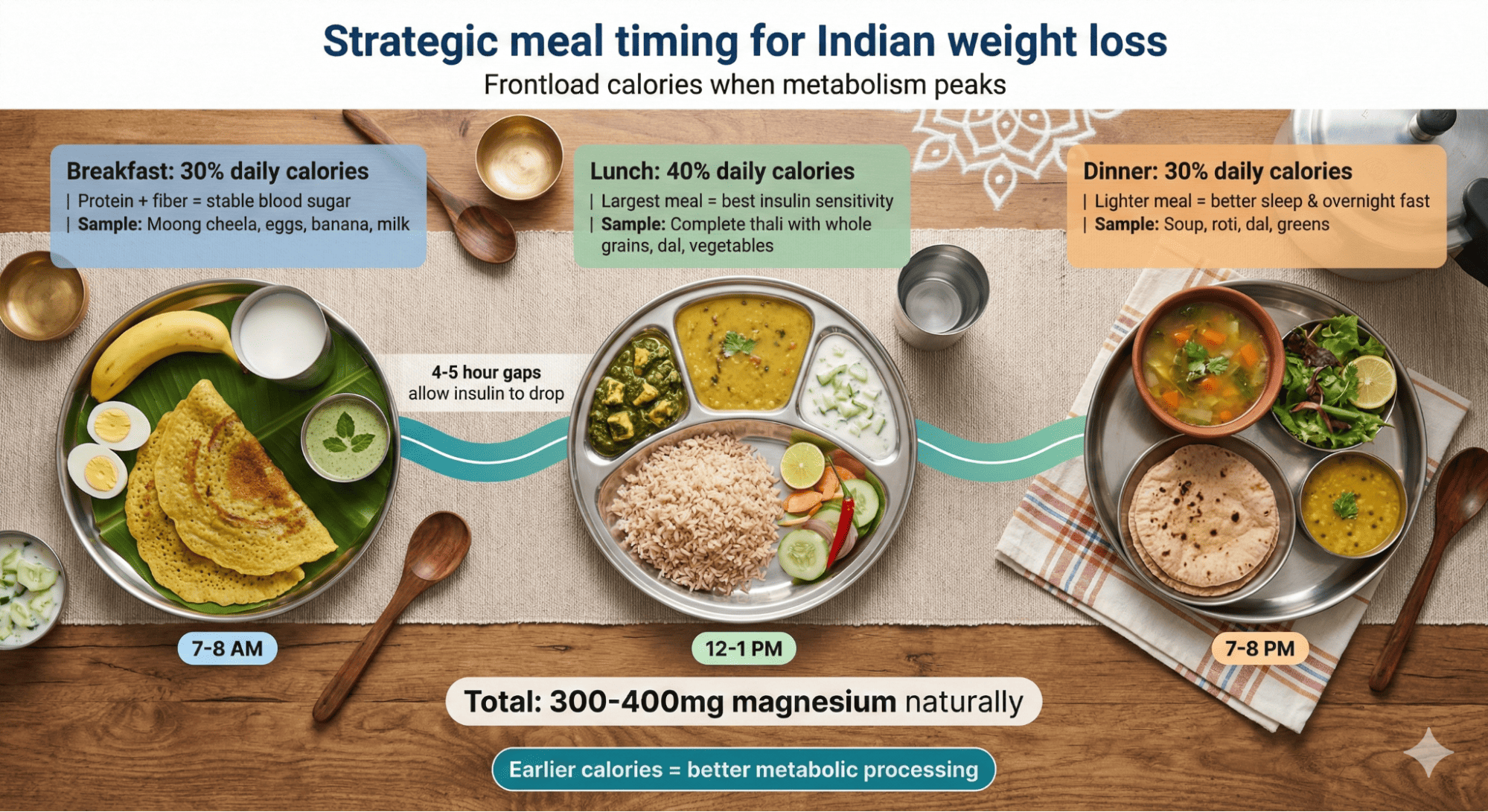
Traditional Indian Foods That Support Nutrient Timing
Strategic food choices enhance nutrient timing benefits. For breakfast if eating it, protein and fiber stabilize blood sugar preventing mid-morning crashes. Try moong dal cheela, vegetable poha with peanuts, or eggs with whole wheat toast. Additionally, lunch as largest meal makes metabolic sense given higher insulin sensitivity. Include dal, vegetables, whole grain, and protein. Moreover, lighter dinner with soup, salad, dal, and small grain portion works better than heavy late meals. Furthermore, if eating pre-workout, easily digestible carbs like banana or idli provide energy without stomach upset. Post-workout within 2 hours, protein and carbs support recovery. Include dal-rice, paneer sandwich, or protein smoothie. In fact, these traditional Indian options support metabolic timing without requiring expensive specialty foods. Therefore, strategic selection and timing of familiar foods optimizes results.
Modern Indian Meal Options and Healthy Recipes
Create meals fitting optimal eating schedule for your lifestyle. If eating breakfast, prepare overnight oats with nuts and fruit, or quick moong dal cheela in 10 minutes. Additionally, for lunch, batch-cooked dal, rice, and vegetables assembled quickly works for office. Moreover, lighter dinners could be vegetable soup with roti, khichdi, or dal with vegetables and small rice portion. Furthermore, planned snacks between meals if needed include nuts, fruit with nut butter, roasted chana, or curd preventing extreme hunger driving overeating. When to eat these meals matters but practicality matters more. If 9 PM is earliest possible dinner, that’s better than skipping dinner or eating junk because ideal timing is impossible. Therefore, strategic meal prep combined with realistic scheduling creates sustainable meal timing weight loss approach despite busy Indian urban reality.
Foods to Limit or Avoid for Better Results
Certain foods or eating patterns sabotage meal timing benefits. Late-night heavy meals especially carb and fat-heavy options promote fat storage and sleep disruption. Therefore, if eating late is unavoidable, choose lighter options. Additionally, constant snacking even on “healthy” foods keeps insulin elevated preventing fat burning between meals. Moreover, liquid calories from frequent chai, juice, or smoothies don’t register fullness like solid foods, causing overconsumption. Furthermore, simple carbs and sugar for breakfast cause crashes by mid-morning increasing subsequent poor choices. Start with protein and fiber instead. In fact, late-night snacking from boredom rather than hunger adds unnecessary calories best avoided. Therefore, consolidating eating into distinct meals with 4-5 hours between, choosing appropriate portions at each, supports eating schedule optimization better than constant grazing.
Portion Sizes and Meal Timing for Indians
Portion distribution across meals affects meal timing weight loss results significantly. If eating 3 meals daily, distribute calories roughly 30% breakfast, 40% lunch, 30% dinner frontloading intake. Additionally, each meal should include palm-size protein, fist-size carbs, and two fists vegetables with thumb-size healthy fat. Moreover, adjust portions based on activity. Larger meals around workout times, smaller meals during sedentary periods. Furthermore, if doing time-restricted eating with 2 meals daily, divide calories evenly or make first meal slightly larger. Avoid tiny breakfast, moderate lunch, then massive dinner pattern common among busy Indians. In fact, this back-loaded pattern promotes fat storage and sleep disruption. Therefore, appropriate portions at appropriate times, not just timing alone, creates comprehensive meal frequency strategy supporting weight loss and metabolic health.
Lifestyle Changes to Support Meal Timing Weight Loss
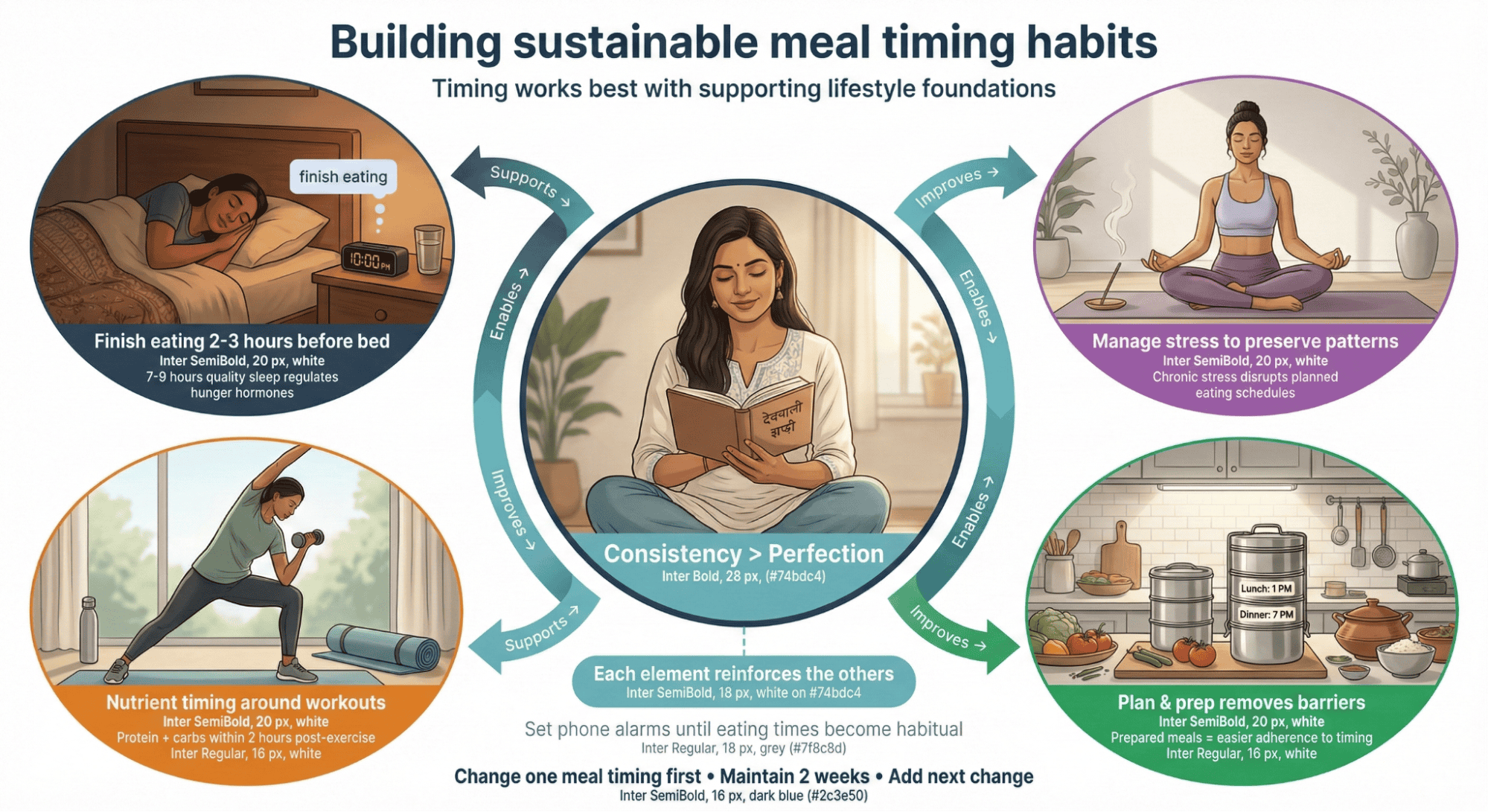
Metabolic Timing: The Right Approach for Indians
Understanding metabolic timing helps optimize when you eat based on physiology. Insulin sensitivity peaks morning, making breakfast or early lunch optimal for carb-containing meals. Therefore, if eating carbs like rice, rotis, or fruit, earlier consumption might support better blood sugar management. Additionally, eating protein throughout the day maintains muscle and satiety. Include 20-30 grams at each meal. Moreover, save mostly protein and vegetables for evening if late dinners are unavoidable, minimizing carbs when insulin sensitivity is lower. Furthermore, exercise creates metabolic window where nutrient timing matters somewhat. Eating protein and carbs within 2 hours post-workout supports recovery, though the window is much longer than once believed. In fact, consistency matters more than perfection. Maintaining generally similar eating schedule daily regulates hormones better than wildly varying times. Therefore, strategic metabolic timing within realistic constraints optimizes available benefits.
Sleep and Stress Management Strategies
Sleep and stress profoundly affect how meal timing impacts results. Inadequate sleep disrupts hunger hormones making any eating schedule harder to maintain. Therefore, prioritize 7-9 hours quality sleep allowing proper hormone regulation. Additionally, finish eating 2-3 hours before bedtime supporting better sleep and allowing overnight fasting period. Moreover, chronic stress increases cortisol affecting when to eat effectiveness. Stress makes you crave comfort foods and disrupts normal hunger cues. Practice stress management supporting your ability to follow planned eating schedule. Furthermore, late-night stress eating sabotages optimal timing. Address stress through means other than food. In fact, improving sleep and managing stress often impacts results more than fine-tuning meal timing perfectly. Therefore, these foundational lifestyle factors matter alongside and sometimes more than specific eating times.
Daily Habits That Make a Real Difference
Small consistent actions make optimal eating schedule sustainable. Set phone alarms for meal times until eating consistently becomes habitual. Additionally, prepare meals in advance removing barriers to eating at planned times. Moreover, keep healthy snacks accessible if meals must be delayed preventing desperate poor choices. Furthermore, eat at table mindfully rather than while working or watching screens, improving satiety and satisfaction from meals. Track eating times for 2 weeks building awareness of current patterns before attempting changes. In fact, change one meal timing first, maintaining that for 2 weeks before adjusting others. Sequential small changes beat simultaneously overhauling everything unsustainably. Additionally, communicate meal time importance to family and coworkers gaining cooperation and support. Therefore, systematic habit building around meal frequency and timing creates lasting changes rather than temporary forced compliance abandoned quickly.
Your 7-Day Meal Timing Weight Loss Management Meal Plan
This meal plan demonstrates strategic eating schedule with earlier heavier meals, lighter evening meals:
| Day | Breakfast (7-8 AM) – 30% calories | Lunch (12-1 PM) – 40% calories | Snack (4-5 PM) | Dinner (7-8 PM) – 30% calories |
| Day 1 | 2 boiled eggs + whole wheat toast + banana + milk | Brown rice (1 katori) + dal (1 katori) + palak paneer + raita + salad | 10 almonds + apple | Vegetable soup + 1 roti + dal + mixed veg |
| Day 2 | Moong dal cheela (2) + paneer + mint chutney + orange | 2 rotis + chana dal + mixed veg curry + curd + salad | Roasted chana (1 bowl) | Grilled chicken/paneer + vegetables + small raita |
| Day 3 | Oats upma with vegetables + nuts + boiled egg + milk | Brown rice + sambhar + fish curry + vegetables + curd | Fruit bowl with nuts | Vegetable khichdi (1 bowl) + curd |
| Day 4 | Vegetable poha + peanuts + boiled egg + banana | 2 rotis + masoor dal + paneer curry + raita + salad | Sprout salad | Tomato soup + 1 roti + dal + vegetables |
| Day 5 | Idli (3) + sambhar + coconut chutney + boiled egg | Quinoa (1 bowl) + dal + vegetables + paneer + raita | 8 walnuts + apple | Clear vegetable soup + grilled fish + salad |
| Day 6 | Besan cheela (2) + vegetables + curd + banana | Brown rice + rajma + mixed vegetables + raita + salad | Roasted makhana + fruit | 1 roti + dal + palak + cucumber raita |
| Day 7 | Vegetable upma + 2 boiled eggs + almonds + milk | 2 rotis + chana dal + mixed veg + paneer + salad | Handful of nuts | Vegetable soup + 1 bajra roti + dal |
Note: Larger meals earlier (breakfast 30%, lunch 40%) when insulin sensitivity higher, lighter evening meals (dinner 30%). All meals include protein supporting satiety. Dinner finished by 8 PM, allowing a 12+ hour overnight fast before breakfast.
Common Mistakes Indians Make with Meal Timing Weight Loss
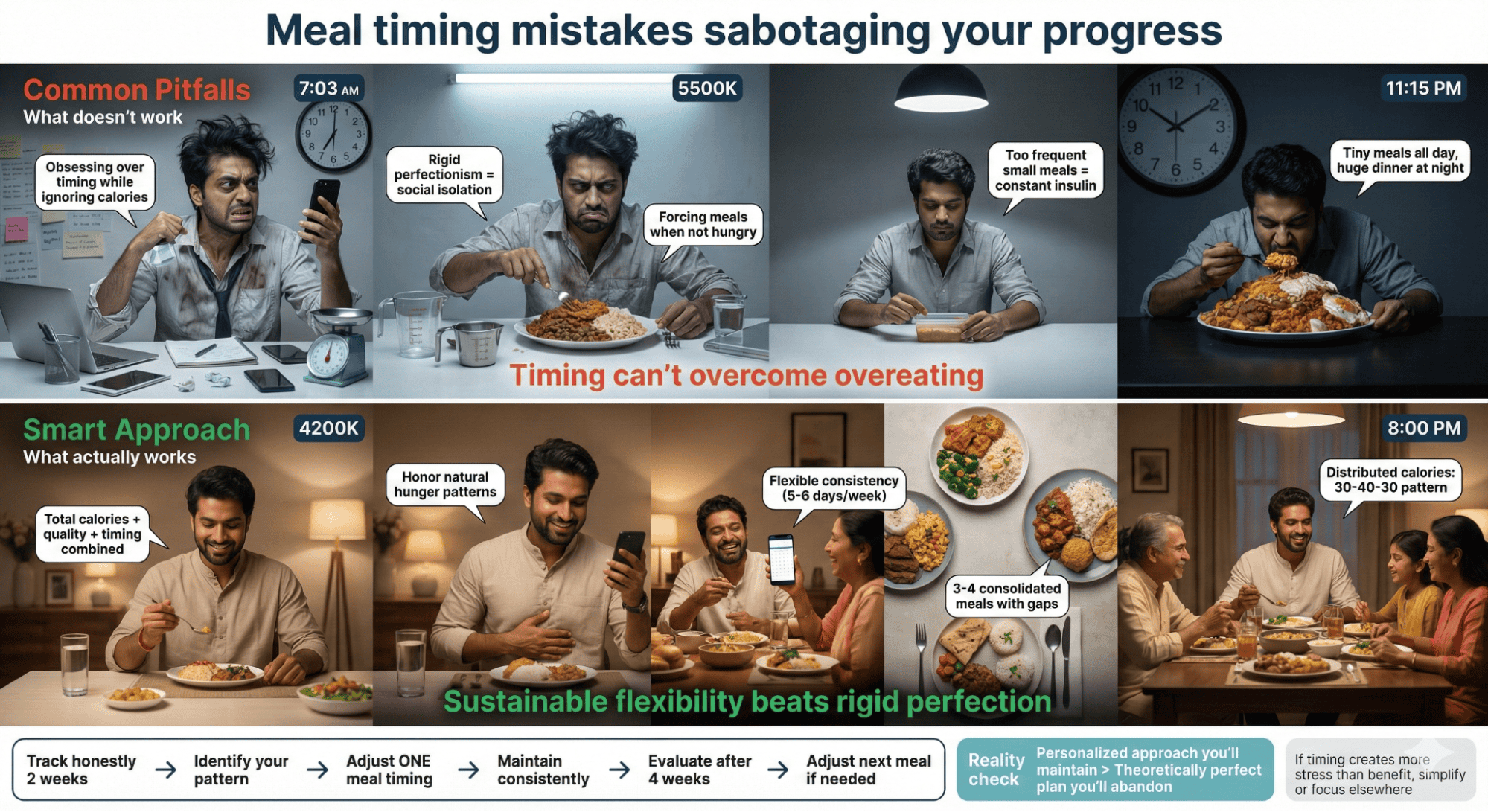
Diet Mistakes That Sabotage Progress
Biggest mistake is obsessing over meal timing while ignoring total calories and food quality. Timing helps but can’t overcome overeating. Another error is forcing breakfast when not hungry thinking it’s mandatory, then overeating later from two large meals. Additionally, many people follow rigid timing rules causing stress when life interferes, then completely abandoning efforts when perfection isn’t maintained. Moreover, eating too small meals too frequently keeping insulin constantly elevated without allowing fat-burning periods. Furthermore, massive dinners because earlier meals were inadequate creates poor sleep and suboptimal metabolic timing. In fact, copying someone else’s eating schedule without considering your own preferences, hunger patterns, and lifestyle dooms adherence. Therefore, realistic personalized approach beats theoretically perfect plans you can’t sustain.
Lifestyle Pitfalls to Watch Out For
Many people sabotage meal timing weight loss through unrealistic expectations and rigidity. Expecting dramatic results from timing changes alone without calorie deficit leads to disappointment. Additionally, social isolation from refusing all meals outside planned times damages relationships unnecessarily. Moreover, not communicating meal time needs to family creates conflict and lack of support. Furthermore, constantly changing timing strategies without giving each 2-3 weeks to assess effectiveness prevents identifying what actually works for you. Not planning and preparing meals for scheduled times means frequent violations from hunger-driven poor decisions. In fact, treating occasional timing deviations for special events as complete failures rather than minor variations in overall consistent pattern creates unnecessary stress. Therefore, sustainable flexible consistency beats rigid perfectionism that causes eventual abandonment.
How to Course-Correct When Things Go Wrong
If eating schedule isn’t working or causing problems, evaluate systematically. Are you actually consistent 5-6 days weekly or sporadic? Track honestly for 2 weeks. Additionally, assess if timing suits your natural hunger patterns and lifestyle. Maybe different timing works better for you. Moreover, verify you’re eating adequate total calories and protein, not just timing meals but under-eating. Furthermore, ensure schedule accommodates social life and family meals rather than creating constant conflict. If current timing creates excessive stress, simplify. Perhaps just establish consistent dinner time first before optimizing others. In fact, if after 4-6 weeks of consistent timing without other changes you see no results, meal timing might not be your primary issue. Focus on total calories and food quality instead. Therefore, honest assessment determines whether timing strategy helps or whether energy should focus elsewhere for your specific situation.
Frequently Asked Questions
Q1: What is meal timing weight loss and how does it affect Indians?
Meal timing weight loss involves strategically scheduling when you eat to optimize metabolism, hunger hormones, and fat burning within calorie deficit. For Indians, research shows eating earlier dinners before 8-9 PM and consistent meal frequency supports better weight management and metabolic health compared to late eating and erratic schedules common in urban populations.
Q2: What are the main signs meal timing is working?
Signs include stable energy without crashes, predictable hunger at meal times, steady weight loss (0.5-1 kilo weekly), good sleep quality, maintained workout performance, and feeling satisfied with eating schedule. Watch for reduced snacking urges between planned meals and absence of extreme hunger indicating appropriate meal frequency and timing.
Q3: What meal timing strategy should Indians follow?
Eat breakfast if naturally hungry, substantial lunch (40% daily calories), lighter dinner (30% calories) finished by 7-8 PM when possible, spacing meals 4-5 hours apart for insulin regulation. Include protein at each meal supporting satiety. When to eat should accommodate your lifestyle; consistency matters more than perfect timing.
Q4: Can meal timing alone create weight loss?
No, meal timing weight loss requires calorie deficit. Strategic timing optimizes hormones, hunger, and metabolism but can’t overcome overeating. Combine appropriate eating schedule with total calorie control, adequate protein, and food quality for results. Timing enhances but doesn’t replace fundamental calorie balance requirement.
Q5: How long does it take to see meal timing results?
Hunger pattern regulation from consistent meal timing appears within 1-2 weeks. Weight loss becomes noticeable within 2-4 weeks if combined with calorie deficit. Full metabolic adaptation to new eating schedule takes 3-4 weeks. Benefits like improved energy and sleep quality often emerge within 2-3 weeks of strategic meal frequency implementation.
Q6: When should I consult a professional about meal timing?
Consult if you have diabetes requiring medication timing coordination with when to eat, eating disorder history, making rigid schedules problematic, digestive conditions affected by timing, or inability to lose weight despite appropriate calories and schedul,e suggesting underlying metabolic issues. Registered dietitians create personalized metabolic timing strategies.
Conclusion
Meal timing weight loss matters, but less than total calories, food quality, and sustainability of your approach. Strategic when to eat scheduling can optimize hormones, hunger regulation, and metabolism supporting better results within calorie deficit. For Indians, practical application means eating dinner earlier when possible, maintaining consistency 5-6 days weekly, frontloading calories to earlier meals, and allowing 4-5 hours between meals. However, rigid timing rules creating constant stress and social isolation defeat the purpose. Your best eating schedule balances physiological optimization with realistic sustainability.
Start by tracking your current meal timing for one week without changing anything, building awareness. Identify one modification supporting both science and your lifestyle, perhaps eating dinner 1 hour earlier or establishing consistent breakfast. Implement for 2-3 weeks before assessing results or adding another change. Small sequential improvements compound into significant overall optimization.
Related Posts


