

You finish a stressful work call and suddenly find yourself standing at the fridge, eating leftover pakoras without even remembering how you got there. The answer lies in understanding stress eating solutions that address cortisol and cravings rather than just willpower that fails you repeatedly every evening. Most Indians blame lack of discipline when the real culprit is biology hijacking your brain during stressful moments throughout the day. This guide reveals the science behind emotional hunger and gives you practical fixes that actually work for Indian lifestyles and food preferences.
What Is Stress Eating Solutions and Why Indian Dieters Should Care?
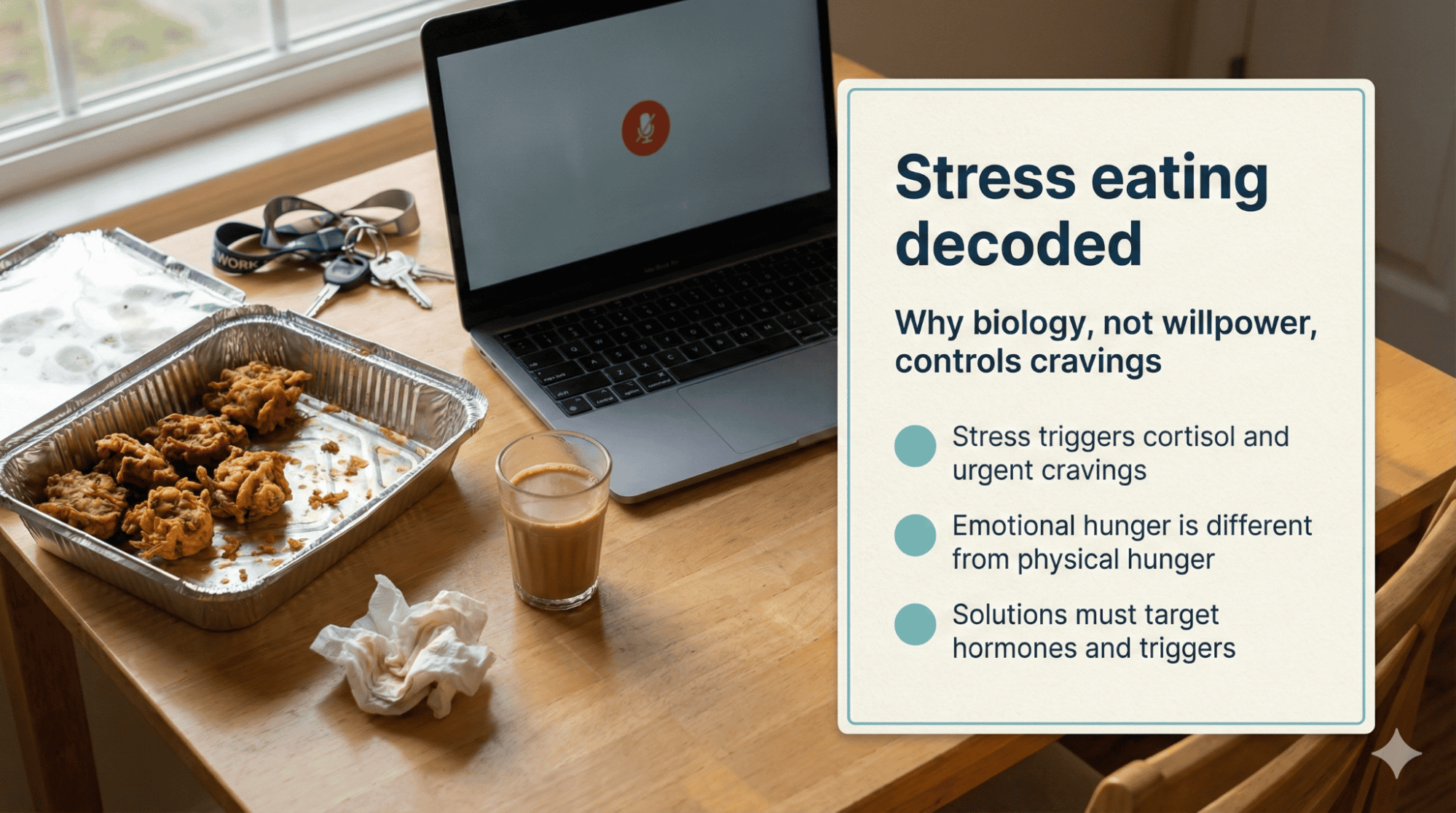
Stress eating happens when you use food to cope with emotions like anxiety, boredom, or frustration rather than actual physical hunger. Your brain seeks comfort through food because eating triggers dopamine release, temporarily making you feel better despite not solving underlying problems. Emotional eating solutions become necessary when you regularly eat without hunger, choose specific comfort foods during tough times, or feel guilt afterward. Think of stress eating as your brain’s misguided attempt to protect you from discomfort by seeking instant relief through something familiar.
Why Stress Matters for Indian Bodies
Indian work culture with long hours, family obligations, and social pressures creates chronic stress that keeps cortisol levels elevated constantly throughout weeks. High cortisol tells your body to store belly fat and increases cravings for sugar and carbs, which explains why stress management matters. Moreover, our cultural tendency to show love through feeding others makes food deeply emotional beyond just nutrition or simple sustenance. This combination means stress eating solutions for Indians must address both biological triggers and deep-rooted cultural patterns around food and emotions.
Common Myths Debunked About This Topic
Many people believe stress eating is just weakness or lack of willpower, when it’s actually a complex biological response to hormones. Another dangerous myth suggests skipping meals controls stress eating, but fasting actually increases cortisol and makes emotional eating worse at night. Additionally, people think healthy snacks solve the problem, but stress eating is about emotional regulation rather than food quality alone. Furthermore, the myth that distraction eliminates stress eating ignores the fact that you need to address underlying stress itself eventually.
The Science Behind Stress Eating Solutions for Indians
How Stress Works in Your Body
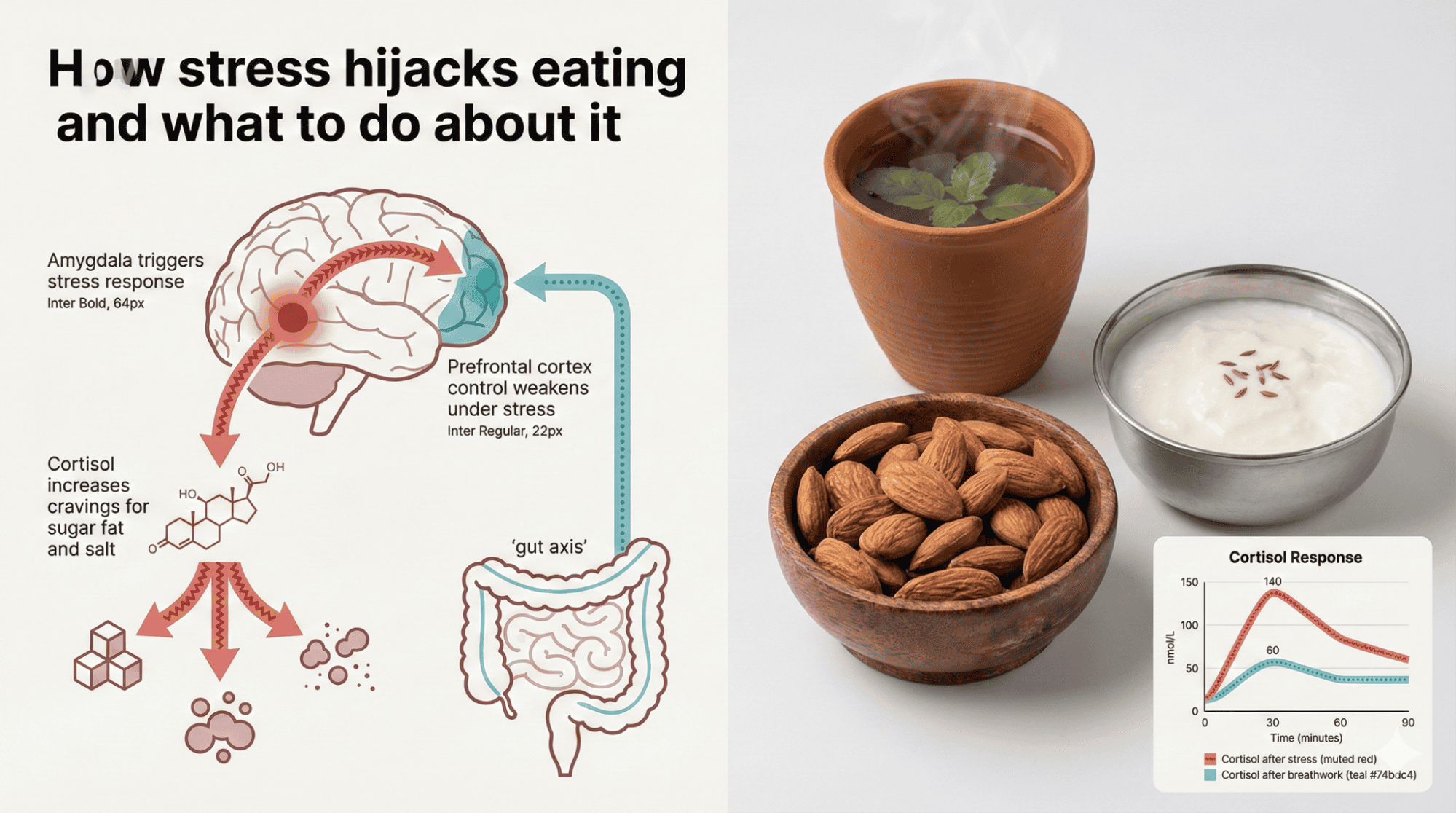
Stress triggers your amygdala to sound alarm bells while shutting down rational thinking in your prefrontal cortex that normally controls impulses. Your body releases cortisol and adrenaline, preparing you to fight or flee danger even when the threat is just an email. Cortisol and cravings connect directly because this stress hormone increases appetite while specifically making you crave sugar, fat, and salt for energy. Moreover, chronic stress damages your gut bacteria and disrupts hunger cues, making it harder to distinguish true hunger from emotional cravings consistently.
The Connection Between Emotional Eating Solutions and Health
Emotional eating solutions matter because stress-driven eating adds hundreds of hidden calories daily that sabotage weight loss efforts despite your best intentions. Studies show that people who eat when stressed gain significantly more belly fat than those eating the same calories without stress. Additionally, stress eating creates guilt and shame that trigger more stress, trapping you in a vicious cycle that worsens over time. Research also confirms that chronic stress eating damages your relationship with food, making normal eating feel impossible even after stress passes temporarily.
What Research Shows for Indian Population
Research from Indian universities found that seventy-five percent of urban professionals report stress eating at least three times weekly during work periods. This stress eating pattern correlates directly with rising obesity rates, particularly among IT professionals working long hours under constant deadline pressure. Indian studies reveal that people who learned stress management techniques reduced emotional eating by sixty percent within three months of practice. Furthermore, data shows that Indians working in high-stress environments have significantly higher cortisol levels than those in less demanding jobs consistently.
Cortisol And Cravings: What to Watch For
Physical Signs and Symptoms to Monitor
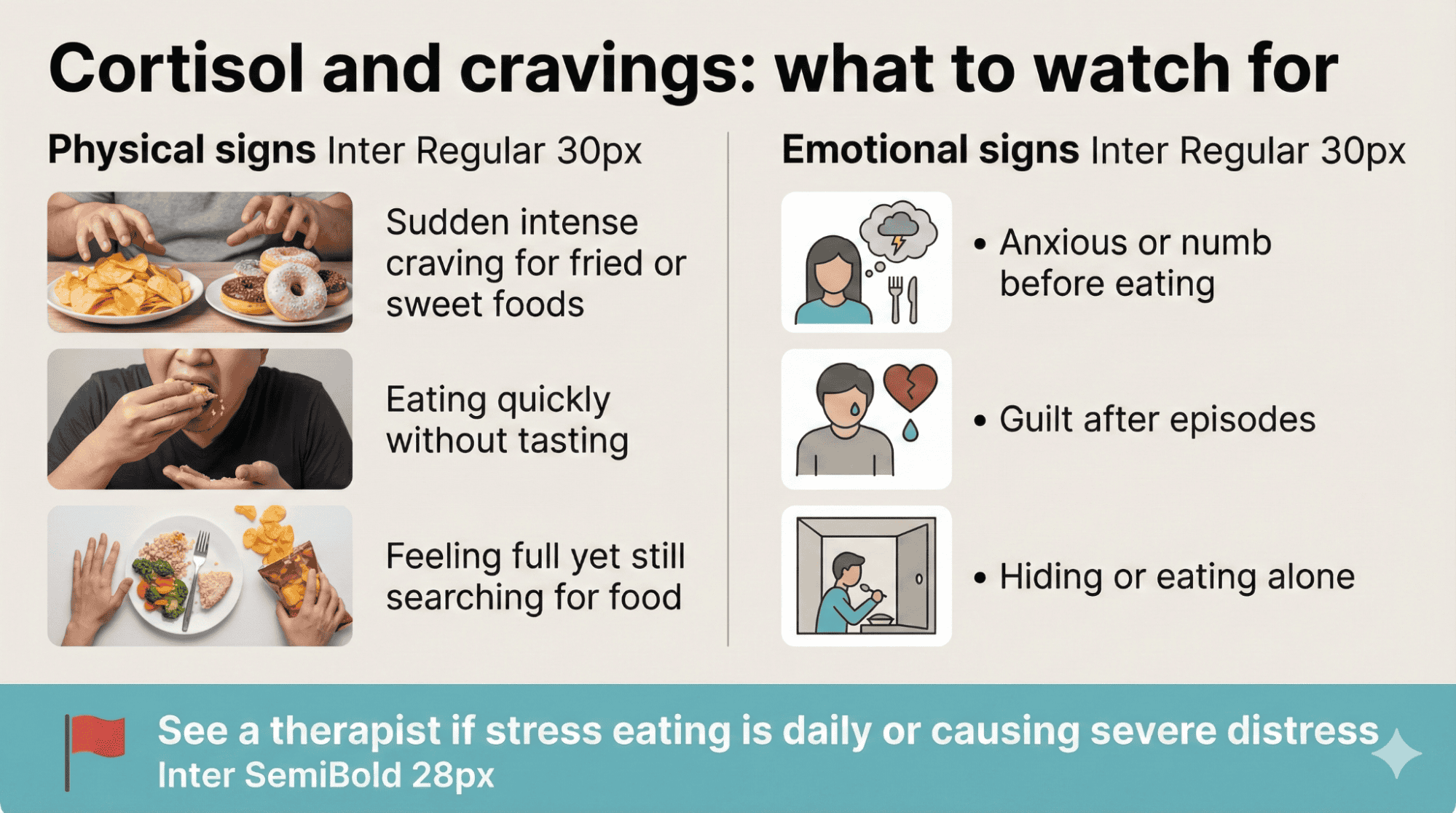
Sudden intense cravings for specific comfort foods like samosas, chips, or sweets signal stress eating rather than genuine physical hunger. Eating quickly without tasting or enjoying your food indicates you’re using food to escape emotions rather than nourish your body. Feeling physically full yet still searching for something to eat points to emotional hunger that food cannot actually satisfy properly. Watch for eating more during stressful times despite having regular meals, which shows cortisol driving appetite beyond your body’s needs.
Emotional and Mental Health Indicators
Feeling anxious, overwhelmed, or numb before reaching for food suggests you’re eating to manage emotions rather than addressing them directly. Guilt and shame after eating, especially followed by promises to do better tomorrow, indicate an unhealthy emotional relationship with food. Eating alone or hiding food consumption from others happens when stress eating makes you feel embarrassed about your behavior patterns. Additionally, using food as a reward or punishment creates emotional associations that make mindful eating techniques difficult to implement successfully over time.
When to Consult a Healthcare Professional
Schedule a therapy session if stress eating happens daily and significantly impacts your weight, health, or emotional well-being over several months. Seek professional help when feeling completely out of control around food, experiencing anxiety attacks related to eating, or developing restrictive patterns. Consult a mental health professional if stress eating accompanies depression, severe anxiety, or trauma that requires specialized treatment beyond nutrition. Moreover, get medical guidance if stress eating coexists with other concerning behaviors like substance use or self-harm that indicate deeper struggles.
Indian Lifestyle Factors Affecting Stress Eating Solutions
Modern Indian Diet Challenges and Solutions
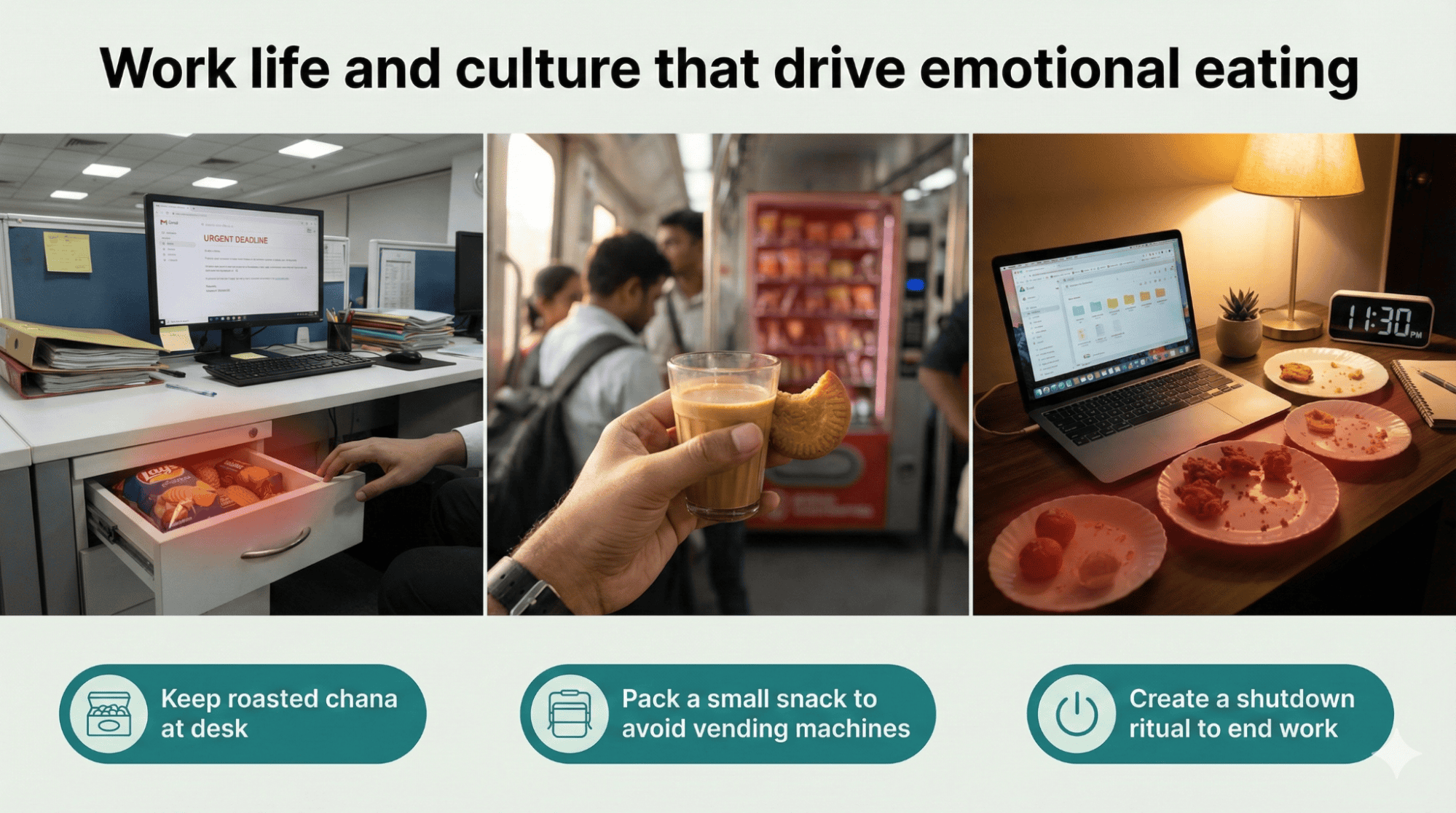
Office stress combined with easy access to vending machines filled with chips and biscuits creates perfect conditions for stress eating throughout workdays. Family expectations to finish everything on your plate regardless of hunger makes it harder to recognize actual fullness cues naturally. Late-night eating during stressful project deadlines becomes habitual, training your brain to associate work stress with food rewards consistently over time. Building awareness through journaling what you eat and why helps identify emotional triggers that drive your stress eating patterns specifically.
Work-Life Balance and Urban Living Impact
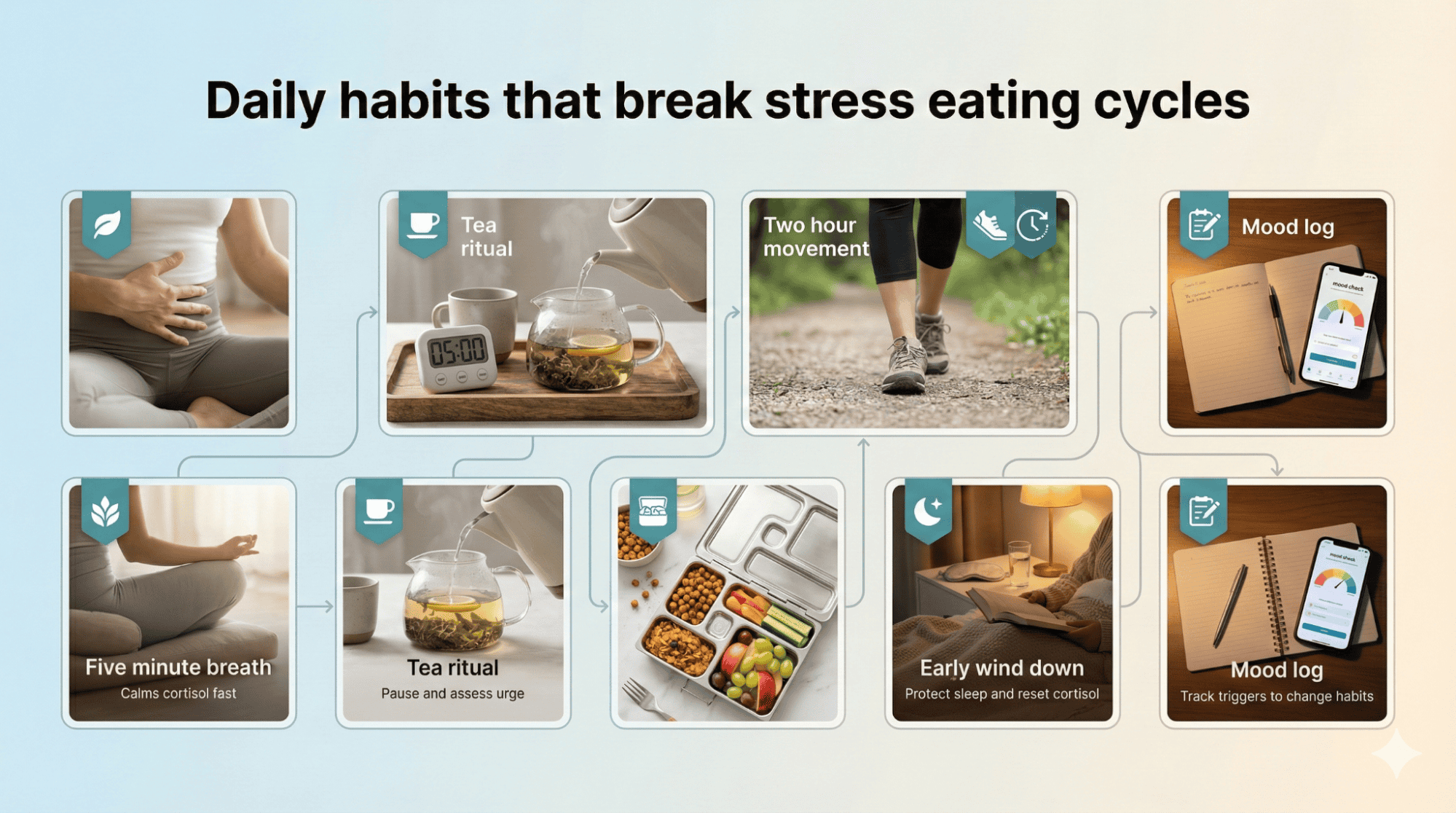
Working long hours without breaks leaves no time for proper stress management, making food the quickest available coping mechanism always accessible. Commuting stress adds to overall cortisol load, making you reach for comfort foods immediately after arriving home from work exhausted. Lack of physical activity means you have no healthy outlet for stress, so your body defaults to eating for relief. Scheduling short movement breaks every two hours reduces cortisol significantly while giving you something besides food to manage stress effectively.
Cultural and Social Influences on Health
Indian culture often uses food to celebrate, comfort, and show love, making emotional associations with eating much stronger than biology alone. Family gatherings centered around elaborate meals create social pressure to eat beyond hunger just to avoid offending hosts or relatives. Suppressing emotions to maintain social harmony leaves you with unprocessed feelings that later trigger stress eating when you’re finally alone. Learning to express emotions directly and seek support beyond food helps break cultural patterns that reinforce emotional eating solutions long-term.
Best Indian Foods for Stress Eating Solutions Management
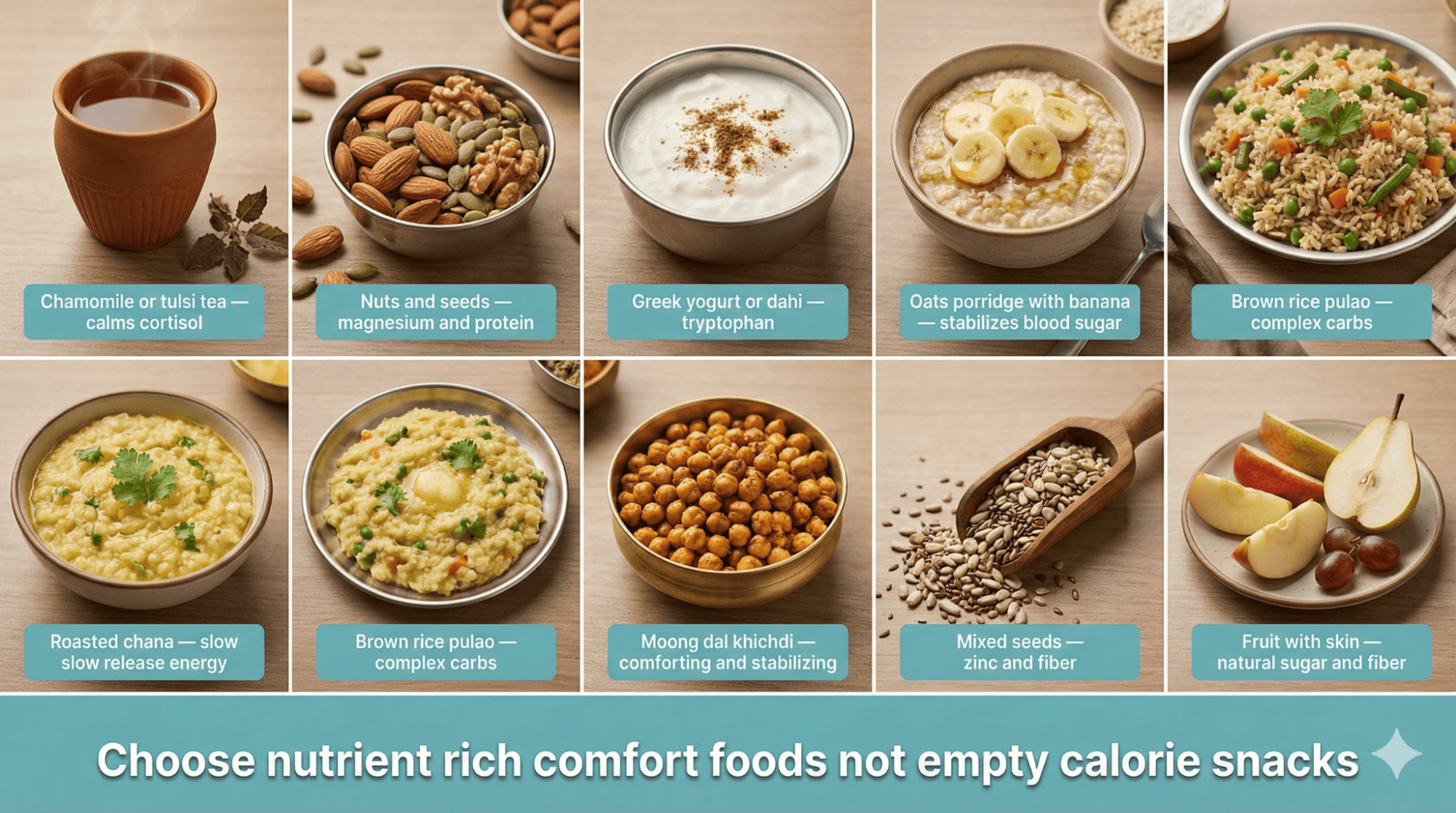
Traditional Indian Foods That Support Stress Management
Complex carbs like brown rice, oats, and whole wheat provide steady energy while supporting serotonin production that improves mood naturally over hours. Herbal teas like chamomile, ashwagandha, and tulsi actively reduce cortisol levels when consumed regularly throughout the day for stress relief. Nuts and seeds, including almonds, walnuts, and pumpkin seeds, provide magnesium that calms your nervous system and reduces stress responses biologically. Furthermore, fermented foods like yogurt and buttermilk support gut bacteria that produce mood-regulating neurotransmitters, affecting emotional eating patterns significantly.
Modern Indian Meal Options and Healthy Recipes
Oatmeal topped with banana and walnuts gives you comfort food that actually stabilizes blood sugar and reduces stress hormone levels. Brown rice pulao with vegetables and cashews provides satisfying texture and flavor while nourishing your body rather than just your emotional needs. Moong dal khichdi with ghee offers ultimate comfort food that’s nutritious enough to support your body through stressful periods without guilt. Moreover, vegetable soup with whole grain crackers gives you something to do with your hands during stress while delivering actual nutrition slowly.
Foods to Limit or Avoid for Better Results
Refined sugar in sweets, sodas, and packaged foods spikes blood sugar, then crashes it, worsening mood swings and triggering more cravings. Excessive caffeine from multiple chai cups throughout the day increases cortisol levels and anxiety that drive stress eating later at night. Deep-fried foods like pakoras and samosas might feel comforting, but actually increase inflammation that worsens stress responses biologically over time. Alcohol used to decompress after work disrupts sleep quality and blood sugar, creating more stress that drives emotional eating tomorrow morning.
Portion Sizes and Meal Timing for Indians
Eat three balanced meals plus two planned snacks to maintain stable blood sugar that prevents cortisol spikes, driving emotional hunger between meals. Never skip breakfast because fasting until lunch elevates cortisol throughout the morning, making stress eating more likely when you finally eat something. Space meals four to five hours apart to allow proper digestion while preventing excessive hunger that clouds judgment around food choices. Keep emergency snacks like roasted chana or nuts ready so stress doesn’t catch you unprepared and vulnerable to vending machine temptations.
Lifestyle Changes to Support Stress Eating Solutions
Mindful Eating Techniques: The Right Approach for Indians
Practice eating without distractions like phone or TV for just one meal daily, paying attention to taste, texture, and fullness signals. Pause halfway through meals to check your hunger level, asking yourself if you’re eating from hunger or just finishing what’s served. Chew each bite twenty times to slow down eating speed, giving your brain time to register fullness before you overeat significantly. Rate your hunger before eating on a scale of one to ten, only eating when truly at five or below physically.
Sleep and Stress Management Strategies
Sleep seven to nine hours nightly because inadequate rest increases cortisol by fifty percent, directly worsening stress eating and cravings the next day. Practice deep breathing for five minutes when stress hits, activating your parasympathetic nervous system that calms cortisol and cravings immediately, naturally. Schedule stress-relief activities like yoga, meditation, or walks daily rather than waiting until stress becomes overwhelming and food seems like the only option. Create a bedtime routine that signals your body to wind down, reducing nighttime stress eating that sabotages your morning motivation.
Daily Habits That Make a Real Difference
Keep a stress and eating journal for two weeks to identify patterns between specific stressors and your emotional eating triggers consistently. Build alternative coping strategies like calling a friend, taking a walk, or practicing a hobby when stress hits instead of automatically eating. Remove tempting foods from easy access at home and office, making stress eating require more effort than alternative coping strategies. Practice self-compassion when slip-ups happen rather than harsh criticism that increases stress and drives more emotional eating as punishment cycles.
Your 7-Day Stress Eating Solutions Management Meal Plan
Breakfast Options (Vegetarian & Non-Vegetarian)
Start your day with oatmeal cooked with milk, topped with banana, walnuts, and cinnamon to stabilize blood sugar and mood all morning. Alternatively, try whole wheat toast with almond butter and apple slices that provide protein and healthy fats, preventing mid-morning stress cravings. Moong dal cheela with vegetables and mint chutney offers savory satisfaction that grounds you before stressful workdays begin with emails. Moreover, Greek yogurt with berries, flax seeds, and honey gives you probiotics supporting the gut-brain connection, affecting emotional eating patterns significantly.
Lunch Ideas for Working Professionals
Pack brown rice with rajma curry, cucumber raita, and salad that provides comfort without blood sugar crashes triggering afternoon stress eating. Whole wheat roti with palak paneer, dal, and vegetables gives you complete nutrition supporting steady energy through stressful afternoon meetings consistently. Quinoa bowl with roasted vegetables, chickpeas, and tahini dressing offers modern options that feel special enough to be satisfying emotionally, too. Furthermore, vegetable daliya with yogurt and fruit provides a lighter option that doesn’t make you sleepy during stressful afternoon work sessions requiring focus.
Evening Snacks and Optimal Timing
Eat your planned evening snack between four and five PM before stress peaks and decision-making becomes impaired by cortisol elevation. Roasted chana with cucumber and lemon offers crunchy satisfaction that gives your hands something to do during stressful moments at home. Apple slices with peanut butter provide a sweet and salty combination that satisfies cravings while delivering actual nutrition supporting stress management naturally. Additionally, herbal tea with a small handful of nuts gives you ritual and nourishment without triggering emotional eating patterns effectively.
Dinner Composition for Better Results
Keep dinner light and early, eating by seven-thirty PM to allow proper digestion before bedtime, when stress eating often happens. Brown rice khichdi with vegetables and ghee provides ultimate comfort food that nourishes rather than just temporarily soothes emotional needs tonight. Grilled fish or paneer with roasted vegetables and millet roti gives you protein and fiber, preventing late-night hunger and stress eating. Alternatively, vegetable soup with whole grain toast offers warm comfort during stressful evenings without heaviness that disrupts sleep quality negatively overnight.
Common Mistakes Indians Make with Stress Eating Solutions
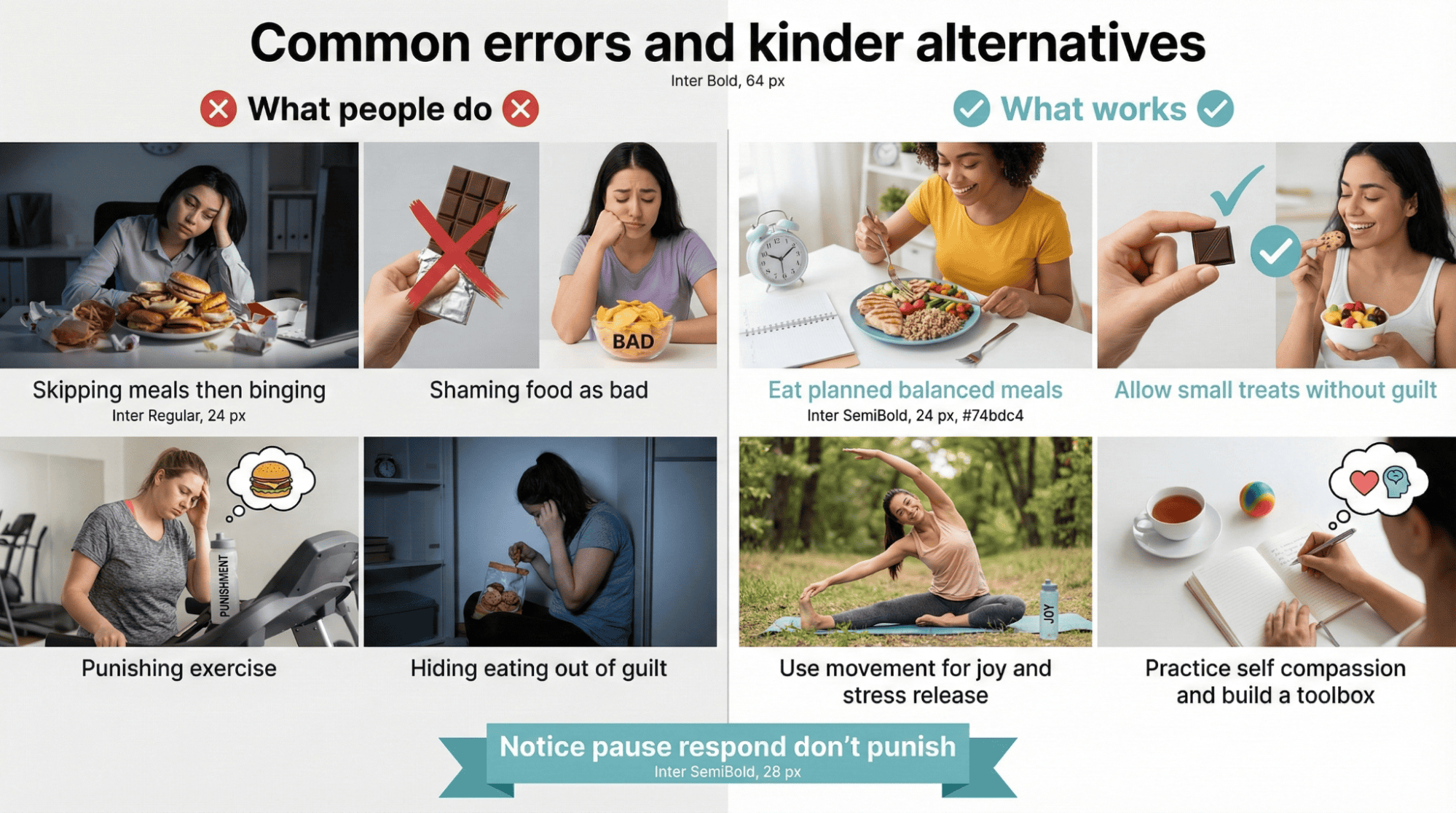
Diet Mistakes That Sabotage Progress
Labeling foods as good or bad creates guilt around eating that actually increases stress and triggers more emotional eating as rebellion. Restricting favorite foods completely makes them more tempting during stress, setting up deprivation-binge cycles that worsen over time. Eating diet foods that don’t satisfy you leaves emotional needs unmet, driving you toward real comfort foods later with less control. Skipping meals to compensate for stress eating yesterday raises cortisol today, making you more likely to stress eat again tonight.
Lifestyle Pitfalls to Watch Out For
Ignoring stress sources while only focusing on food means you never address the root causes driving your emotional eating patterns consistently. Using exercise as punishment for eating creates unhealthy associations that make both exercise and eating feel like chores rather than self-care. Comparing yourself to others on social media increases stress and feelings of inadequacy that trigger emotional eating for temporary relief. Expecting perfection sets you up for failure and harsh self-criticism that raises cortisol and perpetuates stress eating cycles, unfortunately.
How to Course-Correct When Things Go Wrong
Notice stress eating without judgment, simply observing what happened and what triggered it rather than beating yourself up about it. Ask yourself what you really need in the moment such as rest, connection, or movement rather than automatically reaching for food. Create a toolbox of alternative stress responses you can use when eating urges hit, making choices easier during emotional moments naturally. Work with a therapist or counselor specializing in emotional eating if patterns persist despite your best self-help efforts over several months.
Frequently Asked Questions
Q1: What is stress eating solutions and how does it affect Indians?
Stress eating solutions refer to strategies addressing emotional eating triggered by stress rather than physical hunger, affecting seventy-five percent of urban Indian professionals regularly. This pattern leads to weight gain, guilt, damaged relationships with food, and worsening stress because eating doesn’t actually solve underlying emotional problems at all.
Q2: What are the main signs of stress issues?
Common signs include sudden, intense cravings for specific comfort foods, eating quickly without enjoyment, continuing to eat despite fullness, and hiding food consumption. Many people also experience guilt after eating, using food as a reward or punishment, eating more during stressful periods, and feeling out of control around certain foods.
Q3: What foods should Indians eat for better stress eating solutions?
Focus on complex carbs like brown rice and oats, herbal teas including chamomile and ashwagandha, nuts and seeds for magnesium, and fermented foods like yogurt. Include vegetables, fruits, whole grains, and lean proteins that stabilize blood sugar and reduce cortisol levels naturally throughout the day consistently.
Q4: Can stress be managed naturally?
Yes, mindful eating techniques, regular sleep schedule, stress-reduction practices like yoga and meditation, and building alternative coping strategies significantly reduce emotional eating patterns. Addressing underlying stress through therapy, lifestyle changes, and social support helps eliminate stress eating at its source rather than just managing symptoms.
Q5: How long does it take to see results with stress eating solutions changes?
You might notice reduced stress eating episodes within two weeks of implementing mindful eating techniques and stress management practices consistently daily. Significant improvement in emotional regulation, relationship with food, and weight changes typically appear after two to three months of sustained effort and practice.
Conclusion
Stress eating affects seventy-five percent of urban Indian professionals, driven by cortisol and cravings that override rational decision-making during emotional moments throughout busy days. Understanding that stress eating is biological response rather than character weakness helps remove shame that actually worsens the problem significantly over time. The solution requires addressing both stress sources and building alternative coping strategies beyond food that work with your lifestyle and cultural context effectively.
Start by keeping a stress and eating journal today to identify your specific triggers and patterns over the next seven days consistently. Practice one mindful eating technique such as eating without phone distractions at dinner tonight, building awareness of hunger cues versus emotional needs. Try deep breathing for five minutes when stress hits before deciding whether to eat, giving yourself space to choose a response rather than reacting automatically.
Related Posts


