

You’re tired constantly despite adequate sleep. Brain fog makes concentration difficult. Your hands and feet tingle randomly. Blood tests reveal low B12, and your doctor recommends supplements or eating meat. As a vegetarian Indian, you’re confused and worried. Can you get adequate vitamin B12 foods for vegetarians, or is supplementation inevitable? The truth is, vitamin B12 deficiency affects up to 80% of Indian vegetarians, according to research. This essential vitamin exists primarily in animal products, creating unique challenges for vegetarians. However, strategic food choices, fortified foods, and smart supplementation can prevent B12 deficiency while maintaining vegetarian principles. This guide reveals how Indian vegetarians can optimize B12 status effectively.
What Are Vitamin B12 Foods For Vegetarians and Why Indian Dieters Should Care?
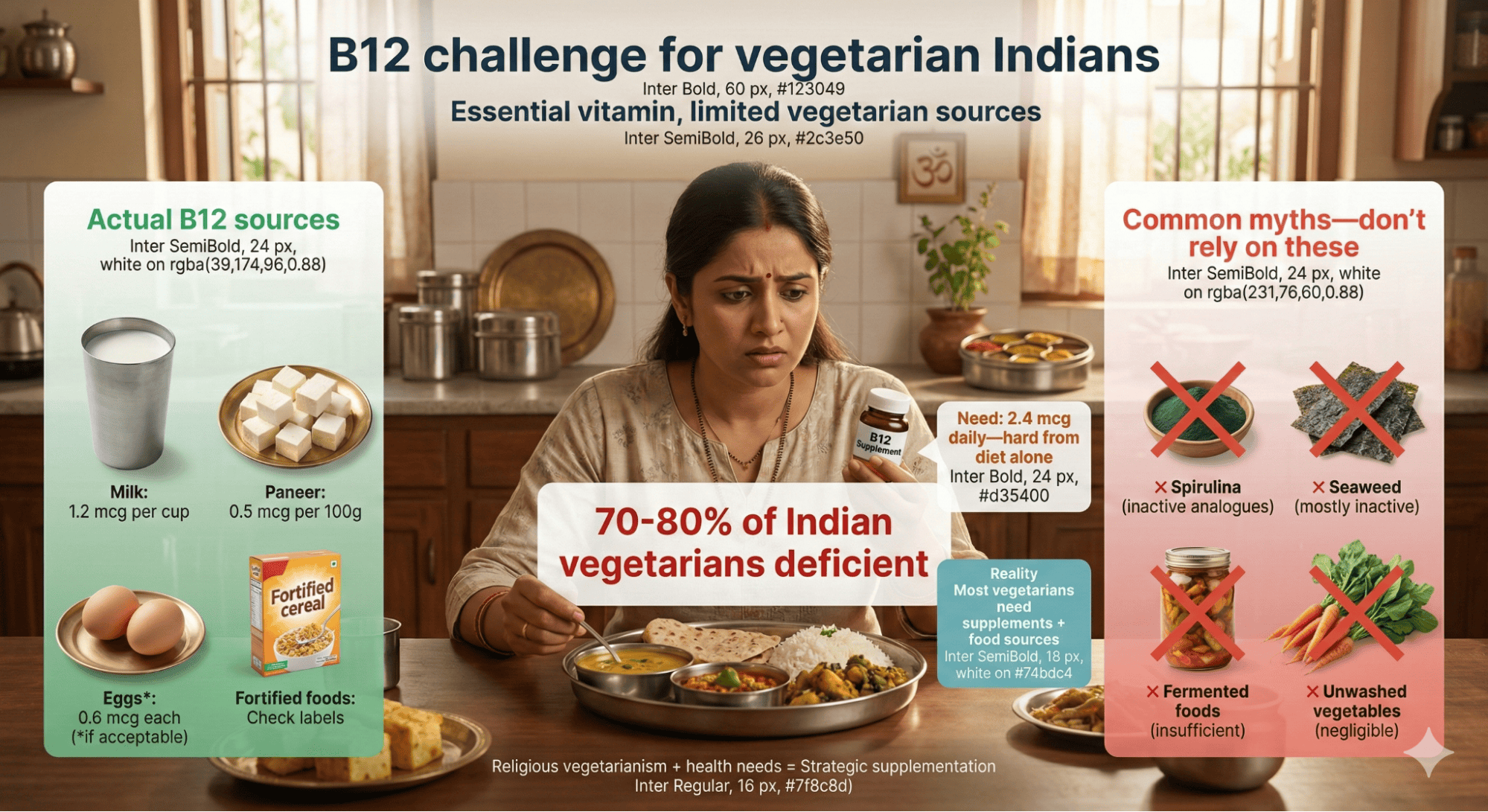
Vitamin B12 foods for vegetarians are limited food sources and strategies vegetarians can use to meet B12 needs without eating meat. Vitamin B12 (cobalamin) is essential for red blood cell formation, nerve function, and DNA synthesis. Additionally, your body can’t produce B12, requiring dietary intake. Moreover, B12 exists almost exclusively in animal products, posing challenges for vegetarians who avoid meat, fish, and poultry. Therefore, vegetarians must rely on dairy, eggs, fortified foods, or supplements. Understanding which plant based B12 sources actually work versus myths helps prevent deficiency affecting millions of Indian vegetarians.
Why Vitamin Matters for Indian Bodies
Indian vegetarians face particularly high B12 deficiency risk due to dietary patterns and absorption issues. Many Indians avoid eggs for religious or cultural reasons, limiting vegetarian B12 sources further. Additionally, dairy consumption often isn’t adequate to meet B12 needs despite being primary vegetarian source. Moreover, Indian diets often lack fortified foods common in Western countries. Furthermore, some Indians have genetic variations affecting B12 absorption, increasing vulnerability. In fact, research shows Indian vegetarians have deficiency rates 10-15 times higher than non-vegetarians. Symptoms like fatigue, weakness, numbness, and cognitive issues significantly affect quality of life. Therefore, understanding vegetarian nutrition specifically regarding B12 becomes critical for health.
Common Myths Debunked About This Topic
Let’s clear up dangerous myths about vitamin B12 foods for vegetarians. First, plant foods don’t contain active B12 despite claims about spirulina, nutritional yeast, or seaweed. These contain B12 analogues that don’t work in humans. Second, fermented foods like idli or dosa don’t provide meaningful B12 despite bacterial fermentation. Third, dairy and eggs alone often don’t provide adequate B12 for many vegetarians needing supplementation additionally. Fourth, B12 deficiency develops slowly, taking years, so absence of symptoms doesn’t mean adequate status. Additionally, high folate intake from vegetarian diets can mask B12 deficiency symptoms until neurological damage occurs. Finally, B12 supplements aren’t “unnatural” or unnecessary for vegetarians. They’re essential health tool for preventing serious deficiency. Therefore, realistic understanding prevents dangerous deficiency.
The Science Behind Vitamin B12 Foods For Vegetarians for Indians
How Vitamin Works in Your Body
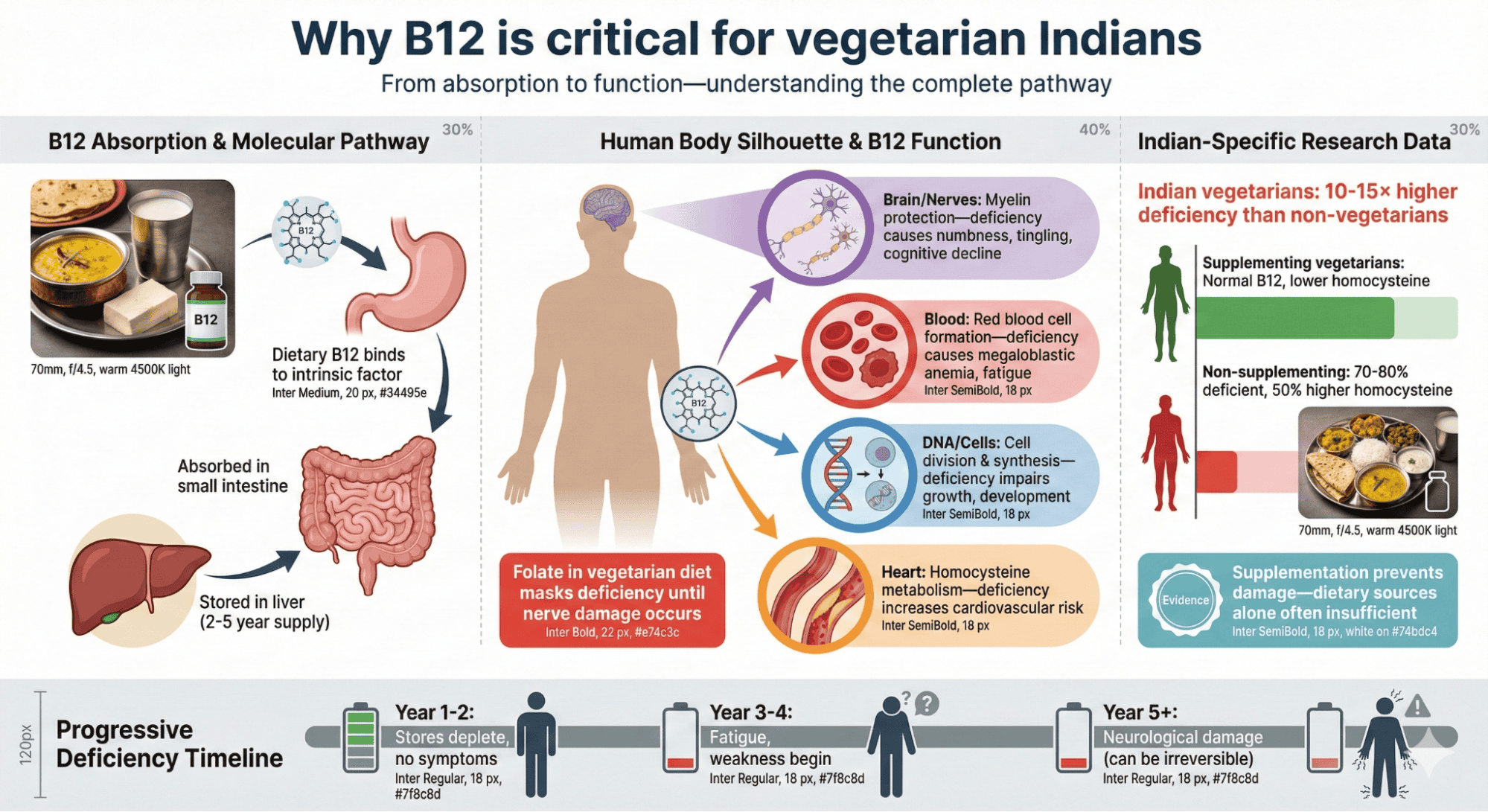
Vitamin B12 functions in critical processes throughout your body. It’s essential for producing red blood cells that carry oxygen to tissues. Additionally, B12 maintains myelin sheath protecting nerves, so deficiency causes neurological symptoms like numbness, tingling, and cognitive issues. Moreover, B12 works with folate for DNA synthesis and cell division. Furthermore, B12 supports metabolism of homocysteine, an amino acid that increases heart disease risk when elevated. In fact, B12 deficiency causes megaloblastic anemia with large immature red blood cells unable to carry oxygen properly. This creates fatigue, weakness, and pale skin. Therefore, adequate B12 is essential for energy, brain function, and overall health. Vegetarian nutrition must address B12 deliberately since plant foods don’t provide it naturally.
The Connection Between B12 Deficiency and Health
B12 deficiency creates cascading health problems beyond just anemia. Neurological damage from deficiency can be irreversible if untreated long-term, causing permanent numbness, balance problems, and cognitive decline. Additionally, elevated homocysteine from inadequate B12 increases cardiovascular disease and stroke risk. Moreover, deficiency during pregnancy causes neural tube defects in babies and developmental delays. Furthermore, low B12 increases depression and mood disorder risk through its role in neurotransmitter production. In fact, many symptoms attributed to aging like fatigue, memory problems, and balance issues actually stem from undiagnosed B12 deficiency common in elderly vegetarians. Therefore, preventing deficiency protects immediate health and long-term wellbeing. Understanding vegan B12 sources and vegetarian options becomes essential for comprehensive health protection.
What Research Shows for Indian Population
Research on B12 deficiency in Indian vegetarians reveals alarming prevalence. Studies show 70-80% of Indian vegetarians have inadequate B12 status based on blood tests. One study found that Indian vegans and vegetarians who don’t supplement have 50% higher homocysteine levels than non-vegetarians, increasing cardiovascular risk. Additionally, research demonstrates that many Indian vegetarians consume dairy but still become deficient because amounts aren’t adequate or absorption is impaired. Moreover, studies show Indian children raised vegetarian have high rates of B12 deficiency affecting growth and development. Furthermore, research indicates that B12 supplementation in deficient Indians rapidly improves energy, cognitive function, and mood within weeks. In fact, studies suggest all Indian vegetarians should supplement B12 regardless of symptoms since deficiency develops insidiously. Therefore, proactive supplementation prevents rather than just treats deficiency.
B12 Deficiency: What to Watch For
Physical Signs and Symptoms to Monitor
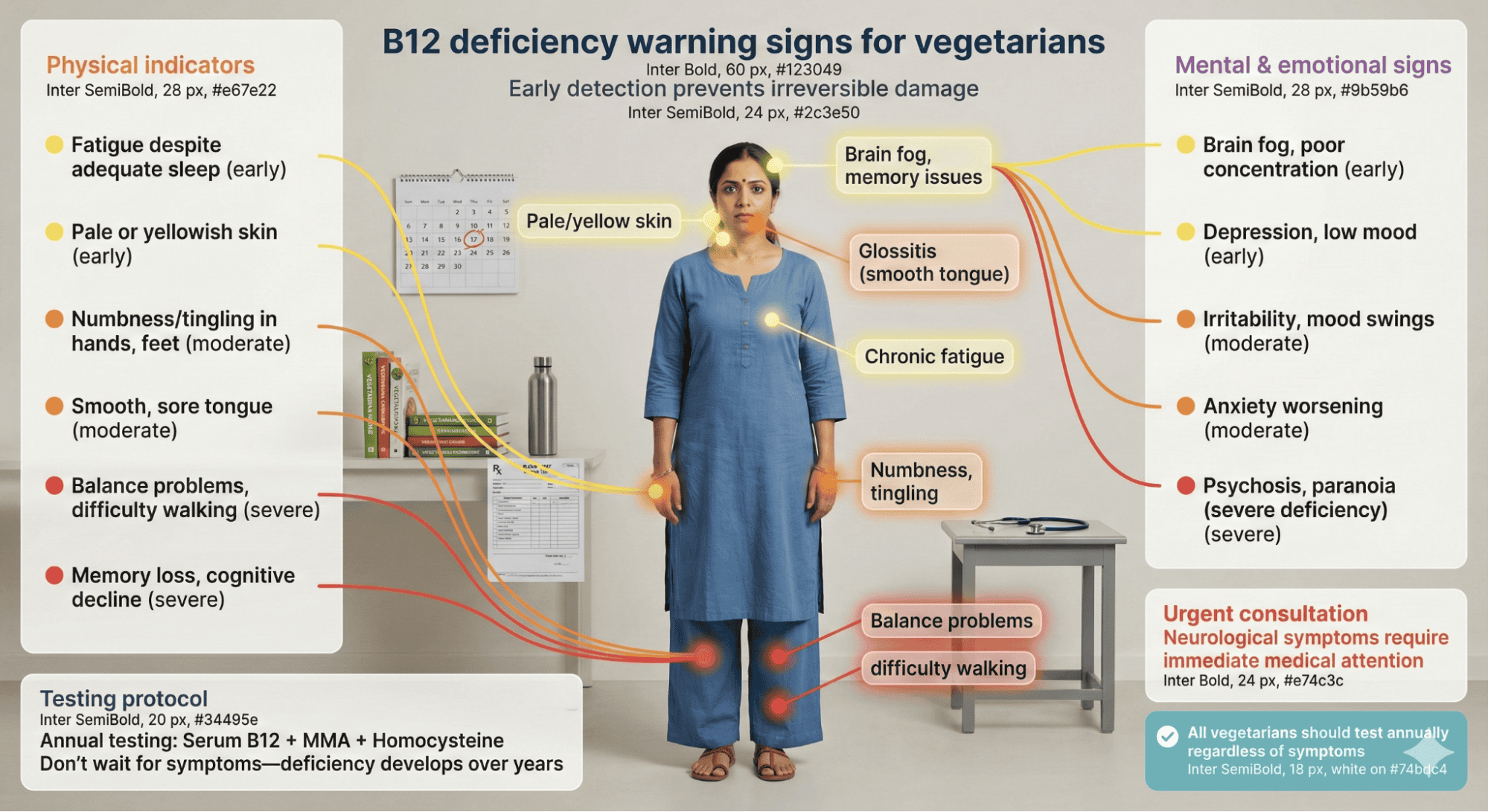
B12 deficiency creates diverse symptoms often misattributed to other causes. Fatigue and weakness despite adequate sleep are early signs. Additionally, pale or yellowish skin indicates anemia from inadequate red blood cell production. Moreover, numbness or tingling in hands and feet signals nerve damage from myelin breakdown. Difficulty walking or balance problems appear with more severe neurological involvement. Furthermore, smooth or sore tongue called glossitis is common. Memory problems, confusion, or cognitive decline especially in elderly people often stem from B12 deficiency. Watch for these symptoms. In fact, if you’re vegetarian experiencing several simultaneously, B12 deficiency is likely culprit. Therefore, early detection through symptoms or blood testing prevents progression to irreversible damage.
Emotional and Mental Health Indicators
B12 deficiency profoundly affects mental health in ways often unrecognized. Depression and low mood improve dramatically with B12 correction in deficient individuals. Additionally, irritability and mood swings stem from inadequate neurotransmitter production requiring B12. Moreover, anxiety worsens with deficiency through its effects on nervous system function. Furthermore, brain fog, poor concentration, and memory problems significantly affect daily functioning and quality of life. Some people experience psychosis or paranoia with severe deficiency. In fact, many people diagnosed with depression or dementia actually have undiagnosed B12 deficiency causing symptoms. Therefore, checking B12 status before assuming psychiatric medications are needed makes sense. Correcting deficiency often resolves mental health symptoms more effectively than medications in deficient individuals.
When to Consult a Healthcare Professional
All vegetarians should get B12 levels tested annually regardless of symptoms since deficiency develops slowly and insidiously. Additionally, if you experience symptoms suggesting deficiency, see a doctor immediately for testing. Request complete evaluation including serum B12, methylmalonic acid (MMA), and homocysteine, not just B12 alone, as some deficient people have normal B12 with elevated MMA. Moreover, if you’re pregnant or planning pregnancy as vegetarian, work with doctors ensuring adequate B12 preventing birth defects. If diagnosed with deficiency, initially high-dose B12 supplements or injections may be needed before switching to maintenance doses. Furthermore, some people have absorption problems requiring lifelong injections rather than oral supplements. Therefore, medical guidance ensures appropriate testing, treatment, and monitoring preventing complications from unaddressed vegetarian nutrition gaps.
Indian Lifestyle Factors Affecting Vitamin B12 Foods For Vegetarians
Modern Indian Diet Challenges and Solutions
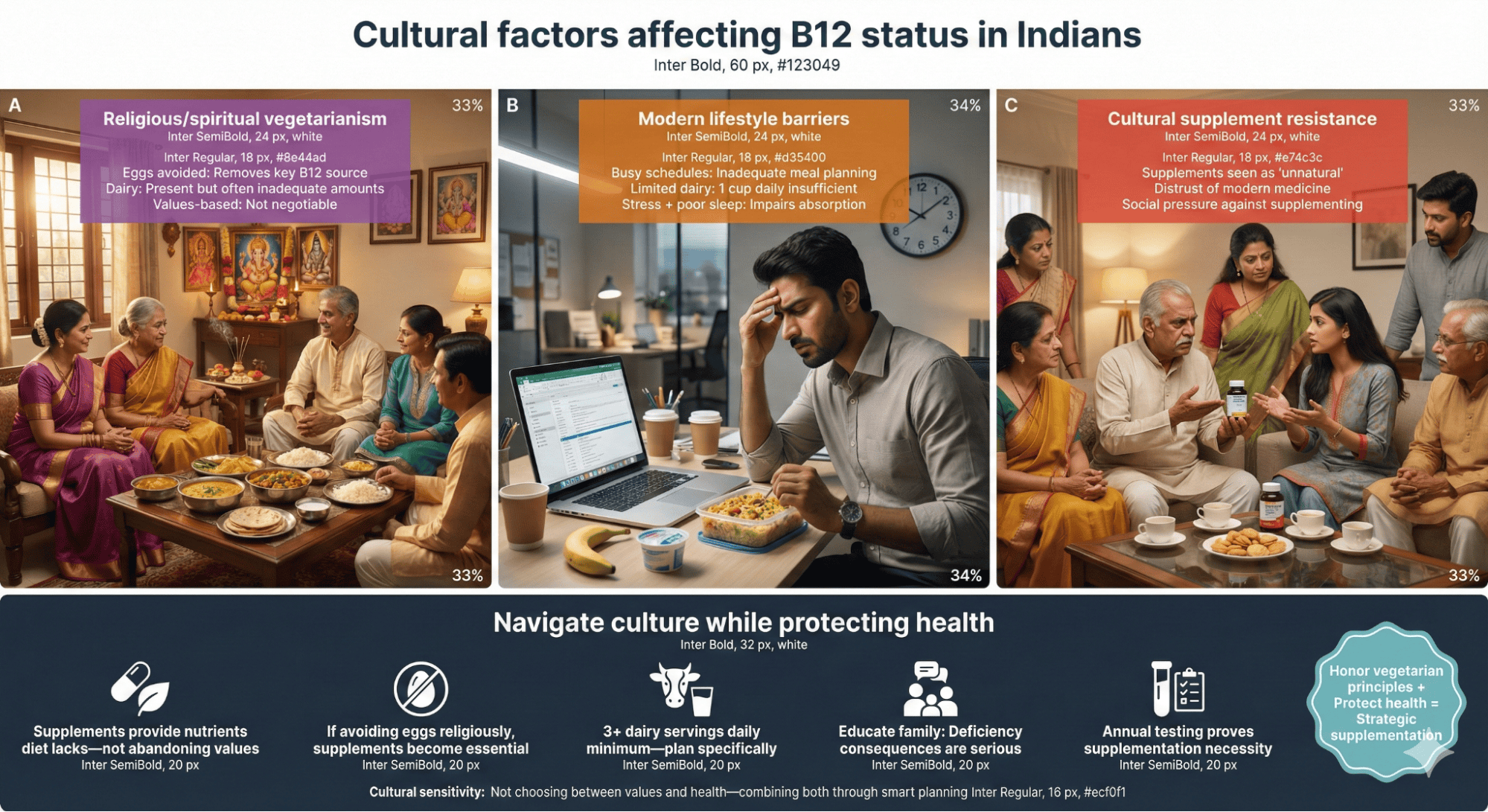
Modern vegetarian Indian diets often lack adequate vitamin B12 foods for vegetarians despite good intentions. Many vegetarians avoid eggs limiting options significantly. Additionally, dairy consumption is often inadequate, perhaps one cup milk or curd daily providing only fraction of B12 needs. Moreover, fortified foods common in Western countries aren’t widely available in India. Furthermore, reliance on processed vegetarian foods like packaged snacks rather than whole foods provides calories without B12. Solutions include consuming adequate dairy products, at least 2-3 servings daily if relying on them. Additionally, include eggs if acceptable, even just 2-3 weekly significantly helps. Moreover, seek out fortified foods like certain breakfast cereals, plant milks, or nutritional yeast with added B12. Furthermore, take B12 supplements as insurance regardless of dietary sources. Therefore, strategic planning ensures adequate intake.
Work-Life Balance and Urban Living Impact
Urban Indian vegetarian lifestyles create additional B12 deficiency risks. Busy schedules mean relying on outside food where dairy quality and quantity is uncertain. Additionally, stress and inadequate sleep impair nutrient absorption including B12. Moreover, some vegetarians eat mostly carb-based diets with dal and vegetables but minimal dairy or eggs. Furthermore, alcohol consumption impairs B12 absorption. Solutions include meal prepping ensuring adequate dairy or eggs at home. Additionally, keep B12 supplements at home and office taking them consistently rather than forgetting. Moreover, reduce alcohol improving absorption of dietary B12. Furthermore, if eating out frequently, choose places offering paneer, curd, or egg options ensuring protein and B12 sources. Therefore, conscious planning overcomes urban lifestyle barriers to adequate vegetarian nutrition.
Cultural and Social Influences on Health
Indian cultural factors both help and hinder B12 status for vegetarians. Traditional vegetarian diets included liberal dairy use supporting B12 intake. However, modern animal rights concerns sometimes reduce dairy consumption without replacing B12. Additionally, some spiritual or religious vegetarians avoid eggs eliminating important B12 source. Moreover, distrust of supplements as “unnatural” prevents many vegetarians from supplementing despite dietary inadequacy. Furthermore, social pressure to remain strictly vegetarian can prevent acknowledging B12 supplementation needs. Solutions include understanding that supplements simply provide nutrients your chosen diet lacks, not abandoning principles. Additionally, if avoiding eggs for religious reasons, acknowledge supplement necessity rather than risking deficiency. Moreover, education about serious consequences of deficiency helps overcome resistance. Therefore, balancing cultural values with health needs through strategic plant based B12 supplementation maintains both vegetarian principles and optimal health.
Best Indian Foods for Vitamin B12 Foods For Vegetarians Management
Traditional Indian Foods That Support Vegetarian Nutrition
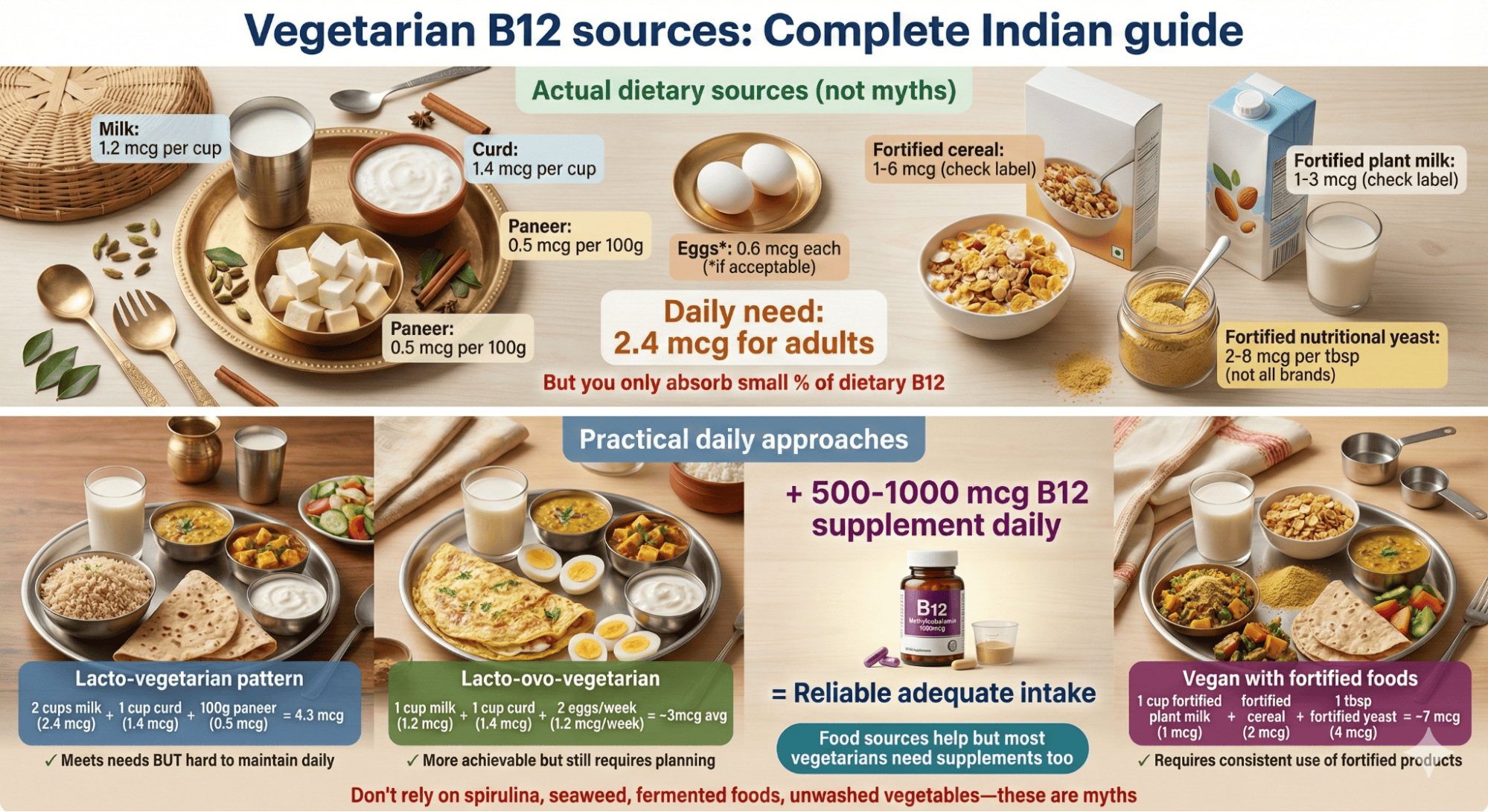
Vitamin B12 foods for vegetarians available to Indians include limited but important options. Dairy products provide primary vegetarian B12 source: one cup milk contains about 1.2 mcg, one cup curd 1.4 mcg, one cup paneer 0.5 mcg, requiring multiple servings daily to meet 2.4 mcg daily needs. Additionally, eggs contain 0.6 mcg per egg, so 3-4 weekly contributes significantly if acceptable. Moreover, fortified plant milks like soy, almond, or oat milk provide 1-3 mcg per cup when fortified, check labels. Furthermore, fortified breakfast cereals offer 1-6 mcg per serving depending on brand. Some nutritional yeast is fortified with 2-8 mcg per tablespoon, though not all brands add B12. In fact, these foods combined with daily supplement provide comprehensive approach. Therefore, maximize dietary sources while acknowledging supplementation necessity for most vegetarians.
Modern Indian Meal Options and Healthy Recipes
Create meals maximizing vegetarian nutrition including B12 sources. Breakfast could include fortified cereal with milk, banana, and nuts providing B12 plus complete nutrition. Additionally, make vegetable omelette using 2 eggs or paneer bhurji with milk-based smoothie. Lunch might include generous paneer portion with vegetables, dal, and curd ensuring multiple dairy servings. Moreover, dinner could be dal, vegetables, and raita with evening milk before bed. If using fortified nutritional yeast, sprinkle on popcorn, salads, or mix into sauces. Furthermore, if using fortified plant milk, make smoothies, porridge, or chai with it. Take B12 supplement with breakfast daily as baseline ensuring adequate intake regardless of food variations. In fact, relying on food alone is difficult for many vegetarians, making supplementation essential alongside dietary efforts. Therefore, combined approach ensures adequacy.
Foods to Limit or Avoid for Better Results
While maximizing B12 sources, avoid relying on foods falsely believed to provide plant based B12. Spirulina, despite health food marketing, contains B12 analogues that don’t function in humans and may interfere with real B12 absorption. Additionally, unwashed vegetables, while containing soil bacteria theoretically producing B12, provide negligible amounts unsuitable for meeting needs. Moreover, fermented foods like idli, dosa, or pickle despite bacterial fermentation don’t reliably provide active B12. Furthermore, seaweed like nori contains mostly inactive B12 analogues. Some tempeh might contain small B12 amounts from fermentation but amounts are unpredictable and insufficient. In fact, relying on these “vegan sources” while avoiding supplements and fortified foods creates deficiency. Therefore, focus on proven sources: dairy, eggs, fortified foods, and B12 supplements rather than unproven alternatives.
Portion Sizes and Meal Timing for Indians
Meeting B12 needs requires strategic portions of limited vegetarian sources. Consume at least 2-3 dairy servings daily: one cup milk or plant milk, one cup curd, and palm-size paneer portion collectively providing 2-3 mcg B12. Additionally, if eating eggs, include 3-4 weekly contributing 2-4 mcg weekly. Moreover, if using fortified foods, check labels calculating actual B12 content and required portions. Furthermore, take B12 supplement daily, ideally 500-1000 mcg cyanocobalamin form, the most stable and studied. Higher doses compensate for poor absorption as you absorb only small percentage of supplemental B12. In fact, since B12 is water-soluble and excess is excreted, megadoses aren’t harmful. Therefore, generous supplementation plus maximizing dietary sources ensures adequate status preventing B12 deficiency in vegetarians.
Lifestyle Changes to Support Vitamin B12 Foods For Vegetarians
B12 Supplements: The Right Approach for Indians
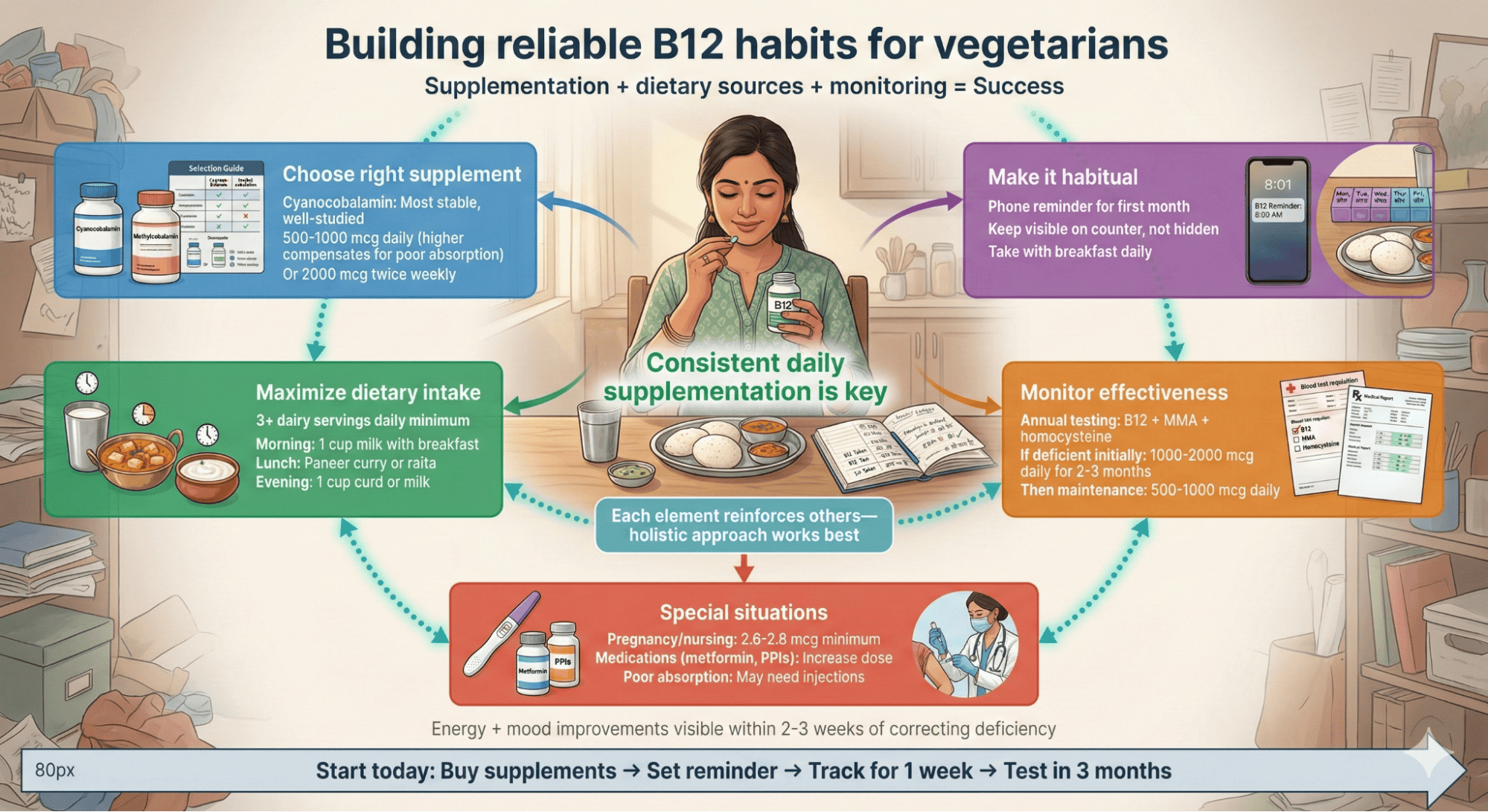
B12 supplements are essential for most Indian vegetarians, not optional extras. Choose cyanocobalamin form, the most stable, well-studied, and affordable. Methylcobalamin is another option but more expensive without clear superiority. Additionally, take 500-1000 mcg daily, or 1000-2000 mcg twice weekly. Higher doses compensate for low absorption percentage. Moreover, sublingual tablets or sprays absorb slightly better but regular tablets work fine taken with food. Furthermore, get B12 tested annually checking if supplementation is adequate or dose needs adjustment. If deficient initially, take 1000-2000 mcg daily for 2-3 months correcting stores before dropping to maintenance dose. In fact, pregnant and nursing vegetarians need higher amounts, at least 2.6-2.8 mcg daily. Therefore, consistent supplementation prevents deficiency that dietary sources alone often can’t.
Sleep and Stress Management Strategies
Sleep and stress affect B12 absorption and utilization. Chronic stress increases B12 needs while impairing absorption. Therefore, practice stress management supporting your body’s nutrient utilization. Additionally, adequate sleep allows proper metabolization and storage of B12. Poor sleep impairs numerous nutritional processes including B12 function. Moreover, alcohol consumption even moderate amounts impairs B12 absorption significantly. Limit alcohol supporting better utilization of dietary and supplemental B12. Furthermore, certain medications like metformin, proton pump inhibitors, and antibiotics interfere with B12 absorption. If taking these long-term, discuss increased supplementation with doctors. In fact, optimizing overall lifestyle factors creates foundation allowing vegetarian nutrition including B12 supplementation to work most effectively. Therefore, holistic approach supports rather than undermines B12 status.
Daily Habits That Make a Real Difference
Small consistent actions optimize B12 status for vegetarians. Take your B12 supplement same time daily, perhaps with breakfast, making it habitual. Additionally, set phone reminder for first month until taking supplements becomes automatic. Moreover, keep supplements visible on counter or desk rather than hidden in cabinets where you’ll forget. Furthermore, include B12-containing foods at each meal when possible maximizing dietary intake alongside supplementation. Track your energy levels, mood, and cognitive function noticing improvements after correcting deficiency, reinforcing importance of continued supplementation. In fact, educate family and friends about vegetarian B12 needs reducing resistance and creating support. Additionally, get annual blood tests confirming adequacy and adjusting supplementation as needed. Therefore, systematic approach to B12 supplementation combined with maximizing vegan B12 sources prevents deficiency effectively.
Your 7-Day Vitamin B12 Foods For Vegetarians Management Meal Plan
This meal plan maximizes vegetarian B12 sources plus daily supplementation:
| Day | Breakfast (with B12 supplement) | Lunch | Evening Snack | Dinner |
| Day 1 | Fortified cereal + milk (1 cup) + banana + B12 pill | 2 rotis + paneer curry (100g) + dal + curd (1 cup) | Cheese (30g) + crackers | Dal + vegetables + raita + milk (1 cup) |
| Day 2 | 2-egg omelette + whole wheat toast + milk + B12 pill | Brown rice + dal + paneer tikka (100g) + curd | Yogurt (1 cup) with nuts | Vegetables + dal + small paneer + milk |
| Day 3 | Paneer bhurji + roti + fruit smoothie with milk + B12 pill | 2 rotis + dal + mixed veg + paneer (80g) + curd | Milk (1 cup) + almonds | Dal + vegetables + raita + cheese |
| Day 4 | Fortified plant milk smoothie + oats + nuts + B12 pill | Quinoa + dal + paneer curry (100g) + curd (1 cup) | Paneer cubes (50g) | Dal + vegetables + milk (1 cup) |
| Day 5 | Idli (3) + sambhar + egg + milk (1 cup) + B12 pill | 2 rotis + dal + palak paneer (100g) + raita | Curd (1 cup) with fruit | Vegetables + dal + paneer + milk |
| Day 6 | Vegetable poha + boiled egg + milk + B12 pill | Brown rice + dal + paneer curry + curd (1 cup) | Cheese (30g) + whole grain crackers | Dal + vegetables + raita + milk (1 cup) |
| Day 7 | Besan cheela (2) + paneer + curd (1 cup) + B12 pill | 2 rotis + dal + mixed veg + paneer (80g) + raita | Milk (1 cup) + nuts | Dal + vegetables + paneer + milk |
Note: Each day includes 2-3 servings dairy (milk, curd, paneer/cheese) providing 2-3 mcg B12. Eggs when included add 0.6 mcg each. PLUS 500-1000 mcg B12 supplement daily ensuring adequate total intake. Fortified foods when available boost intake further.
Common Mistakes Indians Make with Vitamin B12 Foods For Vegetarians
Diet Mistakes That Sabotage Progress
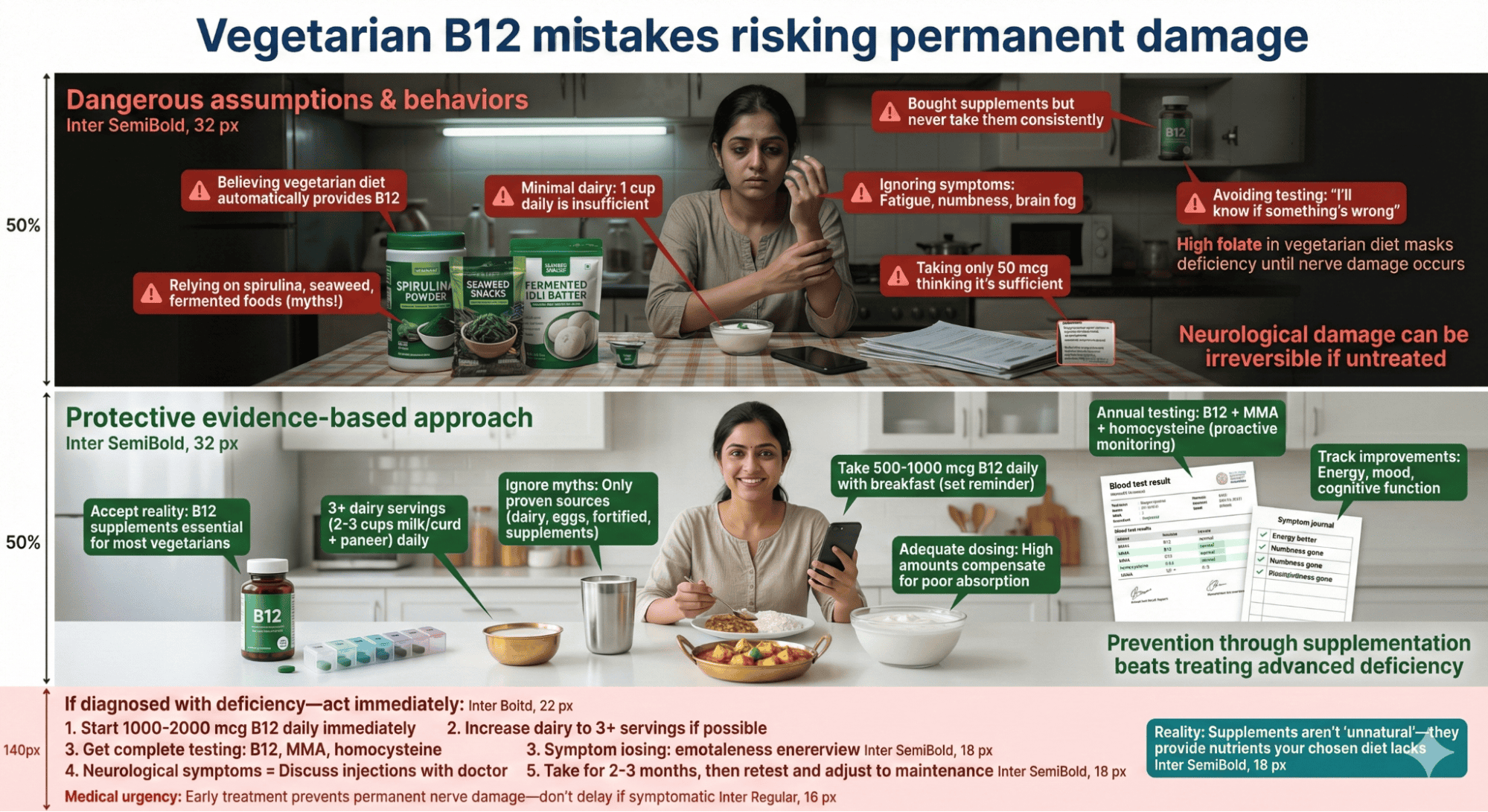
Biggest mistake is believing vegetarian diet automatically provides adequate B12 without deliberate planning or supplementation. Another error is relying on mythical plant based B12 sources like spirulina, unwashed vegetables, or fermented foods that don’t actually provide active B12. Additionally, many vegetarians consume some dairy or eggs but inadequate amounts to meet B12 needs. Moreover, avoiding B12 supplements thinking they’re “unnatural” or unnecessary when they’re essential for most vegetarians. Furthermore, not getting B12 tested assuming absence of symptoms means adequate status when deficiency develops over years before becoming obvious. In fact, high folate intake from vegetarian diets masks deficiency symptoms allowing progression to irreversible neurological damage. Therefore, proactive supplementation and testing prevent rather than just treat deficiency.
Lifestyle Pitfalls to Watch Out For
Many vegetarians sabotage B12 status through poor supplementation habits. Buying supplements but forgetting to take them consistently provides no benefit. Additionally, taking inadequate doses like 50 mcg thinking it’s sufficient when 500-1000 mcg daily is needed due to poor absorption. Moreover, starting supplementation after deficiency symptoms appear rather than preventing deficiency proactively. Furthermore, not educating family about vegetarian B12 needs creates social pressure against supplementation or dietary planning. Not tracking whether supplementation is working through periodic blood tests means continuing inadequate approach. In fact, some vegetarians refuse medical testing or treatment for diagnosed deficiency for ideological reasons risking permanent health damage. Therefore, practical consistent approach to vegetarian nutrition including B12 prevents these sabotaging patterns.
How to Course-Correct When Things Go Wrong
If diagnosed with B12 deficiency or experiencing symptoms, act immediately. Take 1000-2000 mcg B12 supplement daily for 2-3 months correcting depleted stores. Additionally, increase dairy and egg intake if acceptable maximizing dietary sources. Moreover, get complete testing, including MMA and homocysteine, confirming deficiency severity and monitoring recovery. Furthermore, if symptoms are severe or supplementation doesn’t improve levels, discuss B12 injections with your doctor providing better absorption initially. Some people have absorption problems requiring ongoing injections rather than oral supplements. In fact, if neurological symptoms like numbness or balance problems exist, aggressive treatment prevents irreversible damage requiring immediate high-dose therapy. Therefore, don’t delay addressing confirmed or suspected deficiency. Early intervention prevents permanent complications while delayed treatment allows progression.
Frequently Asked Questions
Q1: What is vitamin B12 foods for vegetarians and how does it affect Indians?
Vitamin B12 foods for vegetarians include dairy products (milk, curd, paneer, cheese), eggs, and fortified foods like certain cereals and plant milks, as plant foods don’t naturally contain active B12. Research shows 70-80% of Indian vegetarians have B12 deficiency due to inadequate dairy intake, avoiding eggs, and lack of supplementation creating fatigue, neurological symptoms, and health risks.
Q2: What are the main signs of B12 deficiency?
Signs include persistent fatigue despite rest, pale or yellowish skin, numbness or tingling in hands/feet, difficulty walking or balance problems, smooth sore tongue, memory problems, confusion, depression, and mood disturbances. Multiple symptoms together strongly suggest B12 deficiency requiring immediate testing and treatment preventing irreversible damage.
Q3: What foods should Indian vegetarians eat for adequate B12?
Eat 2-3 dairy servings daily (milk, curd, paneer totaling 2-3 mcg B12), include eggs if acceptable (3-4 weekly), choose fortified cereals or plant milks when available, and TAKE 500-1000 mcg B12 supplements daily as dietary sources alone often insufficient. Combination approach ensures adequate vegetarian nutrition including critical B12.
Q4: Can B12 deficiency be managed naturally without supplements?
Extremely difficult for most vegetarians. While maximizing dairy and eggs helps, achieving adequate B12 through food alone requires eating large amounts daily that most people don’t sustain. B12 supplements are necessary for most vegetarians preventing deficiency effectively and safely. Supplements aren’t “unnatural” but essential nutrition tools for vegetarian diets.
Q5: How long does it take to correct B12 deficiency?
Blood levels normalize within 2-3 months of adequate supplementation (1000-2000 mcg daily). Fatigue and mood improvements appear within 2-4 weeks. Neurological symptoms like numbness take 3-6 months improving slowly. Severely depleted stores may require 6-12 months full restoration. B12 supplementation must continue lifelong preventing recurrence.
Conclusion
Vitamin B12 foods for vegetarians are limited to dairy, eggs, and fortified foods, with plant foods providing no active B12 despite marketing claims. For Indian vegetarians, especially those avoiding eggs, meeting B12 needs through diet alone is extremely challenging. Research showing 70-80% deficiency rates among Indian vegetarians demonstrates dietary sources typically aren’t adequate without deliberate planning and supplementation. B12 supplements aren’t optional for most vegetarians but essential nutrition tool preventing serious health consequences from deficiency including irreversible neurological damage.
Start today by purchasing quality B12 supplement (500-1000 mcg cyanocobalamin) and taking it daily with breakfast. Additionally, increase dairy intake to 2-3 servings daily if relying on food sources. Schedule annual B12 testing monitoring status and adjusting supplementation as needed. These simple actions prevent the fatigue, neurological problems, and health complications affecting majority of unsupplemented vegetarians.
Related Posts


