

Your friend lost 10 kilos on keto, while you gained weight trying the same diet. Your sister sheds fat easily with intermittent fasting, but you feel weak and cranky. You’ve tried every trending diet, yet nothing seems to work for your body. The problem might not be the diets themselves. Understanding weight loss diet for body type reveals why one-size-fits-all approaches fail. Your body type influences how you gain weight, lose fat, and respond to different foods and exercise. This guide helps you identify your weight loss diet for body type and customize a fat loss plan that actually works for your Indian lifestyle.
What Is Weight Loss Diet For Body Type and Why Indian Dieters Should Care?
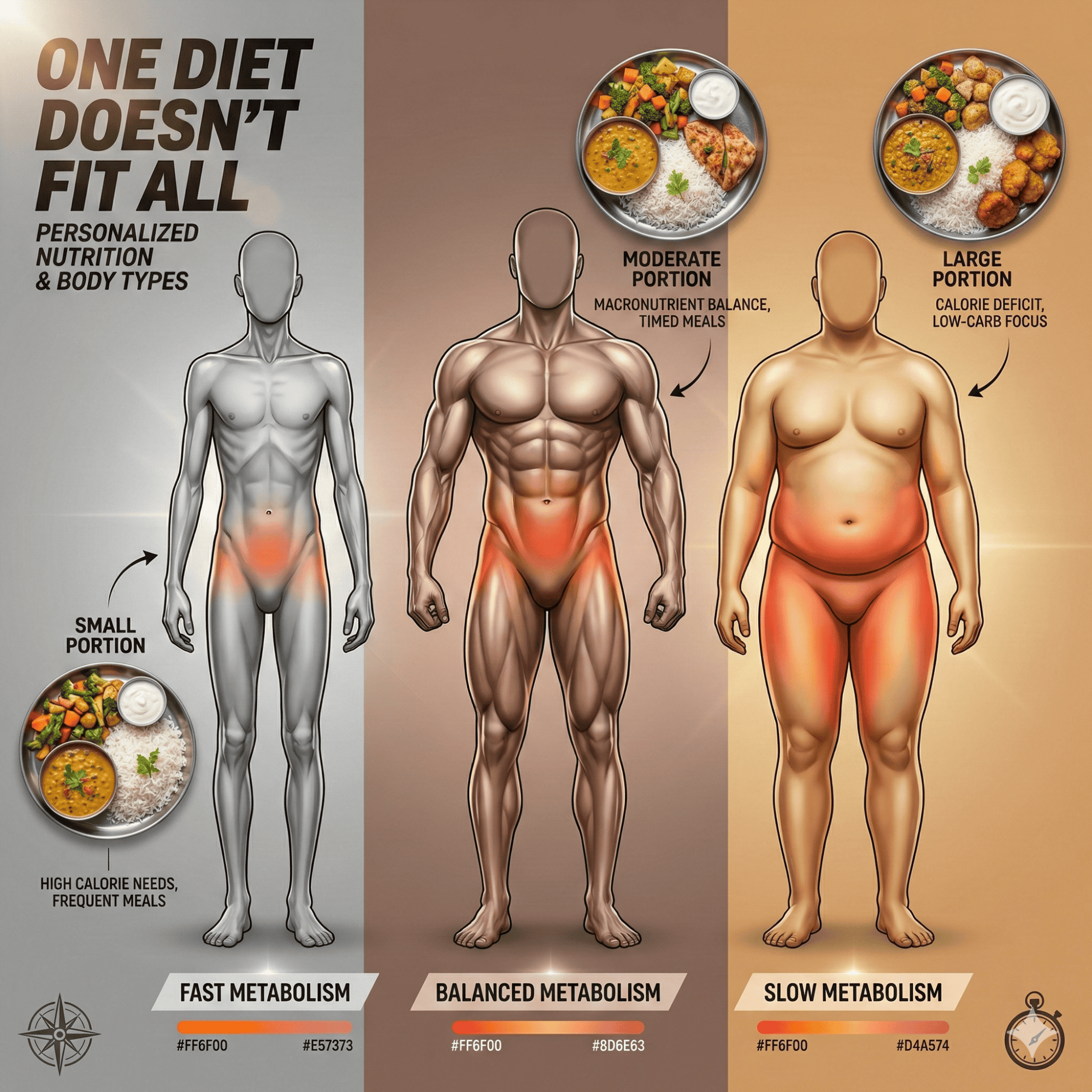
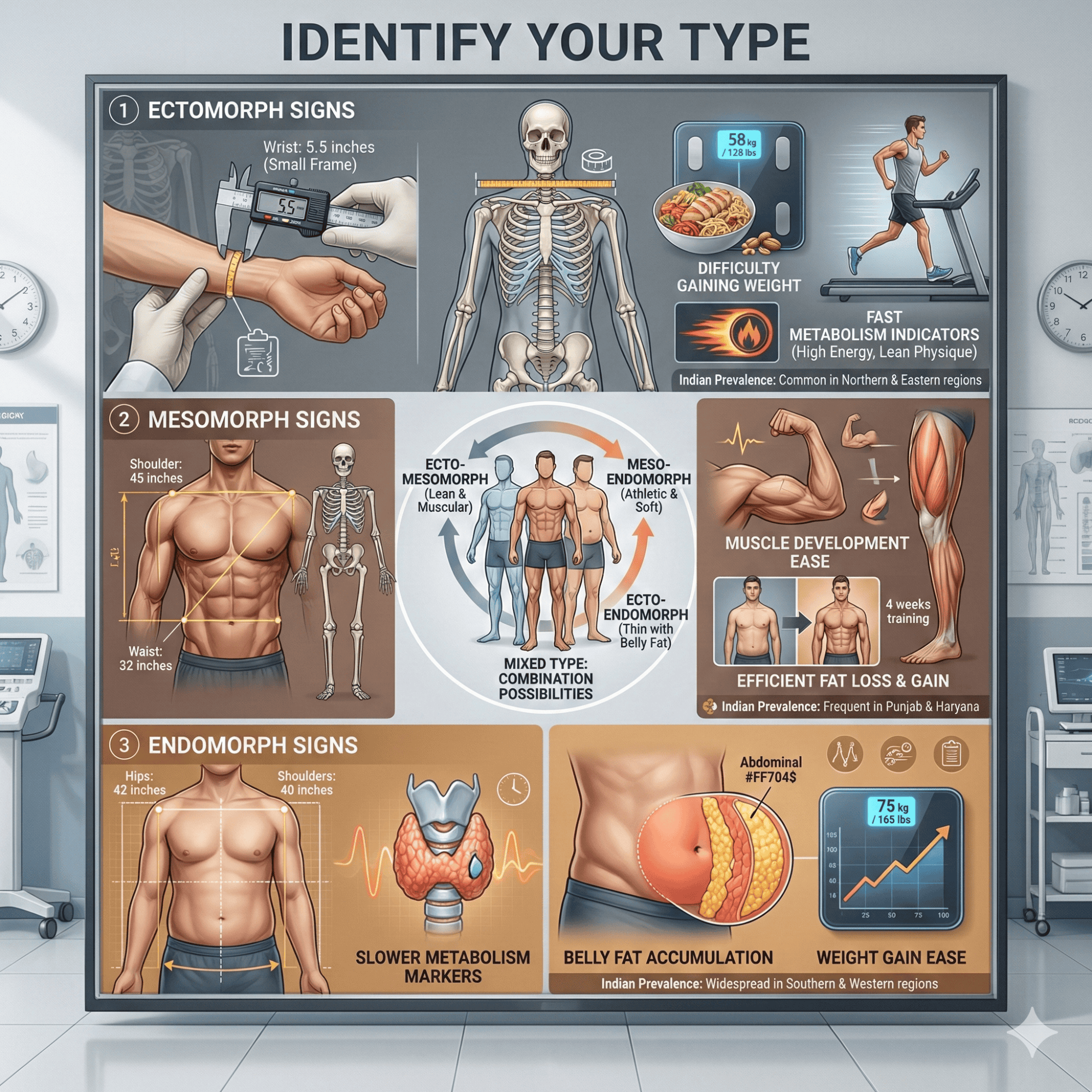
Body type classification, called somatotypes, divides people into three categories: ectomorph (naturally thin, struggles to gain weight), mesomorph (athletic build, gains muscle easily), and endomorph (larger frame, gains weight easily). Your weight loss diet for body type considers how your body naturally stores fat, builds muscle, and responds to food. Ectomorphs have fast metabolism and struggle to gain any weight. Mesomorphs build muscle easily and can lose fat relatively quickly. Endomorphs gain weight easily and find fat loss challenging. Most people are a combination of types rather than purely one category, but understanding your dominant type helps customize your approach.
Why Body Type Matters for Indian Bodies
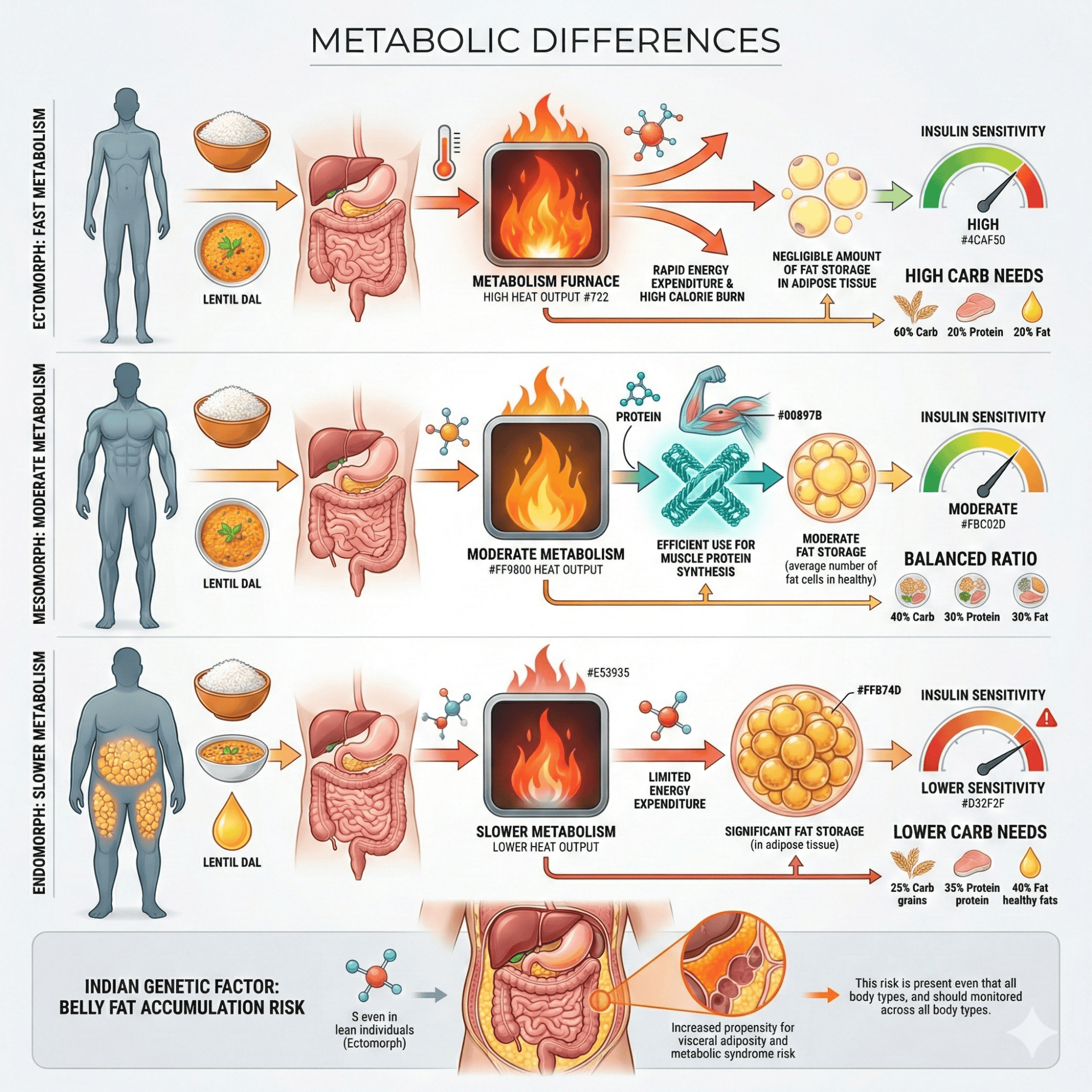
Indians display all three body types, but our genetic predisposition to store belly fat affects everyone regardless of somatotype. Additionally, traditional Indian diets high in carbs impact different body types uniquely. Endomorphs, common among Indians, struggle significantly with carb-heavy diets that spike insulin. Ectomorphs might handle rice and rotis better but still need adequate protein. Moreover, urban Indian lifestyles with sedentary jobs affect body types differently. Endomorphs suffer most from lack of activity, while ectomorphs might lose muscle mass. Understanding your body type metabolism helps you adjust portions, meal timing, and exercise to overcome genetic tendencies and lifestyle challenges specific to Indian living.
Common Myths Debunked About This Topic
Let’s clear up misconceptions about weight loss diet for body type. First, body type isn’t destiny. While genetics influence your natural tendencies, lifestyle choices matter more. Second, you can’t change your fundamental bone structure, but you can definitely lose fat and build muscle regardless of type. Third, the same diet won’t work equally for all body types, which explains why your friend’s success doesn’t translate to you. Fourth, body type isn’t an excuse. Even endomorphs can achieve lean physiques with the right approach. Finally, you’re not stuck with one strategy forever. As your body composition changes, your dietary needs evolve too.
The Science Behind Weight Loss Diet For Body Type for Indians
How Body Types Work in Your Body
Your body type influences several metabolic factors. Ectomorphs typically have higher metabolism, burning calories quickly, which makes gaining weight difficult but also means they can eat more carbs without fat gain. Their insulin sensitivity is usually good. However, they struggle to build muscle without sufficient protein and calories. Mesomorphs have moderate metabolism with excellent muscle-building capacity and good insulin sensitivity. They respond well to most diet and exercise approaches. Endomorphs have slower metabolism and lower insulin sensitivity, making them prone to storing carbs as fat rather than burning them for energy. Therefore, each type needs different macronutrient ratios and meal timing strategies.
The Connection Between Ectomorph Diet and Health
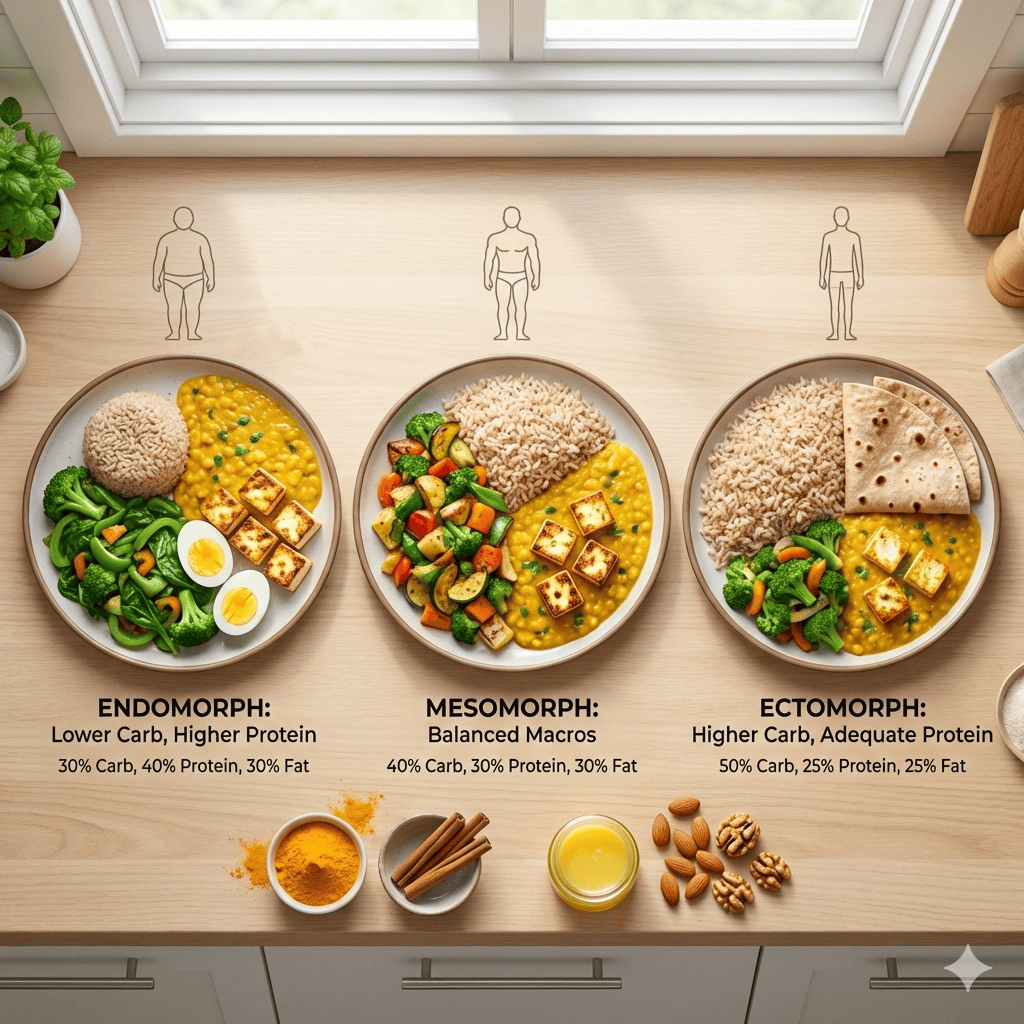
An ectomorph diet focuses on getting enough calories and protein to prevent muscle loss and maintain energy. Ectomorphs need more frequent meals and can handle higher carb intake without fat gain. Additionally, they need adequate healthy fats for hormone production. For Indian ectomorphs, the challenge isn’t weight loss but preventing excessive weight loss and maintaining muscle. Moreover, focusing too much on “healthy eating” with only salads and low-calorie foods depletes their already limited energy reserves. A mesomorph diet balances macros with moderate carbs, high protein, and moderate fats. Mesomorphs maintain results relatively easily with balanced eating. An endomorph diet requires lower carbs, higher protein, and controlled portions to manage insulin and promote fat loss.
What Research Shows for Indian Population
Research on body types in Indians is limited, but studies on metabolism reveal patterns. Many Indians exhibit endomorph characteristics with tendency toward central obesity and insulin resistance even at normal weights. One study found that Indians have higher body fat percentages than Westerners at the same BMI, suggesting slower metabolism or different fat distribution. Additionally, research shows that Indians respond poorly to high-carb diets when insulin resistant, experiencing greater fat gain than other populations. In fact, Indians benefit significantly from adjusting carb intake based on metabolic response rather than following standard diet ratios. Understanding these population-specific tendencies alongside individual somatotype diet needs creates the most effective approach.
Mesomorph Diet: What to Watch For
Physical Signs and Symptoms to Monitor
Identifying your body type helps choose the right mesomorph diet or other approach. Ectomorphs are naturally thin with small joints, narrow shoulders and hips, fast metabolism, and difficulty gaining any weight. Mesomorphs have athletic builds with broad shoulders, narrow waist, medium joints, and gain muscle easily while losing fat relatively quickly. Additionally, endomorphs have larger frames, wider hips, slower metabolism, and gain weight easily especially around the midsection and hips. Most Indians are predominantly endomorph or mesomorph. Mixed types are common where you might have endomorph lower body with mesomorph upper body. Observe how your body responds to diet and exercise over time to understand your tendencies.
Emotional and Mental Health Indicators
Your body type influences more than just physical appearance. Ectomorphs might feel frustrated seeing others gain muscle easily while they remain thin despite efforts. This can create body image issues and obsessive eating to gain weight. Mesomorphs might take their natural advantages for granted, neglecting healthy habits until metabolism slows with age. Moreover, endomorphs often struggle with self-esteem due to constant weight battles, leading to emotional eating, yo-yo dieting, and giving up entirely. Understanding that your challenges stem from biological tendencies rather than personal failure reduces shame and helps you approach weight management with self-compassion and realistic expectations.
When to Consult a Healthcare Professional
Seek help if extreme measures aren’t working despite your best efforts. If you’re eating very little (under 1200 calories) but still not losing weight, underlying metabolic or hormonal issues need evaluation. Get tested if you experience symptoms like extreme fatigue, hair loss, irregular periods, or depression alongside weight struggles. Additionally, if you’ve developed disordered eating patterns or obsess constantly about food and weight, professional help is essential. Work with a registered dietitian who understands body types and can create personalized plans. Sometimes medical conditions like PCOS, thyroid problems, or insulin resistance require treatment alongside dietary changes for effective weight loss diet for body type results.
Indian Lifestyle Factors Affecting Weight Loss Diet For Body Type
Modern Indian Diet Challenges and Solutions
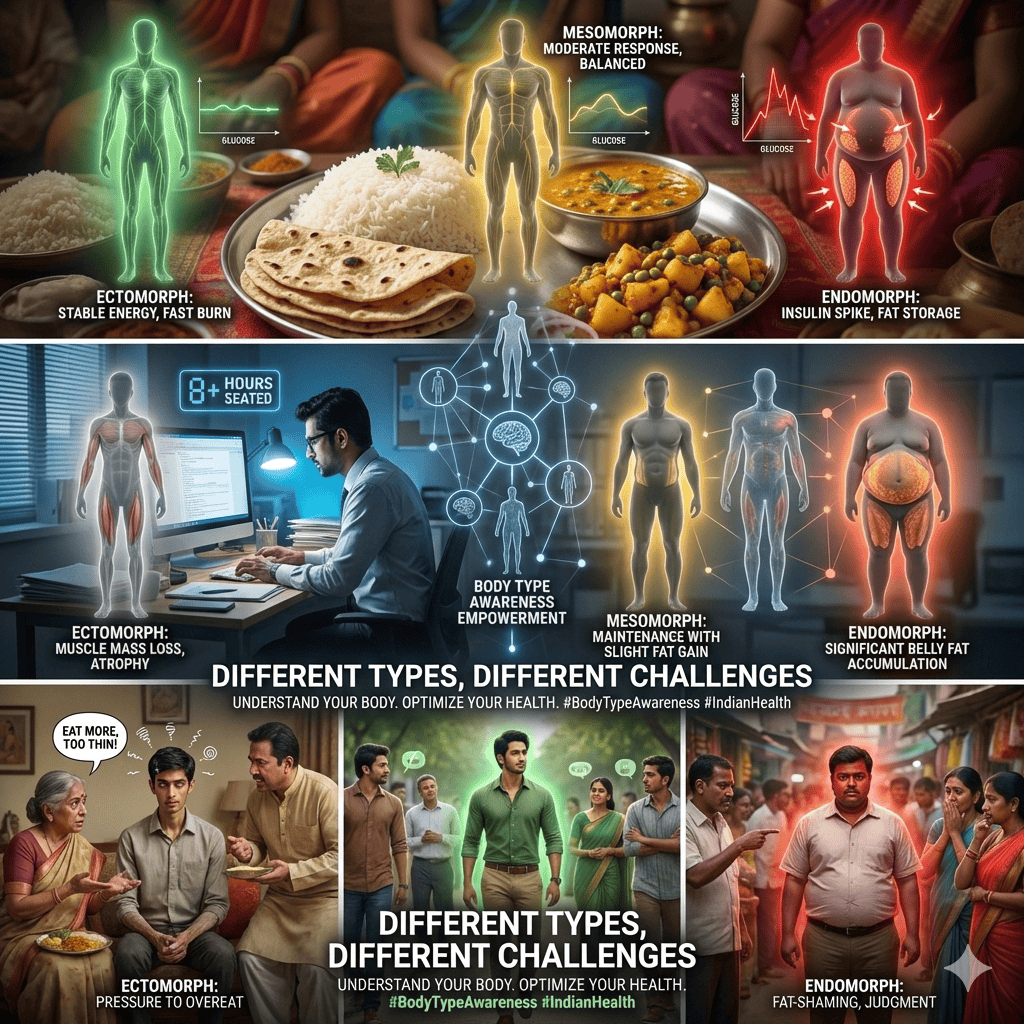
Traditional Indian diets present unique challenges for different body types. Rice and roti-heavy meals affect endomorphs negatively, causing insulin spikes and fat storage. Ectomorphs might handle these carbs fine but need more protein than typical vegetarian meals provide. Moreover, vegetarian diets require careful planning to meet protein needs for all body types. Solutions vary by type. Endomorphs should reduce rice and roti portions, replacing some carbs with vegetables and protein. Choose lower glycemic carbs like brown rice or millets. Mesomorphs can handle moderate carbs but need protein at every meal. Additionally, ectomorphs need adequate carbs for energy plus extra protein to prevent muscle loss. All types benefit from timing carbs around activity.
Work-Life Balance and Urban Living Impact
Urban Indian lifestyles affect body types differently. Sedentary desk jobs hit endomorphs hardest, slowing metabolism further and promoting fat gain. Mesomorphs maintain muscle better but still need activity to prevent fat accumulation. Additionally, ectomorphs lose muscle mass from inactivity, worsening their thin appearance. Stress from work raises cortisol, which endomorphs convert to belly fat more readily than other types. Moreover, irregular eating schedules disrupt all body types but particularly harm endomorphs whose insulin sensitivity depends on consistent meal timing. Solutions include moving hourly during work, packing meals to avoid poor choices, and managing stress actively rather than letting it build. Body type awareness helps prioritize which habits matter most for your specific challenges.
Cultural and Social Influences on Health
Indian culture creates body type-specific pressures. Society often criticizes thin women (ectomorphs) as “too skinny” while praising “healthy” (heavier) builds, making ectomorphs feel inadequate. However, the same culture fat-shames larger individuals (endomorphs), creating opposite pressure. Mesomorphs escape some judgment but face pressure to maintain their naturally athletic build. Moreover, family feeding patterns affect types differently. Forcing ectomorphs to eat more causes stress without results. Encouraging endomorphs to “eat more, you’re looking thin” when they’re actually overweight creates confusion. Navigate these by educating family about body type differences. Set boundaries around food discussions. Focus on health markers beyond appearance. Remember that body type metabolism differences mean your journey looks different from others, and that’s okay.
Best Indian Foods for Weight Loss Diet For Body Type Management
Traditional Indian Foods That Support Endomorph Diet
For endomorph diet success, focus on protein and fiber-rich Indian foods with controlled carbs. Dals (moong, masoor, chana) provide plant protein. Choose non-starchy vegetables like bhindi, lauki, palak, and cauliflower that fill you up without spiking insulin. Include eggs, chicken, fish, or paneer for complete protein. Additionally, use spices like turmeric, black pepper, and cinnamon that support metabolism. Choose fat sources like ghee in moderation, nuts, and seeds. For carbs, prefer millets (bajra, jowar, ragi) and brown rice in small portions rather than white rice. Mesomorphs can eat similar foods with larger carb portions. Ectomorphs need generous carbs from rice, rotis, and starchy vegetables plus adequate protein to maintain muscle and energy.
Modern Indian Meal Options and Healthy Recipes
Create body type-specific meals using Indian ingredients. For endomorphs, breakfast might be vegetable poha with extra protein (eggs or paneer), or moong dal cheela. Keep portions moderate with more vegetables than carbs. Lunch could be small serving of brown rice with plenty of dal, vegetables, and salad. Dinner should emphasize protein and vegetables with minimal carbs. Moreover, mesomorphs can have balanced portions at all meals. Ectomorphs need larger servings including generous carbs. Try rice with dal, paneer dishes with roti, or pasta with protein. Additionally, all types benefit from homemade food where you control oil, salt, and portions rather than relying on restaurants or packaged foods.
Foods to Limit or Avoid for Better Results
Certain foods sabotage all body types but especially endomorphs. Refined carbs like white bread, maida-based products, and white rice spike insulin dramatically. Sugary drinks and sweets cause fat storage. Fried foods like samosas, pakoras, and puris add excessive calories. Moreover, packaged snacks with hidden sugars and unhealthy fats disrupt metabolism. Even “healthy” foods like dried fruits and nuts become problematic in large quantities for endomorphs. Mesomorphs can have small amounts occasionally. Additionally, ectomorphs tolerate these foods better but still shouldn’t rely on them as nutrition sources. Focus on whole, minimally processed foods regardless of body type for optimal weight loss diet for body type results.
Portion Sizes and Meal Timing for Indians
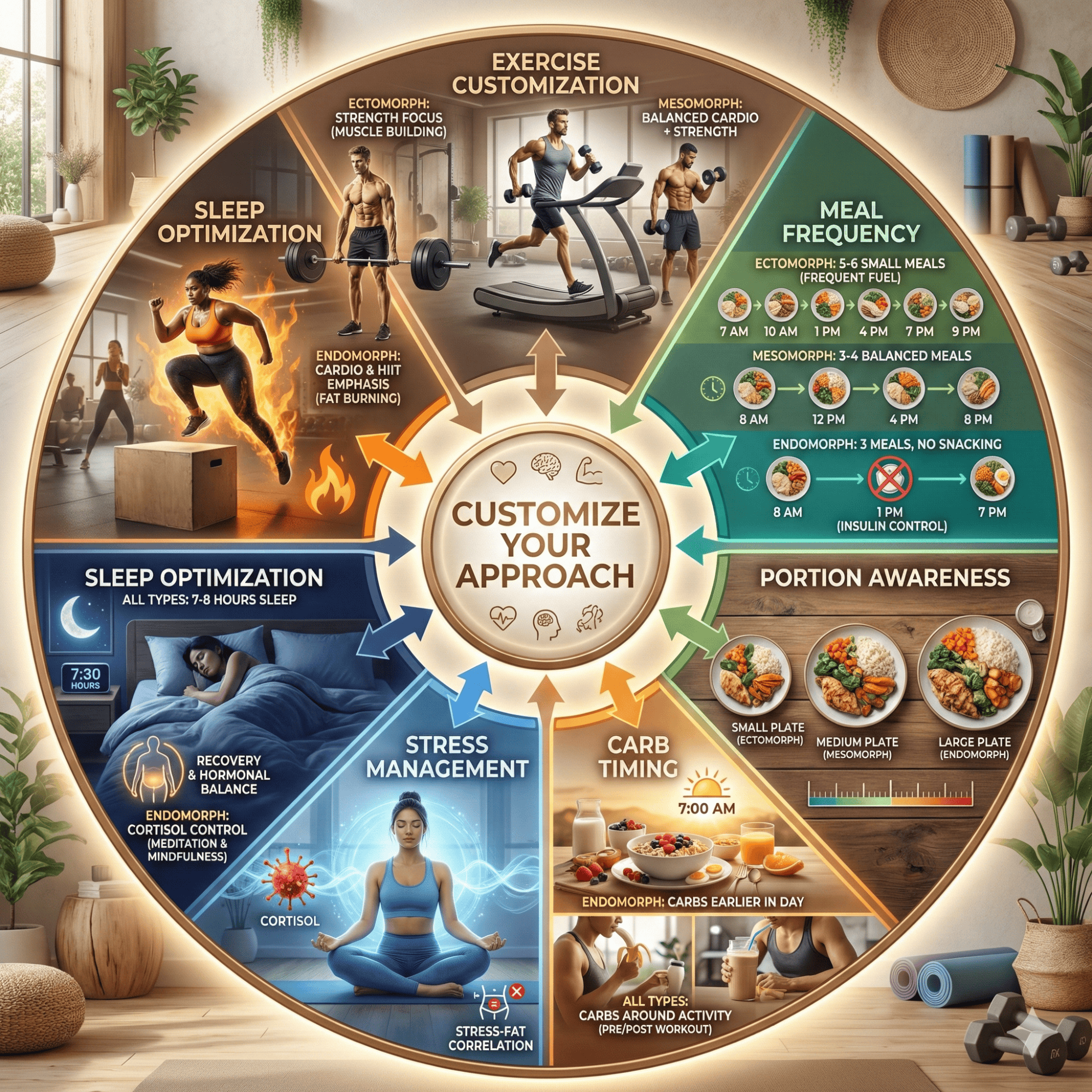
Portion needs vary dramatically by body type. Endomorphs need smaller portions overall with emphasis on protein and vegetables. Use a smaller plate to make portions appear larger. Fill half the plate with vegetables, one-quarter with protein, and one-quarter with whole grain carbs. Mesomorphs can use the same plate method with slightly larger portions. Additionally, ectomorphs need larger servings especially of carbs and protein to meet their higher calorie needs. Meal timing matters for all types. Eating every 3 to 4 hours maintains energy and prevents overeating. Endomorphs particularly benefit from consistent timing to regulate insulin. Moreover, having larger meals earlier when metabolism is active helps all types. Adjust these guidelines based on your personal response and activity level.
Lifestyle Changes to Support Weight Loss Diet For Body Type
Somatotype Diet: The Right Approach for Indians
Implementing somatotype diet principles requires understanding your unique needs. Endomorphs should prioritize protein at every meal (20 to 30 grams), limit carbs to post-workout when insulin sensitivity is highest, include vegetables abundantly, and practice portion control consistently. Mesomorphs can follow balanced macros with moderate carbs distributed throughout the day, adequate protein for muscle maintenance, and healthy fats for hormones. Additionally, ectomorphs need higher carb intake (50 to 60% of calories), adequate protein (1.2 to 1.6 grams per kg body weight), and shouldn’t fear healthy fats. All types benefit from whole foods, consistent meal timing, adequate hydration, and adjusting based on results rather than rigid rules.
Sleep and Stress Management Strategies
Quality sleep affects all body types but particularly endomorphs, as sleep deprivation worsens insulin resistance. Aim for 7 to 8 hours nightly in a dark, cool room. Maintain consistent sleep times even on weekends. Moreover, poor sleep increases cortisol, which endomorphs convert to belly fat readily. For stress management, practice daily relaxation techniques. Try 10 minutes of meditation, deep breathing, or yoga. Stress affects all types but manifests differently. Ectomorphs might lose weight from stress while endomorphs gain it. Additionally, mesomorphs maintain weight but may develop unhealthy coping behaviors. Managing stress isn’t optional for any body type trying to optimize health and body composition.
Daily Habits That Make a Real Difference
Small consistent habits create results for all body types. Track your food for one week to understand actual intake versus perceived intake. Take progress photos monthly since body composition changes aren’t always reflected on scales. Additionally, move daily with activity suited to your type. Endomorphs benefit from frequent moderate activity like walking plus strength training. Mesomorphs can handle intense workouts but need consistency. Ectomorphs should prioritize strength training over excessive cardio to build muscle. Moreover, measure progress beyond weight: energy levels, how clothes fit, strength gains, and health markers. These habits combined with appropriate body type metabolism awareness create sustainable results.
Your 7-Day Weight Loss Diet For Body Type Management Meal Plan
This plan shows options for different body types (adjust portions based on your needs):
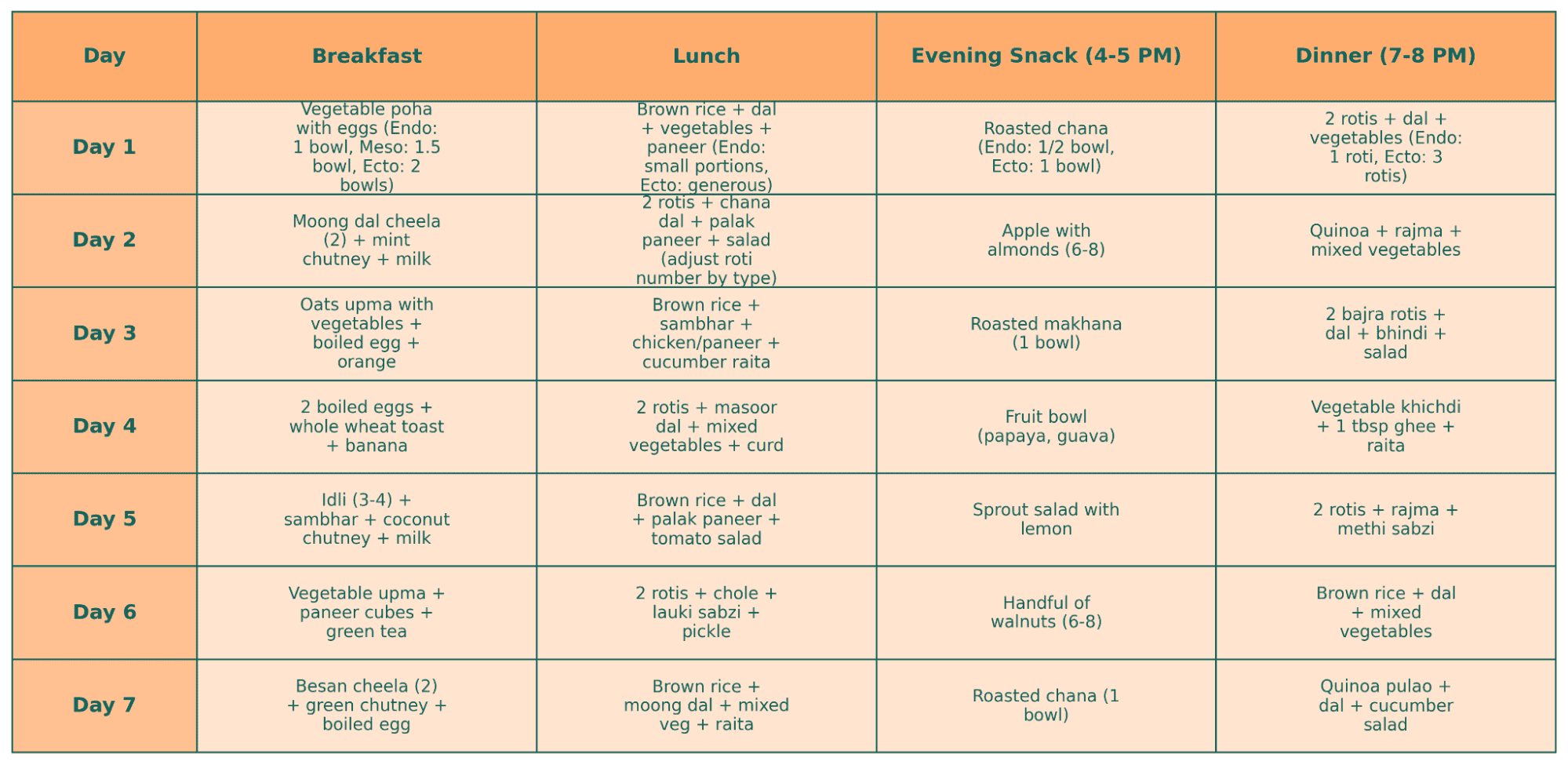
Note: Endomorphs use smaller portions especially of carbs. Mesomorphs use moderate balanced portions. Ectomorphs eat larger servings. Adjust based on hunger and results.
Common Mistakes Indians Make with Weight Loss Diet For Body Type
Diet Mistakes That Sabotage Progress
The biggest mistake is following diets designed for other body types. Endomorphs trying high-carb vegan diets struggle immensely while ectomorphs might do fine. Another error is extreme restriction where endomorphs eat tiny portions hoping to lose fat faster, but this slows metabolism further. Moreover, ectomorphs not eating enough protein lose muscle mass they can’t afford to lose. Many people ignore their body’s signals, pushing through hunger (ectomorphs) or eating when not hungry (endomorphs) based on meal plans rather than internal cues. Additionally, comparing progress to others with different body types creates frustration and unrealistic expectations. These mistakes prevent optimal weight loss diet for body type results.
Lifestyle Pitfalls to Watch Out For
Many Indians sabotage themselves unknowingly. Endomorphs do excessive cardio thinking more exercise equals faster fat loss, but this can increase stress and cortisol. Ectomorphs skip meals or intermittent fast following trends, losing precious muscle. Additionally, not adjusting exercise to body type means mesomorphs might coast on natural advantages without challenging themselves. Social media comparison traps are particularly harmful when you’re comparing your endomorph body to someone’s mesomorph physique. Moreover, not tracking progress objectively means you miss improvements or ignore warning signs. All types need adequate sleep and stress management, but focusing only on diet and exercise ignores these crucial factors.
How to Course-Correct When Things Go Wrong
If progress stalled, evaluate honestly. Track everything for one week: food portions, meal timing, sleep, stress, and activity. Patterns emerge showing where adjustments are needed. Therefore, endomorphs might need to reduce carbs further or add more activity. Mesomorphs might need to tighten portions that have gradually increased. Ectomorphs might need more food if they’ve been under-eating. Additionally, check if life stress increased, disrupting sleep or driving emotional eating. Adjust one variable at a time rather than overhauling everything, which makes it hard to identify what works. Sometimes metabolism adapts to your current approach, requiring a short diet break (eating at maintenance for 1 to 2 weeks) before resuming fat loss efforts. Be patient and persistent while adjusting strategies to your somatotype diet needs.
Conclusion
Understanding weight loss diet for body type explains why generic diets fail and your friend’s success doesn’t translate to your results. Whether you’re predominantly ectomorph, mesomorph, or endomorph, customizing your approach to your body’s natural tendencies rather than fighting against them creates sustainable results. Indians often exhibit endomorph characteristics, requiring extra attention to carb quality and portions, but all types benefit from personalized strategies that respect individual body type metabolism differences.
Start today by identifying your dominant body type through physical characteristics and metabolic responses. Track your food for three days to understand current intake, then adjust macros and portions based on your type’s needs. Additionally, choose one exercise modification suited to your body type, whether adding more walking (endomorphs), maintaining balanced training (mesomorphs), or focusing on strength over cardio (ectomorphs).
FAQs
Q1: What is weight loss diet for body type and how does it affect Indians?
Weight loss diet for body type customizes nutrition and exercise based on your somatotype (ectomorph, mesomorph, or endomorph), considering how your body naturally gains weight, builds muscle, and responds to food. Indians often exhibit endomorph traits with tendency toward central obesity, requiring ectomorph diet or endomorph-specific adjustments for effective fat loss.
Q2: What are the signs of different body types?
Ectomorphs are naturally thin with fast metabolism and difficulty gaining weight. Mesomorphs have athletic builds, gain muscle easily, and lose fat relatively quickly with proper mesomorph diet approaches. Endomorphs have larger frames, slower metabolism, gain weight easily especially around the midsection, and struggle with fat loss.
Q3: What foods should Indians eat for their body type?
All types need protein, vegetables, and healthy fats. Endomorph diet emphasizes protein and vegetables with controlled carbs (millets, brown rice). Mesomorphs eat balanced macros with moderate carbs. Ectomorphs need generous carbs from rice, rotis, plus adequate protein to maintain muscle and energy.
Q4: Can body type metabolism be managed naturally?
Yes, manage body type metabolism through customized nutrition with appropriate macros for your type, exercise suited to your needs (endomorphs need more activity, ectomorphs less cardio), adequate sleep, and stress management. Adjust approach based on your individual responses rather than generic advice.
Q5: How long does it take to see results with body type diets?
Initial changes appear in 2 to 4 weeks (energy, sleep, digestion). Visible body composition changes take 6 to 8 weeks. Significant transformation requires 12 to 16 weeks of a consistent somatotype diet approach customized to your type. Endomorphs typically need longer than other types for similar visual results.
Q6: When should I consult a doctor about weight struggles?
See a doctor if extreme dieting (under 1200 calories) doesn’t produce results, you experience symptoms like fatigue, hair loss, or irregular periods, or you’ve developed disordered eating patterns. Get tested for metabolic or hormonal issues affecting your ability to lose or gain weight appropriately.
Related Posts


