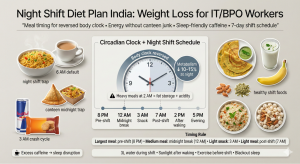
Your Instagram feed overflows with influencers praising intermittent fasting, cousin lost 15 kilos eating only between noon and 8 PM, office colleague swears by skipping breakfast. Should you try time-restricted eating too? This popular approach, limiting when you eat rather than what you eat, promises weight loss without calorie counting or food restriction.
However, does time-restricted eating work for Indians with our cultural eating patterns, family dynamics, and health profiles? This guide reveals the truth about 16:8 fasting, whether it suits Indian lifestyles, and how to implement it safely if you decide it’s right for you.
What Is Time-Restricted Eating and Why Indian Dieters Should Care?

Time-restricted eating is an eating pattern where you consume all meals within a specific daily window, typically 8-10 hours, then fast for the remaining 14-16 hours. The most popular version is 16:8 fasting, eating during an 8-hour window (like noon to 8 PM) and fasting for 16 hours, including sleep. Additionally, this approach focuses on when you eat, not what or how much you eat, though food quality and portions obviously still matter for results.
Moreover, during fasting windows, only water, black coffee, or unsweetened tea is allowed. Anything with calories breaks the fast. Therefore, time-restricted eating differs from traditional dieting by manipulating timing rather than primarily restricting foods or counting calories, though both timing and food quality affect outcomes.
Why Time Matters for Indian Bodies
Time-restricted eating interests Indians seeking weight loss without the restrictive calorie counting or food elimination typical of traditional diets. Our food-centered culture makes eliminating favorite foods psychologically difficult. Additionally, meal timing approaches appeal to those who’ve tried and failed multiple diets, offering a different strategy that might succeed where others failed. Moreover, the flexibility of eating normally during your eating window without obsessive tracking seems easier than constant calorie vigilance.
Furthermore, Indians with busy schedules appreciate the simplicity of having fewer decisions about when to eat. However, Indian cultural eating patterns centered on family meals at specific times can conflict with individualized eating windows. In fact, religious fasting traditions give Indians familiarity with fasting concepts, though traditional fasts differ significantly from time-restricted eating protocols. Therefore, understanding how this approach fits or conflicts with the Indian lifestyle helps determine if it’s worth trying.
Common Myths Debunked About This Topic
Let’s clear up myths about time-restricted eating. First, it’s not magic. Weight loss still requires a calorie deficit whether achieved through timing or counting. Second, you can’t eat unlimited food during your eating window and lose weight. Overeating compensates for fasting time. Third, 16:8 fasting isn’t superior to regular calorie restriction for fat loss. Research shows similar results when calories match. Fourth, fasting doesn’t “detox” your body or speed metabolism dramatically. Benefits come primarily from reduced total calories.
Additionally, breakfast isn’t essential for everyone despite traditional nutrition advice. Some people function well skipping it. However, breakfast also isn’t harmful for those who prefer it. Finally, fasting isn’t necessary for health. It’s one strategy among many. Therefore, realistic expectations about time-restricted eating as a potentially useful tool rather than a miracle solution prevent disappointment.
The Science Behind Time-Restricted Eating for Indians
How Time Works in Your Body
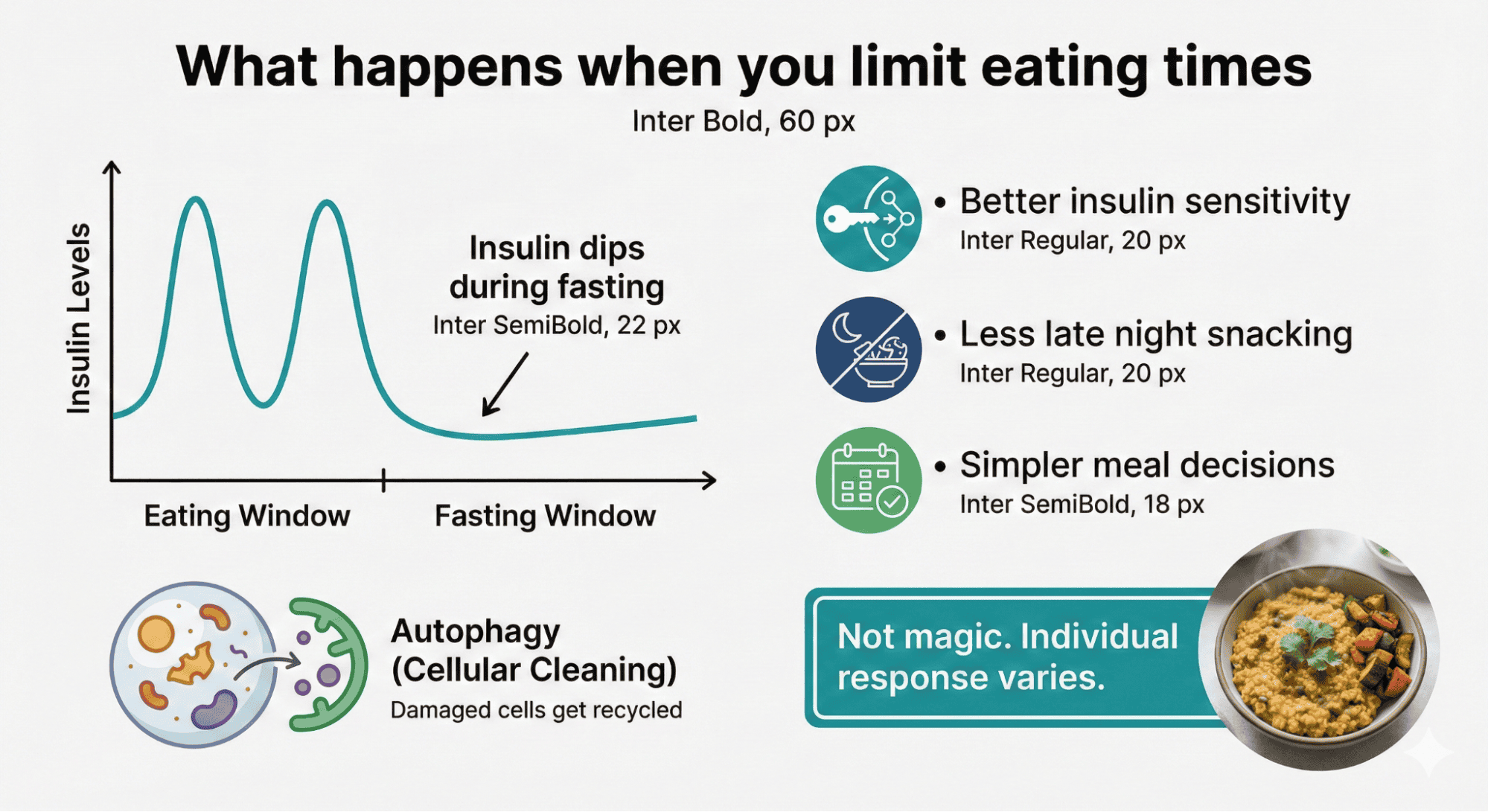
Time-restricted eating affects your body through several mechanisms beyond just reducing calories. Fasting periods allow insulin levels to drop, potentially improving insulin sensitivity and fat burning. Additionally, extended fasting triggers autophagy, cellular cleaning process removing damaged components, though this requires longer fasts than typical 16 hours. Moreover, eating aligned with circadian rhythm eating when your body naturally expects food may optimize metabolism and digestion.
Furthermore, consolidating food intake into shorter windows often reduces total daily calories naturally since there’s less time to eat. In fact, many people consuming 3 meals plus snacks over 15 hours automatically eat less when restricted to 8 hours simply from time limitation. However, some people compensate by eating larger amounts during their window, negating calorie reduction. Therefore, time-restricted eating works best when it naturally creates a calorie deficit without triggering compensatory overeating during eating windows.
The Connection Between Eating Window and Health
The eating window you choose affects adherence and results significantly. Earlier windows like 8 AM to 4 PM align better with natural circadian rhythm eating since metabolism and insulin sensitivity are higher earlier in the day. Additionally, eating earlier prevents late-night eating associated with poorer food choices and less satiety. Moreover, social eating typically happens evenings, making early windows difficult for most Indians despite potential metabolic advantages.
Furthermore, skipping breakfast (later windows like noon to 8 PM) works better for people not naturally hungry in the mornings, while breakfast lovers struggle with this timing. In fact, research shows adherence matters more than specific window timing. The best window is whichever you’ll actually maintain consistently. Therefore, choose your eating window based on your natural hunger patterns, work schedule, and social life rather than trying to force an “optimal” window that doesn’t fit your reality.
What Research Shows for Indian Population
Research specifically on time-restricted eating in Indians is limited, but studies on similar populations provide insights. Research shows Indians benefit from meal timing strategies that prevent late-night eating and excessive snacking. One study found Indians practicing 16:8 fasting lost weight primarily because they stopped evening snacking and late dinners rather than from fasting magic itself. Additionally, research indicates Indians with insulin resistance or prediabetes may benefit from consolidated eating windows, improving insulin sensitivity. Moreover, studies show that skipping breakfast doesn’t harm metabolism as previously thought, though some people experience increased hunger and overeating later when skipping it.
Furthermore, research demonstrates huge individual variation in response to time-restricted eating. Some people love it and find it effortless, while others struggle with hunger, irritability, and poor adherence. Therefore, personal experimentation determines if time-restricted eating works for your body and lifestyle rather than assuming it will work based on others’ success.
Meal Timing: What to Watch For
Physical Signs and Symptoms to Monitor
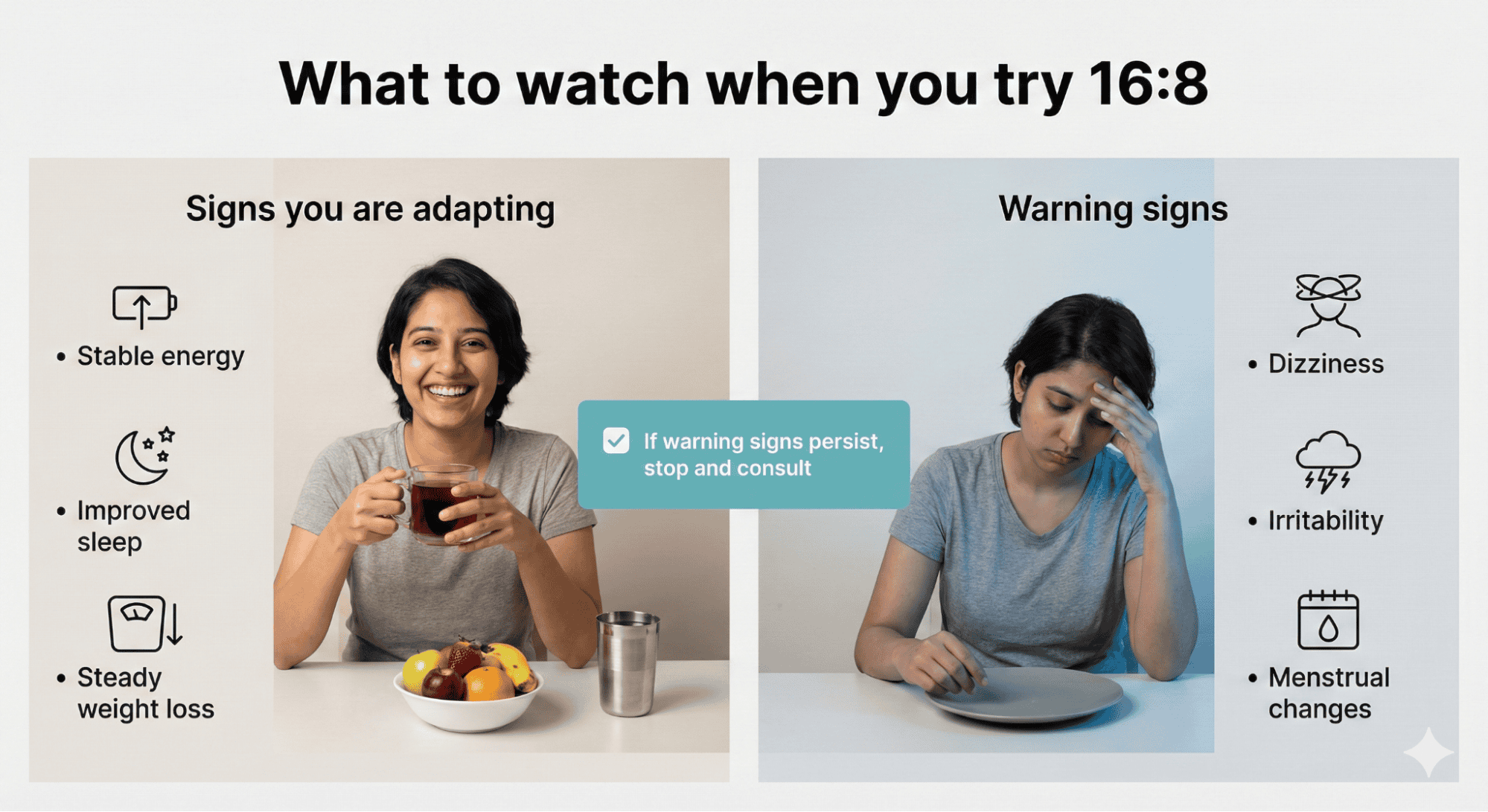
Time-restricted eating should improve your energy and health, not create problems. You should adapt to fasting periods within 1-2 weeks with reduced hunger and stable energy. Additionally, weight should decrease gradually at 0.5-1 kilo weekly if that’s your goal. Watch for improved digestion as your gut gets consistent rest periods. Moreover, sleep quality often improves when avoiding late eating. Blood sugar should stabilize with consistent meal timing.
Furthermore, workout performance should maintain or improve once adapted. Conversely, warning signs include persistent extreme hunger, dizziness, weakness, inability to concentrate, or binge eating during your window. Women should watch for menstrual cycle disruptions indicating hormonal stress. In fact, if you feel worse after 3-4 weeks rather than better, time-restricted eating likely doesn’t suit you. Therefore, listen to your body’s signals rather than forcing an approach that feels wrong despite popularity or others’ success with it.
Emotional and Mental Health Indicators
Time-restricted eating should simplify eating decisions and reduce food stress, not create more anxiety. You should feel freedom from constant eating decisions outside your window. Additionally, reduced food obsession during fasting times can be liberating for some. Moreover, satisfaction with meals during your eating window should remain high, not feeling deprived or restrictive. Furthermore, social eating should remain enjoyable, choosing windows accommodating your social life. However, watch for increasing rigidity or anxiety about eating outside your window.
Additionally, clock-watching and obsessing over when you can eat again indicates unhealthy relationship developing. If you’re compensating for fasting by binge eating during your window, this pattern is problematic. In fact, using fasting as punishment for “bad” eating or to “earn” food signals a disordered relationship with food, requiring a different approach. Therefore, time-restricted eating should feel like a helpful structure, not a restrictive prison.
When to Consult a Healthcare Professional
Consult a doctor before trying time-restricted eating if you have diabetes requiring medication, as fasting affects blood sugar significantly. Additionally, pregnant or nursing women shouldn’t restrict eating times without medical supervision. People with a history of eating disorders should avoid approaches involving restriction or rigid rules. Moreover, if you have conditions requiring consistent medication timing with food, fasting complicates this. Children and adolescents shouldn’t do 16:8 fasting as they need consistent nutrition for growth.
Furthermore, if you develop persistent symptoms like extreme fatigue, dizziness, irregular periods, or disordered eating patterns while fasting, stop and consult professionals. Work with registered dietitians experienced in time-restricted eating to optimize your approach if self-directed efforts cause problems. Therefore, medical guidance ensures safety, especially with underlying health conditions or concerning symptoms developing during implementation.
Indian Lifestyle Factors Affecting Time-Restricted Eating
Modern Indian Diet Challenges and Solutions
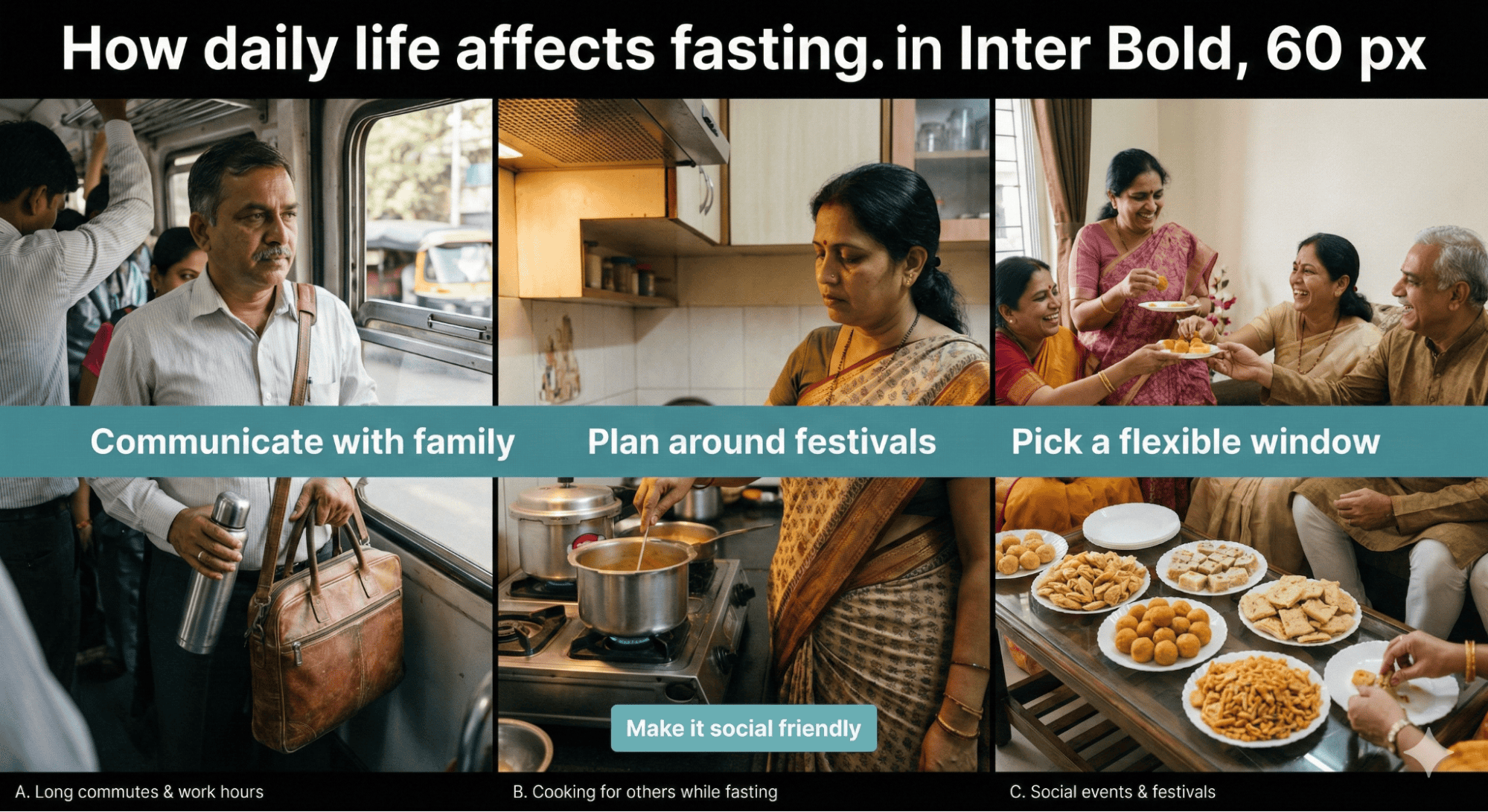
Indian eating patterns create unique challenges for time-restricted eating. Traditional 3 meals plus chai breaks span 14-16 hours naturally, making narrower windows require significant adjustment. Additionally, family breakfast expectations, especially for women who cook for others,s can conflict with late eating windows. Moreover, social and religious obligations around food at specific times create pressure to eat outside your window.
Furthermore, food-centered hospitality culture makes refusing food socially awkward. Solutions include choosing eating windows accommodating family meal times. If the family eats dinner at 8-9 PM, start your window at 12-1 PM for 16:8 fasting. Additionally, communicate your approach to family, reducing pressure and misunderstanding. Have black coffee or tea during fasting times if cultural expectations around chai are strong. Moreover, plan around social events rather than missing important gatherings. Flexibility matters more than perfect adherence to arbitrary windows. Therefore, adapt time-restricted eating to your cultural reality rather than trying to force yourself into patterns that create constant conflict.
Work-Life Balance and Urban Living Impact
Urban Indian professional life affects the implementation of time-restricted eating significantly. Irregular work hours make consistent eating windows challenging. Additionally, client meetings, business lunches, or office celebrations happen outside your control. Moreover, long commutes mean that eating windows must accommodate travel time.
Furthermore, work stress can increase hunger, making fasting periods uncomfortable. Solutions include choosing eating windows matching your typical work schedule. If mornings are rushed, skip breakfast naturally with your window starting at lunch. Additionally, keep non-caloric beverages at your desk for fasting times. Black coffee, green tea, or herbal teas manage hunger without breaking your fast. Moreover, plan important work during your eating times when energy is optimal.
Furthermore, be flexible for work obligations. Occasional window violations for essential business meals won’t derail overall progress. In fact, rigid perfectionism causes more problems than occasional flexibility. Therefore, implement meal timing strategies working with your work reality rather than creating constant stress trying to maintain perfect fasting in inflexible professional environments.
Cultural and Social Influences on Health
The Indian cultural context creates both support and barriers for time-restricted eating. Traditional fasting for religious reasons gives Indians conceptual familiarity with not eating for periods. Additionally, some regional eating patterns naturally consolidate eating into shorter windows. Moreover, communal meal timing means families eat together, potentially supporting consistent eating schedules. However, pressure to eat when food is offered for hospitality makes refusing difficult. Furthermore, explaining 16:8 fasting to family might meet skepticism or concerns about health. Additionally, women face particular pressure around feeding family while fasting themselves.
In fact, cooking while hungry tests willpower significantly. Solutions include framing your approach positively as choosing optimal eating times rather than “dieting” or “fasting,” which sound restrictive. Additionally, involve family in understanding benefits and gaining support. Moreover, choose windows minimizing conflicts with important cultural meal times. Furthermore, remember occasional flexibility for festivals, celebrations, or important family gatherings maintains relationships without destroying overall patterns. Therefore, cultural navigation thoughtfully allows time-restricted eating implementation without alienating family or missing important shared experiences.
Best Indian Foods for Time-Restricted Eating Management
Traditional Indian Foods That Support Circadian Rhythm Eating
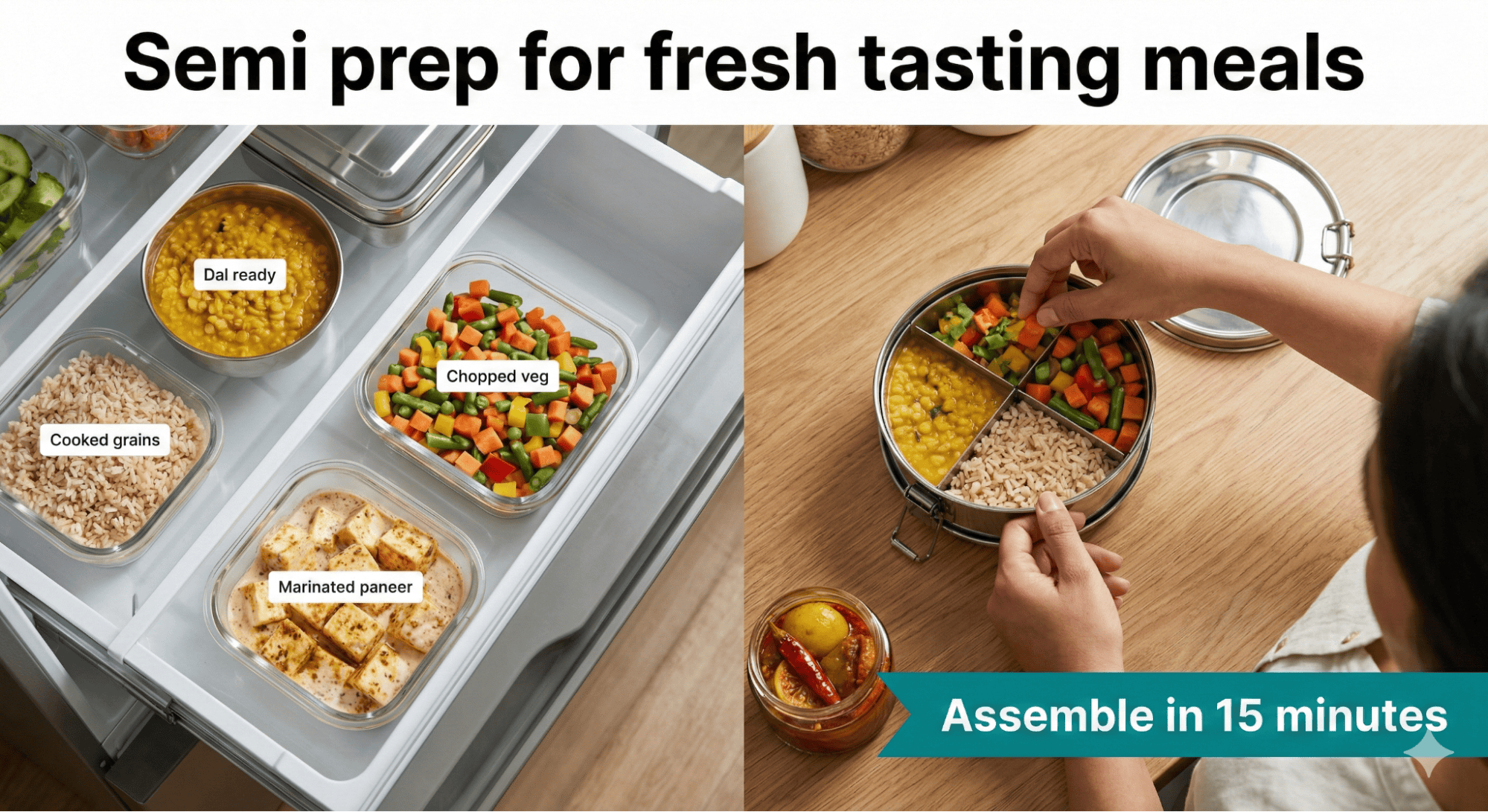
Time-restricted eating works best with foods keeping you satisfied during your eating window and minimize hunger during fasting. Protein-rich dal, paneer, eggs, and chicken provide satiety lasting hours. Include at least 20-30 grams of protein per meal. Additionally, high-fiber foods like vegetables, whole grains, and legumes slow digestion, maintaining fullness. Moreover, healthy fats from nuts, seeds, and ghee in moderation stabilize blood sugar, preventing crashes triggering hunger.
Furthermore, foods with high water content, like vegetables, soups, raitas help fill your stomach without excessive calories. Traditional Indian meals combining dal, vegetables, whole grain roti/rice, and curd naturally provide balanced macros supporting satiety. In fact, avoiding refined carbs and sugar during your window prevents blood sugar spikes and subsequent crashes, making fasting periods harder. Therefore, food quality during your eating window significantly affects how comfortable fasting periods feel.
Modern Indian Meal Options and Healthy Recipes
Create satisfying meals for your eating window using strategic Indian foods. First meal breaking your fast should be a substantial, balanced meal, not just a snack. Try moong dal cheela with vegetables, paneer, and curd, providing 25-30 grams of protein, fiber, and healthy fats. Additionally, lunch could be brown rice, dal, vegetable curry, and raita, offering complete nutrition. Moreover, dinner might be rotis, rajma or chana curry, sabzi, ensuring adequate protein and fiber. If your window allows snacks, choose nuts, fruit with nut butter, roasted chana, or curd, providing nutrients and satiety.
Furthermore, avoid eating continuously during your window. Have 2-3 satisfying meals with 3-4 hours between, rather than constant grazing, which defeats some benefits. In fact, meal timing involves not just when your window starts and ends but strategic eating within the window. Therefore, plan meals that keep you satisfied without overeating, supporting both your fasting periods and health goals.
Foods to Limit or Avoid for Better Results
During your eating window, certain foods should be limited despite technically being allowed. Refined carbs like white bread, maida products, and white rice cause blood sugar spikes and crashes, increasing hunger during fasting periods. Therefore, choose whole grains to maintain stable energy. Additionally, sugary foods and drinks provide quick energy followed by crashes and increased cravings. Moreover, excessive caffeine can mask hunger signals during fasting but create energy crashes and sleep problems.
Furthermore, ultra-processed foods often trigger overeating through their deliberately engineered palatability, making portion control difficult during limited eating times. Alcohol impairs decision-making around food, potentially causing overeating in your window, and provides empty calories. In fact, focusing only on timing while eating poorly quality food during your window limits results significantly. Therefore, combine time-restricted eating with generally healthy food choices for optimal benefits.
Portion Sizes and Meal Timing for Indians
Within your eating window, meal distribution and portions affect results significantly. Don’t try to compress 3 large meals into short windows, causing overeating and digestive distress. Therefore, have 2 substantial meals plus an optional small snack if your window allows. Additionally, first meal breaking fast should be most substantial when hunger is highest and energy needs are greatest. Moreover, space meals 3-4 hours apart allowing digestion between eating episodes. Your last meal should be lighter than others, finishing 2-3 hours before your window closes for better sleep.
Furthermore, portions should be similar to normal meals, not super-sized to “get enough” during your window. Use normal serving sizes: palm-size protein, fist-size carbs, two fists vegetables per meal. In fact, overeating during your window either from extreme hunger or thinking you need to “make up” for fasting time sabotages time-restricted eating benefits. Therefore, strategic meal timing within your window plus appropriate portions creates sustainable approach supporting rather than hindering health goals.
Lifestyle Changes to Support Time-Restricted Eating
16:8 Fasting: The Right Approach for Indians
Starting 16:8 fasting requires strategic implementation preventing failure from overly aggressive changes. Begin by gradually narrowing your eating window over 2-3 weeks rather than jumping to 16 hours immediately. Therefore, if you currently eat over 14 hours, first narrow to 12 hours for a week, then 10 hours, then 8 hours. This adaptation prevents extreme hunger and irritability. Additionally, choose your window based on your schedule and preferences, not arbitrary “optimal” times. If you love breakfast, do 8 AM to 4 PM. If breakfast skipping feels natural, do noon to 8 PM. Moreover, be flexible. Perfect adherence every single day isn’t necessary. Aim for 5-6 days of weekly consistency, allowing flexibility for social events or special occasions.
Furthermore, focus on food quality during your window, not using it as an excuse to eat junk food freely. In fact, many people trying time-restricted eating fail because they either start too aggressively or eat poorly quality food during their window. Therefore, gradual implementation plus continued attention to nutrition creates a sustainable and successful approach.
Sleep and Stress Management Strategies
Sleep and stress significantly affect time-restricted eating success and sustainability. Inadequate sleep increases hunger hormones, making fasting periods extremely difficult. Therefore, prioritize 7-9 hours of quality sleep nightly. Additionally, finish eating 2-3 hours before bedtime, allowing digestion before sleep, improving sleep quality while naturally creating an extended overnight fast. Moreover, high stress elevates cortisol, increasing hunger and craving,s particularly during fasting times. Practice stress management through meditation, yoga, walking, or hobbies, supporting your ability to maintain fasting windows comfortably.
Furthermore, recognize that time-restricted eating itself can bea stressor initially. Your body needs adaptation time. If adding fasting creates excessive stress, compounding existing high stress, delay implementation until life is calmer. In fact, combining aggressive fasting with inadequate sleep and high stress sets you up for failure and potential health problems. Therefore, address these foundational lifestyle factors supporting rather than sabotaging 16:8 fasting implementation.
Daily Habits That Make a Real Difference
Small, consistent actions make time-restricted eating sustainable long-term. Set phone reminders for when your eating window opens and closes until timing becomes habitual. Additionally, keep non-caloric beverages easily accessible during fasting times. Black coffee, herbal tea, or water with lemon can manage hunger without breaking your fast. Moreover, stay busy during fasting periods. Hunger feels worse when you’re bored and idle.
Furthermore, plan your meals during your window, preventing poor food choices from hunger-driven desperation when your window opens. Prep healthy meals in advance, ensuring good options are available immediately. In fact, the first meal breaking your fast sets the tone for eating during your window. Starting with a balanced, nutritious meal prevents subsequent poor choices. Additionally, track your eating windows using an app or journal, building awareness and accountability.
Furthermore, find an accountability partner or community for support when motivation wavers. These habits create structure and support, making meal timing approaches sustainable rather than temporary experiments abandoned when initial motivation fades.
Your 7-Day Time-Restricted Eating Management Meal Plan
This meal plan demonstrates 16:8 fasting with eating window 12 PM to 8 PM:
| Day | 12 PM (Break Fast) | 4 PM (Snack) | 8 PM (Dinner) | Fasting Period (8 PM – 12 PM next day) |
| Day 1 | Brown rice (1 katori) + dal (1 katori) + palak paneer + raita + salad | Roasted chana (1 bowl) + banana | 2 rotis + rajma + mixed veg + curd | Water, black coffee, or green tea only |
| Day 2 | 2 rotis + chana dal + bhindi + curd + salad | Handful of almonds (10) + apple | Quinoa pulao + dal + vegetables + raita | Water, black coffee, or green tea only |
| Day 3 | Brown rice + sambhar + fish/paneer curry + vegetables | Greek yogurt (1 cup) + nuts | 2 bajra rotis + moong dal + sabzi + salad | Water, black coffee, or green tea only |
| Day 4 | 2 rotis + masoor dal + mixed veg + paneer + raita | Sprout salad with lemon | Vegetable khichdi + 1 tsp ghee + curd + vegetables | Water, black coffee, or green tea only |
| Day 5 | Quinoa (1 bowl) + dal + palak + paneer tikka + salad | Roasted makhana + fruit | 2 rotis + rajma + mixed veg + raita | Water, black coffee, or green tea only |
| Day 6 | Brown rice + chana dal + vegetables + chicken/paneer | 8 walnuts + apple | 2 rotis + dal + grilled fish/paneer + salad | Water, black coffee, or green tea only |
| Day 7 | 2 rotis + moong dal + mixed vegetables + curd + salad | Fruit bowl with nuts | Quinoa + dal + vegetables + paneer + raita | Water, black coffee, or green tea only |
Note: All meals are high in protein, fiber, and nutrients supporting satiety during fasting periods. Eating window allows 3 eating episodes (2 meals + 1 snack) spaced 4 hours apart. Stay hydrated during fasting with non-caloric beverages.
Common Mistakes Indians Make with Time-Restricted Eating
Diet Mistakes That Sabotage Progress
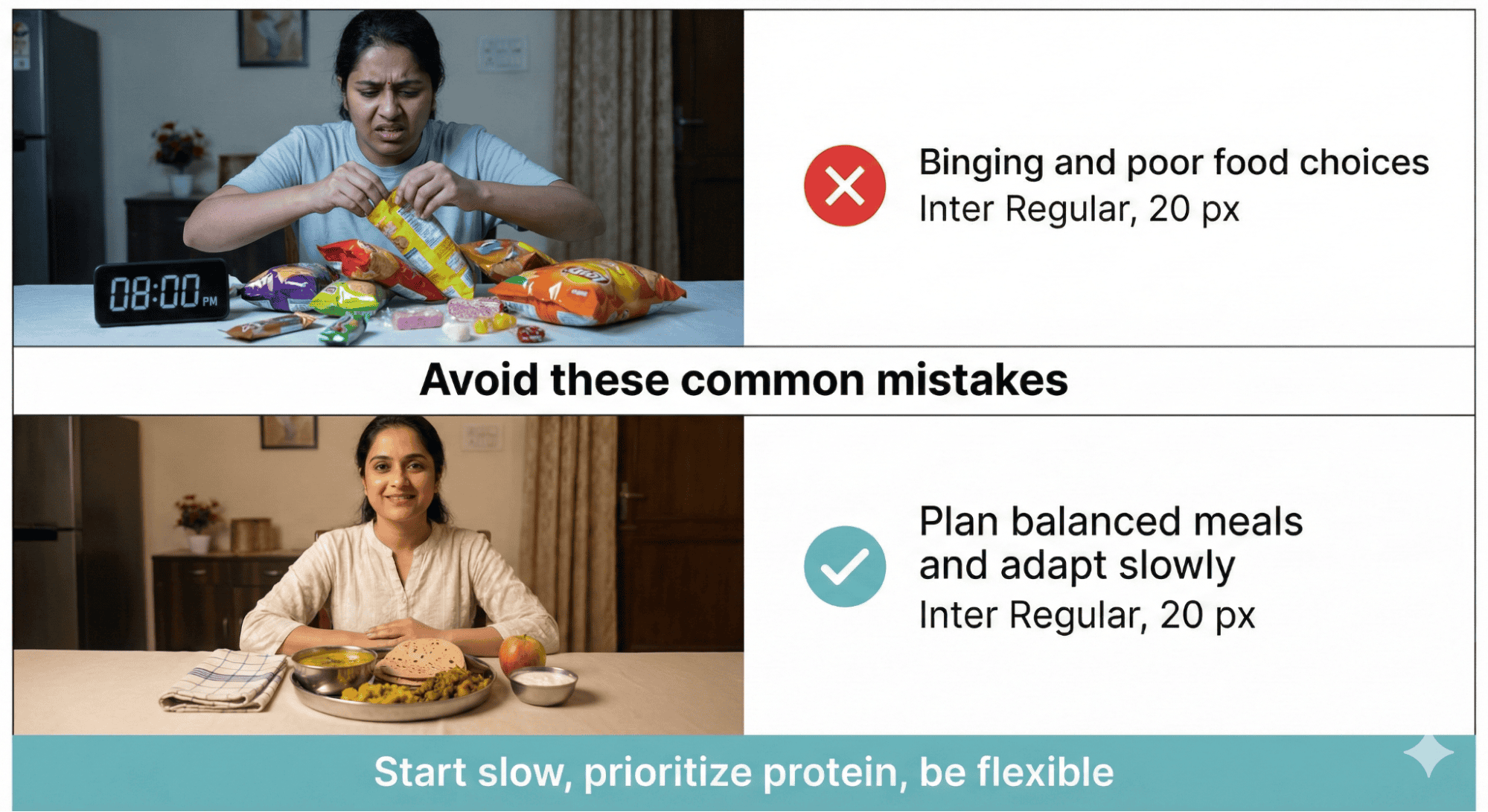
The biggest mistake is overeating during your eating window, thinking you need to “make up” for fasting time. This negates the calorie deficit required for weight loss. Another error is eating poor quality food during your window, thinking timing alone creates results. Additionally, many people start too aggressively with long fasting periods before adapting gradually, causing extreme hunger and abandonment. Moreover, some people don’t eat enough protein or fiber during their window, leaving them unsatisfied and struggling during fasting periods.
Furthermore, constantly changing eating windows prevents body adaptation and habit formation. Inconsistent timing confuses your circadian rhythm rather than optimizing it. In fact, combining time-restricted eating with other extreme diets like very low-carb creates excessive stress on your body. Therefore, realistic expectations about needing a calorie deficit regardless of timing, plus adequate nutrition during your window, sets foundation for successful 16:8 fasting implementation.
Lifestyle Pitfalls to Watch Out For
Many people sabotage time-restricted eating through a poor implementation strategy. Social isolation from refusing all food outside your window damages relationships more than flexible occasional exceptions would harm progress. Additionally, rigidity about windows, causing stress when life interferes, defeats the purpose of a supposedly flexible approach. Moreover, using fasting as punishment for “bad” eating or to “earn” food indicates a problematic relationship developing.
Furthermore, ignoring persistent hunger, weakness, or other negative symptoms while forcing continued fasting despite your body clearly struggling. Not adequately hydrating during fasting periods exacerbates hunger and causes other problems. In fact, expecting immediate dramatic results causes premature abandonment when realistic, gradual progress occurs. Additionally, comparing your experience to others’ ignores individual variation in response to fasting. Therefore, these mindsets and implementation errors prevent seeing whether time-restricted eating actually suits you when implemented appropriately with reasonable expectations.
How to Course-Correct When Things Go Wrong
If time-restricted eating isn’t working or causing problems, troubleshoot systematically. Are you truly restricting calories during your window or overeating, negating the benefits? Track intake for 3 days to verify. Additionally, assess if your window timing suits your life. Maybe different hours would reduce conflict with work or family. Moreover, ensure adequate protein (20-30 grams per meal) and fiber during your window, supporting satiety.
Furthermore, verify you’re allowing 2-3 weeks of adaptation before judging if it works. Initial hunger and adjustment period are normal. However, if after 4 weeks you still feel terrible, time-restricted eating likely doesn’t suit you. In fact, some people naturally prefer to eat more frequently. That’s okay. Additionally, if you’re developing obsessive or disordered patterns around your eating window, stop immediately and consider working with a therapist. Therefore, an honest evaluation determines whether continued attempts at modification help or whether meal timing approaches simply aren’t your best strategy, regardless of popularity.
Conclusion
Time-restricted eating offers one strategy among many for weight loss and health, not a miracle solution superior to all other approaches. For Indians, success depends on choosing eating windows compatible with family meal times, social obligations, and cultural eating patterns rather than forcing incompatible timing, creating constant conflict. 16:8 fasting works when it naturally creates a calorie deficit without triggering compensatory overeating during windows, and when food quality during windows remains nutritious and satisfying. However, it doesn’t work for everyone. Individual variation means some people thrive while others struggle despite perfect implementation.
Start by assessing whether meal timing approaches suit your natural hunger patterns, lifestyle, and health status. If trying it, begin gradually narrowing your window over 2-3 weeks, maintain food quality during windows, and allow flexibility for important social occasions. After 4 weeks of consistent implementation, evaluate honestly whether it’s helping or creating more problems than it solves.
Frequently Asked Questions
Q1: What is time-restricted eating and how does it affect Indians?
Time-restricted eating limits daily eating to specific windows (typically 8-10 hours) followed by 14-16 hour fasting periods, focusing on when rather than what you eat. For Indians, it offers potential weight loss without food restrictions but conflicts with traditional meal timing, family dining patterns, and food-centered hospitality culture requiring thoughtful adaptation for successful implementation.
Q2: What are the main signs time-restricted eating is working?
Signs include gradual weight loss (0.5-1 kilo weekly), reduced snacking and unconscious eating, improved digestion, better sleep from earlier meal cutoffs, and stable energy during fasting periods after 1-2 weeks adaptation. Watch for feeling satisfied during eating windows and comfortable during fasting without extreme hunger indicating successful adaptation to 16:8 fasting.
Q3: What foods should Indians eat during their eating window?
Eat protein-rich foods (dal, paneer, eggs, chicken), high-fiber options (vegetables, whole grains), and healthy fats (nuts, seeds, moderate ghee) providing satiety during fasting periods. Choose balanced Indian meals with adequate protein (20-30 grams per meal), vegetables, and whole grains supporting circadian rhythm eating and preventing excessive hunger during fasting.
Q4: Can time-restricted eating be managed sustainably?
Yes, sustain through gradual window narrowing over 2-3 weeks, choosing windows matching your schedule and preferences, maintaining food quality during windows, allowing flexibility for social events, and focusing on 5-6 days weekly consistency rather than perfectionism. Meal timing strategies work long-term only when adapted to your lifestyle, not forced rigidly.
Q5: How long does it take to adapt to fasting periods?
Initial adaptation with reduced hunger and stable energy takes 1-2 weeks as your body adjusts to new meal timing patterns. Full metabolic adaptation to 16:8 fasting occurs within 3-4 weeks. Weight loss becomes noticeable at 2-4 weeks of consistent implementation with an appropriate calorie deficit during eating windows.
Related Posts