Depression and weight gain are deeply connected, as depression alters brain chemicals controlling appetite and metabolism, while weight gain worsens mood, affecting 56 million Indians. You eat to feel better, then feel worse about eating. The food and mood connection is scientifically proven. This guide covers foods that help with depression in India, a diet plan for mental health and weight, and the best Indian foods for brain health.
What Is Depression And Weight Gain, and Why Indian Dieters Should Care?
Understanding Mental Health and Weight in Simple Terms
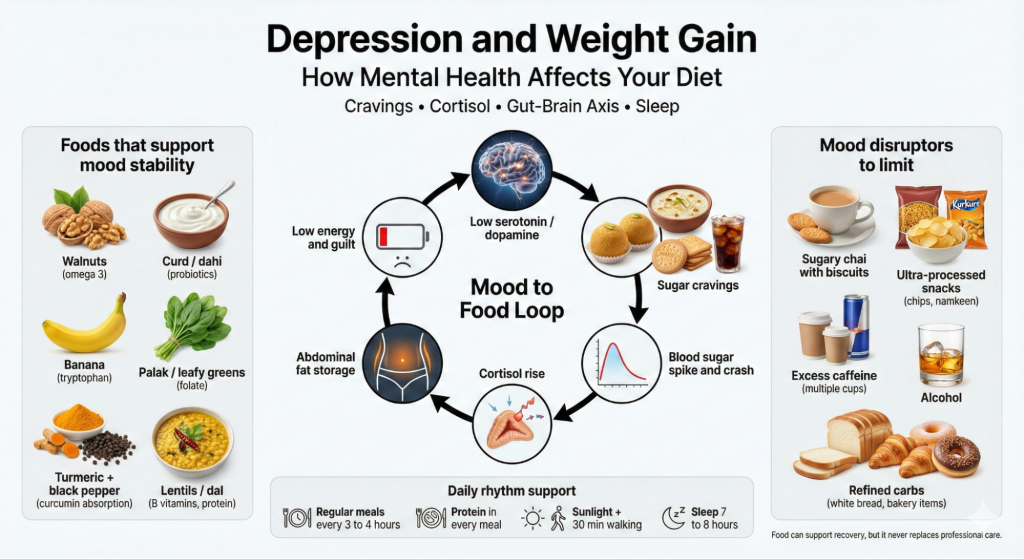
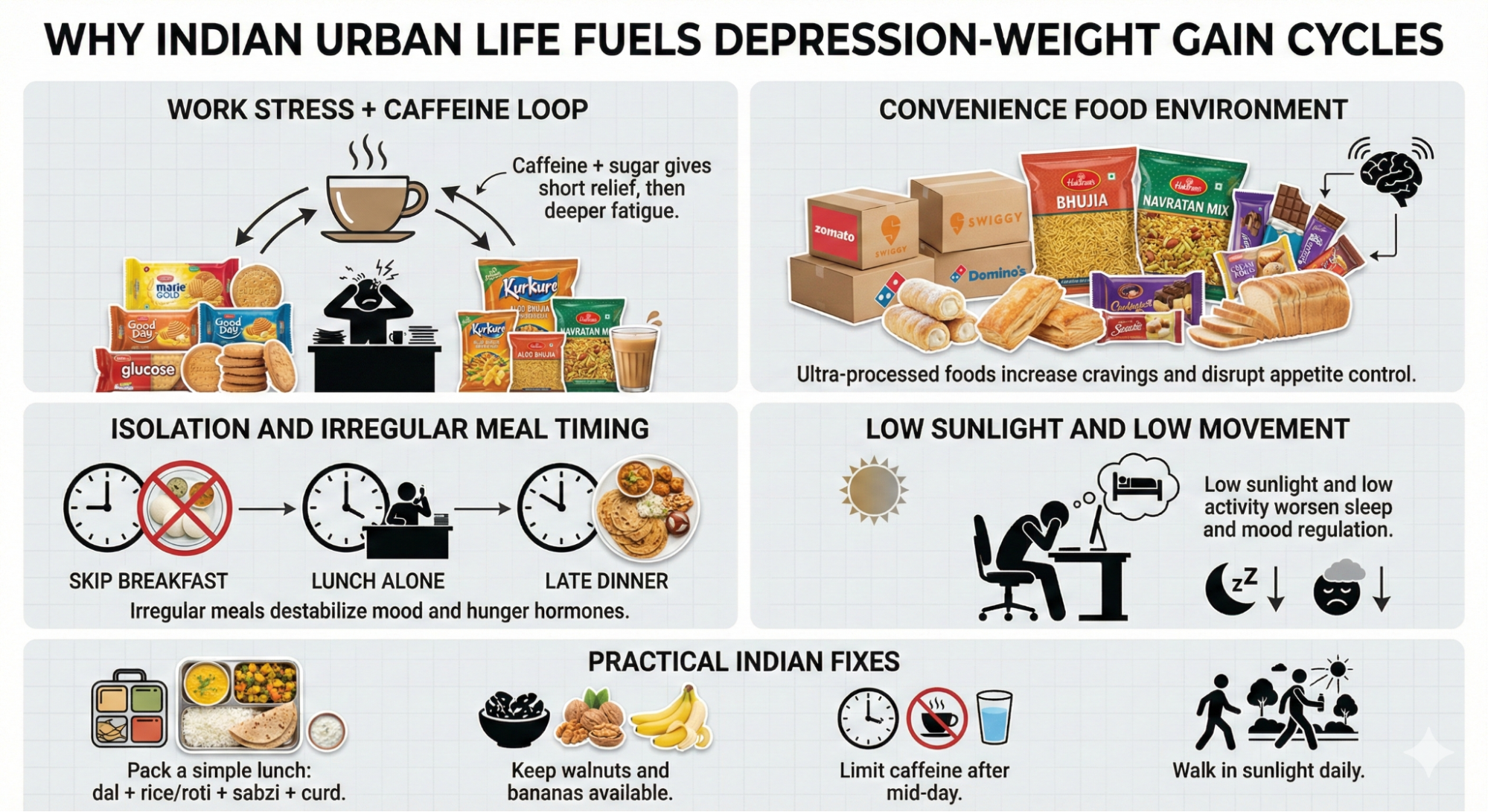
Depression drops serotonin and dopamine, triggering sugar cravings. This creates depression and weight gain simultaneously. A depression diet rich in omega-3 and tryptophan reverses this. Your thali directly influences your emotional state.
Why Mental Health and Weight Matter for Indian Bodies
India has 56 million depression sufferers, yet mental health is taboo. A diet plan for mental health and weight is foreign to most. Anxiety foods, sugar, caffeine, and processed snacks dominate urban diets. The best Indian foods for brain health exist in every kitchen but go unused.
Common Myths Debunked
- Myth: Depression is only a mental problem.
- Fact: Depression and weight gain share biological pathways through cortisol, serotonin, and gut bacteria.
- Myth: Comfort food helps depression.
- Fact: Sugar provides 20-minute relief followed by deeper crashes. A proper depression diet provides sustained mood stability.
- Myth: Exercise alone fixes mood. Fact: Mental health food combined with movement produces 60% better results than either alone.
The Science Behind Depression And Weight Gain for Indians
How Mental Health and Weight Work in Your Body
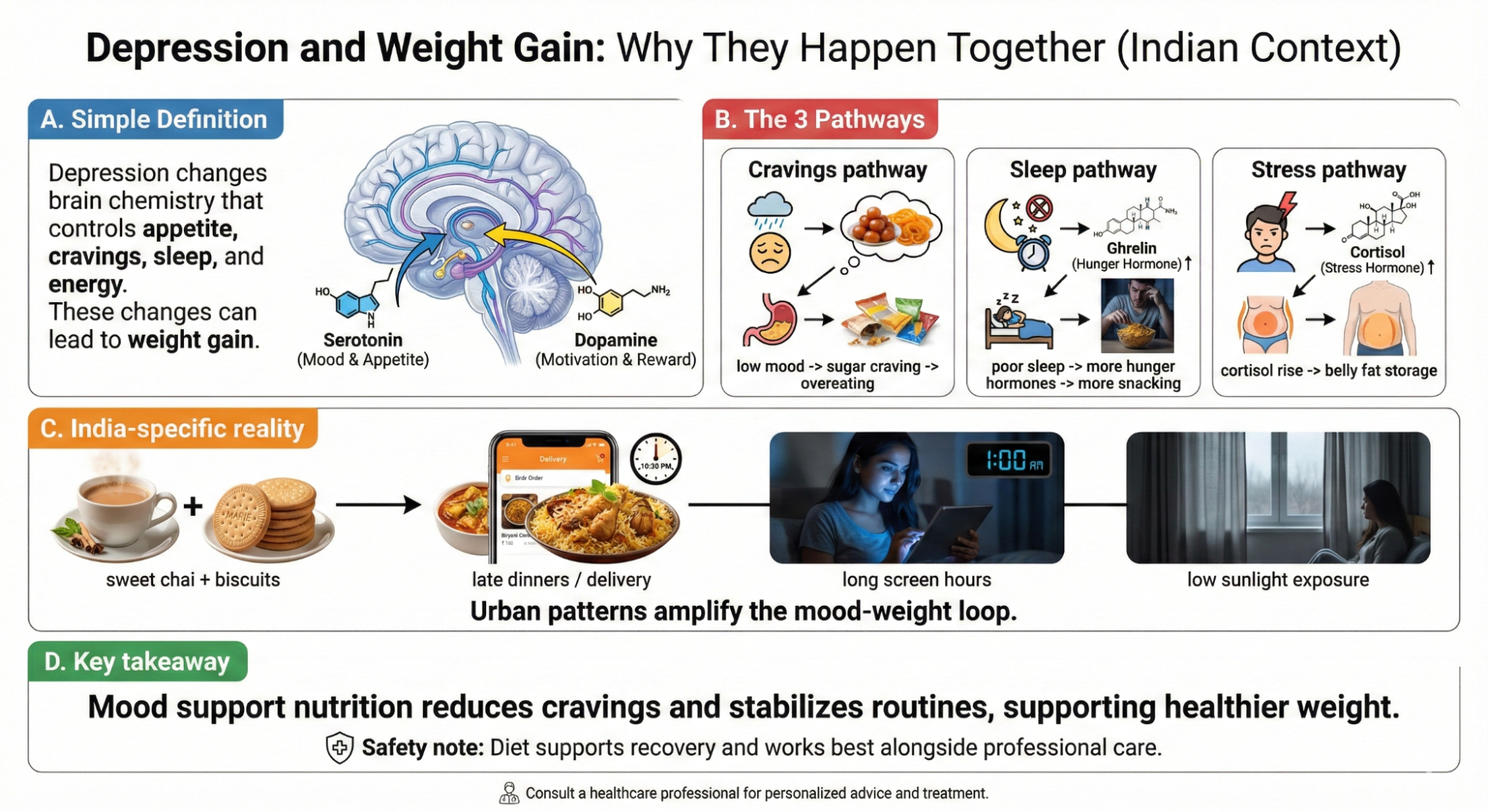
Cortisol increases during depression, storing abdominal fat. Your gut produces 90% of serotonin, making food and mood inseparable. Depression and weight gain create a feedback loop. Anxiety foods like caffeine and sugar amplify this.
The Connection Between Food And Mood and Health
Food and mood connect through the gut-brain axis. Curd and idlis feed serotonin-producing gut bacteria. Walnuts reduce brain inflammation. Foods that help with depression in India include turmeric curcumin, which crosses the blood-brain barrier.
What Research Shows for the Indian Population
AIIMS studies show that a diet plan for mental health and weight improved depression scores by 30% in 12 weeks. Best Indian foods for brain health showed measurable serotonin improvement. Mental health food interventions reduced antidepressant dosage in 25% of participants.
Mental Health Food: What to Watch For
Physical Signs and Symptoms to Monitor
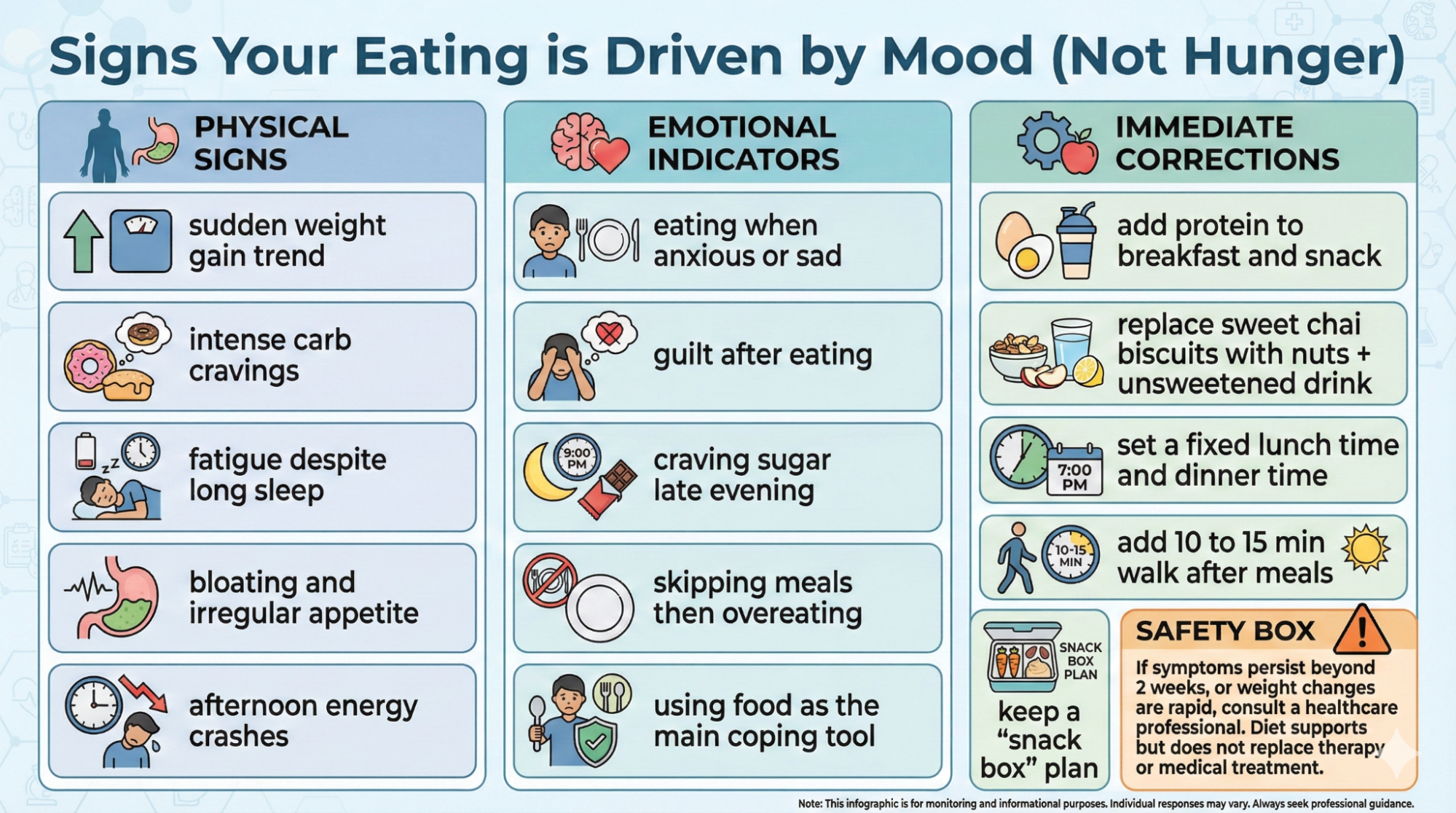
Watch for sudden weight gain, constant carb cravings, and fatigue despite 8+ hours of sleep. A depression diet intervention should begin alongside mental health support.
Emotional and Mental Health Indicators
Eating when sad or anxious rather than hungry indicates the food and mood cycle is disrupted. Guilt after eating and using food as a coping need attention.
When to Consult a Healthcare Professional
See a doctor if symptoms persist beyond 2 weeks or if weight changes are rapid. Depression and weight gain management through diet supports but never replaces therapy. Foods that help with depression in India work alongside professional care.
Indian Lifestyle Factors Affecting Depression And Weight Gain
Modern Indian Diet Challenges and Solutions
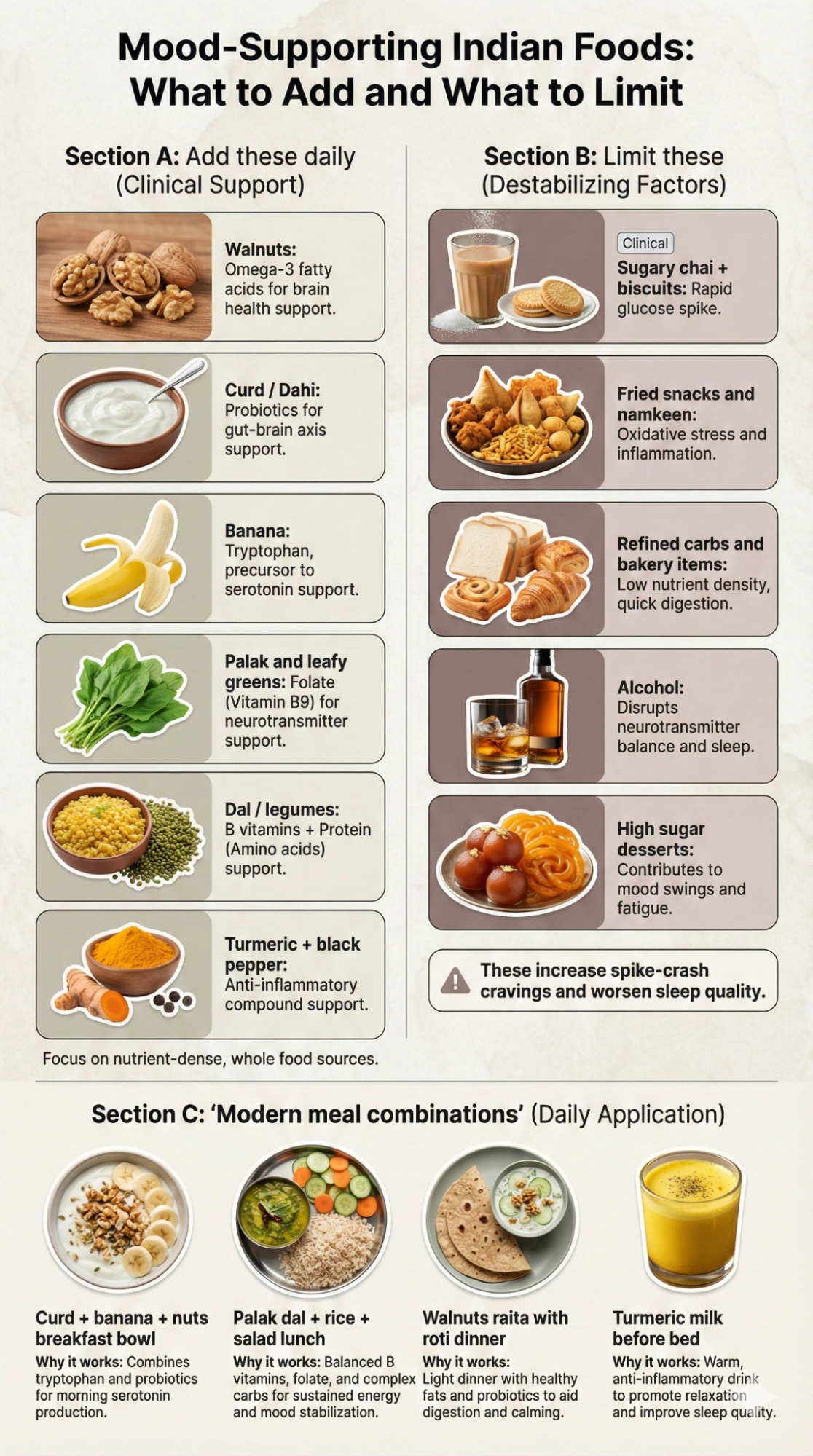
Urban diets are loaded with anxiety foods, sugar, caffeine, and processed snacks, worsening mood. Replacing chai biscuits with turmeric milk and walnuts shifts food and mood balance. Best Indian foods for brain health cost less than junk food.
Work-Life Balance and Urban Living Impact
Metro isolation fuels depression and weight gain. Packing a depression diet lunch: dal, brown rice, palak, and curd takes 15 minutes and protects brain chemistry.
Cultural and Social Influences on Health
“Sab theek hai” covers genuine suffering. Recognising a diet plan for mental health and weight as healthcare starts healing. Traditional foods that help with depression in India, like haldi doodh, were Ayurvedic antidepressants.
Best Indian Foods for Depression And Weight Gain Management
Mood-Boosting Indian Foods
Top foods that help with depression in India:
- Walnuts (akhrot): Omega 3 for serotonin production 7 daily
- Turmeric (haldi): Curcumin reduces brain inflammation
- Curd (dahi): Probiotics feed gut bacteria that make serotonin
- Banana (kela): Tryptophan converts to serotonin, a natural mood lifter
- Dark leafy greens (palak): Folate deficiency linked to depression
Modern Indian Meal Combinations
Try turmeric milk before bed, walnut raita at lunch, banana smoothie for breakfast, or palak dal for dinner. These combinations taste familiar and provide therapeutic nutrients. Best Indian foods for brain health work best in a daily rotation.
Anxiety Foods to Limit or Avoid
Reduce sugar, excess caffeine (max 2 cups chai), processed foods, alcohol, and refined carbs. These anxiety foods spike and crash blood sugar, worsening mood. A depression diet eliminates mood-disrupting foods while adding mood-boosting ones.
Portion Sizes and Meal Timing
Eat regular meals every 3-4 hours; skipping meals crashes blood sugar and mood together. Include protein at every meal for sustained serotonin production. Depression and weight gain worsen when meal patterns are irregular. A diet plan for mental health and weight requires consistent timing.
Lifestyle Changes to Support Depression And Weight Gain Recovery
Mental Health Food: The Right Approach
Mental health food works best with daily movement. Walking for 30 minutes produces endorphins. Foods that help with depression in India, combined with movement, create powerful recovery.
Sleep and Stress Management Strategies
Sleep 7-8 hours; insomnia worsens depression and cortisol-driven weight gain. A depression diet with proper sleep creates compound recovery.
Daily Habits That Make a Real Difference
- Eat 7 walnuts every morning for omega-3
- Drink turmeric milk before bed for anti-inflammation
- Walk 30 minutes in sunlight daily
These amplify depression and weight gain recovery alongside your meal plan.
Your 7-Day Depression And Weight Gain Recovery Meal Plan
| Day | Breakfast | Mid-Morning | Lunch | Evening Snack | Dinner |
| Mon | Oats + banana + walnuts | Green tea + almonds | Brown rice + palak dal + curd + salad | Dark chocolate (20g) + walnuts | Chapati + paneer + turmeric sabzi + haldi milk |
| Tue | Ragi porridge + dates + almonds | Buttermilk + banana | Jowar roti + rajma + raita + salad | Banana + peanut butter | Dal + brown rice + methi sabzi + curd |
| Wed | Moong dal cheela + curd | Walnuts + amla juice | Brown rice + chole + palak + curd | Makhana + green tea | Chapati + fish curry + turmeric dal + haldi milk |
| Thu | Banana smoothie + oats + walnuts | Green tea + dates | Bajra roti + dal + seasonal sabzi + raita | Dark chocolate + almonds | Khichdi + curd + turmeric pickle |
| Fri | Idli + sambar + walnut chutney | Buttermilk + banana | Brown rice + palak paneer + rasam | Sprout chaat + walnuts | Chapati + egg curry + sabzi + haldi milk |
| Sat | Poha + peanuts + banana | Amla juice + almonds | Millet pulao + curd + salad + dal | Banana + dark chocolate | Ragi roti + dal + turmeric sabzi + curd |
| Sun | Besan cheela + curd + chutney | Walnuts + green tea | Brown rice + sambar + poriyal + rasam | Trail mix + banana | Light soup + chapati + paneer + haldi milk |
This diet plan for mental health and weight provides serotonin-boosting nutrients. Anxiety foods are eliminated while comfort remains.
Common Mistakes Indians Make with Depression And Weight Gain
Diet Mistakes That Sabotage Recovery
Using sweets as a mood fix worsens depression. Skipping meals accelerates weight gain. Relying on caffeine instead of proper mental health food.
Lifestyle Pitfalls to Watch Out For
Eating alone in bed worsens both depression and overeating. Not seeking help, thinking diet alone cures depression. Depression and weight gain need multi-pronged approaches.
How to Course-Correct When Things Go Wrong
Mood still low after 4 weeks? See a therapist; diet supports but does not replace professional care. Weight still increasing? Track anxiety foods sneaking back. Resume your depression diet with walnuts, turmeric, and regular meals consistently.
Conclusion
Depression and weight gain affect 56 million Indians, yet the food and mood connection remains largely ignored. Diet interventions improved depression scores by 30% in AIIMS studies using simple Indian foods. Eat 7 walnuts daily, drink turmeric milk before bed, include curd at every meal, and walk 30 minutes in sunlight. Your kitchen can be your first line of emotional defence alongside professional support when needed.
FAQs
Q1: How are depression and weight gain connected?
Depression and weight gain connect through cortisol, serotonin, and gut bacteria. Depression increases cravings while reducing motivation to eat well. The food and mood cycle creates compounding effects.
Q2: What foods help with depression in India?
Foods that help with depression in India include walnuts, turmeric, curd, banana, palak, and fermented foods, all boosting serotonin and reducing brain inflammation naturally.
Q3: What is a good diet plan for mental health and weight?
A diet plan for mental health and weight includes omega-3, probiotics, B vitamins, and tryptophan-rich foods while eliminating anxiety foods like sugar and excess caffeine.
Q4: What are the best Indian foods for brain health?
Best Indian foods for brain health include walnuts, turmeric with black pepper, curd, banana, dark leafy greens, and brahmi, all traditional mental health food items.
Q5: How long until mood-boosting foods show results?
Improved energy appears in 1-2 weeks. Measurable mood improvement from a depression diet takes 6-8 weeks with consistent intake alongside lifestyle changes.
Q6: When should I see a doctor for depression and weight?
See a doctor if depression symptoms last beyond 2 weeks, weight changes are sudden, or daily functioning is significantly impaired. Mental health food supports but does not replace professional care.
Related Posts