

You step on the scale Monday morning feeling hopeful. By Wednesday, you’ve gained 2 kilos despite eating perfectly. Your rings feel tight, your face looks puffy, and your jeans won’t zip. Before you panic and starve yourself, understand this: you’re likely experiencing water weight, not fat gain. This invisible enemy confuses millions of Indian dieters, making you think your efforts aren’t working when they actually are. This guide reveals everything about water weight and how to manage it effectively.
What Is Water Weight and Why Indian Dieters Should Care?
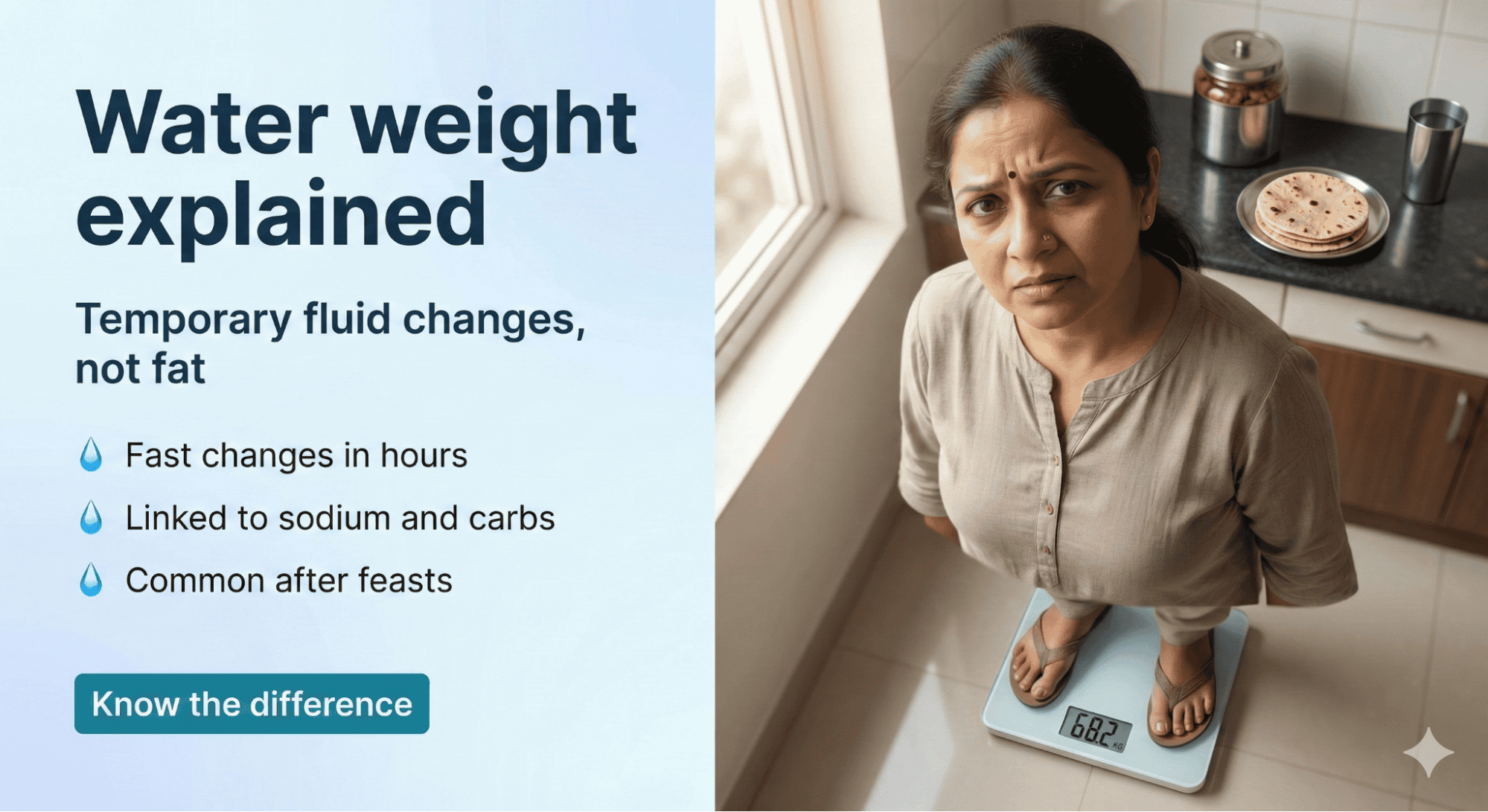
Water weight is the extra fluid your body retains in tissues, causing temporary weight gain and puffiness. Your body is roughly 60% water, constantly balancing fluid levels between cells, blood vessels, and surrounding tissues. When this balance gets disrupted, excess water accumulates in places it shouldn’t, particularly under your skin. This creates bloating, swelling, and those frustrating scale fluctuations that have nothing to do with actual fat. Unlike fat that accumulates gradually, water weight can appear or disappear within hours or days, making your weight swing wildly without real changes in body composition.
Why Water Matters for Indian Bodies
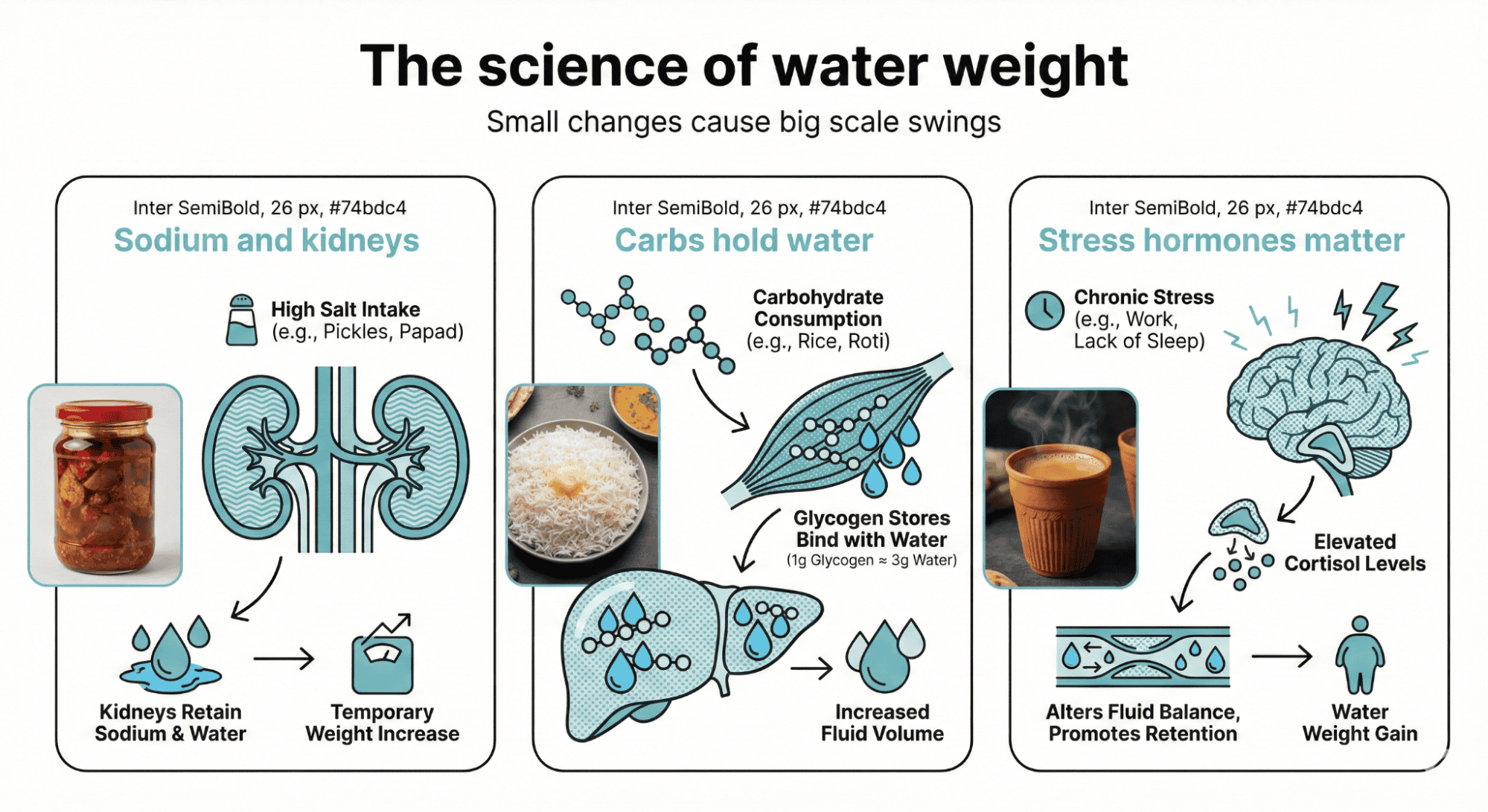
Indians face unique water retention challenges that Western diet advice often ignores. Our traditional foods are delicious but sodium-heavy, from pickles and papad to preserved chutneys. Moreover, the Indian climate makes you sweat more, disrupting fluid balance when you don’t hydrate properly. Urban Indians sit for long hours in air-conditioned offices, reducing circulation and encouraging fluid pooling in legs and feet. Additionally, our carb-heavy diets affect water weight significantly since carbs store with water in muscles. For every gram of carbohydrate stored as glycogen, your body holds 3 to 4 grams of water. Therefore, after a wedding feast or festive celebration, that 2-kilo jump on the scale isn’t fat, it’s water bound to the extra carbs you consumed.
Common Myths Debunked About This Topic
Let’s clear up dangerous misconceptions about water weight. First, drinking less water doesn’t reduce water retention. In fact, it worsens the problem by making your body panic and hold onto every drop. Second, water weight fluctuations are normal and don’t mean your diet failed. Third, you can’t permanently lose 3 kilos in 3 days through any legitimate method. That’s always water weight, which returns quickly. Fourth, women experience more water retention than men due to hormonal fluctuations, especially around menstruation. Finally, some bloating and fluid shifts are completely healthy. Your body needs these mechanisms for survival. The goal isn’t eliminating water retention entirely but managing excessive amounts that cause discomfort.
The Science Behind Water Weight for Indians
How Water Works in Your Body
Your body maintains fluid balance through a complex system involving kidneys, hormones, and sodium intake. When you eat salty food, sodium levels in your blood rise. Your body responds by holding onto water to dilute this sodium back to safe levels, causing temporary water retention. Additionally, the hormone aldosterone regulates sodium and water balance. Stress increases aldosterone, making you retain more water. Your kidneys filter about 180 liters of blood daily, deciding what to keep and what to eliminate as urine. Therefore, when this system gets overwhelmed by excessive salt, inadequate water intake, or hormonal imbalances, fluid accumulates in tissues rather than being eliminated properly.
The Connection Between Bloating and Health
Bloating and water retention signal more than just discomfort. Chronic fluid retention can indicate underlying issues like heart problems, kidney dysfunction, or hormonal imbalances. Additionally, persistent edema (medical term for swelling from fluid) stresses your circulatory system, making your heart work harder. However, occasional bloating after salty meals or before menstruation is completely normal and harmless. The key is distinguishing between normal fluctuations and problematic retention. Moreover, excessive water weight can hide actual fat loss progress on the scale, making you think your efforts aren’t working. This causes people to abandon healthy habits prematurely, when they were actually succeeding but couldn’t see it through the water weight masking their results.
What Research Shows for Indian Population
Studies on Indian populations reveal concerning patterns with water retention. Research shows that Indians consume 2 to 3 times the recommended sodium limit daily, primarily from processed foods, pickles, and restaurant meals. One study found that urban Indians average 10 to 12 grams of sodium daily when the limit is 5 grams. Additionally, Indians have higher rates of hypertension, which both causes and results from chronic water retention. In fact, sodium intake reduction studies on Indians showed dramatic improvements in blood pressure and edema within just 2 weeks. Moreover, research indicates that Indian women experience more severe premenstrual water retention than other populations, possibly due to genetic factors and dietary patterns. Understanding these population-specific challenges helps you address water weight more effectively.
Water Retention: What to Watch For
Physical Signs and Symptoms to Monitor
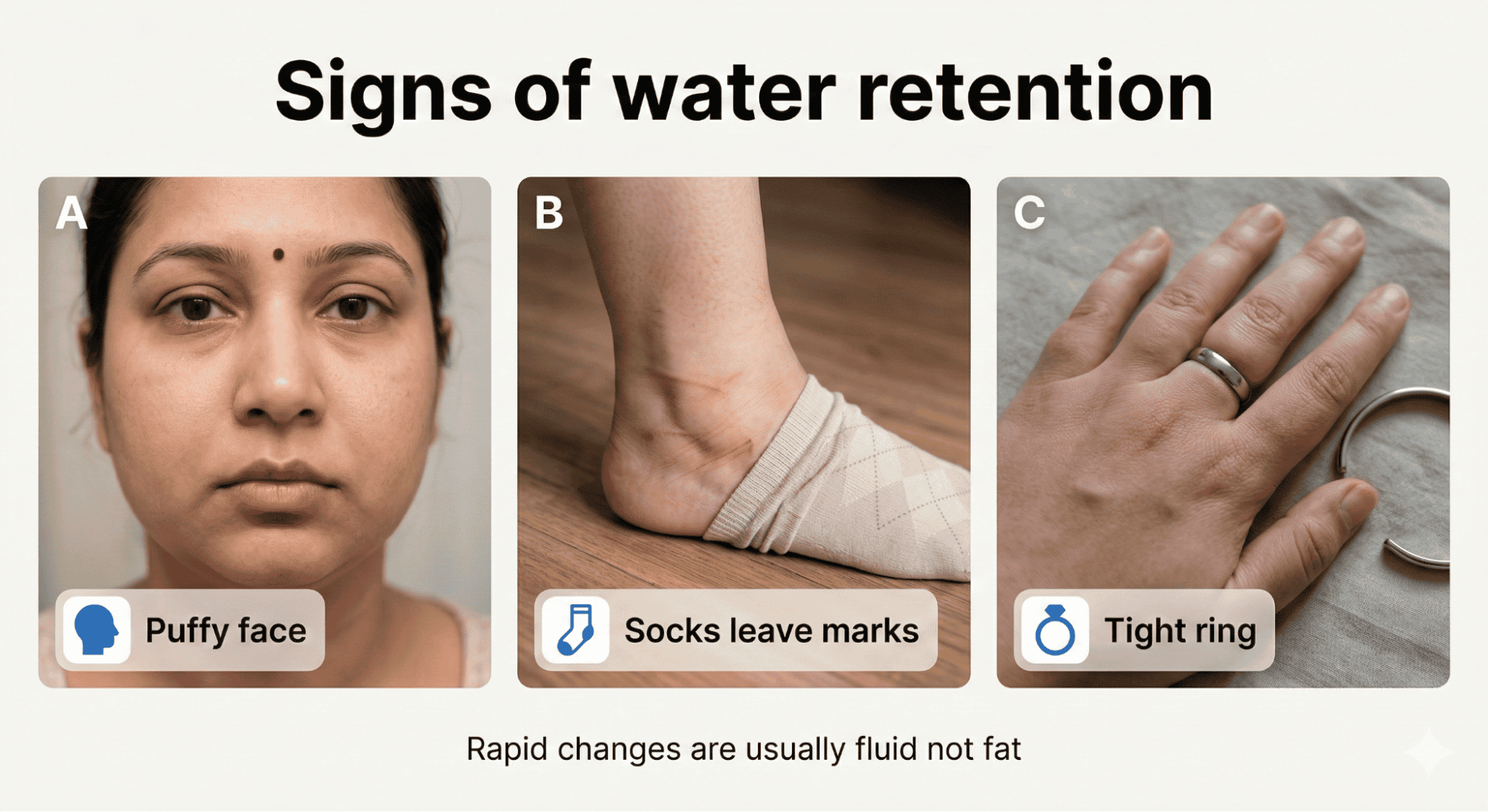
Water retention shows up in visible ways once you know what to watch for. Puffiness around your eyes, especially in the morning, signals fluid accumulation overnight. Swollen ankles and feet that leave sock marks or show indentations when pressed indicate lower body edema. Additionally, tight rings that usually fit comfortably mean fluid retention in your hands. A bloated, distended belly that appears quickly (within hours) after eating is bloating from water and gas, not fat. Moreover, rapid weight fluctuations of 1 to 3 kilos within 24 to 48 hours almost always represent water weight changes. Watch for clothes fitting tighter suddenly despite no change in eating habits. These signs help you distinguish water from fat, preventing unnecessary panic and helping you address the real issue.
Emotional and Mental Health Indicators
Water retention affects mental health more than people realize. Feeling frustrated when the scale jumps 2 kilos overnight despite perfect eating creates stress and disappointment. This stress can trigger emotional eating, creating a vicious cycle. Additionally, body image issues worsen when you feel puffy and uncomfortable in your clothes. Some people develop obsessive weighing behaviors, checking multiple times daily and panicking at normal fluctuations. Moreover, the confusion around water weight versus fat makes you doubt your efforts and consider extreme measures like crash diets or excessive exercise. Understanding that these fluctuations are normal and temporary reduces anxiety significantly. Therefore, recognizing when weight changes are water-related helps you maintain perspective and continue healthy habits without panic-induced sabotage.
When to Consult a Healthcare Professional
See a doctor if water retention becomes severe or persistent. Swelling that doesn’t improve with elevation or lasts more than a few days needs evaluation. Consult a healthcare professional if you experience sudden weight gain of 2 to 3 kilos or more within 24 hours accompanied by shortness of breath, chest pain, or severe leg swelling. Additionally, if one leg swells significantly more than the other, this could indicate a blood clot requiring immediate attention. Get help if edema comes with decreased urination, extreme fatigue, or abdominal swelling, as these might signal kidney or heart problems. Moreover, if you’ve tried reducing sodium intake and increasing water for 2 weeks without improvement, underlying medical conditions might need treatment. Don’t ignore persistent water retention as it sometimes indicates serious health issues requiring professional care.
Indian Lifestyle Factors Affecting Water Weight
Modern Indian Diet Challenges and Solutions
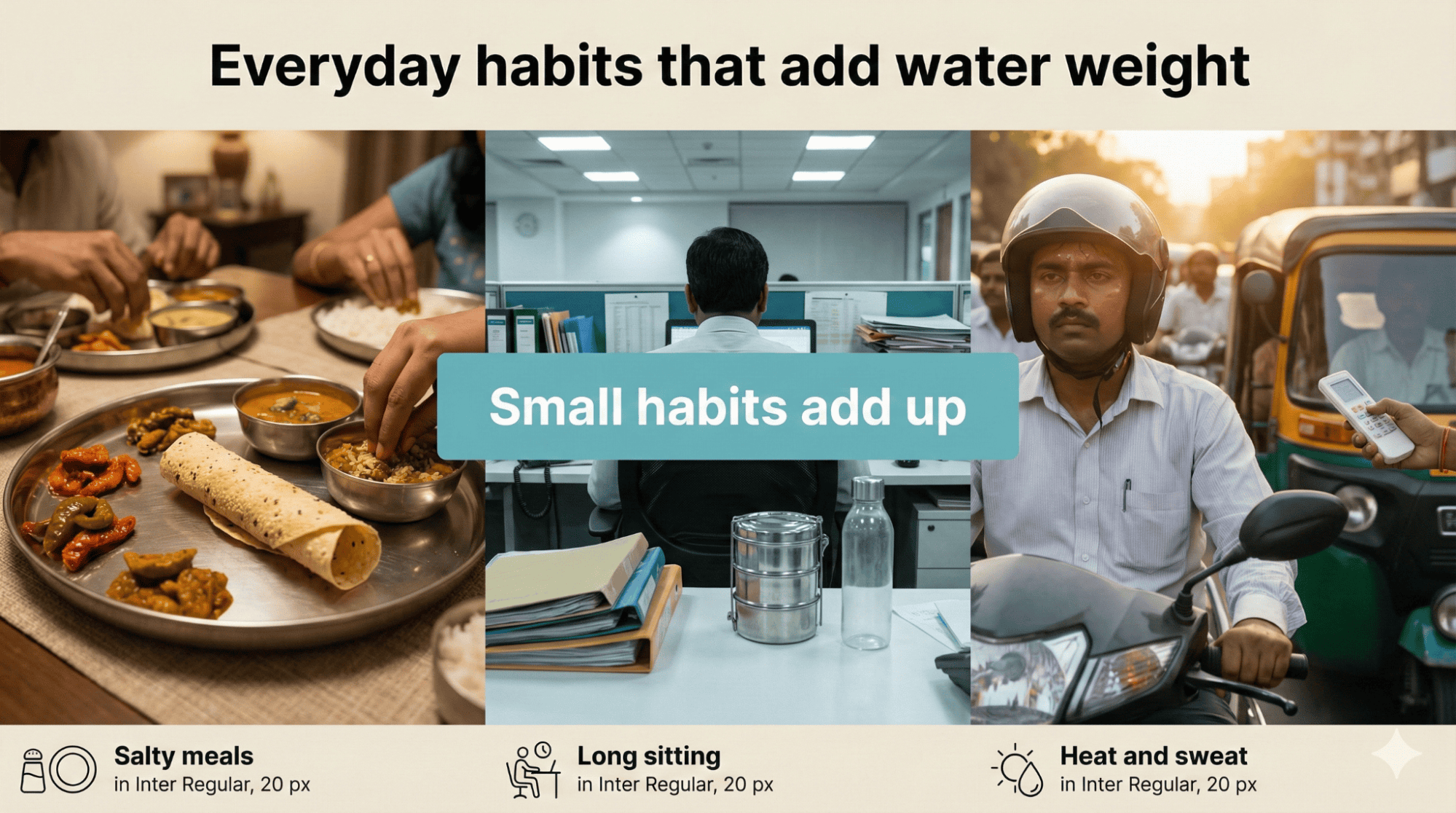
The modern Indian diet creates perfect conditions for water retention through hidden sodium bombs everywhere. Pickles, papad, and preserved chutneys we eat daily contain shocking salt amounts. Restaurant food uses excessive salt for flavor, with one butter chicken serving containing your entire day’s sodium limit. Moreover, packaged snacks like chips, namkeen, and instant noodles are salt landmines. Even “healthy” foods like whole wheat bread or breakfast cereals contain significant sodium. Solutions include making pickles at home with less salt, limiting restaurant meals to once or twice weekly, and reading labels on packaged foods. Additionally, rinse canned vegetables and legumes before cooking to remove excess sodium. Use herbs, spices, lemon, and vinegar for flavor instead of salt. These changes reduce sodium intake dramatically without sacrificing taste.
Work-Life Balance and Urban Living Impact
Urban Indian lifestyles worsen water retention through sedentary habits and environmental factors. Sitting at a desk 8 to 10 hours daily causes fluid to pool in your lower body due to gravity and poor circulation. Air conditioning dehydrates you, making your body hold onto water in response. Additionally, long commutes mean extended sitting, further reducing circulation. Stress from work and deadlines increases cortisol and aldosterone, both promoting water retention. Moreover, grabbing quick meals from outside means excessive sodium intake from restaurant food. Solutions include taking 5-minute walking breaks every hour to improve circulation. Keep a water bottle at your desk to ensure adequate hydration. Pack homemade lunches to control sodium. Do ankle circles and leg stretches while sitting to promote fluid movement. These small adjustments combat urban lifestyle’s negative effects on water weight.
Cultural and Social Influences on Health
Indian culture creates unique water retention challenges through food-centered social obligations. Refusing food at relatives’ homes seems disrespectful, even when it’s salty or fried. Festival seasons bring continuous celebrations with heavy, sodium-rich foods. Moreover, the tradition of feeding guests generously means enormous portions and pressure to eat more. Family members might dismiss bloating concerns, telling you “it’s normal” or “you’re fine,” preventing you from addressing real issues. Additionally, traditional beliefs about certain foods being “hot” or “cold” might discourage drinking adequate water. Navigate these by educating family about water retention and your health goals. Bring your own dishes to gatherings when appropriate. Accept food graciously but eat smaller portions. Choose less salty options when available. Remember that taking care of your health isn’t rude, it’s necessary for your wellbeing and sets good examples for others.
Best Indian Foods for Water Weight Management
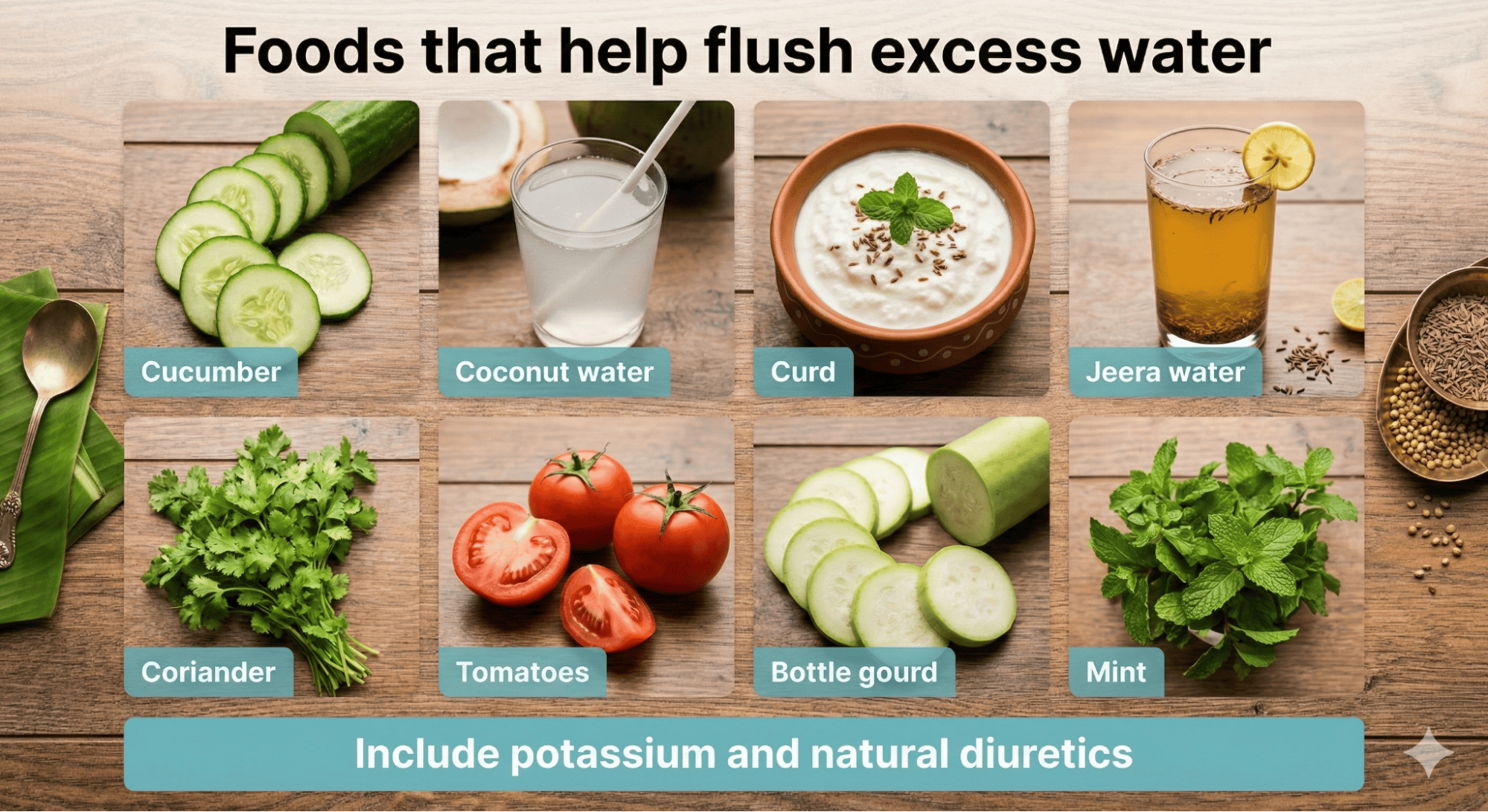
Traditional Indian Foods That Support Edema
Indian cuisine offers natural diuretics that help reduce water retention when used correctly. Cucumber contains 95% water and potassium, helping flush excess sodium and reduce bloating. Curd provides probiotics that improve digestion and reduce water retention from gut issues. Additionally, coconut water offers natural electrolytes, though moderation is key as discussed in earlier guides. Jeera water has mild diuretic properties and aids digestion, reducing bloating. Coriander and mint support kidney function, helping eliminate excess water. Moreover, tomatoes provide potassium which balances sodium, reducing edema. Lauki, tori, and other bottle gourds are naturally diuretic. Include these foods regularly but don’t expect magic. They support your body’s natural water balance when combined with overall healthy eating, not as standalone solutions.
Modern Indian Meal Options and Healthy Recipes
Create meals that naturally combat water retention using Indian ingredients. For breakfast, try vegetable poha with minimal salt, adding lemon juice and coriander for flavor. Make moong dal cheela without added salt, using jeera and black pepper instead. Additionally, prepare oats upma with lots of vegetables and moderate sodium. For lunch, cook dal with extra tomatoes and minimal salt, letting turmeric and garlic provide flavor. Make raitas with cucumber and mint, using less salt. Dinner could be roti with palak or methi sabzi seasoned with spices rather than salt. Moreover, prepare grilled paneer or fish with herb-based marinades instead of store-bought high-sodium versions. These modifications reduce sodium intake significantly while maintaining taste through smart spice usage. Your palate adjusts within 2 weeks, making reduced-salt food taste normal.
Foods to Limit or Avoid for Better Results
Certain foods guarantee water retention and should be limited drastically. Pickles and papad are sodium bombs with minimal nutritional value. Processed cheese, sausages, and cold cuts contain shocking salt amounts. Moreover, instant noodles, packaged soups, and ready-to-eat meals are heavily preserved with sodium. Restaurant food, especially Chinese and fast food, uses excessive salt. Canned foods, even vegetables, contain significant sodium unless labeled “no salt added.” Additionally, salty snacks like chips, namkeen, bhujia, and chakli should be occasional treats, not daily habits. Store-bought sauces, ketchup, and chutney contain hidden sodium. Even seemingly healthy foods like whole wheat bread or breakfast cereals can have 200 to 300mg sodium per serving. Reading labels becomes essential. These foods don’t need complete elimination but should be limited to once or twice weekly rather than daily consumption.
Portion Sizes and Meal Timing for Indians
Portion control and timing affect water weight management significantly. Eat larger meals earlier when your body processes sodium better, with dinner being your lightest meal. Space meals 3 to 4 hours apart to maintain stable blood sugar and prevent compensatory overeating that includes salty foods. Additionally, avoid eating within 2 to 3 hours of bedtime, as lying down after salty meals worsens morning puffiness when gravity can’t help drain fluid. Drink water consistently throughout the day rather than chugging large amounts at once, which can temporarily worsen bloating. Moreover, include a potassium-rich food at each meal to balance sodium naturally. Use smaller plates to reduce overall intake without feeling deprived. These timing and portion strategies work with your body’s natural rhythms to minimize water retention while maintaining satisfaction with your meals.
Lifestyle Changes to Support Water Weight
Sodium Intake: The Right Approach for Indians
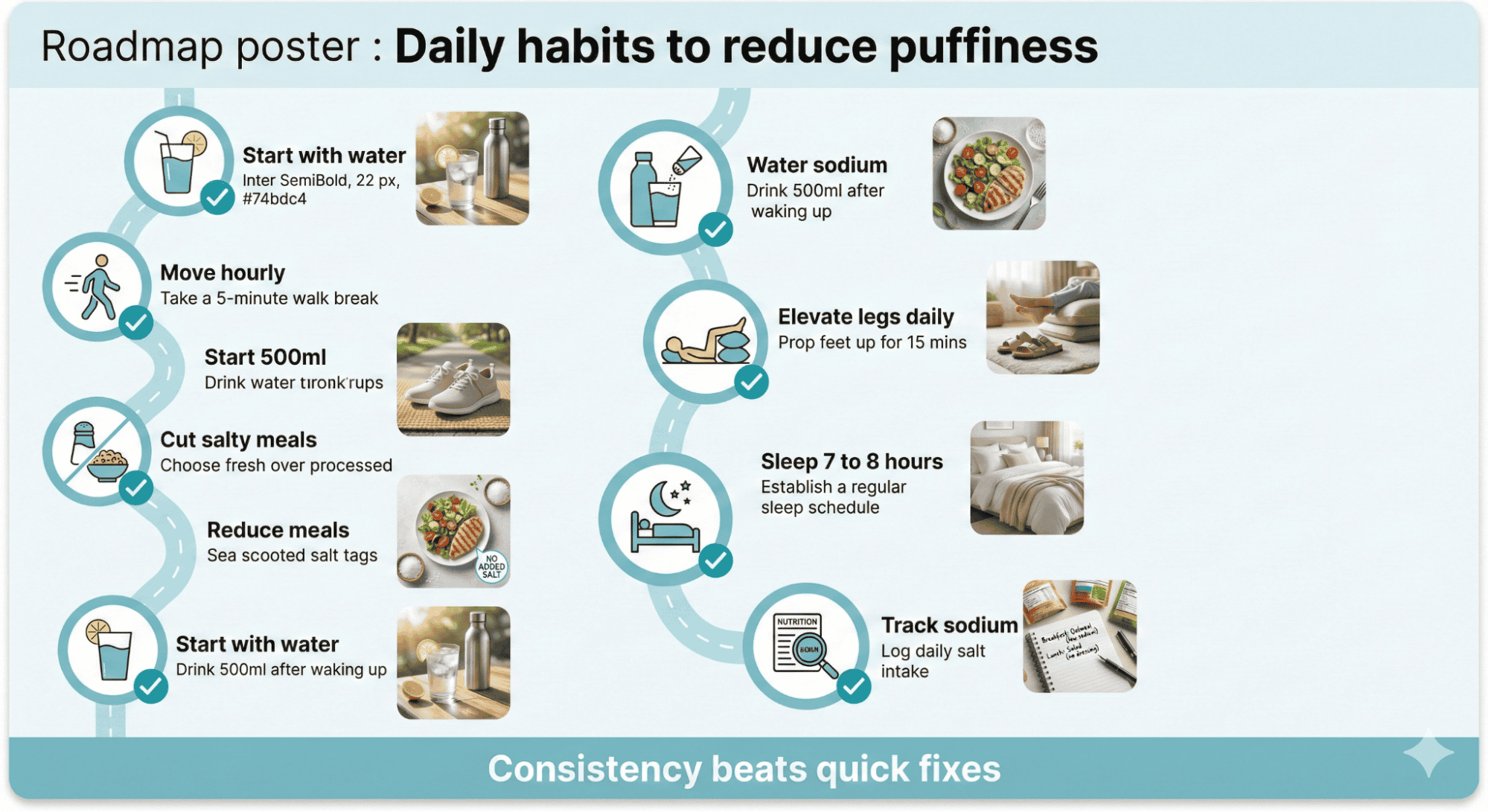
Managing sodium intake requires strategic changes rather than eliminating salt entirely. Aim for 5 grams (2000mg sodium) daily maximum instead of the 10 to 12 grams most Indians consume. Use measuring spoons for salt when cooking rather than adding by feel. Additionally, cook from scratch as much as possible since restaurant and packaged foods contain most dietary sodium. When you must eat out, ask for less salt or sauce on the side. Choose grilled over fried, which usually has less sodium. Moreover, load your plate with fresh vegetables and fruits which are naturally low in sodium and high in potassium. This potassium helps your body eliminate excess sodium, reducing water retention. Use salt substitutes like potassium chloride if your doctor approves, but ensure no kidney problems first. Remember that sodium reduction is a gradual process. Your taste buds need 2 to 3 weeks to adjust to lower salt levels before reduced-sodium food tastes normal.
Sleep and Stress Management Strategies
Sleep and stress profoundly affect water weight through hormonal pathways most people ignore. Poor sleep increases cortisol, which triggers aldosterone release, causing sodium retention and bloating. Aim for 7 to 8 hours of quality sleep in a cool, dark room. Additionally, chronic stress keeps cortisol elevated constantly, promoting water retention alongside fat gain. Practice stress management through whatever works for you: meditation, yoga, walking, or hobbies. Just 10 minutes of deep breathing daily can lower cortisol significantly. Moreover, lack of sleep disrupts appetite hormones, making you crave salty foods which worsen edema. Therefore, prioritizing sleep isn’t just about rest, it’s crucial for maintaining healthy fluid balance. In fact, many people notice dramatic reductions in puffiness and water weight simply from improving sleep quality, without any diet changes. This demonstrates how interconnected these factors are.
Daily Habits That Make a Real Difference
Small daily actions compound into significant water weight management. Start your day with a glass of water to rehydrate after sleep. Take 5-minute walking breaks every hour if you sit all day, improving circulation and reducing lower body edema. Additionally, elevate your legs for 15 minutes in the evening, helping gravity drain accumulated fluid. Do ankle rotations and calf raises throughout the day to pump fluid back toward your heart. Moreover, stay adequately hydrated with 8 to 10 glasses of water daily. This seems counterintuitive but dehydration makes your body hoard water, worsening retention. Limit alcohol which dehydrates you and causes rebound water retention. Avoid crossing your legs while sitting as this restricts circulation. These habits seem trivial individually but collectively create dramatic improvements in how you feel and look, reducing puffiness and bloating without extreme measures or expensive treatments.
Your 7-Day Water Weight Management Meal Plan
This meal plan emphasizes low-sodium cooking with natural diuretics and adequate hydration:
| Day | Breakfast | Lunch | Evening Snack (4-5 PM) | Dinner (7-8 PM) |
| Day 1 | Vegetable poha (minimal salt) + cucumber slices + jeera water | 2 rotis + dal (less salt) + lauki sabzi + cucumber raita | Fresh coconut water (100ml) | Moong dal cheela (2) + mint chutney + tomato salad |
| Day 2 | Oats upma with vegetables + coriander + green tea | Brown rice (1 katori) + sambhar + palak + curd | Watermelon (1 bowl) | 2 bajra rotis + dal + mixed vegetables + salad |
| Day 3 | 2 boiled eggs + whole wheat toast + tomato slices + lemon water | 2 rotis + chana dal + tori sabzi + raita | Cucumber sticks with lemon | Vegetable khichdi + 1 tbsp ghee + curd |
| Day 4 | Moong dal dosa (2) + coconut chutney (less salt) + sambhar | Quinoa pulao + dal + mixed veg + salad | Fresh orange (1) | 2 rotis + palak paneer (minimal salt) + cucumber |
| Day 5 | Vegetable upma + handful of almonds + jeera water | Brown rice + masoor dal + bhindi + raita | Papaya (1 bowl) | 2 rotis + dal + lauki + tomato salad |
| Day 6 | Besan cheela (2) with vegetables + mint chutney + tea | 2 rotis + rajma (less salt) + mixed veg + curd | Coconut water (100ml) | Moong dal khichdi + cucumber raita + salad |
| Day 7 | Idli (3) + sambhar (less salt) + coconut chutney + lemon water | Brown rice + dal + palak + tomato salad | Handful of walnuts (6) | 2 rotis + mixed vegetables + dal + raita |
Note: Use minimal salt in all preparations. Drink 8 to 10 glasses of water throughout the day. Include jeera water, coriander water, or lemon water between meals. Avoid adding salt to raita, salad, or curd.
Common Mistakes Indians Make with Water Weight
Diet Mistakes That Sabotage Progress
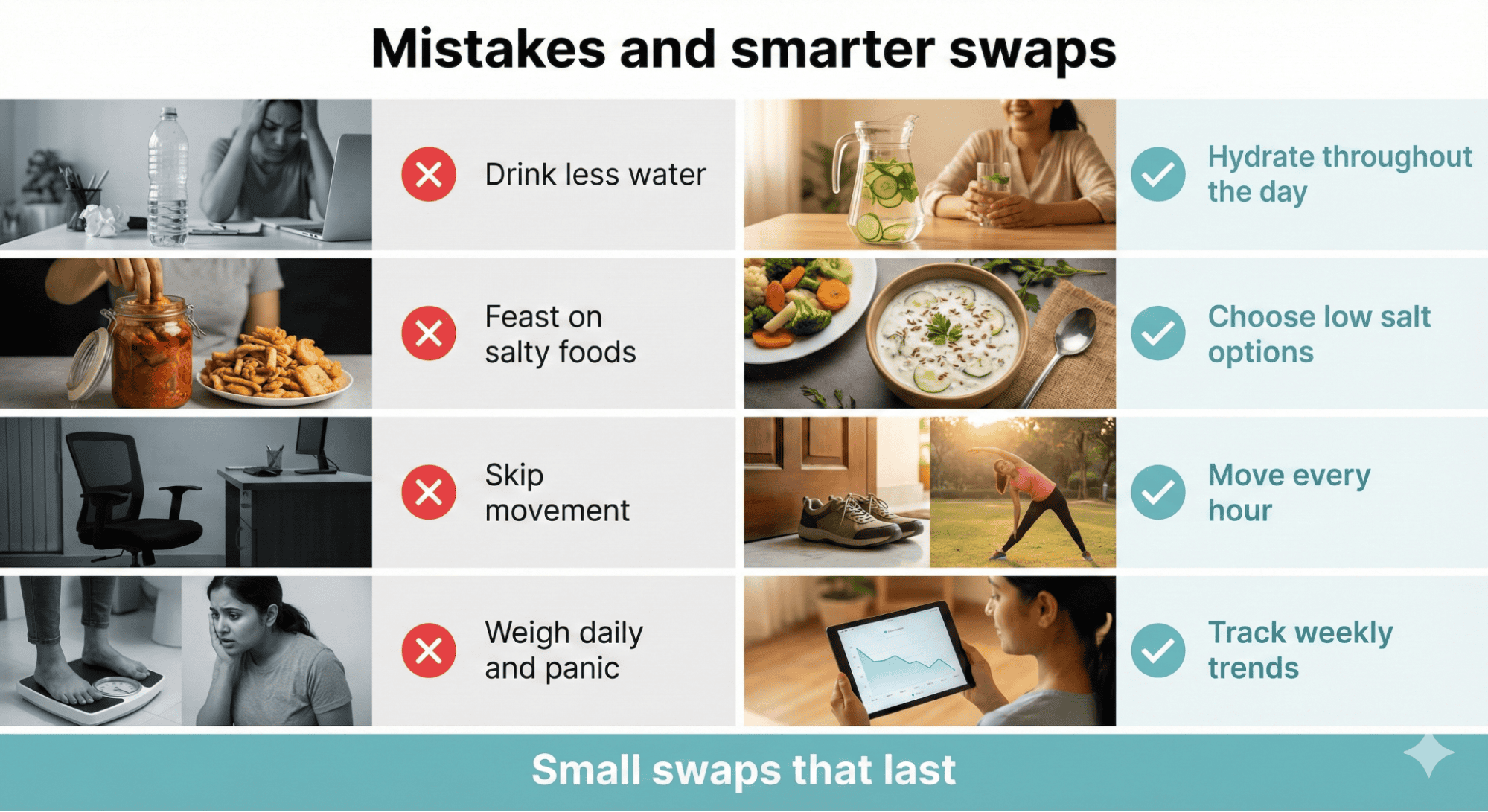
The biggest mistake is thinking less water means less water weight, so people deliberately dehydrate themselves. This backfires spectacularly, making your body panic and hoard every drop. Another error is using “cheat days” with unlimited salty food, causing 2 to 3 kilo jumps that take a week to normalize. Moreover, many people don’t realize how much sodium intake comes from “healthy” foods like whole wheat bread or breakfast cereals. Not reading labels means hidden sodium sneaks in constantly. Additionally, drinking excessive coffee or tea without compensating water intake causes dehydration and rebound retention. Skipping meals leads to excessive hunger and poor food choices, often salty convenience foods. These mistakes keep you trapped in a cycle of bloating and frustration despite thinking you’re being healthy. The solution is adequate hydration, consistent moderate sodium intake, and reading every food label carefully.
Lifestyle Pitfalls to Watch Out For
Many Indians sabotage water weight management through lifestyle habits they don’t connect to the issue. Sitting or standing for hours without movement causes significant lower body edema that people blame on diet when it’s actually poor circulation. Additionally, wearing tight clothes and shoes restricts circulation, worsening bloating. Not managing stress means constantly elevated cortisol promoting fluid retention. Moreover, weighing yourself multiple times daily and panicking at normal fluctuations creates anxiety that increases cortisol further. Comparing your weight to others ignores that everyone’s water weight patterns are different. Taking diuretic pills or laxatives without medical supervision is dangerous and creates dependency. These shortcuts damage your body’s natural fluid regulation. In fact, the cycle of extreme restriction followed by rebound retention is harder to break than simply managing sodium and hydration consistently from the start.
How to Course-Correct When Things Go Wrong
If you’ve been retaining excessive water despite efforts, evaluate systematically. Track your sodium intake honestly for 3 days using a food tracking app. You’ll probably discover hidden sources you didn’t realize. Therefore, identify your biggest sodium culprits and address those first. Maybe it’s eating out too often, or perhaps pickles and papad you didn’t count. Additionally, check if you’re drinking enough water. Aim for 8 to 10 glasses daily and track it. If you’re exercising intensely, you need even more. Moreover, consider hormonal factors if you’re a woman. Premenstrual water retention is normal and usually resolves within a few days. Don’t compound it with panic-induced restriction. However, if you’ve addressed diet, hydration, and activity but still have persistent edema, see a doctor to rule out kidney, heart, or thyroid problems. Sometimes medical intervention is necessary, and there’s no shame in getting help.
Conclusion
Water weight confuses and frustrates Indian dieters, making you think your diet failed when you’re actually progressing fine. The 2-kilo gain after a wedding isn’t fat, it’s water from sodium and carbs. Understanding this distinction prevents panic-induced crash diets that damage metabolism. Your body needs water balance for survival, so some fluctuation is normal and healthy. The goal is managing excessive bloating and edema through smart sodium control, adequate hydration, and lifestyle habits that support circulation.
Start today with one simple change: measure the salt you use when cooking for the next week to build awareness. Drink a glass of water upon waking and before each meal. Additionally, take a 5-minute walk after lunch and dinner to improve circulation. These small actions create dramatic improvements in how you feel without extreme restriction.
FAQs
Q1: What is water weight and how does it affect Indians?
Water weight is excess fluid retained in body tissues, causing temporary weight gain and puffiness, particularly common in Indians due to high-sodium traditional diets and carb-heavy eating patterns. Unlike fat gain, which occurs gradually, bloating and water retention can appear within hours, making the scale fluctuate 1 to 3 kilos daily despite consistent diet efforts.
Q2: What are the main signs of water retention issues?
Signs include morning facial puffiness, swollen ankles with sock marks, tight rings, a bloated belly appearing suddenly, and rapid weight fluctuations of 2 to 3 kilos within 24 to 48 hours. Watch for edema leaving indentations when pressed, clothes suddenly fitting tighter, and an overall feeling of heaviness or discomfort despite unchanged eating habits.
Q3: What foods should Indians eat for better water weight management?
Eat cucumber, curd, jeera water, coconut water (limited), coriander, mint, tomatoes, lauki, and other bottle gourds that naturally support fluid balance. Focus on fresh vegetables and fruits while drastically limiting pickles, papad, processed foods, restaurant meals, and packaged snacks that contain excessive sodium intake, causing bloating and water retention.
Q4: Can water retention be managed naturally?
Yes, manage water retention through reduced sodium intake to 5 grams daily, drinking 8 to 10 glasses of water, regular movement to improve circulation, adequate sleep for hormonal balance, and stress management. Elevate legs periodically, avoid tight clothing, and include natural diuretics like cucumber and edema-reducing foods in daily meals for effective management.
Q5: How long does it take to see results with water weight changes?
Water weight responds quickly, with noticeable reduction in puffiness within 2 to 3 days of reducing sodium and increasing water intake. Significant improvement in bloating and swelling appears within 1 to 2 weeks of consistent changes, though hormonal water retention for women may take a full cycle to stabilize completely.
Related Posts


