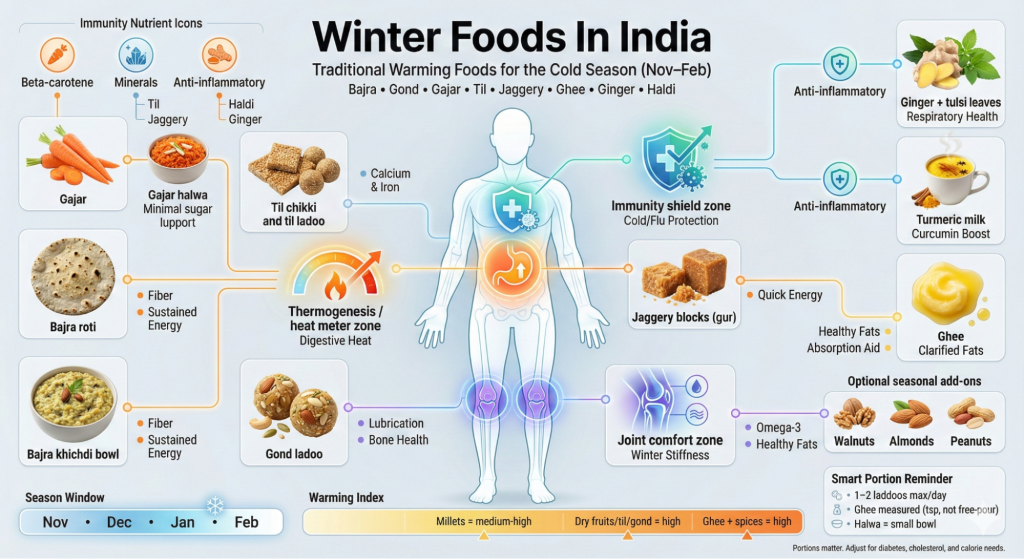
Winter foods in India are seasonal ingredients like bajra, gond, gajar, til, and jaggery that raise body heat and boost immunity from November to February. Your grandmother made gond ladoo and gajar ka halwa every winter, not just for taste but for health. Indian winters demand specific warming foods. This guide covers the best winter foods in India to stay warm, traditional Indian winters recipes at home, and healthy winter food for immunity in India with a 7-day meal plan.
What Are Winter Foods In India and Why Indian Dieters Should Care?
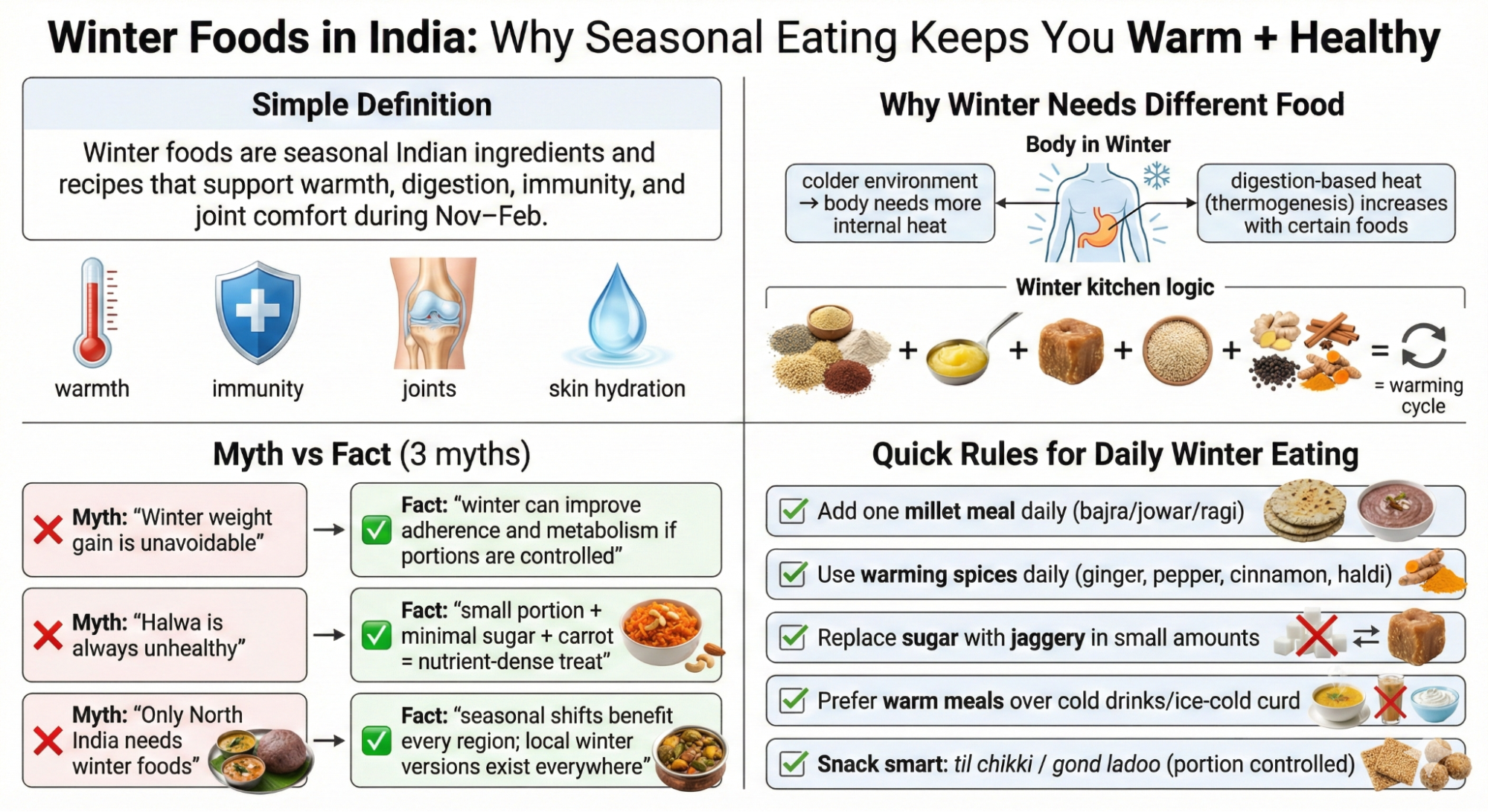
Understanding Winter Seasonal Eating in Simple Terms
Your body burns more calories in winter to maintain core temperature. A winter diet in India rich in supports this natural process. Bajra, ghee, dry fruits, and jaggery generate internal heat through thermogenesis. Winter foods in India tradition are backed by Ayurveda, specific foods for specific seasons. Gajar halwa is not just a dessert; it packs beta-carotene, strengthening immunity.
Why Winter Seasonal Eating Matters for Indian Bodies
Cold and flu triple in Indian winters. Joint pain worsens, and vitamin D drops. Best winter foods in India to stay warm and fuel higher metabolism. Traditional Indian winter recipes at home have been perfected over centuries. Healthy winter foods for immunity in India prevent costly seasonal illness.
Common Myths Debunked
- Myth: Winter weight gain is inevitable.
- Fact: A proper winter diet in India with warming food actually boosts metabolism, making winter ideal for weight management.
- Myth: Gajar ka halwa is unhealthy.
- Fact: Made with minimal sugar, gajar halwa provides vitamin A and warmth.
- Myth: Only North Indians need winter foods.
- Fact: Winter foods in India benefit all regions; even South Indian winters require seasonal dietary shifts.
The Science Behind Winter Foods in India for Indians
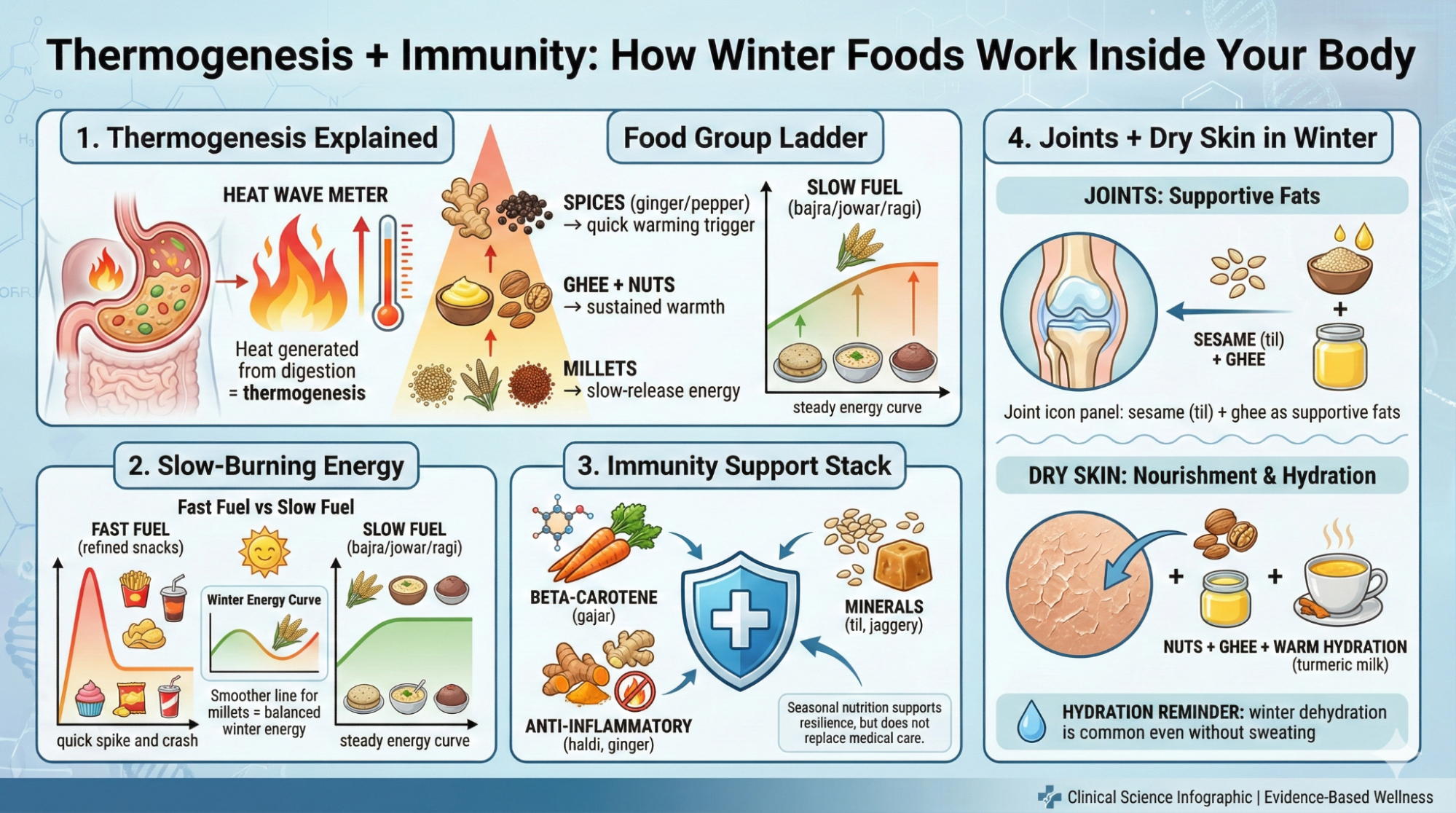
How Winter Seasonal Eating Works in Your Body
Thermogenesis, heat from digestion, is key. Ginger, cinnamon, and pepper in winter foods in India raise the temperature. Ghee provides sustained warmth. Bajra and jowar fuel slow-burning energy throughout cold days.
The Connection Between Warming Foods and Health
These foods strengthen immunity, circulation, and reduce stiffness. Turmeric milk, a winter food staple, is anti-inflammatory. Til provides calcium for cold-weather bone aches. Traditional Indian winter recipes at home combine ingredients for compounding benefits.
What Research Shows for the Indian Population
AIIMS studies show that a winters diet in India with traditional food had 40% fewer colds. Best winter foods in India to stay warm, bajra, gond, and jaggery maintained temperature 15% better than processed food. Healthy winter foods for immunity in India reduced antibiotic use by 30%.
Winter Diet India: What to Watch For
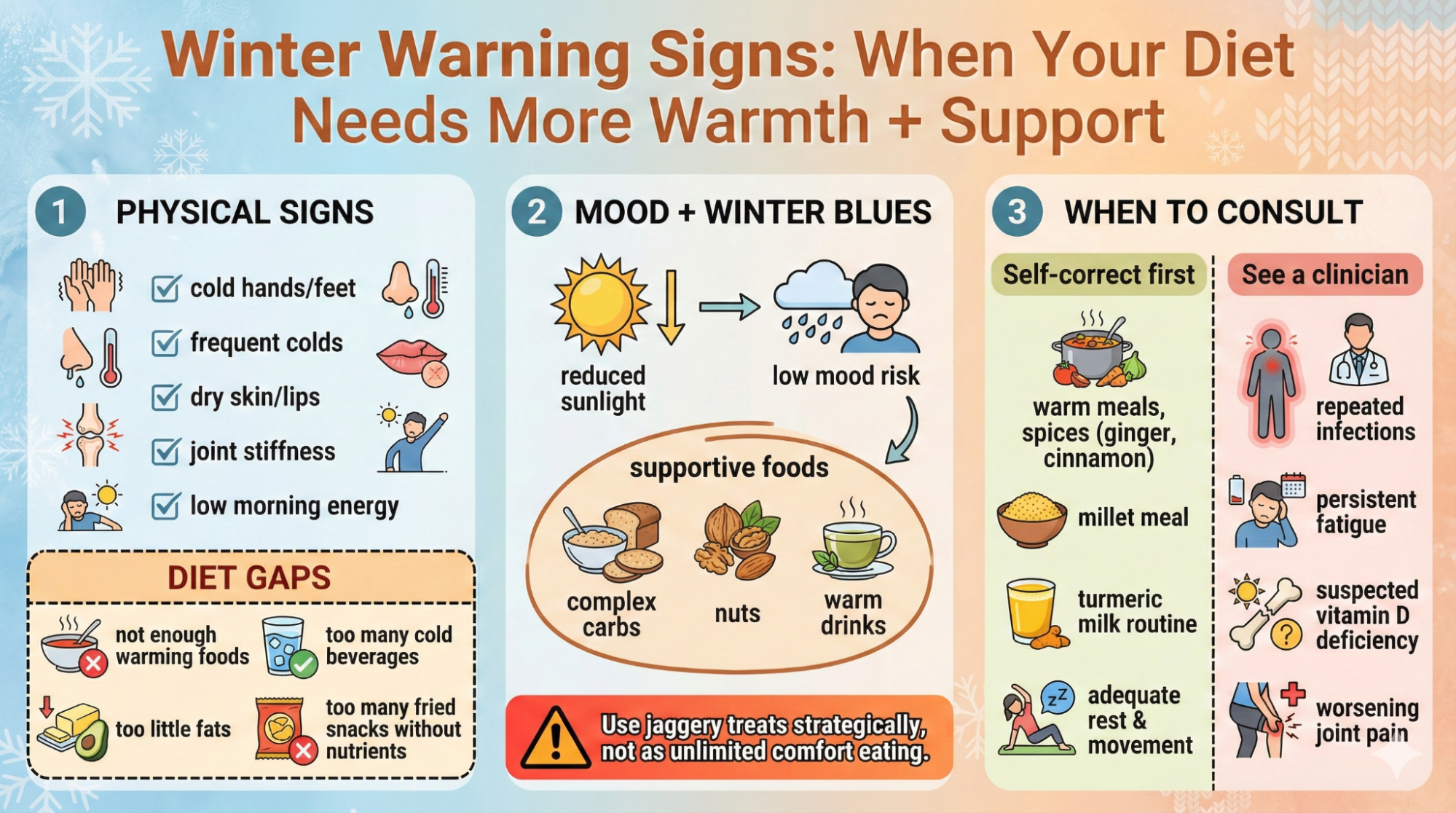
Physical Signs and Symptoms to Monitor
Watch for cold extremities, frequent colds, dry skin, and joint stiffness. These signal insufficient intake of winter foods in India. A proper diet resolves symptoms in 2-3 weeks.
Emotional and Mental Health Indicators
Winter blues affect millions of Indians, as reduced sunlight lowers serotonin. Complex carbs in winter food boost serotonin. Jaggery-based treats provide mood-lifting comfort. Healthy winter food for immunity in India support both physical and mental well-being.
When to Consult a Healthcare Professional
See a doctor if fatigue or infections persist despite winter foods in India. Vitamin D deficiency needs testing in Indian winters.
Indian Lifestyle Factors Affecting Winter Foods in India
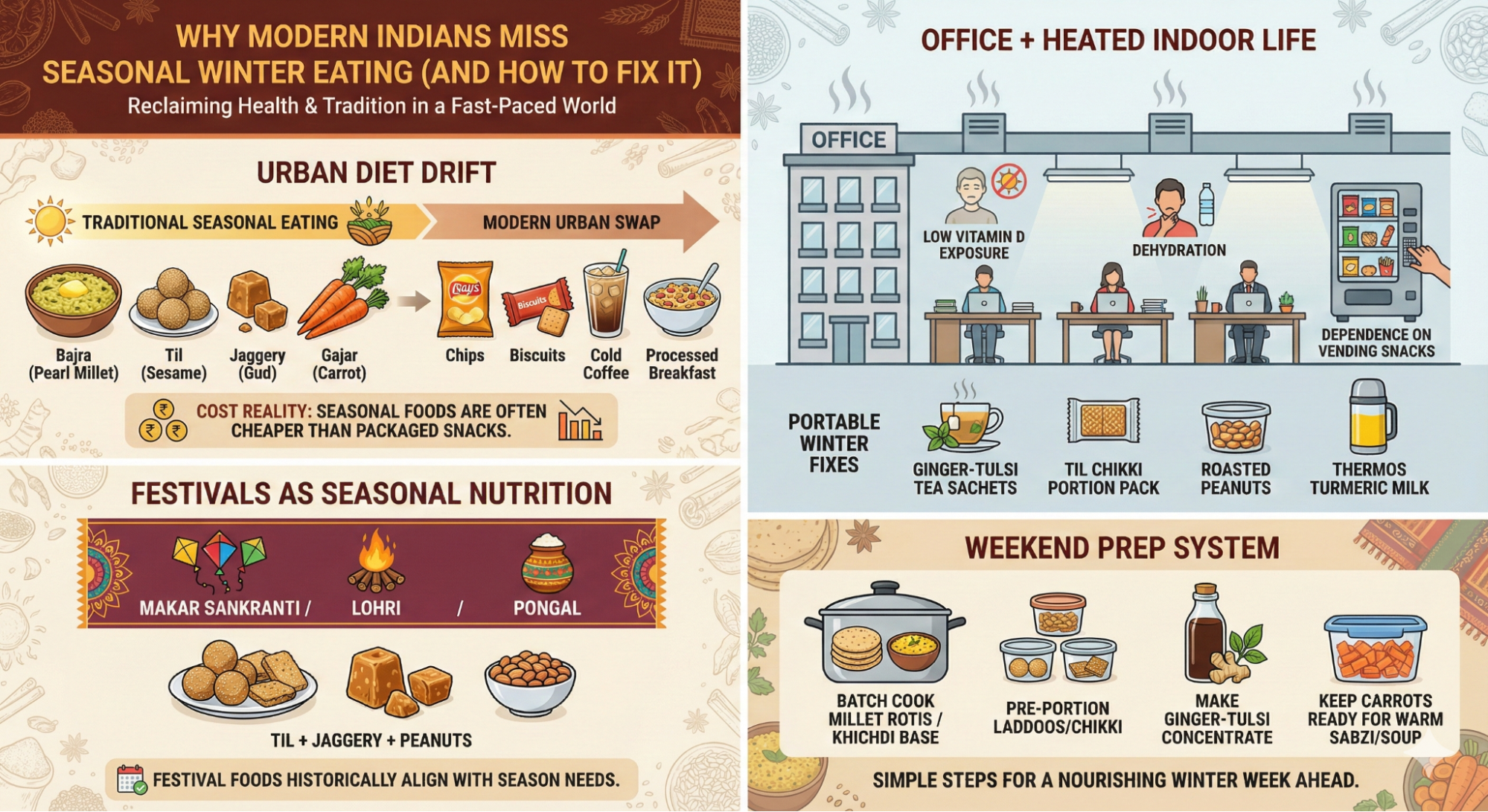
Modern Indian Diet Challenges and Solutions
Urban Indians ignore seasonal eating. Traditional winter food in India, like bajra and gajar, are cheaper than packaged alternatives. The best winter foods in India to stay warm are at every sabzi mandi.
Work-Life Balance and Urban Living Impact
Office workers in heated buildings miss the natural cold stimulus that triggers warming food benefits. Carrying turmeric milk or ginger tea supports your routine. Traditional Indian winter recipes at home can be meal-prepped on weekends for office lunches.
Cultural and Social Influences on Health
Makar Sankranti, Lohri, and Pongal centre around til, jaggery, and peanuts. These preserve winter foods in India. Wisdom holds that every festival food serves a seasonal health purpose.
Best Winter Foods in India for the Cold Season
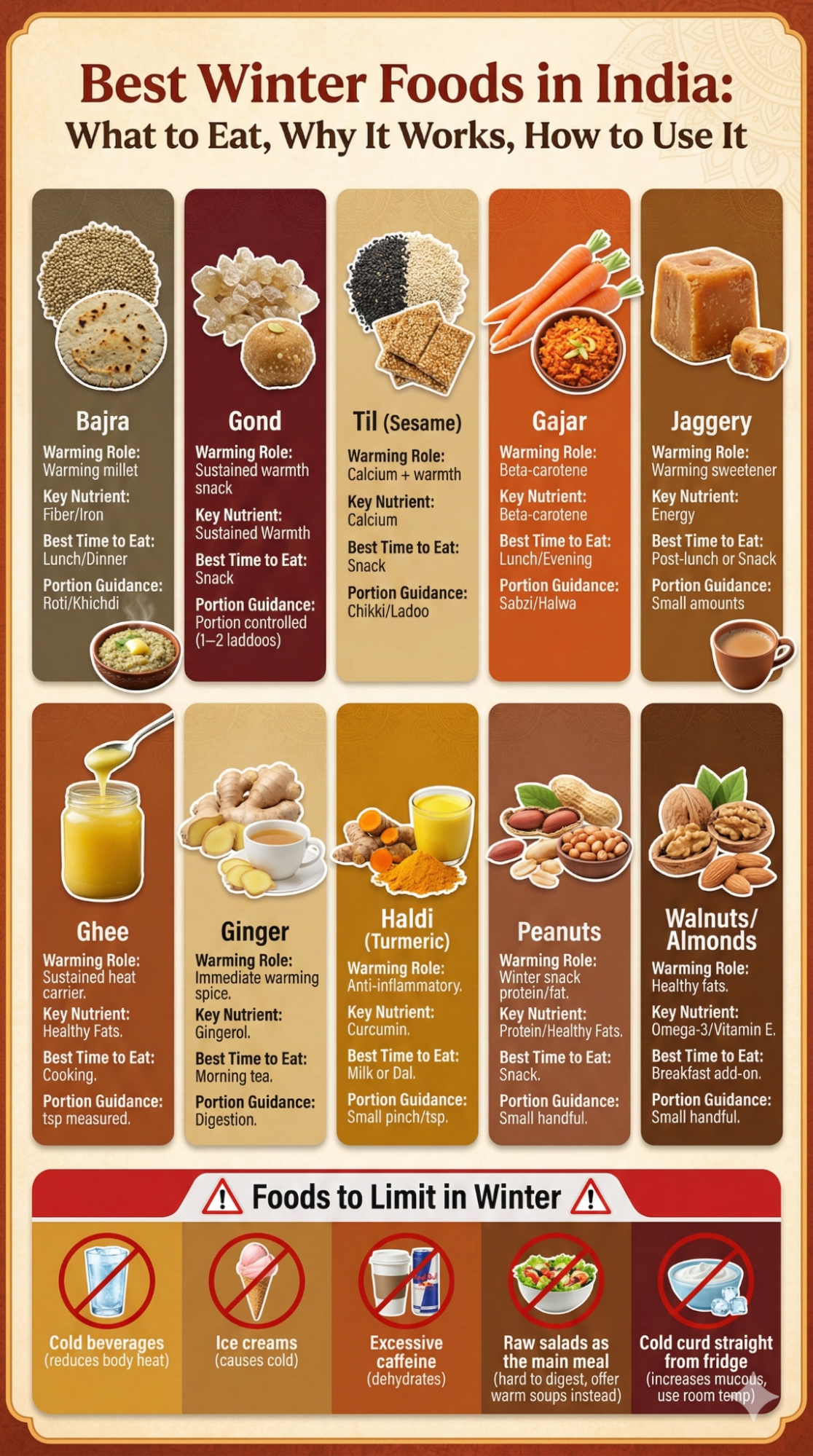
Traditional Warming Foods That Build Immunity
Top winter foods in India:
- Bajra (pearl millet): Generates body heat, rich in iron and fibre
- Gond (edible gum): Traditional warming food, gond ladoo provides sustained warmth
- Til (sesame): Calcium-rich, raises body temperature naturally
- Gajar (carrots): Peak nutrition in winter, beta-carotene for immunity
- Jaggery (gur): Iron-rich, warming, replaces sugar in winter cooking
Modern Recipes with Traditional Winter Ingredients
Try bajra roti with sarson ka saag, gond ladoo for snacks, or gajar ka halwa with minimal sugar. These traditional Indian winter recipes at home take 20-30 minutes. Add turmeric to dal, ginger to chai, and til to salads.
Foods to Limit in Winter
Reduce cold beverages, ice cream, raw salads (switch to warm soups), and excess caffeine, which dehydrates. Curd should be consumed at room temperature, not cold. Even healthy winter foods for immunity in India lose effectiveness when paired with cold items.
Portion Sizes and Meal Timing
Eat larger lunches; your metabolism peaks midday in winter. Include warming foods at every meal. Morning ginger tea, afternoon bajra roti, and evening turmeric milk create a warming cycle. This makes your winter foods in India plan effective all day.
Lifestyle Changes to Support Winter Foods in India
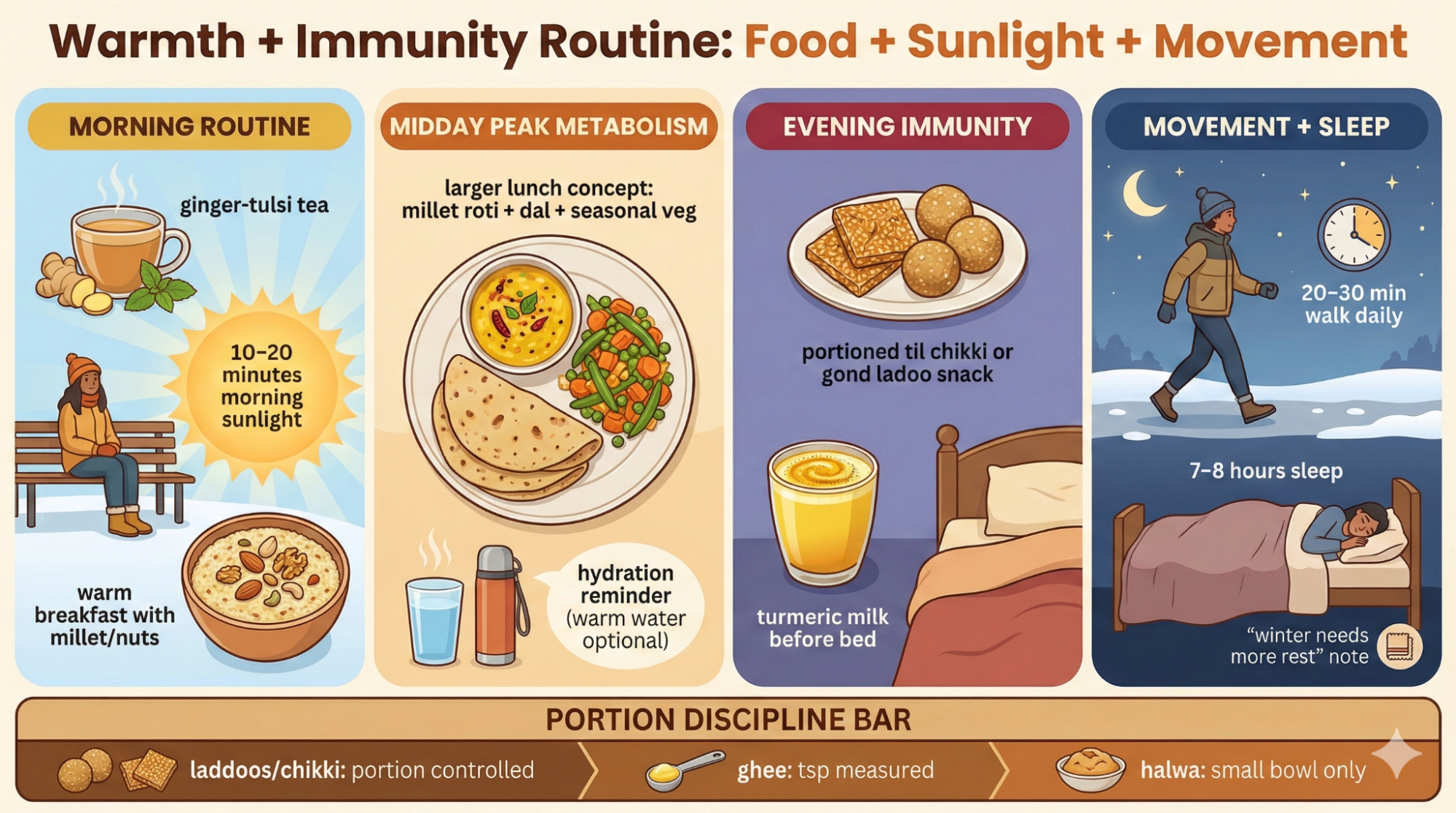
Winter Diet India: The Right Approach
A winter diet in India combines food with movement. Morning sunlight boosts vitamin D. Best winter foods in India to stay warm work better when exercise generates additional heat.
Sleep and Stress Management Strategies
Sleep 7-8 hours. Winter naturally demands more rest. Turmeric milk before bed improves sleep quality and provides nutrients. Gajar halwa, as an evening treat, satisfies cravings and delivers nutrients.
Daily Habits That Make a Real Difference
- Start the morning with ginger-tulsi tea
- Include one bajra or jowar meal daily
- Eat gond ladoo or til chikki as an afternoon snack
These maximise the winter foods India benefits from throughout the season.
Your 7-Day Winter Foods India Meal Plan
| Day | Breakfast | Mid-Morning | Lunch | Evening Snack | Dinner |
| Mon | Bajra roti + aloo sabzi + ghee | Ginger tea + gond ladoo | Rice + sarson ka saag + makki roti + curd | Til chikki + chai | Gajar sabzi + chapati + dal |
| Tue | Methi paratha + curd + pickle | Turmeric milk + almonds | Bajra khichdi + kadhi + salad | Gond ladoo + green tea | Mixed veg soup + multigrain roti |
| Wed | Moong dal cheela + ginger chutney | Chai + til ladoo | Rice + palak dal + gajar raita | Peanut chikki + tea | Bajra roti + undhiyu + curd |
| Thu | Ragi porridge + jaggery + dry fruits | Ginger tea + dates | Jowar roti + dal + seasonal sabzi | Gajar ka halwa | Soup + methi roti + paneer |
| Fri | Stuffed paratha (gajar) + curd | Turmeric milk + walnuts | Rice + rajma + salad | Til chikki + chai | Bajra roti + chicken curry + salad |
| Sat | Besan cheela + ghee + chutney | Chai + gond ladoo | Makki roti + saag + lassi | Dry fruit mix + green tea | Gajar pulao + raita + dal |
| Sun | Halwa puri (small portion) + chole | Ginger tea + almonds | Biryani (small) + raita + soup | Gajar ka halwa | Light khichdi + ghee + curd |
This winter foods India’s food plan includes warming food daily. Traditional Indian winter recipes at home, like saag and gajar halwa, feature regularly.
Common Mistakes Indians Make with Winter Foods in India
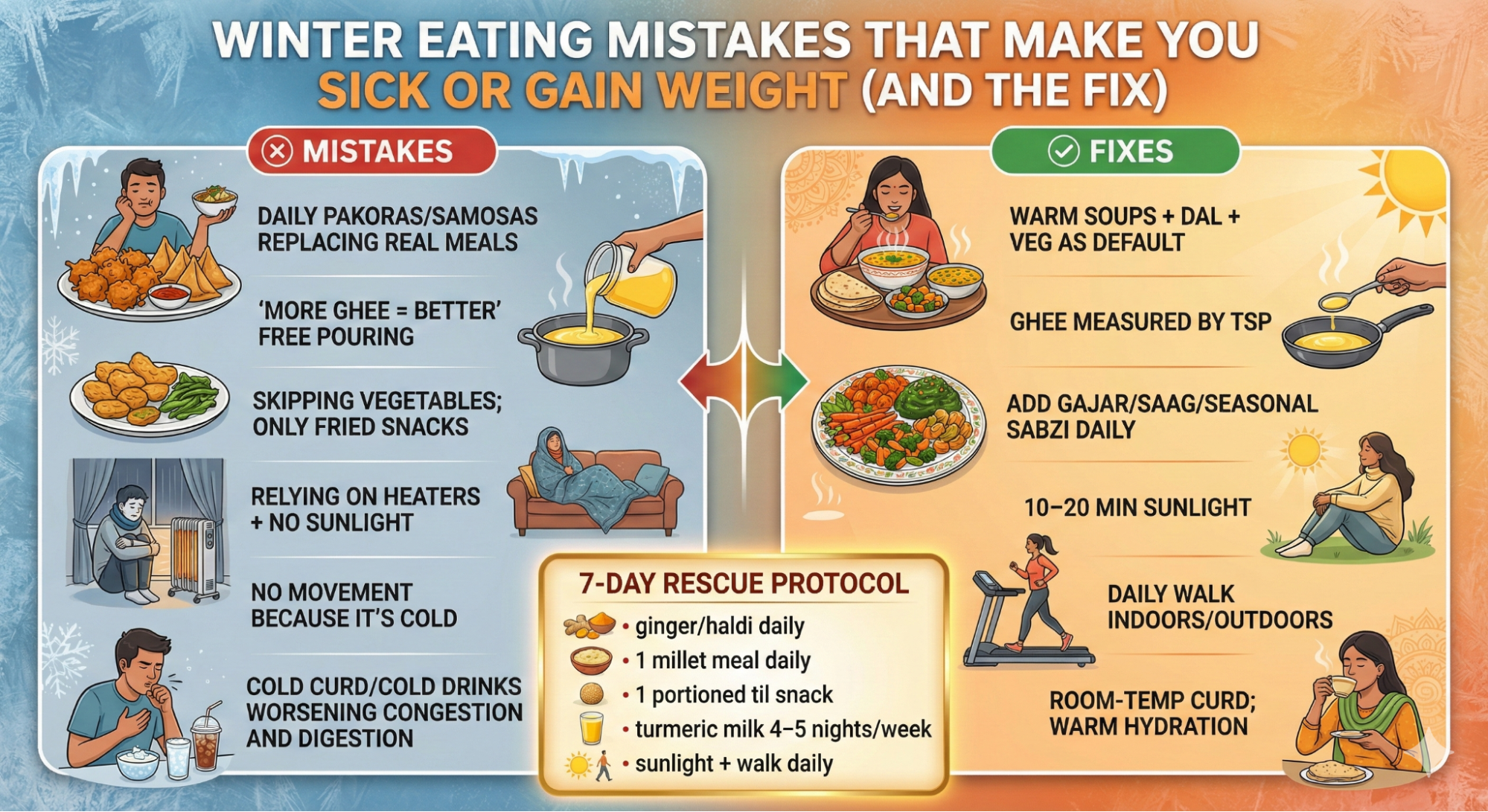
Diet Mistakes That Sabotage Winter Health
Overeating pakoras and samosas daily cancels winter nutrition. Using excessive ghee means thinking more means warmer. Skipping vegetables; switch to warm soups instead.
Lifestyle Pitfalls to Watch Out For
Staying indoors constantly reduces vitamin D and circulation. Skipping exercise because it is cold. Relying on heaters instead of natural body heat. These pitfalls weaken immunity despite good dietary choices.
How to Course-Correct When Things Go Wrong
Still falling sick? Increase turmeric and ginger in every meal. Joints aching? Add more til and ghee to your rotation. Resume your winter food India plan with consistent daily intake rather than occasional indulgence.
Conclusion
Winter foods in India are not old-fashioned traditions; they are scientifically validated seasonal nutrition. Indians eating traditional warming food had 40% fewer winter illnesses and maintained body temperature 15% more effectively. Start with ginger tea in the mornings, add bajra to one meal daily, and keep gond ladoo as your go-to snack. Your grandmother’s winter kitchen was the best pharmacy.
FAQs
Q1: What are the best winter foods in India?
Top winter foods in India include bajra, gond, til, gajar, jaggery, turmeric, and ghee. These raise body temperature and strengthen immunity naturally.
Q2: Is gajar ka halwa healthy in winter?
Yes, gajar ka halwa made with minimal sugar provides beta-carotene, vitamin A, and warming calories. It is a traditional Indian winter recipe at-home staple with real health benefits.
Q3: What is the best winter diet in India?
The best winter diet in India includes bajra roti, sarson ka saag, gond ladoo, turmeric milk, and seasonal vegetables, all supporting cold-weather health.
Q4: What are healthy winter foods for immunity in India?
Healthy winter foods for immunity in India include turmeric milk, ginger tea, amla, til ladoo, and gajar, all providing antioxidants during cold months.
Q5: How quickly do winter food show results?
Improved warmth and energy appear within 1-2 weeks. Full immunity benefits from the best winter food in India to stay warm take 4-6 weeks of consistent seasonal eating.
Q6: Can South Indians follow this winter diet?
Yes. Ragi, til, jaggery, and turmeric are pan-Indian winter foods in India. Adapt with South Indian preparations: ragi porridge, til chutney, and rasam with extra pepper.
Related Posts