You’ve been dieting perfectly for weeks, losing weight steadily, then suddenly the scale refuses to move despite zero changes in your routine. This frustrating weight loss plateau isn’t a sign you’re doing something wrong, but rather your body’s natural adaptation to defend itself. Most Indian dieters panic and either quit completely or slash calories dangerously low, both strategies that worsen the plateau instead of breaking it. This guide reveals why weight stalls happen and gives you science-backed plateau solutions that actually restart fat loss without extreme restrictions.
What Is a Weight Loss Plateau and Why Indian Dieters Should Care?
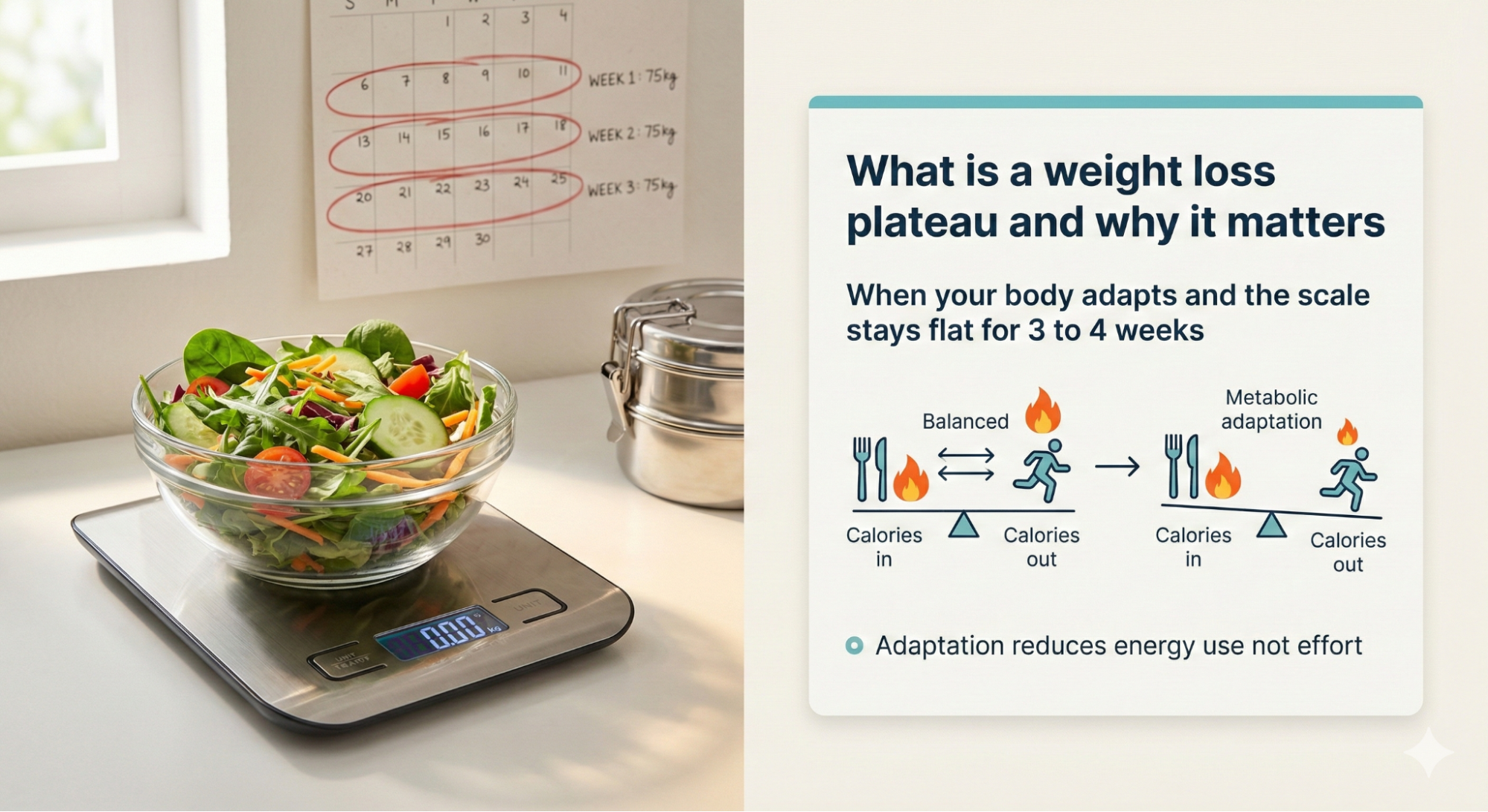
A weight loss plateau happens when your body adapts to your current calorie intake and activity level, slowing metabolism to match reduced energy coming in. Your weight stays exactly the same for three to four weeks despite maintaining the diet and exercise routine that previously worked perfectly. This metabolic adaptation is your body’s survival mechanism protecting you from what it perceives as starvation threatening your survival continuously. Think of plateau as your body becoming more efficient at the current routine, requiring new challenges to keep progress going forward.
Why Weight Matters for Indian Bodies
Indian genetics program our bodies to store fat efficiently because our ancestors faced frequent famines requiring survival during food scarcity periods. This genetic advantage becomes a disadvantage during weight loss because our bodies resist releasing stored fat more stubbornly than Western populations. Moreover, Indian diets often lack adequate protein, causing muscle loss during weight loss that further slows metabolism below already reduced levels. Research shows that Indians plateau earlier and more frequently during weight loss compared to other populations with different genetic backgrounds completely.
Common Myths Debunked About This Topic
Many people believe plateaus mean their diet stopped working, when it actually means their body successfully adapted requiring strategic changes. Another dangerous myth suggests eating even less breaks plateaus, but extreme restriction actually worsens metabolic slowdown and makes plateaus last longer. Additionally, people think doing more cardio solves everything, but excessive exercise without adequate recovery increases cortisol that prevents fat loss. Furthermore, the myth that plateaus are permanent ignores research showing strategic diet breaks and calorie cycling reliably restart weight loss within weeks.
The Science Behind Weight Loss Plateau for Indians
How Weight Works in Your Body
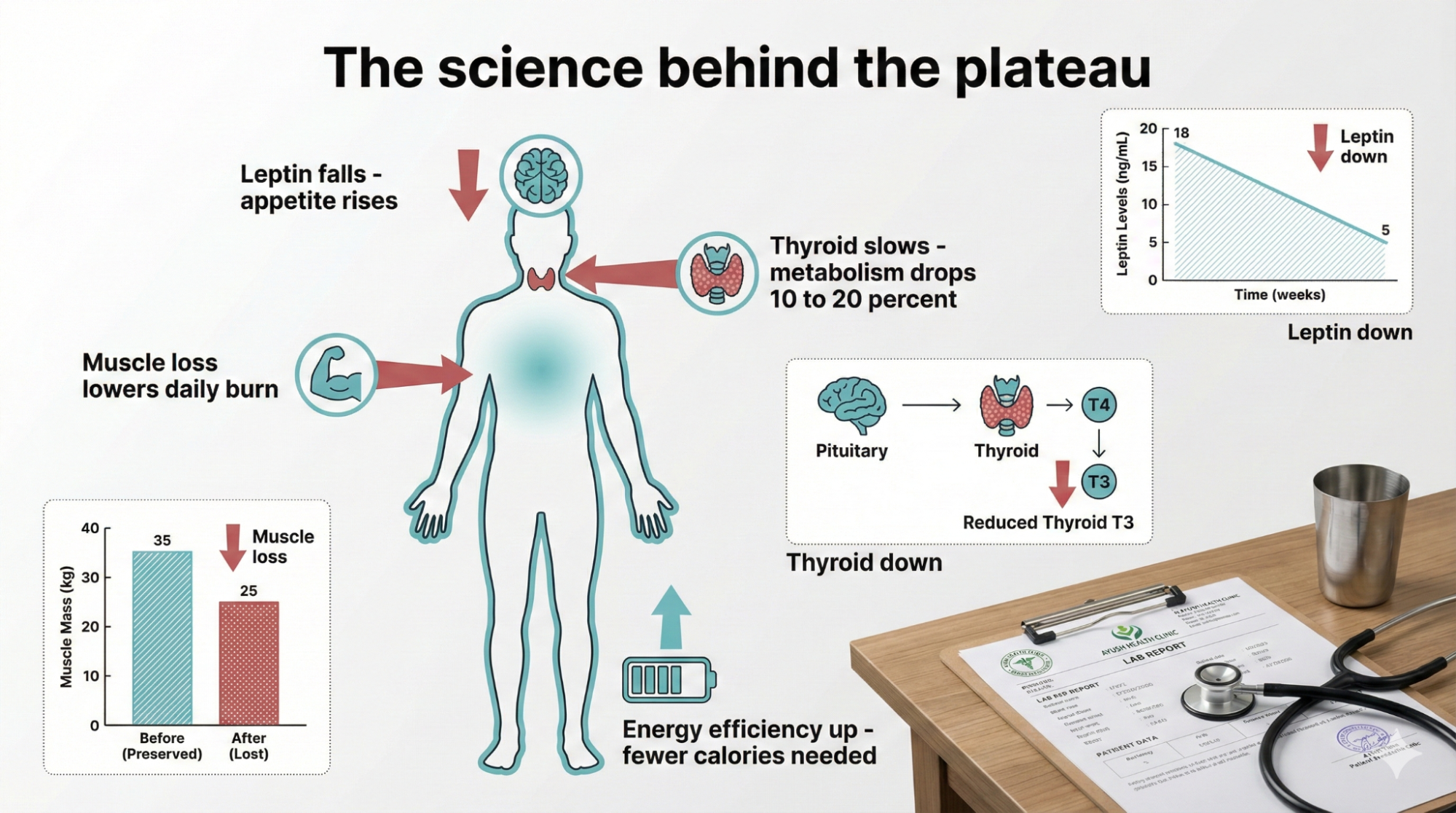
When you lose weight, your body produces less leptin, the hormone signaling fullness, causing increased hunger despite eating the same calories. Your thyroid hormones decrease during calorie restriction, slowing metabolism by ten to twenty percent below what your new weight would predict. Additionally, your body becomes more efficient at using energy, burning fewer calories doing the same activities compared to before weight loss. Moreover, you lose some muscle mass during weight loss unless actively preserving it, further reducing metabolic rate below previous levels significantly.
The Connection Between Plateau Solutions and Health
Plateau solutions matter because staying stuck at the same weight for months creates frustration that often leads to giving up entirely. Studies show that strategic diet breaks where you eat at maintenance calories for one to two weeks actually accelerate long-term weight loss. Additionally, implementing calorie cycling with higher calorie days mixed with lower days prevents metabolic adaptation while maintaining average calorie deficit over weeks. Research also confirms that changing exercise routines and adding strength training preserves muscle mass that keeps metabolism higher during continued weight loss phases.
What Research Shows for Indian Population
Research from Indian obesity centers found that Indians plateau after losing just five to seven percent of body weight, earlier than most populations. This early plateau correlates with genetic insulin resistance making fat cells more resistant to releasing stored energy despite calorie deficits. Indian studies reveal that incorporating diet breaks every six to eight weeks during weight loss prevented plateaus and led to greater total weight loss. Furthermore, data shows that Indians who added strength training twice weekly maintained metabolism better and broke through plateaus faster than cardio-only exercisers.
Weight Stall: What to Watch For

Physical Signs and Symptoms to Monitor
Weight staying exactly the same for three to four weeks despite perfect adherence to your diet indicates a true plateau rather than normal fluctuations. Feeling constantly cold, experiencing fatigue despite adequate sleep, and losing hair signal your metabolism has slowed too much requiring intervention soon. Increased hunger and food cravings that weren’t present initially suggest leptin levels have dropped, making continued weight loss harder to maintain. Watch for strength decreases during workouts despite consistent training, indicating muscle loss that’s slowing your metabolism significantly over time without action.
Emotional and Mental Health Indicators
Feeling frustrated and demotivated when the scale doesn’t move creates mental stress that actually elevates cortisol and worsens plateau duration. Obsessing over every gram on the scale and weighing yourself multiple times daily indicates unhealthy relationship with weight needing immediate attention. Considering extreme measures like crash diets or excessive exercise shows desperation that often leads to giving up or developing disordered eating. Additionally, losing interest in social activities to maintain rigid diet routines signals your approach has become unsustainable requiring strategic adjustments.
When to Consult a Healthcare Professional
Schedule testing for thyroid function if plateau persists beyond two months despite implementing various plateau solutions correctly and consistently throughout. Seek medical guidance if you’re eating below twelve hundred calories daily yet still not losing weight, as severe metabolic issues might exist. Consult healthcare professionals if you develop symptoms like extreme fatigue, depression, hair loss, or irregular periods during prolonged weight loss attempts. Moreover, get professional help if you find yourself trapped in restrict-binge cycles or developing obsessive thoughts about food and weight constantly.
Indian Lifestyle Factors Affecting Weight Loss Plateau

Modern Indian Diet Challenges and Solutions
Repetitive meals using the same ingredients day after day cause nutrient deficiencies that slow metabolism and contribute to plateaus over several months. Insufficient protein intake below point eight grams per kilogram body weight causes muscle loss that reduces metabolic rate significantly during weight loss. Evening snacking on chai and biscuits adds hidden calories that create smaller deficit than you calculate, preventing continued weight loss progress. Tracking everything you eat including cooking oils, condiments, and beverages reveals hidden calories causing plateaus despite thinking you’re eating correctly always.
Work-Life Balance and Urban Living Impact
Chronic work stress elevates cortisol continuously, which signals your body to hold onto fat stores especially around the belly area stubbornly. Insufficient sleep below seven hours nightly disrupts hunger hormones ghrelin and leptin, increasing appetite while slowing metabolism below optimal levels considerably. Sitting at desks for ten hours daily reduces non-exercise activity thermogenesis, burning fewer calories throughout the day than previously calculated. Building movement into your workday through short walks and desk exercises increases daily calorie burn without requiring formal exercise time.
Cultural and Social Influences on Health
Family pressure to eat everything served makes creating consistent calorie deficit difficult, especially during festivals and weekend gatherings with relatives. Social eating at restaurants multiple times weekly provides meals with hidden oils and larger portions than home-cooked equivalents affecting calories. Celebrating every occasion with sweets and fried foods creates frequent diet breaks that aren’t strategic, preventing sustained calorie deficit needed. Learning to participate in social events without overeating requires planning ahead and making conscious choices rather than always eating everything offered.
Best Indian Foods for Weight Loss Plateau Management
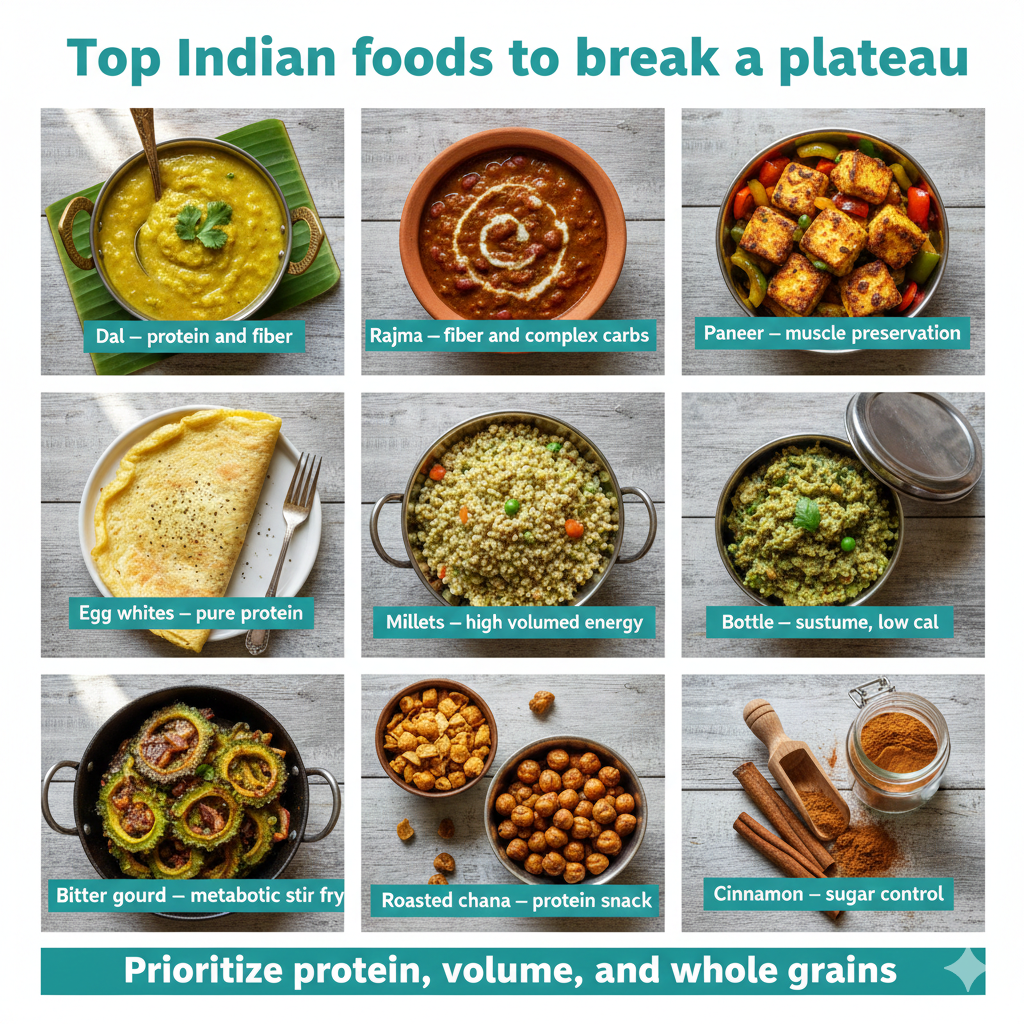
Traditional Indian Foods That Support Metabolic Adaptation
High-protein foods including dal, rajma, chole, paneer, and eggs preserve muscle mass during weight loss, keeping metabolism higher than low-protein diets. Vegetables like bitter gourd, bottle gourd, and leafy greens provide volume and nutrients with minimal calories, allowing satisfying portions despite deficits. Whole grains including brown rice, quinoa, and millets provide fiber and sustained energy without the blood sugar spikes from refined grains. Furthermore, traditional spices like turmeric, cinnamon, and fenugreek have compounds that may slightly boost metabolism and improve insulin sensitivity over time.
Modern Indian Meal Options and Healthy Recipes
Protein-rich breakfasts like egg white omelettes with vegetables or Greek yogurt with nuts jumpstart metabolism and preserve muscle mass effectively. High-volume lunches with large vegetable portions, moderate protein, and small whole grain serving create fullness without excessive calories during plateaus. Evening soups made with vegetables and small amounts of dal provide satisfying dinners that keep calories controlled without constantly feeling restricted. Moreover, meal prepping protein sources like grilled chicken or paneer in advance ensures adequate protein intake throughout the week despite busy schedules.
Foods to Limit or Avoid for Better Results
Refined carbs, including white rice, maida products, and sugary foods, spike insulin and promote fat storage, making plateau breaking significantly harder. Excessive cooking oil going beyond two tablespoons daily, adds hidden calories that prevent the deficit needed for continued weight loss progress. Processed snacks like biscuits, chips, and packaged foods contain additives that may slow metabolism and increase inflammation, affecting fat-burning capacity. Restaurant meals cooked with excessive oil and larger portions than necessary sabotage calorie control, despite choosing seemingly healthy menu items.
Portion Sizes and Meal Timing for Indians
Increase protein to one to one point two grams per kilogram body weight daily to preserve muscle mass during continued calorie restriction phases. Reduce carbs slightly during plateau by replacing some rice or roti with extra vegetables while maintaining adequate protein and fat intake. Implement calorie cycling by eating maintenance calories two days weekly and deficit calories five days, preventing metabolic adaptation while maintaining average deficit. Time largest meal after your hardest workout to fuel recovery and build muscle that keeps metabolism elevated throughout weight loss journey.
Lifestyle Changes to Support Weight Loss Plateau
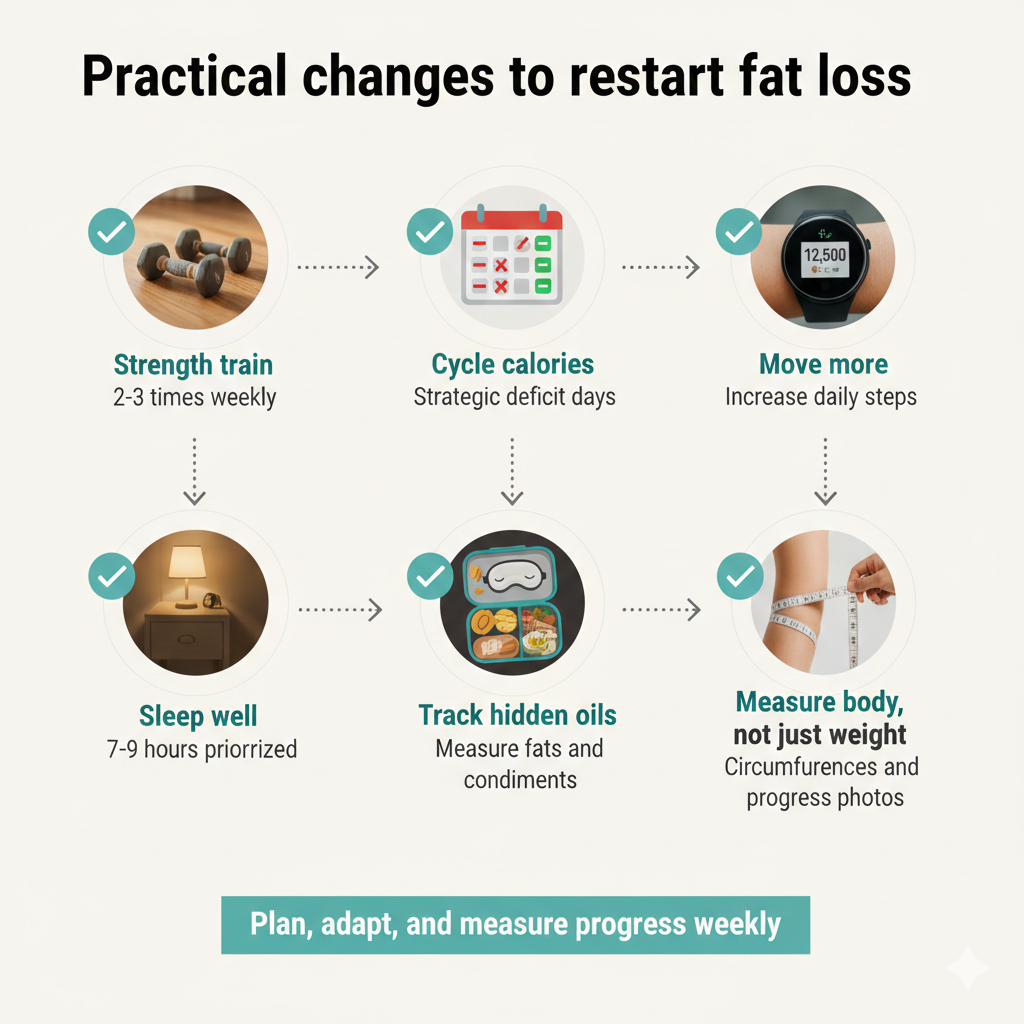
Calorie Cycling: The Right Approach for Indians
Calculate maintenance calories using an online calculator, then eat deficit calories for five days and maintenance calories for two days weekly for cycling. Choose weekend days for higher calories when social eating is more likely, approaching sustainable long-term without feeling deprived. Increase carbs on higher-calorie days while keeping protein constant, providing energy for harder workouts that build metabolism-boosting muscle mass. Track weekly average calories rather than daily totals to ensure you’re maintaining overall deficit despite strategic higher calorie days included.
Sleep and Stress Management Strategies
Sleep seven to nine hours nightly because adequate rest regulates hunger hormones and allows your body to recover from exercise stress. Practice stress management through meditation, yoga, or hobbies daily, as elevated cortisol directly prevents fat loss regardless of diet perfection. Take planned diet breaks eating at maintenance for one to two weeks every six to eight weeks to restore metabolic hormones. Create work-life boundaries that prevent chronic stress from undermining your weight loss efforts despite perfect diet and exercise adherence throughout.
Daily Habits That Make a Real Difference
Change your exercise routine every four to six weeks by trying new activities, adjusting intensity, or adding strength training components regularly. Increase daily steps gradually to ten thousand or more through parking farther away, taking stairs, and walking during phone calls. Track measurements including waist, hip, and thigh circumference alongside weight because fat loss continues even when the scale doesn’t move. Increase water intake to three liters daily because adequate hydration supports metabolism and helps distinguish hunger from thirst signals throughout busy days.
Your 7-Day Weight Loss Plateau Management Meal Plan
Breakfast Options (Vegetarian & Non-Vegetarian)
Start your day with a four-egg white omelette loaded with vegetables and one slice of whole wheat toast for a high-protein breakfast. Alternatively, try Greek yogurt with almonds, chia seeds, berries, and one tablespoon of honey, providing protein and healthy fats for energy. Moong dal cheela with vegetables and mint chutney offers a traditional option delivering protein without excessive calories for South Indian preferences. Moreover, overnight oats with protein powder, walnuts, and apple slices give you a convenient meal prep option requiring zero morning effort.
Lunch Ideas for Working Professionals
Pack brown rice with grilled chicken breast, large mixed vegetable sabzi, and cucumber raita delivering protein and volume for fullness. Whole wheat roti with rajma curry, paneer bhurji, and salad provides vegetarian option maintaining high protein during plateau phases consistently. Quinoa bowl with chickpeas, roasted vegetables, and tahini dressing offers modern alternative delivering complete protein plus fiber for satiety. Furthermore, large salad with grilled fish, nuts, and olive oil dressing gives you low-carb option for days you’re cycling calories strategically.
Evening Snacks and Optimal Timing
Choose protein-rich snacks between four and five PM, like roasted chana, boiled eggs, or a protein shake, to prevent overeating from extreme hunger. Apple slices with two tablespoons of peanut butter provide a satisfying combination of fiber, protein, and healthy fats, keeping you full. Cucumber and carrot sticks with hummus offer a high-volume snack delivering vegetables plus protein without excessive calories during deficit days. Additionally, a small handful of mixed nuts with green tea gives you a metabolism-boosting beverage plus healthy fats supporting hormone production during restriction.
Dinner Composition for Better Results
Keep dinner light and early with vegetable soup, grilled protein, and a large salad, allowing proper digestion before sleep tonight. Brown rice khichdi with extra vegetables and a small amount of dal provides comfort food that’s controlled in calories and portions. Grilled paneer or tofu with roasted vegetables and half a portion of millet roti gives you a traditional meal adapted for plateau breaking. Alternatively, a vegetable stir-fry with lean protein over cauliflower rice offers a very low-carb option for strategic deficit days during calorie cycling.
Common Mistakes Indians Make with Weight Loss Plateau
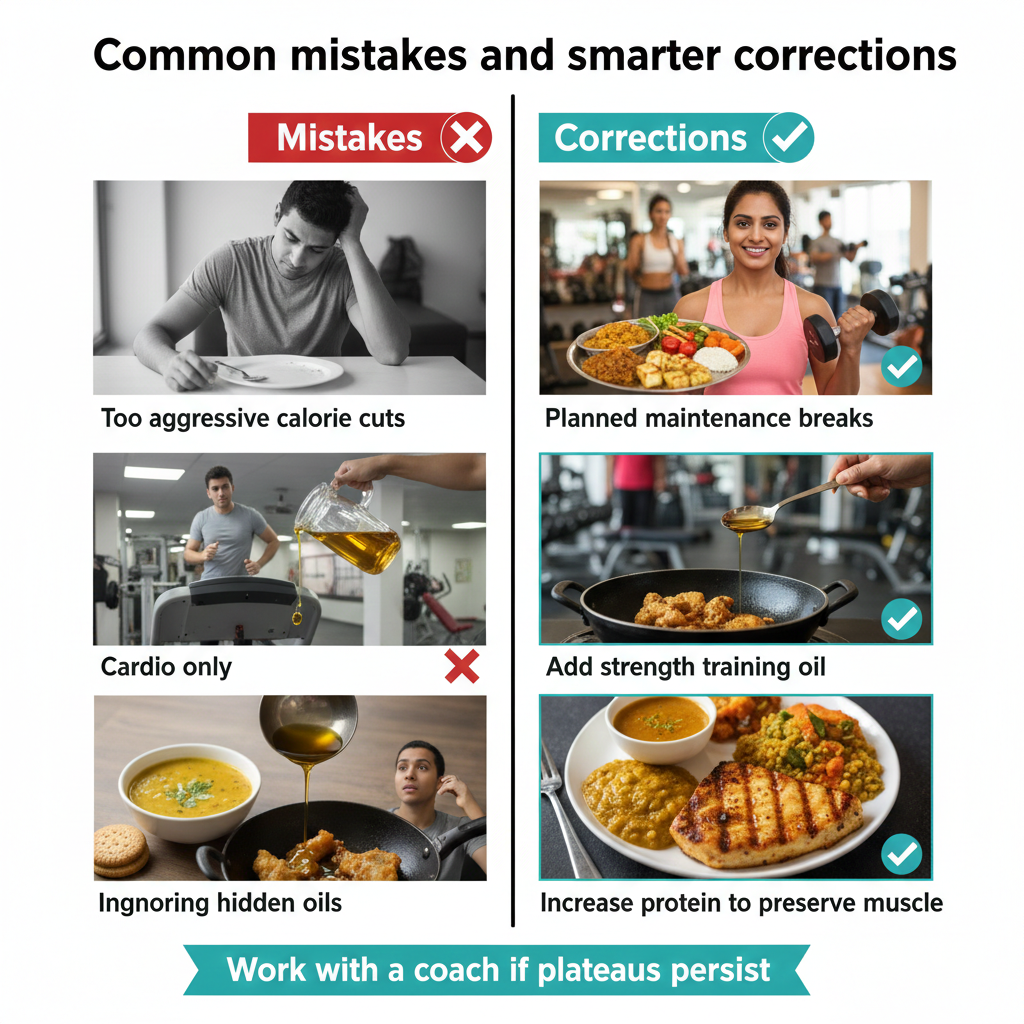
Diet Mistakes That Sabotage Progress
Cutting calories too aggressively below twelve hundred daily slows metabolism dramatically, making the plateau worse rather than breaking through it effectively soon. Eliminating entire food groups creates nutrient deficiencies that slow metabolic function and make continued weight loss significantly more difficult over time. Eating the exact same meals daily prevents getting varied nutrients needed for optimal metabolic function and adaptation to changing needs. Ignoring protein needs while focusing only on calorie counting causes muscle loss that permanently reduces metabolism below previous levels considerably.
Lifestyle Pitfalls to Watch Out For
Doing excessive cardio without any strength training burns muscle along with fat, permanently lowering metabolism and making future weight loss harder. Weighing yourself daily and getting discouraged by normal fluctuations creates unnecessary stress that elevates cortisol and prevents fat loss completely. Comparing your progress to others on social media ignores individual metabolic differences and creates unrealistic expectations leading to giving up prematurely. Expecting linear weight loss without understanding plateaus are normal physiological responses causes panic and poor decisions like crash dieting attempts.
How to Course-Correct When Things Go Wrong
Take a planned two-week diet break eating at maintenance calories to restore metabolic hormones before resuming deficit eating strategically afterward. Reassess your calorie needs based on new lower body weight because requirements decrease as you lose weight throughout the journey. Add strength training three times weekly if you’ve been doing only cardio, building muscle that increases metabolic rate permanently over time. Work with a nutritionist who understands metabolic adaptation if self-directed efforts don’t break plateau after implementing multiple strategies correctly.
Frequently Asked Questions
Q1: What is weight loss plateau and how does it affect Indians?
A weight loss plateau happens when your body adapts to reduced calories by slowing metabolism, causing weight to stay the same for weeks despite perfect diet adherence. Indians plateau earlier during weight loss than other populations due to genetic insulin resistance, making fat cells more stubborn about releasing stored energy.
Q2: What are the main signs of weight issues?
Common plateau signs include weight staying exactly the same for three to four weeks, feeling constantly cold and fatigued, increased hunger and cravings, hair loss, and strength decreases. Many people also experience frustration, obsessive weighing, considering extreme measures, and losing interest in social activities to maintain rigid routines consistently throughout.
Q3: What foods should Indians eat for better weight loss plateau?
Focus on high-protein foods like dal, rajma, eggs, paneer, Greek yogurt, along with vegetables, whole grains, and traditional spices. Implement calorie cycling with higher calories two days weekly, maintain adequate protein, and reduce refined carbs while keeping portions controlled consistently.
Q4: Can weight be managed naturally?
Yes, strategic diet breaks at maintenance calories every six to eight weeks, calorie cycling, adequate protein intake, strength training, and proper sleep naturally overcome metabolic adaptation. These approaches restore hormones and prevent the metabolic slowdown causing plateaus without requiring extreme restrictions or dangerous measures ever.
Q5: How long does it take to see results with weight loss plateau changes?
You might notice improved energy and reduced hunger within one week of implementing diet breaks or calorie cycling strategies consistently maintained. Visible weight loss typically resumes within two to four weeks after making strategic changes as metabolism adjusts and hormones restore to healthier levels.
Conclusion
Weight loss plateau affects nearly every dieter eventually, with Indians plateauing earlier due to genetic factors making fat cells particularly stubborn about releasing stored energy. Understanding that plateaus represent normal metabolic adaptation rather than failure empowers you to implement science-backed plateau solutions like calorie cycling, diet breaks, and strength training effectively. The key is patience and strategic changes rather than panic and extreme restriction that worsens metabolic slowdown and prevents long-term success completely.
Start by calculating your true maintenance calories today, then implement calorie cycling with maintenance calories two days weekly and deficit five days consistently. Add strength training three times weekly if you’re currently doing only cardio, building muscle that permanently raises your metabolic rate over time. Take a planned two-week diet break at maintenance calories if you’ve been restricting for more than eight weeks straight without any breaks.
Related Posts