Low-sodium Indian recipes use spice alternatives like lemon, amchur, and herbs instead of excess salt, keeping sodium under 1500mg daily for blood pressure control. Your doctor said to reduce salt, but every recipe starts with “namak swadanusar.” Over 220 million Indians have hypertension. This guide covers low-sodium Indian curry recipes, how to reduce salt in Indian cooking, and an Indian diet plan for high blood pressure.
What Are Low-Sodium Indian Recipes and Why Indian Dieters Should Care?
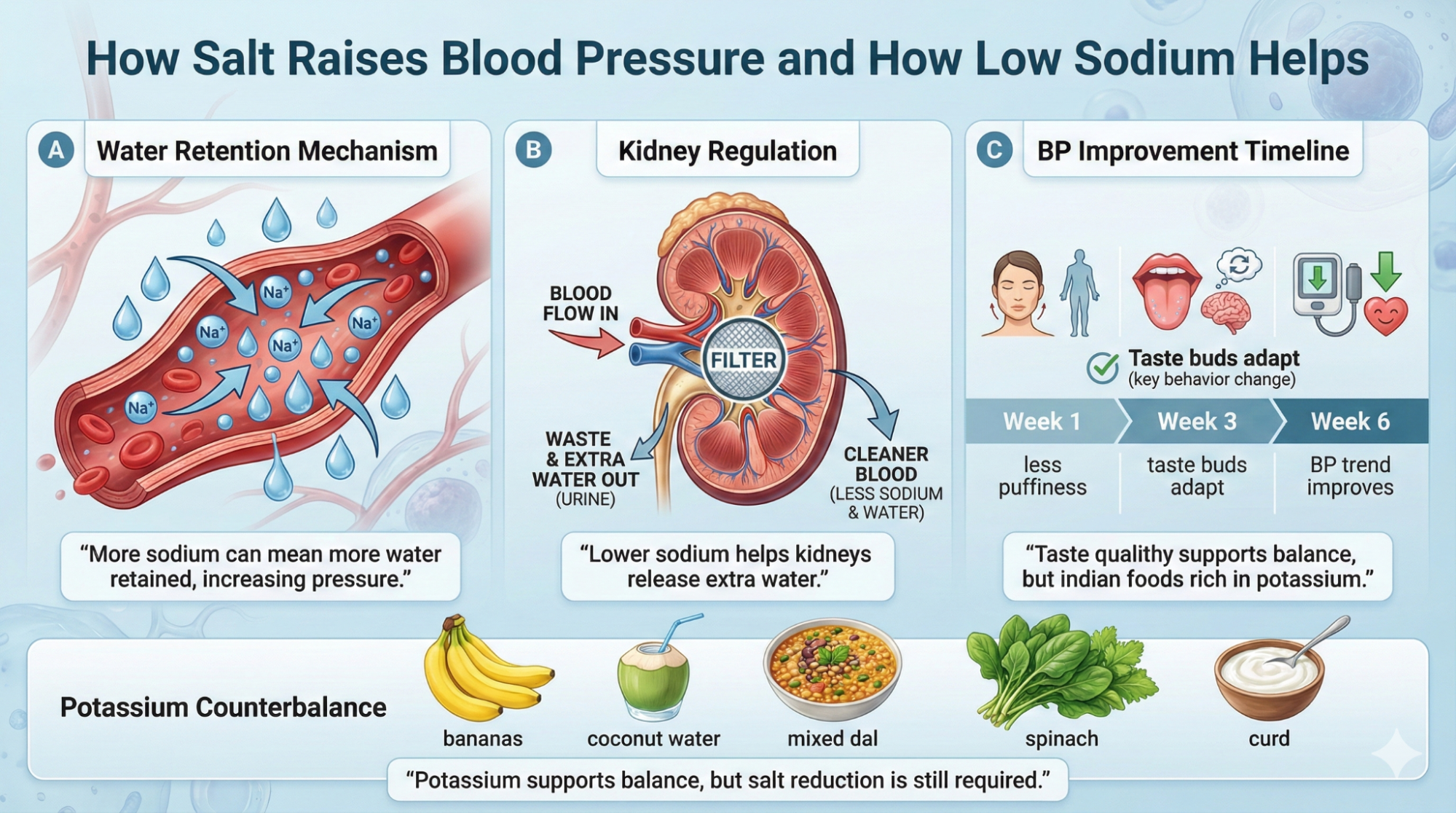
Understanding Low Sodium Cooking in Simple Terms
The recommended sodium limit is 2300mg Indians consume 3500-4000mg. Low sodium food does not mean tasteless. How to reduce salt in Indian cooking starts with measuring instead of guessing and using spice alternatives.
Why Low Sodium Cooking Matters for Indian Bodies
India has the highest hypertension burden. Every 1000mg sodium reduction lowers BP by 5-6 mmHg. Low-sodium Indian recipes make this practical. An Indian diet plan for high blood pressure must address the salt used at every stage, such as tadka, curry, raita, and pickle.
Common Myths Debunked
- Myth: Low-salt recipes taste bland.
- Fact: Spice-rich, low-sodium Indian recipes can taste better than over-salted versions. Cumin and amchur add depth that salt cannot.
- Myth: Only table salt matters.
- Fact: Hidden sodium in pickles, papad, packaged masalas, and bread adds 1000+ mg daily.
- Myth: Rock salt and sendha namak are healthier.
- Fact: All salt types contain sodium. Low-sodium food means reducing the total quantity.
The Science Behind Low-Sodium Indian Recipes for Indians
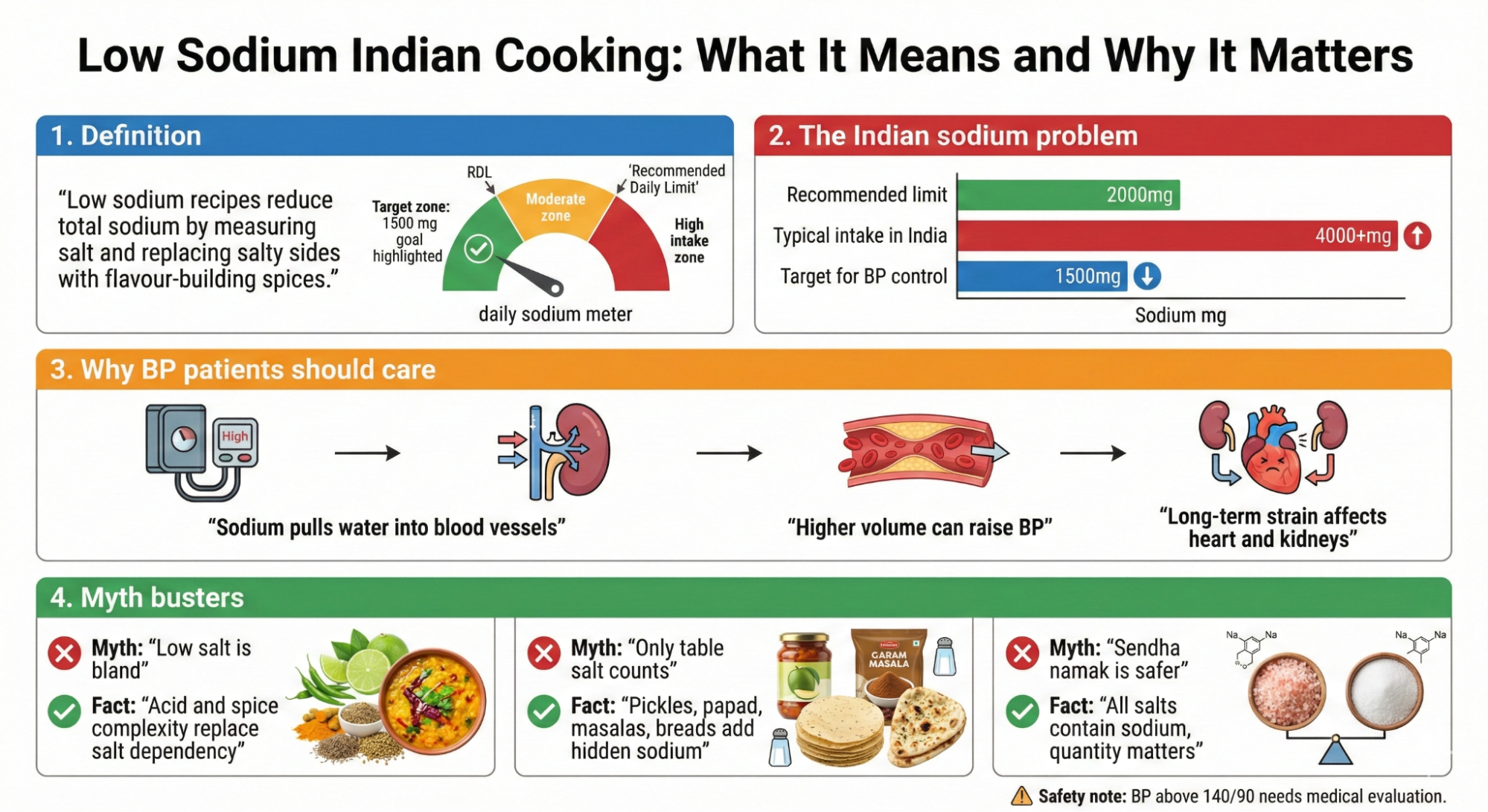
How Low Sodium Cooking Works in Your Body
Excess sodium causes water retention, increasing blood pressure. Reducing sodium lets the kidneys release water, dropping BP naturally. Low-sodium Indian recipes include potassium-rich banana and coconut water that counteract sodium.
The Connection Between Low-Salt Recipes and Health
Low-salt recipes reduce stroke risk by 25% and kidney damage by 30%. Salt-free cooking preserves natural vegetable flavour. An Indian diet plan for high blood pressure with low-sodium food reduces medication dependency.
What Research Shows for the Indian Population
AIIMS studies show low sodium Indian curry recipes reduced BP by 8 mmHg in 6 weeks. How to reduce salt in Indian cooking using spices showed zero taste difference after 3 weeks. A high blood pressure diet with 1500mg of sodium matched one BP medication.
Salt-Free Cooking: What to Watch For
Physical Signs and Symptoms to Monitor
Watch for headaches, morning puffiness, swollen ankles, and breathlessness. Low-sodium food changes show reduced puffiness within 1 week.
Emotional and Mental Health Indicators
Fear of tasteless food creates resistance. Low-salt recipes use spices, not flavour elimination. Many discover richer taste after switching to low-sodium Indian recipes.
When to Consult a Healthcare Professional
See a cardiologist if BP stays above 140/90. Low-sodium Indian curry recipe support but cannot replace medication. How to reduce salt in Indian cooking needs a nutritionist’s guidance with BP medications.
Indian Lifestyle Factors Affecting Low-Sodium Indian Recipes
Modern Indian Diet Challenges
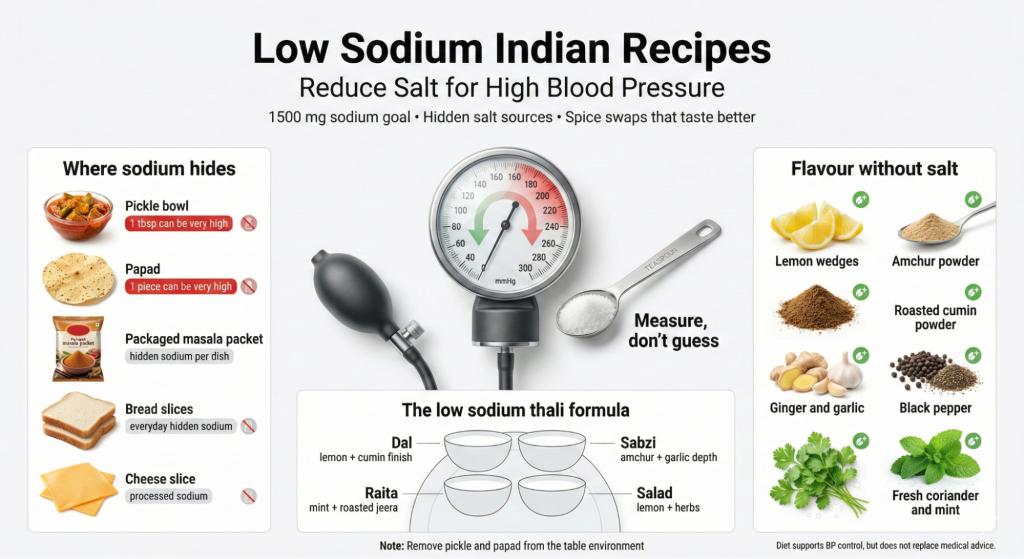
Hidden sodium is massive: 1 papad 500mg, 1 tablespoon pickle 800mg, and packaged masalas 300mg per dish. An Indian diet plan for high blood pressure starts with identifying hidden sources before reducing visible salt.
Work-Life Balance and Urban Living Impact
Restaurant dal has 3x the home sodium. Packed lunches with low-sodium Indian recipes are essential. How to reduce salt in Indian cooking for tiffin keeps sodium manageable at work.
Cultural and Social Influences on Health
“Namak kam hai” is an insult. Explaining your high blood pressure diet normalises low-salt recipes at family meals.
Best Approaches for Low-Sodium Indian Recipes
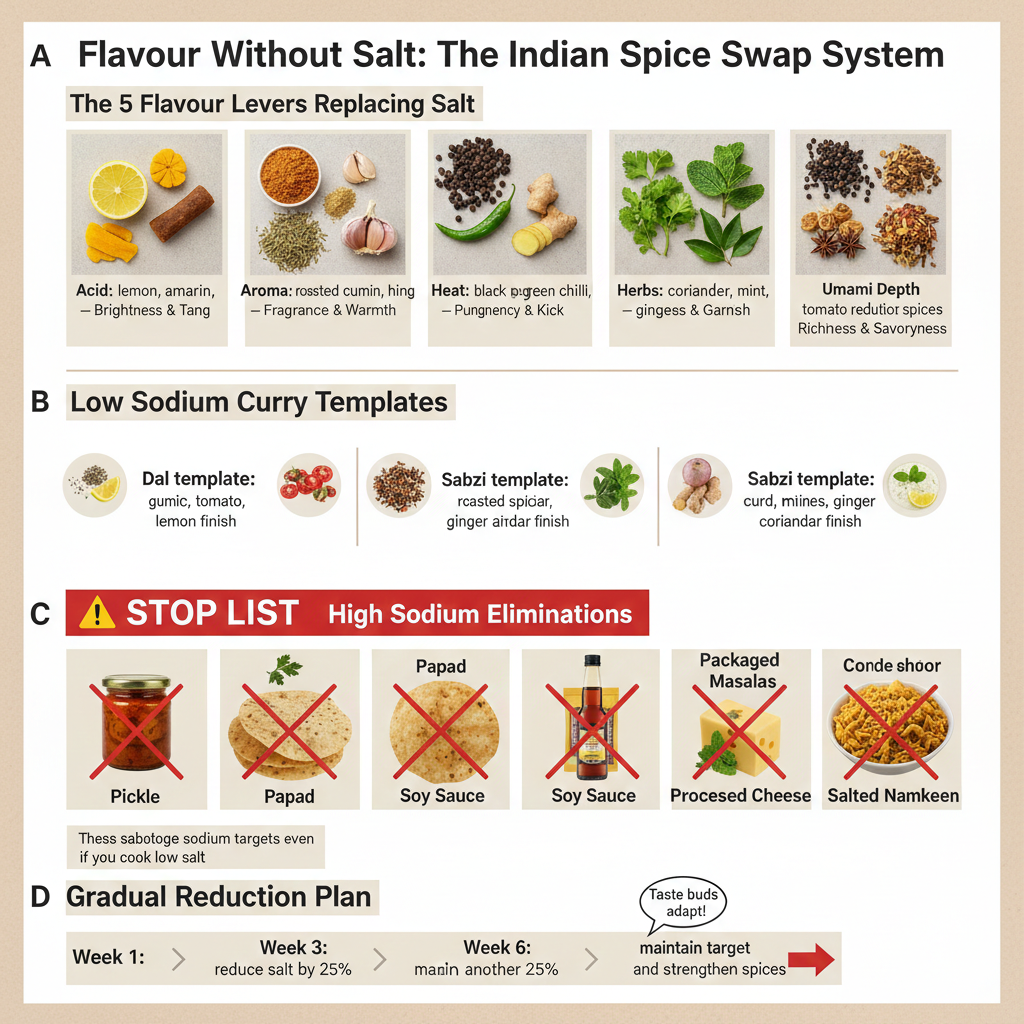
Spice Substitutes That Replace Salt
Top low-sodium Indian recipes flavour enhancers:
- Lemon juice: Acidity mimics saltiness; add to dal, sabzi, salads
- Amchur (dry mango powder): Tangy depth replaces salt in curries
- Roasted cumin powder: Earthy flavor enhancing every dish
- Fresh coriander and mint chutney: Flavour-packed with zero sodium
- Black pepper and ginger: Heat and zing replacing salt dependence
Low Sodium Indian Curry Recipes
Make dal with extra cumin and lemon instead of salt. Cook sabzi with amchur and roasted garlic. Prepare raita with roasted cumin and mint. These low-sodium Indian curry recipes taste authentic. Spice complexity must increase as salt decreases.
High Sodium Foods to Eliminate
Remove papad (500mg per piece), pickles (800mg per tablespoon), packaged masalas, soy sauce, and processed cheese from your high blood pressure diet. These hidden sodium bombs sabotage even the best low-sodium food efforts.
Gradual Reduction Strategy
Reduce salt by 25% in week 1, another 25% in week 3, and taste buds adapt in 3 weeks. Low-sodium Indian recipes should be gradual. Salt-free cooking is the goal, but measured reduction is the path.
Lifestyle Changes to Support Low-Sodium Indian Recipes
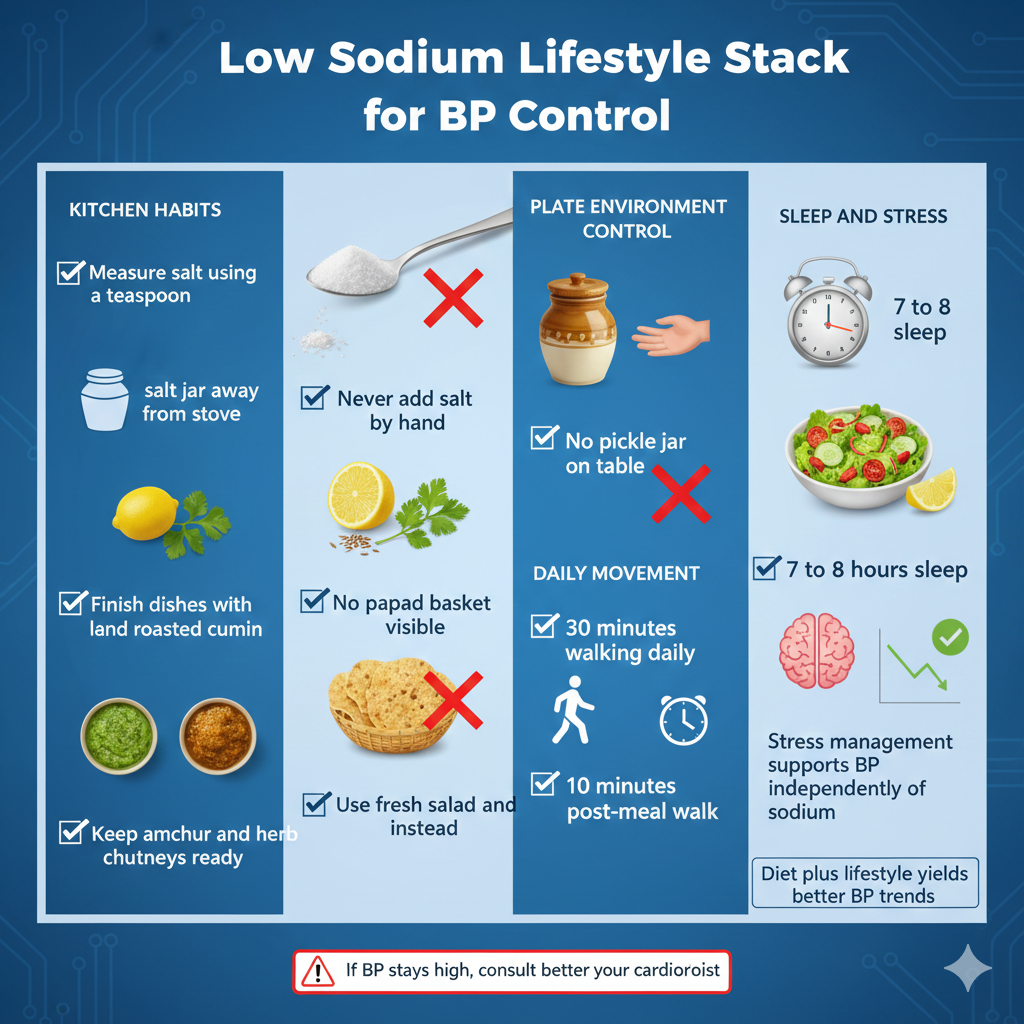
Salt Free Cooking: The Right Approach
Salt-free cooking requires stocking lemon, amchur, and cumin. Measure salt with a teaspoon. An Indian diet plan for high blood pressure combines low sodium with potassium from bananas and coconut water.
Sleep and Stress Management Strategies
Sleep 7-8 hours; stress raises BP independently. Low-sodium Indian recipes with stress management beat a diet alone. Walk 30 minutes daily for an additional 5-8 mmHg reduction.
Daily Habits That Make a Real Difference
- Measure all salt with a teaspoon, never add by hand
- Squeeze lemon on dal and sabzi before adding any salt
- Remove pickle and papad from your thali permanently
These build sustainable low-sodium Indian recipe habits.
Your 7-Day Low Sodium Indian Recipes Meal Plan
| Day | Breakfast | Mid-Morning | Lunch | Evening Snack | Dinner |
| Mon | Oats + banana + cinnamon | Coconut water + almonds | Brown rice + dal (cumin, lemon) + lauki sabzi (amchur) | Unsalted makhana + green tea | Chapati + palak paneer (low salt) + raita (mint) |
| Tue | Moong dal cheela + mint chutney | Buttermilk (no salt) + banana | Jowar roti + chole (cumin heavy) + salad (lemon) | Unsalted peanuts + tea | Ragi roti + dal + methi sabzi (garlic) |
| Wed | Ragi porridge + dates + almonds | Coconut water + walnuts | Brown rice + rajma (roasted cumin) + curd + salad | Fruit chaat (no chaat masala) | Chapati + fish curry (pepper, lemon) + sabzi |
| Thu | Poha (low salt) + peanuts + lemon | Banana + almonds | Bajra roti + palak dal (amchur) + raita | Unsalted makhana + green tea | Multigrain roti + paneer (herbs) + dal |
| Fri | Idli + sambar (low salt) + chutney | Buttermilk + dates | Brown rice + sambar (cumin) + poriyal (coconut) | Unsalted trail mix + tea | Chapati + chicken (pepper, herbs) + sabzi |
| Sat | Besan cheela + curd + mint chutney | Coconut water + banana | Millet pulao (herbs) + raita + salad | Fruit + walnuts | Dal + ragi roti + lauki sabzi (ginger) |
| Sun | Banana smoothie + oats + cinnamon | Almonds + green tea | Brown rice + dal makhani (low salt) + salad | Unsalted makhana + chai | Light khichdi (cumin, ghee, pepper) + curd |
This low-sodium Indian recipe plan keeps sodium under 1500mg. Low-sodium Indian curry recipes use cumin, lemon, and amchur throughout.
Common Mistakes Indians Make with Low-Sodium Cooking
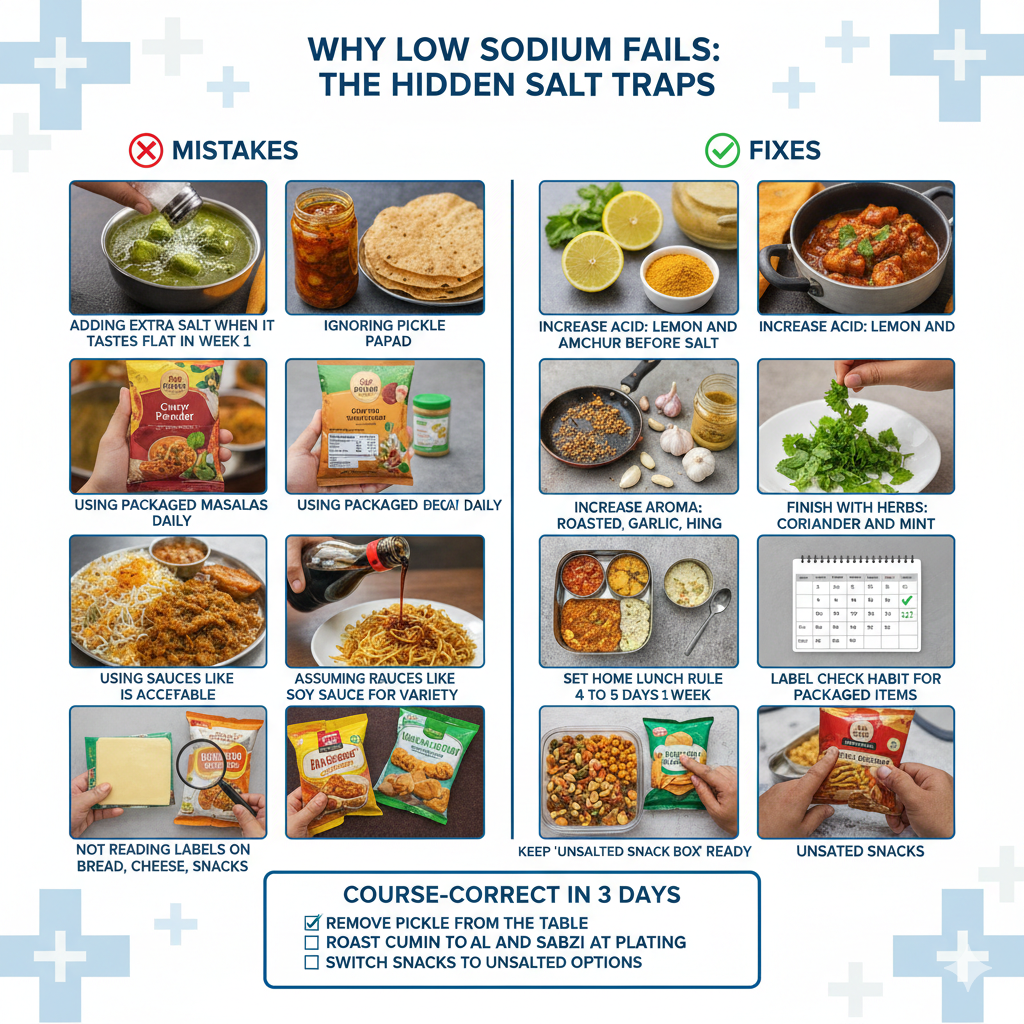
Diet Mistakes That Sabotage Progress
Adding extra salt because the food tastes bland initially. Ignoring hidden sodium in masalas and sauces. Using soy sauce as “different,” these destroy low-sodium food efforts.
Lifestyle Pitfalls to Watch Out For
Assuming restaurant food is low-salt. Not reading labels. Keeping a pickle on the table. A high blood pressure diet requires environmental changes.
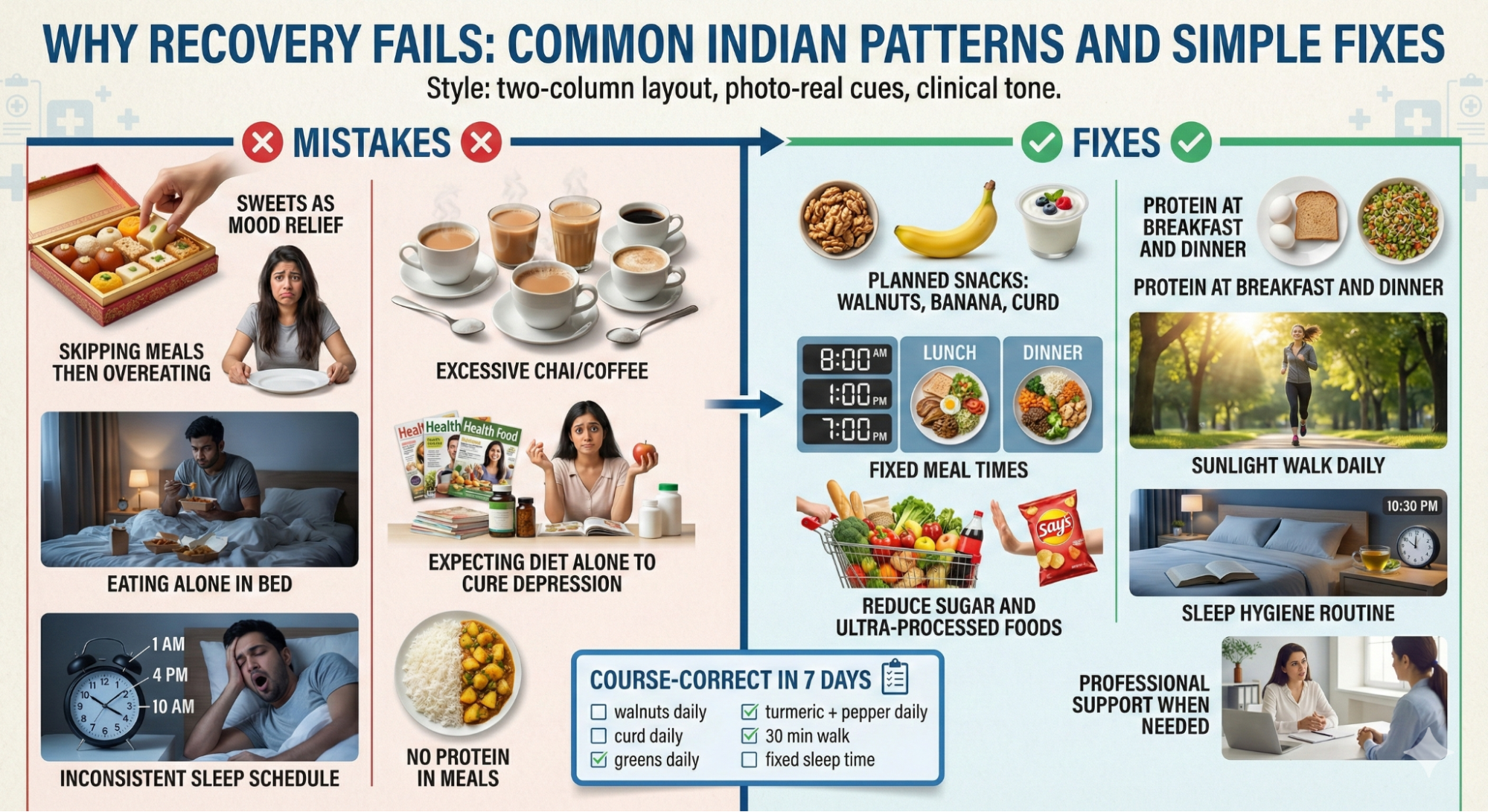
How to Course-Correct When Things Go Wrong
BP still high on your high blood pressure diet? Check hidden sodium. Food tasteless? Increase lemon and roasted cumin. Resume low-sodium Indian recipes with strict measurements and more spice variety.
Conclusion
Low-sodium Indian recipes can lower BP by 8 mmHg in 6 weeks, equivalent to one medication. Over 220 million Indian hypertension patients can benefit from spice-forward cooking that replaces salt with cumin, lemon, and amchur. Measure salt today, remove pickle from your thali, and squeeze lemon on every dal and sabzi. Your taste buds adapt in 3 weeks; your heart benefits for a lifetime.
FAQs
Q1: What are low-sodium Indian recipes?
Low-sodium Indian recipes are traditional Indian dishes made with reduced salt using spice alternatives, lemon, amchur, cumin, and herbs. Low-salt recipes maintain authentic taste while protecting heart health.
Q2: How to reduce salt in Indian cooking?
How to reduce salt in Indian cooking: measure with a teaspoon, add lemon before salt, use amchur in curries, and increase cumin and pepper. Salt-free cooking uses flavour layering instead of salt.
Q3: What is a good Indian diet plan for high blood pressure?
An Indian diet plan for high blood pressure limits sodium to 1500mg using low-sodium food, eliminates pickles and papad, and increases potassium from bananas and coconut water.
Q4: Do low-sodium Indian curry recipes taste good?
Yes, low-sodium Indian curry recipes use spice complexity for depth. After 3 weeks of adaptation, most Indians prefer the richer taste of spice-forward cooking over salt-heavy versions.
Q5: How quickly does reducing salt lower BP?
BP reduction of 5-8 mmHg appears within 2-4 weeks of consistent low-sodium Indian recipes. Full cardiovascular benefits from a high blood pressure diet develop over 3-6 months.
Q6: When should I see a doctor about BP and sodium?
See a cardiologist if BP stays above 140/90 despite salt-free cooking for 6 weeks. Low-salt recipes support, but severe hypertension needs medication alongside dietary changes.
Related Posts