You’re trying every diet trend from the West, exercising daily, yet nothing seems to work with your traditional meal timings and family dinners. The question isn’t whether intermittent fasting India works, but how to adapt it to chai rituals, late dinners, and cultural expectations around food. Most fasting guides ignore the reality that Indian families eat together at specific times regardless of Western eating windows suggested online. This guide reveals how to make intermittent fasting work with your actual lifestyle rather than forcing yourself into rigid schedules that fail.
What Is Intermittent Fasting India and Why Indian Dieters Should Care?
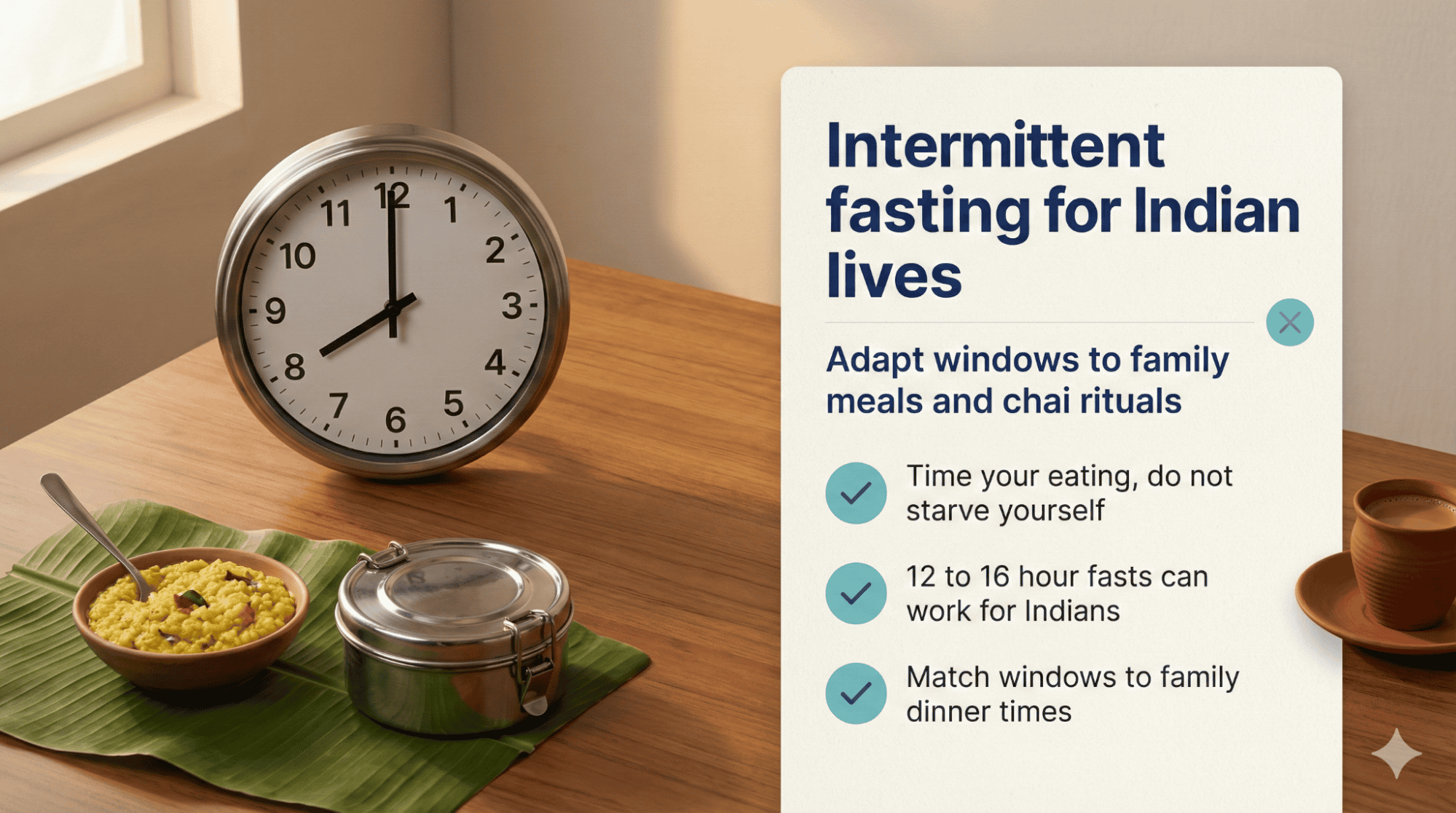
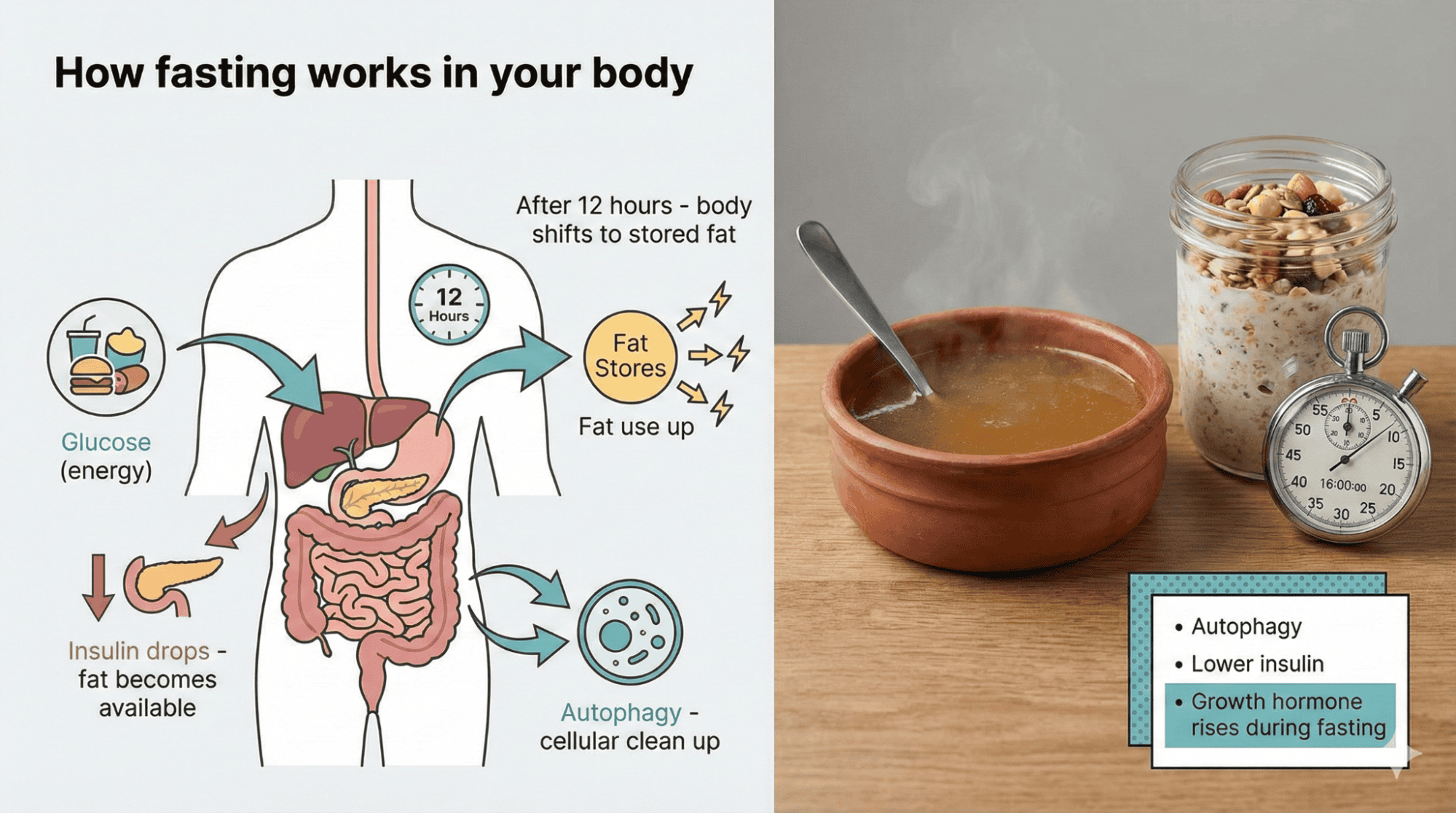
Intermittent fasting means cycling between eating and fasting periods, typically limiting your eating to specific hours rather than restricting what you eat. Fasting for Indians can range from twelve-hour overnight fasts to sixteen-hour fasts with eight-hour eating windows depending on what fits your schedule. Your body switches from burning glucose to burning stored fat after twelve hours without food, making extended fasting periods effective for weight loss. Think of intermittent fasting as giving your digestive system a break while allowing your body time to repair and burn fat stores.
Why Intermittent Matters for Indian Bodies
Indian genetics respond particularly well to fasting because our ancestors naturally went through feast and famine cycles without constant food availability. Our traditional eating patterns already included natural fasting periods between dinner and breakfast, though modern snacking habits disrupted this healthy rhythm. Moreover, Indians facing insulin resistance and diabetes benefit significantly from fasting periods that lower insulin levels and improve insulin sensitivity dramatically. Research shows that intermittent fasting India adapted to local meal culture works better than forcing Western eating windows that clash with family schedules.
Common Myths Debunked About This Topic
Many people believe fasting slows metabolism, when research actually shows metabolic rate increases during short-term fasting periods up to seventy-two hours. Another dangerous myth suggests you must fast sixteen hours daily, but even twelve-hour overnight fasts provide significant health benefits for beginners. Additionally, people think fasting means starving yourself, when it’s actually about timing meals strategically rather than reducing calories to dangerous levels. Furthermore, the myth that fasting causes muscle loss ignores studies showing proper protein intake during eating windows preserves muscle mass effectively.
The Science Behind Intermittent Fasting India for Indians
How Intermittent Works in Your Body
Fasting triggers autophagy, a cellular cleanup process where your body breaks down and recycles damaged cells for energy and repair efficiently. Your insulin levels drop during fasting, allowing stored body fat to become accessible for burning rather than remaining locked away in cells. Human growth hormone increases up to five times during fasting, supporting fat loss while preserving muscle mass throughout the fasting period. Moreover, fasting reduces inflammation markers throughout your body, improving overall health beyond just weight loss benefits you see on the scale.
The Connection Between Fasting For Indians and Health
Fasting for Indians works exceptionally well because extended eating windows common in Indian culture often lead to constant insulin elevation throughout the day. Studies show that limiting eating to eight to ten hours daily reduces calorie intake by twenty percent without consciously restricting food portions. Additionally, intermittent fasting improves insulin sensitivity significantly, making it particularly beneficial for Indians with family history of diabetes or PCOS. Research also confirms that fasting supports better sleep quality, reduced inflammation, and improved brain function beyond just weight management benefits alone.
What Research Shows for Indian Population
Research from Indian universities found that intermittent fasting improved metabolic markers in Indians more effectively than traditional calorie restriction diets over months. This fasting approach reduced belly fat specifically, which is crucial because Indians store dangerous visceral fat around organs at lower BMI levels. Indian studies reveal that twelve to fourteen-hour fasts matched cultural meal timings better than sixteen-hour fasts, leading to higher adherence rates. Furthermore, data shows that Indians combining intermittent fasting with traditional whole foods lost significantly more weight than those following Western low-carb approaches.
Indian Fasting Methods: What to Watch For
Physical Signs and Symptoms to Monitor
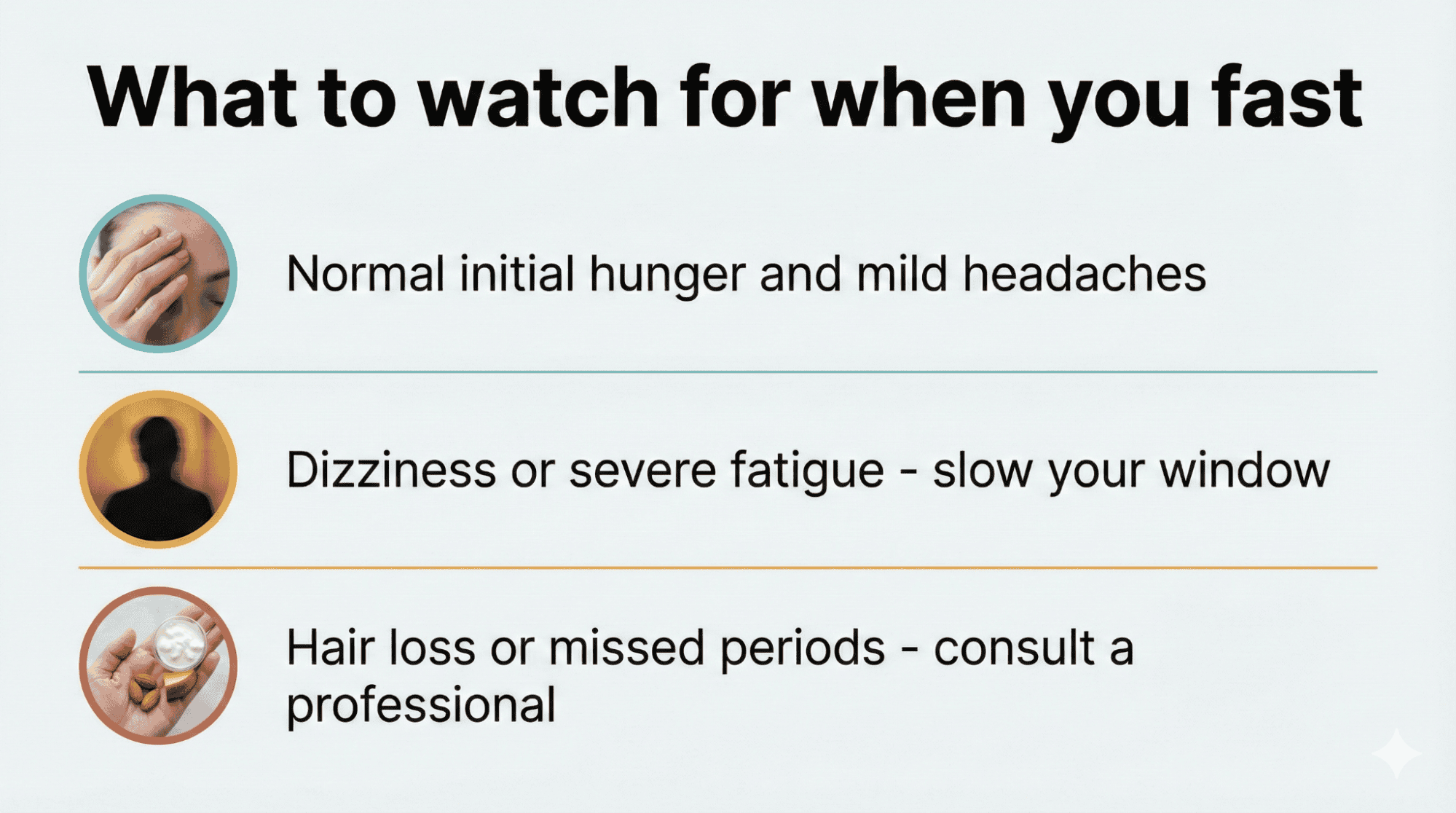
Initial hunger pangs during the first week of intermittent fasting India are normal and typically disappear as your body adapts to new patterns. Headaches or dizziness during fasting periods signal you might need to start with shorter fasts and gradually extend them over several weeks. Feeling cold or experiencing fatigue indicates you might be undereating during your eating windows, requiring attention to meal quality and portions. Watch for hair loss or irregular periods in women, which suggest you’re fasting too aggressively and need to adjust your approach immediately.
Emotional and Mental Health Indicators
Irritability or mood swings during fasting windows often improve after the first week as your body adapts to using fat for energy. Obsessing about food during fasting periods or binge eating during eating windows indicates your fasting schedule might be too restrictive for sustainability. Feeling anxious or stressed about breaking your fast at the exact right time suggests you’re being too rigid rather than flexible. Additionally, losing enjoyment in food or developing guilt around eating signals unhealthy relationships with food requiring professional guidance before continuing fasting.
When to Consult a Healthcare Professional
Schedule a doctor consultation before starting intermittent fasting India if you have diabetes, low blood pressure, or history of eating disorders. Seek medical guidance if you’re pregnant, breastfeeding, underweight, or taking medications that require food at specific times throughout the day. Consult healthcare professionals if you experience persistent fatigue, severe headaches, or digestive issues that don’t resolve after two weeks of fasting. Moreover, get professional help if fasting triggers binge eating, extreme restriction, or any disordered eating patterns that concern you significantly.
Indian Lifestyle Factors Affecting Intermittent Fasting India
Modern Indian Diet Challenges and Solutions
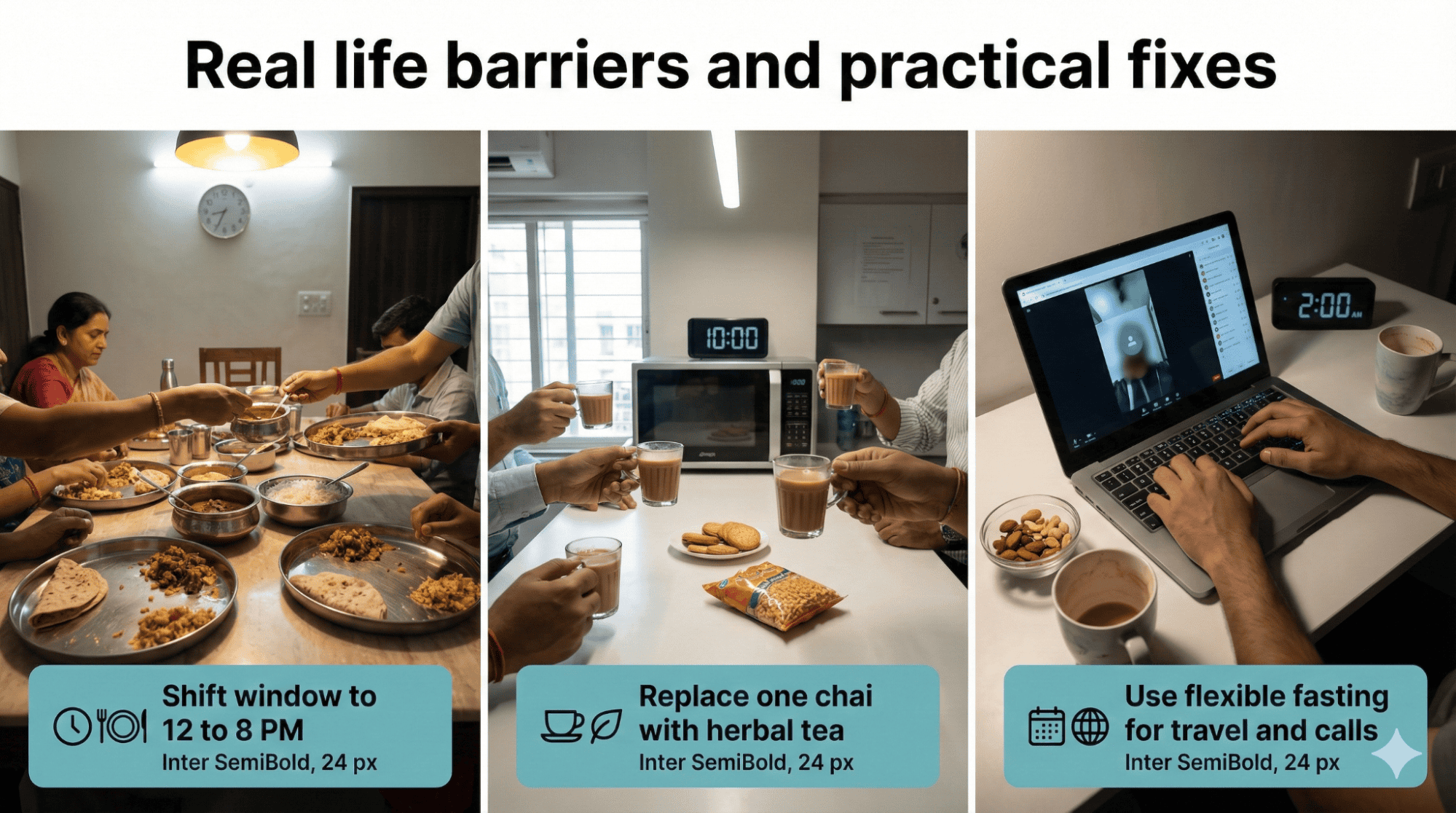
Family dinners happening at nine or ten PM make standard sixteen-eight fasting windows impractical for most Indian households with traditional schedules. Morning chai rituals feel essential for starting your day, yet adding milk and sugar technically breaks your fast before eating windows begin. Social gatherings and festivals centered around food at all hours create pressure to break fasts early or extend eating windows unnecessarily. Adapting fasting to your actual life means choosing eating windows that accommodate family meals rather than isolating yourself during traditional times.
Work-Life Balance and Urban Living Impact
Office lunch timings between one and two PM conflict with ideal eating windows that many Western sources recommend starting at noon. Late-night work calls with international clients push dinner later, making early eating window closures unrealistic for urban professionals consistently throughout weeks. Commuting stress and long hours increase cortisol, which can make fasting more difficult and potentially counterproductive for some people initially. Building gradual fasting habits starting with twelve-hour overnight fasts before attempting longer windows reduces stress and improves adherence rates significantly.
Cultural and Social Influences on Health
Extended family expectations around eating together at specific times make individual eating windows socially awkward during gatherings and visits. Religious fasting practices already familiar to most Indians provide cultural framework making intermittent fasting more acceptable than Western diet trends. Ayurvedic principles emphasizing eating according to natural rhythms align well with intermittent fasting when adapted thoughtfully to individual constitutions properly. Learning to communicate your health goals respectfully helps family members support rather than sabotage your eating windows during shared meals.
Best Indian Foods for Intermittent Fasting India Management
Traditional Indian Foods That Support Eating Windows India
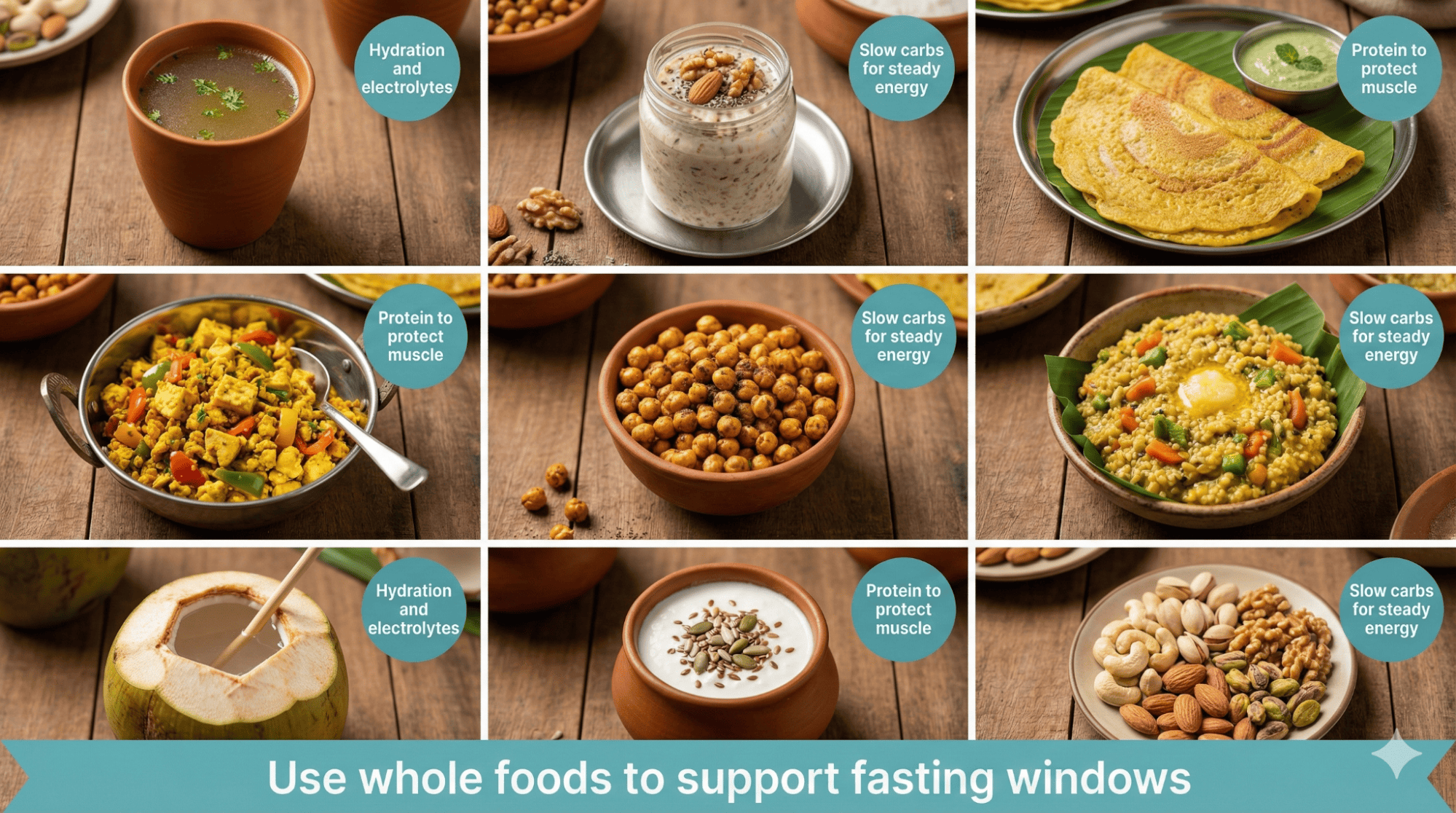
Dal and legumes provide protein and fiber that keep you satisfied throughout fasting periods better than refined carbs that spike blood sugar. Vegetables including bottle gourd, spinach, and okra offer nutrients with minimal calories, allowing larger portions during eating windows without overeating significantly. Nuts and seeds provide healthy fats and protein, making them perfect for breaking fasts gently without shocking your digestive system suddenly. Furthermore, whole grains like brown rice and millets release energy slowly, preventing hunger spikes during the early hours of fasting periods.
Modern Indian Meal Options and Healthy Recipes
Breaking fast with bone broth or vegetable soup prepares your digestive system before eating larger meals during your eating window. Overnight oats soaked with nuts, seeds, and fruits offer convenient first meals requiring no morning preparation time during rushed schedules. Paneer or tofu scrambles with vegetables provide protein-rich meals that sustain you through longer fasting periods the next day effectively. Moreover, quinoa bowls with roasted vegetables and chickpeas give you complete nutrition concentrated in smaller eating windows without feeling deprived constantly.
Foods to Limit or Avoid for Better Results
Refined carbs like white rice, maida products, and sugary foods spike insulin during eating windows, making fasting periods harder to sustain. Fried foods and excessive oils cause digestive discomfort during eating windows when your stomach is adjusting to eating after fasting. Sugary beverages including chai with sugar, fruit juices, and sodas provide empty calories while breaking fasts without providing satiety or nutrition. Processed snacks and packaged foods contain additives that increase inflammation and hunger, undermining the health benefits of intermittent fasting India completely.
Portion Sizes and Meal Timing for Indians
Start eating windows with protein and vegetables before adding carbs to prevent blood sugar spikes that trigger intense hunger later during fasting. Break fasts gently with light foods rather than immediately eating large heavy meals that overwhelm your digestive system after hours of rest. Time your largest meal for the middle of your eating window rather than right before closing it to prevent digestive discomfort. Space meals three to four hours apart within eating windows to allow proper digestion rather than constantly grazing throughout permitted hours.
Lifestyle Changes to Support Intermittent Fasting India
Traditional Fasting: The Right Approach for Indians
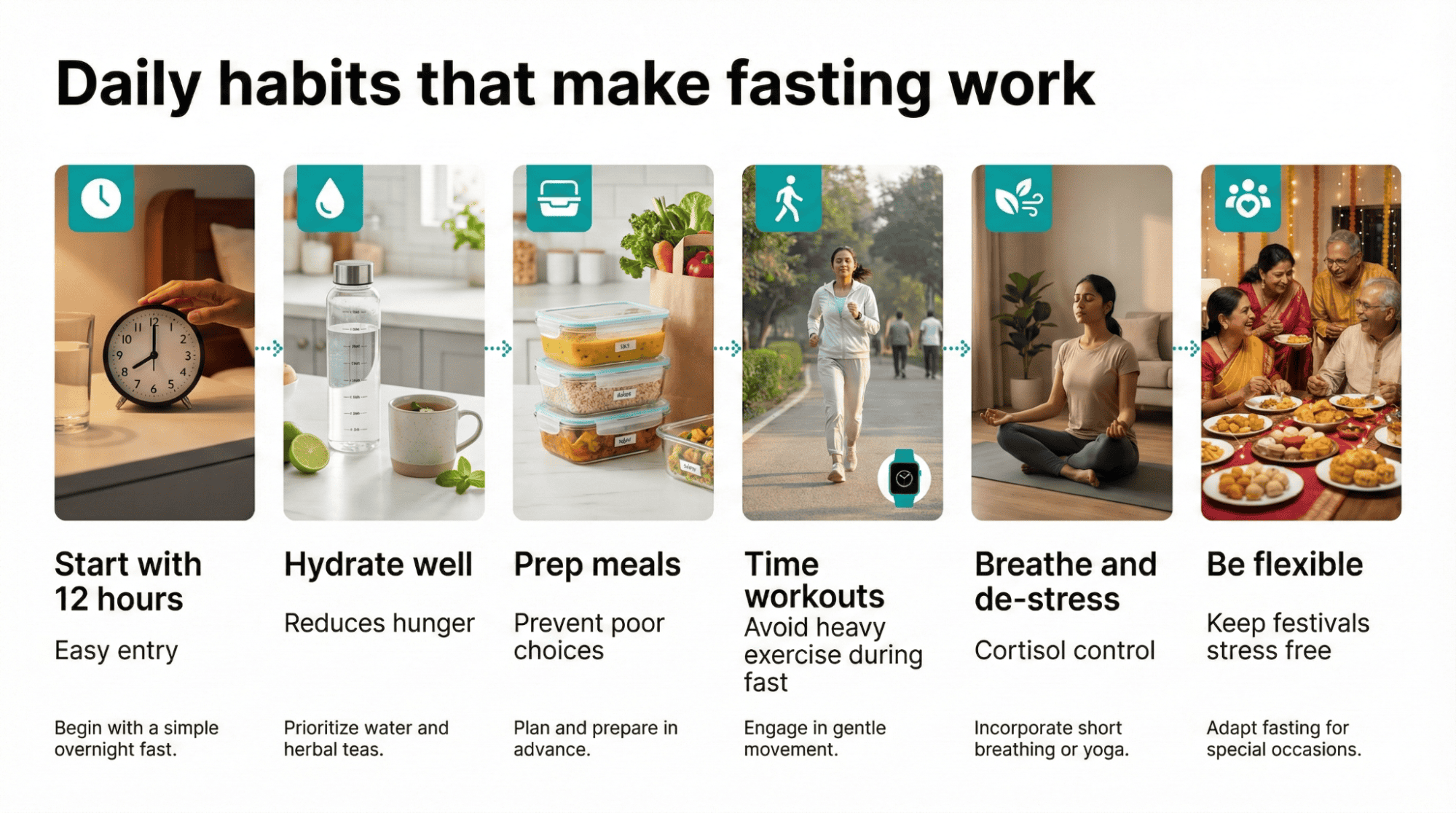
Start with twelve-hour overnight fasts from eight PM to eight AM, which most people can manage without significant hunger or lifestyle disruption. Gradually extend fasting windows by thirty minutes weekly until reaching fourteen to sixteen hours if comfortable rather than jumping immediately to strict schedules. Choose eating windows that accommodate your family’s meal times, such as twelve PM to eight PM if dinners happen later in evenings. Allow flexibility for special occasions and festivals rather than maintaining rigid fasting schedules that create social isolation or family tension unnecessarily.
Sleep and Stress Management Strategies
Sleep seven to nine hours nightly because inadequate rest increases hunger hormones and makes fasting periods significantly more difficult to sustain. Practice stress reduction through yoga or meditation during fasting periods to manage any discomfort rather than breaking fasts prematurely from anxiety. Stop eating three hours before bed to improve sleep quality and allow proper digestion rather than going to bed with full stomach. Create consistent sleep schedules that support natural circadian rhythms, making fasting feel more natural rather than forced against your body’s preferences.
Daily Habits That Make a Real Difference
Drink plenty of water, herbal tea, and black coffee during fasting windows to stay hydrated and reduce hunger without breaking your fast. Plan your meals during eating windows in advance to ensure adequate nutrition rather than making poor choices from extreme hunger. Track how you feel during different fasting lengths and eating windows to identify what works for your unique body and schedule. Stay busy during fasting periods with work or activities that keep your mind occupied rather than constantly thinking about food and counting minutes.
Your 7-Day Intermittent Fasting India Management Meal Plan
Breakfast Options (Vegetarian & Non-Vegetarian)
Break your fast at noon with moong dal cheela loaded with vegetables and served with mint chutney for gentle reentry into eating. Alternatively, try scrambled eggs with spinach and whole wheat toast providing protein and nutrients after overnight fasting periods end at midday. Oats cooked with milk, topped with nuts, seeds, and berries offer satisfying nutrition that sustains you through afternoon without heavy feeling. Moreover, vegetable upma made with semolina, loaded with vegetables and peanuts provides South Indian comfort food perfect for breaking fasts traditionally.
Lunch Ideas for Working Professionals
Pack brown rice with rajma curry, cucumber raita, and salad that provides complete nutrition concentrated in your eating window at work. Whole wheat roti with palak paneer, dal, and vegetables gives you traditional meal adapted to fit intermittent fasting India schedules practically. Quinoa bowl with roasted vegetables, chickpeas, and tahini dressing offers modern option that delivers protein and fiber for sustained energy. Furthermore, mixed vegetable pulao with yogurt and nuts provides one-pot meal solution that’s convenient for office lunches during eating windows effectively.
Evening Snacks and Optimal Timing
Eat snacks around five PM within your eating window to maintain energy before dinner without overeating at final meal of the day. Greek yogurt with berries and almonds provides protein and healthy fats that satisfy sweet cravings within permitted eating hours appropriately together. Roasted chana with cucumber and lemon offers crunchy satisfaction while delivering protein and fiber during the later hours of eating windows. Additionally, herbal tea with a small portion of nuts keeps you satisfied until dinner arrives without adding excessive calories unnecessarily to totals.
Dinner Composition for Better Results
Close your eating window by eight PM with vegetable-heavy meals that digest easily before your overnight fast begins several hours later. Brown rice khichdi with vegetables and ghee provides comfort food that’s gentle on digestion during the final hours of eating windows. Grilled fish or paneer with roasted vegetables and small portion of millet roti gives you protein and nutrients before extended fasting overnight. Alternatively, vegetable soup with whole grain crackers offers light option that won’t disrupt sleep while providing nutrition before fasting period starts.
Common Mistakes Indians Make with Intermittent Fasting India
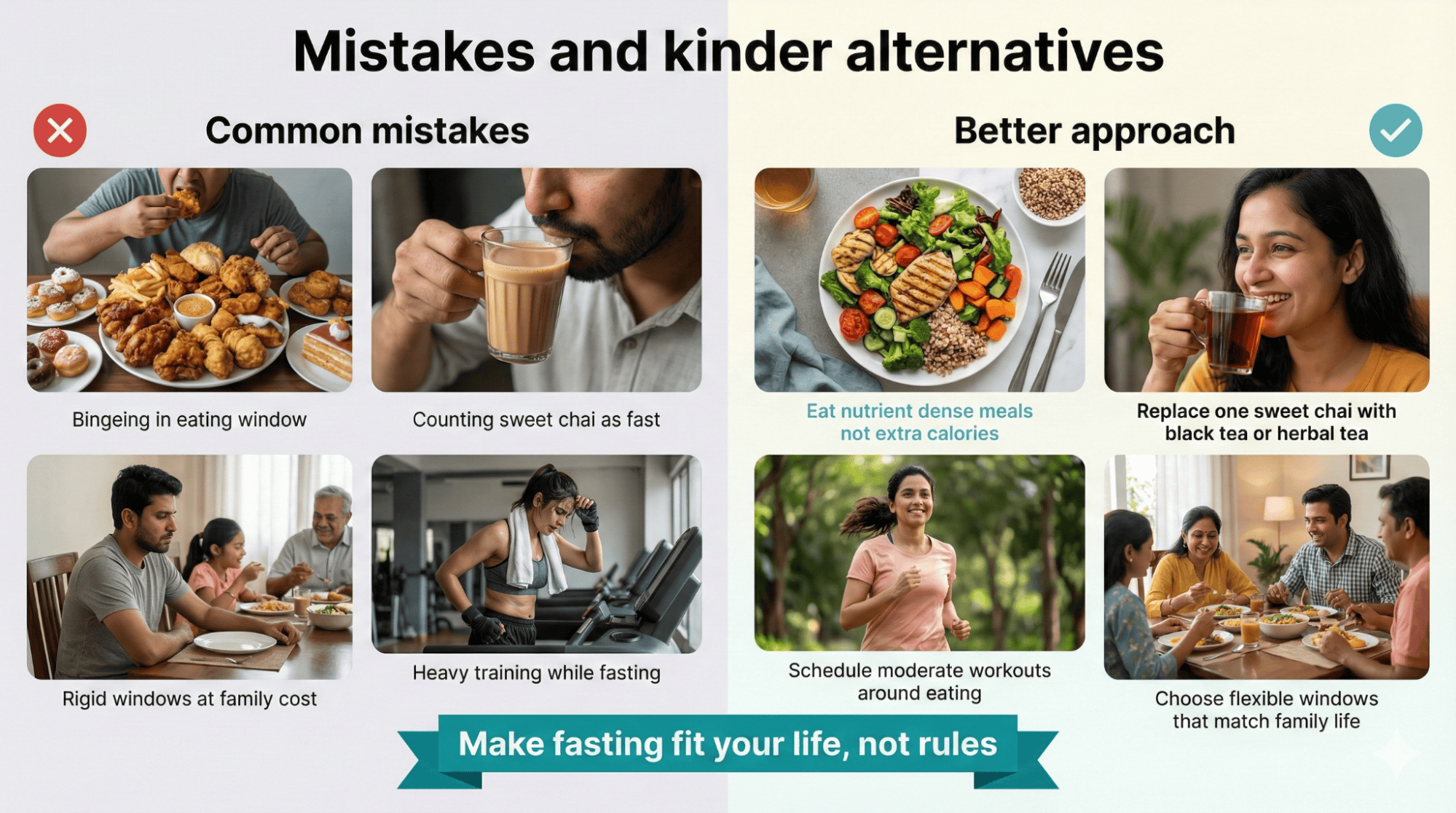
Diet Mistakes That Sabotage Progress
Overeating during eating windows to compensate for fasting periods adds more calories than you would normally eat throughout the entire day. Choosing processed and junk foods during eating windows because you’re extremely hungry undermines all health benefits that fasting provides naturally. Drinking calories through chai, juices, or smoothies during fasting windows technically breaks your fast even though they’re liquid rather than solid. Starting with aggressive sixteen to eighteen-hour fasts before your body adapts causes burnout and makes you quit within the first week.
Lifestyle Pitfalls to Watch Out For
Being too rigid about eating windows causes you to miss family meals or social events, creating isolation that’s unsustainable long term. Fasting on days when you have intense workouts depletes energy stores excessively, potentially causing muscle loss rather than just fat loss. Ignoring hunger cues that signal genuine need for food versus just habit-based eating leads to unhealthy restriction patterns developing over time. Expecting immediate dramatic results causes disappointment when weight loss happens gradually over weeks rather than overnight as unrealistic expectations suggest.
How to Course-Correct When Things Go Wrong
Shorten your fasting window temporarily if experiencing persistent fatigue, headaches, or irritability that don’t resolve after the first week of adjustment. Increase food quality and portions during eating windows if you’re losing weight too rapidly or experiencing hair loss from inadequate nutrition. Add one extra meal to your eating window if feeling constantly hungry or obsessing about food during fasting periods throughout the day. Consult a nutritionist specializing in intermittent fasting India if struggling with implementation despite following general guidelines correctly for several weeks.
Frequently Asked Questions
Q1: What is intermittent fasting India and how does it affect Indians?
Intermittent fasting India means cycling between eating and fasting periods adapted to Indian meal culture and family schedules, typically starting with twelve-hour overnight fasts. This approach works well for Indians because it improves insulin sensitivity, reduces belly fat specifically, and aligns with cultural fasting traditions already familiar to most families.
Q2: What are the main signs of intermittent issues?
Common initial symptoms include hunger pangs, headaches, irritability, and fatigue during the first week as your body adapts to new eating patterns consistently. Warning signs to watch include hair loss, irregular periods in women, persistent dizziness, binge eating during eating windows, or developing an unhealthy obsession with food and fasting schedules.
Q3: What foods should Indians eat for better intermittent fasting India?
Focus on dal, legumes, vegetables, whole grains like brown rice and millets, nuts, seeds, lean proteins, and healthy fats during eating windows. Break fasts gently with soups or light meals before eating larger portions, avoiding refined carbs, fried foods, and sugary items that spike blood sugar.
Q4: Can intermittent be managed naturally?
Yes, starting with twelve-hour overnight fasts and gradually extending windows by thirty minutes weekly allows natural adaptation to fasting for Indians. Choosing eating windows that accommodate family meal times, staying hydrated during fasts, and focusing on whole foods during eating windows supports sustainable intermittent fasting naturally.
Q5: How long does it take to see results with intermittent fasting India changes?
You might notice improved energy, reduced bloating, and better focus within one to two weeks of starting twelve-hour fasts consistently maintained daily. Significant weight loss and metabolic improvements typically appear after four to eight weeks as your body fully adapts to fasting and burning fat efficiently.
Conclusion
Intermittent fasting India works exceptionally well when adapted to traditional meal culture, family schedules, and cultural expectations around eating together at specific times. Research shows that even twelve-hour overnight fasts provide significant health benefits for Indians, with longer fasting windows offering additional advantages for those who can sustain them comfortably. The key is flexibility and gradual adaptation rather than forcing rigid Western eating windows that clash with Indian lifestyles and create unsustainable stress.
Start with a twelve-hour overnight fast from eight PM to eight AM for the next seven days, tracking how you feel and adjusting as needed. Choose an eating window that accommodates your family’s dinner time rather than isolating yourself from traditional meal culture that matters to you. Focus on eating whole foods, adequate protein, and vegetables during eating windows rather than compensating for fasting by overeating processed foods tonight.
Related Posts