You’re taking multivitamins, eating healthy meals, exercising regularly, yet you catch every cold and weight loss stalls inexplicably despite your efforts. The culprit might be zinc for weight loss that most Indian dieters completely overlook while focusing on protein, fiber, and calories. Most Indians consume barely half the zinc their bodies need daily, which weakens immunity and slows metabolism without obvious symptoms appearing early. This guide reveals why zinc matters for both immunity and weight management, plus practical ways to get adequate amounts from Indian foods.
What Is Zinc For Weight Loss and Why Indian Dieters Should Care?
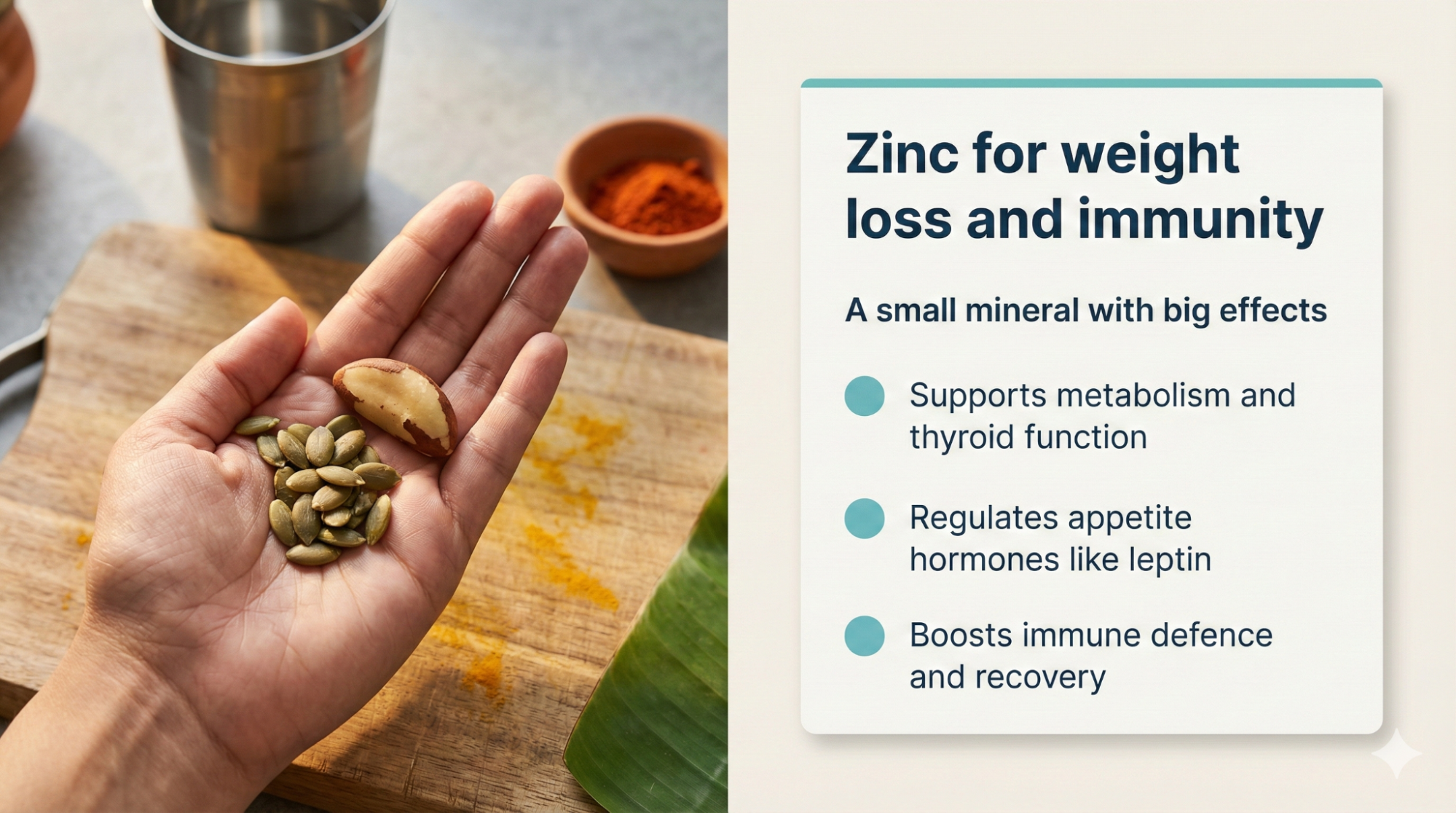
Zinc is an essential mineral your body cannot produce or store, requiring daily intake through food or supplements for optimal health. This mineral participates in over three hundred enzymatic reactions including metabolism, immune function, wound healing, and DNA synthesis throughout your body constantly. Zinc for weight loss works by supporting thyroid function, regulating appetite hormones, and enabling your body to burn fat efficiently rather than storing it. Think of zinc as a helper molecule that makes countless biological processes work properly, including those controlling your weight and immunity.
Why Zinc Matters for Indian Bodies
Indian vegetarian diets rich in grains and legumes contain phytates that block zinc absorption, making deficiency extremely common despite adequate intake. Our zinc-depleted soils produce vegetables and grains with lower mineral content than previous generations consumed, creating widespread nutritional gaps across populations. Moreover, Indians working stressful jobs deplete zinc faster because stress increases excretion through urine and sweat significantly throughout demanding days. Research shows that zinc deficiency affects over forty percent of Indian children and thirty percent of adults, directly impacting immunity and metabolism rates.
Common Myths Debunked About This Topic
Many people believe only protein foods contain zinc, when pumpkin seeds and nuts actually provide excellent amounts for vegetarians and vegans. Another dangerous myth suggests zinc deficiency only causes visible symptoms like white spots on nails, but metabolic effects happen long before. Additionally, people think supplements are better than food sources, but whole foods provide zinc with cofactors that enhance absorption naturally. Furthermore, the myth that more zinc is always better ignores the fact that excessive intake competes with copper absorption and causes problems.
The Science Behind Zinc For Weight Loss for Indians
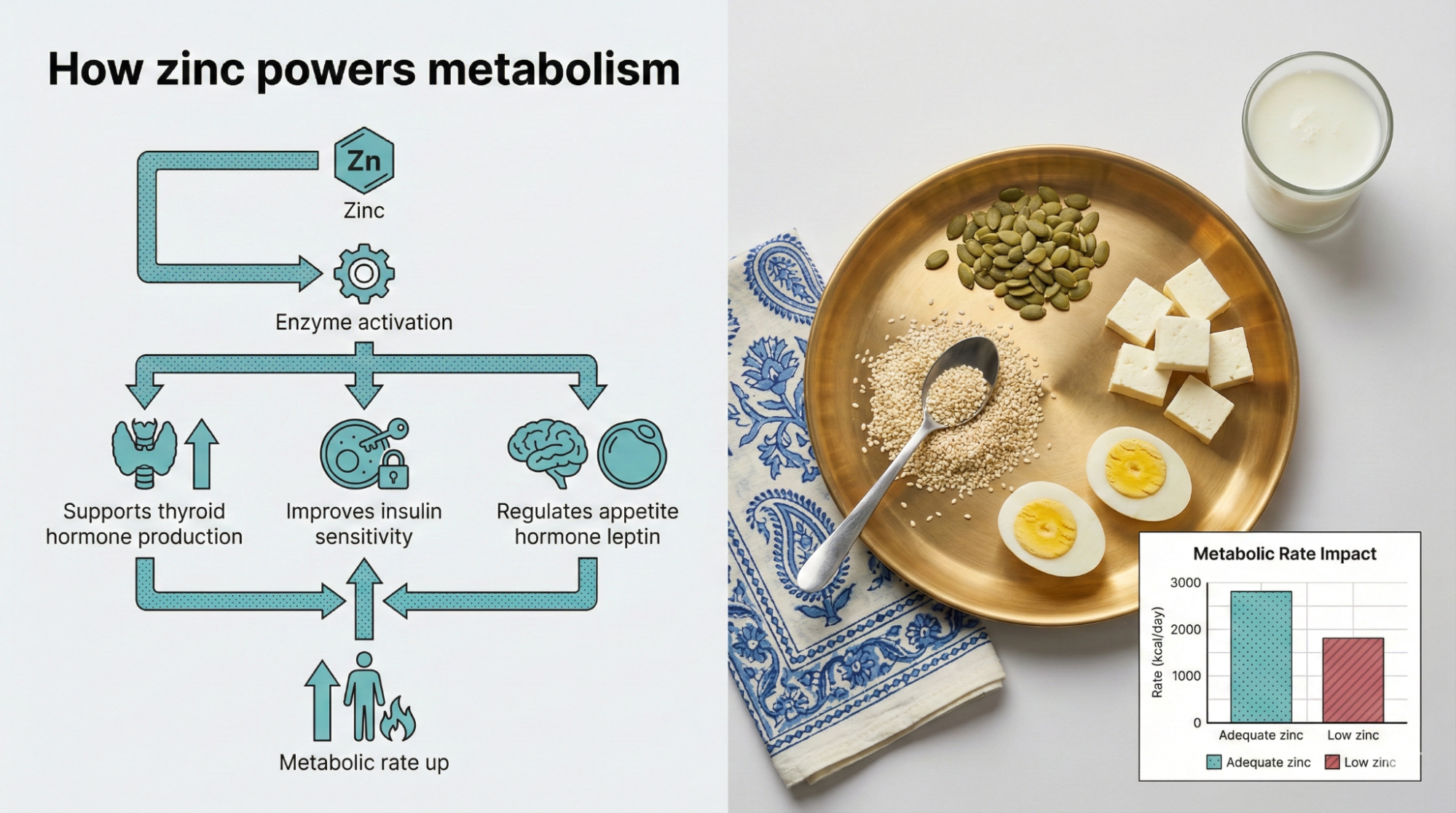
How Zinc Works in Your Body
Zinc activates enzymes that break down carbohydrates, proteins, and fats, meaning inadequate zinc literally slows your metabolism and fat burning capacity. This mineral regulates leptin, the hormone telling your brain you’re full, so zinc deficiency leads to constant hunger despite eating adequate calories. Zinc supports thyroid hormone production and conversion, with deficiency causing hypothyroidism symptoms including unexplained weight gain and fatigue consistently observed together. Moreover, zinc reduces inflammation throughout your body, which is crucial because chronic inflammation prevents weight loss regardless of diet and exercise efforts.
The Connection Between Zinc Deficiency and Health
Zinc deficiency weakens immune function dramatically, making you susceptible to infections that further deplete zinc stores through increased immune activity fighting illness. Studies show that people with adequate zinc intake lose weight more easily because their metabolism functions at full capacity rather than slowed rate. Additionally, zinc improves insulin sensitivity, helping your body use glucose properly rather than storing it as fat around your belly and organs. Research also confirms that zinc supplementation in deficient individuals improves thyroid function, raises metabolic rate, and supports healthy weight loss over several months.
What Research Shows for Indian Population
Research from Indian nutrition institutes found that zinc deficiency affects forty-two percent of urban Indians despite seemingly adequate calorie and protein intake. This widespread deficiency correlates directly with rising obesity and diabetes rates because zinc regulates both metabolism and blood sugar control simultaneously. Indian studies reveal that zinc supplementation improved immune function and reduced infection rates by thirty-five percent in deficient children within weeks. Furthermore, data shows that Indian vegetarians have significantly lower zinc levels than non-vegetarians, with vegetarians requiring careful attention to zinc-rich plant foods.
Zinc Rich Foods: What to Watch For
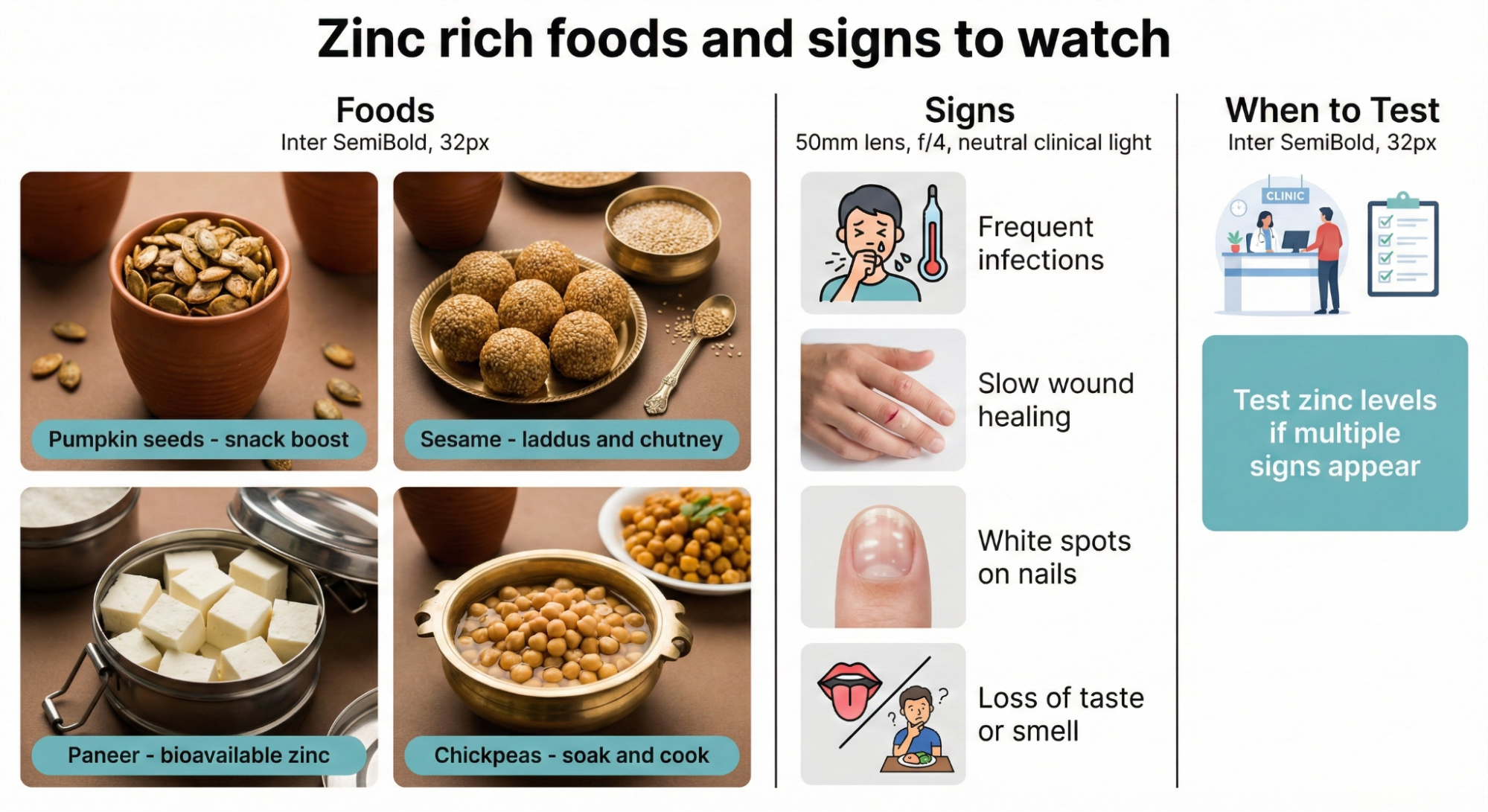
Physical Signs and Symptoms to Monitor
Frequent colds and infections that last longer than usual signal weakened immune health from potential zinc deficiency affecting your body’s defenses. White spots on fingernails, hair loss, and slow wound healing indicate your body lacks zinc needed for cell growth and repair. Loss of taste or smell, poor appetite despite low food intake, and digestive issues point to zinc levels below optimal requirements consistently. Watch for unexplained weight gain despite eating less, as zinc deficiency slows metabolism making fat loss extremely difficult despite perfect diet.
Emotional and Mental Health Indicators
Brain fog and difficulty concentrating happen because zinc is crucial for neurotransmitter function and optimal brain performance throughout demanding days. Depression and anxiety worsen with zinc deficiency because this mineral helps produce serotonin and other mood-regulating brain chemicals effectively naturally. Poor memory and learning difficulties affect people with low zinc levels because this mineral supports brain cell communication and neuroplasticity over time. Additionally, feeling constantly tired despite adequate sleep indicates your body cannot efficiently produce energy without sufficient zinc for metabolic enzyme function.
When to Consult a Healthcare Professional
Schedule testing for zinc levels if you experience multiple symptoms including frequent infections, unexplained weight gain, hair loss, and poor wound healing. Seek medical guidance before taking zinc supplements if you have kidney disease, take antibiotics, or use medications that interact with minerals. Consult healthcare professionals if zinc supplementation doesn’t improve symptoms after three months, as other underlying issues might be affecting absorption. Moreover, get professional help if you’re pregnant, breastfeeding, or have digestive disorders that impair nutrient absorption from food sources significantly.
Indian Lifestyle Factors Affecting Zinc For Weight Loss
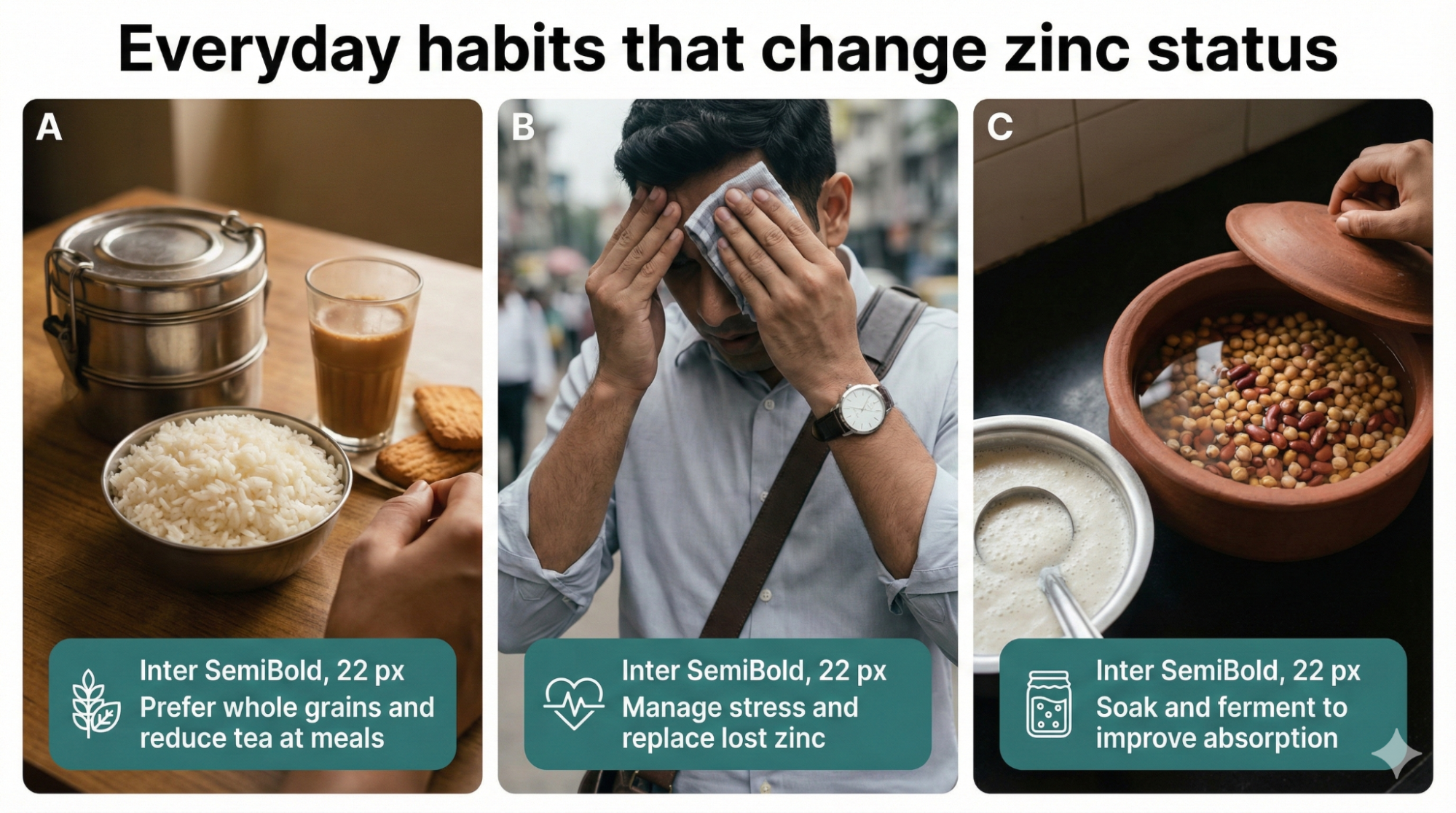
Modern Indian Diet Challenges and Solutions
Refined white rice and polished grains lose up to eighty percent of zinc during processing, creating deficiency despite consuming adequate calories daily. Vegetarian diets high in phytates from grains, legumes, and tea block zinc absorption by thirty to fifty percent compared to omnivorous diets. Relying on outside food from restaurants means you have no control over ingredients or cooking methods that might further deplete zinc. Soaking grains and legumes overnight before cooking reduces phytates significantly, improving zinc absorption from these staple foods Indians eat daily consistently.
Work-Life Balance and Urban Living Impact
Chronic work stress increases zinc loss through urine and sweat, creating deficiency even when dietary intake seems adequate based on calculations. Sweating during hot weather or intense exercise further depletes zinc stores, requiring increased intake that most people don’t compensate for adequately. Alcohol consumption common in urban social settings interferes with zinc absorption and increases urinary excretion, worsening deficiency states over time considerably. Building stress management habits and limiting alcohol while increasing zinc-rich foods helps maintain adequate levels despite demanding urban lifestyles constantly.
Cultural and Social Influences on Health
Vegetarian traditions prevalent in many Indian communities make zinc deficiency more likely without careful attention to plant-based zinc sources. Pressure to follow trendy diets that eliminate food groups might accidentally remove important zinc sources like dairy or nuts from intake. Religious fasting practices that restrict certain foods can limit zinc intake during extended periods, potentially creating temporary deficiencies affecting immunity. Learning to incorporate diverse zinc-rich foods acceptable within cultural and religious guidelines ensures adequate intake while respecting important traditions and values.
Best Indian Foods for Zinc For Weight Loss Management
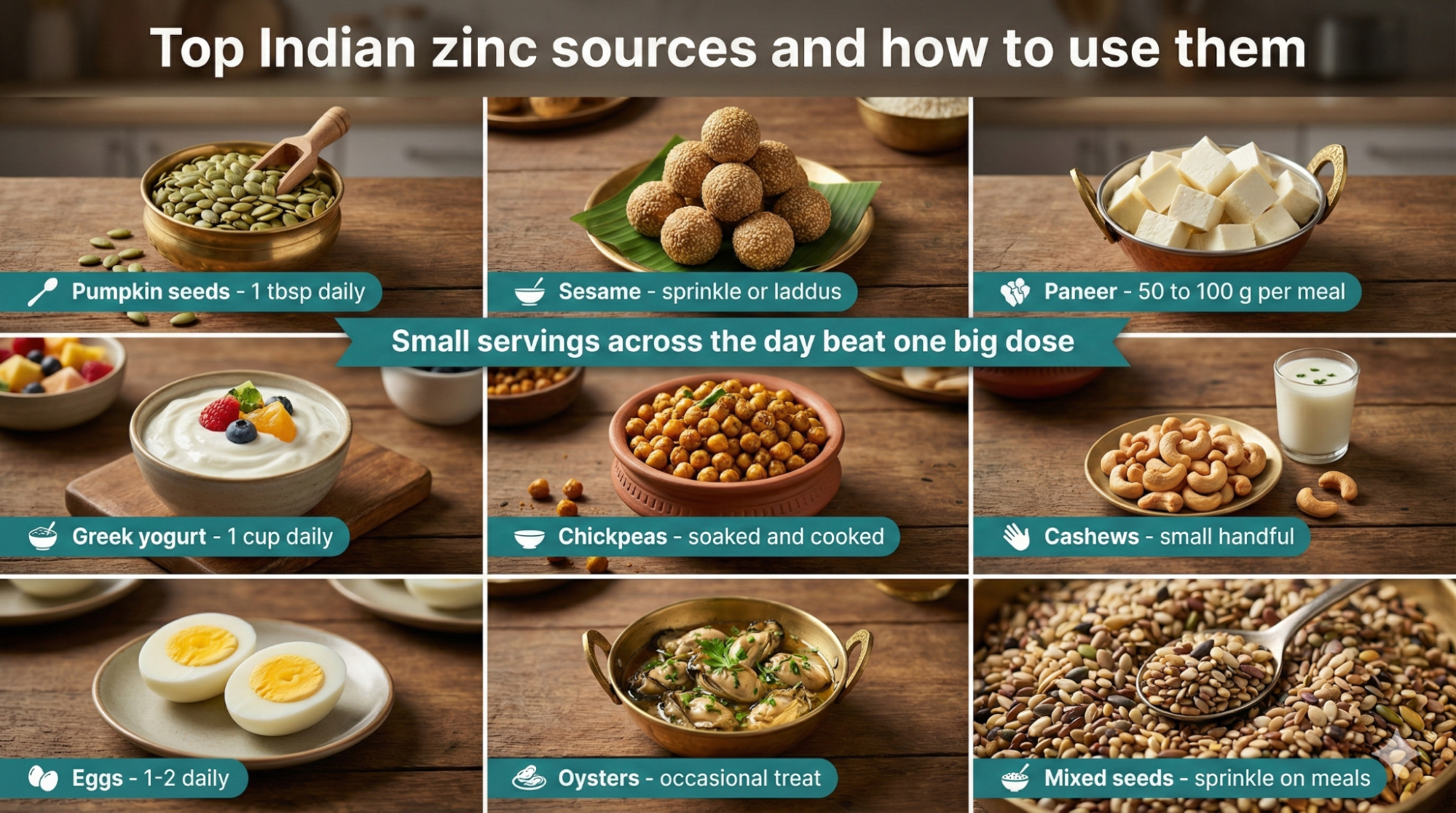
Traditional Indian Foods That Support Immune Health
Pumpkin seeds provide one of the highest plant-based zinc sources, with just thirty grams supplying nearly half your daily requirements effectively. Sesame seeds used in til ladoos and chikkis offer excellent zinc along with healthy fats and calcium for comprehensive nutrition. Chickpeas, kidney beans, and other legumes provide moderate zinc, especially when soaked overnight to reduce phytates blocking absorption significantly. Furthermore, dairy products including milk, yogurt, and paneer offer zinc that’s highly bioavailable compared to plant sources with absorption blockers present.
Modern Indian Meal Options and Healthy Recipes
Overnight oats topped with pumpkin seeds, walnuts, and berries provide zinc-rich breakfast that’s convenient for busy morning schedules consistently. Hummus made from chickpeas with tahini sesame paste gives you double zinc sources in one delicious dip for vegetables or crackers. Quinoa pulao with cashews and vegetables offers complete protein plus zinc, making it perfect for vegetarians seeking mineral-rich meals throughout weeks. Moreover, paneer tikka with bell peppers provides high-quality protein and zinc in familiar Indian flavors adapted for health goals effectively together.
Foods to Limit or Avoid for Better Results
Excessive tea and coffee consumption throughout the day reduces zinc absorption through tannins and caffeine interfering with mineral uptake significantly. Processed foods and refined grains strip away zinc during manufacturing, providing empty calories without the nutrients whole foods naturally contain. High-fiber supplements taken with meals can bind to zinc and prevent absorption, requiring separation by at least two hours for optimal results. Excessive calcium supplements compete with zinc for absorption, so balance is crucial rather than megadosing any single mineral without professional guidance.
Portion Sizes and Meal Timing for Indians
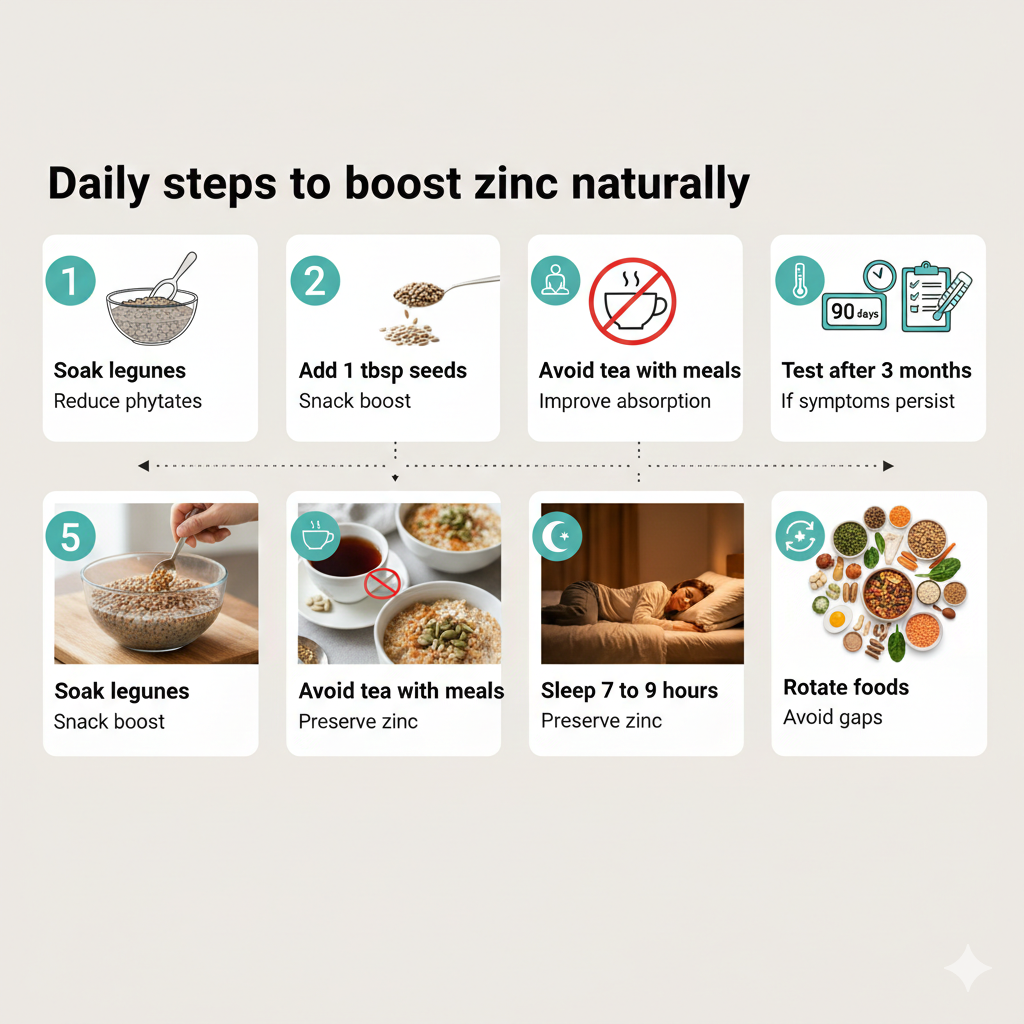
Include one tablespoon of pumpkin or sesame seeds daily in breakfast or snacks to boost zinc intake significantly above current levels. Add one serving of legumes soaked overnight to lunch or dinner, preparing them properly to maximize zinc absorption from these foods. Consume zinc-rich foods throughout the day rather than concentrated in one meal to improve absorption rates and maintain steady blood levels. Separate high-calcium foods like dairy from zinc-rich plant foods by two hours if trying to maximize absorption from both sources effectively.
Lifestyle Changes to Support Zinc For Weight Loss
Zinc Benefits: The Right Approach for Indians
Calculate your zinc needs based on fifteen milligrams daily for men and twelve milligrams for women, adjusting upward if you’re vegetarian or physically active. Soak grains, legumes, and nuts overnight before cooking or eating to reduce phytates that block zinc absorption by thirty to fifty percent. Include fermented foods like idli and dosa in your diet because fermentation breaks down phytates, improving mineral absorption from whole grains. Consider zinc supplementation after consulting a healthcare provider if dietary changes don’t improve symptoms within three months of consistent effort properly.
Sleep and Stress Management Strategies
Sleep seven to nine hours nightly because inadequate rest increases inflammation and impairs immune function that zinc normally supports throughout your body. Practice stress reduction through meditation or yoga daily, as chronic stress depletes zinc stores faster than your diet can replenish them. Limit intense exercise to four to five times weekly rather than daily, as excessive training increases zinc loss through sweat without adequate recovery. Create boundaries around work stress and practice saying no to unnecessary commitments that drain energy and deplete essential nutrients like zinc.
Daily Habits That Make a Real Difference
Track your zinc intake for one week using a food diary to identify whether you’re actually meeting daily requirements through diet. Choose whole grains over refined versions whenever possible, as whole wheat contains three times more zinc than white flour products. Snack on nuts and seeds rather than chips and biscuits to boost zinc intake while satisfying cravings for crunchy foods throughout busy days. Cook in cast iron vessels occasionally, as this traditional practice adds small amounts of minerals including zinc to your food naturally.
Your 7-Day Zinc For Weight Loss Management Meal Plan
Breakfast Options (Vegetarian & Non-Vegetarian)
Start your day with overnight oats soaked with pumpkin seeds, walnuts, chia seeds, and topped with banana for zinc-rich breakfast. Alternatively, try scrambled eggs with spinach and whole wheat toast, as eggs provide highly bioavailable zinc along with complete protein. Moong dal cheela loaded with vegetables and topped with sesame seed chutney offers South Indian option packed with zinc and minerals. Moreover, Greek yogurt parfait with granola, mixed nuts, and berries gives you probiotics plus zinc supporting both immunity and digestion together.
Lunch Ideas for Working Professionals
Pack brown rice with chickpea curry, cucumber raita, and pumpkin seed salad topping that provides complete zinc-rich nutrition at work. Whole wheat roti with kidney bean masala, paneer bhurji, and vegetables gives you multiple zinc sources in traditional Indian meal format. Quinoa bowl with roasted vegetables, hummus, and tahini dressing offers modern option delivering plant-based zinc effectively for vegetarian colleagues. Furthermore, mixed dal with brown rice, yogurt, and roasted cashews provides complete protein plus zinc through carefully combined traditional foods.
Evening Snacks and Optimal Timing
Eat zinc-rich snacks between four and five PM to maintain stable blood sugar and support immune function throughout the afternoon hours. Roasted pumpkin seeds with cucumber and cherry tomatoes provide crunchy satisfaction along with substantial zinc boosting daily intake significantly above baseline. Trail mix with cashews, almonds, pumpkin seeds, and dark chocolate chips offers portable nutrition that’s convenient for busy schedules at work. Additionally, hummus with carrot and bell pepper sticks gives you zinc from chickpeas and tahini while delivering vegetables for fiber and vitamins.
Dinner Composition for Better Results
Keep dinner moderate with focus on zinc-rich proteins and vegetables rather than heavy carbs that might interfere with mineral absorption overnight. Grilled fish or chicken with roasted vegetables and quinoa provides highly bioavailable zinc along with complete nutrition for recovery during sleep. Palak paneer with brown rice and dal offers vegetarian option combining multiple zinc sources in one satisfying traditional Indian meal. Alternatively, vegetable and tofu stir-fry with cashews over small brown rice portion gives you zinc and protein without excessive calories.
Common Mistakes Indians Make with Zinc For Weight Loss
Diet Mistakes That Sabotage Progress
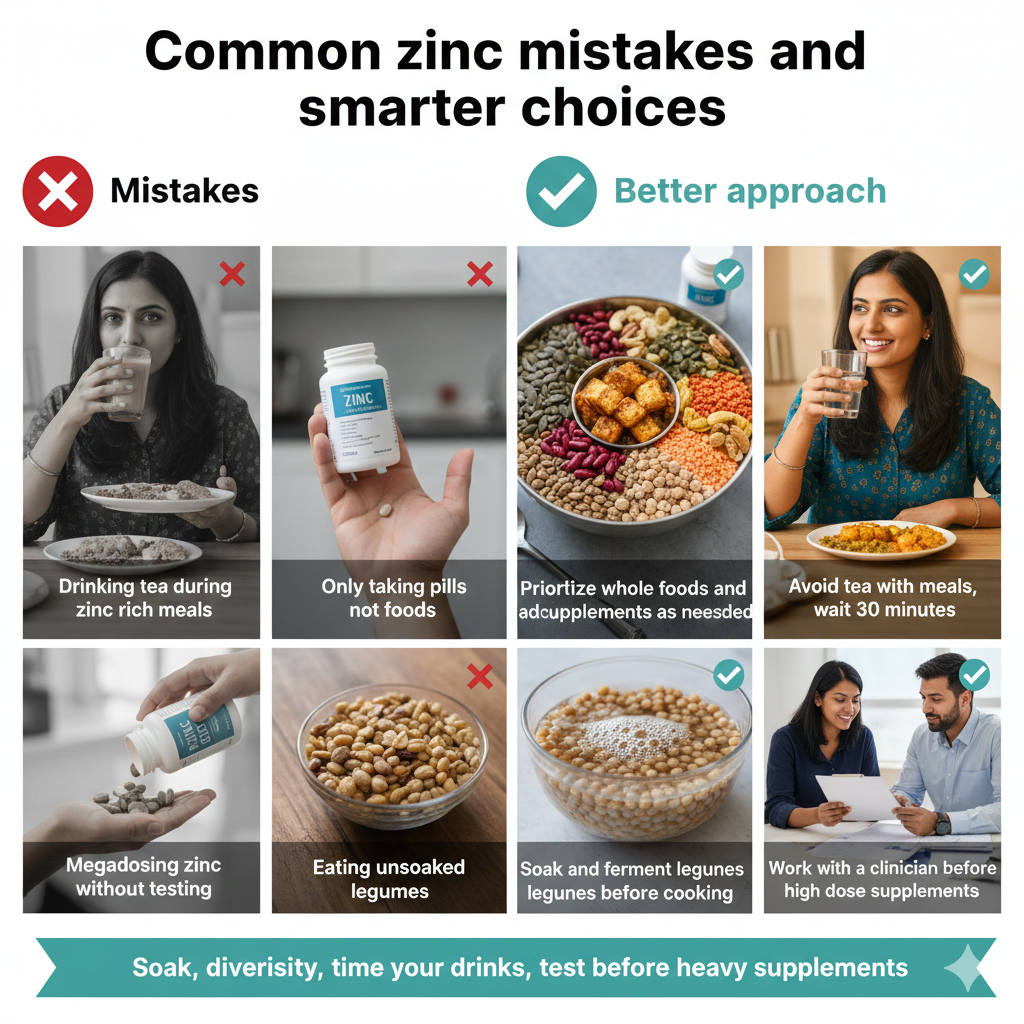
Taking zinc supplements on empty stomach causes nausea and digestive discomfort, making people quit before experiencing any actual benefits from supplementation. Consuming excessive fiber from whole grains without soaking them properly blocks zinc absorption despite eating seemingly zinc-rich foods regularly throughout weeks. Drinking tea or coffee with meals containing zinc sources reduces absorption by up to fifty percent through tannins binding to minerals. Expecting immediate results from zinc supplementation ignores the fact that replenishing stores takes several weeks before noticing symptom improvements visibly.
Lifestyle Pitfalls to Watch Out For
Taking too much zinc through supplements competes with copper absorption, potentially creating new deficiency while fixing another problem inadvertently over time. Ignoring food sources while relying entirely on supplements misses the synergistic nutrients and cofactors that enhance zinc absorption from whole foods. Consuming alcohol regularly interferes with zinc absorption and increases urinary loss, undermining supplementation efforts despite best dietary intentions throughout weeks. Exercising excessively in hot weather without increasing zinc intake depletes stores through sweat faster than dietary sources can replenish them.
How to Course-Correct When Things Go Wrong
Start tracking both zinc intake and symptoms weekly to identify whether dietary changes are actually improving your situation over time. Switch to zinc picolinate or citrate forms if zinc sulfate causes stomach upset, as different forms have varying absorption rates and tolerability. Separate zinc supplements from calcium, iron, and high-fiber meals by at least two hours for optimal absorption without nutrient competition. Consult a nutritionist specializing in mineral nutrition if symptoms persist despite supplementation, as absorption issues might require professional investigation and guidance.
Frequently Asked Questions
Q1: What is zinc for weight loss and how does it affect Indians?
Zinc for weight loss refers to how this essential mineral supports metabolism, thyroid function, and appetite regulation, with deficiency slowing fat burning significantly. Forty percent of Indians are zinc deficient due to vegetarian diets high in absorption-blocking phytates and zinc-depleted soils affecting food quality across regions.
Q2: What are the main signs of zinc issues?
Common zinc deficiency symptoms include frequent infections, slow wound healing, hair loss, white spots on nails, loss of taste or smell, and poor appetite. Many people also experience unexplained weight gain despite eating less, brain fog, depression, fatigue, digestive issues, and weakened immunity catching every cold.
Q3: What foods should Indians eat for better zinc for weight loss?
Focus on pumpkin seeds, sesame seeds, chickpeas, kidney beans, lentils, nuts, dairy products like yogurt and paneer, and eggs. Soak grains and legumes overnight before cooking to reduce phytates blocking zinc absorption, and include fermented foods improving mineral uptake naturally.
Q4: Can zinc be managed naturally?
Yes, eating zinc-rich foods daily, soaking grains and legumes to reduce phytates, limiting tea with meals, and managing stress naturally maintains adequate levels. However, supplementation might be necessary for vegetarians, pregnant women, or those with severe deficiency requiring faster replenishment than diet provides.
Q5: How long does it take to see results with zinc for weight loss changes?
You might notice improved immunity and fewer infections within two to three weeks of increasing zinc intake through food or supplements consistently. Significant improvements in metabolism, energy levels, and weight loss typically appear after two to three months as zinc stores replenish throughout body.
Conclusion
Zinc for weight loss remains one of the most overlooked yet crucial minerals for Indian dieters, with forty percent facing deficiency affecting metabolism and immunity simultaneously. This essential mineral supports thyroid function, regulates appetite hormones, and enables fat burning, making adequate intake critical for weight management beyond just calories and exercise alone. The solution requires incorporating zinc-rich foods daily, properly preparing grains and legumes to enhance absorption, and considering supplementation under professional guidance when needed.
Start by adding one tablespoon of pumpkin seeds to your breakfast or snacks today, then track your zinc intake for seven days. Soak all grains and legumes overnight before cooking to reduce phytates blocking mineral absorption from these Indian staple foods. Separate your tea or coffee from meals by at least one hour to maximize zinc absorption from food rather than inadvertently blocking it.
Related Posts