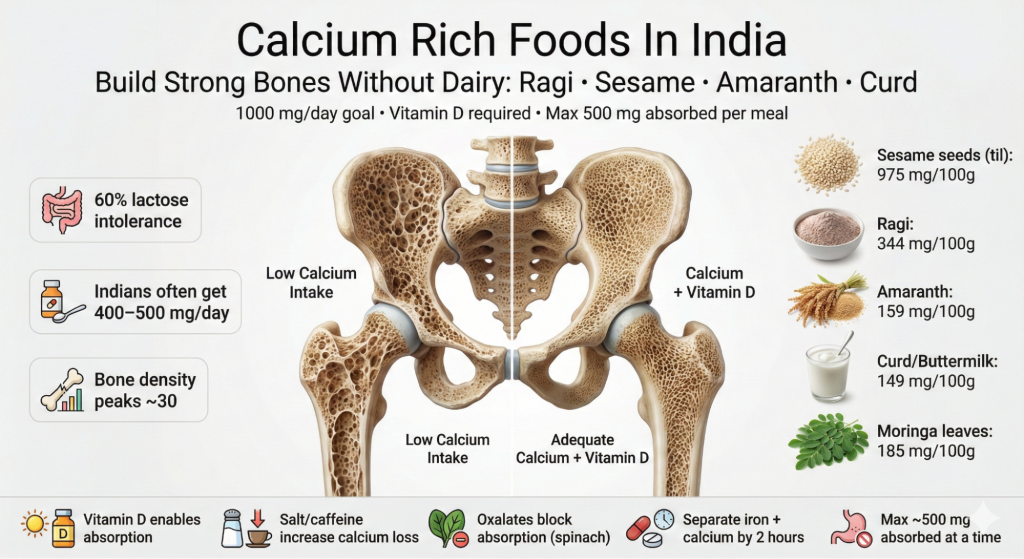
Calcium rich foods in India are dairy and non-dairy calcium sources, such as ragi, sesame, amaranth, and curd, that build strong bones without relying on milk alone. Everyone says “drink milk,” but over 60% of Indian adults are lactose intolerant. How to increase calcium naturally in the Indian diet goes far beyond dairy. This guide covers calcium rich Indian foods for strong bones, vegetarian calcium sources without milk in India, and a 7-day meal plan.
What Are Calcium-Rich Foods in India and Why Indian Dieters Should Care?
Understanding Calcium for Bone Health in Simple Terms
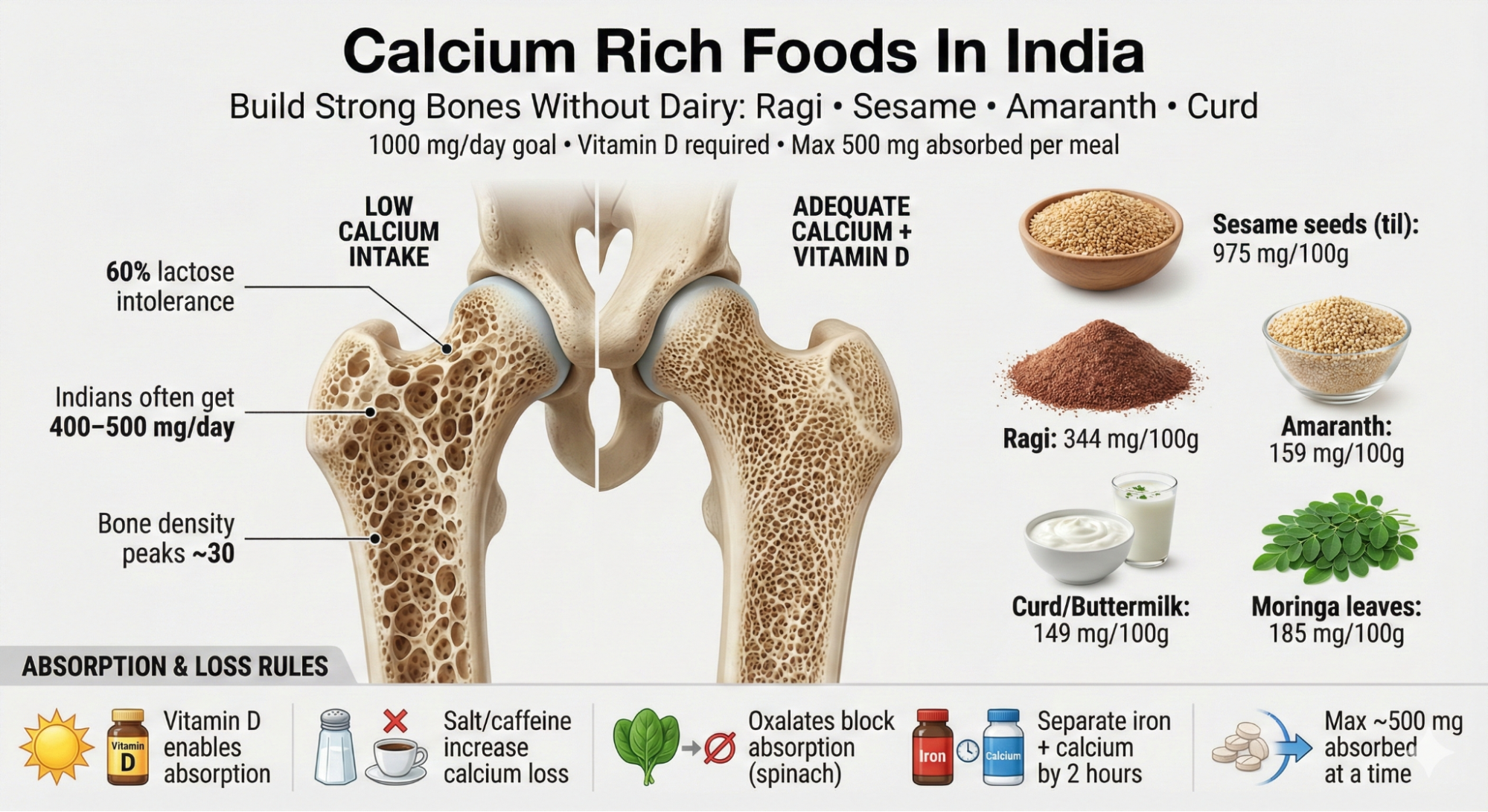
Calcium forms 99% of bone structure. Adults need 1000mg daily, but most Indians get 400- 500 mg. Calcium-rich foods in India fill this gap. Without adequate intake, your body pulls calcium from bones. Strong bones depend on consistent calcium intake.
Why Calcium for Bone Health Matters for Indian Bodies
Indian women face osteoporosis 10 years earlier than Western women. Vegetarian diets and indoor lifestyles create weak bones. Calcium-rich Indian foods for strong bones are underconsumed. Vegetarian calcium sources without milk matter for the 60% who are lactose intolerant.
Common Myths Debunked
- Myth: Milk is the only good calcium source.
- Fact: Ragi has 344mg of calcium per 100g, triple that of milk. Calcium-rich foods in India go far beyond dairy.
- Myth: Calcium deficiency only affects old people.
- Fact: Bone density peaks at 30. Building calcium intake must start early.
- Myth: Supplements replace dietary calcium.
- Fact: How to increase calcium naturally Indian diet through food absorption is better than pills.
The Science Behind Calcium Rich Foods in India for Indians
How Calcium for Bone Health Works in Your Body
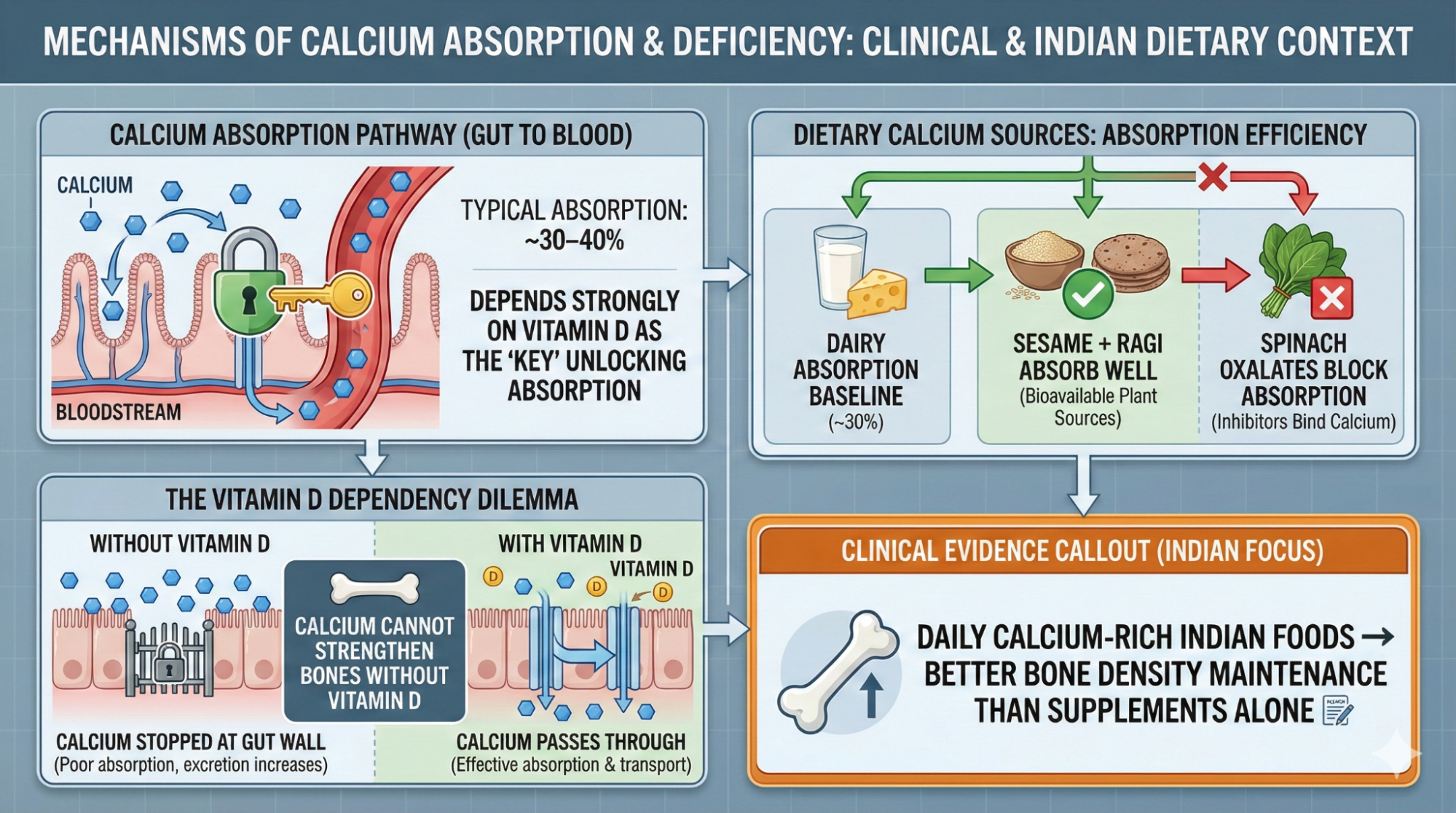
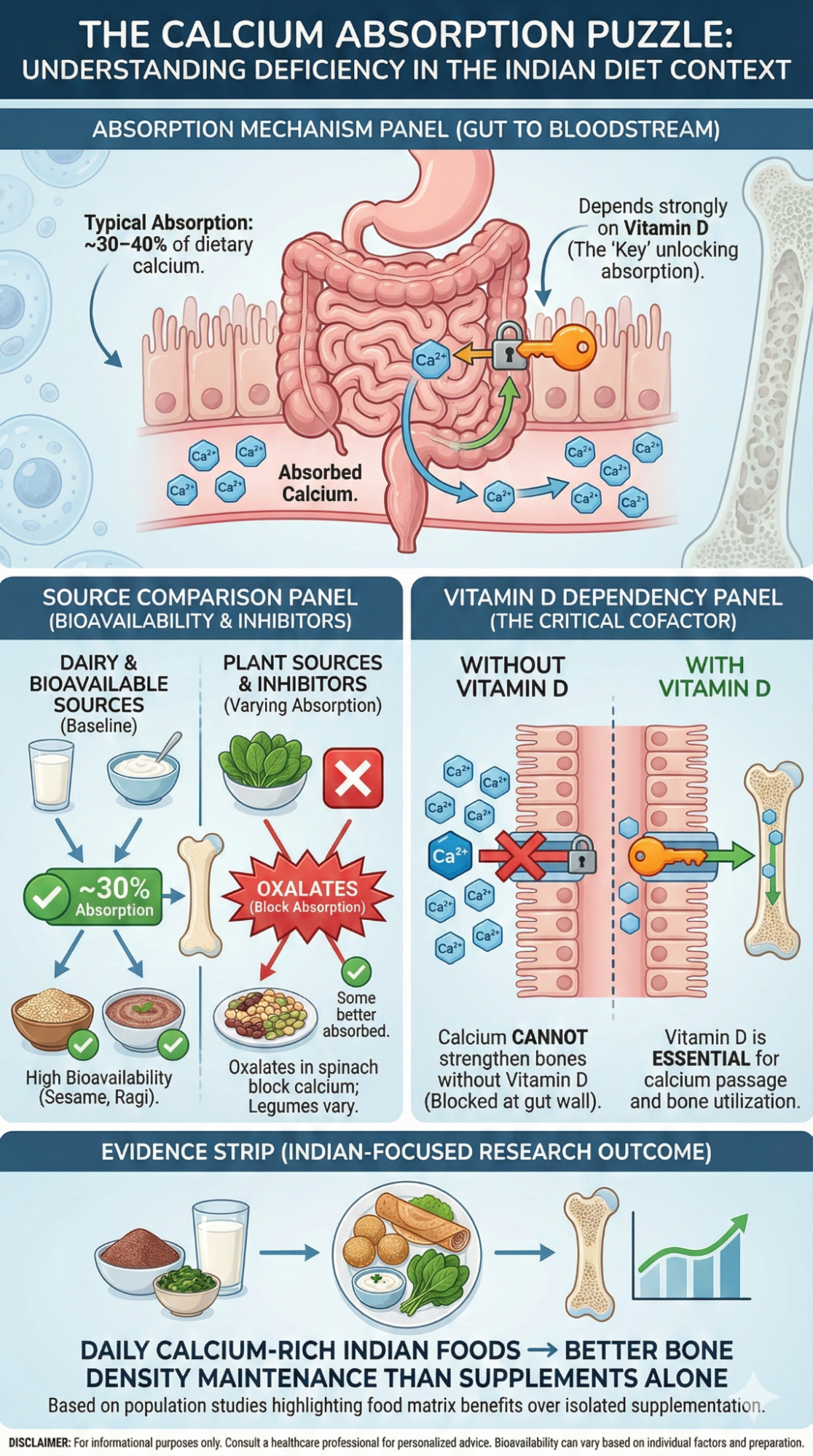
Your body absorbs 30-40% of dietary calcium, depending on vitamin D. Dairy calcium-rich foods absorb at 30%, and plant sources vary. Oxalates in spinach block absorption, while sesame and ragi absorb well. Vitamin D is essential; calcium cannot strengthen bones without it.
The Connection Between Bone Health and Overall Wellness
Calcium affects more than fractures. Low calcium causes muscle cramps, numbness, and dental problems. The parathyroid then pulls calcium from bones. Calcium-rich foods in India prevent this cascade. How to increase calcium naturally: An Indian diet protects the heart, muscles, and nerves.
What Research Shows for the Indian Population
AIIMS bone health studies show that Indian women consuming calcium-rich Indian foods for strong bones daily maintained bone density 40% better than those relying on supplements alone. Vegetarian calcium sources without milk, India specifically ragi and sesame, showed absorption rates comparable to dairy. Dietary treatment proved sustainable long-term.
Calcium Deficiency: What to Watch For
Physical Signs and Symptoms to Monitor
Watch for frequent muscle cramps, tingling in fingers, brittle nails, dental problems, and stress fractures from minor falls. These signal a deficiency needing immediate dietary intervention. Calcium-rich food in India must be prioritised if any two symptoms appear together.
Emotional and Mental Health Indicators
Low calcium causes anxiety, confusion, and memory problems. Brain function requires calcium for nerve signalling. Addressing deficiency with calcium-rich foods in India often improves mood and mental clarity within weeks.
When to Consult a Healthcare Professional
See a doctor if you experience stress fractures, severe muscle spasms, or a bone density scan shows osteopenia. Combined calcium and vitamin D deficiency needs dual treatment. How to increase calcium naturally: An Indian diet should complement medical care for diagnosed osteoporosis.
Indian Lifestyle Factors Affecting Calcium Rich Food in India
Modern Indian Diet Challenges and Solutions
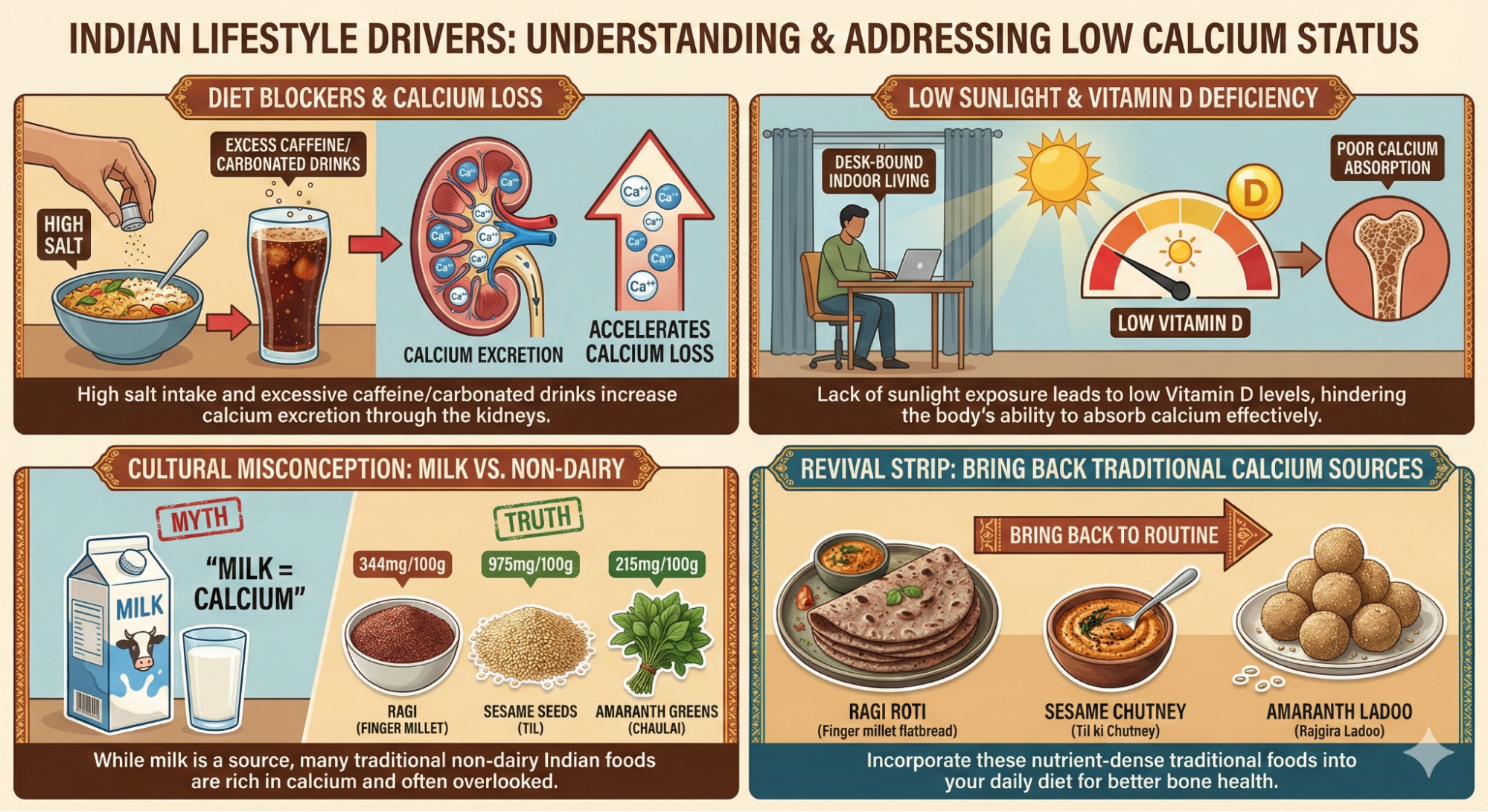
Indian cooking uses oxalate-rich greens to block absorption. Excess salt increases calcium loss. Switching to calcium foods like ragi, sesame, and amaranth helps. Calcium-rich Indian food for strong bones should replace low-absorption greens.
Work-Life Balance and Urban Living Impact
Office workers get minimal sunlight. Vegetarian calcium sources without milk in India, paired with morning sunlight, maximise calcium absorption for desk-bound professionals.
Cultural and Social Influences on Health
Indian culture equates milk with calcium but ignores superior sources. Traditional foods like ragi roti, sesame chutney, and amaranth ladoo are disappearing from urban diets. Reviving calcium-rich food traditions like ragi roti and sesame chutney provides more calcium than milk.
Best Indian Foods for Calcium-Rich Foods in India Management
Traditional Indian Foods That Support Bone Health
Top calcium-rich foods for Indians:
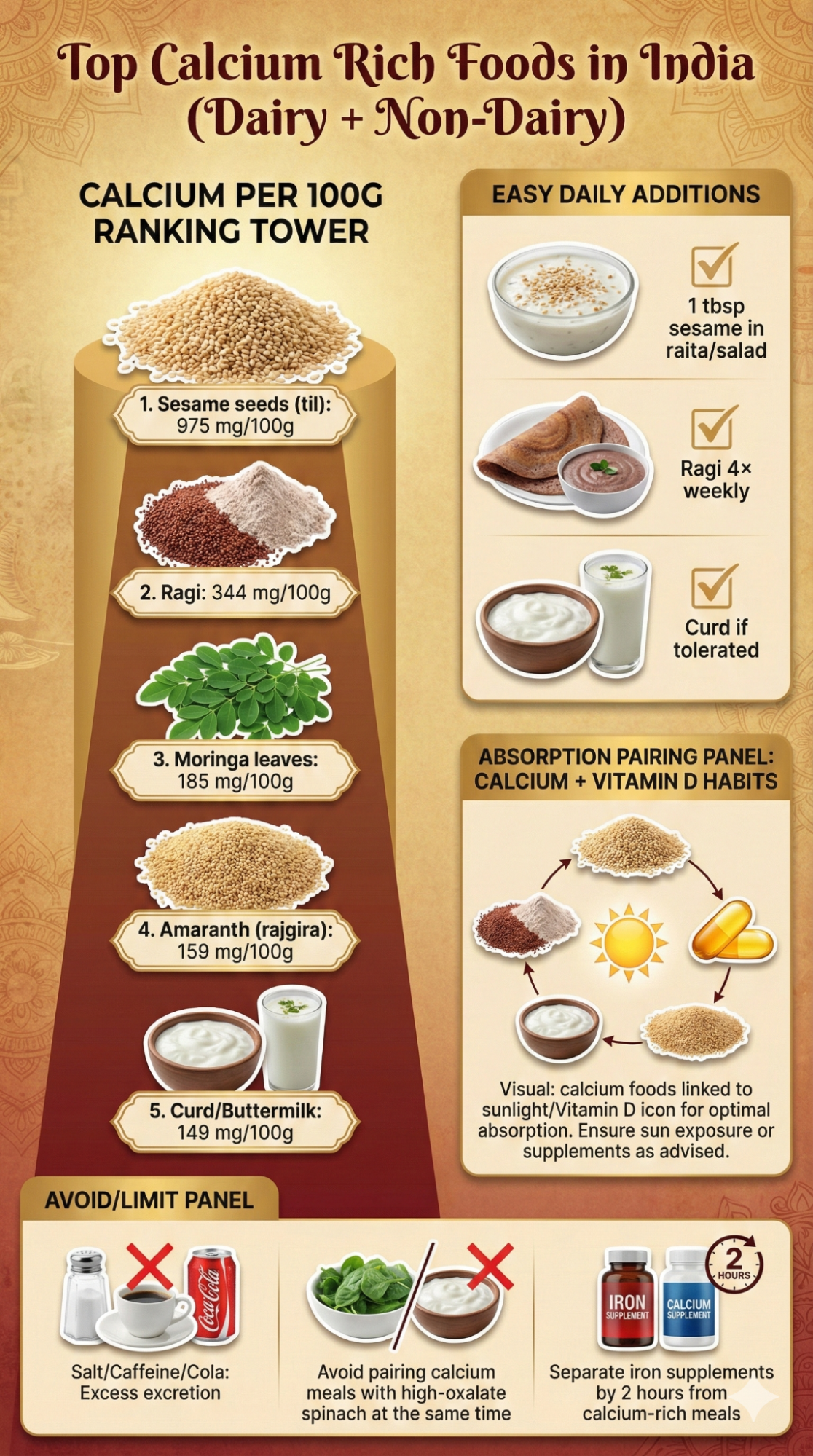
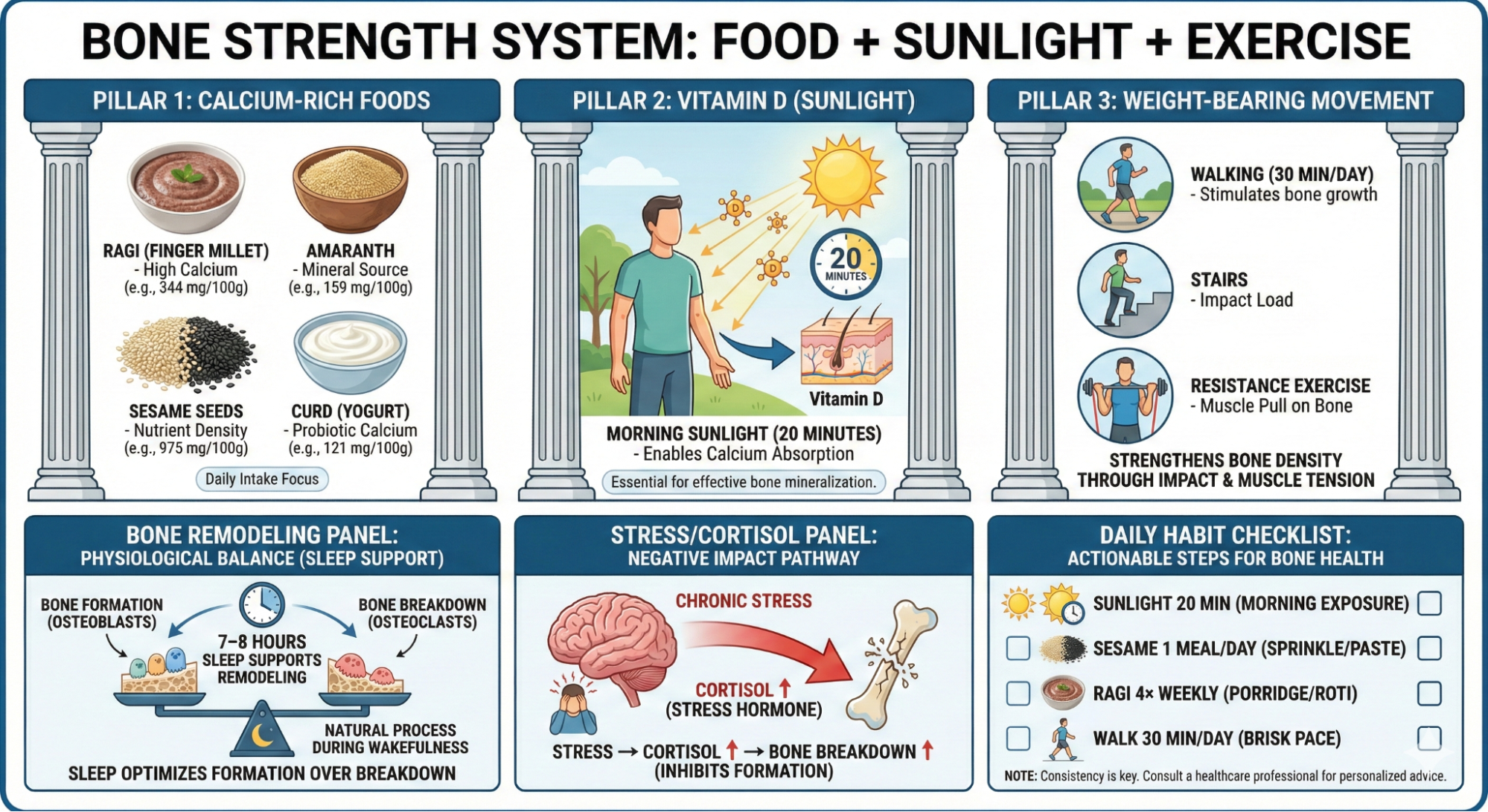
- Ragi (nachni): 344mg per 100g, the Indian calcium champion
- Sesame seeds (til): 975mg per 100g, highest plant source
- Amaranth (rajgira): 159mg per 100g with protein
- Curd and buttermilk: 149mg per 100g with probiotics
- Moringa leaves: 185mg per 100g with iron
Modern Indian Meal Options and Healthy Recipes
Try ragi porridge for breakfast, sesame chutney with lunch, or amaranth ladoo as a snack. These recipes taste great and boost calcium intake. Add a tablespoon of sesame to salads and raitas daily. How to increase calcium naturally in the Indian diet means incorporating these into regular cooking.
Foods to Limit or Avoid
Reducing excess salt, caffeine, and carbonated drinks all increases calcium loss. Avoid eating calcium-rich foods with high-oxalate items like raw spinach simultaneously. Separate iron supplements and calcium rich food by 2 hours for optimal absorption.
Portion Sizes and Meal Timing for Indians
Spread calcium intake across 3 meals; the body absorbs a maximum of 500mg at once. Include calcium-rich foods at breakfast, lunch, and dinner. Morning curd and evening sesame ensure consistent levels. This makes your calcium rich food in India plan effective.
Lifestyle Changes to Support Calcium Rich Foods in India
Calcium Deficiency: The Right Approach for Indians
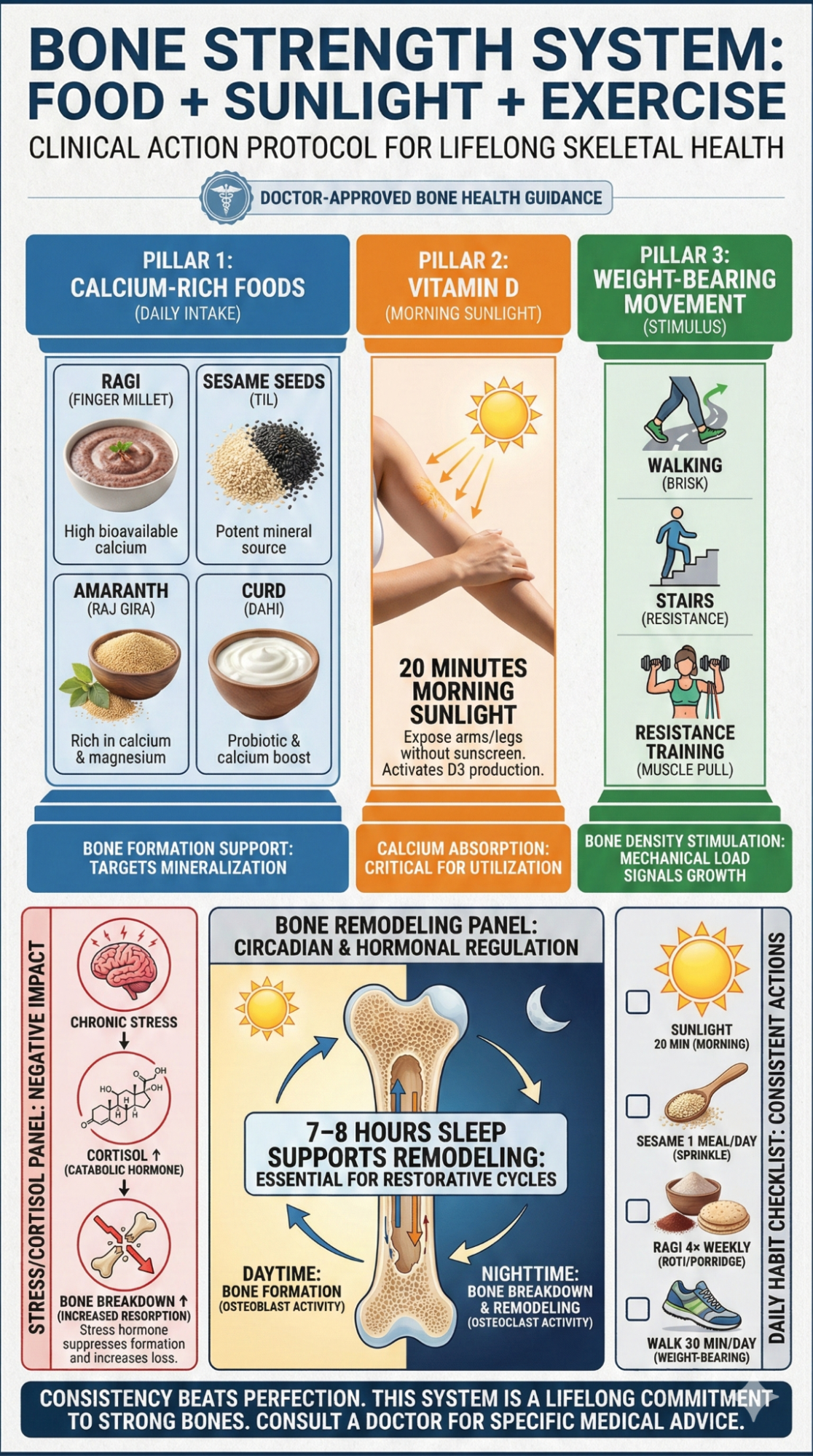
To prevent calcium deficiency, combine a diet with weight-bearing exercise. Walking and stair climbing stimulate bone formation. Exercise plus calcium rich Indian foods for strong bones works better than either alone.
Sleep and Stress Management Strategies
Sleep 7-8 hours; bone remodelling happens during sleep. Stress increases cortisol, breaking bones. Managing stress alongside vegetarian calcium sources without milk, the India plan protects from both directions.
Daily Habits That Make a Real Difference
- Get 20 minutes of morning sunlight for vitamin D
- Add sesame seeds to one meal daily
- Eat ragi in any form 4 times weekly
These maximise calcium-rich foods in India absorption and skeletal strength.
Your 7-Day Calcium Rich Foods India Meal Plan
| Day | Breakfast | Mid-Morning | Lunch | Evening Snack | Dinner |
| Mon | Ragi porridge + almonds | Curd + banana | Brown rice + sesame chutney + dal + sabzi | Amaranth ladoo + milk | Ragi roti + paneer sabzi |
| Tue | Moong dal cheela + curd | Buttermilk + figs | Jowar roti + rajma + raita | Sesame chikki + tea | Chapati + palak paneer + curd |
| Wed | Oats + milk + almonds | Ragi malt + banana | Brown rice + mixed veg + sesame raita | Moringa soup | Ragi dosa + sambar |
| Thu | Besan cheela + buttermilk | Curd + dates | Bajra roti + paneer + amaranth salad | Til ladoo + milk | Chapati + dal + sabzi |
| Fri | Ragi idli + coconut chutney | Almonds + curd | Millet pulao + raita + sesame chutney | Amaranth chikki | Ragi roti + egg curry |
| Sat | Sesame paratha + curd | Buttermilk + figs | Rice + chole + moringa sabzi | Ragi malt | Paneer tikka + multigrain roti |
| Sun | Ragi pancakes + honey | Milk + almonds | Brown rice + dal + sesame raita + sabzi | Til ladoo + tea | Amaranth khichdi + curd |
This calcium rich foods India plan provides 1000- 1200 mg of calcium daily. Add milk if tolerated. Pair with 20 minutes of sunlight for vitamin D.
Common Mistakes Indians Make with Calcium Rich Foods in India
Diet Mistakes That Sabotage Progress
Taking calcium supplements with iron supplements blocks both. Relying only on spinach for calcium: oxalates block 95% of absorption. Drinking excess tea with calcium-rich foods reduces uptake. These mistakes worsen the deficiency despite apparent effort.
Lifestyle Pitfalls to Watch Out For
Complete lack of sunlight exposure, no weight-bearing exercise, and excess caffeine consumption accelerate bone loss. Consistent lifestyle support alongside dietary calcium is essential.
How to Course-Correct When Things Go Wrong
Bone density declining? Increase ragi and sesame in daily staples. Muscle cramps persisting? Check vitamin D levels, as calcium absorption fails without it. Resume calcium rich foods in India with vitamin D optimisation. Both nutrients work as a team.
Conclusion
Calcium-rich foods in India provide abundant non-dairy options to build strong bones. Ragi and sesame alone can meet your full daily calcium requirement, no milk needed. Add ragi to 4 meals weekly, sprinkle sesame on every salad, get morning sunlight, and walk 30 minutes daily. These changes protect your bones for decades.
FAQs
Q1: What are the best calcium rich foods in India?
Top calcium rich foods in India include ragi (344mg/100g), sesame seeds (975mg/100g), amaranth, curd, moringa, and almonds. These calcium foods build bone health effectively.
Q2: What are calcium deficiency symptoms?
Calcium deficiency causes muscle cramps, brittle nails, tingling fingers, dental problems, and stress fractures. Severe deficiency leads to osteoporosis and increased fracture risk.
Q3: What are the best vegetarian calcium sources without milk in India?
Vegetarian calcium sources without milk in India include ragi, sesame, amaranth, moringa leaves, almonds, and figs, all providing high-calcium foods without dairy.
Q4: How to increase calcium naturally in the Indian diet?
How to increase calcium naturally in the Indian diet involves eating ragi 4 times weekly, adding sesame to meals, getting sunlight for vitamin D, and spreading calcium foods across all meals.
Q5: How long to improve bone health with diet?
Improvements are seen on scans after 6-12 months of calcium-rich Indian foods, vitamin D, and exercise for strong bones.
Q6: When should I see a doctor about calcium?
See a doctor if you experience stress fractures, severe cramps, or a family history of osteoporosis. A bone density scan after 40 detects calcium deficiency early.
Related Posts